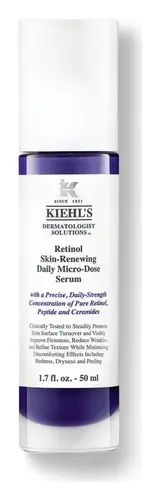
This anti-aging serum is formulated around Retinol and Niacinamide to soften the look of wrinkles and refine skin texture.
This anti-aging eye moisturizer is formulated around Oryza Sativa Extract and Bifida Ferment Lysate to soften the look of wrinkles and hydrate skin.


What's inside
What's inside
 Key Ingredients
Benefits
Concerns
Ingredients Side-by-side
Water
Skin ConditioningGlycerin
Humectant


Butylene Glycol
Humectant
Pentylene Glycol
Skin Conditioning
Niacinamide
Smoothing









Cetyl Alcohol
Emollient



Isohexadecane
EmollientIsononyl Isononanoate
EmollientDiisopropyl Sebacate
Emollient2-Oleamido-1,3-Octadecanediol
Skin Conditioning4-T-Butylcyclohexanol
Masking

Acetyl Dipeptide-1 Cetyl Ester
Skin Conditioning
Adenosine
Skin Conditioning
Ceramide NP
Skin Conditioning
Hydroxypalmitoyl Sphinganine
Skin Conditioning
Lauroyl Lysine
Skin Conditioning
Octyldodecanol
Emollient
Pentaerythrityl Tetra-Di-T-Butyl Hydroxyhydrocinnamate
Antioxidant
Sodium Chloride
MaskingSodium Hyaluronate
Humectant
Sodium Hydroxide
BufferingTrisodium Ethylenediamine Disuccinate
ChelatingRetinol
Skin Conditioning

Tocopherol
Antioxidant
Dicaprylyl Ether
Emollient
Ammonium Polyacryloyldimethyl Taurate
Emulsion StabilisingBehenyl Alcohol
Emollient
Caprylyl Glycol
Emollient
Carbomer
Emulsion StabilisingCetearyl Alcohol
Emollient


Cetearyl Glucoside
Emulsifying
Glycine Soja Oil
Emollient
Helianthus Annuus Seed Oil
Emollient
Hydroxyethylcellulose
Emulsion StabilisingLecithin
Emollient
Phenethyl Alcohol
MaskingPoloxamer 188
EmulsifyingPolycaprolactone
StabilisingSorbitan Laurate
Emulsifying
Steareth-100
Gel FormingCI 40800
Cosmetic ColorantChlorphenesin
Antimicrobial
Phenoxyethanol
Preservative
Water, Glycerin, Butylene Glycol, Pentylene Glycol, Niacinamide, Cetyl Alcohol, Isohexadecane, Isononyl Isononanoate, Diisopropyl Sebacate, 2-Oleamido-1,3-Octadecanediol, 4-T-Butylcyclohexanol, Acetyl Dipeptide-1 Cetyl Ester, Adenosine, Ceramide NP, Hydroxypalmitoyl Sphinganine, Lauroyl Lysine, Octyldodecanol, Pentaerythrityl Tetra-Di-T-Butyl Hydroxyhydrocinnamate, Sodium Chloride, Sodium Hyaluronate, Sodium Hydroxide, Trisodium Ethylenediamine Disuccinate, Retinol, Tocopherol, Dicaprylyl Ether, Ammonium Polyacryloyldimethyl Taurate, Behenyl Alcohol, Caprylyl Glycol, Carbomer, Cetearyl Alcohol, Cetearyl Glucoside, Glycine Soja Oil, Helianthus Annuus Seed Oil, Hydroxyethylcellulose, Lecithin, Phenethyl Alcohol, Poloxamer 188, Polycaprolactone, Sorbitan Laurate, Steareth-100, CI 40800, Chlorphenesin, Phenoxyethanol
Oryza Sativa Extract
Absorbent
Water
Skin ConditioningGlycerin
Humectant
Methylpropanediol
SolventBifida Ferment Lysate
Skin Conditioning
Dimethicone
Emollient
Snail Secretion Filtrate
Skin Conditioning
Cyclopentasiloxane
Emollient
Niacinamide
Smoothing
Butyrospermum Parkii Butter
Skin Conditioning
Butylene Glycol
Humectant
Dioscorea Japonica Root Extract
Skin Conditioning
Hydrogenated Polydecene
EmollientTremella Fuciformis Extract
Humectant
Arctium Lappa Root Extract
Skin Conditioning
Piper Methysticum Leaf/Root/Stem Extract
Skin ConditioningRose Extract
Skin ConditioningCentella Asiatica Extract
Cleansing
Houttuynia Cordata Extract
Skin Conditioning
Collagen Extract
Skin Conditioning
Pseudoalteromonas Exopolysaccharides
Skin ConditioningAnastatica Hierochuntica Extract
AstringentPhaseolus Lunatus Seed Extract
EmollientArgania Spinosa Kernel Oil
Emollient
Epilobium Angustifolium Flower/Leaf/Stem Extract
Skin ConditioningNymphaea Alba Flower Extract
Skin ConditioningLepidium Meyenii Root Extract
Skin ConditioningSalicornia Herbacea Extract
Skin ConditioningHydrogenated Lecithin
Emulsifying
Sodium Hyaluronate
Humectant
Oenothera Biennis Oil
Emollient
Borago Officinalis Seed Oil
Emollient
Centaurea Cyanus Flower Water
Skin Conditioning
Polysorbate 60
Emulsifying
Phytosteryl/Behenyl/Octyldodecyl Lauroyl Glutamate
Skin ConditioningCetearyl Olivate
Sorbitan Olivate
Emulsifying
Polyacrylate-13
Hydroxyacetophenone
Antioxidant
Polyglyceryl-2 Stearate
Emulsifying
C12-16 Alcohols
EmollientPolysorbate 20
Emulsifying
Polyisobutene
Dimethicone/Vinyl Dimethicone Crosspolymer
Skin Conditioning
Cetyl Alcohol
Emollient
Glyceryl Stearate
Emollient
Stearyl Alcohol
Emollient
1,2-Hexanediol
Skin Conditioning
Tranexamic Acid
Astringent
Sodium Polyacrylate
Absorbent
Palmitic Acid
Emollient
Ethylhexylglycerin
Skin ConditioningTocopheryl Acetate
Antioxidant
Polyquaternium-51
Skin Conditioning
Glycosyl Trehalose
Emulsion StabilisingXanthan Gum
EmulsifyingDisodium Stearoyl Glutamate
CleansingHydrogenated Starch Hydrolysate
HumectantRaffinose
Skin ConditioningBiosaccharide Gum-1
Humectant
Adenosine
Skin Conditioning
Lecithin
Emollient
Disodium EDTA
ChelatingPanthenol
Skin Conditioning
Dipropylene Glycol
HumectantCeramide NP
Skin Conditioning
Saccharomyces Ferment Filtrate
Humectant
Folic Acid
Skin ConditioningSodium Palmitoyl Proline
Skin ConditioningCholesterol
Emollient
Cetyl Hydroxyethylcellulose
Emulsion StabilisingAcetic Acid
BufferingTriethylhexanoin
MaskingAcrylates Copolymer
Lactic Acid
Buffering
Alcohol Denat.
Antimicrobial

Rutin
Antioxidant
Sodium Lauroyl Lactylate
EmulsifyingPalmitoyl Tetrapeptide-7
Skin Conditioning
Palmitoyl Tripeptide-1
Skin Conditioning
Hydrolyzed Lupine Protein
Skin ConditioningHelichrysum Italicum Flower Water
Skin ConditioningCaprylic/Capric Triglyceride
Masking
Sorbitan Laurate
Emulsifying
Cetearyl Alcohol
Emollient
Phospholipids
Skin Conditioning
Hydrogenated Phosphatidylcholine
Emulsifying
Tromethamine
BufferingCopper Tripeptide-1
Skin Conditioning
Magnesium PCA
Humectant
Sodium Lactate
Buffering
Isostearyl Isostearate
Emollient
Phytosphingosine
Skin Conditioning
Leuconostoc/Radish Root Ferment Filtrate
Antimicrobial
1-Methylhydantoin-2-Imide
Skin ConditioningGlycine
Buffering
Glucosamine Hcl
Glutamic Acid
Humectant
Glutamine
Skin ConditioningDisodium Phosphate
BufferingLysine
Skin ConditioningLeucine
Skin ConditioningMagnesium Citrate
Skin ConditioningMaltodextrin
Absorbent
Methionine
Skin ConditioningValine
MaskingSerine
Masking
Sucrose
Humectant
Cysteine
Antioxidant
Citrulline
Skin ConditioningSea Salt
Abrasive
Asparagine
MaskingAspartic Acid
Masking
Alanine
Masking
Arginine
Masking
Ammonia
Buffering
Ornithine
Skin ConditioningUrea
Buffering
Uric Acid
BufferingIsoleucine
Skin ConditioningCalcium Chloride
AstringentTaurine
BufferingTyrosine
MaskingThreonine
Tryptophan
MaskingPhenylalanine
Masking
Formic Acid
Preservative
Potassium Hydroxide
BufferingProline
Skin Conditioning
Histidine
Humectant
Ceramide Ng
Skin Conditioning
Inulin Lauryl Carbamate
Emulsion StabilisingCaprylyl Glycol
Emollient
Tocopheryl Linoleate
Antioxidant
Hydroxydecyl Ubiquinone
Antioxidant
Hydroxyethylcellulose
Emulsion StabilisingAcetyl Dipeptide-1 Cetyl Ester
Skin Conditioning
Ceramide AP
Skin Conditioning
Vp/Polycarbamyl Polyglycol Ester
Saccharide Hydrolysate
HumectantPalmitoyl Tripeptide-5
Skin Conditioning
Hydrolyzed Vegetable Protein
Skin ConditioningHydrolyzed Sesame Protein Pg-Propyl Methylsilanediol
Skin ConditioningCarbomer
Emulsion StabilisingAscorbic Acid Polypeptide
Antioxidant
Palmitoyl Pentapeptide-4
Skin Conditioning
Potassium Cetyl Phosphate
EmulsifyingAcetyl Hexapeptide-8
Humectant
Hydrolyzed Glycosaminoglycans
HumectantAcetyl Tripeptide-1
Skin Conditioning
Palmitoyl Hexapeptide-12
Skin Conditioning
Ceramide EOP
Skin Conditioning
Potassium Sorbate
Preservative
Oryza Sativa Extract, Water, Glycerin, Methylpropanediol, Bifida Ferment Lysate, Dimethicone, Snail Secretion Filtrate, Cyclopentasiloxane, Niacinamide, Butyrospermum Parkii Butter, Butylene Glycol, Dioscorea Japonica Root Extract, Hydrogenated Polydecene, Tremella Fuciformis Extract, Arctium Lappa Root Extract, Piper Methysticum Leaf/Root/Stem Extract, Rose Extract, Centella Asiatica Extract, Houttuynia Cordata Extract, Collagen Extract, Pseudoalteromonas Exopolysaccharides, Anastatica Hierochuntica Extract, Phaseolus Lunatus Seed Extract, Argania Spinosa Kernel Oil, Epilobium Angustifolium Flower/Leaf/Stem Extract, Nymphaea Alba Flower Extract, Lepidium Meyenii Root Extract, Salicornia Herbacea Extract, Hydrogenated Lecithin, Sodium Hyaluronate, Oenothera Biennis Oil, Borago Officinalis Seed Oil, Centaurea Cyanus Flower Water, Polysorbate 60, Phytosteryl/Behenyl/Octyldodecyl Lauroyl Glutamate, Cetearyl Olivate, Sorbitan Olivate, Polyacrylate-13, Hydroxyacetophenone, Polyglyceryl-2 Stearate, C12-16 Alcohols, Polysorbate 20, Polyisobutene, Dimethicone/Vinyl Dimethicone Crosspolymer, Cetyl Alcohol, Glyceryl Stearate, Stearyl Alcohol, 1,2-Hexanediol, Tranexamic Acid, Sodium Polyacrylate, Palmitic Acid, Ethylhexylglycerin, Tocopheryl Acetate, Polyquaternium-51, Glycosyl Trehalose, Xanthan Gum, Disodium Stearoyl Glutamate, Hydrogenated Starch Hydrolysate, Raffinose, Biosaccharide Gum-1, Adenosine, Lecithin, Disodium EDTA, Panthenol, Dipropylene Glycol, Ceramide NP, Saccharomyces Ferment Filtrate, Folic Acid, Sodium Palmitoyl Proline, Cholesterol, Cetyl Hydroxyethylcellulose, Acetic Acid, Triethylhexanoin, Acrylates Copolymer, Lactic Acid, Alcohol Denat., Rutin, Sodium Lauroyl Lactylate, Palmitoyl Tetrapeptide-7, Palmitoyl Tripeptide-1, Hydrolyzed Lupine Protein, Helichrysum Italicum Flower Water, Caprylic/Capric Triglyceride, Sorbitan Laurate, Cetearyl Alcohol, Phospholipids, Hydrogenated Phosphatidylcholine, Tromethamine, Copper Tripeptide-1, Magnesium PCA, Sodium Lactate, Isostearyl Isostearate, Phytosphingosine, Leuconostoc/Radish Root Ferment Filtrate, 1-Methylhydantoin-2-Imide, Glycine, Glucosamine Hcl, Glutamic Acid, Glutamine, Disodium Phosphate, Lysine, Leucine, Magnesium Citrate, Maltodextrin, Methionine, Valine, Serine, Sucrose, Cysteine, Citrulline, Sea Salt, Asparagine, Aspartic Acid, Alanine, Arginine, Ammonia, Ornithine, Urea, Uric Acid, Isoleucine, Calcium Chloride, Taurine, Tyrosine, Threonine, Tryptophan, Phenylalanine, Formic Acid, Potassium Hydroxide, Proline, Histidine, Ceramide Ng, Inulin Lauryl Carbamate, Caprylyl Glycol, Tocopheryl Linoleate, Hydroxydecyl Ubiquinone, Hydroxyethylcellulose, Acetyl Dipeptide-1 Cetyl Ester, Ceramide AP, Vp/Polycarbamyl Polyglycol Ester, Saccharide Hydrolysate, Palmitoyl Tripeptide-5, Hydrolyzed Vegetable Protein, Hydrolyzed Sesame Protein Pg-Propyl Methylsilanediol, Carbomer, Ascorbic Acid Polypeptide, Palmitoyl Pentapeptide-4, Potassium Cetyl Phosphate, Acetyl Hexapeptide-8, Hydrolyzed Glycosaminoglycans, Acetyl Tripeptide-1, Palmitoyl Hexapeptide-12, Ceramide EOP, Potassium Sorbate
Reviews
Ingredients Explained
These ingredients are found in both products.
Ingredients higher up in an ingredient list are typically present in a larger amount.
Acetyl Dipeptide-1 Cetyl Ester is a peptide composed of amino acids arginine and tyrosine.
This peptide is considered a neurotransmitter peptide, meaning it has pain-relieving and relaxing properties. It has the ability to calm skin irritation from external factors such as chemical stinging or heat.
Neurotransmitter peptides are also often called "botox in a bottle". This is because these peptides have the ability to relax the muscles.
Though relaxing the muscles can prevent expression lines (as we have seen in botox), the studies do not show these peptides to be a botox replacement. The effects of this muscle relaxation is also short-term, as opposed to longer-term results from botox.
Learn more about Acetyl Dipeptide-1 Cetyl EsterAdenosine is a purine nucleoside that your body already makes in every cell. In skincare, it acts mainly as a skin conditioning and anti-aging agent.
The way it works is fairly well mapped out:
Your skin has cells called fibroblasts that build collagen (the stuff that keeps skin firm and smooth). Adenosine basically flips a switch on these cells that tells them to get to work making more collagen and other proteins. These cells slow down on their own as skin ages, so Adenosine helps give them a little nudge to keep going.
The clinical backing is pretty solid too.
A blind, randomized, placebo-controlled trial of 126 women aged 45-65 tested a 0.1% cream twice daily and found real improvements in crow's feet and frown lines using a precise 3D skin-mapping technique; these changes showed up by week 3 and held at 2 months.
A later study using Adenosine-loaded dissolving microneedle patches reported gains in wrinkle depth, dermal density, elasticity, and hydration.
On concentrations, South Korea's Ministry of Food and Drug Safety has set 0.04% as the approved functional anti-wrinkle level. You'll typically see this ingredient used somewhere in the 0.04-0.1% range since it works at low doses.
This ingredient has been found safe for cosmetics with the data showing no irritation or sensitization.
Overall, this is a great ingredient for any anti-aging routine and has no photosensitizing effect, so it suits both AM and PM use.
Learn more about AdenosineButylene Glycol (or BG) is used within cosmetic products for a few different reasons:
Overall, Butylene Glycol is a safe and well-rounded ingredient that works well with other ingredients.
Though this ingredient works well with most skin types, some people with sensitive skin may experience a reaction such as allergic rashes, closed comedones, or itchiness.
Learn more about Butylene GlycolCaprylyl Glycol is a humectant, skin conditioner, emollient, and preservative booster derived from either caprylic acid or synthetically created.
Typical use levels vary from 0.3-1% as a preservative booster and go up to 2% to condition skin.
Because it is not a free-fatty acid, this ingredient is fungal acne safe (there's nothing for Malassezia to feed on).
Learn more about Caprylyl GlycolCarbomer is a synthetic thickening and gelling agent. It's basically the ingredient that gives a lot of serums, gels, creams, and sunscreens their smooth, non-sticky texture.
Although legally permitted at very high levels, carbomers are normally used at concentrations below 1%.
It also needs to be neutralized to actually thicken, and because it is a large molecule, it doesn't really penetrate the skin barrier.
Allergy-wise, the risk is very low. Clinical studies show carbomers have low potential for skin irritation/sensitization even at concentrations up to 100%.
A 2024 UK study patch-tested 1,302 patients and found true allergy to the parent group of carbomer to be rare with no confirmed relevant reactions.
Learn more about CarbomerCeramide NP (formerly known as Ceramide 3) is one of the skin's naturally occurring lipids.
Since ceramides are the major lipid components of the skin, they are crucial for maintaining skin barrier and hydration. Ceramide NP most closely mirrors the dominant kind in human skin amongst ceramide subtypes.
This ceramide works by slotting into gaps within the stratum corneum's lipid matrix to limit trans-epidermal water loss (TEWL) and shield the skin against external irritants.
A study with 312 patients found that using a ceramide-containing routine for 4 weeks reduced the severity of atopic dermatitis by over 61%.
Another clinical study in subjects aged 60 and older found that a ceramide body wash and moisturizer improved skin dryness and itchy skin in 15 days.
Overall, ceramides are considered non-irritating and safety tests have found little to no observable adverse effects from using this ingredient.
Ceramide NP is usually sourced from plants (like soybean or rice bran), or produced synthetically.
Learn more about Ceramide NPCetearyl alcohol is a waxy mixture of two fatty alcohols: cetyl alcohol and stearyl alcohol. It is an emollient and emulsifier.
Despite having "alcohol" in its name, it has nothing to do with drying solvent alcohols; the FDA also allows "alcohol-free" products to contain fatty alcohols like this ingredient.
It plays several roles in a formula:
Typical use levels for this ingredient sit around 1-10% and the Cosmetic Ingredient Review Expert Panel has affirmed safety at concentrations up to 25% in leave-on products.
Multiple assessments have found it to be non-irritating and non-sensitizing to most people.
However, there have been some cases of allergic contact dermatitis in patients with chronically compromised skin barriers.
Cetearyl alcohol has a comedogenic rating of 2 and irritancy rating of 1. Both of these numbers come from the 1989 study that used rabbit ears; a "2" means mildly comedogenic and a "1" means low irritancy.
Here's the catch: rabbit skin is more sensitive than human skin and throws a lot of false positives. A 1996 reappraisal found that ingredients rated 1-2 in the rabbit ear tests are generally safe for humans.
Remember comedogenic ratings are unable to assess the entire formula of a product or how it will react on your skin. Just be sure to patch test if you are unsure about certain ingredients.
This ingredient is not fungal acne safe. Cetearyl alcohol is a fatty alcohol with chain lengths that fall within the range that Malassezia can metabolize.
A 2019 study has also observed Malassezia growth in the presence of this ingredient, confirming it to be not-fungal acne safe.
Learn more about Cetearyl AlcoholCetyl Alcohol is a fatty alcohol. Fatty Alcohols are most often used as an emollient or to thicken a product.
Its main roles are:
Though it has "alcohol" in the name, it is not related to denatured alcohol or ethyl alcohol.
The FDA allows products labeled "alcohol-free" to have fatty alcohols.
This ingredient may not be fungal acne safe. It is a primary fatty alcohol with a chain length above 12 carbons. A study from 2019 show Malassezia can feed on fatty alcohols in this range, so it may trigger fungal acne in those prone to it.
Learn more about Cetyl AlcoholGlycerin (or glycerol) is a compound naturally found in your skin. It's a powerhouse humectant that pulls water into the stratum corneum.
Topically, glycerin does several things at once:
Your skin makes glycerin on its own (mostly from sebaceous oil breakdown) and shuttles it to your outermost layer of skin, or your epidermis, via aquaporin-3.
Aquaporin-3 is a transporter that is essential for normal skin hydration, elasticity, and repair. Interestingly, mice lacking in AQP3 have dry and less elastic skin that can be fully corrected with glycerin.
This ingredient is non-irritating, plays well with almost every ingredient, and works across all skin types. Typical use is anywhere between 3-10% but can go up to 79% in some leave-on products.
Just know very high concentrations (>40%) can feel tacky in low humidity.
Glycerin is the name for this ingredient in American English. British English uses Glycerol/Glycerine.
Learn more about GlycerinHydroxyethylcellulose is used to improve the texture of products. It is created from a chemical reaction involving ethylene oxide and alkali-cellulose. Cellulose is a sugar found in plant cell walls and help give plants structure.
This ingredient helps stabilize products by preventing ingredients from separating. It can also help thicken the texture of a product.
This ingredient can also be found in pill medicines to help our bodies digest other ingredients.
Learn more about HydroxyethylcelluloseLecithin is a term for a group of substances found in the cell membranes of plants, animals, and humans. They are made up of phospholipids.
Thanks to its amphiphilic structure (water-loving head and oil-loving tail), it is a true multitasker:
It plays well with most ingredients and is typically used at 0.1-1%. However, concentrations up to 50% have been reported in moisturizers.
Learn more about LecithinNiacinamide is a multitasking form of vitamin B3 that strengthens the skin barrier, reduces pores and dark spots, regulates oil, and improves signs of aging.
And the best part? It's gentle and well-tolerated by most skin types, including sensitive and reactive skin.
You might have heard of "niacin flush", or the reddening of skin that causes itchiness. Niacinamide has not been found to cause this.
In very rare cases, some individuals may not be able to tolerate niacinamide at all or experience an allergic reaction to it.
If you are experiencing flaking, irritation, and dryness with this ingredient, be sure to double check all your products as this ingredient can be found in all categories of skincare.
When incorporating niacinamide into your routine, look out for concentration amounts. Typically, 5% niacinamide provides benefits such as fading dark spots. However, if you have sensitive skin, it is better to begin with a smaller concentration.
When you apply niacinamide to your skin, your body converts it into nicotinamide adenine dinucleotide (NAD). NAD is an essential coenzyme that is already found in your cells as "fuel" and powers countless biological processes.
In your skin, NAD helps repair cell damage, produce new healthy cells, support collagen production, strengthen the skin barrier, and fight environmental stressors (like UV and pollution).
Our natural NAD levels start to decline with age, leading to slower skin repair, visible aging, and a weaker skin barrier. By providing your skin niacinamide, you're recharging your skin's NAD levels. This leads to stronger, healthier, and younger looking skin.
Another name for vitamin B3 is nicotinamide. This vitamin is water-soluble and our bodies don't store it. We obtain Vitamin B3 from either food or skincare. Meat, fish, wheat, yeast, and leafy greens contain vitamin B3.
The type of niacinamide used in skincare is synthetically created.
Learn more about NiacinamideSodium Hyaluronate is the salt form of hyaluronic acid. It is a long sugar chain that is naturally found in your skin, joints, and connective tissue that maintains hydration and elasticity.
In skincare, it works as a humectant. It pulls water from the environment and deeper layers of skin and binds it to the surface.
Interestingly, the size of the molecule affects its behavior:
Some clinical evidence links low molecular weight versions to improved wrinkle depth, elasticity, anti-inflammatory effects, and barrier repair.
Many serums use a blend of both weights so you can get surface hydration plus longer-lasting and deeper effects.
You'll typically see concentrations between 0.1-2% for this ingredient.
Learn more about Sodium HyaluronateSorbitan Laurate is created from lauric acid and derivatives from sorbitol. It is an emulsifier.
Water. It's the most common cosmetic ingredient of all. You'll usually see it at the top of ingredient lists, meaning that it makes up the largest part of the product.
So why is it so popular? Water most often acts as a solvent - this means that it helps dissolve other ingredients into the formulation.
You'll also recognize water as that liquid we all need to stay alive. If you see this, drink a glass of water. Remember to stay hydrated!
Learn more about Water

