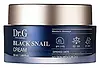
This barrier-repair moisturizer is formulated around Snail Secretion Filtrate and Niacinamide to strengthen the skin barrier and soften the look of wrinkles.
This barrier-repair moisturizer is formulated around Centella Asiatica Leaf Water and Snail Extract to strengthen the skin barrier and calm redness.

What's inside
What's inside
 Key Ingredients
Benefits
Concerns
Ingredients Side-by-side
Water
Skin ConditioningSnail Secretion Filtrate
Skin Conditioning





Dipropylene Glycol
HumectantGlycerin
Humectant
Cyclomethicone
Emollient
Cetearyl Alcohol
Emollient






Caprylic/Capric Triglyceride
Masking
Triethylhexanoin
MaskingHydrogenated Polydecene
EmollientNiacinamide
Smoothing







Hydrogen
Antioxidant
1,2-Hexanediol
Skin Conditioning
Oak Root Extract
Skin ConditioningCetearyl Glucoside
Emulsifying
Glyceryl Stearate Se
Emulsifying
Muscle Extract
Skin ProtectingButter Extract
Emollient
Portulaca Pilosa Extract
Skin ConditioningCentella Asiatica Extract
Cleansing
Ficus Indica Leaf Extract
Skin ConditioningRosa Indica Flower Extract
Antioxidant
Averrhoa Bilimbi Leaf Extract
Skin ConditioningCitrus Iyo Fruit Extract
EmollientPlant Ash Extract
Aloe Vera Callus Extract
Antioxidant
Ocimum Basilicum Leaf Extract
Skin ConditioningTurtle Extract
EmollientCoral Extract
Skin ConditioningHydrogenated Lecithin
Emulsifying
Argania Spinosa Kernel Oil
Emollient
Sodium Hyaluronate
Humectant
Arachis Hypogaea Oil
Skin Conditioning
Citrus Aurantium Bergamia Fruit Oil
Masking

Citrus Tangerina Peel Oil
Masking
Geranium Macrorrhizum Flower/Leaf/Stem Oil
Masking
Citrus Iyo Peel Oil
Rose Flower Oil
Masking
Citronellal
Masking
Santalum Album Oil
Masking
Jasminum Officinale Oil
Masking
Chamomilla Recutita Flower Oil
Masking
Citrus Limon Leaf Oil
Masking
Ferula Galbaniflua Resin Oil
Antimicrobial
Rice Ferment Filtrate
Skin Conditioning
Dimethicone
Emollient
Squalane
Emollient
Alcohol
Antimicrobial

Glyceryl Stearate
Emollient
Cetearyl Olivate
Sorbitan Oleate
Emulsifying
PEG-100 Stearate
Surfactant
2-Hydroxyethyl Acrylate
Cellulose
Absorbent
Butylene Glycol
Humectant
Palmitic Acid
Emollient
Hydrogenated Polyisobutene
EmollientBetaine
Humectant
Ethanolamine
BufferingPolysorbate 60
Emulsifying
Polyquaternium-51
Skin Conditioning
Glycosyl Trehalose
Emulsion StabilisingIsononyl Isononanoate
EmollientPolyglyceryl-10 Stearate
Skin Conditioning
Cellulose Gum
Emulsion StabilisingTriticum Vulgare Starch
Abrasive
Hydrogenated Starch Hydrolysate
HumectantRaffinose
Skin ConditioningBiosaccharide Gum-1
Humectant
Butyrospermum Parkii Butter
Skin Conditioning
Stearic Acid
Cleansing
Adenosine
Skin Conditioning
Polyglyceryl-2 Dipolyhydroxystearate
Skin Conditioning
Beta-Glucan
Skin Conditioning
Disodium EDTA
ChelatingLecithin
Emollient
Sucrose
Humectant
Caramel
Cosmetic ColorantPanthenol
Skin Conditioning
Inulin Lauryl Carbamate
Emulsion StabilisingLauryl Acrylate
Propylene Glycol
Humectant
Titanium Dioxide
Cosmetic Colorant

Coco-Caprylate/Caprate
Emollient
Tromethamine
BufferingFolic Acid
Skin ConditioningDisodium Stearoyl Glutamate
CleansingArabinose
HumectantPEG-30 Dipolyhydroxystearate
Emulsifying
Ceramide NP
Skin Conditioning
Cholesterol
Emollient
Xanthan Gum
EmulsifyingTriethoxycaprylylsilane
Alumina
Abrasive
Pearl Powder
Palmitoyl Pentapeptide-4
Skin Conditioning
Parfum
Masking
Ethylhexylglycerin
Skin ConditioningPhenoxyethanol
Preservative
Pentylene Glycol
Skin Conditioning
Caprylyl Glycol
Emollient
Benzyl Salicylate
Perfuming
Limonene
Perfuming
Geraniol
Perfuming
Hydroxycitronellal
Perfuming
Linalool
Perfuming
Water, Snail Secretion Filtrate, Dipropylene Glycol, Glycerin, Cyclomethicone, Cetearyl Alcohol, Caprylic/Capric Triglyceride, Triethylhexanoin, Hydrogenated Polydecene, Niacinamide, Hydrogen, 1,2-Hexanediol, Oak Root Extract, Cetearyl Glucoside, Glyceryl Stearate Se, Muscle Extract, Butter Extract, Portulaca Pilosa Extract, Centella Asiatica Extract, Ficus Indica Leaf Extract, Rosa Indica Flower Extract, Averrhoa Bilimbi Leaf Extract, Citrus Iyo Fruit Extract, Plant Ash Extract, Aloe Vera Callus Extract, Ocimum Basilicum Leaf Extract, Turtle Extract, Coral Extract, Hydrogenated Lecithin, Argania Spinosa Kernel Oil, Sodium Hyaluronate, Arachis Hypogaea Oil, Citrus Aurantium Bergamia Fruit Oil, Citrus Tangerina Peel Oil, Geranium Macrorrhizum Flower/Leaf/Stem Oil, Citrus Iyo Peel Oil, Rose Flower Oil, Citronellal, Santalum Album Oil, Jasminum Officinale Oil, Chamomilla Recutita Flower Oil, Citrus Limon Leaf Oil, Ferula Galbaniflua Resin Oil, Rice Ferment Filtrate, Dimethicone, Squalane, Alcohol, Glyceryl Stearate, Cetearyl Olivate, Sorbitan Oleate, PEG-100 Stearate, 2-Hydroxyethyl Acrylate, Cellulose, Butylene Glycol, Palmitic Acid, Hydrogenated Polyisobutene, Betaine, Ethanolamine, Polysorbate 60, Polyquaternium-51, Glycosyl Trehalose, Isononyl Isononanoate, Polyglyceryl-10 Stearate, Cellulose Gum, Triticum Vulgare Starch, Hydrogenated Starch Hydrolysate, Raffinose, Biosaccharide Gum-1, Butyrospermum Parkii Butter, Stearic Acid, Adenosine, Polyglyceryl-2 Dipolyhydroxystearate, Beta-Glucan, Disodium EDTA, Lecithin, Sucrose, Caramel, Panthenol, Inulin Lauryl Carbamate, Lauryl Acrylate, Propylene Glycol, Titanium Dioxide, Coco-Caprylate/Caprate, Tromethamine, Folic Acid, Disodium Stearoyl Glutamate, Arabinose, PEG-30 Dipolyhydroxystearate, Ceramide NP, Cholesterol, Xanthan Gum, Triethoxycaprylylsilane, Alumina, Pearl Powder, Palmitoyl Pentapeptide-4, Parfum, Ethylhexylglycerin, Phenoxyethanol, Pentylene Glycol, Caprylyl Glycol, Benzyl Salicylate, Limonene, Geraniol, Hydroxycitronellal, Linalool
Water
Skin ConditioningCentella Asiatica Leaf Water
Skin Conditioning
Butylene Glycol
Humectant
Butyrospermum Parkii Butter
Skin Conditioning
Cetearyl Alcohol
Emollient
Glycereth-26
Humectant
1,2-Hexanediol
Skin Conditioning
Cetearyl Olivate
Simmondsia Chinensis Seed Oil
Emollient
Camellia Japonica Seed Oil
Emollient
Sorbitan Olivate
Emulsifying
Beeswax
Emulsion Stabilising
Sorbitan Sesquioleate
Emulsifying
Vinyldimethicone
Glyceryl Stearate
Emollient
Arginine
Masking
Acrylates/C10-30 Alkyl Acrylate Crosspolymer
Emulsion StabilisingSnail Extract
Emollient
Xanthan Gum
EmulsifyingSodium Polyacrylate
Absorbent
Adenosine
Skin Conditioning
Disodium EDTA
ChelatingEthylhexylglycerin
Skin ConditioningCentella Asiatica Extract
Cleansing
Scutellaria Baicalensis Root Extract
Astringent
Polygonum Cuspidatum Root Extract
Antioxidant
Dipotassium Glycyrrhizate
Humectant
Camellia Sinensis Leaf Extract
Antimicrobial
Pentylene Glycol
Skin Conditioning
Caprylyl Glycol
Emollient
Cynanchum Atratum Extract
Skin ConditioningChamomilla Recutita Flower Extract
Masking
Rosmarinus Officinalis Leaf Extract
AntimicrobialWater, Centella Asiatica Leaf Water, Butylene Glycol, Butyrospermum Parkii Butter, Cetearyl Alcohol, Glycereth-26, 1,2-Hexanediol, Cetearyl Olivate, Simmondsia Chinensis Seed Oil, Camellia Japonica Seed Oil, Sorbitan Olivate, Beeswax, Sorbitan Sesquioleate, Vinyldimethicone, Glyceryl Stearate, Arginine, Acrylates/C10-30 Alkyl Acrylate Crosspolymer, Snail Extract, Xanthan Gum, Sodium Polyacrylate, Adenosine, Disodium EDTA, Ethylhexylglycerin, Centella Asiatica Extract, Scutellaria Baicalensis Root Extract, Polygonum Cuspidatum Root Extract, Dipotassium Glycyrrhizate, Camellia Sinensis Leaf Extract, Pentylene Glycol, Caprylyl Glycol, Cynanchum Atratum Extract, Chamomilla Recutita Flower Extract, Rosmarinus Officinalis Leaf Extract
Reviews
Ingredients Explained
These ingredients are found in both products.
Ingredients higher up in an ingredient list are typically present in a larger amount.
1,2-Hexanediol is a synthetic liquid and another multi-functional powerhouse.
It is a:
- Humectant, drawing moisture into the skin
- Emollient, helping to soften skin
- Solvent, dispersing and stabilizing formulas
- Preservative booster, enhancing the antimicrobial activity of other preservatives
Adenosine is a purine nucleoside that your body already makes in every cell. In skincare, it acts mainly as a skin conditioning and anti-aging agent.
The way it works is fairly well mapped out:
Your skin has cells called fibroblasts that build collagen (the stuff that keeps skin firm and smooth). Adenosine basically flips a switch on these cells that tells them to get to work making more collagen and other proteins. These cells slow down on their own as skin ages, so Adenosine helps give them a little nudge to keep going.
The clinical backing is pretty solid too.
A blind, randomized, placebo-controlled trial of 126 women aged 45-65 tested a 0.1% cream twice daily and found real improvements in crow's feet and frown lines using a precise 3D skin-mapping technique; these changes showed up by week 3 and held at 2 months.
A later study using Adenosine-loaded dissolving microneedle patches reported gains in wrinkle depth, dermal density, elasticity, and hydration.
On concentrations, South Korea's Ministry of Food and Drug Safety has set 0.04% as the approved functional anti-wrinkle level. You'll typically see this ingredient used somewhere in the 0.04-0.1% range since it works at low doses.
This ingredient has been found safe for cosmetics with the data showing no irritation or sensitization.
Overall, this is a great ingredient for any anti-aging routine and has no photosensitizing effect, so it suits both AM and PM use.
Learn more about AdenosineButylene Glycol (or BG) is used within cosmetic products for a few different reasons:
Overall, Butylene Glycol is a safe and well-rounded ingredient that works well with other ingredients.
Though this ingredient works well with most skin types, some people with sensitive skin may experience a reaction such as allergic rashes, closed comedones, or itchiness.
Learn more about Butylene GlycolThis ingredient is also known as shea butter. It is a plant-derived extract from the nuts of the Africa shea tree and one of the most well-studied emollients.
Because it has a high concentration of fatty acids (primarily oleic, stearic, and linoleic) it is able to form a protective barrier on the skin's surface. This helps seal in moisture and prevents transepidermal water loss (TEWL).
In vitro research found an increase in skin hydration by 58% and a decrease in TEWL by 37.8% after 24 hours of applying this ingredient (pretty impressive for a single ingredient!).
Besides hydration, shea butter also contains triterpenes that have anti-inflammatory potential. In particule, lupeol cinnamate has shown the highest anti-inflammatory activity in vivo.
Shea butter also contains vitamins A and E which may contribute to antioxidant activity.
While Shea Butter has an SPF rating of about 3-4, it is not a sunscreen replacement.
This ingredient may not be fungal acne safe because its fatty acids fall within the C11-C24 range that the Malassezia yeast can metabolize.
This ingredient shows up on a lot of "pore-clogging" lists but there's no real evidence behind that. It doesn't even have a comedogenic rating from an actual study; the numbers you'll find online come from blogs citing other blogs.
Ratings for other ingredients mostly come from a 1980s rabbit ear test. This test doesn't translate well to human skin or to real products because the ingredient sits at a much lower percentage.
Some people still find it breaks them out. So if that's you, definitely trust your skin. Just know this one's based on experience and not evidence.
Learn more about Butyrospermum Parkii ButterCaprylyl Glycol is a humectant, skin conditioner, emollient, and preservative booster derived from either caprylic acid or synthetically created.
Typical use levels vary from 0.3-1% as a preservative booster and go up to 2% to condition skin.
Because it is not a free-fatty acid, this ingredient is fungal acne safe (there's nothing for Malassezia to feed on).
Learn more about Caprylyl GlycolCentella Asiatica Extract (Centella) is one of the most researched botanical extracts in skincare with decades of studies backing its effects on inflammation, collagen, and the skin barrier.
That research keeps pointing back to the same four triterpenoid saponins: Asiaticoside, Madecassoside, Asiatic Acid, and Madecassic Acid.
These compounds allow centella to dial back inflammation, encourage the skin to build and hold onto collagen, support the barrier and hydration, and bring solid antioxidant activity to protect against signs of aging.
Centella also carries a nice supporting cast of Vitamin A, vitamin C, several B vitamins, and amino acids. Put it all together and you get an ingredient that soothes, hydrates, and protects, all at once.
Most of centella's magic comes from the four big compounds (Asiaticoside, Madecassoside, Asiatic Acid, and Madecassic Acid). These are the actives doing the heavy lifting in almost every centella study.
Here is the short version of what they do in the skin:
So it is not just soothing for the sake of soothing. Centella calms the skin AND helps it rebuild.
Just FYI, not all centella on an ingredient list is the same. What you are getting actually depends on the extract:
Fun fact on the ratios: the leaves tend to be richest in Madecassoside and Asiaticoside, and lower in the two acids. The exact amounts shift with where the plant is grown and how it is processed. This means purity really does vary brand to brand.
Centella is one of the most easygoing actives out there.
It layers well with basically everything: niacinamide, hyaluronic acid, peptides, and vitamin C, and also pairs nicely with stronger actives like retinoids and exfoliating acids where it can help take the edge off irritation.
On the safety side, centella and its triterpenes are classified as weak sensitizers, meaning allergic reactions are possible but uncommon.
Patch tests at 1% and 5% came back negative in test panels, and creams at typical use levels did not cause allergic reactions across large groups of people.
But as with any new active, a patch test is still a smart move for very reactive skin.
Centella is widely used because it is effective at low percentages. For context, human safety testing found no meaningful irritation from creams containing centella extract at everyday use levels (the tested amounts were well under 1%).
The irritancy threshold in animal testing was also above 30% (so real-world formulas sit far below anything concerning).
In collagen lab studies, higher concentrations drove more collagen synthesis, so serums built around centella tend to feature it more prominently.
Bottom line: you will find centella working nicely anywhere from a fraction of a percent up to hero-ingredient levels depending on whether it is a supporting soother or the main event.
Fun fact: Centella has been used as a medicine and in food for many centuries. As a medicine, it is used to treat burns, scratches, and wounds.
Learn more about Centella Asiatica ExtractCetearyl alcohol is a waxy mixture of two fatty alcohols: cetyl alcohol and stearyl alcohol. It is an emollient and emulsifier.
Despite having "alcohol" in its name, it has nothing to do with drying solvent alcohols; the FDA also allows "alcohol-free" products to contain fatty alcohols like this ingredient.
It plays several roles in a formula:
Typical use levels for this ingredient sit around 1-10% and the Cosmetic Ingredient Review Expert Panel has affirmed safety at concentrations up to 25% in leave-on products.
Multiple assessments have found it to be non-irritating and non-sensitizing to most people.
However, there have been some cases of allergic contact dermatitis in patients with chronically compromised skin barriers.
Cetearyl alcohol has a comedogenic rating of 2 and irritancy rating of 1. Both of these numbers come from the 1989 study that used rabbit ears; a "2" means mildly comedogenic and a "1" means low irritancy.
Here's the catch: rabbit skin is more sensitive than human skin and throws a lot of false positives. A 1996 reappraisal found that ingredients rated 1-2 in the rabbit ear tests are generally safe for humans.
Remember comedogenic ratings are unable to assess the entire formula of a product or how it will react on your skin. Just be sure to patch test if you are unsure about certain ingredients.
This ingredient is not fungal acne safe. Cetearyl alcohol is a fatty alcohol with chain lengths that fall within the range that Malassezia can metabolize.
A 2019 study has also observed Malassezia growth in the presence of this ingredient, confirming it to be not-fungal acne safe.
Learn more about Cetearyl AlcoholCetearyl Olivate is a plant-derived emulsifier and texture enhancer. It helps keep the oil and water phases from separating so your formulas stay stable.
You'll likely see it combined with Sorbitan Olivate (together sold as the trade name Olivem 1000). This combination generates a liquid crystal structure that closely resemble the lipid organization of the stratum corneum.
These "skin-like" liquid crystals improve skin barrier integrity and promote the delivery of actives into the skin.
This ingredient is well-tolerated and has no significant sensitization data.
Because it is derived from the fatty acids in olive oil, this ingredient may not be fungal acne safe.
Learn more about Cetearyl OlivateDisodium EDTA is a chelating agent. It grabs onto and deactivates metal ions that sneak into your products from water, packaging, or air.
This ingredient mainly works behind the scenes and helps with:
On top of that, this ingredient can counteract the effects of hard water by binding to the minerals in it.
One thing worth knowing is that Disodium EDTA has been shown to be a mild penetration enhancer. It can help other ingredients absorb into skin more effectively which can be a double-edged sword (great for actives, but can also make the active too strong if you have sensitive skin).
Clinical patch testing showed no significant skin irritation at typical use concentrations and minimal dermal absorption.
You'll most likely see this ingredient near the end of an ingredient list. It's typically found in concentrations less than 1%.
Learn more about Disodium EDTAEthylhexylglycerin is created from glycerin. It is a multitasker ingredient that:
The CIR Expert Panel found minimal skin absorption or sensitization of any kind in a safety assessment. Though this ingredient is considered well-tolerated, a small number of cases of allergic dermatitis have been published since 2002. Just be sure to patch test if you are unsure.
Industry-reported use ranges from 8% in rinse-off products and 2% in leave-on formulations.
Learn more about EthylhexylglycerinGlyceryl Stearate is made by reacting glycerin with stearic acid (typically sourced from plant oils like palm or coconut). It's an emulsifier, emollient, and mild occlusive.
Emulsifiers help ingredients like oil and water stay mixed so your formula stays nicely blended and uniform in texture.
This ingredient is typically used in concentrations between 1-10%. Studies have found it to be non-sensitizing, non-phototoxic, and non-photoallergenic.
A close cousin of this ingredient is Glyceryl Stearate SE ("self-emulsifying"). This just has a small amount of sodium or potassium stearate added so it can emulsify without a co-emulsifier.
Since this ingredient is an ester of a C18 fatty acid, it may not be fungal acne safe. The Malassezia yeast can potentially metabolize within the C11-C24 range.
Fun fact: The human body also creates Glyceryl Stearate naturally.
Learn more about Glyceryl StearatePentylene Glycol (1,2-pentanediol) is a multitasking little diol with three main roles in a formula:
Research on alkanediols (the family pentylene glycol belongs to) show they work by disrupting microbial cell membranes. This disruption helps the primary preservative system in a product work more effectively at lower doses.
On the safety side, the Cosmetic Ingredient Review Expert Panel has concluded this ingredient to be safe as used in current cosmetic practices + concentrations.
Typical use levels in a formula run about 1-5%.
Learn more about Pentylene GlycolWater. It's the most common cosmetic ingredient of all. You'll usually see it at the top of ingredient lists, meaning that it makes up the largest part of the product.
So why is it so popular? Water most often acts as a solvent - this means that it helps dissolve other ingredients into the formulation.
You'll also recognize water as that liquid we all need to stay alive. If you see this, drink a glass of water. Remember to stay hydrated!
Learn more about WaterXanthan gum is used as a stabilizer and thickener within cosmetic products. It helps give products a sticky, thick feeling - preventing them from being too runny.
On the technical side of things, xanthan gum is a polysaccharide - a combination consisting of multiple sugar molecules bonded together.
Xanthan gum is a pretty common and great ingredient. It is a natural, non-toxic, non-irritating ingredient that is also commonly used in food products.
Learn more about Xanthan Gum

