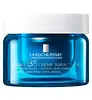
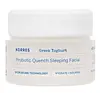
La Roche-Posay Hyalu B5 Creme Suractivee Versus KORRES Greek Yoghurt Probiotic Quench Sleeping Facial
This barrier-repair moisturizer is formulated around Panthenol and Sodium Hyaluronate to strengthen the skin barrier and hydrate skin.


What's inside
What's inside
 Key Ingredients
Benefits
Concerns
Ingredients Side-by-side
Water
Skin ConditioningGlycerin
Humectant


Isohexadecane
EmollientPropanediol
Solvent
Alcohol Denat.
Antimicrobial




Isopropyl Isostearate
Emollient


Panthenol
Skin Conditioning

Dimethicone
Emollient
Octyldodecanol
Emollient
Behenyl Alcohol
Emollient
Cetyl Alcohol
Emollient
Alpinia Galanga Leaf Extract
Skin ConditioningStearic Acid
Cleansing
Calcium Chloride
AstringentCetearyl Alcohol
Emollient
Cetearyl Glucoside
Emulsifying
PEG-100 Stearate
Surfactant
Sodium Hyaluronate
Humectant

Sodium Hydroxide
BufferingAlgin
MaskingSilica
Abrasive


Myristic Acid
Cleansing
Cellulose
Absorbent
Palmitic Acid
Emollient
Adenosine
Skin Conditioning
Ammonium Polyacryloyldimethyl Taurate
Emulsion StabilisingDisodium Stearoyl Glutamate
CleansingEctoin
Skin Conditioning
Hydrolyzed Hyaluronic Acid
Humectant
Hydroxyacetophenone
Antioxidant
Caprylic/Capric Triglyceride
Masking
Capryloyl Salicylic Acid
Exfoliating

Citric Acid
Buffering

Laureth-7
EmulsifyingTrisodium Ethylenediamine Disuccinate
ChelatingAcetyl Glucosamine
Skin Conditioning
Xanthan Gum
EmulsifyingPentylene Glycol
Skin Conditioning
Phytic Acid
Chelating
Polyacrylamide
Polyepsilon-Lysine
Skin ConditioningButylene Glycol
Humectant
1,2-Hexanediol
Skin Conditioning
C13-14 Isoparaffin
Emollient
Phenoxyethanol
Preservative
Parfum
Masking

Water, Glycerin, Isohexadecane, Propanediol, Alcohol Denat., Isopropyl Isostearate, Panthenol, Dimethicone, Octyldodecanol, Behenyl Alcohol, Cetyl Alcohol, Alpinia Galanga Leaf Extract, Stearic Acid, Calcium Chloride, Cetearyl Alcohol, Cetearyl Glucoside, PEG-100 Stearate, Sodium Hyaluronate, Sodium Hydroxide, Algin, Silica, Myristic Acid, Cellulose, Palmitic Acid, Adenosine, Ammonium Polyacryloyldimethyl Taurate, Disodium Stearoyl Glutamate, Ectoin, Hydrolyzed Hyaluronic Acid, Hydroxyacetophenone, Caprylic/Capric Triglyceride, Capryloyl Salicylic Acid, Citric Acid, Laureth-7, Trisodium Ethylenediamine Disuccinate, Acetyl Glucosamine, Xanthan Gum, Pentylene Glycol, Phytic Acid, Polyacrylamide, Polyepsilon-Lysine, Butylene Glycol, 1,2-Hexanediol, C13-14 Isoparaffin, Phenoxyethanol, Parfum
Water
Skin ConditioningGlycerin
Humectant
Glyceryl Stearate Citrate
Emollient
Hexyldecyl Stearate
EmollientTriheptanoin
Skin ConditioningBehenyl Alcohol
Emollient
Glyceryl Stearate
Emollient
Isodecyl Neopentanoate
EmollientC10-18 Triglycerides
Emollient
Acacia Decurrens/Jojoba/Sunflower Seed Wax Polyglyceryl-3 Esters
EmollientLecithin
Emollient
Simmondsia Chinensis Seed Oil
Emollient
Salvia Hispanica Seed Oil
Emollient
Aloe Barbadensis Leaf Juice Powder
Skin Conditioning
Acrylates/C10-30 Alkyl Acrylate Crosspolymer
Emulsion StabilisingAlgin
MaskingAlpha-Glucan Oligosaccharide
Cleansing
Ascorbic Acid
Antioxidant

Ascorbyl Tetraisopalmitate
Antioxidant
Bisabolol
Antioxidant
Caprylyl Glycol
Emollient
Cetearyl Alcohol
Emollient
Chlorella Vulgaris Extract
Skin ConditioningDisodium Phosphate
BufferingDistarch Phosphate
AbsorbentGalactoarabinan
Glyceryl Polyacrylate
Glycine Soja Oil
Emollient
Glycine Soja Sterols
Emollient
Hydrolyzed Sodium Hyaluronate
Skin Conditioning
Hydroxyethyl Acrylate/Sodium Acryloyldimethyl Taurate Copolymer
Emulsion StabilisingLactic Acid
Buffering
Lactobacillus
Skin ConditioningLaminaria Digitata Extract
Skin Protecting
Lonicera Caprifolium Flower Extract
Perfuming
Lonicera Japonica Flower Extract
Skin ConditioningMaltodextrin
Absorbent
Maris Aqua
HumectantMenthyl Lactate
Masking
Panthenol
Skin Conditioning
Pentylene Glycol
Skin Conditioning
Phenethyl Alcohol
MaskingPolyglyceryl-3 Diisostearate
Emulsifying
Polymnia Sonchifolia Root Juice
Skin ConditioningPolysorbate 60
Emulsifying
Potassium Phosphate
BufferingPullulan
Rosmarinus Officinalis Leaf Extract
AntimicrobialSaccharide Isomerate
Humectant
Serine
Masking
Sodium Carboxymethyl Beta-Glucan
CleansingSodium Hyaluronate
Humectant
Sodium Hydroxide
BufferingSorbitan Isostearate
Emulsifying
Tetrasodium Glutamate Diacetate
ChelatingTocopherol
Antioxidant
Tocopheryl Acetate
Antioxidant
Trehalose
Humectant
Urea
Buffering
Xanthan Gum
EmulsifyingYogurt
Skin ProtectingYogurt Powder
Zingiber Officinale Root Extract
Masking
Benzyl Alcohol
Perfuming
Phenoxyethanol
Preservative
Salicylic Acid
Masking
Sorbic Acid
Preservative
Parfum
Masking
Water, Glycerin, Glyceryl Stearate Citrate, Hexyldecyl Stearate, Triheptanoin, Behenyl Alcohol, Glyceryl Stearate, Isodecyl Neopentanoate, C10-18 Triglycerides, Acacia Decurrens/Jojoba/Sunflower Seed Wax Polyglyceryl-3 Esters, Lecithin, Simmondsia Chinensis Seed Oil, Salvia Hispanica Seed Oil, Aloe Barbadensis Leaf Juice Powder, Acrylates/C10-30 Alkyl Acrylate Crosspolymer, Algin, Alpha-Glucan Oligosaccharide, Ascorbic Acid, Ascorbyl Tetraisopalmitate, Bisabolol, Caprylyl Glycol, Cetearyl Alcohol, Chlorella Vulgaris Extract, Disodium Phosphate, Distarch Phosphate, Galactoarabinan, Glyceryl Polyacrylate, Glycine Soja Oil, Glycine Soja Sterols, Hydrolyzed Sodium Hyaluronate, Hydroxyethyl Acrylate/Sodium Acryloyldimethyl Taurate Copolymer, Lactic Acid, Lactobacillus, Laminaria Digitata Extract, Lonicera Caprifolium Flower Extract, Lonicera Japonica Flower Extract, Maltodextrin, Maris Aqua, Menthyl Lactate, Panthenol, Pentylene Glycol, Phenethyl Alcohol, Polyglyceryl-3 Diisostearate, Polymnia Sonchifolia Root Juice, Polysorbate 60, Potassium Phosphate, Pullulan, Rosmarinus Officinalis Leaf Extract, Saccharide Isomerate, Serine, Sodium Carboxymethyl Beta-Glucan, Sodium Hyaluronate, Sodium Hydroxide, Sorbitan Isostearate, Tetrasodium Glutamate Diacetate, Tocopherol, Tocopheryl Acetate, Trehalose, Urea, Xanthan Gum, Yogurt, Yogurt Powder, Zingiber Officinale Root Extract, Benzyl Alcohol, Phenoxyethanol, Salicylic Acid, Sorbic Acid, Parfum
Reviews
Ingredients Explained
These ingredients are found in both products.
Ingredients higher up in an ingredient list are typically present in a larger amount.
Algin is the sodium salt of alginic acid, a sugar-based polymer pulled out of brown seaweed.
In cosmetics, it's a workhorse thickener, binder, and film former rather than an active; it's mostly there for texture and slip.
Industry survey data collected by the Cosmetic Ingredient Review put its maximum reported use at 50% in paste masks and mud packs with reported use going all the way down to 0.001% in aerosol products. Most formulas sit at the low end since a little goes a long way as a thickener.
Allergy-wise, this ingredient is about as low-risk as it gets topically:
The "algae causes acne" idea comes from three places that got tangled together:
None of that transfers to a purified polysaccharide like algin. Clogged pores are a lipid problem where an ingredient has to get into the follicle and mix with sebum to form a comedone. Algin is a big, water-loving sugar chain that does neither; it gels and then sits on the surface as a film until it's rinsed off.
Learn more about AlginBehenyl Alcohol is a type of fatty alcohol (these are different from the drying, solvent alcohols).
Fatty Alcohols have hydrating properties and are most often used as an emollient or to thicken a product. They are usually derived from natural fats and oils; behenyl alcohol is derived from the fats of vegetable oils.
Emollients help keep your skin soft and hydrated by creating a film that traps moisture in.
In 2000, Behenyl Alcohol was approved by the US as medicine to reduce the duration of cold sores.
Learn more about Behenyl AlcoholCetearyl alcohol is a waxy mixture of two fatty alcohols: cetyl alcohol and stearyl alcohol. It is an emollient and emulsifier.
Despite having "alcohol" in its name, it has nothing to do with drying solvent alcohols; the FDA also allows "alcohol-free" products to contain fatty alcohols like this ingredient.
It plays several roles in a formula:
Typical use levels for this ingredient sit around 1-10% and the Cosmetic Ingredient Review Expert Panel has affirmed safety at concentrations up to 25% in leave-on products.
Multiple assessments have found it to be non-irritating and non-sensitizing to most people.
However, there have been some cases of allergic contact dermatitis in patients with chronically compromised skin barriers.
Cetearyl alcohol has a comedogenic rating of 2 and irritancy rating of 1. Both of these numbers come from the 1989 study that used rabbit ears; a "2" means mildly comedogenic and a "1" means low irritancy.
Here's the catch: rabbit skin is more sensitive than human skin and throws a lot of false positives. A 1996 reappraisal found that ingredients rated 1-2 in the rabbit ear tests are generally safe for humans.
Remember comedogenic ratings are unable to assess the entire formula of a product or how it will react on your skin. Just be sure to patch test if you are unsure about certain ingredients.
This ingredient is not fungal acne safe. Cetearyl alcohol is a fatty alcohol with chain lengths that fall within the range that Malassezia can metabolize.
A 2019 study has also observed Malassezia growth in the presence of this ingredient, confirming it to be not-fungal acne safe.
Learn more about Cetearyl AlcoholGlycerin (or glycerol) is a compound naturally found in your skin. It's a powerhouse humectant that pulls water into the stratum corneum.
Topically, glycerin does several things at once:
Your skin makes glycerin on its own (mostly from sebaceous oil breakdown) and shuttles it to your outermost layer of skin, or your epidermis, via aquaporin-3.
Aquaporin-3 is a transporter that is essential for normal skin hydration, elasticity, and repair. Interestingly, mice lacking in AQP3 have dry and less elastic skin that can be fully corrected with glycerin.
This ingredient is non-irritating, plays well with almost every ingredient, and works across all skin types. Typical use is anywhere between 3-10% but can go up to 79% in some leave-on products.
Just know very high concentrations (>40%) can feel tacky in low humidity.
Glycerin is the name for this ingredient in American English. British English uses Glycerol/Glycerine.
Learn more about GlycerinPanthenol is a common ingredient that helps hydrate and soothe the skin. It is found naturally in our skin and hair.
There are two forms of panthenol: D and L.
D-panthenol is also known as dexpanthenol. Most cosmetics use dexpanthenol or a mixture of D and L-panthenol.
Panthenol is famous due to its ability to go deeper into the skin's layers. Using this ingredient has numerous pros (and no cons):
Like hyaluronic acid, panthenol is a humectant. Humectants are able to bind and hold large amounts of water to keep skin hydrated.
This ingredient works well for wound healing. It works by increasing tissue in the wound and helps close open wounds.
Once oxidized, panthenol converts to pantothenic acid. Panthothenic acid is found in all living cells.
This ingredient is also referred to as pro-vitamin B5.
Learn more about PanthenolParfum is a catch-all term for an ingredient or more that is used to give a scent to products.
Also called "fragrance", this ingredient can be a blend of hundreds of chemicals or plant oils. This means every product with "fragrance" or "parfum" in the ingredients list is a different mixture.
For instance, Habanolide is a proprietary trade name for a specific aroma chemical. When used as a fragrance ingredient in cosmetics, most aroma chemicals fall under the broad labeling category of “FRAGRANCE” or “PARFUM” according to EU and US regulations.
The term 'parfum' or 'fragrance' is not regulated in many countries. In many cases, it is up to the brand to define this term.
For instance, many brands choose to label themselves as "fragrance-free" because they are not using synthetic fragrances. However, their products may still contain ingredients such as essential oils that are considered a fragrance by INCI standards.
One example is Calendula flower extract. Calendula is an essential oil that still imparts a scent or 'fragrance'.
Depending on the blend, the ingredients in the mixture can cause allergies and sensitivities on the skin. Some ingredients that are known EU allergens include linalool and citronellol.
Parfum can also be used to mask or cover an unpleasant scent.
The bottom line is: not all fragrances/parfum/ingredients are created equally. If you are worried about fragrances, we recommend taking a closer look at an ingredient. And of course, we always recommend speaking with a professional.
Learn more about ParfumPentylene Glycol (1,2-pentanediol) is a multitasking little diol with three main roles in a formula:
Research on alkanediols (the family pentylene glycol belongs to) show they work by disrupting microbial cell membranes. This disruption helps the primary preservative system in a product work more effectively at lower doses.
On the safety side, the Cosmetic Ingredient Review Expert Panel has concluded this ingredient to be safe as used in current cosmetic practices + concentrations.
Typical use levels in a formula run about 1-5%.
Learn more about Pentylene GlycolPhenoxyethanol is one of the most widely used preservatives in skincare (and for good reason!).
It has a large spectrum of antimicrobial activity and especially effective bacteria, yeast, and mold while only having a weak effect on your skin's natural microbiome.
On a cellular level, it disrupts the cell membranes of microbes by poking holes that make the cell leak. This shuts down the chemical reactions the microbe needs to make energy so it can no longer survive.
Another perk of this ingredient is that it stays functional across a wide pH range (3-10).
You'll often see it paired with boosters like Ethylhexylglycerin; one study showed that a 1:9 ratio of Ethylhexylglycerin to Phenoxyethanol damages bacterial membranes as effectively as doubling the Phenoxyethanol concentration on its own.
Typical use concentrations range from 0.3-1% depending on the formula, and this ingredient is capped at 1% int the EU.
Safety-wise, the fear mongering does not hold up to the evidence. The EU's Scientific Committee on Consumer Safety and FDA consider it safe as a preservative at up to 1%, including for children of all ages.
Adverse systemic effects only showed up in animal studies at exposures roughly 200x higher than what people get from cosmetics. And despite its very widespread use, this ingredient is a rare sensitizer and allergic reactions are uncommon.
Learn more about PhenoxyethanolSodium Hyaluronate is the salt form of hyaluronic acid. It is a long sugar chain that is naturally found in your skin, joints, and connective tissue that maintains hydration and elasticity.
In skincare, it works as a humectant. It pulls water from the environment and deeper layers of skin and binds it to the surface.
Interestingly, the size of the molecule affects its behavior:
Some clinical evidence links low molecular weight versions to improved wrinkle depth, elasticity, anti-inflammatory effects, and barrier repair.
Many serums use a blend of both weights so you can get surface hydration plus longer-lasting and deeper effects.
You'll typically see concentrations between 0.1-2% for this ingredient.
Learn more about Sodium HyaluronateSodium Hydroxide is also known as lye or caustic soda. It is used to adjust the pH of products; many ingredients require a specific pH to be effective.
In small amounts, sodium hydroxide is considered safe to use. However, large amounts may cause chemical burns due to its high alkaline.
Your skin has a natural pH and acid mantle. This acid mantle helps prevent harmful bacteria from breaking through. The acid mantle also helps keep your skin hydrated.
"Alkaline" refers to a high pH level. A low pH level would be considered acidic.
Learn more about Sodium HydroxideWater. It's the most common cosmetic ingredient of all. You'll usually see it at the top of ingredient lists, meaning that it makes up the largest part of the product.
So why is it so popular? Water most often acts as a solvent - this means that it helps dissolve other ingredients into the formulation.
You'll also recognize water as that liquid we all need to stay alive. If you see this, drink a glass of water. Remember to stay hydrated!
Learn more about WaterXanthan gum is used as a stabilizer and thickener within cosmetic products. It helps give products a sticky, thick feeling - preventing them from being too runny.
On the technical side of things, xanthan gum is a polysaccharide - a combination consisting of multiple sugar molecules bonded together.
Xanthan gum is a pretty common and great ingredient. It is a natural, non-toxic, non-irritating ingredient that is also commonly used in food products.
Learn more about Xanthan Gum

