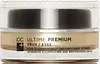
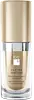
IDC Intensive Illuminating & Replenishing Cream Ultime Premium Eyes Versus IDC Restructuring and Lifting Cream Ultime Eyes
This anti-aging eye moisturizer is formulated around Bakuchiol and Caffeine to soften the look of wrinkles.
This anti-aging eye moisturizer is formulated around Squalane and Palmitoyl Tripeptide-1 to soften the look of wrinkles and strengthen the skin barrier.

What's inside
What's inside
 Key Ingredients
Benefits
Concerns
Ingredients Side-by-side
Water
Skin ConditioningGlycerin
Humectant


Glyceryl Stearate Se
Emulsifying




Dimethicone
Emollient
Caprylic/Capric Triglyceride
Masking
Squalane
Emollient
Cetearyl Alcohol
Emollient
Synthetic Fluorphlogopite
Butylene Glycol
Humectant
Dipalmitoyl Hydroxyproline
Skin Conditioning
Glyceryl Stearate
Emollient
Jojoba Esters
Emollient
Citrus Grandis Fruit Water
Masking
Albizia Julibrissin Bark Extract
MaskingCitrullus Lanatus Fruit Extract
Skin Conditioning
Bakuchiol
Antimicrobial






Helianthus Annuus Seed Wax
Skin Conditioning
Caffeine
Skin Conditioning
Pyrus Malus Fruit Extract
Skin Conditioning
Sodium Hyaluronate
Humectant
Hydrolyzed Sodium Hyaluronate
Skin Conditioning
Gleditsia Triacanthos Seed Extract
Palmitoyl Tripeptide-38
Skin Conditioning
Palmitoyl Tripeptide-1
Skin Conditioning
Humulus Lupulus Oil
Masking
Palmitoyl Tetrapeptide-7
Skin Conditioning
Propanediol
Solvent
Polysilicone-11
Bisabolol
Antioxidant
Tocopheryl Acetate
Antioxidant
Lens Esculenta Fruit Extract
Skin ConditioningSodium Stearoyl Glutamate
CleansingAmmonium Acryloyldimethyltaurate/Vp Copolymer
Salicylic Acid
Masking





Polyacrylamide
Palmitic Acid
Emollient
Sodium Lactate
Buffering
Creatine
Skin ConditioningC13-14 Isoparaffin
Emollient
Tetrasodium Glutamate Diacetate
ChelatingTropaeolum Majus Flower/Leaf/Stem Extract
Skin ConditioningCaprylyl Glycol
Emollient
Alteromonas Ferment Extract
Skin Conditioning
Teprenone
Skin ConditioningHydroxypropyl Cyclodextrin
MaskingCarica Papaya Fruit Extract
Skin ConditioningCentella Asiatica Flower/Leaf/Stem Extract
Skin Conditioning
Iris Florentina Root Extract
MaskingPolyglycerin-3
Humectant
Andrographis Paniculata Leaf Extract
AstringentLaureth-7
EmulsifyingSodium PCA
Humectant
Carbomer
Emulsion StabilisingStyrene Oxide
Decyl Glucoside
Cleansing
Biosaccharide Gum-1
Humectant
Polysorbate 20
Emulsifying
Hexylene Glycol
EmulsifyingCitric Acid
Buffering
Darutoside
Skin ConditioningSodium Hydroxide
BufferingBenzyl Alcohol
Perfuming


Sorbic Acid
Preservative
Sodium Benzoate
Masking
Phenoxyethanol
Preservative
Potassium Sorbate
Preservative
1,2-Hexanediol
Skin Conditioning
Parfum
Masking
CI 77891
Cosmetic ColorantCI 77491
Cosmetic ColorantWater, Glycerin, Glyceryl Stearate Se, Dimethicone, Caprylic/Capric Triglyceride, Squalane, Cetearyl Alcohol, Synthetic Fluorphlogopite, Butylene Glycol, Dipalmitoyl Hydroxyproline, Glyceryl Stearate, Jojoba Esters, Citrus Grandis Fruit Water, Albizia Julibrissin Bark Extract, Citrullus Lanatus Fruit Extract, Bakuchiol, Helianthus Annuus Seed Wax, Caffeine, Pyrus Malus Fruit Extract, Sodium Hyaluronate, Hydrolyzed Sodium Hyaluronate, Gleditsia Triacanthos Seed Extract, Palmitoyl Tripeptide-38, Palmitoyl Tripeptide-1, Humulus Lupulus Oil, Palmitoyl Tetrapeptide-7, Propanediol, Polysilicone-11, Bisabolol, Tocopheryl Acetate, Lens Esculenta Fruit Extract, Sodium Stearoyl Glutamate, Ammonium Acryloyldimethyltaurate/Vp Copolymer, Salicylic Acid, Polyacrylamide, Palmitic Acid, Sodium Lactate, Creatine, C13-14 Isoparaffin, Tetrasodium Glutamate Diacetate, Tropaeolum Majus Flower/Leaf/Stem Extract, Caprylyl Glycol, Alteromonas Ferment Extract, Teprenone, Hydroxypropyl Cyclodextrin, Carica Papaya Fruit Extract, Centella Asiatica Flower/Leaf/Stem Extract, Iris Florentina Root Extract, Polyglycerin-3, Andrographis Paniculata Leaf Extract, Laureth-7, Sodium PCA, Carbomer, Styrene Oxide, Decyl Glucoside, Biosaccharide Gum-1, Polysorbate 20, Hexylene Glycol, Citric Acid, Darutoside, Sodium Hydroxide, Benzyl Alcohol, Sorbic Acid, Sodium Benzoate, Phenoxyethanol, Potassium Sorbate, 1,2-Hexanediol, Parfum, CI 77891, CI 77491
Water
Skin ConditioningCyclopentasiloxane
Emollient
Glycerin
Humectant
Squalane
Emollient
Butylene Glycol
Humectant
Caprylic/Capric Triglyceride
Masking
Nylon-12

PEG-8/Smdi Copolymer
Imperata Cylindrica Root Extract
Skin ConditioningSteareth-21
CleansingPolyacrylate Crosspolymer-6
Emulsion StabilisingPolysorbate 40
Emulsifying
Salix Nigra Bark Extract
Skin ProtectingSodium Hyaluronate
Humectant
Bisabolol
Antioxidant
Hydrolyzed Rice Bran Protein
Skin ConditioningGlycosaminoglycans
EmollientGlycyrrhiza Glabra Root Extract
Bleaching
Alteromonas Ferment Extract
Skin Conditioning
Ceramide NP
Skin Conditioning
Fucus Serratus Extract
Skin ProtectingAhnfeltia Concinna Extract
Skin ConditioningCeramide AP
Skin Conditioning
Glycine Soja Protein
EmulsifyingAscophyllum Nodosum Extract
Skin Conditioning
Creatine
Skin ConditioningCarica Papaya Fruit Extract
Skin ConditioningCentella Asiatica Flower/Leaf/Stem Extract
Skin Conditioning
Iris Florentina Root Extract
MaskingAlbizia Julibrissin Bark Extract
MaskingCitric Acid
Buffering
Pseudoalteromonas Ferment Extract
Humectant
Ubiquinone
Antioxidant
Cynara Scolymus Leaf Extract
Skin ConditioningHydrolyzed Wheat Protein
Skin ConditioningPalmitoyl Tripeptide-1
Skin Conditioning
Hydrolyzed Soy Protein
Humectant
Palmitoyl Tetrapeptide-7
Skin Conditioning
Rumex Occidentalis Extract
Skin ConditioningBiotin
AntiseborrhoeicCeramide EOP
Skin Conditioning
Retinol
Skin Conditioning
Lecithin
Emollient
Palmitoyl Tripeptide-8
Skin Conditioning
Acetyl Tetrapeptide-2
Skin Conditioning
Ascorbic Acid
Antioxidant
Acetyl Octapeptide-3
Humectant
Darutoside
Skin ConditioningTripeptide-10 Citrulline
Skin Conditioning
Tocopherol
Antioxidant
Tripeptide-1
Skin Conditioning
Dipalmitoyl Hydroxyproline
Skin Conditioning
Phytosphingosine
Skin Conditioning
Sodium Lactate
Buffering
Dipotassium Glycyrrhizate
Humectant
Sorbitol
Humectant
Dimethicone
Emollient
Polysilicone-11
Sodium Lauroyl Lactylate
EmulsifyingCyclohexasiloxane
Emollient
Sclerotium Gum
Emulsion StabilisingCaprylyl Glycol
Emollient
1,2-Hexanediol
Skin Conditioning
Ammonium Acryloyldimethyltaurate/Vp Copolymer
Sodium Carbomer
Emulsion StabilisingSteareth-2
EmulsifyingSodium Metabisulfite
Antioxidant
Phenoxyethanol
Preservative
Disodium EDTA
ChelatingCyclodextrin
AbsorbentCarbomer
Emulsion StabilisingDimethylmethoxy Chromanol
Antioxidant
Xanthan Gum
EmulsifyingCholesterol
Emollient
Sodium Benzoate
Masking
Superoxide Dismutase
Antioxidant
Decyl Glucoside
Cleansing
Polysorbate 20
Emulsifying
Ethylhexylglycerin
Skin ConditioningBenzoic Acid
Masking
Sodium Citrate
BufferingHexylene Glycol
EmulsifyingIodopropynyl Butylcarbamate
Preservative
Ethylbisiminomethylguaiacol Manganese Chloride
Antioxidant
Potassium Sorbate
Preservative
Sodium Dextran Sulfate
Gel FormingAcrylates/C10-30 Alkyl Acrylate Crosspolymer
Emulsion StabilisingDehydroacetic Acid
Preservative
Sodium Sulfite
Preservative
Hydroxypropyl Cyclodextrin
MaskingDextran
Triethanolamine
BufferingWater, Cyclopentasiloxane, Glycerin, Squalane, Butylene Glycol, Caprylic/Capric Triglyceride, Nylon-12, PEG-8/Smdi Copolymer, Imperata Cylindrica Root Extract, Steareth-21, Polyacrylate Crosspolymer-6, Polysorbate 40, Salix Nigra Bark Extract, Sodium Hyaluronate, Bisabolol, Hydrolyzed Rice Bran Protein, Glycosaminoglycans, Glycyrrhiza Glabra Root Extract, Alteromonas Ferment Extract, Ceramide NP, Fucus Serratus Extract, Ahnfeltia Concinna Extract, Ceramide AP, Glycine Soja Protein, Ascophyllum Nodosum Extract, Creatine, Carica Papaya Fruit Extract, Centella Asiatica Flower/Leaf/Stem Extract, Iris Florentina Root Extract, Albizia Julibrissin Bark Extract, Citric Acid, Pseudoalteromonas Ferment Extract, Ubiquinone, Cynara Scolymus Leaf Extract, Hydrolyzed Wheat Protein, Palmitoyl Tripeptide-1, Hydrolyzed Soy Protein, Palmitoyl Tetrapeptide-7, Rumex Occidentalis Extract, Biotin, Ceramide EOP, Retinol, Lecithin, Palmitoyl Tripeptide-8, Acetyl Tetrapeptide-2, Ascorbic Acid, Acetyl Octapeptide-3, Darutoside, Tripeptide-10 Citrulline, Tocopherol, Tripeptide-1, Dipalmitoyl Hydroxyproline, Phytosphingosine, Sodium Lactate, Dipotassium Glycyrrhizate, Sorbitol, Dimethicone, Polysilicone-11, Sodium Lauroyl Lactylate, Cyclohexasiloxane, Sclerotium Gum, Caprylyl Glycol, 1,2-Hexanediol, Ammonium Acryloyldimethyltaurate/Vp Copolymer, Sodium Carbomer, Steareth-2, Sodium Metabisulfite, Phenoxyethanol, Disodium EDTA, Cyclodextrin, Carbomer, Dimethylmethoxy Chromanol, Xanthan Gum, Cholesterol, Sodium Benzoate, Superoxide Dismutase, Decyl Glucoside, Polysorbate 20, Ethylhexylglycerin, Benzoic Acid, Sodium Citrate, Hexylene Glycol, Iodopropynyl Butylcarbamate, Ethylbisiminomethylguaiacol Manganese Chloride, Potassium Sorbate, Sodium Dextran Sulfate, Acrylates/C10-30 Alkyl Acrylate Crosspolymer, Dehydroacetic Acid, Sodium Sulfite, Hydroxypropyl Cyclodextrin, Dextran, Triethanolamine
Ingredients Explained
These ingredients are found in both products.
Ingredients higher up in an ingredient list are typically present in a larger amount.
1,2-Hexanediol is a synthetic liquid and another multi-functional powerhouse.
It is a:
- Humectant, drawing moisture into the skin
- Emollient, helping to soften skin
- Solvent, dispersing and stabilizing formulas
- Preservative booster, enhancing the antimicrobial activity of other preservatives
We don't have a description for Albizia Julibrissin Bark Extract yet.
Alteromonas Ferment Extract is derived from a bacteria from in deep sea water. It has skin soothing and antioxidant properties.
Ammonium Acryloyldimethyltaurate/Vp Copolymer is a synthetically created polymer. It's used as a film-forming agent and used to thicken the consistency of products.
Think of it as a supportive ingredient that helps your gel-creams feel silky, "cloud cream-like", and spread evenly without being greasy.
The Cosmetic Ingredient Review (CIR) Expert Panel evaluated it (along with 22 other acryloyldimethyltaurate polymers) and concluded it's:
Due to its large molecular size, it sits on the surface of skin rather than penetrating it.
Learn more about Ammonium Acryloyldimethyltaurate/Vp CopolymerBisabolol is a gentle skin conditioner, antioxidant, and soothing ingredient.
It's primary claim to fame is soothing and research shows topically applied bisabolol can quiet the chemical messengers that cause your skin to become inflamed, helping to sooth any irritation.
A clinical study found that applying 0.5% bisabolol daily for 8 weeks produced an average 9% decrease in skin pigmentation. Researchers found it can also suppress the process that leads to excess melanin production in skin.
In vitro studies found that bisabolol combined with propylene glycol significantly increased skin permeability by increasing lipid fluidity in the stratum corneum.
You'll likely see use concentrations quite low, usually 0.1-0.2%.
Overall, this is a well-tolerated ingredient that works well in formulas designed for sensitive, reactive, or post-procedure skin.
Learn more about BisabololButylene Glycol (or BG) is used within cosmetic products for a few different reasons:
Overall, Butylene Glycol is a safe and well-rounded ingredient that works well with other ingredients.
Though this ingredient works well with most skin types, some people with sensitive skin may experience a reaction such as allergic rashes, closed comedones, or itchiness.
Learn more about Butylene GlycolCaprylic/Capric Triglyceride (aka MCT Oil) is a lightweight emollient, solvent, and texture enhancer. It is considered a skin-softener by helping to prevent moisture loss.
Though it behaves like an oil, it is not technically one due to its chemical composition. One perk of this ingredient is that it is very stable, resistant to oxidation, and unlikely to go rancid.
In practice, that translates to a long shelf life and a consistently elegant skin feel.
While there is an assumption Caprylic Triglyceride can clog pores due to it being derived from coconut oil, there is no research supporting this. Just patch test if you have concerns.
Fractionated coconut oil and MCT Oil are both listed as Caprylic/Capric Triglyceride according to INCI. This is because INCI names are based on the ingredient’s final chemical composition and not its marketing name or source.
This ingredient is treated as the gold standard fungal acne safe oil. Even though it is coconut derived, the problematic lauric acid is stripped out.
This leaves just caprylic (C8) and capric (C10) acid. These chain lengths actually trend antifungal; a 2020 study found caprylic acid was enough to disrupt Malassezia furfur cell membrane, with a caprylic acid derivative damaging membrane structures at concentrations as low as 0.2%.
Learn more about Caprylic/Capric TriglycerideCaprylyl Glycol is a humectant, skin conditioner, emollient, and preservative booster derived from either caprylic acid or synthetically created.
Typical use levels vary from 0.3-1% as a preservative booster and go up to 2% to condition skin.
Because it is not a free-fatty acid, this ingredient is fungal acne safe (there's nothing for Malassezia to feed on).
Learn more about Caprylyl GlycolCarbomer is a synthetic thickening and gelling agent. It's basically the ingredient that gives a lot of serums, gels, creams, and sunscreens their smooth, non-sticky texture.
Although legally permitted at very high levels, carbomers are normally used at concentrations below 1%.
It also needs to be neutralized to actually thicken, and because it is a large molecule, it doesn't really penetrate the skin barrier.
Allergy-wise, the risk is very low. Clinical studies show carbomers have low potential for skin irritation/sensitization even at concentrations up to 100%.
A 2024 UK study patch-tested 1,302 patients and found true allergy to the parent group of carbomer to be rare with no confirmed relevant reactions.
Learn more about CarbomerCarica Papaya Fruit Extract comes from the flesh of the papaya. It's a skin conditioning agent that carries a mix of bioactives like papain, beta-carotene, and vitamin C.
These bioactive compounds give it two main talking points:
1. Papain is a proteolytic enzyme that provides mild exfoliation, helping skin look smoother and more even.
2. The carotenoids and vitamin C provide some antioxidant activity.
It's pretty compatible with most ingredients, but just sure to space out enzyme products with strong acids/retinoids to avoid over-doing it.
Maximum reported concentration is around 0.1% and most leave-on products use just 0.05%. If you see higher figures like 5-10%, this is usually the pre-diluted material from raw extract suppliers.
This ingredient has an assuring safety record and there's a lack of clinical case reports of dermatitis from using it.
The only caveat is allergy: patch test if you have a papaya or latex-fruit allergy.
Learn more about Carica Papaya Fruit ExtractCentella Asiatica Flower/Leaf/Stem Extract can be good for sensitive skin. It can help to reduce redness.
Citric Acid is an alpha hydroxy acid (AHA) naturally found in citrus fruits like oranges, lemons, and limes.
Like other AHAs, citric acid can exfoliate skin by breaking down the bonds that hold dead skin cells together. This helps reveal smoother and brighter skin underneath.
However, this exfoliating effect only happens at high concentrations (20%) which can be hard to find in cosmetic products.
Due to this, citric acid is usually included in small amounts as a pH adjuster. This helps keep products slightly more acidic and compatible with skin's natural pH.
In skincare formulas, citric acid can:
While it can provide some skin benefits, research shows lactic acid and glycolic acid are generally more effective and less irritating exfoliants.
Most citric acid used in skincare today is made by fermenting sugars (usually from molasses). This synthetic version is identical to the natural citrus form but easier to stabilize and use in formulations.
Rosacea skin has a lower threshold for acids generally, with 62.5% of rosacea subjects in one study reacting to lactic acid in a sting test. This is why we mark citric acid as a potential rosacea trigger.
However, this ingredient shows up as a pH adjuster or chelator at roughly 0.1-1% in many products. These low levels are unlikely to be an issue for rosacea skin and becomes a potential trigger at exfoliating concentrations (20%). Because everybody's skin is unique, we recommend a patch test if you are unsure.
Learn more about Citric AcidWe don't have a description for Creatine yet.
We don't have a description for Darutoside yet.
Decyl Glucoside is a plant-derived surfactant and emulsion stabilizer. It is created by reacting glucose with the fatty acids from plants.
Like all surfactants, it works by lowering the surface tension between water and oil. This makes it so that dirt, sebum, and makeup can be lifted off your skin and rinsed away. It also produces a dense and creamy foam.
Because it has a neutral charge, it is compatible with a wide range of ingredients and stays stable across a broad pH range/water hardiness conditions.
Patch testing has shown it to have the lowest irritation potential among common cleansing surfactants (like SLS).
Typical use levels range from 5-20% in rinse-off cleansers.
One thing worth knowing: The American Contact Dermatitis Society named the parent family, alkyl glucosides, "Allergen of the Year" in 2017. The prevalence of allergy is pretty low but be sure to patch test if you've reacted to "gentle" or sulfate-free cleansers before.
This ingredient is fungal acne safe because the fatty alcohol portion of this ingredient is not within the C11-24 chain length that Malassezia can metabolize.
Learn more about Decyl GlucosideDimethicone is a type of synthetic silicone created from natural materials such as quartz. It is also known as polydimethylsiloxane.
What it does:
Dimethicone comes in different viscosities:
Depending on the viscosity, dimethicone has different properties.
Ingredients lists don't always show which type is used, so we recommend reaching out to the brand if you have questions about the viscosity.
This ingredient is unlikely to cause irritation because it does not get absorbed into skin. However, people with silicone allergies should be careful about using this ingredient.
Note: Dimethicone may contribute to pilling. This is because it is not oil or water soluble, so pilling may occur when layered with products. When mixed with heavy oils in a formula, the outcome is also quite greasy.
Learn more about DimethiconeDipalmitoyl Hydroxyproline isn't fungal acne safe.
Glycerin (or glycerol) is a compound naturally found in your skin. It's a powerhouse humectant that pulls water into the stratum corneum.
Topically, glycerin does several things at once:
Your skin makes glycerin on its own (mostly from sebaceous oil breakdown) and shuttles it to your outermost layer of skin, or your epidermis, via aquaporin-3.
Aquaporin-3 is a transporter that is essential for normal skin hydration, elasticity, and repair. Interestingly, mice lacking in AQP3 have dry and less elastic skin that can be fully corrected with glycerin.
This ingredient is non-irritating, plays well with almost every ingredient, and works across all skin types. Typical use is anywhere between 3-10% but can go up to 79% in some leave-on products.
Just know very high concentrations (>40%) can feel tacky in low humidity.
Glycerin is the name for this ingredient in American English. British English uses Glycerol/Glycerine.
Learn more about GlycerinHexylene Glycol is a multitasker ingredient that works as a solvent, humectant, emulsifier, viscosity reducer, and preservative booster.
It is able to dissolve both water and oil-soluble ingredients to stabilize tricky actives and make products spread more easily.
As a humectant, it pulls water into the skin. But it's a pretty minor moisturizing ingredient compared to other humectants, like glycerin.
Interestingly, it can act as a mild penetration enhancer. One in vitro study on human skin found a 12% concentration upped the absorption of mometasone furoate (a medicinal ingredient used to treat inflammatory skin conditions) up to 7%.
This ingredient is typically used at levels of 0.1-10% depending on the role it's playing.
A patch test study on eczema patients didn't find a significant increase in irritation versus the control group, but the potential for irritation rises at higher concentrations.
Learn more about Hexylene GlycolThis ingredient is used in skincare as a delivery system.
It works by "encapsulating" active ingredients with its unique ring shape that is water-loving on the outside and oil-loving on the inside. This improves the stability and absorption of the product into the skin.
According to a manufacturer, it also offer some moisturizing effects.
Learn more about Hydroxypropyl CyclodextrinWe don't have a description for Iris Florentina Root Extract yet.
Palmitoyl Tetrapeptide-7 (formerly Palmitoyl Tetrapeptide-3) is a synthetic peptide. Its main job is to fight what researchers call "inflammaging".
"Inflammaging" is the slow, low-grade chronic inflammation that quietly breaks down collagen as we age.
This ingredient calms down a specific inflammation signal in your skin cells (called IL-6). When left unchecked, this signal triggers enzymes that break down collagen and elastin.
Clinical testing showed statistically significant improvements in:
Studies also found the more of this ingredient used, the more your skin produces Collagen I, fibronectin, and hyaluronic acid.
You'll likely see this ingredient paired with Palmitoyl Tripeptide-1 in the well-known Matrixyl 3000 complex for enhanced anti-aging effects.
A 3% concentration applied twice daily for two months showed meaningful skin rejuvenation results in clinical panels.
Fungal acne note:
Usually a palmitic acid component can feed Malassezia in unbound form, but here is is covalently bonded to the peptide. This means it is very difficult for Malassezia to access, and therefore very unlikely to cause fungal acne.
Palmitoyl Tripeptide-1 (aka Pal-GHK) is a synthetic signal peptide made of three amino acids attached to palmitic acid.
That fatty acid attachment is the key: it boosts the peptide's ability to penetrate the skin barrier. This puts it closer to the dermal cells where it can actually make a difference.
Once there, it acts as a matrikine, a signaling peptide that prompts fibroblasts to produce more collagen, fibronectin, and hyaluronic acid.
In vitro studies show it can boost collagen production in skin cells even when UV-damaged skin samples were treated with it at a tiny concentration (it almost fully restored dermal collagen at 5ppm). It achieved this at 100x lower concentration than retinoic acid, which needed 500 ppm to do the same thing.
Human clinical data is promising, but modest:
A study of 23 female volunteers found a small but statistically significant increase (~4%) in skin thickness after treatment at 4 ppm.
A separate small trial of 15 women showed statistically significant reductions in wrinkle length, depth, and skin roughness after applying it twice daily for four weeks.
You'll likely see Pal-GHK paired with Palmitoyl Tetrapeptide-7 as part of the Matrixyl 3000 complex.
Fungal acne note:
Usually a palmitic acid component can feed Malassezia in unbound form, but here is is covalently bonded to the peptide. This means it is very difficult for Malassezia to access, and therefore very unlikely to cause fungal acne.
Phenoxyethanol is one of the most widely used preservatives in skincare (and for good reason!).
It has a large spectrum of antimicrobial activity and especially effective bacteria, yeast, and mold while only having a weak effect on your skin's natural microbiome.
On a cellular level, it disrupts the cell membranes of microbes by poking holes that make the cell leak. This shuts down the chemical reactions the microbe needs to make energy so it can no longer survive.
Another perk of this ingredient is that it stays functional across a wide pH range (3-10).
You'll often see it paired with boosters like Ethylhexylglycerin; one study showed that a 1:9 ratio of Ethylhexylglycerin to Phenoxyethanol damages bacterial membranes as effectively as doubling the Phenoxyethanol concentration on its own.
Typical use concentrations range from 0.3-1% depending on the formula, and this ingredient is capped at 1% int the EU.
Safety-wise, the fear mongering does not hold up to the evidence. The EU's Scientific Committee on Consumer Safety and FDA consider it safe as a preservative at up to 1%, including for children of all ages.
Adverse systemic effects only showed up in animal studies at exposures roughly 200x higher than what people get from cosmetics. And despite its very widespread use, this ingredient is a rare sensitizer and allergic reactions are uncommon.
Learn more about PhenoxyethanolPolysilicone-11 is a film-forming silicone that creates a non-tacky and matte finish on the skin. It's commonly used to improve texture, absorb excess oil, and help active ingredients spread evenly.
Due to its "rubber-like" structure, it stays on the skin's surface instead of being absorbed. On the skin, it creates a flexible layer that enhances wearability and stability.
Polysorbate 20 is a gentle, water-soluble emulsifier and mild surfactant. It stops oil and water from separating to keep your formulas blended and stable.
It also acts as a mild penetration enhancer by helping active ingredients absorb slightly better.
The common safety discussion around this ingredient involves a manufacturing byproduct called 1,4-dioxane.
Trace amounts can form during production but the EU's Scientific Committee on Consumer Safety has concluded that levels at/below 10 ppm in finished products are safe (commercial products consistently fall within acceptable margins).
True allergic reactions are uncommon and the CIR Expert Panel has confirmed this ingredient to be safe as used in cosmetics.
Because it is derived from lauric acid, it may not be fungal acne safe.
Learn more about Polysorbate 20Potassium Sorbate is a preservative used to prevent yeast and mold in products. It is commonly found in both cosmetic and food products.
This ingredient comes from potassium salt derived from sorbic acid. Sorbic acid is a natural antibiotic and effective against fungus.
Both potassium sorbate and sorbic acid can be found in baked goods, cheeses, dried meats, dried fruit, ice cream, pickles, wine, yogurt, and more.
You'll often find this ingredient used with other preservatives.
Learn more about Potassium SorbateSodium Benzoate is a preservative. It's used in both cosmetic and food products to inhibit the growth of mold and bacteria. It is typically produced synthetically.
Both the US FDA and EU Health Committee have approved the use of sodium benzoate. In the US, levels of 0.1% (of the total product) are allowed.
Sodium benzoate works as a preservative by inhibiting the growth of bacteria inside of cells. It prevents the cell from fermenting a type of sugar using an enzyme called phosphofructokinase.
It is the salt of benzoic acid. Foods containing sodium benzoate include soda, salad dressings, condiments, fruit juices, wines, and snack foods.
Studies for using ascorbic acid and sodium benzoate in cosmetics are lacking, especially in skincare routines with multiple steps.
We always recommend speaking with a professional, such as a dermatologist, if you have any concerns.
Learn more about Sodium BenzoateSodium Hyaluronate is the salt form of hyaluronic acid. It is a long sugar chain that is naturally found in your skin, joints, and connective tissue that maintains hydration and elasticity.
In skincare, it works as a humectant. It pulls water from the environment and deeper layers of skin and binds it to the surface.
Interestingly, the size of the molecule affects its behavior:
Some clinical evidence links low molecular weight versions to improved wrinkle depth, elasticity, anti-inflammatory effects, and barrier repair.
Many serums use a blend of both weights so you can get surface hydration plus longer-lasting and deeper effects.
You'll typically see concentrations between 0.1-2% for this ingredient.
Learn more about Sodium HyaluronateSodium Lactate is the sodium salt of lactic acid, an AHA. It is a humectant and sometimes used to adjust the pH of a product.
This ingredient is part of our skin's NMF, or natural moisturizing factor. Our NMF is essential for the hydration of our top skin layers and plasticity of skin. NMF also influences our skin's natural acid mantle and pH, which protects our skin from harmful bacteria.
High percentages of Sodium Lactate can have an exfoliating effect.
Fun fact: Sodium Lactate is produced from fermented sugar.
Learn more about Sodium LactateSqualane is the hydrogenated and shelf-stable form of squalene (a lipid that naturally occurs in human sebum).
It is an emollient and skin conditioning agent that is able to integrate seamlessly into the skin's lipid barrier without clogging pores.
This is due to how structurally similar it is to what your skin already produces.
Though it is mostly an emollient that helps soften and hydrate skin, it also has some humectant and occlusive action. Humectants help the skin retain moisture while occlusives seal it in, making squalane a triple-threat moisturizer.
Research shows it has antioxidant capabilities that help protect against stressors like UV exposure, specifically UVA induced oxidative stress. This study also found that it supports collagen biosynthesis in human dermal fibroblasts.
No clinical study has reported significant adverse effects and irritation reactions are very rare from this ingredient (even at 100% concentration).
Overall, it's a fantastic ingredient for hydration and is suitable for all skin types.
This depends on the source. Squalane can be derived from both plants and animals. Most squalane used in skincare comes from plants.
Please note: the source of squalane is only known if disclosed by the brand. We recommend reaching out to the brand if you have any questions about their squalane.
Read more about squalene with an "e".
Though squalane is often called an oil, it’s technically not one. It is a hydrocarbon, meaning it is only made of carbon and hydrogen. True oils are triglycerides and made of fatty acids and glycerol.
The term “oil-free” isn’t regulated so companies can define it however they want. Some exclude all oils, while others just avoid mineral oil or comedogenic oils.
Squalane has a comedogenic rating of 1 from the original 1972 study that tested raw ingredients under occlusion on rabbit ears. This system is not standardized or peer-reviewed, and using the raw ingredients is very different from how diluted cosmetic formulations are used on human skin.
A comedogenic rating of 1 means it is "unlikely to clog pores" according to the original rating system.
The overall formula of a product matters more than the individual ingredients on whether or not it will cause clogged pores.
Learn more about SqualaneWater. It's the most common cosmetic ingredient of all. You'll usually see it at the top of ingredient lists, meaning that it makes up the largest part of the product.
So why is it so popular? Water most often acts as a solvent - this means that it helps dissolve other ingredients into the formulation.
You'll also recognize water as that liquid we all need to stay alive. If you see this, drink a glass of water. Remember to stay hydrated!
Learn more about Water

