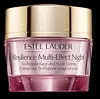
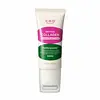
Estée Lauder Resilience Multi-Effect Night Tri-Peptide Face And Neck Creme Versus CKD GUARANTEED Retino Collagen Gua Sha Neck Cream
This anti-aging night moisturizer is formulated around Acetyl Hexapeptide-8 to soften the look of wrinkles.


What's inside
What's inside
 Key Ingredients
Benefits
Concerns
Ingredients Side-by-side
Water
Skin ConditioningCaprylic/Capric/Myristic/Stearic Triglyceride
EmollientPetrolatum
Emollient



Hexyldecyl Stearate
EmollientButylene Glycol
Humectant
Dimethicone
Emollient

Glycereth-26
Humectant
PEG-100 Stearate
Surfactant

Cetearyl Alcohol
Emollient



Glyceryl Stearate
Emollient
Propanediol
Solvent
Narcissus Tazetta Bulb Extract
Astringent
Cucumis Sativus Fruit Extract
Emollient

Mimosa Tenuiflora Bark Extract
Skin ProtectingHordeum Vulgare Extract
EmollientCucumis Melo Fruit Extract
Skin ConditioningPersea Gratissima Oil
Skin Conditioning
Whey Protein
Skin ConditioningCaffeine
Skin Conditioning
Thermus Thermophillus Ferment
Skin ConditioningAlgae Extract
EmollientLaminaria Digitata Extract
Skin Protecting
Artemia Extract
Skin ConditioningAcetyl Hexapeptide-8
Humectant
Polygonum Cuspidatum Root Extract
Antioxidant
Ergothioneine
Antioxidant
Trifluoroacetyl Tripeptide-2
Skin Conditioning
Trehalose
Humectant
Sorbitol
Humectant
Glycerin
Humectant
Decarboxy Carnosine Hcl
Skin ConditioningCholesterol
Emollient
Isohexadecane
EmollientAcetyl Glucosamine
Skin Conditioning
Myristyl Myristate
Emollient
Cetearyl Glucoside
Emulsifying
Tetradecyl Aminobutyroylvalylaminobutyric Urea Trifluoroacetate
Skin ConditioningPropylene Glycol Dicaprylate
EmollientAminopropyl Ascorbyl Phosphate
Antioxidant


Caprylyl Glycol
Emollient
Acrylates/C10-30 Alkyl Acrylate Crosspolymer
Emulsion StabilisingCaprylic/Capric Triglyceride
Masking
Tocopheryl Acetate
Antioxidant
Linoleic Acid
Cleansing
Polysorbate 80
Emulsifying
Faex Extract
Skin ConditioningPropylene Glycol Dicaprate
EmollientZinc PCA
Humectant


Helianthus Annuus Seedcake
Abrasive
Hexylene Glycol
EmulsifyingAcrylamide/Sodium Acryloyldimethyltaurate Copolymer
Emulsion StabilisingSodium Hyaluronate
Humectant
Myristyl Alcohol
Emollient
Tromethamine
BufferingStearic Acid
Cleansing
Potassium Sulfate
Pentaerythrityl Tetra-Di-T-Butyl Hydroxyhydrocinnamate
Antioxidant
Citric Acid
Buffering
Maltodextrin
Absorbent
Aluminum Hydroxide
EmollientParfum
Masking

Potassium Sorbate
Preservative
Dextran
Disodium EDTA
BHT
Antioxidant
Phenoxyethanol
Preservative
CI 42090
Cosmetic ColorantCI 17200
Cosmetic ColorantCI 77891
Cosmetic ColorantWater, Caprylic/Capric/Myristic/Stearic Triglyceride, Petrolatum, Hexyldecyl Stearate, Butylene Glycol, Dimethicone, Glycereth-26, PEG-100 Stearate, Cetearyl Alcohol, Glyceryl Stearate, Propanediol, Narcissus Tazetta Bulb Extract, Cucumis Sativus Fruit Extract, Mimosa Tenuiflora Bark Extract, Hordeum Vulgare Extract, Cucumis Melo Fruit Extract, Persea Gratissima Oil, Whey Protein, Caffeine, Thermus Thermophillus Ferment, Algae Extract, Laminaria Digitata Extract, Artemia Extract, Acetyl Hexapeptide-8, Polygonum Cuspidatum Root Extract, Ergothioneine, Trifluoroacetyl Tripeptide-2, Trehalose, Sorbitol, Glycerin, Decarboxy Carnosine Hcl, Cholesterol, Isohexadecane, Acetyl Glucosamine, Myristyl Myristate, Cetearyl Glucoside, Tetradecyl Aminobutyroylvalylaminobutyric Urea Trifluoroacetate, Propylene Glycol Dicaprylate, Aminopropyl Ascorbyl Phosphate, Caprylyl Glycol, Acrylates/C10-30 Alkyl Acrylate Crosspolymer, Caprylic/Capric Triglyceride, Tocopheryl Acetate, Linoleic Acid, Polysorbate 80, Faex Extract, Propylene Glycol Dicaprate, Zinc PCA, Helianthus Annuus Seedcake, Hexylene Glycol, Acrylamide/Sodium Acryloyldimethyltaurate Copolymer, Sodium Hyaluronate, Myristyl Alcohol, Tromethamine, Stearic Acid, Potassium Sulfate, Pentaerythrityl Tetra-Di-T-Butyl Hydroxyhydrocinnamate, Citric Acid, Maltodextrin, Aluminum Hydroxide, Parfum, Potassium Sorbate, Dextran, Disodium EDTA, BHT, Phenoxyethanol, CI 42090, CI 17200, CI 77891
Water
Skin ConditioningGlycerin
Humectant
Caprylic/Capric Triglyceride
Masking
Butylene Glycol
Humectant
Pentylene Glycol
Skin Conditioning
Niacinamide
Smoothing
1,2-Hexanediol
Skin Conditioning
Cetearyl Olivate
Hydrogenated Polyisobutene
EmollientSorbitan Olivate
Emulsifying
Polyglyceryl-3 Methylglucose Distearate
Emulsifying
Vinyldimethicone
Diisostearyl Malate
EmollientGlyceryl Stearate
Emollient
Caprylyl Methicone
Skin Conditioning
Erythritol
Humectant
Cetearyl Alcohol
Emollient
Glucose
Humectant
Chlorella Vulgaris Extract
Skin ConditioningCarbomer
Emulsion StabilisingAmmonium Acryloyldimethyltaurate/Vp Copolymer
Fructooligosaccharides
Humectant
Fructose
Humectant
Citrus Aurantium Bergamia Fruit Oil
Masking
Melia Azadirachta Flower Extract
Skin ConditioningOcimum Sanctum Leaf Extract
Skin ConditioningPalmitic Acid
Emollient
Ethylhexylglycerin
Skin ConditioningDipotassium Glycyrrhizate
Humectant
Stearic Acid
Cleansing
Adenosine
Skin Conditioning
Melia Azadirachta Leaf Extract
Skin ConditioningLavandula Angustifolia Oil
Masking
Hydrogenated Lecithin
Emulsifying
Sodium Phytate
Retinal
Skin Conditioning
Curcuma Longa Root Extract
Antioxidant
Corallina Officinalis Extract
Skin Conditioning
Salvia Sclarea Oil
Masking
Hydrolyzed Collagen
Emollient
Ceramide NP
Skin Conditioning
Theobroma Cacao Seed Extract
Antioxidant
Dextrin
AbsorbentGlycine
Buffering
Serine
Masking
Glutamic Acid
Humectant
Tromethamine
BufferingDipropylene Glycol
HumectantCynanchum Atratum Extract
Skin ConditioningAspartic Acid
Masking
Leucine
Skin ConditioningAlanine
Masking
Lysine
Skin ConditioningArginine
Masking
Tyrosine
MaskingPhenylalanine
Masking
Proline
Skin Conditioning
Valine
MaskingThreonine
Isoleucine
Skin ConditioningHistidine
Humectant
Methionine
Skin ConditioningCysteine
Antioxidant
Hyaluronic Acid
Humectant
Althaea Rosea Flower Extract
Skin ConditioningTocopherol
Antioxidant
Caprylyl/Capryl Glucoside
CleansingHexapeptide-2
Bleaching
Hydrolyzed Elastin
EmollientBiotin
AntiseborrhoeicLimonene
Perfuming
Linalool
Perfuming
Water, Glycerin, Caprylic/Capric Triglyceride, Butylene Glycol, Pentylene Glycol, Niacinamide, 1,2-Hexanediol, Cetearyl Olivate, Hydrogenated Polyisobutene, Sorbitan Olivate, Polyglyceryl-3 Methylglucose Distearate, Vinyldimethicone, Diisostearyl Malate, Glyceryl Stearate, Caprylyl Methicone, Erythritol, Cetearyl Alcohol, Glucose, Chlorella Vulgaris Extract, Carbomer, Ammonium Acryloyldimethyltaurate/Vp Copolymer, Fructooligosaccharides, Fructose, Citrus Aurantium Bergamia Fruit Oil, Melia Azadirachta Flower Extract, Ocimum Sanctum Leaf Extract, Palmitic Acid, Ethylhexylglycerin, Dipotassium Glycyrrhizate, Stearic Acid, Adenosine, Melia Azadirachta Leaf Extract, Lavandula Angustifolia Oil, Hydrogenated Lecithin, Sodium Phytate, Retinal, Curcuma Longa Root Extract, Corallina Officinalis Extract, Salvia Sclarea Oil, Hydrolyzed Collagen, Ceramide NP, Theobroma Cacao Seed Extract, Dextrin, Glycine, Serine, Glutamic Acid, Tromethamine, Dipropylene Glycol, Cynanchum Atratum Extract, Aspartic Acid, Leucine, Alanine, Lysine, Arginine, Tyrosine, Phenylalanine, Proline, Valine, Threonine, Isoleucine, Histidine, Methionine, Cysteine, Hyaluronic Acid, Althaea Rosea Flower Extract, Tocopherol, Caprylyl/Capryl Glucoside, Hexapeptide-2, Hydrolyzed Elastin, Biotin, Limonene, Linalool
Reviews
Ingredients Explained
These ingredients are found in both products.
Ingredients higher up in an ingredient list are typically present in a larger amount.
Butylene Glycol (or BG) is used within cosmetic products for a few different reasons:
Overall, Butylene Glycol is a safe and well-rounded ingredient that works well with other ingredients.
Though this ingredient works well with most skin types, some people with sensitive skin may experience a reaction such as allergic rashes, closed comedones, or itchiness.
Learn more about Butylene GlycolCaprylic/Capric Triglyceride (aka MCT Oil) is a lightweight emollient, solvent, and texture enhancer. It is considered a skin-softener by helping to prevent moisture loss.
Though it behaves like an oil, it is not technically one due to its chemical composition. One perk of this ingredient is that it is very stable, resistant to oxidation, and unlikely to go rancid.
In practice, that translates to a long shelf life and a consistently elegant skin feel.
While there is an assumption Caprylic Triglyceride can clog pores due to it being derived from coconut oil, there is no research supporting this. Just patch test if you have concerns.
Fractionated coconut oil and MCT Oil are both listed as Caprylic/Capric Triglyceride according to INCI. This is because INCI names are based on the ingredient’s final chemical composition and not its marketing name or source.
This ingredient is treated as the gold standard fungal acne safe oil. Even though it is coconut derived, the problematic lauric acid is stripped out.
This leaves just caprylic (C8) and capric (C10) acid. These chain lengths actually trend antifungal; a 2020 study found caprylic acid was enough to disrupt Malassezia furfur cell membrane, with a caprylic acid derivative damaging membrane structures at concentrations as low as 0.2%.
Learn more about Caprylic/Capric TriglycerideCetearyl alcohol is a waxy mixture of two fatty alcohols: cetyl alcohol and stearyl alcohol. It is an emollient and emulsifier.
Despite having "alcohol" in its name, it has nothing to do with drying solvent alcohols; the FDA also allows "alcohol-free" products to contain fatty alcohols like this ingredient.
It plays several roles in a formula:
Typical use levels for this ingredient sit around 1-10% and the Cosmetic Ingredient Review Expert Panel has affirmed safety at concentrations up to 25% in leave-on products.
Multiple assessments have found it to be non-irritating and non-sensitizing to most people.
However, there have been some cases of allergic contact dermatitis in patients with chronically compromised skin barriers.
Cetearyl alcohol has a comedogenic rating of 2 and irritancy rating of 1. Both of these numbers come from the 1989 study that used rabbit ears; a "2" means mildly comedogenic and a "1" means low irritancy.
Here's the catch: rabbit skin is more sensitive than human skin and throws a lot of false positives. A 1996 reappraisal found that ingredients rated 1-2 in the rabbit ear tests are generally safe for humans.
Remember comedogenic ratings are unable to assess the entire formula of a product or how it will react on your skin. Just be sure to patch test if you are unsure about certain ingredients.
This ingredient is not fungal acne safe. Cetearyl alcohol is a fatty alcohol with chain lengths that fall within the range that Malassezia can metabolize.
A 2019 study has also observed Malassezia growth in the presence of this ingredient, confirming it to be not-fungal acne safe.
Learn more about Cetearyl AlcoholGlycerin (or glycerol) is a compound naturally found in your skin. It's a powerhouse humectant that pulls water into the stratum corneum.
Topically, glycerin does several things at once:
Your skin makes glycerin on its own (mostly from sebaceous oil breakdown) and shuttles it to your outermost layer of skin, or your epidermis, via aquaporin-3.
Aquaporin-3 is a transporter that is essential for normal skin hydration, elasticity, and repair. Interestingly, mice lacking in AQP3 have dry and less elastic skin that can be fully corrected with glycerin.
This ingredient is non-irritating, plays well with almost every ingredient, and works across all skin types. Typical use is anywhere between 3-10% but can go up to 79% in some leave-on products.
Just know very high concentrations (>40%) can feel tacky in low humidity.
Glycerin is the name for this ingredient in American English. British English uses Glycerol/Glycerine.
Learn more about GlycerinGlyceryl Stearate is made by reacting glycerin with stearic acid (typically sourced from plant oils like palm or coconut). It's an emulsifier, emollient, and mild occlusive.
Emulsifiers help ingredients like oil and water stay mixed so your formula stays nicely blended and uniform in texture.
This ingredient is typically used in concentrations between 1-10%. Studies have found it to be non-sensitizing, non-phototoxic, and non-photoallergenic.
A close cousin of this ingredient is Glyceryl Stearate SE ("self-emulsifying"). This just has a small amount of sodium or potassium stearate added so it can emulsify without a co-emulsifier.
Since this ingredient is an ester of a C18 fatty acid, it may not be fungal acne safe. The Malassezia yeast can potentially metabolize within the C11-C24 range.
Fun fact: The human body also creates Glyceryl Stearate naturally.
Learn more about Glyceryl StearateStearic Acid is a fatty acid that is already found in your skin. It's one of the free fatty acids that works alongside ceramides and cholesterols to maintain your barrier.
In cosmetics, it is a multitasker:
Safety-wise, the CIR Expert Panel has concluded it to be safe in cosmetics when formulated to be non-irritating and non-sensitizing.
Free stearic acid is a C18 fatty acid that the Malassezia yeast can substrate, so this ingredient may not be fungal acne safe.
Learn more about Stearic AcidTromethamine (aka THAM) is a synthetic amino acid that shows up in skincare as a helper ingredient.
It functions as a pH adjuster to help neutralize acidic ingredients and set a formula's pH to the right spot.
This matters a lot because a lot of actives (like vitamin C) needs a specific pH to work well and feel comfortable on skin.
Concentration use ranges from 0.1-1.0% depending on the formula.
Learn more about TromethamineWater. It's the most common cosmetic ingredient of all. You'll usually see it at the top of ingredient lists, meaning that it makes up the largest part of the product.
So why is it so popular? Water most often acts as a solvent - this means that it helps dissolve other ingredients into the formulation.
You'll also recognize water as that liquid we all need to stay alive. If you see this, drink a glass of water. Remember to stay hydrated!
Learn more about Water

