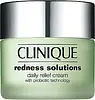
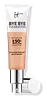
Clinique Redness Solutions Daily Relief Cream with Microbiome Technology Versus IT Cosmetics Bye Bye Foundation Full Coverage Moisturizer SPF 50+

What's inside
What's inside
 Key Ingredients
Benefits
Concerns
Ingredients Side-by-side
Water
Skin ConditioningDimethicone
Emollient

Butyrospermum Parkii Butter
Skin Conditioning




Cetearyl Alcohol
Emollient

Hydrogenated Polyisobutene
EmollientTrisiloxane
Skin Conditioning
Butylene Glycol
Humectant
Glycerin
Humectant
Sucrose
Humectant
Isostearyl Palmitate
Emollient
PEG-100 Stearate
Surfactant
Camellia Sinensis Leaf Extract
Antimicrobial






Polygonum Cuspidatum Root Extract
Antioxidant
Hordeum Vulgare Extract
EmollientTriticum Vulgare Germ Extract
Skin ConditioningCetearyl Glucoside
Emulsifying
Aspalathus Linearis Leaf Extract
Skin ConditioningSaccharomyces Lysate Extract
Humectant
Ascophyllum Nodosum Extract
Skin ConditioningAsparagopsis Armata Extract
Skin ProtectingAlgae Extract
EmollientCaffeine
Skin Conditioning
Lactobacillus Ferment
Skin Conditioning
Sodium Lauroyl Oat Amino Acids
CleansingHydrogenated Lecithin
Emulsifying
Polyethylene
Abrasive

Glyceryl Stearate
Emollient
Salicylic Acid
Masking





Sorbitol
Humectant
Methyl Glucose Sesquistearate
Emollient
Cholesterol
Emollient
Linoleic Acid
Cleansing
Glycine
Buffering
Inulin
Skin Conditioning
Tromethamine
BufferingDecarboxy Carnosine Hcl
Skin ConditioningPhytosphingosine
Skin Conditioning
Cetyl Alcohol
Emollient
Tocopheryl Acetate
Antioxidant
Bisabolol
Antioxidant
Squalane
Emollient
Hdi/Trimethylol Hexyllactone Crosspolymer
Behenyl Alcohol
Emollient
Sodium Hyaluronate
Humectant
Carbomer
Emulsion StabilisingSilica
Abrasive
Disodium EDTA
Potassium Sorbate
Preservative
Phenoxyethanol
Preservative
CI 42090
Cosmetic ColorantCI 19140
Cosmetic ColorantCI 77289
Cosmetic ColorantCI 77891
Cosmetic ColorantMica
Cosmetic ColorantWater, Dimethicone, Butyrospermum Parkii Butter, Cetearyl Alcohol, Hydrogenated Polyisobutene, Trisiloxane, Butylene Glycol, Glycerin, Sucrose, Isostearyl Palmitate, PEG-100 Stearate, Camellia Sinensis Leaf Extract, Polygonum Cuspidatum Root Extract, Hordeum Vulgare Extract, Triticum Vulgare Germ Extract, Cetearyl Glucoside, Aspalathus Linearis Leaf Extract, Saccharomyces Lysate Extract, Ascophyllum Nodosum Extract, Asparagopsis Armata Extract, Algae Extract, Caffeine, Lactobacillus Ferment, Sodium Lauroyl Oat Amino Acids, Hydrogenated Lecithin, Polyethylene, Glyceryl Stearate, Salicylic Acid, Sorbitol, Methyl Glucose Sesquistearate, Cholesterol, Linoleic Acid, Glycine, Inulin, Tromethamine, Decarboxy Carnosine Hcl, Phytosphingosine, Cetyl Alcohol, Tocopheryl Acetate, Bisabolol, Squalane, Hdi/Trimethylol Hexyllactone Crosspolymer, Behenyl Alcohol, Sodium Hyaluronate, Carbomer, Silica, Disodium EDTA, Potassium Sorbate, Phenoxyethanol, CI 42090, CI 19140, CI 77289, CI 77891, Mica
Titanium Dioxide 9%
Cosmetic Colorant

Zinc Oxide 6.3%
Cosmetic Colorant
Water
Skin ConditioningPhenyl Trimethicone
Skin Conditioning
Dimethicone
Emollient
Butylene Glycol
Humectant
Butylene Glycol Dicaprylate/Dicaprate
EmollientOrbignya Oleifera Seed Oil
Emollient
Butyloctyl Salicylate
Skin Conditioning
Cetyl PEG/PPG-10/1 Dimethicone
Emulsifying
Cyclopentasiloxane
Emollient
Snail Secretion Filtrate
Skin Conditioning
Aluminum Hydroxide
EmollientMagnesium Sulfate
Polyglyceryl-4 Isostearate
Emulsifying
Stearic Acid
Cleansing
Cyclohexasiloxane
Emollient
Dimethicone/Vinyl Dimethicone Crosspolymer
Skin Conditioning
Hexyl Laurate
Emollient
Calcium Stearate
Cosmetic ColorantCaprylyl Glycol
Emollient
Triethoxycaprylylsilane
Ethyl Hexanediol
SolventEthylhexylglycerin
Skin ConditioningLimonene
Perfuming


Citrus Limon Peel Oil
Masking
Sorbitan Isostearate
Emulsifying
Tocopheryl Acetate
Antioxidant
Phenoxyethanol
Preservative
1,2-Hexanediol
Skin Conditioning
Citrus Aurantium Bergamia Fruit Oil
Masking
Adenosine
Skin Conditioning
Citrus Aurantium Dulcis Peel Oil
Masking
Citrus Aurantifolia Oil
Cleansing
Pinus Sylvestris Leaf Oil
Masking
Niacinamide
Smoothing
Polymethylsilsesquioxane
Lactobacillus/Dipteryx Odorata Seed Ferment Filtrate
Skin ConditioningLactobacillus/Pumpkin Ferment Extract
Skin ConditioningPropylene Glycol
Humectant
Saccharomyces/Xylinum/Black Tea Ferment
Skin Conditioning
Linalool
Perfuming
Glycerin
Humectant
Eucalyptus Globulus Leaf Oil
Perfuming
Saccharomyces/Rice Ferment Filtrate
Skin Conditioning
Lactobacillus/Kelp Ferment Filtrate
Skin ConditioningCitral
Perfuming
Hydrolyzed Collagen
Emollient
Leuconostoc/Radish Root Ferment Filtrate
Antimicrobial
Panax Ginseng Root Extract
Emollient
Cocos Nucifera Fruit Extract
Emollient
Hydroxyethylcellulose
Emulsion StabilisingPentaerythrityl Tetra-Di-T-Butyl Hydroxyhydrocinnamate
Antioxidant
Camellia Sinensis Leaf Extract
Antimicrobial
Silk Extract
Skin ConditioningHydrolyzed Silk
Humectant
Sodium Citrate
BufferingCitric Acid
Buffering
Steareth-20
CleansingPotassium Sorbate
Preservative
Saccharomyces/Camellia Sinensis Extract Ferment Filtrate
Skin Conditioning
Bacillus
Skin ConditioningInonotus Obliquus Extract
Skin ConditioningPhellinus Linteus Ferment Filtrate
Tricholoma Matsutake Mycelium Ferment Extract
HumectantWhey Filtrate
Skin ConditioningPhaseolus Angularis Seed Extract
Antioxidant
Lactobacillus Ferment
Skin Conditioning
Lactobacillus
Skin ConditioningHouttuynia Cordata Extract
Skin Conditioning
Phellodendron Amurense Bark
Abrasive
Prunella Vulgaris
Skin ConditioningRice Ferment Filtrate
Skin Conditioning
Lactobacillus/Rice Ferment Filtrate
Skin ConditioningXanthan Gum
EmulsifyingDiamond Powder
Abrasive
Olea Europaea Leaf Extract
Perfuming
Chlorhexidine Digluconate
Antimicrobial
N-Hydroxysuccinimide
Skin ConditioningBiotin
AntiseborrhoeicPalmitoyl Tripeptide-1
Skin Conditioning
Hydrolyzed Hyaluronic Acid
Humectant
Chrysin
Skin ConditioningPalmitoyl Tetrapeptide-7
Skin Conditioning
Iron Oxides
Titanium Dioxide 9%, Zinc Oxide 6.3%, Water, Phenyl Trimethicone, Dimethicone, Butylene Glycol, Butylene Glycol Dicaprylate/Dicaprate, Orbignya Oleifera Seed Oil, Butyloctyl Salicylate, Cetyl PEG/PPG-10/1 Dimethicone, Cyclopentasiloxane, Snail Secretion Filtrate, Aluminum Hydroxide, Magnesium Sulfate, Polyglyceryl-4 Isostearate, Stearic Acid, Cyclohexasiloxane, Dimethicone/Vinyl Dimethicone Crosspolymer, Hexyl Laurate, Calcium Stearate, Caprylyl Glycol, Triethoxycaprylylsilane, Ethyl Hexanediol, Ethylhexylglycerin, Limonene, Citrus Limon Peel Oil, Sorbitan Isostearate, Tocopheryl Acetate, Phenoxyethanol, 1,2-Hexanediol, Citrus Aurantium Bergamia Fruit Oil, Adenosine, Citrus Aurantium Dulcis Peel Oil, Citrus Aurantifolia Oil, Pinus Sylvestris Leaf Oil, Niacinamide, Polymethylsilsesquioxane, Lactobacillus/Dipteryx Odorata Seed Ferment Filtrate, Lactobacillus/Pumpkin Ferment Extract, Propylene Glycol, Saccharomyces/Xylinum/Black Tea Ferment, Linalool, Glycerin, Eucalyptus Globulus Leaf Oil, Saccharomyces/Rice Ferment Filtrate, Lactobacillus/Kelp Ferment Filtrate, Citral, Hydrolyzed Collagen, Leuconostoc/Radish Root Ferment Filtrate, Panax Ginseng Root Extract, Cocos Nucifera Fruit Extract, Hydroxyethylcellulose, Pentaerythrityl Tetra-Di-T-Butyl Hydroxyhydrocinnamate, Camellia Sinensis Leaf Extract, Silk Extract, Hydrolyzed Silk, Sodium Citrate, Citric Acid, Steareth-20, Potassium Sorbate, Saccharomyces/Camellia Sinensis Extract Ferment Filtrate, Bacillus, Inonotus Obliquus Extract, Phellinus Linteus Ferment Filtrate, Tricholoma Matsutake Mycelium Ferment Extract, Whey Filtrate, Phaseolus Angularis Seed Extract, Lactobacillus Ferment, Lactobacillus, Houttuynia Cordata Extract, Phellodendron Amurense Bark, Prunella Vulgaris, Rice Ferment Filtrate, Lactobacillus/Rice Ferment Filtrate, Xanthan Gum, Diamond Powder, Olea Europaea Leaf Extract, Chlorhexidine Digluconate, N-Hydroxysuccinimide, Biotin, Palmitoyl Tripeptide-1, Hydrolyzed Hyaluronic Acid, Chrysin, Palmitoyl Tetrapeptide-7, Iron Oxides
Reviews
Ingredients Explained
These ingredients are found in both products.
Ingredients higher up in an ingredient list are typically present in a larger amount.
Butylene Glycol (or BG) is used within cosmetic products for a few different reasons:
Overall, Butylene Glycol is a safe and well-rounded ingredient that works well with other ingredients.
Though this ingredient works well with most skin types, some people with sensitive skin may experience a reaction such as allergic rashes, closed comedones, or itchiness.
Learn more about Butylene GlycolCamellia Sinensis Leaf Extract (tea extract) is one of the most well-researched plant extracts in skincare with an impressive resume.
Black tea, green tea, and oolong tea are all harvested from the Camellia Sinensis plant.
Studies show green tea extract and its catechins (like epigallocatechin gallate (EGCG)) help your skin cells product energy more efficiently and reducing the number of free-radicals that can damage your skin from the inside.
In lab-grown skin models, this translated to younger, healthier, and stronger skin.
There's also good sun protection data; researchers saw less DNA damage and redness on human skin when green tea was applied before UVB exposure. And the more they applied, the better the protection.
Needless to say, this ingredient shouldn't replace your sunscreen. But it is a great supportive ingredient that you can already find in many sunscreens and antioxidant serums.
A 2009 study found a 2% green tea lotion was effective for mild-to-moderate acne thanks to its anti-inflammatory and mild antimicrobial activity.
The quality of the extract matters a lot here:
Good extracts contain 50-90% catechins while lower quality ones are mostly there for marketing. We recommend reaching out to the brand if you have questions about the quality or source of their ingredients.
Human Repeated Insult Patch Testing showed no irritation or sensitization at use concentrations (0.86% in leave-on products and up to 30% as leaf water).
Learn more about Camellia Sinensis Leaf ExtractDimethicone is a type of synthetic silicone created from natural materials such as quartz. It is also known as polydimethylsiloxane.
What it does:
Dimethicone comes in different viscosities:
Depending on the viscosity, dimethicone has different properties.
Ingredients lists don't always show which type is used, so we recommend reaching out to the brand if you have questions about the viscosity.
This ingredient is unlikely to cause irritation because it does not get absorbed into skin. However, people with silicone allergies should be careful about using this ingredient.
Note: Dimethicone may contribute to pilling. This is because it is not oil or water soluble, so pilling may occur when layered with products. When mixed with heavy oils in a formula, the outcome is also quite greasy.
Learn more about DimethiconeGlycerin (or glycerol) is a compound naturally found in your skin. It's a powerhouse humectant that pulls water into the stratum corneum.
Topically, glycerin does several things at once:
Your skin makes glycerin on its own (mostly from sebaceous oil breakdown) and shuttles it to your outermost layer of skin, or your epidermis, via aquaporin-3.
Aquaporin-3 is a transporter that is essential for normal skin hydration, elasticity, and repair. Interestingly, mice lacking in AQP3 have dry and less elastic skin that can be fully corrected with glycerin.
This ingredient is non-irritating, plays well with almost every ingredient, and works across all skin types. Typical use is anywhere between 3-10% but can go up to 79% in some leave-on products.
Just know very high concentrations (>40%) can feel tacky in low humidity.
Glycerin is the name for this ingredient in American English. British English uses Glycerol/Glycerine.
Learn more about GlycerinThis ingredient is made when the Lactobacillus bacteria (the same kind that makes yogurt and kimchi) are allowed to ferment a nutrient medium.
As it ferments, it collects lactic acid, peptides, enzymes, and other bioactive metabolites to provide:
A 2023 review noted that probiotic fermentation ingredients like this one can enhance antioxidant capacity, reduce UV-induced oxidative damage, and support barrier function.
One clinical study from the same year showed a Lactobacillus ferment lysate significantly reduced transepidermal water loss and improved skin hydration.
Another review highlighted that topical Lactobacillus-based preparations can improve ceramide levels in the stratum corneum, support barrier integrity, and even help reduce S. aureus colonization in atopic dermatitis.
Why is this so cool?
Basically, your skin's outer layer works as a brick wall; skin cells are bricks and ceramides are the mortar holding it together. Moisture escapes, irritants get in, and your skin gets dry and reactive when ceramide levels drop. On top of that, "bad" skin bacteria S. aureus loves to move in when your barrier is weak to make inflammation and irritation worse.
So Lactobacillus ferment is basically patching the wall and evicting the troublemaker when it boosts ceramide production and help keep S. aureus in check.
On top of all this, it also acts as a mild antimicrobial preservative booster.
Just so you know, most studies focus on specific strains or the lysate form rather than this generic "Lactobacillus Ferment", so results can vary.
Though it's a promising ingredient, it doesn't have decades of robust clinical data behind it just yet.
Lactobacillus Ferment is generally considered safe for fungal-acne prone skin. The key thing to understand is that it comes from bacteria, not yeast or fungus.
Yeast-derived ferments (like galactomyces) have been shown to activate a protein that's linked to Malassezia-related skin issues whereas lactobacillus doesn't have that problem.
Its byproducts also don't contain the types of fatty acids (C11-24 chain lengths) that Malassezia feeds on.
Learn more about Lactobacillus FermentPhenoxyethanol is one of the most widely used preservatives in skincare (and for good reason!).
It has a large spectrum of antimicrobial activity and especially effective bacteria, yeast, and mold while only having a weak effect on your skin's natural microbiome.
On a cellular level, it disrupts the cell membranes of microbes by poking holes that make the cell leak. This shuts down the chemical reactions the microbe needs to make energy so it can no longer survive.
Another perk of this ingredient is that it stays functional across a wide pH range (3-10).
You'll often see it paired with boosters like Ethylhexylglycerin; one study showed that a 1:9 ratio of Ethylhexylglycerin to Phenoxyethanol damages bacterial membranes as effectively as doubling the Phenoxyethanol concentration on its own.
Typical use concentrations range from 0.3-1% depending on the formula, and this ingredient is capped at 1% int the EU.
Safety-wise, the fear mongering does not hold up to the evidence. The EU's Scientific Committee on Consumer Safety and FDA consider it safe as a preservative at up to 1%, including for children of all ages.
Adverse systemic effects only showed up in animal studies at exposures roughly 200x higher than what people get from cosmetics. And despite its very widespread use, this ingredient is a rare sensitizer and allergic reactions are uncommon.
Learn more about PhenoxyethanolPotassium Sorbate is a preservative used to prevent yeast and mold in products. It is commonly found in both cosmetic and food products.
This ingredient comes from potassium salt derived from sorbic acid. Sorbic acid is a natural antibiotic and effective against fungus.
Both potassium sorbate and sorbic acid can be found in baked goods, cheeses, dried meats, dried fruit, ice cream, pickles, wine, yogurt, and more.
You'll often find this ingredient used with other preservatives.
Learn more about Potassium SorbateTocopheryl Acetate is a stable, shelf-friendly form of vitamin E.
Formulators love it because plain vitamin E oxidizes quickly once it hits air. This acetate version stays stable and resists going off, helping to extend a product's shelf life.
It's actually inactive on its own and works like a slow-release "storage" form; the enzymes in your skin called esterases gradually convert it into active vitamin E over time.
One in vivo study showed 5% of the acetate in the living layer of the epidermis converted to vitamin E after 5 days of application. This study also found the skin gained protection against UV damage even though the conversion was slow and small.
Once converted, vitamin E acts as a skin's main fat-soluble antioxidant that fights free radicals to protect skin from damage.
Topical vitamin E generally boosts the skin's photoprotection, and it reduced UV-damage in animal models.
This ingredient has some brightening potential but it's more of a prevention ingredient than spot-fader. Cell studies show it can slow down melanin production but it's worth noting that it's not the most powerful brightener out there.
Overall, it has a pretty solid safety profile and has been found to be non-irritating and non-comedogenic. Allergic reactions may happen but stay rare due to how widely the ingredient gets used.
The concentration will vary depending on the formula; industry data shows 0.1% in baby lotions, 3% in lipsticks, and 5% in foot powders. You can also find this ingredient at 100% in a pure vitamin E oil.
Most leave-on skincare keeps it at the lower end, often between 0.5-1%.
Learn more about Tocopheryl AcetateWater. It's the most common cosmetic ingredient of all. You'll usually see it at the top of ingredient lists, meaning that it makes up the largest part of the product.
So why is it so popular? Water most often acts as a solvent - this means that it helps dissolve other ingredients into the formulation.
You'll also recognize water as that liquid we all need to stay alive. If you see this, drink a glass of water. Remember to stay hydrated!
Learn more about Water

