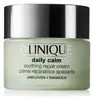
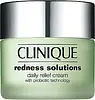
Clinique Daily Calm Soothing Repair Cream Versus Clinique Redness Solutions Daily Relief Cream with Microbiome Technology
This barrier-repair moisturizer is formulated around Butyrospermum Parkii Butter and Ceramide NP to strengthen the skin barrier and calm redness.
This calming moisturizer is formulated around Butyrospermum Parkii Butter and Camellia Sinensis Leaf Extract to calm redness and strengthen the skin barrier.

What's inside
What's inside
 Key Ingredients
Benefits
Concerns
Ingredients Side-by-side
Water
Skin ConditioningButyrospermum Parkii Butter
Skin Conditioning






Caprylic/Capric/Myristic/Stearic Triglyceride
EmollientIsododecane
EmollientGlycerin
Humectant
Butylene Glycol
Humectant
Di-C12-15 Alkyl Fumarate
EmollientDimethicone
Emollient
Steareth-2
EmulsifyingStearyl Alcohol
Emollient
Glyceryl Stearate
Emollient
Pentylene Glycol
Skin Conditioning
Steareth-21
CleansingSodium Hyaluronate
Humectant


Caffeine
Skin Conditioning
Scutellaria Baicalensis Root Extract
Astringent
Cladosiphon Okamuranus Extract
Skin Conditioning
Phyllostachys Edulis Leaf Extract
EmollientMagnolia Officinalis Bark Extract
Antimicrobial
Cholesterol
Emollient
Linoleic Acid
Cleansing
Trehalose
Humectant
Ceramide NP
Skin Conditioning
Dipotassium Glycyrrhizate
Humectant
Acrylates/C10-30 Alkyl Acrylate Crosspolymer
Emulsion Stabilising1,2-Hexanediol
Skin Conditioning
Sodium Hydroxide
BufferingPolysilicone-11

Carbomer
Emulsion StabilisingDextrin
AbsorbentTocopheryl Acetate
Antioxidant


Disodium EDTA
ChelatingChlorphenesin
Antimicrobial
Potassium Sorbate
Preservative
Water, Butyrospermum Parkii Butter, Caprylic/Capric/Myristic/Stearic Triglyceride, Isododecane, Glycerin, Butylene Glycol, Di-C12-15 Alkyl Fumarate, Dimethicone, Steareth-2, Stearyl Alcohol, Glyceryl Stearate, Pentylene Glycol, Steareth-21, Sodium Hyaluronate, Caffeine, Scutellaria Baicalensis Root Extract, Cladosiphon Okamuranus Extract, Phyllostachys Edulis Leaf Extract, Magnolia Officinalis Bark Extract, Cholesterol, Linoleic Acid, Trehalose, Ceramide NP, Dipotassium Glycyrrhizate, Acrylates/C10-30 Alkyl Acrylate Crosspolymer, 1,2-Hexanediol, Sodium Hydroxide, Polysilicone-11, Carbomer, Dextrin, Tocopheryl Acetate, Disodium EDTA, Chlorphenesin, Potassium Sorbate
Water
Skin ConditioningDimethicone
Emollient
Butyrospermum Parkii Butter
Skin Conditioning
Cetearyl Alcohol
Emollient
Hydrogenated Polyisobutene
EmollientTrisiloxane
Skin Conditioning
Butylene Glycol
Humectant
Glycerin
Humectant
Sucrose
Humectant
Isostearyl Palmitate
Emollient
PEG-100 Stearate
Surfactant
Camellia Sinensis Leaf Extract
Antimicrobial
Polygonum Cuspidatum Root Extract
Antioxidant
Hordeum Vulgare Extract
EmollientTriticum Vulgare Germ Extract
Skin ConditioningCetearyl Glucoside
Emulsifying
Aspalathus Linearis Leaf Extract
Skin ConditioningSaccharomyces Lysate Extract
Humectant
Ascophyllum Nodosum Extract
Skin Conditioning
Asparagopsis Armata Extract
Skin Protecting
Algae Extract
Emollient
Caffeine
Skin Conditioning
Lactobacillus Ferment
Skin Conditioning
Sodium Lauroyl Oat Amino Acids
CleansingHydrogenated Lecithin
Emulsifying
Polyethylene
Abrasive
Glyceryl Stearate
Emollient
Salicylic Acid
Masking




Sorbitol
Humectant
Methyl Glucose Sesquistearate
Emollient
Cholesterol
Emollient
Linoleic Acid
Cleansing
Glycine
Buffering
Inulin
Skin Conditioning
Tromethamine
BufferingDecarboxy Carnosine Hcl
Skin ConditioningPhytosphingosine
Skin Conditioning
Cetyl Alcohol
Emollient
Tocopheryl Acetate
Antioxidant
Bisabolol
Antioxidant
Squalane
Emollient
Hdi/Trimethylol Hexyllactone Crosspolymer
Behenyl Alcohol
Emollient
Sodium Hyaluronate
Humectant
Carbomer
Emulsion StabilisingSilica
Abrasive
Disodium EDTA
ChelatingPotassium Sorbate
Preservative
Phenoxyethanol
Preservative
CI 42090
Cosmetic ColorantCI 19140
Cosmetic ColorantCI 77289
Cosmetic ColorantCI 77891
Cosmetic ColorantMica
Cosmetic ColorantWater, Dimethicone, Butyrospermum Parkii Butter, Cetearyl Alcohol, Hydrogenated Polyisobutene, Trisiloxane, Butylene Glycol, Glycerin, Sucrose, Isostearyl Palmitate, PEG-100 Stearate, Camellia Sinensis Leaf Extract, Polygonum Cuspidatum Root Extract, Hordeum Vulgare Extract, Triticum Vulgare Germ Extract, Cetearyl Glucoside, Aspalathus Linearis Leaf Extract, Saccharomyces Lysate Extract, Ascophyllum Nodosum Extract, Asparagopsis Armata Extract, Algae Extract, Caffeine, Lactobacillus Ferment, Sodium Lauroyl Oat Amino Acids, Hydrogenated Lecithin, Polyethylene, Glyceryl Stearate, Salicylic Acid, Sorbitol, Methyl Glucose Sesquistearate, Cholesterol, Linoleic Acid, Glycine, Inulin, Tromethamine, Decarboxy Carnosine Hcl, Phytosphingosine, Cetyl Alcohol, Tocopheryl Acetate, Bisabolol, Squalane, Hdi/Trimethylol Hexyllactone Crosspolymer, Behenyl Alcohol, Sodium Hyaluronate, Carbomer, Silica, Disodium EDTA, Potassium Sorbate, Phenoxyethanol, CI 42090, CI 19140, CI 77289, CI 77891, Mica
Reviews
Ingredients Explained
These ingredients are found in both products.
Ingredients higher up in an ingredient list are typically present in a larger amount.
Butylene Glycol (or BG) is used within cosmetic products for a few different reasons:
Overall, Butylene Glycol is a safe and well-rounded ingredient that works well with other ingredients.
Though this ingredient works well with most skin types, some people with sensitive skin may experience a reaction such as allergic rashes, closed comedones, or itchiness.
Learn more about Butylene GlycolThis ingredient is also known as shea butter. It is a plant-derived extract from the nuts of the Africa shea tree and one of the most well-studied emollients.
Because it has a high concentration of fatty acids (primarily oleic, stearic, and linoleic) it is able to form a protective barrier on the skin's surface. This helps seal in moisture and prevents transepidermal water loss (TEWL).
In vitro research found an increase in skin hydration by 58% and a decrease in TEWL by 37.8% after 24 hours of applying this ingredient (pretty impressive for a single ingredient!).
Besides hydration, shea butter also contains triterpenes that have anti-inflammatory potential. In particule, lupeol cinnamate has shown the highest anti-inflammatory activity in vivo.
Shea butter also contains vitamins A and E which may contribute to antioxidant activity.
While Shea Butter has an SPF rating of about 3-4, it is not a sunscreen replacement.
This ingredient may not be fungal acne safe because its fatty acids fall within the C11-C24 range that the Malassezia yeast can metabolize.
This ingredient shows up on a lot of "pore-clogging" lists but there's no real evidence behind that. It doesn't even have a comedogenic rating from an actual study; the numbers you'll find online come from blogs citing other blogs.
Ratings for other ingredients mostly come from a 1980s rabbit ear test. This test doesn't translate well to human skin or to real products because the ingredient sits at a much lower percentage.
Some people still find it breaks them out. So if that's you, definitely trust your skin. Just know this one's based on experience and not evidence.
Learn more about Butyrospermum Parkii ButterCaffeine is a naturally occurring plant compound found in coffee beans, tea leaves, cocoa pods, and guarana.
As an antioxidant, caffeine protects your skin from free radical damage caused by UV exposure and envionrmnetal stressors.
Early research also shows that caffeine can help calm redness, soothe irritated skin, and support hair growth by stimulating microcirculation in the scalp.
You might have seen eye creams marketing caffeine as a depuffing ingredient. This is because it is a vasoconstrictor meaning it can temporarily constrict blood vessels, though clinical evidence for this specific use is still limited.
Most skincare products contain this ingredient at concentrations between 1-6%. It is able to penetrate skin easily regardless of skin type or thickness.
Just so you know, a very small number of case reports describe caffeine-induced allergy. This ingredient is generally well-tolerated, non-irritating, and non-sensitizing for the majority of people.
Learn more about CaffeineCarbomer is a synthetic thickening and gelling agent. It's basically the ingredient that gives a lot of serums, gels, creams, and sunscreens their smooth, non-sticky texture.
Although legally permitted at very high levels, carbomers are normally used at concentrations below 1%.
It also needs to be neutralized to actually thicken, and because it is a large molecule, it doesn't really penetrate the skin barrier.
Allergy-wise, the risk is very low. Clinical studies show carbomers have low potential for skin irritation/sensitization even at concentrations up to 100%.
A 2024 UK study patch-tested 1,302 patients and found true allergy to the parent group of carbomer to be rare with no confirmed relevant reactions.
Learn more about CarbomerCholesterol is a lipid that is naturally found in human skin and is one of the three key components of your skin barrier. In skincare, it is an emollient and barrier-repairing ingredient.
It works by fitting directly into the lipid layers of skin to help restore structure and reduce transepidermal water loss (TEWL).
This is a great ingredient for dry, compromised, or aging skin; our skin starts to produce less cholesterol with age.
Research shows cholesterol works best in combination with ceramides and fatty acids, the other two major components in your skin barrier.
Cholesterol is also a well-establish penetration enhancer and can help other actives absorb more effectively.
Cosmetic-grade cholesterol is usually derived from lanolin but plant and synthetic options also exist. We recommend reaching out to the brand if you have questions about their source of cholesterol.
Learn more about CholesterolDimethicone is a type of synthetic silicone created from natural materials such as quartz. It is also known as polydimethylsiloxane.
What it does:
Dimethicone comes in different viscosities:
Depending on the viscosity, dimethicone has different properties.
Ingredients lists don't always show which type is used, so we recommend reaching out to the brand if you have questions about the viscosity.
This ingredient is unlikely to cause irritation because it does not get absorbed into skin. However, people with silicone allergies should be careful about using this ingredient.
Note: Dimethicone may contribute to pilling. This is because it is not oil or water soluble, so pilling may occur when layered with products. When mixed with heavy oils in a formula, the outcome is also quite greasy.
Learn more about DimethiconeDisodium EDTA is a chelating agent. It grabs onto and deactivates metal ions that sneak into your products from water, packaging, or air.
This ingredient mainly works behind the scenes and helps with:
On top of that, this ingredient can counteract the effects of hard water by binding to the minerals in it.
One thing worth knowing is that Disodium EDTA has been shown to be a mild penetration enhancer. It can help other ingredients absorb into skin more effectively which can be a double-edged sword (great for actives, but can also make the active too strong if you have sensitive skin).
Clinical patch testing showed no significant skin irritation at typical use concentrations and minimal dermal absorption.
You'll most likely see this ingredient near the end of an ingredient list. It's typically found in concentrations less than 1%.
Learn more about Disodium EDTAGlycerin (or glycerol) is a compound naturally found in your skin. It's a powerhouse humectant that pulls water into the stratum corneum.
Topically, glycerin does several things at once:
Your skin makes glycerin on its own (mostly from sebaceous oil breakdown) and shuttles it to your outermost layer of skin, or your epidermis, via aquaporin-3.
Aquaporin-3 is a transporter that is essential for normal skin hydration, elasticity, and repair. Interestingly, mice lacking in AQP3 have dry and less elastic skin that can be fully corrected with glycerin.
This ingredient is non-irritating, plays well with almost every ingredient, and works across all skin types. Typical use is anywhere between 3-10% but can go up to 79% in some leave-on products.
Just know very high concentrations (>40%) can feel tacky in low humidity.
Glycerin is the name for this ingredient in American English. British English uses Glycerol/Glycerine.
Learn more about GlycerinGlyceryl Stearate is made by reacting glycerin with stearic acid (typically sourced from plant oils like palm or coconut). It's an emulsifier, emollient, and mild occlusive.
Emulsifiers help ingredients like oil and water stay mixed so your formula stays nicely blended and uniform in texture.
This ingredient is typically used in concentrations between 1-10%. Studies have found it to be non-sensitizing, non-phototoxic, and non-photoallergenic.
A close cousin of this ingredient is Glyceryl Stearate SE ("self-emulsifying"). This just has a small amount of sodium or potassium stearate added so it can emulsify without a co-emulsifier.
Since this ingredient is an ester of a C18 fatty acid, it may not be fungal acne safe. The Malassezia yeast can potentially metabolize within the C11-C24 range.
Fun fact: The human body also creates Glyceryl Stearate naturally.
Learn more about Glyceryl StearateLinoleic Acid is also known as Vitamin F. It is a fatty acid with emollient and skin conditioning properties.
Our top layer of skin, or epidermis, naturally contains high amounts of linoleic acid.
Your body uses linoleic acid to build ceramides and prostaglandins. Ceramides keep your skin's barrier hydrated and strong while prosaglandins help control inflammation and healing.
Needless to say, linoleic acid is crucial for having a strong skin barrier.
One study found applying linoleic acid rich sunflower oil to be more effective at repairing the skin barrier than olive oil.
This ingredient can also help treat acne by softening sebum to prevent clogged pores. Another study found using 2.5% linoleic acid gel for 4 weeks showed a 25% reduction in small comedones.
Studies show it can also help lighten hyperpigmentation or sun spots by disrupting the melanin production process. It also helps your skin shed melanin pigment from your skin caused by UV exposure.
Due to its role in the production of the fatty acid prostaglandin, linoleic acid can also help reduce inflammation and support wound healing.
Fun fact: Linoleic acid is an essential fatty acid. This means our bodies cannot create it on its own and we need to get it through foods such as nuts and vegetable oils.
Just know this ingredient is not always fungal-acne safe because it is a long-chain fatty acid (with 18 carbon atoms) that directly feeds the Malassezia yeast responsible for fungal acne.
Learn more about Linoleic AcidPotassium Sorbate is a preservative used to prevent yeast and mold in products. It is commonly found in both cosmetic and food products.
This ingredient comes from potassium salt derived from sorbic acid. Sorbic acid is a natural antibiotic and effective against fungus.
Both potassium sorbate and sorbic acid can be found in baked goods, cheeses, dried meats, dried fruit, ice cream, pickles, wine, yogurt, and more.
You'll often find this ingredient used with other preservatives.
Learn more about Potassium SorbateSodium Hyaluronate is the salt form of hyaluronic acid. It is a long sugar chain that is naturally found in your skin, joints, and connective tissue that maintains hydration and elasticity.
In skincare, it works as a humectant. It pulls water from the environment and deeper layers of skin and binds it to the surface.
Interestingly, the size of the molecule affects its behavior:
Some clinical evidence links low molecular weight versions to improved wrinkle depth, elasticity, anti-inflammatory effects, and barrier repair.
Many serums use a blend of both weights so you can get surface hydration plus longer-lasting and deeper effects.
You'll typically see concentrations between 0.1-2% for this ingredient.
Learn more about Sodium HyaluronateTocopheryl Acetate is a stable, shelf-friendly form of vitamin E.
Formulators love it because plain vitamin E oxidizes quickly once it hits air. This acetate version stays stable and resists going off, helping to extend a product's shelf life.
It's actually inactive on its own and works like a slow-release "storage" form; the enzymes in your skin called esterases gradually convert it into active vitamin E over time.
One in vivo study showed 5% of the acetate in the living layer of the epidermis converted to vitamin E after 5 days of application. This study also found the skin gained protection against UV damage even though the conversion was slow and small.
Once converted, vitamin E acts as a skin's main fat-soluble antioxidant that fights free radicals to protect skin from damage.
Topical vitamin E generally boosts the skin's photoprotection, and it reduced UV-damage in animal models.
This ingredient has some brightening potential but it's more of a prevention ingredient than spot-fader. Cell studies show it can slow down melanin production but it's worth noting that it's not the most powerful brightener out there.
Overall, it has a pretty solid safety profile and has been found to be non-irritating and non-comedogenic. Allergic reactions may happen but stay rare due to how widely the ingredient gets used.
The concentration will vary depending on the formula; industry data shows 0.1% in baby lotions, 3% in lipsticks, and 5% in foot powders. You can also find this ingredient at 100% in a pure vitamin E oil.
Most leave-on skincare keeps it at the lower end, often between 0.5-1%.
Learn more about Tocopheryl AcetateWater. It's the most common cosmetic ingredient of all. You'll usually see it at the top of ingredient lists, meaning that it makes up the largest part of the product.
So why is it so popular? Water most often acts as a solvent - this means that it helps dissolve other ingredients into the formulation.
You'll also recognize water as that liquid we all need to stay alive. If you see this, drink a glass of water. Remember to stay hydrated!
Learn more about Water

