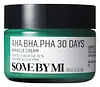
Some By Mi AHA, BHA, PHA 30 Days Miracle Cream Versus Tula Skincare Dew Your Thing Oil Free Gel Cream
This acne moisturizer is formulated around Centella Asiatica Extract and Niacinamide to clear breakouts and calm redness.
This barrier-repair moisturizer is formulated around Lactococcus Ferment Lysate and Saccharomyces/Rice Ferment Filtrate to strengthen the skin barrier and hydrate skin.


What's inside
What's inside
 Key Ingredients
Benefits
Concerns
Ingredients Side-by-side
Centella Asiatica Extract 70.78%
Cleansing





Dipropylene Glycol
HumectantGlycerin
Humectant
Water
Skin ConditioningNiacinamide
Smoothing





Caprylic/Capric Triglyceride
Masking
Cetyl Ethylhexanoate
EmollientMelaleuca Alternifolia Leaf Water
Antimicrobial
Ricinus Communis Seed Oil
Masking



Hydrogenated Castor Oil
Emollient
Azadirachta Indica Leaf Extract
Skin ConditioningMelia Azadirachta Flower Extract
Skin ConditioningCoccinia Indica Fruit Extract
Skin Conditioning
Solanum Melongena Fruit Extract
Skin ConditioningAloe Barbadensis Leaf Extract
Emollient
Ocimum Sanctum Leaf Extract
Skin ConditioningCurcuma Longa Root Extract
Antioxidant
Coral Extract
Skin ConditioningCalendula Officinalis Flower Extract
Masking
Camellia Sinensis Leaf Extract
Antimicrobial
Lavandula Angustifolia Extract
Skin Conditioning

Rosmarinus Officinalis Leaf Extract
AntimicrobialOriganum Vulgare Flower/Leaf/Stem Extract
Skin ConditioningThymus Vulgaris Extract
Perfuming
Fructan
Skin ConditioningTremella Fuciformis Extract
Humectant
Salix Alba Bark Extract
Astringent
Enantia Chlorantha Bark Extract
Skin ConditioningSolanum Lycopersicum Seed Extract
Skin ConditioningHamamelis Virginiana Flower Extract
Polygonum Fagopyrum Seed Extract
Skin ConditioningCentella Asiatica Leaf Extract
Skin Conditioning
Nelumbo Nucifera Flower Extract
Skin ConditioningSaccharide Isomerate
Humectant
Sodium Hyaluronate
Humectant
Butylene Glycol
Humectant
Propanediol
Solvent
Betaine
Humectant
Allantoin
Skin Conditioning
Madecassoside
Antioxidant
Madecassic Acid
Skin Conditioning
Asiaticoside
Antioxidant
Asiatic Acid
Skin Conditioning
Adenosine
Skin Conditioning
Ceramide NP
Skin Conditioning
Oleanolic Acid
Skin ConditioningCapryloyl Salicylic Acid
Exfoliating
Inulin Lauryl Carbamate
Emulsion StabilisingPolyglyceryl-3 Methylglucose Distearate
Emulsifying
Cetearyl Glucoside
Emulsifying
Sorbitan Olivate
Emulsifying
Cetearyl Alcohol
Emollient



Lactobionic Acid
Buffering
Citric Acid
Buffering
Ammonium Acryloyldimethyltaurate/Vp Copolymer
1,2-Hexanediol
Skin Conditioning
Benzyl Glycol
SolventEthylhexylglycerin
Skin ConditioningRaspberry Ketone
Masking
Disodium EDTA
Mentha Piperita Oil
Masking

Limonene
Perfuming
Centella Asiatica Extract 70.78%, Dipropylene Glycol, Glycerin, Water, Niacinamide, Caprylic/Capric Triglyceride, Cetyl Ethylhexanoate, Melaleuca Alternifolia Leaf Water, Ricinus Communis Seed Oil, Hydrogenated Castor Oil, Azadirachta Indica Leaf Extract, Melia Azadirachta Flower Extract, Coccinia Indica Fruit Extract, Solanum Melongena Fruit Extract, Aloe Barbadensis Leaf Extract, Ocimum Sanctum Leaf Extract, Curcuma Longa Root Extract, Coral Extract, Calendula Officinalis Flower Extract, Camellia Sinensis Leaf Extract, Lavandula Angustifolia Extract, Rosmarinus Officinalis Leaf Extract, Origanum Vulgare Flower/Leaf/Stem Extract, Thymus Vulgaris Extract, Fructan, Tremella Fuciformis Extract, Salix Alba Bark Extract, Enantia Chlorantha Bark Extract, Solanum Lycopersicum Seed Extract, Hamamelis Virginiana Flower Extract, Polygonum Fagopyrum Seed Extract, Centella Asiatica Leaf Extract, Nelumbo Nucifera Flower Extract, Saccharide Isomerate, Sodium Hyaluronate, Butylene Glycol, Propanediol, Betaine, Allantoin, Madecassoside, Madecassic Acid, Asiaticoside, Asiatic Acid, Adenosine, Ceramide NP, Oleanolic Acid, Capryloyl Salicylic Acid, Inulin Lauryl Carbamate, Polyglyceryl-3 Methylglucose Distearate, Cetearyl Glucoside, Sorbitan Olivate, Cetearyl Alcohol, Lactobionic Acid, Citric Acid, Ammonium Acryloyldimethyltaurate/Vp Copolymer, 1,2-Hexanediol, Benzyl Glycol, Ethylhexylglycerin, Raspberry Ketone, Disodium EDTA, Mentha Piperita Oil, Limonene
Water
Skin ConditioningPropanediol
Solvent
Cyclopentasiloxane
Emollient
Cyclohexasiloxane
Emollient
Caprylyl Methicone
Skin Conditioning
Dimethicone
Emollient
Aspergillus/Rice Ferment
HumectantLactococcus Ferment Lysate
Skin Conditioning
Saccharomyces/Rice Ferment Filtrate
Skin Conditioning
Lactic Acid
Buffering
Aloe Barbadensis Flower Extract
EmollientSodium Hyaluronate
Humectant
Citrullus Lanatus Fruit Extract
Skin Conditioning
Coccinia Indica Fruit Extract
Skin Conditioning
Corallina Officinalis Extract
Skin Conditioning
Curcuma Longa Root Extract
Antioxidant
Lens Esculenta Fruit Extract
Skin ConditioningMelia Azadirachta Flower Extract
Skin ConditioningMelia Azadirachta Leaf Extract
Skin ConditioningOcimum Sanctum Leaf Extract
Skin ConditioningOpuntia Ficus-Indica Stem Extract
Skin Conditioning
Pyrus Malus Fruit Extract
Skin Conditioning
Chondrus Crispus Extract
Skin Conditioning
Solanum Melongena Fruit Extract
Skin ConditioningGlycerin
Humectant
Gluconolactone
Skin Conditioning
Panthenol
Skin Conditioning
Pantolactone
Humectant
Sodium Lactate
Buffering
Sodium PCA
Humectant
Tocopherol
Antioxidant
Saccharide Isomerate
Humectant
Sodium Benzoate
Masking
Sodium Chloride
MaskingSodium Citrate
BufferingCitric Acid
Buffering
Caprylhydroxamic Acid
Caprylyl Glycol
Emollient
Cetyl PEG/PPG-10/1 Dimethicone
Emulsifying
Dimethicone/PEG-10/15 Crosspolymer
Dipropylene Glycol
Humectant1,2-Hexanediol
Skin Conditioning
Butylene Glycol
Humectant
Potassium Sorbate
Preservative
Ethylhexylglycerin
Skin ConditioningParfum
Masking
Phenoxyethanol
Preservative
Water, Propanediol, Cyclopentasiloxane, Cyclohexasiloxane, Caprylyl Methicone, Dimethicone, Aspergillus/Rice Ferment, Lactococcus Ferment Lysate, Saccharomyces/Rice Ferment Filtrate, Lactic Acid, Aloe Barbadensis Flower Extract, Sodium Hyaluronate, Citrullus Lanatus Fruit Extract, Coccinia Indica Fruit Extract, Corallina Officinalis Extract, Curcuma Longa Root Extract, Lens Esculenta Fruit Extract, Melia Azadirachta Flower Extract, Melia Azadirachta Leaf Extract, Ocimum Sanctum Leaf Extract, Opuntia Ficus-Indica Stem Extract, Pyrus Malus Fruit Extract, Chondrus Crispus Extract, Solanum Melongena Fruit Extract, Glycerin, Gluconolactone, Panthenol, Pantolactone, Sodium Lactate, Sodium PCA, Tocopherol, Saccharide Isomerate, Sodium Benzoate, Sodium Chloride, Sodium Citrate, Citric Acid, Caprylhydroxamic Acid, Caprylyl Glycol, Cetyl PEG/PPG-10/1 Dimethicone, Dimethicone/PEG-10/15 Crosspolymer, Dipropylene Glycol, 1,2-Hexanediol, Butylene Glycol, Potassium Sorbate, Ethylhexylglycerin, Parfum, Phenoxyethanol
Reviews
Ingredients Explained
These ingredients are found in both products.
Ingredients higher up in an ingredient list are typically present in a larger amount.
1,2-Hexanediol is a synthetic liquid and another multi-functional powerhouse.
It is a:
- Humectant, drawing moisture into the skin
- Emollient, helping to soften skin
- Solvent, dispersing and stabilizing formulas
- Preservative booster, enhancing the antimicrobial activity of other preservatives
Butylene Glycol (or BG) is used within cosmetic products for a few different reasons:
Overall, Butylene Glycol is a safe and well-rounded ingredient that works well with other ingredients.
Though this ingredient works well with most skin types, some people with sensitive skin may experience a reaction such as allergic rashes, closed comedones, or itchiness.
Learn more about Butylene GlycolCitric Acid is an alpha hydroxy acid (AHA) naturally found in citrus fruits like oranges, lemons, and limes.
Like other AHAs, citric acid can exfoliate skin by breaking down the bonds that hold dead skin cells together. This helps reveal smoother and brighter skin underneath.
However, this exfoliating effect only happens at high concentrations (20%) which can be hard to find in cosmetic products.
Due to this, citric acid is usually included in small amounts as a pH adjuster. This helps keep products slightly more acidic and compatible with skin's natural pH.
In skincare formulas, citric acid can:
While it can provide some skin benefits, research shows lactic acid and glycolic acid are generally more effective and less irritating exfoliants.
Most citric acid used in skincare today is made by fermenting sugars (usually from molasses). This synthetic version is identical to the natural citrus form but easier to stabilize and use in formulations.
Rosacea skin has a lower threshold for acids generally, with 62.5% of rosacea subjects in one study reacting to lactic acid in a sting test. This is why we mark citric acid as a potential rosacea trigger.
However, this ingredient shows up as a pH adjuster or chelator at roughly 0.1-1% in many products. These low levels are unlikely to be an issue for rosacea skin and becomes a potential trigger at exfoliating concentrations (20%). Because everybody's skin is unique, we recommend a patch test if you are unsure.
Learn more about Citric AcidCoccinia Indica Fruit Extract is also known as Ivy Gourd Fruit Extract. It has skin conditioning properties.
The fruit is rich in flavonoids, phenolic acids, terpenoids, and sterols that show antioxidant and anti-inflammatory effect in vitro. This is because the fruit contains a thick mucilage that forms a protective and soothing layer on the skin's surface.
The extract itself has demonstrated antioxidant, soothing, and potential anti-allergy properties.
Most of this research is done in vitro and dedicated clinical studies on topical application are still limited.
Learn more about Coccinia Indica Fruit ExtractCurcuma Longa Root Extract comes from the rhizome (underground stem) of the turmeric plant.
While the official EU Cosing Database lists this ingredient as a fragrance, it actually does more than give products a scent.
This ingredient contains a group of yellow pigments called curcuminoids (mostly curcumin) that give it genuine antioxidant and anti-inflammatory activity in skin.
Reviews of topical clinical studies have found turmeric/curcumin to be generally well-tolerated and useful across conditions like eczema and mild inflammation.
One thing working in its favor is that curcumin barely penetrates; in lab skin-permeation testing, the curcuminoids mostly stayed in the outermost layer of skin. This is a good thing because its soothing and antioxidant activity is a surface-level job anyway.
At this time, industry data shows there's no single "correct" cosmetic percentage. It's used across a wide range depending on the product and varies from tiny fractions of a percent up to a few percent.
Allergy-wise, curcumin is a documented (but uncommon) contact allergen. It can also cross react with related plants, so anyone with a turmeric/ginger/cinnamon allergy or reactive skin should patch test first.
Learn more about Curcuma Longa Root ExtractDipropylene Glycol is a synthetically created humectant, stabilizer, and solvent.
This ingredient helps:
Dipropylene glycol is technically an alcohol, but it belongs to the glycol family (often considered part of the ‘good’ alcohols). This means it is hydrating and gentle on skin unlike drying solvent alcohols like denatured alcohol.
As a masking agent, Dipropylene Glycol can be used to cover the smell of other ingredients. However, it does not have a scent.
Studies show Dipropylene Glycol is considered safe to use in skincare.
Learn more about Dipropylene GlycolEthylhexylglycerin is created from glycerin. It is a multitasker ingredient that:
The CIR Expert Panel found minimal skin absorption or sensitization of any kind in a safety assessment. Though this ingredient is considered well-tolerated, a small number of cases of allergic dermatitis have been published since 2002. Just be sure to patch test if you are unsure.
Industry-reported use ranges from 8% in rinse-off products and 2% in leave-on formulations.
Learn more about EthylhexylglycerinGlycerin (or glycerol) is a compound naturally found in your skin. It's a powerhouse humectant that pulls water into the stratum corneum.
Topically, glycerin does several things at once:
Your skin makes glycerin on its own (mostly from sebaceous oil breakdown) and shuttles it to your outermost layer of skin, or your epidermis, via aquaporin-3.
Aquaporin-3 is a transporter that is essential for normal skin hydration, elasticity, and repair. Interestingly, mice lacking in AQP3 have dry and less elastic skin that can be fully corrected with glycerin.
This ingredient is non-irritating, plays well with almost every ingredient, and works across all skin types. Typical use is anywhere between 3-10% but can go up to 79% in some leave-on products.
Just know very high concentrations (>40%) can feel tacky in low humidity.
Glycerin is the name for this ingredient in American English. British English uses Glycerol/Glycerine.
Learn more about GlycerinMelia Azadirachta Flower Extract is from the Neem tree. Neem trees originate from India.
Melia Azadirachta Flower Extract contains antioxidants. Antioxidants help fight free-radicals. Free-radicals are molecules that may damage your skin cells, such as pollution.
The flowers of this tree are lilac colored.
Learn more about Melia Azadirachta Flower ExtractOcimum Sanctum Leaf Extract comes from the Holy Basil plant. Holy Basil is native to India.
Holy Basil is rich in antioxidants due to its high romarinic acid, ferulic acid, and rutin content. This gives it skin brightening and soothing properties.
While Holy Basil has many claims to help fight acne, more research is needed.
One thing to note is the presence of tannins; tannins are naturally found in nature. However, this compound may be skin-sensitizing.
Learn more about Ocimum Sanctum Leaf ExtractPropanediol is an all-star ingredient. It softens, hydrates, and smooths the skin.
It’s often used to:
Propanediol is not likely to cause sensitivity and considered safe to use. It is derived from corn or petroleum with a clear color and no scent.
Learn more about PropanediolSaccharide Isomerate comes from sugars found in corn. It is a skin hydrator.
The structure of this ingredient can be altered to be more similar to the carbohydrates found in our skin. This ability to mimic our skin gives it hydrating properties.
Specifically, saccharide Isomerate is a humectant. Humectants draw moisture from the air to our skin.
Research shows Saccharide Isomerate to be an effective moisturizer.
Learn more about Saccharide IsomerateSodium Hyaluronate is the salt form of hyaluronic acid. It is a long sugar chain that is naturally found in your skin, joints, and connective tissue that maintains hydration and elasticity.
In skincare, it works as a humectant. It pulls water from the environment and deeper layers of skin and binds it to the surface.
Interestingly, the size of the molecule affects its behavior:
Some clinical evidence links low molecular weight versions to improved wrinkle depth, elasticity, anti-inflammatory effects, and barrier repair.
Many serums use a blend of both weights so you can get surface hydration plus longer-lasting and deeper effects.
You'll typically see concentrations between 0.1-2% for this ingredient.
Learn more about Sodium HyaluronateThis ingredient comes from eggplant (or aubergine). It has skin conditioning properties due to its abundance of antioxidants like Chlorogenic Acid, Caffeic Acid, and Nasunin.
Nasunin is the pigment concentrated in the purple peel and has demonstrated the abilityu to neutralize free radicals and bind excess iron in lab studies.
Lab studies have shown that eggplant extracts can lower oxidative stress and protect skin cell membranes from damage. A 2025 study found that specific compounds in eggplant (particularly a phenolamide called N-Trans-Feruloylputrescine) may support skin health by neutralizing 2-nonenal, a byproduct linked to aging skin.
Overall, this is a gentle, well-tolerated ingredient that adds a little extra antioxidant support to your routine.
Those with nighshade vegetable allergies (tomatoes, peppers, potatoes) should patch test as eggplant is part of the same family.
Learn more about Solanum Melongena Fruit ExtractWater. It's the most common cosmetic ingredient of all. You'll usually see it at the top of ingredient lists, meaning that it makes up the largest part of the product.
So why is it so popular? Water most often acts as a solvent - this means that it helps dissolve other ingredients into the formulation.
You'll also recognize water as that liquid we all need to stay alive. If you see this, drink a glass of water. Remember to stay hydrated!
Learn more about Water

