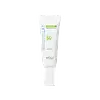
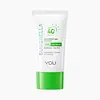
Y.O.U Sunbrella Pro Acnecare Shield Sunscreen SPF 50+ PA++++ Versus Y.O.U Sunbrella Acne Shield Light Sunscreen SPF 40+
This chemical sunscreen covers the full UV range and blocks ~98% of UVB at SPF 50.
This chemical sunscreen covers the full UV range and blocks ~98% of UVB at SPF 40.

What's inside
What's inside
 Key Ingredients
Benefits
Concerns
Ingredients Side-by-side
Water
Skin ConditioningPropylene Glycol
Humectant


Ethylhexyl Methoxycinnamate
UV Absorber


Propanediol
Solvent
Diethylamino Hydroxybenzoyl Hexyl Benzoate
UV Filter
Dimethicone/Vinyl Dimethicone Crosspolymer
Skin Conditioning
Butylene Glycol
Humectant
Silica
Abrasive


Phenoxyethanol
Preservative
Acrylates/C10-30 Alkyl Acrylate Crosspolymer
Emulsion StabilisingHydroxyacetophenone
Antioxidant
Aminomethyl Propanol
BufferingSorbitan Stearate
Emulsifying
Magnesium Aluminum Silicate
Absorbent
Dihydroxypropyl Arginine Hcl
HumectantHydrogenated Lecithin
Emulsifying
PEG-9 Dimethicone
Skin Conditioning
Cetearyl Methicone
Skin Conditioning
Tridecane
Perfuming

Undecane
EmollientCaprylyl Methicone
Skin Conditioning
Steareth-21
CleansingCaprylyl Glycol
Emollient
Parfum
Masking
Disodium EDTA
ChelatingEthylhexylglycerin
Skin ConditioningSodium Surfactin
CleansingPhytosterols
Skin Conditioning
Sucrose Cocoate
Emulsifying

Sodium Benzoate
Masking
Zinc PCA
Humectant


Butyl Methoxydibenzoylmethane
UV Absorber
Ectoin
Skin Conditioning


Glycerin
Humectant
Glucosylrutin
Antioxidant
Polyester-7
Skin ConditioningPEG-60 Hydrogenated Castor Oil
Emulsifying
Neopentyl Glycol Diheptanoate
EmollientZea Mays Starch
Absorbent
Portulaca Oleracea Extract
Skin Conditioning
Cocamidopropyl Dimethylamine
Emulsifying
Hydrolyzed Corn Starch
HumectantHydrolyzed Corn Starch Octenylsuccinate
AbsorbentIsoquercitrin
Antioxidant
Scutellaria Baicalensis Root Extract
Astringent
O-Cymen-5-Ol
Antimicrobial
Salicylic Acid
Masking


Butyrospermum Parkii Butter
Skin Conditioning

Hamamelis Virginiana Extract
Antiseborrhoeic
Buddleja Officinalis Flower Extract
UV FilterPhenylethyl Resorcinol
Antioxidant
Ceramide NP
Skin Conditioning
1,2-Hexanediol
Skin Conditioning
Lactic Acid
Buffering
10-Hydroxydecanoic Acid
Skin ConditioningXanthan Gum
EmulsifyingHydrated Silica
Abrasive
Palmitoyl Tripeptide-5
Skin Conditioning
Madecassoside
Antioxidant
Asiaticoside
Antioxidant
Ceramide As
Skin Conditioning
Ceramide Ns
Skin Conditioning
Glucose
Humectant
Asiatic Acid
Skin Conditioning
Madecassic Acid
Skin Conditioning
Sodium Hyaluronate
Humectant
Chondrus Crispus Extract
Skin Conditioning
Hydroxypropyltrimonium Hyaluronate
Hydrolyzed Hyaluronic Acid
Humectant
Sodium Acetylated Hyaluronate
Humectant
Hyaluronic Acid
Humectant
Hydrolyzed Sodium Hyaluronate
Skin Conditioning
Sodium Hyaluronate Crosspolymer
Humectant
Potassium Hyaluronate
Skin ConditioningCeramide AP
Skin Conditioning
Ceramide EOP
Skin Conditioning
Water, Propylene Glycol, Ethylhexyl Methoxycinnamate, Propanediol, Diethylamino Hydroxybenzoyl Hexyl Benzoate, Dimethicone/Vinyl Dimethicone Crosspolymer, Butylene Glycol, Silica, Phenoxyethanol, Acrylates/C10-30 Alkyl Acrylate Crosspolymer, Hydroxyacetophenone, Aminomethyl Propanol, Sorbitan Stearate, Magnesium Aluminum Silicate, Dihydroxypropyl Arginine Hcl, Hydrogenated Lecithin, PEG-9 Dimethicone, Cetearyl Methicone, Tridecane, Undecane, Caprylyl Methicone, Steareth-21, Caprylyl Glycol, Parfum, Disodium EDTA, Ethylhexylglycerin, Sodium Surfactin, Phytosterols, Sucrose Cocoate, Sodium Benzoate, Zinc PCA, Butyl Methoxydibenzoylmethane, Ectoin, Glycerin, Glucosylrutin, Polyester-7, PEG-60 Hydrogenated Castor Oil, Neopentyl Glycol Diheptanoate, Zea Mays Starch, Portulaca Oleracea Extract, Cocamidopropyl Dimethylamine, Hydrolyzed Corn Starch, Hydrolyzed Corn Starch Octenylsuccinate, Isoquercitrin, Scutellaria Baicalensis Root Extract, O-Cymen-5-Ol, Salicylic Acid, Butyrospermum Parkii Butter, Hamamelis Virginiana Extract, Buddleja Officinalis Flower Extract, Phenylethyl Resorcinol, Ceramide NP, 1,2-Hexanediol, Lactic Acid, 10-Hydroxydecanoic Acid, Xanthan Gum, Hydrated Silica, Palmitoyl Tripeptide-5, Madecassoside, Asiaticoside, Ceramide As, Ceramide Ns, Glucose, Asiatic Acid, Madecassic Acid, Sodium Hyaluronate, Chondrus Crispus Extract, Hydroxypropyltrimonium Hyaluronate, Hydrolyzed Hyaluronic Acid, Sodium Acetylated Hyaluronate, Hyaluronic Acid, Hydrolyzed Sodium Hyaluronate, Sodium Hyaluronate Crosspolymer, Potassium Hyaluronate, Ceramide AP, Ceramide EOP
Aloe Barbadensis Leaf Water
MaskingEthylhexyl Methoxycinnamate
UV Absorber
Water
Skin ConditioningEthylhexyl Salicylate
UV Absorber
Bis-Ethylhexyloxyphenol Methoxyphenyl Triazine
UV Absorber
Methylene Bis-Benzotriazolyl Tetramethylbutylphenol
UV Filter
Ethylhexyl Triazone
UV Absorber
Potassium Cetyl Phosphate
EmulsifyingDiethylamino Hydroxybenzoyl Hexyl Benzoate
UV Filter
Butyloctyl Salicylate
Skin Conditioning
Propylene Glycol
Humectant
Cyclopentasiloxane
Emollient
Cetearyl Alcohol
Emollient
Butylene Glycol
Humectant
Dibutyl Adipate
EmollientSucrose Polystearate
EmollientPhenoxyethanol
Preservative
Hexylene Glycol
EmulsifyingDecyl Glucoside
Cleansing
Hydroxyacetophenone
Antioxidant
Sodium Carbomer
Emulsion StabilisingAcrylates/Beheneth-25 Methacrylate Copolymer
Microcrystalline Cellulose
Absorbent1,2-Hexanediol
Skin Conditioning
Ammonium Acryloyldimethyltaurate/Vp Copolymer
Bisabolol
Antioxidant
Allantoin
Skin Conditioning
Ethylhexylglycerin
Skin ConditioningGlyceryl Stearate
Emollient
Polyglyceryl-10 Laurate
Skin Conditioning
Polysorbate 60
Emulsifying
Sodium Laureth Sulfate
Cleansing
Menthol
Masking
Menthyl Lactate
Masking
Disodium EDTA
ChelatingOlea Europaea Oil Unsaponifiables
Skin Conditioning
Parfum
Masking
Xanthan Gum
EmulsifyingBHT
Antioxidant
Totarol
Antioxidant
Diethylhexyl Butamido Triazone
UV Absorber
Zinc PCA
Humectant
Centella Asiatica Leaf Extract
Skin Conditioning
Ectoin
Skin Conditioning
Malic Acid
Buffering
Phenylethyl Resorcinol
Antioxidant
Glycerin
Humectant
Thermus Thermophillus Ferment
Skin ConditioningPropanediol
Solvent
Caprylic/Capric Triglyceride
Masking
Mentha Piperita Leaf Extract
Skin ConditioningBuddleja Officinalis Leaf Extract
Skin ConditioningCeramide NP
Skin Conditioning
Hydrogenated Lecithin
Emulsifying
Potassium Sorbate
Preservative
Ceramide Ns
Skin Conditioning
Ceramide As
Skin Conditioning
Silica
Abrasive
Ceramide EOP
Skin Conditioning
Ceramide AP
Skin Conditioning
Aloe Barbadensis Leaf Water, Ethylhexyl Methoxycinnamate, Water, Ethylhexyl Salicylate, Bis-Ethylhexyloxyphenol Methoxyphenyl Triazine, Methylene Bis-Benzotriazolyl Tetramethylbutylphenol, Ethylhexyl Triazone, Potassium Cetyl Phosphate, Diethylamino Hydroxybenzoyl Hexyl Benzoate, Butyloctyl Salicylate, Propylene Glycol, Cyclopentasiloxane, Cetearyl Alcohol, Butylene Glycol, Dibutyl Adipate, Sucrose Polystearate, Phenoxyethanol, Hexylene Glycol, Decyl Glucoside, Hydroxyacetophenone, Sodium Carbomer, Acrylates/Beheneth-25 Methacrylate Copolymer, Microcrystalline Cellulose, 1,2-Hexanediol, Ammonium Acryloyldimethyltaurate/Vp Copolymer, Bisabolol, Allantoin, Ethylhexylglycerin, Glyceryl Stearate, Polyglyceryl-10 Laurate, Polysorbate 60, Sodium Laureth Sulfate, Menthol, Menthyl Lactate, Disodium EDTA, Olea Europaea Oil Unsaponifiables, Parfum, Xanthan Gum, BHT, Totarol, Diethylhexyl Butamido Triazone, Zinc PCA, Centella Asiatica Leaf Extract, Ectoin, Malic Acid, Phenylethyl Resorcinol, Glycerin, Thermus Thermophillus Ferment, Propanediol, Caprylic/Capric Triglyceride, Mentha Piperita Leaf Extract, Buddleja Officinalis Leaf Extract, Ceramide NP, Hydrogenated Lecithin, Potassium Sorbate, Ceramide Ns, Ceramide As, Silica, Ceramide EOP, Ceramide AP
Reviews
Ingredients Explained
These ingredients are found in both products.
Ingredients higher up in an ingredient list are typically present in a larger amount.
1,2-Hexanediol is a synthetic liquid and another multi-functional powerhouse.
It is a:
- Humectant, drawing moisture into the skin
- Emollient, helping to soften skin
- Solvent, dispersing and stabilizing formulas
- Preservative booster, enhancing the antimicrobial activity of other preservatives
Butylene Glycol (or BG) is used within cosmetic products for a few different reasons:
Overall, Butylene Glycol is a safe and well-rounded ingredient that works well with other ingredients.
Though this ingredient works well with most skin types, some people with sensitive skin may experience a reaction such as allergic rashes, closed comedones, or itchiness.
Learn more about Butylene GlycolCeramide AP is is a skin-identical lipid that mimics what your skin already makes naturally. Ceramides help maintain epidermal integrity and barrier function.
You'll often see this ingredient paired with other ceramides (like ceramide NP), cholesterol, or fatty acids because this combination best mimics the natural lipid mix your skin already has.
The skin's ability to produce ceramides gets disrupted in skin conditions like eczema. This in turn weakens the skin barrier and applying ceramides topically has been shown to replenish what's been lost to restore barrier function.
Most of the studies with Ceramide AP test it as part of a multi-ceramide complex; studies reinforce ceramide AP's role in rebalancing ceramides in skin and improving skin hydration.
Learn more about Ceramide APCeramide AS is formally known as Ceramides 4 and 5.
Ceramides are intercellular lipids naturally found in our skin that bonds dead skin cells together to create a barrier. They are known for their ability to hold water and thus are a great ingredient for dry skin.
Ceramide EOP is formally known as Ceramide 1.
It is naturally found in skin and part of the intercellular "mortar" holding everything together in your outermost layer.
EOP stands for a linked Ester fatty acid, a linked Omega hydroxy fatty acid, and the Phytosphingosine base.
What makes Ceramide EOP special is its ultra-long fatty acid chain; this unique structure allows it to bridge the lipid layers in your skin barrier to prevent water loss (something no other ceramide can do).
Low levels of Ceramide EOP have been found in people with eczema and psoriasis.
Using it together with other ceramides, cholesterol, and linoleic acid have been shown to meaningfully improve hydration and reduce water loss.
In one clinical study, a regimen using Ceramide EOP, NP, and AP led to significant symptom improvements in patients with eczema, psoriasis, and dry skin in just 4 weeks.
You'll usually see concentrations between 0.1-0.5% in formulations. Overall, this is a well-tolerated and safe ingredient for cosmetic use.
Learn more about Ceramide EOPCeramide NP (formerly known as Ceramide 3) is one of the skin's naturally occurring lipids.
Since ceramides are the major lipid components of the skin, they are crucial for maintaining skin barrier and hydration. Ceramide NP most closely mirrors the dominant kind in human skin amongst ceramide subtypes.
This ceramide works by slotting into gaps within the stratum corneum's lipid matrix to limit trans-epidermal water loss (TEWL) and shield the skin against external irritants.
A study with 312 patients found that using a ceramide-containing routine for 4 weeks reduced the severity of atopic dermatitis by over 61%.
Another clinical study in subjects aged 60 and older found that a ceramide body wash and moisturizer improved skin dryness and itchy skin in 15 days.
Overall, ceramides are considered non-irritating and safety tests have found little to no observable adverse effects from using this ingredient.
Ceramide NP is usually sourced from plants (like soybean or rice bran), or produced synthetically.
Learn more about Ceramide NPCeramide NS is formally known as Ceramide 2. It is one of the major ceramides in the stratum corneum (outermost layer of skin) plays a role in forming a protective barrier.
Due to its structure, skin lipids can be packed tightly and in turn, this strengthens the barrier and reduces water loss.
Studies show conditions like atopic dermatitis can worsen when ceramide NS levels are low.
Learn more about Ceramide NsDiethylamino Hydroxybenzoyl Hexyl Benzoate (DHHB) is a chemical UV-A absorber. It is formulated for high UVA protection (320-400 nm).
DHHB is well-liked for:
DHHB has been approved by the EU, Japan, Taiwan, and South America for use up to 10%. Unfortunately, it has not been approved for use in the US or Canada due to slow regulatory processes.
This ingredient is soluble in oils, fats, and lipids.
Learn more about Diethylamino Hydroxybenzoyl Hexyl BenzoateDisodium EDTA is a chelating agent. It grabs onto and deactivates metal ions that sneak into your products from water, packaging, or air.
This ingredient mainly works behind the scenes and helps with:
On top of that, this ingredient can counteract the effects of hard water by binding to the minerals in it.
One thing worth knowing is that Disodium EDTA has been shown to be a mild penetration enhancer. It can help other ingredients absorb into skin more effectively which can be a double-edged sword (great for actives, but can also make the active too strong if you have sensitive skin).
Clinical patch testing showed no significant skin irritation at typical use concentrations and minimal dermal absorption.
You'll most likely see this ingredient near the end of an ingredient list. It's typically found in concentrations less than 1%.
Learn more about Disodium EDTAEctoin is a compound found naturally in some species of bacteria. It can be synthetically created for skincare use.
This ingredient is an osmolyte; Osmolytes help organisms survive osmotic shock (it protects them from extreme conditions). It does this by influencing the properties of biological fluids within cells.
When applied to the skin, ectoin helps bind water molecules to protect our skin. The water forms a sort of armor for the parts of our skin cells, enzymes, proteins, and more.
Besides this, ectoin has many uses in skincare:
A study from 2004 found ectoin to counteract the damage from UV-A exposure at different cell levels. It has also been shown to protect skin against both UV-A, UV-B rays, infrared light, and visible light.
Studies show ectoin to have dual-action pollution protection: first, it protects our skin from further pollution damage. Second, it helps repair damage from pollution.
In fact, ectoin has been shown to help with:
Fun fact: In the EU, ectoin is used in inhalation medication as an anti-pollution ingredient.
Ectoin is a highly stable ingredient. It has a wide pH range of 1-9. Light, oxygen, and temperature do not affect this ingredient.
The chemical name for this ingredient is Tetrahydromethylpyrimidine Carboxylic Acid.
Learn more about EctoinThis ingredient is also known as Octinoxate and is one of the oldest and most widely used chemical UV filters in skincare.
It has a simple job: soap up UVB radiation (290-320 nm), the wavelengths responsible for sunburn and a big chunk of long-term sun damage.
In formulas, it's always paired with a separate UVA filter because octinoxate solely protects skin from UVB.
Because it's an oil-soluble liquid, it's easy to blend into the oil phase of lotions/creams and gives a cosmetically elegant feel.
The one quirk about formulating this ingredient is photostability; the molecule slowly changes shape into a less effective version when sunlight hits it. So the longer you're in the sun, the weaker its protection gets. The drop can be more than 30% in some formulas.
It also doesn't play nice with Avobenzone (the common UVA filter) since avobenzone destabilizes octinoxate and the two degrade each other. But don't worry: brands have solved this issue by adding photostabilizers like Tinosorb S to prevent degradation and keep SPF stable under heavy UV exposure.
The maximum allowed level is 10% in the EU and Australia, 7.5% in the US and Canada, and 20% in Japan.
The Cosmetic Ingredient Review Panel has concluded this ingredient to be safe in cosmetics up to 10%.
One last thing worth knowing for context:
Octinoxate has been the subject of ongoing review in Europe where the Scientific Committee on Consumer Safety's (SCCS) 2025 final opinion is that this ingredient is an endocrine-active substance.
Lab and animal studies suggest it can act a bit like a hormone in the body (mildly mimicking estrogen and slightly blocking male hormones). It's important to know this hasn't really been shown to happen in everyday human use.
This ingredient is also banned in Hawaii over coral reef concerns.
Learn more about Ethylhexyl MethoxycinnamateEthylhexylglycerin is created from glycerin. It is a multitasker ingredient that:
The CIR Expert Panel found minimal skin absorption or sensitization of any kind in a safety assessment. Though this ingredient is considered well-tolerated, a small number of cases of allergic dermatitis have been published since 2002. Just be sure to patch test if you are unsure.
Industry-reported use ranges from 8% in rinse-off products and 2% in leave-on formulations.
Learn more about EthylhexylglycerinGlycerin (or glycerol) is a compound naturally found in your skin. It's a powerhouse humectant that pulls water into the stratum corneum.
Topically, glycerin does several things at once:
Your skin makes glycerin on its own (mostly from sebaceous oil breakdown) and shuttles it to your outermost layer of skin, or your epidermis, via aquaporin-3.
Aquaporin-3 is a transporter that is essential for normal skin hydration, elasticity, and repair. Interestingly, mice lacking in AQP3 have dry and less elastic skin that can be fully corrected with glycerin.
This ingredient is non-irritating, plays well with almost every ingredient, and works across all skin types. Typical use is anywhere between 3-10% but can go up to 79% in some leave-on products.
Just know very high concentrations (>40%) can feel tacky in low humidity.
Glycerin is the name for this ingredient in American English. British English uses Glycerol/Glycerine.
Learn more about GlycerinHydrogenated Lecithin is a more stable version of lecithin.
It's made by taking lecithin (a phospholipid commonly found in soybeans and egg yolks) and hydrogenating it. This just means the unsaturated fatty acids are turned into saturated ones so they don't go bad as easily.
This ingredient is an emollient, emulsifier, and penetration enhancer. As an emollient, it helps soften and hydrate skin by trapping moisture within. As an emulsifier, it prevents oil and water ingredients from separating.
Hydrogenated Lecithin can form tiny spherical structures made of phospholipid bilayers called liposomes. These liposomes are able to capture compounds inside their structure and deliver them through the skin barrier.
Because phospholipids are a natural component of our cell membranes, this ingredient is inherently compatible with skin.
A 2021 study found lecithin-based surfactants were less harsh and more tolerable comared to Sodium Lauryl Sulfate (SLS).
Learn more about Hydrogenated LecithinHydroxyacetophenone is a small phenolic molecule that earns its place in a formulas as an antioxidant and preservative booster.
As a phenol, it is able to neutralize free radicals to protect both the product and the skin from oxidative stress.
Though it can't kill microbes on its own, it works as a good supporting agent when combined with other preservatives like Phenoxyethanol or 1,2-Hexanediol.
This ingredient naturally occurs as piceol in Norwegian spruce needles (~0.4-1.1% dry weight and in cloudberries). Though the cosmetic-grade material is synthesized for purity and consistency.
You'll usually see it used at low levels and suppliers recommend up to 1% added to a water phase.
Safety testing was done at concentrations like 0.05% in SPF products and 0.5% in a Human Repeated Insult Patch Test. The safety evidence is assuring; this ingredient is safe for cosmetics in current use and also holds safety status as a food flavoring as well.
An honest caveat: the "soothing" and "anti-inflammatory" claims come mostly from supplier marketing rather than published clinical trials. The Cosmetic Ingredient Review's own literature search found no useful efficacy studies on this ingredient.
So the antioxidant and preservative-boosting roles are the well supported ones while the calming benefit is plausible but thinly evidenced.
Overall, this is a well-tolerated, low-irritation multitasker that quietly helps a formula stay fresh and stable.
Learn more about HydroxyacetophenoneParfum is a catch-all term for an ingredient or more that is used to give a scent to products.
Also called "fragrance", this ingredient can be a blend of hundreds of chemicals or plant oils. This means every product with "fragrance" or "parfum" in the ingredients list is a different mixture.
For instance, Habanolide is a proprietary trade name for a specific aroma chemical. When used as a fragrance ingredient in cosmetics, most aroma chemicals fall under the broad labeling category of “FRAGRANCE” or “PARFUM” according to EU and US regulations.
The term 'parfum' or 'fragrance' is not regulated in many countries. In many cases, it is up to the brand to define this term.
For instance, many brands choose to label themselves as "fragrance-free" because they are not using synthetic fragrances. However, their products may still contain ingredients such as essential oils that are considered a fragrance by INCI standards.
One example is Calendula flower extract. Calendula is an essential oil that still imparts a scent or 'fragrance'.
Depending on the blend, the ingredients in the mixture can cause allergies and sensitivities on the skin. Some ingredients that are known EU allergens include linalool and citronellol.
Parfum can also be used to mask or cover an unpleasant scent.
The bottom line is: not all fragrances/parfum/ingredients are created equally. If you are worried about fragrances, we recommend taking a closer look at an ingredient. And of course, we always recommend speaking with a professional.
Learn more about ParfumPhenoxyethanol is one of the most widely used preservatives in skincare (and for good reason!).
It has a large spectrum of antimicrobial activity and especially effective bacteria, yeast, and mold while only having a weak effect on your skin's natural microbiome.
On a cellular level, it disrupts the cell membranes of microbes by poking holes that make the cell leak. This shuts down the chemical reactions the microbe needs to make energy so it can no longer survive.
Another perk of this ingredient is that it stays functional across a wide pH range (3-10).
You'll often see it paired with boosters like Ethylhexylglycerin; one study showed that a 1:9 ratio of Ethylhexylglycerin to Phenoxyethanol damages bacterial membranes as effectively as doubling the Phenoxyethanol concentration on its own.
Typical use concentrations range from 0.3-1% depending on the formula, and this ingredient is capped at 1% int the EU.
Safety-wise, the fear mongering does not hold up to the evidence. The EU's Scientific Committee on Consumer Safety and FDA consider it safe as a preservative at up to 1%, including for children of all ages.
Adverse systemic effects only showed up in animal studies at exposures roughly 200x higher than what people get from cosmetics. And despite its very widespread use, this ingredient is a rare sensitizer and allergic reactions are uncommon.
Learn more about PhenoxyethanolPhenylethyl Resorcinol (PR) is a synthetic antioxidant and tyrosinase inhibitor. This ingredient is found naturally in pine trees.
What is a tyrosinase inhibitor?
Tyrosinase is an enzyme that plays a key role in melanin production, which leads to skin darkening when exposed to UV light. By inhibiting this enzyme, PR can help with skin brightening and lifting dark spots.
The manufacturer states 0.5% of PR is more effective than 1% kojic acid. In 2013, a study of 80 participants found combining PR with other skin-brightening ingredients found 57% showed moderate improvement and 17% saw no change. Another study with 20 women reported a 43% reduction in uneven skin tone.
While more research is needed to fully confirm PR's efficacy, there’s no harm in trying it - especially when combined with other proven skin-brightening ingredients.
Learn more about Phenylethyl ResorcinolPropanediol is an all-star ingredient. It softens, hydrates, and smooths the skin.
It’s often used to:
Propanediol is not likely to cause sensitivity and considered safe to use. It is derived from corn or petroleum with a clear color and no scent.
Learn more about PropanediolPropylene Glycol is a synthetic, colorless, odorless liquid that has been a staple in cosmetics for decades. It is a skin conditioning agent, humectant, and solvent.
As a humectant, it draw water to the skin to reduce flaking and restore suppleness. It's also a solvent that helps dissolve other actives and keeps formulas stable across temperature changes.
The CIR Expert Panel has confirmed this ingredient to be nontoxic and clinical studies show no sensitization at cosmetic use concentrations.
True allergic reactions are quite rare: a 15-year retrospective study of 6,751 patients found only 0.31% had a positive reaction (and less than half were considered clinically relevant).
It seemed that when sensitization does occur, it's most commonly linked to topical medication (like corticosteroids) and not cosmetics. Allergic contact dermatitis also appears largely limited to individuals with underlying skin conditions.
Overall, propylene glycol is a well-studied ingredient that most people can tolerate without issue.
Learn more about Propylene GlycolSilica, also known as silicon dioxide, is a naturally occurring mineral. It is used as a fine, spherical, and porous powder in cosmetics.
Though it has exfoliant properties, the function of silica varies depending on the product.
The unique structure of silica enhances the spreadability and adds smoothness, making it a great texture enhancer.
It is also used as an active carrier, emulsifier, and mattifier due to its ability to absorb excess oil.
In some products, tiny microneedles called spicules are made from silica or hydrolyzed sponge. When you rub them in, they lightly polish away dead skin layers and enhance the penetration of active ingredients.
Learn more about SilicaWater. It's the most common cosmetic ingredient of all. You'll usually see it at the top of ingredient lists, meaning that it makes up the largest part of the product.
So why is it so popular? Water most often acts as a solvent - this means that it helps dissolve other ingredients into the formulation.
You'll also recognize water as that liquid we all need to stay alive. If you see this, drink a glass of water. Remember to stay hydrated!
Learn more about WaterXanthan gum is used as a stabilizer and thickener within cosmetic products. It helps give products a sticky, thick feeling - preventing them from being too runny.
On the technical side of things, xanthan gum is a polysaccharide - a combination consisting of multiple sugar molecules bonded together.
Xanthan gum is a pretty common and great ingredient. It is a natural, non-toxic, non-irritating ingredient that is also commonly used in food products.
Learn more about Xanthan GumZinc PCA is a clever two-in-one molecule: the zinc salt of pyrrolidone carboxylic acid (PCA).
Think of it as two useful things bonded together; the PCA half is one of your skin's own natural moisturizing factors (NMF) so it helps hold water in the upper layers. On the other hand, the zinc half does the heavy lifting on oil and bacteria.
The zinc part slows down an enzyme that turns testosterone into DHT, the hormone that tells your oil glands to pump out more sebum. Less of that signal means less oil. It also gently fights acne-causing bacteria and soothes redness/irritation.
This is why Zinc PCA often shows up in products for oily, breakout-prone skin and greasy scalps.
One lab study also hinted it might have a small anti-aging perk because it seemed to protect collagen from UVA damage and even helped the skin make a bit more of it. That last bit is still early research done in a dish and not real skin, so take it as a nice bonus rather than a promise for now.
As for scar healing, the picture is more "maybe" than a firm yes. Zinc itself plays a real role in wound repair because it is a cofactor for the enzymes involved in collagen building, calming inflammation, and helping new skin cells cover a wound. Lower zinc levels are also linked to slower healing.
Most of the scar healing research is on zinc oxide or oral zinc rather than zinc PCA specifically, with a focus on healing fresh wounds instead of scars that are already there.
Direct evidence that zinc PCA improves the look of established scars is still limited at this time. Though it would be fair to say zinc PCA supports the general skin-repair environment thanks to its zinc content .
This ingredient is water-soluble and plays nicely with other actives like niacinamide and salicylic acid. It works best at mildly acidic formulas (~4-6 pH) and is effective at low levels. Around 0.1% is enough to be active and finished products commonly use it anywhere up to 4%.
Overall, this is a well-tolerated, low-drama multitasker that suits oily and acne-prone skin.
Learn more about Zinc PCA

