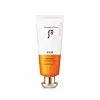
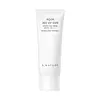
The History of Whoo Essential UV Protective Cream SPF 50+ Versus S.NATURE Aqua 365 UV Sun Protective Cream SPF 50+
This hybrid sunscreen covers the full UV range and blocks ~98% of UVB at SPF 50.
This chemical sunscreen covers the full UV range and blocks ~98% of UVB at SPF 50.

What's inside
What's inside
 Key Ingredients
Benefits
Concerns
Ingredients Side-by-side
Water
Skin ConditioningCyclopentasiloxane
Emollient
Butylene Glycol
Humectant

Ethylhexyl Methoxycinnamate
UV Absorber


Dipropylene Glycol
HumectantGlycerin
Humectant
Diethylamino Hydroxybenzoyl Hexyl Benzoate
UV Filter
Ethylhexyl Salicylate
UV Absorber
C12-15 Alkyl Benzoate
AntimicrobialPhenylbenzimidazole Sulfonic Acid
UV Absorber
Potassium Cetyl Phosphate
EmulsifyingTitanium Dioxide
Cosmetic Colorant
Glyceryl Stearate
Emollient

Tromethamine
Buffering1,2-Hexanediol
Skin Conditioning
Bis-Ethylhexyloxyphenol Methoxyphenyl Triazine
UV Absorber
Panthenol
Skin Conditioning

PEG-100 Stearate
Surfactant
Palmitic Acid
Emollient


Cetearyl Alcohol
Emollient

Stearic Acid
Cleansing
Carbomer
Emulsion StabilisingAluminum Stearate
Cosmetic ColorantPolyhydroxystearic Acid
Emulsifying
C14-22 Alcohols
Emulsion Stabilising
Squalane
Emollient
Xanthan Gum
EmulsifyingLactobacillus/Soybean Ferment Extract
Skin ConditioningAcrylates/C10-30 Alkyl Acrylate Crosspolymer
Emulsion StabilisingAlumina
Abrasive
Macadamia Integrifolia Seed Oil
Skin Conditioning
Saccharomyces/Potato Extract Ferment Filtrate
Humectant
Triethylhexanoin
MaskingAlcohol Denat.
Antimicrobial

Arachidyl Glucoside
EmulsifyingButyrospermum Parkii Butter
Skin Conditioning
Hydrogenated Lecithin
Emulsifying
Saccharomyces/Barley Seed Ferment Filtrate
HumectantCI 77891
Cosmetic ColorantMica
Cosmetic ColorantSorbitol
Humectant
Lecithin
Emollient
Trisodium EDTA
ChelatingPanax Ginseng Root Extract
Emollient
Saposhnikovia Divaricata Root Extract
AntimicrobialBupleurum Falcatum Root Extract
Skin ConditioningCaprylic/Capric Triglyceride
Masking
Cnidium Officinale Root Extract
Skin ConditioningPEG-10 Rapeseed Sterol
CleansingPlatycodon Grandiflorus Root Extract
Antioxidant
Polysorbate 80
Emulsifying
Schizonepeta Tenuifolia Extract
Skin ConditioningIron Oxides
Ceramide NP
Skin Conditioning
Cholesterol
Emollient
Dimethicone
Emollient
Dioscorea Japonica Root Extract
Skin Conditioning
Glycyrrhiza Glabra Root Extract
Bleaching

Typha Angustifolia Spike Extract
Skin ConditioningCinnamomum Cassia Bark Extract
Masking
Poncirus Trifoliata Fruit Extract
Skin ConditioningPaeonia Lactiflora Root Extract
Skin ConditioningOphiopogon Japonicus Root Extract
Skin ConditioningScutellaria Baicalensis Extract
AntimicrobialAtractylodes Japonica Rhizome Extract
Skin ConditioningZiziphus Jujuba Fruit Extract
Skin ConditioningZingiber Officinale Extract
Skin ConditioningCornus Officinalis Fruit Extract
Skin ConditioningAngelica Gigas Root Extract
Skin ConditioningAsparagus Cochinchinensis Root Extract
Skin ConditioningChaenomeles Sinensis Fruit Extract
Antioxidant
Polygonatum Odoratum Root Extract
Skin ConditioningPolygonum Multiflorum Root Extract
Skin ConditioningArginine
Masking
Cordyceps Militaris Extract
Skin ConditioningCordyceps Sinensis Extract
Antioxidant
Diospyros Kaki Leaf Extract
Skin Protecting
Lycium Chinense Fruit Extract
Antioxidant
Morus Alba Fruit Extract
Antioxidant
Schisandra Chinensis Fruit Extract
Skin Conditioning
Thymus Vulgaris Extract
Perfuming
Glycoproteins
Skin Conditioning
Artemisia Princeps Leaf Extract
Skin ConditioningCamellia Sinensis Leaf Extract
Antimicrobial

Chrysanthemum Indicum Extract
Antioxidant
Tocopherol
Antioxidant
Angelica Acutiloba Root Extract
Skin ConditioningYeast Extract
Skin ConditioningGanoderma Lucidum Extract
Skin Protecting
Astragalus Membranaceus Root Extract
Emollient
Citrus Unshiu Peel Extract
MaskingEthylhexylglycerin
Skin ConditioningSaccharomyces Ferment Filtrate
Humectant
Parfum
Masking
Linalool
Perfuming
Geraniol
Perfuming
Limonene
Perfuming
Benzyl Salicylate
Perfuming
Citronellol
Perfuming
Hexyl Cinnamal
Perfuming
Water, Cyclopentasiloxane, Butylene Glycol, Ethylhexyl Methoxycinnamate, Dipropylene Glycol, Glycerin, Diethylamino Hydroxybenzoyl Hexyl Benzoate, Ethylhexyl Salicylate, C12-15 Alkyl Benzoate, Phenylbenzimidazole Sulfonic Acid, Potassium Cetyl Phosphate, Titanium Dioxide, Glyceryl Stearate, Tromethamine, 1,2-Hexanediol, Bis-Ethylhexyloxyphenol Methoxyphenyl Triazine, Panthenol, PEG-100 Stearate, Palmitic Acid, Cetearyl Alcohol, Stearic Acid, Carbomer, Aluminum Stearate, Polyhydroxystearic Acid, C14-22 Alcohols, Squalane, Xanthan Gum, Lactobacillus/Soybean Ferment Extract, Acrylates/C10-30 Alkyl Acrylate Crosspolymer, Alumina, Macadamia Integrifolia Seed Oil, Saccharomyces/Potato Extract Ferment Filtrate, Triethylhexanoin, Alcohol Denat., Arachidyl Glucoside, Butyrospermum Parkii Butter, Hydrogenated Lecithin, Saccharomyces/Barley Seed Ferment Filtrate, CI 77891, Mica, Sorbitol, Lecithin, Trisodium EDTA, Panax Ginseng Root Extract, Saposhnikovia Divaricata Root Extract, Bupleurum Falcatum Root Extract, Caprylic/Capric Triglyceride, Cnidium Officinale Root Extract, PEG-10 Rapeseed Sterol, Platycodon Grandiflorus Root Extract, Polysorbate 80, Schizonepeta Tenuifolia Extract, Iron Oxides, Ceramide NP, Cholesterol, Dimethicone, Dioscorea Japonica Root Extract, Glycyrrhiza Glabra Root Extract, Typha Angustifolia Spike Extract, Cinnamomum Cassia Bark Extract, Poncirus Trifoliata Fruit Extract, Paeonia Lactiflora Root Extract, Ophiopogon Japonicus Root Extract, Scutellaria Baicalensis Extract, Atractylodes Japonica Rhizome Extract, Ziziphus Jujuba Fruit Extract, Zingiber Officinale Extract, Cornus Officinalis Fruit Extract, Angelica Gigas Root Extract, Asparagus Cochinchinensis Root Extract, Chaenomeles Sinensis Fruit Extract, Polygonatum Odoratum Root Extract, Polygonum Multiflorum Root Extract, Arginine, Cordyceps Militaris Extract, Cordyceps Sinensis Extract, Diospyros Kaki Leaf Extract, Lycium Chinense Fruit Extract, Morus Alba Fruit Extract, Schisandra Chinensis Fruit Extract, Thymus Vulgaris Extract, Glycoproteins, Artemisia Princeps Leaf Extract, Camellia Sinensis Leaf Extract, Chrysanthemum Indicum Extract, Tocopherol, Angelica Acutiloba Root Extract, Yeast Extract, Ganoderma Lucidum Extract, Astragalus Membranaceus Root Extract, Citrus Unshiu Peel Extract, Ethylhexylglycerin, Saccharomyces Ferment Filtrate, Parfum, Linalool, Geraniol, Limonene, Benzyl Salicylate, Citronellol, Hexyl Cinnamal
Water
Skin ConditioningDibutyl Adipate
EmollientPolymethylsilsesquioxane
Propanediol
Solvent
Diethylamino Hydroxybenzoyl Hexyl Benzoate
UV Filter
Butyloctyl Salicylate
Skin Conditioning
Ethylhexyl Triazone
UV Absorber
Niacinamide
Smoothing


Methylene Bis-Benzotriazolyl Tetramethylbutylphenol
UV Filter
Caprylyl Methicone
Skin Conditioning
Diethylhexyl Butamido Triazone
UV Absorber
Glycerin
Humectant
1,2-Hexanediol
Skin Conditioning
Butylene Glycol
Humectant
Laminaria Japonica Extract
Skin Protecting
Eclipta Prostrata Leaf Extract
Skin ConditioningPanthenol
Skin Conditioning
Allantoin
Skin Conditioning
Veronicastrum Sibiricum Extract
HumectantArtemisia Gmelinii Extract
EmollientSodium Hyaluronate
Humectant
Hydrolyzed Hyaluronic Acid
Humectant
Sodium Acetylated Hyaluronate
Humectant
Beta-Glucan
Skin Conditioning
Tocopherol
Antioxidant
Methylpropanediol
SolventDipropylene Glycol
HumectantFructooligosaccharides
Humectant
Adenosine
Skin Conditioning
Hydrogenated Lecithin
Emulsifying
Pentylene Glycol
Skin Conditioning
Decyl Glucoside
Cleansing
Ethylhexylglycerin
Skin ConditioningPoly C10-30 Alkyl Acrylate
Emulsion StabilisingTromethamine
BufferingCarbomer
Emulsion StabilisingAcrylates/C10-30 Alkyl Acrylate Crosspolymer
Emulsion StabilisingSodium Stearoyl Glutamate
CleansingXanthan Gum
EmulsifyingBehenyl Alcohol
Emollient
Polyglyceryl-3 Methylglucose Distearate
Emulsifying
Polyacrylate Crosspolymer-6
Emulsion StabilisingWater, Dibutyl Adipate, Polymethylsilsesquioxane, Propanediol, Diethylamino Hydroxybenzoyl Hexyl Benzoate, Butyloctyl Salicylate, Ethylhexyl Triazone, Niacinamide, Methylene Bis-Benzotriazolyl Tetramethylbutylphenol, Caprylyl Methicone, Diethylhexyl Butamido Triazone, Glycerin, 1,2-Hexanediol, Butylene Glycol, Laminaria Japonica Extract, Eclipta Prostrata Leaf Extract, Panthenol, Allantoin, Veronicastrum Sibiricum Extract, Artemisia Gmelinii Extract, Sodium Hyaluronate, Hydrolyzed Hyaluronic Acid, Sodium Acetylated Hyaluronate, Beta-Glucan, Tocopherol, Methylpropanediol, Dipropylene Glycol, Fructooligosaccharides, Adenosine, Hydrogenated Lecithin, Pentylene Glycol, Decyl Glucoside, Ethylhexylglycerin, Poly C10-30 Alkyl Acrylate, Tromethamine, Carbomer, Acrylates/C10-30 Alkyl Acrylate Crosspolymer, Sodium Stearoyl Glutamate, Xanthan Gum, Behenyl Alcohol, Polyglyceryl-3 Methylglucose Distearate, Polyacrylate Crosspolymer-6
Reviews
Ingredients Explained
These ingredients are found in both products.
Ingredients higher up in an ingredient list are typically present in a larger amount.
1,2-Hexanediol is a synthetic liquid and another multi-functional powerhouse.
It is a:
- Humectant, drawing moisture into the skin
- Emollient, helping to soften skin
- Solvent, dispersing and stabilizing formulas
- Preservative booster, enhancing the antimicrobial activity of other preservatives
Acrylates/C10-30 Alkyl Acrylate Crosspolymer is a synthetic polymer. It is used to thicken, emulsify, and improve the texture of products.
As an emulsifier, it helps stabilize oil-in-water emulsions to give products an elegant feel when applied.
It can also form a thin protective film on skin. One study found that a formula using this polymer helped slow down how quickly other ingredients (like DEET) were absorbed through skin.
A 2024 study of over 1,300 patients confirmed that sensitization to this ingredient is rare. It is also non-mutagenic and has a clean track record.
Learn more about Acrylates/C10-30 Alkyl Acrylate CrosspolymerButylene Glycol (or BG) is used within cosmetic products for a few different reasons:
Overall, Butylene Glycol is a safe and well-rounded ingredient that works well with other ingredients.
Though this ingredient works well with most skin types, some people with sensitive skin may experience a reaction such as allergic rashes, closed comedones, or itchiness.
Learn more about Butylene GlycolCarbomer is a synthetic thickening and gelling agent. It's basically the ingredient that gives a lot of serums, gels, creams, and sunscreens their smooth, non-sticky texture.
Although legally permitted at very high levels, carbomers are normally used at concentrations below 1%.
It also needs to be neutralized to actually thicken, and because it is a large molecule, it doesn't really penetrate the skin barrier.
Allergy-wise, the risk is very low. Clinical studies show carbomers have low potential for skin irritation/sensitization even at concentrations up to 100%.
A 2024 UK study patch-tested 1,302 patients and found true allergy to the parent group of carbomer to be rare with no confirmed relevant reactions.
Learn more about CarbomerDiethylamino Hydroxybenzoyl Hexyl Benzoate (DHHB) is a chemical UV-A absorber. It is formulated for high UVA protection (320-400 nm).
DHHB is well-liked for:
DHHB has been approved by the EU, Japan, Taiwan, and South America for use up to 10%. Unfortunately, it has not been approved for use in the US or Canada due to slow regulatory processes.
This ingredient is soluble in oils, fats, and lipids.
Learn more about Diethylamino Hydroxybenzoyl Hexyl BenzoateDipropylene Glycol is a synthetically created humectant, stabilizer, and solvent.
This ingredient helps:
Dipropylene glycol is technically an alcohol, but it belongs to the glycol family (often considered part of the ‘good’ alcohols). This means it is hydrating and gentle on skin unlike drying solvent alcohols like denatured alcohol.
As a masking agent, Dipropylene Glycol can be used to cover the smell of other ingredients. However, it does not have a scent.
Studies show Dipropylene Glycol is considered safe to use in skincare.
Learn more about Dipropylene GlycolEthylhexylglycerin is created from glycerin. It is a multitasker ingredient that:
The CIR Expert Panel found minimal skin absorption or sensitization of any kind in a safety assessment. Though this ingredient is considered well-tolerated, a small number of cases of allergic dermatitis have been published since 2002. Just be sure to patch test if you are unsure.
Industry-reported use ranges from 8% in rinse-off products and 2% in leave-on formulations.
Learn more about EthylhexylglycerinGlycerin (or glycerol) is a compound naturally found in your skin. It's a powerhouse humectant that pulls water into the stratum corneum.
Topically, glycerin does several things at once:
Your skin makes glycerin on its own (mostly from sebaceous oil breakdown) and shuttles it to your outermost layer of skin, or your epidermis, via aquaporin-3.
Aquaporin-3 is a transporter that is essential for normal skin hydration, elasticity, and repair. Interestingly, mice lacking in AQP3 have dry and less elastic skin that can be fully corrected with glycerin.
This ingredient is non-irritating, plays well with almost every ingredient, and works across all skin types. Typical use is anywhere between 3-10% but can go up to 79% in some leave-on products.
Just know very high concentrations (>40%) can feel tacky in low humidity.
Glycerin is the name for this ingredient in American English. British English uses Glycerol/Glycerine.
Learn more about GlycerinHydrogenated Lecithin is a more stable version of lecithin.
It's made by taking lecithin (a phospholipid commonly found in soybeans and egg yolks) and hydrogenating it. This just means the unsaturated fatty acids are turned into saturated ones so they don't go bad as easily.
This ingredient is an emollient, emulsifier, and penetration enhancer. As an emollient, it helps soften and hydrate skin by trapping moisture within. As an emulsifier, it prevents oil and water ingredients from separating.
Hydrogenated Lecithin can form tiny spherical structures made of phospholipid bilayers called liposomes. These liposomes are able to capture compounds inside their structure and deliver them through the skin barrier.
Because phospholipids are a natural component of our cell membranes, this ingredient is inherently compatible with skin.
A 2021 study found lecithin-based surfactants were less harsh and more tolerable comared to Sodium Lauryl Sulfate (SLS).
Learn more about Hydrogenated LecithinPanthenol is a common ingredient that helps hydrate and soothe the skin. It is found naturally in our skin and hair.
There are two forms of panthenol: D and L.
D-panthenol is also known as dexpanthenol. Most cosmetics use dexpanthenol or a mixture of D and L-panthenol.
Panthenol is famous due to its ability to go deeper into the skin's layers. Using this ingredient has numerous pros (and no cons):
Like hyaluronic acid, panthenol is a humectant. Humectants are able to bind and hold large amounts of water to keep skin hydrated.
This ingredient works well for wound healing. It works by increasing tissue in the wound and helps close open wounds.
Once oxidized, panthenol converts to pantothenic acid. Panthothenic acid is found in all living cells.
This ingredient is also referred to as pro-vitamin B5.
Learn more about PanthenolTocopherol is a fat-soluble antioxidant known as Vitamin E.
You'll find this ingredient in the vast majority of skincare (for good reason). It works to neutralize free radicals, or unstable molecules generated by UV exposure, pollution, and other environmental stressors, before they can cause oxidative damage to your skin cells.
Topically applied tocopherol has been shown to protect against UV damage by ramping up the skin's own natural defense enzymes.
It also acts as a skin conditioning agent; some studies show that regular topical use can improve the skin's water-binding capacity over 2-4 weeks.
This ingredient is especially loved for being a team player. When combined with Vitamin C, the photoprotective effect of both ingredients roughly doubles and the combo also helps reduce UV-induced DNA damage.
This ingredient has some brightening potential but it's more of a prevention ingredient than spot-fader. Cell studies show it can slow down melanin production but it's worth noting that it's not the most powerful brightener out there.
In formulations, it also serves as a stabilizer that helps protect other oxidation-prone ingredients from degrading.
Concentrations usually range from 0.1-1% in most leave-on products.
Learn more about TocopherolTromethamine (aka THAM) is a synthetic amino acid that shows up in skincare as a helper ingredient.
It functions as a pH adjuster to help neutralize acidic ingredients and set a formula's pH to the right spot.
This matters a lot because a lot of actives (like vitamin C) needs a specific pH to work well and feel comfortable on skin.
Concentration use ranges from 0.1-1.0% depending on the formula.
Learn more about TromethamineWater. It's the most common cosmetic ingredient of all. You'll usually see it at the top of ingredient lists, meaning that it makes up the largest part of the product.
So why is it so popular? Water most often acts as a solvent - this means that it helps dissolve other ingredients into the formulation.
You'll also recognize water as that liquid we all need to stay alive. If you see this, drink a glass of water. Remember to stay hydrated!
Learn more about WaterXanthan gum is used as a stabilizer and thickener within cosmetic products. It helps give products a sticky, thick feeling - preventing them from being too runny.
On the technical side of things, xanthan gum is a polysaccharide - a combination consisting of multiple sugar molecules bonded together.
Xanthan gum is a pretty common and great ingredient. It is a natural, non-toxic, non-irritating ingredient that is also commonly used in food products.
Learn more about Xanthan Gum

