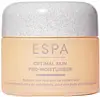
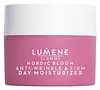
ESPA Optimal Skin Pro-Moisturiser Versus Lumene Lumo Nordic Bloom Anti-Wrinkle And Firm Day Moisturizer
This moisturizer is formulated around Xylitylglucoside and Inulin to hydrate skin.
This anti-aging day moisturizer is formulated around Adenosine to soften the look of wrinkles.


What's inside
What's inside
 Key Ingredients
Benefits
Concerns
Ingredients Side-by-side
Water
Skin ConditioningCoconut Alkanes
Emollient


Polyglyceryl-6 Distearate
Emulsifying

Helianthus Annuus Seed Oil Unsaponifiables
Emollient
Polyglyceryl-2 Stearate
Emulsifying
Cetyl Stearate
Emollient
Xylitylglucoside
Humectant
Pectin
Emulsion StabilisingInulin
Skin Conditioning
Coco-Caprylate/Caprate
Emollient
Plukenetia Volubilis Seed Oil
Emollient
Propanediol
Solvent
Ethylhexyl Palmitate
Emollient
Caprylic/Capric Triglyceride
Masking
Glyceryl Stearate
Emollient
Anhydroxylitol
Humectant
Cetyl Alcohol
Emollient
Phenoxyethanol
Preservative
Stearyl Alcohol
Emollient
Glycerin
Humectant
Isostearyl Isostearate
Emollient
Potassium Cetyl Phosphate
EmulsifyingJojoba Esters
Emollient
Helianthus Annuus Seed Oil
Emollient
Limonene
Perfuming


Citrus Aurantium Dulcis Peel Oil
Masking
Sclerotium Gum
Emulsion StabilisingXylitol
Humectant
Alpha-Glucan Oligosaccharide
Cleansing
Polyglyceryl-3 Beeswax
Emulsifying
Benzoic Acid
Masking
Citrus Aurantium Amara Flower Oil
Masking
Citrus Aurantium Bergamia Fruit Oil
Masking
Citrus Nobilis Peel Oil
Masking
Parfum
Masking
Sodium Hydroxide
BufferingDehydroacetic Acid
Preservative
Glucose
Humectant
Alaria Esculenta Extract
Skin Protecting
Lonicera Caprifolium Flower Extract
Perfuming
Linalool
Perfuming
Rosmarinus Officinalis Leaf Extract
AntimicrobialAsparagus Officinalis Stem Extract
Skin ConditioningMyrothamnus Flabellifolia Leaf/Stem Extract
HumectantEthylhexylglycerin
Skin ConditioningSilica Dimethyl Silylate
EmollientLonicera Japonica Flower Extract
Skin ConditioningSorbitol
Humectant
Hydrolyzed Yeast Protein
Skin ConditioningStearic Acid
Cleansing
Sodium Benzoate
Masking
Butylene Glycol
Humectant
Lactic Acid
Buffering






Lecithin
Emollient
Caprylyl Glycol
Emollient
Ascorbic Acid
Antioxidant

Calcium Gluconate
HumectantCitric Acid
Buffering
Gluconolactone
Chelating

Potassium Sorbate
Preservative
Geraniol
Perfuming
Jasminum Officinale Flower Extract
Masking
Rosa Damascena Flower Oil
Masking
Citronellol
Perfuming
Sodium Hyaluronate
Humectant

Xanthan Gum
EmulsifyingTocopheryl Acetate
Antioxidant
Citral
Perfuming
Hexylene Glycol
EmulsifyingTocopherol
Antioxidant
Glyceryl Linoleate
Emollient
Glyceryl Linolenate
Emollient
Disodium EDTA
ChelatingSodium Ascorbyl Phosphate
Antioxidant
Retinyl Palmitate
Skin Conditioning
Glyceryl Caprylate
EmollientOleic Acid
Emollient
Iron Oxides
Water, Coconut Alkanes, Polyglyceryl-6 Distearate, Helianthus Annuus Seed Oil Unsaponifiables, Polyglyceryl-2 Stearate, Cetyl Stearate, Xylitylglucoside, Pectin, Inulin, Coco-Caprylate/Caprate, Plukenetia Volubilis Seed Oil, Propanediol, Ethylhexyl Palmitate, Caprylic/Capric Triglyceride, Glyceryl Stearate, Anhydroxylitol, Cetyl Alcohol, Phenoxyethanol, Stearyl Alcohol, Glycerin, Isostearyl Isostearate, Potassium Cetyl Phosphate, Jojoba Esters, Helianthus Annuus Seed Oil, Limonene, Citrus Aurantium Dulcis Peel Oil, Sclerotium Gum, Xylitol, Alpha-Glucan Oligosaccharide, Polyglyceryl-3 Beeswax, Benzoic Acid, Citrus Aurantium Amara Flower Oil, Citrus Aurantium Bergamia Fruit Oil, Citrus Nobilis Peel Oil, Parfum, Sodium Hydroxide, Dehydroacetic Acid, Glucose, Alaria Esculenta Extract, Lonicera Caprifolium Flower Extract, Linalool, Rosmarinus Officinalis Leaf Extract, Asparagus Officinalis Stem Extract, Myrothamnus Flabellifolia Leaf/Stem Extract, Ethylhexylglycerin, Silica Dimethyl Silylate, Lonicera Japonica Flower Extract, Sorbitol, Hydrolyzed Yeast Protein, Stearic Acid, Sodium Benzoate, Butylene Glycol, Lactic Acid, Lecithin, Caprylyl Glycol, Ascorbic Acid, Calcium Gluconate, Citric Acid, Gluconolactone, Potassium Sorbate, Geraniol, Jasminum Officinale Flower Extract, Rosa Damascena Flower Oil, Citronellol, Sodium Hyaluronate, Xanthan Gum, Tocopheryl Acetate, Citral, Hexylene Glycol, Tocopherol, Glyceryl Linoleate, Glyceryl Linolenate, Disodium EDTA, Sodium Ascorbyl Phosphate, Retinyl Palmitate, Glyceryl Caprylate, Oleic Acid, Iron Oxides
Water
Skin ConditioningCaprylic/Capric Glycerides
EmollientShea Butter Ethyl Esters
Emollient
Glycerin
Humectant
Butyrospermum Parkii Butter
Skin Conditioning
Betaine
Humectant
Vaccinium Vitis-Idaea Fruit Juice
Skin ConditioningPropanediol
Solvent
Cetearyl Alcohol
Emollient
Hydrogenated Olive Oil Lauryl Esters
Emulsion Stabilising
Sucrose Distearate
Emollient
Sucrose Stearate
EmollientHippophae Rhamnoides Oil
Emollient
Vaccinium Vitis-Idaea Fruit Extract
Antioxidant
Rubus Chamaemorus Seed Oil
Skin Conditioning
Vaccinium Vitis-Idaea Seed Oil
Antioxidant
Sodium Hyaluronate
Humectant
Phenoxyethanol
Preservative
Silica
Abrasive
Dipalmitoyl Hydroxyproline
Skin Conditioning
Dimethicone
Emollient
Tocopherol
Antioxidant
Alcohol Denat.
Antimicrobial

Xanthan Gum
EmulsifyingPalmitic Acid
Emollient
Helianthus Annuus Seed Oil
Emollient
Ethylhexylglycerin
Skin ConditioningHydrogenated Vegetable Oil
Emollient
Sodium Gluconate
ChelatingTocopheryl Acetate
Antioxidant
Adenosine
Skin Conditioning
Sodium Hydroxide
BufferingGlycine Soja Oil
Emollient
Biosaccharide Gum-1
Humectant
Rosmarinus Officinalis Leaf Extract
AntimicrobialParfum
Masking
CI 77491
Cosmetic ColorantWater, Caprylic/Capric Glycerides, Shea Butter Ethyl Esters, Glycerin, Butyrospermum Parkii Butter, Betaine, Vaccinium Vitis-Idaea Fruit Juice, Propanediol, Cetearyl Alcohol, Hydrogenated Olive Oil Lauryl Esters, Sucrose Distearate, Sucrose Stearate, Hippophae Rhamnoides Oil, Vaccinium Vitis-Idaea Fruit Extract, Rubus Chamaemorus Seed Oil, Vaccinium Vitis-Idaea Seed Oil, Sodium Hyaluronate, Phenoxyethanol, Silica, Dipalmitoyl Hydroxyproline, Dimethicone, Tocopherol, Alcohol Denat., Xanthan Gum, Palmitic Acid, Helianthus Annuus Seed Oil, Ethylhexylglycerin, Hydrogenated Vegetable Oil, Sodium Gluconate, Tocopheryl Acetate, Adenosine, Sodium Hydroxide, Glycine Soja Oil, Biosaccharide Gum-1, Rosmarinus Officinalis Leaf Extract, Parfum, CI 77491
Ingredients Explained
These ingredients are found in both products.
Ingredients higher up in an ingredient list are typically present in a larger amount.
Ethylhexylglycerin is created from glycerin. It is a multitasker ingredient that:
The CIR Expert Panel found minimal skin absorption or sensitization of any kind in a safety assessment. Though this ingredient is considered well-tolerated, a small number of cases of allergic dermatitis have been published since 2002. Just be sure to patch test if you are unsure.
Industry-reported use ranges from 8% in rinse-off products and 2% in leave-on formulations.
Learn more about EthylhexylglycerinGlycerin (or glycerol) is a compound naturally found in your skin. It's a powerhouse humectant that pulls water into the stratum corneum.
Topically, glycerin does several things at once:
Your skin makes glycerin on its own (mostly from sebaceous oil breakdown) and shuttles it to your outermost layer of skin, or your epidermis, via aquaporin-3.
Aquaporin-3 is a transporter that is essential for normal skin hydration, elasticity, and repair. Interestingly, mice lacking in AQP3 have dry and less elastic skin that can be fully corrected with glycerin.
This ingredient is non-irritating, plays well with almost every ingredient, and works across all skin types. Typical use is anywhere between 3-10% but can go up to 79% in some leave-on products.
Just know very high concentrations (>40%) can feel tacky in low humidity.
Glycerin is the name for this ingredient in American English. British English uses Glycerol/Glycerine.
Learn more about GlycerinHelianthus Annuus Seed Oil is a plant oil derived from the seeds of a sunflower.
It is rich in fatty acids, primarily linoleic acid and oleic acid. This gives it emollient and skin conditioning properties.
The reason this ingredient is so effective is because it forms a thin film on the skin that reduces transepidermal water loss (TEWL) while supplying linoleic acid to the stratum corneum to improve barrier strength.
The high linoleic acid content is particularly noteworthy for acne-prone skin.
Research suggests that acne-prone skin tends to be deficient in linoleic acid in sebum. Topical application may help replenish this to support a healthier follicular environment and less comedone-promoting sebum.
One randomized study found sunflower seed oil preserved skin barrier integrity in adult volunteers with and without atopic dermatitis (outperforming olive oil).
This ingredient is well-studied, gentle, and an effective emollient suitable for most skin types.
On fungal acne: This ingredient may not be Fungal acne (Malassezia folliculitis) safe. This is because it contains fatty acids with carbon chain lengths in the C11-C24 range.
Learn more about Helianthus Annuus Seed OilParfum is a catch-all term for an ingredient or more that is used to give a scent to products.
Also called "fragrance", this ingredient can be a blend of hundreds of chemicals or plant oils. This means every product with "fragrance" or "parfum" in the ingredients list is a different mixture.
For instance, Habanolide is a proprietary trade name for a specific aroma chemical. When used as a fragrance ingredient in cosmetics, most aroma chemicals fall under the broad labeling category of “FRAGRANCE” or “PARFUM” according to EU and US regulations.
The term 'parfum' or 'fragrance' is not regulated in many countries. In many cases, it is up to the brand to define this term.
For instance, many brands choose to label themselves as "fragrance-free" because they are not using synthetic fragrances. However, their products may still contain ingredients such as essential oils that are considered a fragrance by INCI standards.
One example is Calendula flower extract. Calendula is an essential oil that still imparts a scent or 'fragrance'.
Depending on the blend, the ingredients in the mixture can cause allergies and sensitivities on the skin. Some ingredients that are known EU allergens include linalool and citronellol.
Parfum can also be used to mask or cover an unpleasant scent.
The bottom line is: not all fragrances/parfum/ingredients are created equally. If you are worried about fragrances, we recommend taking a closer look at an ingredient. And of course, we always recommend speaking with a professional.
Learn more about ParfumPhenoxyethanol is one of the most widely used preservatives in skincare (and for good reason!).
It has a large spectrum of antimicrobial activity and especially effective bacteria, yeast, and mold while only having a weak effect on your skin's natural microbiome.
On a cellular level, it disrupts the cell membranes of microbes by poking holes that make the cell leak. This shuts down the chemical reactions the microbe needs to make energy so it can no longer survive.
Another perk of this ingredient is that it stays functional across a wide pH range (3-10).
You'll often see it paired with boosters like Ethylhexylglycerin; one study showed that a 1:9 ratio of Ethylhexylglycerin to Phenoxyethanol damages bacterial membranes as effectively as doubling the Phenoxyethanol concentration on its own.
Typical use concentrations range from 0.3-1% depending on the formula, and this ingredient is capped at 1% int the EU.
Safety-wise, the fear mongering does not hold up to the evidence. The EU's Scientific Committee on Consumer Safety and FDA consider it safe as a preservative at up to 1%, including for children of all ages.
Adverse systemic effects only showed up in animal studies at exposures roughly 200x higher than what people get from cosmetics. And despite its very widespread use, this ingredient is a rare sensitizer and allergic reactions are uncommon.
Learn more about PhenoxyethanolPropanediol is an all-star ingredient. It softens, hydrates, and smooths the skin.
It’s often used to:
Propanediol is not likely to cause sensitivity and considered safe to use. It is derived from corn or petroleum with a clear color and no scent.
Learn more about PropanediolThis is a botanical extract from the rosemary plant (the same one you cook with). In skincare, it mostly works as a skin conditioning agent.
Its activity comes from a handful of polyphenols, carnosic acid, carnosol, and rosmarinic acid. Almost 90% of the antioxidant activity of this ingredient can be attributed to canosol and carnosic acid.
These compounds protect your skin two ways:
1) They fight off free radicals, or the unstable molecules from things like sun and pollution that age and damage skin.
2) They help calm inflammation by switching off the chemical signals that tell skin to get red and irritated.
Lab studies also suggest that rosmarinic acid may help protect collagen and slow sugar-related damage to it.
The Cosmetic Ingredient Review has concluded rosemary-derived ingredients to be safe when formulated to be non-sensitizing.
Rosemary can occasionally cause allergic contact dermatitis (due to carnosol), so be sure to patch test if you have reactive or fragrance-sensitive skin.
Learn more about Rosmarinus Officinalis Leaf ExtractSodium Hyaluronate is the salt form of hyaluronic acid. It is a long sugar chain that is naturally found in your skin, joints, and connective tissue that maintains hydration and elasticity.
In skincare, it works as a humectant. It pulls water from the environment and deeper layers of skin and binds it to the surface.
Interestingly, the size of the molecule affects its behavior:
Some clinical evidence links low molecular weight versions to improved wrinkle depth, elasticity, anti-inflammatory effects, and barrier repair.
Many serums use a blend of both weights so you can get surface hydration plus longer-lasting and deeper effects.
You'll typically see concentrations between 0.1-2% for this ingredient.
Learn more about Sodium HyaluronateSodium Hydroxide is also known as lye or caustic soda. It is used to adjust the pH of products; many ingredients require a specific pH to be effective.
In small amounts, sodium hydroxide is considered safe to use. However, large amounts may cause chemical burns due to its high alkaline.
Your skin has a natural pH and acid mantle. This acid mantle helps prevent harmful bacteria from breaking through. The acid mantle also helps keep your skin hydrated.
"Alkaline" refers to a high pH level. A low pH level would be considered acidic.
Learn more about Sodium HydroxideTocopherol is a fat-soluble antioxidant known as Vitamin E.
You'll find this ingredient in the vast majority of skincare (for good reason). It works to neutralize free radicals, or unstable molecules generated by UV exposure, pollution, and other environmental stressors, before they can cause oxidative damage to your skin cells.
Topically applied tocopherol has been shown to protect against UV damage by ramping up the skin's own natural defense enzymes.
It also acts as a skin conditioning agent; some studies show that regular topical use can improve the skin's water-binding capacity over 2-4 weeks.
This ingredient is especially loved for being a team player. When combined with Vitamin C, the photoprotective effect of both ingredients roughly doubles and the combo also helps reduce UV-induced DNA damage.
This ingredient has some brightening potential but it's more of a prevention ingredient than spot-fader. Cell studies show it can slow down melanin production but it's worth noting that it's not the most powerful brightener out there.
In formulations, it also serves as a stabilizer that helps protect other oxidation-prone ingredients from degrading.
Concentrations usually range from 0.1-1% in most leave-on products.
Learn more about TocopherolTocopheryl Acetate is a stable, shelf-friendly form of vitamin E.
Formulators love it because plain vitamin E oxidizes quickly once it hits air. This acetate version stays stable and resists going off, helping to extend a product's shelf life.
It's actually inactive on its own and works like a slow-release "storage" form; the enzymes in your skin called esterases gradually convert it into active vitamin E over time.
One in vivo study showed 5% of the acetate in the living layer of the epidermis converted to vitamin E after 5 days of application. This study also found the skin gained protection against UV damage even though the conversion was slow and small.
Once converted, vitamin E acts as a skin's main fat-soluble antioxidant that fights free radicals to protect skin from damage.
Topical vitamin E generally boosts the skin's photoprotection, and it reduced UV-damage in animal models.
This ingredient has some brightening potential but it's more of a prevention ingredient than spot-fader. Cell studies show it can slow down melanin production but it's worth noting that it's not the most powerful brightener out there.
Overall, it has a pretty solid safety profile and has been found to be non-irritating and non-comedogenic. Allergic reactions may happen but stay rare due to how widely the ingredient gets used.
The concentration will vary depending on the formula; industry data shows 0.1% in baby lotions, 3% in lipsticks, and 5% in foot powders. You can also find this ingredient at 100% in a pure vitamin E oil.
Most leave-on skincare keeps it at the lower end, often between 0.5-1%.
Learn more about Tocopheryl AcetateWater. It's the most common cosmetic ingredient of all. You'll usually see it at the top of ingredient lists, meaning that it makes up the largest part of the product.
So why is it so popular? Water most often acts as a solvent - this means that it helps dissolve other ingredients into the formulation.
You'll also recognize water as that liquid we all need to stay alive. If you see this, drink a glass of water. Remember to stay hydrated!
Learn more about WaterXanthan gum is used as a stabilizer and thickener within cosmetic products. It helps give products a sticky, thick feeling - preventing them from being too runny.
On the technical side of things, xanthan gum is a polysaccharide - a combination consisting of multiple sugar molecules bonded together.
Xanthan gum is a pretty common and great ingredient. It is a natural, non-toxic, non-irritating ingredient that is also commonly used in food products.
Learn more about Xanthan Gum

