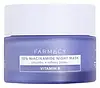
This smoothing overnight mask is formulated around Niacinamide and Panthenol to refine skin texture and strengthen the skin barrier.
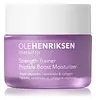
This barrier-repair moisturizer is formulated around Niacinamide and Acetyl Hexapeptide-8 to strengthen the skin barrier and soften the look of wrinkles.


What's inside
What's inside
 Key Ingredients
Benefits
Concerns
Ingredients Side-by-side
Water
Skin ConditioningPropanediol
Solvent

Niacinamide
Smoothing










C15-19 Alkane
SolventCaprylic/Capric Triglyceride
Masking
Glycerin
Humectant
Panthenol
Skin Conditioning
1,2-Hexanediol
Skin Conditioning
Cetearyl Olivate


Cetearyl Alcohol
Emollient



Sorbitan Olivate
Emulsifying
Butyrospermum Parkii Butter
Skin Conditioning
Betaine
Humectant
Vaccinium Corymbosum Seed Oil
Antioxidant

Tocopheryl Acetate
Antioxidant
Beta-Glucan
Skin Conditioning
Bisabolol
Antioxidant
Allantoin
Skin Conditioning
Melia Azadirachta Flower Extract
Skin ConditioningGlycogen
HumectantCoccinia Indica Fruit Extract
Skin Conditioning
Lactobacillus Ferment
Skin Conditioning
Corallina Officinalis Extract
Skin Conditioning
Solanum Melongena Fruit Extract
Skin ConditioningAloe Barbadensis Flower Extract
EmollientSimmondsia Chinensis Seed Oil
Emollient
Zingiber Officinale Root Extract
Masking
Curcuma Longa Root Extract
Antioxidant
Ocimum Basilicum Flower/Leaf Extract
TonicOcimum Sanctum Leaf Extract
Skin ConditioningMaltodextrin
Absorbent
Arginine
Masking
Carbomer
Emulsion StabilisingPentylene Glycol
Skin Conditioning
Sodium Phytate
ChelatingMelia Azadirachta Leaf Extract
Skin ConditioningCaprylyl Glycol
Emollient
Water, Propanediol, Niacinamide, C15-19 Alkane, Caprylic/Capric Triglyceride, Glycerin, Panthenol, 1,2-Hexanediol, Cetearyl Olivate, Cetearyl Alcohol, Sorbitan Olivate, Butyrospermum Parkii Butter, Betaine, Vaccinium Corymbosum Seed Oil, Tocopheryl Acetate, Beta-Glucan, Bisabolol, Allantoin, Melia Azadirachta Flower Extract, Glycogen, Coccinia Indica Fruit Extract, Lactobacillus Ferment, Corallina Officinalis Extract, Solanum Melongena Fruit Extract, Aloe Barbadensis Flower Extract, Simmondsia Chinensis Seed Oil, Zingiber Officinale Root Extract, Curcuma Longa Root Extract, Ocimum Basilicum Flower/Leaf Extract, Ocimum Sanctum Leaf Extract, Maltodextrin, Arginine, Carbomer, Pentylene Glycol, Sodium Phytate, Melia Azadirachta Leaf Extract, Caprylyl Glycol
Water
Skin ConditioningPropanediol
Solvent
Dicaprylyl Carbonate
EmollientGlycerin
Humectant
Methylpropanediol
SolventCetearyl Alcohol
Emollient
Stearyl Alcohol
Emollient
Mangifera Indica Seed Butter
Skin Conditioning
Niacinamide
Smoothing
Acetyl Hexapeptide-1
Skin Conditioning
Acetyl Hexapeptide-8
Humectant
Acetyl Octapeptide-3
Humectant
Acetyl Tetrapeptide-2
Skin Conditioning
Acetyl Dipeptide-1 Cetyl Ester
Skin Conditioning
Palmitoyl Tripeptide-1
Skin Conditioning
Palmitoyl Tetrapeptide-7
Skin Conditioning
Carnosine
Skin Conditioning
Ceramide NP
Skin Conditioning
Ceramide AP
Skin Conditioning
Ceramide EOP
Skin Conditioning
Collagen
Moisturising
Serine
Masking
Alanine
Masking
Glycine
Buffering
Glutamic Acid
Humectant
Lysine Hcl
Skin Conditioning
Threonine
Arginine
Masking
Proline
Skin Conditioning
Hyaluronic Acid
Humectant
Sodium Hyaluronate
Humectant
Linoleic Acid
Cleansing
Linolenic Acid
Cleansing
Sodium PCA
Humectant
Sodium Lactate
Buffering
Panthenol
Skin Conditioning
Tocopherol
Antioxidant
Tocopheryl Acetate
Antioxidant
Betaine
Humectant
PCA
Humectant
Cyanocobalamin
Skin ConditioningXylitol
Humectant
Anhydroxylitol
Humectant
Xylitylglucoside
Humectant
Sorbitan Olivate
Emulsifying
Carbomer
Emulsion StabilisingHydroxyethylcellulose
Emulsion StabilisingXanthan Gum
EmulsifyingCetearyl Olivate
Sorbitan Laurate
Emulsifying
Phytosphingosine
Skin Conditioning
Cholesterol
Emollient
Polysorbate 60
Emulsifying
Butylene Glycol
Humectant
Hydroxyacetophenone
Antioxidant
Glycine Soja Oil
Emollient
Acrylates/C10-30 Alkyl Acrylate Crosspolymer
Emulsion StabilisingPolysorbate 20
Emulsifying
Ammonium Acryloyldimethyltaurate/Beheneth-25 Methacrylate Crosspolymer
Emulsion StabilisingDimethicone
Emollient
Sodium Phytate
ChelatingSodium Lauroyl Lactylate
EmulsifyingPentaerythrityl Tetra-Di-T-Butyl Hydroxyhydrocinnamate
Antioxidant
Leuconostoc/Radish Root Ferment Filtrate
Antimicrobial
Citric Acid
Buffering
Caprylyl Glycol
Emollient
Ethylhexylglycerin
Skin ConditioningPhenoxyethanol
Preservative
Parfum
Masking
Citral
Perfuming
Limonene
Perfuming
Linalool
Perfuming
Water, Propanediol, Dicaprylyl Carbonate, Glycerin, Methylpropanediol, Cetearyl Alcohol, Stearyl Alcohol, Mangifera Indica Seed Butter, Niacinamide, Acetyl Hexapeptide-1, Acetyl Hexapeptide-8, Acetyl Octapeptide-3, Acetyl Tetrapeptide-2, Acetyl Dipeptide-1 Cetyl Ester, Palmitoyl Tripeptide-1, Palmitoyl Tetrapeptide-7, Carnosine, Ceramide NP, Ceramide AP, Ceramide EOP, Collagen, Serine, Alanine, Glycine, Glutamic Acid, Lysine Hcl, Threonine, Arginine, Proline, Hyaluronic Acid, Sodium Hyaluronate, Linoleic Acid, Linolenic Acid, Sodium PCA, Sodium Lactate, Panthenol, Tocopherol, Tocopheryl Acetate, Betaine, PCA, Cyanocobalamin, Xylitol, Anhydroxylitol, Xylitylglucoside, Sorbitan Olivate, Carbomer, Hydroxyethylcellulose, Xanthan Gum, Cetearyl Olivate, Sorbitan Laurate, Phytosphingosine, Cholesterol, Polysorbate 60, Butylene Glycol, Hydroxyacetophenone, Glycine Soja Oil, Acrylates/C10-30 Alkyl Acrylate Crosspolymer, Polysorbate 20, Ammonium Acryloyldimethyltaurate/Beheneth-25 Methacrylate Crosspolymer, Dimethicone, Sodium Phytate, Sodium Lauroyl Lactylate, Pentaerythrityl Tetra-Di-T-Butyl Hydroxyhydrocinnamate, Leuconostoc/Radish Root Ferment Filtrate, Citric Acid, Caprylyl Glycol, Ethylhexylglycerin, Phenoxyethanol, Parfum, Citral, Limonene, Linalool
Reviews
Ingredients Explained
These ingredients are found in both products.
Ingredients higher up in an ingredient list are typically present in a larger amount.
Arginine is a semi-essential amino acid. This just means our bodies can product a bit on its own, but sometimes needs a little boost from food sources.
It is a part of your skin's natural moisturizing factor (NMF), or the water-loving molecules in your outermost layer of skin (stratum corneum) that keeps everything hydrated and happy.
Here's an interesting thing about Arginine: your skin converts it into urea through the Krebs-Henseleit urea cycle. Urea is one of the most effective humectants your skin naturally produces.
A clinical study showed applying 2.5% arginine hydrochloride to atopic dermatitis skin showed significant urea levels in the stratum corneum and improved moisture in just four weeks.
Arginine is also a precursor to nitric oxide; nitric oxide improves microcirculation and supports wound healing and collagen synthesis.
One study found that an amino acid complex containing Arginine reduced skin irritation, improved hydration, and accelerated skin repair in clinical / in-vivo studies.
Arginine itself is an amino acid and not a fatty acid, oil, or ester. On its own, it's not a direct food source for Malassezia, or the yeast that causes fungal acne.
Learn more about ArginineBetaine is a humectant. Like hyaluronic acid, it helps attract and retain moisture in the skin. It’s known for being gentle and for helping the skin maintain balanced hydration.
Betaine is mainly used to improve hydration and support calmer skin. It helps skin cells regulate water balance because it functions as an osmolyte.
Some studies suggest betaine may support making skin tone more even.
Fun fact: Betaine naturally exists in the skin and the body. In cosmetic products, it can be either plant-derived (most commonly from sugar beets) or synthetically produced for consistency and stability.
Betaine is also known as trimethylglycine.
Learn more about BetaineCaprylyl Glycol is a humectant, skin conditioner, emollient, and preservative booster derived from either caprylic acid or synthetically created.
Typical use levels vary from 0.3-1% as a preservative booster and go up to 2% to condition skin.
Because it is not a free-fatty acid, this ingredient is fungal acne safe (there's nothing for Malassezia to feed on).
Learn more about Caprylyl GlycolCarbomer is a synthetic thickening and gelling agent. It's basically the ingredient that gives a lot of serums, gels, creams, and sunscreens their smooth, non-sticky texture.
Although legally permitted at very high levels, carbomers are normally used at concentrations below 1%.
It also needs to be neutralized to actually thicken, and because it is a large molecule, it doesn't really penetrate the skin barrier.
Allergy-wise, the risk is very low. Clinical studies show carbomers have low potential for skin irritation/sensitization even at concentrations up to 100%.
A 2024 UK study patch-tested 1,302 patients and found true allergy to the parent group of carbomer to be rare with no confirmed relevant reactions.
Learn more about CarbomerCetearyl alcohol is a waxy mixture of two fatty alcohols: cetyl alcohol and stearyl alcohol. It is an emollient and emulsifier.
Despite having "alcohol" in its name, it has nothing to do with drying solvent alcohols; the FDA also allows "alcohol-free" products to contain fatty alcohols like this ingredient.
It plays several roles in a formula:
Typical use levels for this ingredient sit around 1-10% and the Cosmetic Ingredient Review Expert Panel has affirmed safety at concentrations up to 25% in leave-on products.
Multiple assessments have found it to be non-irritating and non-sensitizing to most people.
However, there have been some cases of allergic contact dermatitis in patients with chronically compromised skin barriers.
Cetearyl alcohol has a comedogenic rating of 2 and irritancy rating of 1. Both of these numbers come from the 1989 study that used rabbit ears; a "2" means mildly comedogenic and a "1" means low irritancy.
Here's the catch: rabbit skin is more sensitive than human skin and throws a lot of false positives. A 1996 reappraisal found that ingredients rated 1-2 in the rabbit ear tests are generally safe for humans.
Remember comedogenic ratings are unable to assess the entire formula of a product or how it will react on your skin. Just be sure to patch test if you are unsure about certain ingredients.
This ingredient is not fungal acne safe. Cetearyl alcohol is a fatty alcohol with chain lengths that fall within the range that Malassezia can metabolize.
A 2019 study has also observed Malassezia growth in the presence of this ingredient, confirming it to be not-fungal acne safe.
Learn more about Cetearyl AlcoholCetearyl Olivate is a plant-derived emulsifier and texture enhancer. It helps keep the oil and water phases from separating so your formulas stay stable.
You'll likely see it combined with Sorbitan Olivate (together sold as the trade name Olivem 1000). This combination generates a liquid crystal structure that closely resemble the lipid organization of the stratum corneum.
These "skin-like" liquid crystals improve skin barrier integrity and promote the delivery of actives into the skin.
This ingredient is well-tolerated and has no significant sensitization data.
Because it is derived from the fatty acids in olive oil, this ingredient may not be fungal acne safe.
Learn more about Cetearyl OlivateGlycerin (or glycerol) is a compound naturally found in your skin. It's a powerhouse humectant that pulls water into the stratum corneum.
Topically, glycerin does several things at once:
Your skin makes glycerin on its own (mostly from sebaceous oil breakdown) and shuttles it to your outermost layer of skin, or your epidermis, via aquaporin-3.
Aquaporin-3 is a transporter that is essential for normal skin hydration, elasticity, and repair. Interestingly, mice lacking in AQP3 have dry and less elastic skin that can be fully corrected with glycerin.
This ingredient is non-irritating, plays well with almost every ingredient, and works across all skin types. Typical use is anywhere between 3-10% but can go up to 79% in some leave-on products.
Just know very high concentrations (>40%) can feel tacky in low humidity.
Glycerin is the name for this ingredient in American English. British English uses Glycerol/Glycerine.
Learn more about GlycerinNiacinamide is a multitasking form of vitamin B3 that strengthens the skin barrier, reduces pores and dark spots, regulates oil, and improves signs of aging.
And the best part? It's gentle and well-tolerated by most skin types, including sensitive and reactive skin.
You might have heard of "niacin flush", or the reddening of skin that causes itchiness. Niacinamide has not been found to cause this.
In very rare cases, some individuals may not be able to tolerate niacinamide at all or experience an allergic reaction to it.
If you are experiencing flaking, irritation, and dryness with this ingredient, be sure to double check all your products as this ingredient can be found in all categories of skincare.
When incorporating niacinamide into your routine, look out for concentration amounts. Typically, 5% niacinamide provides benefits such as fading dark spots. However, if you have sensitive skin, it is better to begin with a smaller concentration.
When you apply niacinamide to your skin, your body converts it into nicotinamide adenine dinucleotide (NAD). NAD is an essential coenzyme that is already found in your cells as "fuel" and powers countless biological processes.
In your skin, NAD helps repair cell damage, produce new healthy cells, support collagen production, strengthen the skin barrier, and fight environmental stressors (like UV and pollution).
Our natural NAD levels start to decline with age, leading to slower skin repair, visible aging, and a weaker skin barrier. By providing your skin niacinamide, you're recharging your skin's NAD levels. This leads to stronger, healthier, and younger looking skin.
Another name for vitamin B3 is nicotinamide. This vitamin is water-soluble and our bodies don't store it. We obtain Vitamin B3 from either food or skincare. Meat, fish, wheat, yeast, and leafy greens contain vitamin B3.
The type of niacinamide used in skincare is synthetically created.
Learn more about NiacinamidePanthenol is a common ingredient that helps hydrate and soothe the skin. It is found naturally in our skin and hair.
There are two forms of panthenol: D and L.
D-panthenol is also known as dexpanthenol. Most cosmetics use dexpanthenol or a mixture of D and L-panthenol.
Panthenol is famous due to its ability to go deeper into the skin's layers. Using this ingredient has numerous pros (and no cons):
Like hyaluronic acid, panthenol is a humectant. Humectants are able to bind and hold large amounts of water to keep skin hydrated.
This ingredient works well for wound healing. It works by increasing tissue in the wound and helps close open wounds.
Once oxidized, panthenol converts to pantothenic acid. Panthothenic acid is found in all living cells.
This ingredient is also referred to as pro-vitamin B5.
Learn more about PanthenolPropanediol is an all-star ingredient. It softens, hydrates, and smooths the skin.
It’s often used to:
Propanediol is not likely to cause sensitivity and considered safe to use. It is derived from corn or petroleum with a clear color and no scent.
Learn more about PropanediolSodium Phytate is the sodium salt of Phytic acid, a compound that plants store phosphorus in. It's the plant-derived alternative to ingredients like Disodium EDTA.
In skincare, this ingredient is a chelator that grabs onto trace metal ions like iron and copper that sneak into formulas through water/raw materials.
Those metals speed up oxidation so binding them keeps oils, fragrance, and actives from going off, stops color changes, and helps the preservative system work harder.
Survey data shows usage levels range from 0.0099%-0.5% in leave-on products, 0.025%-0.3% in rinse-off, and up to 0.05% in eye-area products. Suppliers typically recommend a range between 0.05-0.5%.
Learn more about Sodium PhytateSorbitan Olivate is created from the fatty acids in olive oil and sorbitol.
This ingredient is an oil in water emulsifier. It helps stabilize a product by preventing oils and waters from separating. Sorbitan Olivate also helps hydrate the skin.
This ingredient is also known as part of Olivem 1000, with Cetearyl Olivate being the other part.
According to a manufacturer, this ingredient helps preserve the natural microbiome of skin. Having a healthy microbiome helps keep our skin healthy and protects against harmful bacteria.
Please note, having a healthy microbiome is different from fungal acne; a healthy microbiome includes small amounts of yeast that normally live on your skin without causing problems.
Fungal acne happens when one type of yeast (Malassezia) grows out of control. This is usually because it's feeding on certain oils or fatty acids. Due to the olive oil base, this ingredient may not be fungal acne safe.
Learn more about Sorbitan OlivateTocopheryl Acetate is a stable, shelf-friendly form of vitamin E.
Formulators love it because plain vitamin E oxidizes quickly once it hits air. This acetate version stays stable and resists going off, helping to extend a product's shelf life.
It's actually inactive on its own and works like a slow-release "storage" form; the enzymes in your skin called esterases gradually convert it into active vitamin E over time.
One in vivo study showed 5% of the acetate in the living layer of the epidermis converted to vitamin E after 5 days of application. This study also found the skin gained protection against UV damage even though the conversion was slow and small.
Once converted, vitamin E acts as a skin's main fat-soluble antioxidant that fights free radicals to protect skin from damage.
Topical vitamin E generally boosts the skin's photoprotection, and it reduced UV-damage in animal models.
This ingredient has some brightening potential but it's more of a prevention ingredient than spot-fader. Cell studies show it can slow down melanin production but it's worth noting that it's not the most powerful brightener out there.
Overall, it has a pretty solid safety profile and has been found to be non-irritating and non-comedogenic. Allergic reactions may happen but stay rare due to how widely the ingredient gets used.
The concentration will vary depending on the formula; industry data shows 0.1% in baby lotions, 3% in lipsticks, and 5% in foot powders. You can also find this ingredient at 100% in a pure vitamin E oil.
Most leave-on skincare keeps it at the lower end, often between 0.5-1%.
Learn more about Tocopheryl AcetateWater. It's the most common cosmetic ingredient of all. You'll usually see it at the top of ingredient lists, meaning that it makes up the largest part of the product.
So why is it so popular? Water most often acts as a solvent - this means that it helps dissolve other ingredients into the formulation.
You'll also recognize water as that liquid we all need to stay alive. If you see this, drink a glass of water. Remember to stay hydrated!
Learn more about Water

