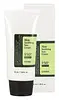
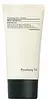
This hybrid sunscreen covers the full UV range and blocks ~98% of UVB at SPF 50.
This chemical sunscreen covers the full UV range and blocks ~98% of UVB at SPF 50.

What's inside
What's inside
 Key Ingredients
Benefits
Concerns
Ingredients Side-by-side
Water
Skin ConditioningEthylhexyl Methoxycinnamate
UV Absorber


Glycerin
Humectant


Propylene Glycol
Humectant

Cyclopentasiloxane
Emollient
Phenylbenzimidazole Sulfonic Acid
UV Absorber
Bis-Ethylhexyloxyphenol Methoxyphenyl Triazine
Skin Conditioning
Dicaprylyl Carbonate
EmollientIsoamyl P-Methoxycinnamate
UV Absorber
Potassium Cetyl Phosphate
EmulsifyingAlcohol
Antimicrobial

Dimethicone
Emollient
Butylene Glycol
Humectant
Glyceryl Stearate
Emollient
Titanium Dioxide
Cosmetic Colorant
C14-22 Alcohols
Emulsion Stabilising
Polymethyl Methacrylate

Cetearyl Alcohol
Emollient


PEG-100 Stearate
Surfactant
Triethanolamine
BufferingSilica
Abrasive

Sodium Hydroxide
BufferingDimethicone/Vinyl Dimethicone Crosspolymer
Skin Conditioning
C12-20 Alkyl Glucoside
EmulsifyingAluminum Hydroxide
EmollientStearic Acid
Cleansing
Parfum
Masking

Caprylyl Glycol
Emollient
Phenoxyethanol
Preservative
Acrylates/C10-30 Alkyl Acrylate Crosspolymer
Emulsion StabilisingAloe Arborescens Leaf Extract
MoisturisingDipotassium Glycyrrhizate
Humectant

Carbomer
Emulsion StabilisingXanthan Gum
EmulsifyingLimonene
Perfuming
Tocopheryl Acetate
Antioxidant


Disodium EDTA
Hexyl Cinnamal
Perfuming
Linalool
Perfuming
Benzyl Salicylate
Perfuming
Geraniol
Perfuming
Benzyl Alcohol
Perfuming
Citronellol
Perfuming
Benzyl Benzoate
Antimicrobial
Citral
Perfuming
Water, Ethylhexyl Methoxycinnamate, Glycerin, Propylene Glycol, Cyclopentasiloxane, Phenylbenzimidazole Sulfonic Acid, Bis-Ethylhexyloxyphenol Methoxyphenyl Triazine, Dicaprylyl Carbonate, Isoamyl P-Methoxycinnamate, Potassium Cetyl Phosphate, Alcohol, Dimethicone, Butylene Glycol, Glyceryl Stearate, Titanium Dioxide, C14-22 Alcohols, Polymethyl Methacrylate, Cetearyl Alcohol, PEG-100 Stearate, Triethanolamine, Silica, Sodium Hydroxide, Dimethicone/Vinyl Dimethicone Crosspolymer, C12-20 Alkyl Glucoside, Aluminum Hydroxide, Stearic Acid, Parfum, Caprylyl Glycol, Phenoxyethanol, Acrylates/C10-30 Alkyl Acrylate Crosspolymer, Aloe Arborescens Leaf Extract, Dipotassium Glycyrrhizate, Carbomer, Xanthan Gum, Limonene, Tocopheryl Acetate, Disodium EDTA, Hexyl Cinnamal, Linalool, Benzyl Salicylate, Geraniol, Benzyl Alcohol, Citronellol, Benzyl Benzoate, Citral
Water
Skin ConditioningDipropylene Glycol
HumectantEthylhexyl Methoxycinnamate
UV Absorber
Homosalate
Skin Conditioning
Bis-Ethylhexyloxyphenol Methoxyphenyl Triazine
Skin Conditioning
Ethylhexyl Salicylate
UV Absorber
Glycerin
Humectant
Niacinamide
Smoothing




Polyglyceryl-3 Distearate
Emulsifying
Cetyl Alcohol
Emollient
Butyloctyl Salicylate
Skin Conditioning
Aluminum Starch Octenylsuccinate
Absorbent
Allantoin
Skin Conditioning
Panthenol
Skin Conditioning
Lecithin
Emollient
Hydroxyacetophenone
Antioxidant
Pentylene Glycol
Skin Conditioning
Caprylyl Glycol
Emollient
Citric Acid
Buffering
Centella Asiatica Extract
Cleansing
Gluconolactone
Skin Conditioning
Lonicera Japonica Flower Extract
Skin ConditioningSodium Hyaluronate
Humectant
Salvia Officinalis Leaf Extract
CleansingMelaleuca Alternifolia Leaf Extract
Perfuming
Camellia Japonica Flower Extract
EmollientCentella Asiatica Leaf Extract
Skin Conditioning
Caprylic/Capric Triglyceride
Masking
Cetyl Ethylhexanoate
EmollientEthylhexyl Palmitate
Emollient
Arginine
Masking
Hydrolyzed Hyaluronic Acid
Humectant
Hydroxypropyltrimonium Hyaluronate
Ceramide NP
Skin Conditioning
Dipotassium Glycyrrhizate
Humectant
Sodium Hyaluronate Crosspolymer
Humectant
Madecassoside
Antioxidant
Madecassic Acid
Skin Conditioning
Sodium Acetylated Hyaluronate
Humectant
Asiaticoside
Antioxidant
Asiatic Acid
Skin Conditioning
Dimethicone/Vinyl Dimethicone Crosspolymer
Skin Conditioning
Glyceryl Stearate
Emollient
Glyceryl Caprylate
EmollientTrehalose
Humectant
Sorbitan Sesquioleate
Emulsifying
Potassium Cetyl Phosphate
EmulsifyingTromethamine
BufferingAcrylates/C10-30 Alkyl Acrylate Crosspolymer
Emulsion StabilisingCarbomer
Emulsion StabilisingGlyceryl Stearate Citrate
Emollient
Butylene Glycol
Humectant
Polyglyceryl-10 Myristate
Skin Conditioning
Ethylhexylglycerin
Skin ConditioningAdenosine
Skin Conditioning
Disodium EDTA
Tocopheryl Acetate
Antioxidant
1,2-Hexanediol
Skin Conditioning
Water, Dipropylene Glycol, Ethylhexyl Methoxycinnamate, Homosalate, Bis-Ethylhexyloxyphenol Methoxyphenyl Triazine, Ethylhexyl Salicylate, Glycerin, Niacinamide, Polyglyceryl-3 Distearate, Cetyl Alcohol, Butyloctyl Salicylate, Aluminum Starch Octenylsuccinate, Allantoin, Panthenol, Lecithin, Hydroxyacetophenone, Pentylene Glycol, Caprylyl Glycol, Citric Acid, Centella Asiatica Extract, Gluconolactone, Lonicera Japonica Flower Extract, Sodium Hyaluronate, Salvia Officinalis Leaf Extract, Melaleuca Alternifolia Leaf Extract, Camellia Japonica Flower Extract, Centella Asiatica Leaf Extract, Caprylic/Capric Triglyceride, Cetyl Ethylhexanoate, Ethylhexyl Palmitate, Arginine, Hydrolyzed Hyaluronic Acid, Hydroxypropyltrimonium Hyaluronate, Ceramide NP, Dipotassium Glycyrrhizate, Sodium Hyaluronate Crosspolymer, Madecassoside, Madecassic Acid, Sodium Acetylated Hyaluronate, Asiaticoside, Asiatic Acid, Dimethicone/Vinyl Dimethicone Crosspolymer, Glyceryl Stearate, Glyceryl Caprylate, Trehalose, Sorbitan Sesquioleate, Potassium Cetyl Phosphate, Tromethamine, Acrylates/C10-30 Alkyl Acrylate Crosspolymer, Carbomer, Glyceryl Stearate Citrate, Butylene Glycol, Polyglyceryl-10 Myristate, Ethylhexylglycerin, Adenosine, Disodium EDTA, Tocopheryl Acetate, 1,2-Hexanediol
Reviews
Ingredients Explained
These ingredients are found in both products.
Ingredients higher up in an ingredient list are typically present in a larger amount.
Acrylates/C10-30 Alkyl Acrylate Crosspolymer is a synthetic polymer. It is used to thicken, emulsify, and improve the texture of products.
As an emulsifier, it helps stabilize oil-in-water emulsions to give products an elegant feel when applied.
It can also form a thin protective film on skin. One study found that a formula using this polymer helped slow down how quickly other ingredients (like DEET) were absorbed through skin.
A 2024 study of over 1,300 patients confirmed that sensitization to this ingredient is rare. It is also non-mutagenic and has a clean track record.
Learn more about Acrylates/C10-30 Alkyl Acrylate CrosspolymerThis ingredient is better known as bemotrizinol or Tinosorb S and is one of the best broad-spectrum UV filters in modern sunscreen.
It works by absorbing UV light across a whole range (280-400 nm) with peaks around 310 nm (UVB) and 340-345 nm (UVA). This means it covers UVB plus the deeper UVA wavelengths that drive photoaging and pigmentation.
Another pro?
It's exceptionally photostable, barely degrades in sunlight, and acts as a "bodyguard" for less stable filters.
That's why you'll see it paired with avobenzone or octinoxate; this team up ensures they keep working through sun exposure.
Safety reviews have been reassuring across the board. This ingredient shows low absorption through the skin, rarely irritates, and lab studies found it doesn't act like a hormone in the body (a concern that's been raised about some older sunscreen filters).
On maximum concentrations:
In 2026, the US F.D.A finally added it as an OTC sunscreen ingredient at concentrations up to 6% for adults / children 6 months and older
Learn more about Bis-Ethylhexyloxyphenol Methoxyphenyl TriazineButylene Glycol (or BG) is used within cosmetic products for a few different reasons:
Overall, Butylene Glycol is a safe and well-rounded ingredient that works well with other ingredients.
Though this ingredient works well with most skin types, some people with sensitive skin may experience a reaction such as allergic rashes, closed comedones, or itchiness.
Learn more about Butylene GlycolCaprylyl Glycol is a humectant, skin conditioner, emollient, and preservative booster derived from either caprylic acid or synthetically created.
Typical use levels vary from 0.3-1% as a preservative booster and go up to 2% to condition skin.
Because it is not a free-fatty acid, this ingredient is fungal acne safe (there's nothing for Malassezia to feed on).
Learn more about Caprylyl GlycolCarbomer is a synthetic thickening and gelling agent. It's basically the ingredient that gives a lot of serums, gels, creams, and sunscreens their smooth, non-sticky texture.
Although legally permitted at very high levels, carbomers are normally used at concentrations below 1%.
It also needs to be neutralized to actually thicken, and because it is a large molecule, it doesn't really penetrate the skin barrier.
Allergy-wise, the risk is very low. Clinical studies show carbomers have low potential for skin irritation/sensitization even at concentrations up to 100%.
A 2024 UK study patch-tested 1,302 patients and found true allergy to the parent group of carbomer to be rare with no confirmed relevant reactions.
Learn more about CarbomerThis ingredient is a silicone elastomer that works as a texture enhancer, adds a silky slip, and also helps absorb excess oil.
Because it's a large macromolecule that's insoluble in water and chemically inert, it's not expected to penetrate or be absorbed into skin.
Human patch tests with a facial lotion containing 1% of this ingredient found no sensitization.
Learn more about Dimethicone/Vinyl Dimethicone CrosspolymerDipotassium Glycyrrhizate comes from licorice root.
Extracts of licorice have demonstrated to have antibacterial, anti‐inflammatory, antiviral, antioxidant properties.
One component, glabridin, has extra potent antioxidant and soothing properties. It has also been found to block pigmentation from UVB rays in guinea pigs.
Licorice Root also contains a flavonoid. Flavonoids are a natural substance from in plants. Flavonoids also have antioxidant properties.
Another component, glycyrrhizin, has been found to have anti-inflammatory and antimicrobial benefits. This may make licorice root extract effective at treating acne. However, more research is needed to support this.
Liquiritin is one of the flavone compounds found in licorice. It has been found to help lighten skin by preventing tyrosinase from reacting with tyrosine. When the two react, protein is converted to melanin. Melanin is the substance in your body that gives your features pigmentation.
Licorice root is native to Southern Europe and Asia. It has been used in traditional Chinese medicine to help with respiratory issues.
Learn more about Dipotassium GlycyrrhizateDisodium EDTA is a chelating agent. It grabs onto and deactivates metal ions that sneak into your products from water, packaging, or air.
This ingredient mainly works behind the scenes and helps with:
On top of that, this ingredient can counteract the effects of hard water by binding to the minerals in it.
One thing worth knowing is that Disodium EDTA has been shown to be a mild penetration enhancer. It can help other ingredients absorb into skin more effectively which can be a double-edged sword (great for actives, but can also make the active too strong if you have sensitive skin).
Clinical patch testing showed no significant skin irritation at typical use concentrations and minimal dermal absorption.
You'll most likely see this ingredient near the end of an ingredient list. It's typically found in concentrations less than 1%.
Learn more about Disodium EDTAThis ingredient is also known as Octinoxate and is one of the oldest and most widely used chemical UV filters in skincare.
It has a simple job: soap up UVB radiation (290-320 nm), the wavelengths responsible for sunburn and a big chunk of long-term sun damage.
In formulas, it's always paired with a separate UVA filter because octinoxate solely protects skin from UVB.
Because it's an oil-soluble liquid, it's easy to blend into the oil phase of lotions/creams and gives a cosmetically elegant feel.
The one quirk about formulating this ingredient is photostability; the molecule slowly changes shape into a less effective version when sunlight hits it. So the longer you're in the sun, the weaker its protection gets. The drop can be more than 30% in some formulas.
It also doesn't play nice with Avobenzone (the common UVA filter) since avobenzone destabilizes octinoxate and the two degrade each other. But don't worry: brands have solved this issue by adding photostabilizers like Tinosorb S to prevent degradation and keep SPF stable under heavy UV exposure.
The maximum allowed level is 10% in the EU and Australia, 7.5% in the US and Canada, and 20% in Japan.
The Cosmetic Ingredient Review Panel has concluded this ingredient to be safe in cosmetics up to 10%.
One last thing worth knowing for context:
Octinoxate has been the subject of ongoing review in Europe where the Scientific Committee on Consumer Safety's (SCCS) 2025 final opinion is that this ingredient is an endocrine-active substance.
Lab and animal studies suggest it can act a bit like a hormone in the body (mildly mimicking estrogen and slightly blocking male hormones). It's important to know this hasn't really been shown to happen in everyday human use.
This ingredient is also banned in Hawaii over coral reef concerns.
Learn more about Ethylhexyl MethoxycinnamateGlycerin (or glycerol) is a compound naturally found in your skin. It's a powerhouse humectant that pulls water into the stratum corneum.
Topically, glycerin does several things at once:
Your skin makes glycerin on its own (mostly from sebaceous oil breakdown) and shuttles it to your outermost layer of skin, or your epidermis, via aquaporin-3.
Aquaporin-3 is a transporter that is essential for normal skin hydration, elasticity, and repair. Interestingly, mice lacking in AQP3 have dry and less elastic skin that can be fully corrected with glycerin.
This ingredient is non-irritating, plays well with almost every ingredient, and works across all skin types. Typical use is anywhere between 3-10% but can go up to 79% in some leave-on products.
Just know very high concentrations (>40%) can feel tacky in low humidity.
Glycerin is the name for this ingredient in American English. British English uses Glycerol/Glycerine.
Learn more about GlycerinGlyceryl Stearate is made by reacting glycerin with stearic acid (typically sourced from plant oils like palm or coconut). It's an emulsifier, emollient, and mild occlusive.
Emulsifiers help ingredients like oil and water stay mixed so your formula stays nicely blended and uniform in texture.
This ingredient is typically used in concentrations between 1-10%. Studies have found it to be non-sensitizing, non-phototoxic, and non-photoallergenic.
A close cousin of this ingredient is Glyceryl Stearate SE ("self-emulsifying"). This just has a small amount of sodium or potassium stearate added so it can emulsify without a co-emulsifier.
Since this ingredient is an ester of a C18 fatty acid, it may not be fungal acne safe. The Malassezia yeast can potentially metabolize within the C11-C24 range.
Fun fact: The human body also creates Glyceryl Stearate naturally.
Learn more about Glyceryl StearatePotassium Cetyl Phosphate is the potassium salt of a mixture. This mixture consists of the esters from phosphoricacid and cetyl alcohol.
Potassium Cetyl Phosphate is an emulsifier and cleansing agent. Emulsifiers help stabilize a product. It does this by preventing certain ingredients from separating.
As a cleansing agent, Potassium Cetyl Phosphate helps gather oils, dirts, and pollutants from your skin. This makes it easier to rinse them away with water.
Learn more about Potassium Cetyl PhosphateTocopheryl Acetate is a stable, shelf-friendly form of vitamin E.
Formulators love it because plain vitamin E oxidizes quickly once it hits air. This acetate version stays stable and resists going off, helping to extend a product's shelf life.
It's actually inactive on its own and works like a slow-release "storage" form; the enzymes in your skin called esterases gradually convert it into active vitamin E over time.
One in vivo study showed 5% of the acetate in the living layer of the epidermis converted to vitamin E after 5 days of application. This study also found the skin gained protection against UV damage even though the conversion was slow and small.
Once converted, vitamin E acts as a skin's main fat-soluble antioxidant that fights free radicals to protect skin from damage.
Topical vitamin E generally boosts the skin's photoprotection, and it reduced UV-damage in animal models.
This ingredient has some brightening potential but it's more of a prevention ingredient than spot-fader. Cell studies show it can slow down melanin production but it's worth noting that it's not the most powerful brightener out there.
Overall, it has a pretty solid safety profile and has been found to be non-irritating and non-comedogenic. Allergic reactions may happen but stay rare due to how widely the ingredient gets used.
The concentration will vary depending on the formula; industry data shows 0.1% in baby lotions, 3% in lipsticks, and 5% in foot powders. You can also find this ingredient at 100% in a pure vitamin E oil.
Most leave-on skincare keeps it at the lower end, often between 0.5-1%.
Learn more about Tocopheryl AcetateWater. It's the most common cosmetic ingredient of all. You'll usually see it at the top of ingredient lists, meaning that it makes up the largest part of the product.
So why is it so popular? Water most often acts as a solvent - this means that it helps dissolve other ingredients into the formulation.
You'll also recognize water as that liquid we all need to stay alive. If you see this, drink a glass of water. Remember to stay hydrated!
Learn more about Water

