Tula Skincare Protect + Plump Firming & Hydrating Face Moisturizer Versus Dr. Dennis Gross Skincare Advanced Retinol + Ferulic Texture Renewal Serum
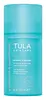
This anti-aging moisturizer is formulated around Squalane and Lactococcus Ferment Lysate to soften the look of wrinkles and hydrate skin.
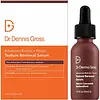
This smoothing serum is formulated around Lactic Acid and Retinol to refine skin texture and soften the look of wrinkles.

What's inside
What's inside
 Key Ingredients
Benefits
Concerns
Ingredients Side-by-side
Water
Skin ConditioningSqualane
Emollient


Caprylic/Capric Triglyceride
Masking
Glycerin
Humectant
Lactococcus Ferment Lysate
Skin Conditioning
Isoamyl Laurate
Emollient

Cetearyl Olivate
Butyrospermum Parkii Butter
Skin Conditioning


Pseudozyma Epicola/Argania Spinosa Kernel Oil/Olive Fruit Oil/Sunflower Seed Oil/(Angelica Gigas/Licorice/Lithospermum Erythrorhizon) Root Ferment Extract Filtrate
Emollient
Sorbitan Olivate
Emulsifying
Lycium Barbarum Fruit Extract
Astringent
Copper Palmitoyl Heptapeptide-14
Skin Conditioning
Heptapeptide-15 Palmitate
Skin Conditioning
Honey
Humectant
Phospholipids
Skin Conditioning
Betaine
Humectant
Niacinamide
Smoothing






Sodium Phytate
Sorbitol
Humectant
Gluconolactone
Skin Conditioning
Lactic Acid
Buffering

Phosphatidylcholine
EmulsifyingSesamum Indicum Seed Extract
Skin Conditioning
Tremella Fuciformis Sporocarp Extract
Antioxidant
Dehydroacetic Acid
Preservative
Docosahexaenoic Acid
Skin Conditioning
Sphingolipids
Emollient
Xanthan Gum
EmulsifyingPinus Pinaster Bark Extract
Antioxidant
Sodium Acetylated Hyaluronate
Humectant
Sodium Hyaluronate
Humectant
Hyaluronic Acid
Humectant
Eicosapentaenoic Acid
Emollient
Lactic Acid/Glycolic Acid Copolymer
Skin ConditioningCaprylyl Glycol
Emollient
Sodium Hyaluronate Crosspolymer
Humectant
Tocopherol
Antioxidant
Tetrasodium Glutamate Diacetate
Tocopheryl Acetate
Antioxidant
Hydrolyzed Sodium Hyaluronate
Skin Conditioning
Calcium Gluconate
HumectantGlyceryl Caprylate
EmollientPolyvinyl Alcohol
Phenylpropanol
Masking

Phytosphingosine
Skin Conditioning
Curcuma Longa Root Extract
Antioxidant
Dimethylmethoxy Chromanol
Antioxidant
Ascorbyl Palmitate
Antioxidant
Lecithin
Emollient
Hydrogenated Palm Glycerides
Emollient
Phenoxyethanol
Preservative
Tetrahexyldecyl Ascorbate
Antioxidant
Potassium Sorbate
Preservative
Carbomer
Emulsion StabilisingCetyl Palmitate
Emollient
Propanediol
Solvent
Sodium Chloride
MaskingDimethyl Isosorbide
SolventSorbitan Palmitate
Emulsifying
Cetyl Alcohol
Emollient
Pentylene Glycol
Skin Conditioning
Sodium Hydroxide
BufferingSodium Benzoate
Masking
Ethylhexylglycerin
Skin ConditioningWater, Squalane, Caprylic/Capric Triglyceride, Glycerin, Lactococcus Ferment Lysate, Isoamyl Laurate, Cetearyl Olivate, Butyrospermum Parkii Butter, Pseudozyma Epicola/Argania Spinosa Kernel Oil/Olive Fruit Oil/Sunflower Seed Oil/(Angelica Gigas/Licorice/Lithospermum Erythrorhizon) Root Ferment Extract Filtrate, Sorbitan Olivate, Lycium Barbarum Fruit Extract, Copper Palmitoyl Heptapeptide-14, Heptapeptide-15 Palmitate, Honey, Phospholipids, Betaine, Niacinamide, Sodium Phytate, Sorbitol, Gluconolactone, Lactic Acid, Phosphatidylcholine, Sesamum Indicum Seed Extract, Tremella Fuciformis Sporocarp Extract, Dehydroacetic Acid, Docosahexaenoic Acid, Sphingolipids, Xanthan Gum, Pinus Pinaster Bark Extract, Sodium Acetylated Hyaluronate, Sodium Hyaluronate, Hyaluronic Acid, Eicosapentaenoic Acid, Lactic Acid/Glycolic Acid Copolymer, Caprylyl Glycol, Sodium Hyaluronate Crosspolymer, Tocopherol, Tetrasodium Glutamate Diacetate, Tocopheryl Acetate, Hydrolyzed Sodium Hyaluronate, Calcium Gluconate, Glyceryl Caprylate, Polyvinyl Alcohol, Phenylpropanol, Phytosphingosine, Curcuma Longa Root Extract, Dimethylmethoxy Chromanol, Ascorbyl Palmitate, Lecithin, Hydrogenated Palm Glycerides, Phenoxyethanol, Tetrahexyldecyl Ascorbate, Potassium Sorbate, Carbomer, Cetyl Palmitate, Propanediol, Sodium Chloride, Dimethyl Isosorbide, Sorbitan Palmitate, Cetyl Alcohol, Pentylene Glycol, Sodium Hydroxide, Sodium Benzoate, Ethylhexylglycerin
Water
Skin ConditioningPropylene Glycol
Humectant
Dimethyl Isosorbide
SolventPolyglyceryl-10 Laurate
Skin Conditioning
Glycerin
Humectant
Ethoxydiglycol
HumectantLactic Acid
Buffering
Hydroxypropyl Starch Phosphate
Mandelic Acid
Antimicrobial
Retinol
Skin Conditioning
Bakuchiol
Antimicrobial
Nephelium Lappaceum Leaf Extract
Skin ConditioningFerulic Acid
Antimicrobial
Squalane
Emollient
Linoleic Acid
Cleansing
Salicylic Acid
Masking

Salix Alba Bark Extract
Astringent
Phospholipids
Skin Conditioning
Soy Isoflavones
Skin ConditioningSodium Hyaluronate
Humectant
Saccharide Isomerate
Humectant
Ubiquinone
Antioxidant
Sodium PCA
Humectant
Hexylresorcinol
Antimicrobial
Quercetin
Antioxidant
Adenosine
Skin Conditioning
Morus Alba Bark Extract
Skin ConditioningPanthenol
Skin Conditioning
Glycolic Acid
Buffering
Maltodextrin
Absorbent
Xanthan Gum
EmulsifyingLeuconostoc/Radish Root Ferment Filtrate
Antimicrobial
Caprylic/Capric Triglyceride
Masking
Potassium Hydroxide
BufferingPolysorbate 20
Emulsifying
Sodium Phytate
Citric Acid
Buffering
Sodium Citrate
BufferingPhenoxyethanol
Preservative
Sodium Benzoate
Masking
Potassium Sorbate
Preservative
Water, Propylene Glycol, Dimethyl Isosorbide, Polyglyceryl-10 Laurate, Glycerin, Ethoxydiglycol, Lactic Acid, Hydroxypropyl Starch Phosphate, Mandelic Acid, Retinol, Bakuchiol, Nephelium Lappaceum Leaf Extract, Ferulic Acid, Squalane, Linoleic Acid, Salicylic Acid, Salix Alba Bark Extract, Phospholipids, Soy Isoflavones, Sodium Hyaluronate, Saccharide Isomerate, Ubiquinone, Sodium PCA, Hexylresorcinol, Quercetin, Adenosine, Morus Alba Bark Extract, Panthenol, Glycolic Acid, Maltodextrin, Xanthan Gum, Leuconostoc/Radish Root Ferment Filtrate, Caprylic/Capric Triglyceride, Potassium Hydroxide, Polysorbate 20, Sodium Phytate, Citric Acid, Sodium Citrate, Phenoxyethanol, Sodium Benzoate, Potassium Sorbate
Reviews
Ingredients Explained
These ingredients are found in both products.
Ingredients higher up in an ingredient list are typically present in a larger amount.
Caprylic/Capric Triglyceride (aka MCT Oil) is a lightweight emollient, solvent, and texture enhancer. It is considered a skin-softener by helping to prevent moisture loss.
Though it behaves like an oil, it is not technically one due to its chemical composition. One perk of this ingredient is that it is very stable, resistant to oxidation, and unlikely to go rancid.
In practice, that translates to a long shelf life and a consistently elegant skin feel.
While there is an assumption Caprylic Triglyceride can clog pores due to it being derived from coconut oil, there is no research supporting this. Just patch test if you have concerns.
Fractionated coconut oil and MCT Oil are both listed as Caprylic/Capric Triglyceride according to INCI. This is because INCI names are based on the ingredient’s final chemical composition and not its marketing name or source.
This ingredient is treated as the gold standard fungal acne safe oil. Even though it is coconut derived, the problematic lauric acid is stripped out.
This leaves just caprylic (C8) and capric (C10) acid. These chain lengths actually trend antifungal; a 2020 study found caprylic acid was enough to disrupt Malassezia furfur cell membrane, with a caprylic acid derivative damaging membrane structures at concentrations as low as 0.2%.
Learn more about Caprylic/Capric TriglycerideDimethyl Isosorbide (often shortened to DMI) is a sugar-derived solvent made from sorbitol. It's used to dissolve tricky ingredients and help them mix smoothly into a formula.
Many actives sit as gritty crystals when undissolved, so DMI swoops in to full dissolve them. This helps improve texture, stability, and how evenly an active is distributed.
It does have a penetration-enhancing reputation that is a bit more nuanced than marketing suggests; a cell study on human skin found that 10% DMI didn't significantly boost the permeation of Hydroquinone, Salicylic Acid, or Octadecenedioic Acid compared to controls (though it did improve their solubility in the formula itself).
Typical usage concentrations usually range from 1-10% depending on the formula's needs; this ingredient is also well tolerated at these levels.
Learn more about Dimethyl IsosorbideGlycerin (or glycerol) is a compound naturally found in your skin. It's a powerhouse humectant that pulls water into the stratum corneum.
Topically, glycerin does several things at once:
Your skin makes glycerin on its own (mostly from sebaceous oil breakdown) and shuttles it to your outermost layer of skin, or your epidermis, via aquaporin-3.
Aquaporin-3 is a transporter that is essential for normal skin hydration, elasticity, and repair. Interestingly, mice lacking in AQP3 have dry and less elastic skin that can be fully corrected with glycerin.
This ingredient is non-irritating, plays well with almost every ingredient, and works across all skin types. Typical use is anywhere between 3-10% but can go up to 79% in some leave-on products.
Just know very high concentrations (>40%) can feel tacky in low humidity.
Glycerin is the name for this ingredient in American English. British English uses Glycerol/Glycerine.
Learn more about GlycerinLactic Acid is another well-loved alpha hydroxy acid (AHA). It is gentler than glycolic acid but still highly effective.
Its main role is to exfoliate the surface of the skin by loosening the “glue” that holds dead skin cells together. Shedding those old cells leads to smoother, softer, and more even-toned skin.
Because lactic acid molecules are larger than glycolic acid, they don’t penetrate as deeply. This means they’re less likely to sting or irritate, making it a great choice for beginners or those with sensitive skin.
Like glycolic acid, it can:
Lactic acid also acts as a humectant (like hyaluronic acid). It can draw water into the skin to improve hydration and also plays a role in the skin's natural moisturizing factor (NMF) in the form of sodium lactate.
Studies show it can boost ceramide production to strengthen the skin barrier and even help balance the skin’s microbiome.
To get results, choose products with a pH between 3-4.
Lower strengths (5-12%) focus on surface exfoliation; higher strengths (12% and up) can reach deeper in the dermis (deeper, supportive layer) to improve skin texture and firmness over time.
Though it was originally derived from milk, most modern lactic acid used in skincare is vegan. It is made through non-dairy fermentation to create a bio-identical and stable form suitable for all formulations.
When lactic acid shows up near the end of an ingredient list, it usually means the brand added just a tiny amount to adjust the product’s pH.
Legend has it that Cleopatra used to bathe in sour milk to help reduce wrinkles.
Lactic acid is truly a gentle multitasker: it exfoliates, hydrates, strengthens, and brightens. It's a great ingredient for giving your skin a smooth, glowing, and healthy look without the harshness of stronger acids.
Read more about some other popular AHA's here:
Learn more about Lactic AcidPhenoxyethanol is one of the most widely used preservatives in skincare (and for good reason!).
It has a large spectrum of antimicrobial activity and especially effective bacteria, yeast, and mold while only having a weak effect on your skin's natural microbiome.
On a cellular level, it disrupts the cell membranes of microbes by poking holes that make the cell leak. This shuts down the chemical reactions the microbe needs to make energy so it can no longer survive.
Another perk of this ingredient is that it stays functional across a wide pH range (3-10).
You'll often see it paired with boosters like Ethylhexylglycerin; one study showed that a 1:9 ratio of Ethylhexylglycerin to Phenoxyethanol damages bacterial membranes as effectively as doubling the Phenoxyethanol concentration on its own.
Typical use concentrations range from 0.3-1% depending on the formula, and this ingredient is capped at 1% int the EU.
Safety-wise, the fear mongering does not hold up to the evidence. The EU's Scientific Committee on Consumer Safety and FDA consider it safe as a preservative at up to 1%, including for children of all ages.
Adverse systemic effects only showed up in animal studies at exposures roughly 200x higher than what people get from cosmetics. And despite its very widespread use, this ingredient is a rare sensitizer and allergic reactions are uncommon.
Learn more about PhenoxyethanolPhospholipids are a family of skin-identical lipids that makeup the structural backbone of every cell membrane in your body.
In cosmetics, they function as skin conditioning agents with emulsifier and surfactant properties. They're typically sourced from soybean or sunflower lecithin (or sometimes egg yolk or marine sources).
Because they mirror the lipids naturally found in the deeper layers of your skin, topical phospholipids help reinforce the lipid matrix, reduce transepidermal water loss, and leave skin feeling conditioned.
They're also used to form liposomes, or tiny self-assembling vesible used to stabilize actives like vitamin c or retinol. This helps these ingredients integrate into the upper layers of skin more easily.
Phospholipids are compatible with everything and the CIR Expert Panel has concluded them to be safe at current use levels.
Some types of phospholipids include:
Learn more about PhospholipidsPotassium Sorbate is a preservative used to prevent yeast and mold in products. It is commonly found in both cosmetic and food products.
This ingredient comes from potassium salt derived from sorbic acid. Sorbic acid is a natural antibiotic and effective against fungus.
Both potassium sorbate and sorbic acid can be found in baked goods, cheeses, dried meats, dried fruit, ice cream, pickles, wine, yogurt, and more.
You'll often find this ingredient used with other preservatives.
Learn more about Potassium SorbateSodium Benzoate is a preservative. It's used in both cosmetic and food products to inhibit the growth of mold and bacteria. It is typically produced synthetically.
Both the US FDA and EU Health Committee have approved the use of sodium benzoate. In the US, levels of 0.1% (of the total product) are allowed.
Sodium benzoate works as a preservative by inhibiting the growth of bacteria inside of cells. It prevents the cell from fermenting a type of sugar using an enzyme called phosphofructokinase.
It is the salt of benzoic acid. Foods containing sodium benzoate include soda, salad dressings, condiments, fruit juices, wines, and snack foods.
Studies for using ascorbic acid and sodium benzoate in cosmetics are lacking, especially in skincare routines with multiple steps.
We always recommend speaking with a professional, such as a dermatologist, if you have any concerns.
Learn more about Sodium BenzoateSodium Hyaluronate is the salt form of hyaluronic acid. It is a long sugar chain that is naturally found in your skin, joints, and connective tissue that maintains hydration and elasticity.
In skincare, it works as a humectant. It pulls water from the environment and deeper layers of skin and binds it to the surface.
Interestingly, the size of the molecule affects its behavior:
Some clinical evidence links low molecular weight versions to improved wrinkle depth, elasticity, anti-inflammatory effects, and barrier repair.
Many serums use a blend of both weights so you can get surface hydration plus longer-lasting and deeper effects.
You'll typically see concentrations between 0.1-2% for this ingredient.
Learn more about Sodium HyaluronateSodium Phytate is the synthetic salt form of phytic acid. Phytic acid is an antioxidant and can be found in plant seeds.
Sodium Phytate is a chelating agent. Chelating agents help prevent metals from binding to water. This helps stabilize the ingredients and the product.
Squalane is the hydrogenated and shelf-stable form of squalene (a lipid that naturally occurs in human sebum).
It is an emollient and skin conditioning agent that is able to integrate seamlessly into the skin's lipid barrier without clogging pores.
This is due to how structurally similar it is to what your skin already produces.
Though it is mostly an emollient that helps soften and hydrate skin, it also has some humectant and occlusive action. Humectants help the skin retain moisture while occlusives seal it in, making squalane a triple-threat moisturizer.
Research shows it has antioxidant capabilities that help protect against stressors like UV exposure, specifically UVA induced oxidative stress. This study also found that it supports collagen biosynthesis in human dermal fibroblasts.
No clinical study has reported significant adverse effects and irritation reactions are very rare from this ingredient (even at 100% concentration).
Overall, it's a fantastic ingredient for hydration and is suitable for all skin types.
This depends on the source. Squalane can be derived from both plants and animals. Most squalane used in skincare comes from plants.
Please note: the source of squalane is only known if disclosed by the brand. We recommend reaching out to the brand if you have any questions about their squalane.
Read more about squalene with an "e".
Though squalane is often called an oil, it’s technically not one. It is a hydrocarbon, meaning it is only made of carbon and hydrogen. True oils are triglycerides and made of fatty acids and glycerol.
The term “oil-free” isn’t regulated so companies can define it however they want. Some exclude all oils, while others just avoid mineral oil or comedogenic oils.
Squalane has a comedogenic rating of 1 from the original 1972 study that tested raw ingredients under occlusion on rabbit ears. This system is not standardized or peer-reviewed, and using the raw ingredients is very different from how diluted cosmetic formulations are used on human skin.
A comedogenic rating of 1 means it is "unlikely to clog pores" according to the original rating system.
The overall formula of a product matters more than the individual ingredients on whether or not it will cause clogged pores.
Learn more about SqualaneWater. It's the most common cosmetic ingredient of all. You'll usually see it at the top of ingredient lists, meaning that it makes up the largest part of the product.
So why is it so popular? Water most often acts as a solvent - this means that it helps dissolve other ingredients into the formulation.
You'll also recognize water as that liquid we all need to stay alive. If you see this, drink a glass of water. Remember to stay hydrated!
Learn more about WaterXanthan gum is used as a stabilizer and thickener within cosmetic products. It helps give products a sticky, thick feeling - preventing them from being too runny.
On the technical side of things, xanthan gum is a polysaccharide - a combination consisting of multiple sugar molecules bonded together.
Xanthan gum is a pretty common and great ingredient. It is a natural, non-toxic, non-irritating ingredient that is also commonly used in food products.
Learn more about Xanthan Gum

