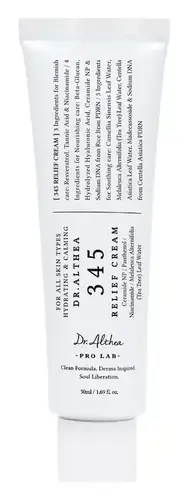
This barrier-repair moisturizer is formulated around Panthenol and Madecassoside to strengthen the skin barrier and calm redness.
This calming moisturizer is formulated around Panthenol and Madecassoside to calm redness and strengthen the skin barrier.


What's inside
What's inside
 Key Ingredients
Benefits
Concerns
Ingredients Side-by-side
Water
Skin ConditioningGlycerin
Humectant


Panthenol
Skin Conditioning

Hydrogenated Polyisobutene
EmollientAstrocaryum Murumuru Seed Butter
Emollient



Octyldodecanol
Emollient
Dimethicone
Emollient
Oryza Sativa Starch
AbsorbentMagnesium Sulfate
Hydrogenated Castor Oil
Emollient
Polyglyceryl-4 Isostearate
Emulsifying
Cetyl PEG/PPG-10/1 Dimethicone
Emulsifying
Hexyl Laurate
Emollient
Silica
Abrasive


PEG-30 Dipolyhydroxystearate
Emulsifying
Disteardimonium Hectorite
StabilisingMadecassoside
Antioxidant


Asiaticoside
Antioxidant
Madecassic Acid
Skin Conditioning
Asiatic Acid
Skin Conditioning
Centella Asiatica Extract
Cleansing
Centella Asiatica Callus Conditioned Media
Skin Conditioning
Alpha-Glucan Oligosaccharide
Cleansing
Polymnia Sonchifolia Root Juice
Skin ConditioningBifida Ferment Lysate
Skin Conditioning
Glycine Soja Oil
Emollient

Copper Gluconate
Skin Conditioning
Magnesium Aspartate
Skin ConditioningZinc Gluconate
Skin Conditioning

Sphingolipids
Emollient
Tocopherol
Antioxidant

Cetyl Alcohol
Emollient
Propylene Carbonate
SolventCaprylyl Glycol
Emollient
Pentylene Glycol
Skin Conditioning
Mannitol
Humectant
Beta-Sitosterol
Emulsion Stabilising
Phosphatidylcholine
EmulsifyingSqualene
Emollient
Phospholipids
Skin Conditioning
Polyglyceryl-10 Laurate
Skin Conditioning
Sodium Citrate
BufferingAcetic Acid
BufferingP-Anisic Acid
MaskingLactic Acid
Buffering

Ubiquinone
Antioxidant
Citric Acid
Buffering
Potassium Sorbate
Preservative
Sodium Benzoate
Masking
Ethylhexylglycerin
Skin ConditioningPhenoxyethanol
Preservative
Water, Glycerin, Panthenol, Hydrogenated Polyisobutene, Astrocaryum Murumuru Seed Butter, Octyldodecanol, Dimethicone, Oryza Sativa Starch, Magnesium Sulfate, Hydrogenated Castor Oil, Polyglyceryl-4 Isostearate, Cetyl PEG/PPG-10/1 Dimethicone, Hexyl Laurate, Silica, PEG-30 Dipolyhydroxystearate, Disteardimonium Hectorite, Madecassoside, Asiaticoside, Madecassic Acid, Asiatic Acid, Centella Asiatica Extract, Centella Asiatica Callus Conditioned Media, Alpha-Glucan Oligosaccharide, Polymnia Sonchifolia Root Juice, Bifida Ferment Lysate, Glycine Soja Oil, Copper Gluconate, Magnesium Aspartate, Zinc Gluconate, Sphingolipids, Tocopherol, Cetyl Alcohol, Propylene Carbonate, Caprylyl Glycol, Pentylene Glycol, Mannitol, Beta-Sitosterol, Phosphatidylcholine, Squalene, Phospholipids, Polyglyceryl-10 Laurate, Sodium Citrate, Acetic Acid, P-Anisic Acid, Lactic Acid, Ubiquinone, Citric Acid, Potassium Sorbate, Sodium Benzoate, Ethylhexylglycerin, Phenoxyethanol
Water
Skin ConditioningDicaprylyl Ether
Emollient
Panthenol
Skin Conditioning
Glycerin
Humectant
Butyrospermum Parkii Butter
Skin Conditioning
Hydroxypropyl Starch
Polyglyceryl-6 Distearate
Emulsifying
Propanediol
Solvent
Butylene Glycol
Humectant
Cetyl Esters
Emollient
Jojoba Esters
Emollient
Behenyl Alcohol
Emollient
Acacia Decurrens Flower Wax
Emollient
Helianthus Annuus Seed Wax
Skin Conditioning
Madecassoside
Antioxidant
Centella Asiatica Leaf Extract
Skin Conditioning
Polymnia Sonchifolia Root Juice
Skin ConditioningZinc Gluconate
Skin Conditioning
Copper Gluconate
Skin Conditioning
Hydrogenated Polyisobutene
EmollientSilica
Abrasive
Aluminum Hydroxide
EmollientMagnesium Aspartate
Skin ConditioningPseudoalteromonas Ferment Extract
Humectant
Citric Acid
Buffering
Disodium EDTA
ChelatingBifida Ferment Lysate
Skin Conditioning
Dimethicone
Emollient
Cetearyl Isononanoate
Emollient
Maltodextrin
Absorbent
Polyglyceryl-4 Isostearate
Emulsifying
Tocopheryl Acetate
Antioxidant
Humulus Lupulus Extract
AntimicrobialPhenoxyethanol
Preservative
Sodium Lauroyl Lactylate
EmulsifyingCeramide NP
Skin Conditioning
Ceramide AP
Skin Conditioning
Cholesterol
Emollient
Phytosphingosine
Skin Conditioning
Xanthan Gum
EmulsifyingCarbomer
Emulsion StabilisingEthylhexylglycerin
Skin ConditioningCeramide EOP
Skin Conditioning
Polyglycerin-3
Humectant
Polyglyceryl-3 Beeswax
Emulsifying
Polysorbate 80
Emulsifying
Sorbitan Isostearate
Emulsifying
Chlorphenesin
Antimicrobial
Hydroxyethyl Acrylate/Sodium Acryloyldimethyl Taurate Copolymer
Emulsion StabilisingCetyl Alcohol
Emollient
CI 77891
Cosmetic ColorantWater, Dicaprylyl Ether, Panthenol, Glycerin, Butyrospermum Parkii Butter, Hydroxypropyl Starch, Polyglyceryl-6 Distearate, Propanediol, Butylene Glycol, Cetyl Esters, Jojoba Esters, Behenyl Alcohol, Acacia Decurrens Flower Wax, Helianthus Annuus Seed Wax, Madecassoside, Centella Asiatica Leaf Extract, Polymnia Sonchifolia Root Juice, Zinc Gluconate, Copper Gluconate, Hydrogenated Polyisobutene, Silica, Aluminum Hydroxide, Magnesium Aspartate, Pseudoalteromonas Ferment Extract, Citric Acid, Disodium EDTA, Bifida Ferment Lysate, Dimethicone, Cetearyl Isononanoate, Maltodextrin, Polyglyceryl-4 Isostearate, Tocopheryl Acetate, Humulus Lupulus Extract, Phenoxyethanol, Sodium Lauroyl Lactylate, Ceramide NP, Ceramide AP, Cholesterol, Phytosphingosine, Xanthan Gum, Carbomer, Ethylhexylglycerin, Ceramide EOP, Polyglycerin-3, Polyglyceryl-3 Beeswax, Polysorbate 80, Sorbitan Isostearate, Chlorphenesin, Hydroxyethyl Acrylate/Sodium Acryloyldimethyl Taurate Copolymer, Cetyl Alcohol, CI 77891
Ingredients Explained
These ingredients are found in both products.
Ingredients higher up in an ingredient list are typically present in a larger amount.
Bifida Ferment Lysate is a postbiotic ingredient made by fermenting Bifidobacterium to extract a nutrient-rich mix of peptides, amino acids, vitamins, organic acids, and polysaccharides.
These components are basically the building blocks that your skin already uses to stay hydrated, repair itself, and maintain its barrier. That's why this ingredient helps your skin hold onto moisture and stay resilient against irritation.
One in-vitro study found that this ingredient tells your skin cells to produce more of the proteins (filaggrin, loricrin, and involucrin) for building a strong and healthy barrier. This study also found this ingredient to be a solid antioxidant that helped neutralize damage against UV and pollution.
A study with people from 2010 found that sensitive, reactive skin using a cream with 10% of this ingredient for a month became noticeably less dry, less reactive, and harder to irritate compared to the group using a plain cream.
In short, this ingredient is a well-tolerated ingredient that can help with barrier repair, antioxidant protection, and calming reactive skin.
This ingredient is generally considered fungal acne (Malassezia) safe; Bifidobacterium is a bacterium, not a yeast or fungus.
The fungal acne concern with fermented ingredients mainly applies to yeast-derived ferments like Saccharomyces and Galactomyces, because those are in the same kingdom as Malassezia and could theoretically contain residual compounds that feed it.
Bifida is a completely different organism, so on its own it doesn't provide a food source for the Malassezia yeast that causes fungal acne.
Learn more about Bifida Ferment LysateCetyl Alcohol is a fatty alcohol. Fatty Alcohols are most often used as an emollient or to thicken a product.
Its main roles are:
Though it has "alcohol" in the name, it is not related to denatured alcohol or ethyl alcohol.
The FDA allows products labeled "alcohol-free" to have fatty alcohols.
This ingredient may not be fungal acne safe. It is a primary fatty alcohol with a chain length above 12 carbons. A study from 2019 show Malassezia can feed on fatty alcohols in this range, so it may trigger fungal acne in those prone to it.
Learn more about Cetyl AlcoholCitric Acid is an alpha hydroxy acid (AHA) naturally found in citrus fruits like oranges, lemons, and limes.
Like other AHAs, citric acid can exfoliate skin by breaking down the bonds that hold dead skin cells together. This helps reveal smoother and brighter skin underneath.
However, this exfoliating effect only happens at high concentrations (20%) which can be hard to find in cosmetic products.
Due to this, citric acid is usually included in small amounts as a pH adjuster. This helps keep products slightly more acidic and compatible with skin's natural pH.
In skincare formulas, citric acid can:
While it can provide some skin benefits, research shows lactic acid and glycolic acid are generally more effective and less irritating exfoliants.
Most citric acid used in skincare today is made by fermenting sugars (usually from molasses). This synthetic version is identical to the natural citrus form but easier to stabilize and use in formulations.
Rosacea skin has a lower threshold for acids generally, with 62.5% of rosacea subjects in one study reacting to lactic acid in a sting test. This is why we mark citric acid as a potential rosacea trigger.
However, this ingredient shows up as a pH adjuster or chelator at roughly 0.1-1% in many products. These low levels are unlikely to be an issue for rosacea skin and becomes a potential trigger at exfoliating concentrations (20%). Because everybody's skin is unique, we recommend a patch test if you are unsure.
Learn more about Citric AcidThis ingredient is a copper salt known for its wound healing properties.
Our bodies use copper to help stabilize our skin's collagen and elastin. Its also an essential for superoxide dismutase, an enzyme with strong antioxidant properties.
Copper has wound healing properties due to its role in creating new blood vessels and tissue repair.
Learn more about Copper GluconateDimethicone is a type of synthetic silicone created from natural materials such as quartz. It is also known as polydimethylsiloxane.
What it does:
Dimethicone comes in different viscosities:
Depending on the viscosity, dimethicone has different properties.
Ingredients lists don't always show which type is used, so we recommend reaching out to the brand if you have questions about the viscosity.
This ingredient is unlikely to cause irritation because it does not get absorbed into skin. However, people with silicone allergies should be careful about using this ingredient.
Note: Dimethicone may contribute to pilling. This is because it is not oil or water soluble, so pilling may occur when layered with products. When mixed with heavy oils in a formula, the outcome is also quite greasy.
Learn more about DimethiconeEthylhexylglycerin is created from glycerin. It is a multitasker ingredient that:
The CIR Expert Panel found minimal skin absorption or sensitization of any kind in a safety assessment. Though this ingredient is considered well-tolerated, a small number of cases of allergic dermatitis have been published since 2002. Just be sure to patch test if you are unsure.
Industry-reported use ranges from 8% in rinse-off products and 2% in leave-on formulations.
Learn more about EthylhexylglycerinGlycerin (or glycerol) is a compound naturally found in your skin. It's a powerhouse humectant that pulls water into the stratum corneum.
Topically, glycerin does several things at once:
Your skin makes glycerin on its own (mostly from sebaceous oil breakdown) and shuttles it to your outermost layer of skin, or your epidermis, via aquaporin-3.
Aquaporin-3 is a transporter that is essential for normal skin hydration, elasticity, and repair. Interestingly, mice lacking in AQP3 have dry and less elastic skin that can be fully corrected with glycerin.
This ingredient is non-irritating, plays well with almost every ingredient, and works across all skin types. Typical use is anywhere between 3-10% but can go up to 79% in some leave-on products.
Just know very high concentrations (>40%) can feel tacky in low humidity.
Glycerin is the name for this ingredient in American English. British English uses Glycerol/Glycerine.
Learn more about GlycerinHydrogenated Polyisobutene is a synthetic polymer. Polymers are compounds with high molecular weight. Hydrogenated Polyisobutene is an emollient and texture enhancer.
In one study, Hydrogenated Polyisobutene showed better skin hydration levels than Caprylic/Capric Triglyceride. As an emollient, it helps keep your skin soft and hydrated by trapping moisture in.
Hydrogenated Polyisobutene is often used as a mineral oil replacement.
Learn more about Hydrogenated PolyisobuteneMadecassoside is one of four active compounds found in Centella asiatica and is one of the main reasons Centella is so effective at calming irritated skin and supporting the moisture barrier.
There's a solid body of peer-reviewed research backing Madecassoside for several skin benefits. Studies have found:
Madecassoside pairs well with other hydrating or antioxidant ingredients like Ascorbic Acid or Hyaluronic Acid.
Learn more about MadecassosideWe don't have a description for Magnesium Aspartate yet.
Panthenol is a common ingredient that helps hydrate and soothe the skin. It is found naturally in our skin and hair.
There are two forms of panthenol: D and L.
D-panthenol is also known as dexpanthenol. Most cosmetics use dexpanthenol or a mixture of D and L-panthenol.
Panthenol is famous due to its ability to go deeper into the skin's layers. Using this ingredient has numerous pros (and no cons):
Like hyaluronic acid, panthenol is a humectant. Humectants are able to bind and hold large amounts of water to keep skin hydrated.
This ingredient works well for wound healing. It works by increasing tissue in the wound and helps close open wounds.
Once oxidized, panthenol converts to pantothenic acid. Panthothenic acid is found in all living cells.
This ingredient is also referred to as pro-vitamin B5.
Learn more about PanthenolPhenoxyethanol is one of the most widely used preservatives in skincare (and for good reason!).
It has a large spectrum of antimicrobial activity and especially effective bacteria, yeast, and mold while only having a weak effect on your skin's natural microbiome.
On a cellular level, it disrupts the cell membranes of microbes by poking holes that make the cell leak. This shuts down the chemical reactions the microbe needs to make energy so it can no longer survive.
Another perk of this ingredient is that it stays functional across a wide pH range (3-10).
You'll often see it paired with boosters like Ethylhexylglycerin; one study showed that a 1:9 ratio of Ethylhexylglycerin to Phenoxyethanol damages bacterial membranes as effectively as doubling the Phenoxyethanol concentration on its own.
Typical use concentrations range from 0.3-1% depending on the formula, and this ingredient is capped at 1% int the EU.
Safety-wise, the fear mongering does not hold up to the evidence. The EU's Scientific Committee on Consumer Safety and FDA consider it safe as a preservative at up to 1%, including for children of all ages.
Adverse systemic effects only showed up in animal studies at exposures roughly 200x higher than what people get from cosmetics. And despite its very widespread use, this ingredient is a rare sensitizer and allergic reactions are uncommon.
Learn more about PhenoxyethanolPolyglyceryl-4 Isostearate is a plant-derived, PEG-free emulsifier.
It's made by hooking isostearic acid onto a chain of glycerin units to give it a water-loving "head" and oil-loving "tail". This allows it to keep the oil and water mixed in a formula.
The highest reported concentration is about 24% in eye makeup but most suppliers recommend a level below 10%.
It has a clean track record for safety and found to be non-irritating.
Because it is an ester of a C18 fatty acid, Malassezia can potentially metabolize it (it sits in the C11-24 range that Malassezia likes). Therefore, this ingredient may not be fungal acne safe.
Learn more about Polyglyceryl-4 IsostearatePolymnia Sonchifolia Root Juice comes from the roots of the Yacon plant native to South America. It is a skin conditioning ingredient that helps keep skin feeling soft and hydrated.
Yacon roots are naturally loaded with fructooligosaccharides (FOS), a type of prebiotic sugar. Prebiotics like FOS help feed the "good" bacteria on your skin to support a healthy and balanced environment.
This root juice also contains antioxidant compounds (like chlorogenic acid and caffeic acid).
Just so you know, Yacon belongs to the daisy family so be sure to patch test if you have a known allergy to plants in that family.
Learn more about Polymnia Sonchifolia Root JuiceSilica, also known as silicon dioxide, is a naturally occurring mineral. It is used as a fine, spherical, and porous powder in cosmetics.
Though it has exfoliant properties, the function of silica varies depending on the product.
The unique structure of silica enhances the spreadability and adds smoothness, making it a great texture enhancer.
It is also used as an active carrier, emulsifier, and mattifier due to its ability to absorb excess oil.
In some products, tiny microneedles called spicules are made from silica or hydrolyzed sponge. When you rub them in, they lightly polish away dead skin layers and enhance the penetration of active ingredients.
Learn more about SilicaWater. It's the most common cosmetic ingredient of all. You'll usually see it at the top of ingredient lists, meaning that it makes up the largest part of the product.
So why is it so popular? Water most often acts as a solvent - this means that it helps dissolve other ingredients into the formulation.
You'll also recognize water as that liquid we all need to stay alive. If you see this, drink a glass of water. Remember to stay hydrated!
Learn more about WaterZinc gluconate has antibacterial and wound healing properties. It is particularly effective against fighting inflammatory acne.
This ingredient is the zinc salt of the PHA gluconic acid. PHAs are gentle cousins to AHAs.