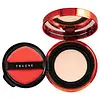
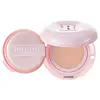
Trueve Radiant Hi-Cover Mesh Cushion Versus Rose All Day The Realest Airyfit Glow Cushion SPF 40 PA++++

What's inside
What's inside
 Key Ingredients
Benefits
Concerns
Ingredients Side-by-side
Water
Skin ConditioningTetrahexyldecyl Ascorbate
Antioxidant






Glycerin
Humectant

Caprylic/Capric Triglyceride
Masking
Helianthus Annuus Seed Oil
Emollient


Methylpropanediol
SolventTrimethylpentanediol/Adipic Acid Copolymer
Skin Conditioning3-O-Ethyl Ascorbic Acid
Skin Conditioning
Niacinamide
Smoothing





Lactobacillus Ferment
Skin Conditioning
Tocopherol
Antioxidant
Acetyl Tetrapeptide-2
Skin Conditioning
Centella Asiatica Leaf Extract
Skin Conditioning
Panthenol
Skin Conditioning
Allantoin
Skin Conditioning
Fomes Officinalis Extract
Skin ProtectingJania Rubens Extract
Skin ConditioningCeramide NP
Skin Conditioning
Hyaluronic Acid
Humectant
Hydrolyzed Hyaluronic Acid
Humectant
Sodium Hyaluronate
Humectant
Hydrolyzed Sodium Hyaluronate
Skin Conditioning
Hydroxypropyltrimonium Hyaluronate
Potassium Hyaluronate
Skin ConditioningSodium Acetylated Hyaluronate
Humectant
Sodium Hyaluronate Crosspolymer
Humectant
Cholesterol
Emollient
Phytosphingosine
Skin Conditioning
Glycine Soja Oil
Emollient


Ethylhexylglycerin
Skin ConditioningCaprylyl Glycol
Emollient
Propylene Glycol
Humectant
Pentylene Glycol
Skin Conditioning
Propanediol
Solvent
Glycolipids
Skin ConditioningLecithin
Emollient
Sodium Carrageenan
Emulsion StabilisingC15-19 Alkane
SolventCyclopentasiloxane
Emollient
Aluminum Starch Octenylsuccinate
Absorbent
Acrylates/C10-30 Alkyl Acrylate Crosspolymer
Emulsion StabilisingSodium Acrylate/Sodium Acryloyldimethyl Taurate Copolymer
Emulsion StabilisingSilica
Abrasive
PEG-40 Hydrogenated Castor Oil
Emulsifying
Lauryl Glucoside
CleansingBHT
Antioxidant
Tetrasodium EDTA
Sodium Bisulfite
Antioxidant
Triethanolamine
BufferingTris(Tetramethylhydroxypiperidinol)Citrate
StabilisingCitric Acid
Buffering
Dehydroacetic Acid
Preservative
Potassium Sorbate
Preservative
1,2-Hexanediol
Skin Conditioning
Benzoic Acid
Masking
Benzyl Alcohol
Perfuming




Sodium Benzoate
Masking
Phenoxyethanol
Preservative
CI 19140
Cosmetic ColorantParfum
Masking
Water, Tetrahexyldecyl Ascorbate, Glycerin, Caprylic/Capric Triglyceride, Helianthus Annuus Seed Oil, Methylpropanediol, Trimethylpentanediol/Adipic Acid Copolymer, 3-O-Ethyl Ascorbic Acid, Niacinamide, Lactobacillus Ferment, Tocopherol, Acetyl Tetrapeptide-2, Centella Asiatica Leaf Extract, Panthenol, Allantoin, Fomes Officinalis Extract, Jania Rubens Extract, Ceramide NP, Hyaluronic Acid, Hydrolyzed Hyaluronic Acid, Sodium Hyaluronate, Hydrolyzed Sodium Hyaluronate, Hydroxypropyltrimonium Hyaluronate, Potassium Hyaluronate, Sodium Acetylated Hyaluronate, Sodium Hyaluronate Crosspolymer, Cholesterol, Phytosphingosine, Glycine Soja Oil, Ethylhexylglycerin, Caprylyl Glycol, Propylene Glycol, Pentylene Glycol, Propanediol, Glycolipids, Lecithin, Sodium Carrageenan, C15-19 Alkane, Cyclopentasiloxane, Aluminum Starch Octenylsuccinate, Acrylates/C10-30 Alkyl Acrylate Crosspolymer, Sodium Acrylate/Sodium Acryloyldimethyl Taurate Copolymer, Silica, PEG-40 Hydrogenated Castor Oil, Lauryl Glucoside, BHT, Tetrasodium EDTA, Sodium Bisulfite, Triethanolamine, Tris(Tetramethylhydroxypiperidinol)Citrate, Citric Acid, Dehydroacetic Acid, Potassium Sorbate, 1,2-Hexanediol, Benzoic Acid, Benzyl Alcohol, Sodium Benzoate, Phenoxyethanol, CI 19140, Parfum
Water
Skin ConditioningTitanium Dioxide
Cosmetic Colorant

Phenyl Trimethicone
Skin Conditioning
Dimethicone
Emollient
Triethylhexanoin
MaskingCyclopentasiloxane
Emollient
Lauryl PEG-9 Polydimethylsiloxyethyl Dimethicone
Skin Conditioning
Bis-Hydroxyethoxypropyl Dimethicone/Ipdi Copolymer Ethylcarbamate
Glycerin
Humectant
C13-16 Isoalkane
SolventButylene Glycol
Humectant
Pentylene Glycol
Skin Conditioning
Trimethylsiloxysilicate
Emollient
Synthetic Fluorphlogopite
Aluminum Hydroxide
EmollientSodium Chloride
MaskingHeptyl Undecylenate
EmollientDipentaerythrityl Hexa C5-9 Acid Esters
Skin ConditioningDisteardimonium Hectorite
StabilisingPanthenol
Skin Conditioning
Hydrogenated Polyisobutene
EmollientSodium Stearoyl Glutamate
CleansingIsostearyl Alcohol
Emollient
PEG/PPG-18/18 Dimethicone
Emulsifying
Phenoxyethanol
Preservative
Polymethylsilsesquioxane
Dimethicone/Vinyl Dimethicone Crosspolymer
Skin Conditioning
Dimethicone Crosspolymer
Emulsion Stabilising
Aureobasidium Pullulans Ferment
Skin ConditioningPolyhydroxystearic Acid
Emulsifying
Lecithin
Emollient
Ethylhexyl Palmitate
Emollient
Isopropyl Myristate
Emollient
Isostearic Acid
Cleansing
Sodium Hyaluronate
Humectant
Tocopheryl Acetate
Antioxidant
Ethylhexylglycerin
Skin ConditioningPolyglyceryl-3 Polyricinoleate
Emulsifying
Methylpropanediol
SolventPropanediol
Solvent
Trisodium Ethylenediamine Disuccinate
Lauric Acid
Cleansing
Triethoxycaprylylsilane
Lauryl Alcohol Diphosphonic Acid
Emulsion Stabilising1,2-Hexanediol
Skin Conditioning
Tocopherol
Antioxidant
Caffeine
Skin Conditioning
Copper Tripeptide-1
Skin Conditioning
Acetyl Hexapeptide-8
Humectant
CI 77492
Cosmetic ColorantCI 77491
Cosmetic ColorantCI 77499
Cosmetic ColorantWater, Titanium Dioxide, Phenyl Trimethicone, Dimethicone, Triethylhexanoin, Cyclopentasiloxane, Lauryl PEG-9 Polydimethylsiloxyethyl Dimethicone, Bis-Hydroxyethoxypropyl Dimethicone/Ipdi Copolymer Ethylcarbamate, Glycerin, C13-16 Isoalkane, Butylene Glycol, Pentylene Glycol, Trimethylsiloxysilicate, Synthetic Fluorphlogopite, Aluminum Hydroxide, Sodium Chloride, Heptyl Undecylenate, Dipentaerythrityl Hexa C5-9 Acid Esters, Disteardimonium Hectorite, Panthenol, Hydrogenated Polyisobutene, Sodium Stearoyl Glutamate, Isostearyl Alcohol, PEG/PPG-18/18 Dimethicone, Phenoxyethanol, Polymethylsilsesquioxane, Dimethicone/Vinyl Dimethicone Crosspolymer, Dimethicone Crosspolymer, Aureobasidium Pullulans Ferment, Polyhydroxystearic Acid, Lecithin, Ethylhexyl Palmitate, Isopropyl Myristate, Isostearic Acid, Sodium Hyaluronate, Tocopheryl Acetate, Ethylhexylglycerin, Polyglyceryl-3 Polyricinoleate, Methylpropanediol, Propanediol, Trisodium Ethylenediamine Disuccinate, Lauric Acid, Triethoxycaprylylsilane, Lauryl Alcohol Diphosphonic Acid, 1,2-Hexanediol, Tocopherol, Caffeine, Copper Tripeptide-1, Acetyl Hexapeptide-8, CI 77492, CI 77491, CI 77499
Ingredients Explained
These ingredients are found in both products.
Ingredients higher up in an ingredient list are typically present in a larger amount.
1,2-Hexanediol is a synthetic liquid and another multi-functional powerhouse.
It is a:
- Humectant, drawing moisture into the skin
- Emollient, helping to soften skin
- Solvent, dispersing and stabilizing formulas
- Preservative booster, enhancing the antimicrobial activity of other preservatives
Cyclopentasiloxane (D5) is a lightweight silicone that mostly acts as an emollient and solvent in cosmetics. Its the reason your products feel silky, fast-spreading, and non-greasy.
Since D5 is volatile, it does its thing and then evaporates off the skin quickly.
The safety profile of this ingredient is reassuring; the US CIR Expert Panel concluded D5 is safe as used in cosmetics and Health Canada concluded that D5 is not harmful to human health or the environment as currently used in cosmetics
There's a study that people mention about D5 in a rat study showing tumors. This study is related to long-term inhalation of high D5 levels.
Regulatory bodies have judged this study to be not applicable in topical skincare since skin absorption of D5 is very low and we're not really inhaling huge amounts of D5.
The only restriction for this ingredient is environmental. The European Chemicals Agency (ECHA) restricted D5 in wash-off cosmetics at or above 0.1% due to their persistence in water.
Learn more about CyclopentasiloxaneEthylhexylglycerin is created from glycerin. It is a multitasker ingredient that:
The CIR Expert Panel found minimal skin absorption or sensitization of any kind in a safety assessment. Though this ingredient is considered well-tolerated, a small number of cases of allergic dermatitis have been published since 2002. Just be sure to patch test if you are unsure.
Industry-reported use ranges from 8% in rinse-off products and 2% in leave-on formulations.
Learn more about EthylhexylglycerinGlycerin (or glycerol) is a compound naturally found in your skin. It's a powerhouse humectant that pulls water into the stratum corneum.
Topically, glycerin does several things at once:
Your skin makes glycerin on its own (mostly from sebaceous oil breakdown) and shuttles it to your outermost layer of skin, or your epidermis, via aquaporin-3.
Aquaporin-3 is a transporter that is essential for normal skin hydration, elasticity, and repair. Interestingly, mice lacking in AQP3 have dry and less elastic skin that can be fully corrected with glycerin.
This ingredient is non-irritating, plays well with almost every ingredient, and works across all skin types. Typical use is anywhere between 3-10% but can go up to 79% in some leave-on products.
Just know very high concentrations (>40%) can feel tacky in low humidity.
Glycerin is the name for this ingredient in American English. British English uses Glycerol/Glycerine.
Learn more about GlycerinLecithin is a term for a group of substances found in the cell membranes of plants, animals, and humans. They are made up of phospholipids.
Thanks to its amphiphilic structure (water-loving head and oil-loving tail), it is a true multitasker:
It plays well with most ingredients and is typically used at 0.1-1%. However, concentrations up to 50% have been reported in moisturizers.
Learn more about LecithinMethylpropanediol is a synthetic solvent and humectant.
As a solvent, it helps dissolve other ingredients, helping to evenly distribute ingredients throughout the product. This ingredient has also been shown to have antimicrobial properties which makes it a preservative booster.
Methylpropanediol is able to add a bit of moisture to the skin. It also helps other ingredients be better absorbed into the skin, such as salicylic acid.
Learn more about MethylpropanediolPanthenol is a common ingredient that helps hydrate and soothe the skin. It is found naturally in our skin and hair.
There are two forms of panthenol: D and L.
D-panthenol is also known as dexpanthenol. Most cosmetics use dexpanthenol or a mixture of D and L-panthenol.
Panthenol is famous due to its ability to go deeper into the skin's layers. Using this ingredient has numerous pros (and no cons):
Like hyaluronic acid, panthenol is a humectant. Humectants are able to bind and hold large amounts of water to keep skin hydrated.
This ingredient works well for wound healing. It works by increasing tissue in the wound and helps close open wounds.
Once oxidized, panthenol converts to pantothenic acid. Panthothenic acid is found in all living cells.
This ingredient is also referred to as pro-vitamin B5.
Learn more about PanthenolPentylene Glycol (1,2-pentanediol) is a multitasking little diol with three main roles in a formula:
Research on alkanediols (the family pentylene glycol belongs to) show they work by disrupting microbial cell membranes. This disruption helps the primary preservative system in a product work more effectively at lower doses.
On the safety side, the Cosmetic Ingredient Review Expert Panel has concluded this ingredient to be safe as used in current cosmetic practices + concentrations.
Typical use levels in a formula run about 1-5%.
Learn more about Pentylene GlycolPhenoxyethanol is one of the most widely used preservatives in skincare (and for good reason!).
It has a large spectrum of antimicrobial activity and especially effective bacteria, yeast, and mold while only having a weak effect on your skin's natural microbiome.
On a cellular level, it disrupts the cell membranes of microbes by poking holes that make the cell leak. This shuts down the chemical reactions the microbe needs to make energy so it can no longer survive.
Another perk of this ingredient is that it stays functional across a wide pH range (3-10).
You'll often see it paired with boosters like Ethylhexylglycerin; one study showed that a 1:9 ratio of Ethylhexylglycerin to Phenoxyethanol damages bacterial membranes as effectively as doubling the Phenoxyethanol concentration on its own.
Typical use concentrations range from 0.3-1% depending on the formula, and this ingredient is capped at 1% int the EU.
Safety-wise, the fear mongering does not hold up to the evidence. The EU's Scientific Committee on Consumer Safety and FDA consider it safe as a preservative at up to 1%, including for children of all ages.
Adverse systemic effects only showed up in animal studies at exposures roughly 200x higher than what people get from cosmetics. And despite its very widespread use, this ingredient is a rare sensitizer and allergic reactions are uncommon.
Learn more about PhenoxyethanolPropanediol is an all-star ingredient. It softens, hydrates, and smooths the skin.
It’s often used to:
Propanediol is not likely to cause sensitivity and considered safe to use. It is derived from corn or petroleum with a clear color and no scent.
Learn more about PropanediolSodium Hyaluronate is the salt form of hyaluronic acid. It is a long sugar chain that is naturally found in your skin, joints, and connective tissue that maintains hydration and elasticity.
In skincare, it works as a humectant. It pulls water from the environment and deeper layers of skin and binds it to the surface.
Interestingly, the size of the molecule affects its behavior:
Some clinical evidence links low molecular weight versions to improved wrinkle depth, elasticity, anti-inflammatory effects, and barrier repair.
Many serums use a blend of both weights so you can get surface hydration plus longer-lasting and deeper effects.
You'll typically see concentrations between 0.1-2% for this ingredient.
Learn more about Sodium HyaluronateTocopherol is a fat-soluble antioxidant known as Vitamin E.
You'll find this ingredient in the vast majority of skincare (for good reason). It works to neutralize free radicals, or unstable molecules generated by UV exposure, pollution, and other environmental stressors, before they can cause oxidative damage to your skin cells.
Topically applied tocopherol has been shown to protect against UV damage by ramping up the skin's own natural defense enzymes.
It also acts as a skin conditioning agent; some studies show that regular topical use can improve the skin's water-binding capacity over 2-4 weeks.
This ingredient is especially loved for being a team player. When combined with Vitamin C, the photoprotective effect of both ingredients roughly doubles and the combo also helps reduce UV-induced DNA damage.
This ingredient has some brightening potential but it's more of a prevention ingredient than spot-fader. Cell studies show it can slow down melanin production but it's worth noting that it's not the most powerful brightener out there.
In formulations, it also serves as a stabilizer that helps protect other oxidation-prone ingredients from degrading.
Concentrations usually range from 0.1-1% in most leave-on products.
Learn more about TocopherolWater. It's the most common cosmetic ingredient of all. You'll usually see it at the top of ingredient lists, meaning that it makes up the largest part of the product.
So why is it so popular? Water most often acts as a solvent - this means that it helps dissolve other ingredients into the formulation.
You'll also recognize water as that liquid we all need to stay alive. If you see this, drink a glass of water. Remember to stay hydrated!
Learn more about Water

