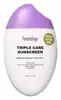
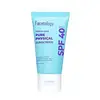
Facetology Triple Care Sunscreen SPF 40 Versus Facetology Triple Care Pure Physical Sunscreen SPF 40
This hybrid sunscreen covers the full UV range and blocks ~98% of UVB at SPF 40.
This mineral sunscreen covers the full UV range and blocks ~98% of UVB at SPF 40.

What's inside
What's inside
 Key Ingredients
Benefits
Concerns
Ingredients Side-by-side
Water
Skin ConditioningEthylhexyl Methoxycinnamate
UV Absorber


Niacinamide
Smoothing











Butyloctyl Salicylate
Skin Conditioning
Butyl Methoxydibenzoylmethane
UV Absorber
Silica
Abrasive
Glycerin
Humectant
Centella Asiatica Extract
Cleansing
Butylene Glycol
Humectant
Octocrylene
UV Absorber
Methylene Bis-Benzotriazolyl Tetramethylbutylphenol
UV Filter
Ethylhexyl Salicylate
UV Absorber
Titanium Dioxide
Cosmetic Colorant
Madecassoside
Antioxidant
Artemisia Vulgaris Extract
Skin Conditioning
Camellia Japonica Flower Extract
EmollientMorus Alba Bark Extract
Skin ConditioningBroussonetia Papyrifera Bark Extract
Skin ConditioningCamellia Sinensis Leaf Extract
Antimicrobial
Rhus Semialata Extract
Skin ConditioningPyrus Malus Fruit Extract
Skin Conditioning
Tricholoma Matsutake Extract
Skin ConditioningPhragmites Communis Extract
Skin ConditioningPoria Cocos Extract
Skin ConditioningTranexamic Acid
Astringent
Salicylic Acid
Masking



Aloe Barbadensis Leaf Extract
Emollient
Propylene Glycol
Humectant
Triethoxycaprylylsilane

Acetyl Glucosamine
Skin Conditioning
Citric Acid
Buffering
Aluminum Hydroxide
EmollientCaprylhydroxamic Acid
ChelatingDecyl Glucoside
Cleansing
PEG-40 Hydrogenated Castor Oil
Emulsifying

Xanthan Gum
Emulsifying1,2-Hexanediol
Skin Conditioning
Cocamidopropyl Dimethylamine
Emulsifying
Laureth-7
EmulsifyingLecithin
Emollient
Pentylene Glycol
Skin Conditioning
Polyacrylamide
Potassium Sorbate
Preservative
Sodium Benzoate
Masking
Phenoxyethanol
Preservative
Ethylhexylglycerin
Skin ConditioningBHT
Antioxidant
Water, Ethylhexyl Methoxycinnamate, Niacinamide, Butyloctyl Salicylate, Butyl Methoxydibenzoylmethane, Silica, Glycerin, Centella Asiatica Extract, Butylene Glycol, Octocrylene, Methylene Bis-Benzotriazolyl Tetramethylbutylphenol, Ethylhexyl Salicylate, Titanium Dioxide, Madecassoside, Artemisia Vulgaris Extract, Camellia Japonica Flower Extract, Morus Alba Bark Extract, Broussonetia Papyrifera Bark Extract, Camellia Sinensis Leaf Extract, Rhus Semialata Extract, Pyrus Malus Fruit Extract, Tricholoma Matsutake Extract, Phragmites Communis Extract, Poria Cocos Extract, Tranexamic Acid, Salicylic Acid, Aloe Barbadensis Leaf Extract, Propylene Glycol, Triethoxycaprylylsilane, Acetyl Glucosamine, Citric Acid, Aluminum Hydroxide, Caprylhydroxamic Acid, Decyl Glucoside, PEG-40 Hydrogenated Castor Oil, Xanthan Gum, 1,2-Hexanediol, Cocamidopropyl Dimethylamine, Laureth-7, Lecithin, Pentylene Glycol, Polyacrylamide, Potassium Sorbate, Sodium Benzoate, Phenoxyethanol, Ethylhexylglycerin, BHT
Water
Skin ConditioningZinc Oxide
Cosmetic Colorant
C12-15 Alkyl Benzoate
AntimicrobialCentella Asiatica Leaf Water
Skin Conditioning
Propanediol
Solvent
Coco-Caprylate/Caprate
Emollient
Glycerin
Humectant
Methyl Methacrylate Crosspolymer
Silica
Abrasive
Polyhydroxystearic Acid
Emulsifying
Dimethicone/Vinyl Dimethicone Crosspolymer
Skin Conditioning
Pentylene Glycol
Skin Conditioning
1,2-Hexanediol
Skin Conditioning
Dibutyl Adipate
EmollientPanthenol
Skin Conditioning
Hydroxyethyl Acrylate/Sodium Acryloyldimethyl Taurate Copolymer
Emulsion StabilisingTriethoxycaprylylsilane
C14-22 Alcohols
Emulsion Stabilising
Sodium Acrylate/Sodium Acryloyldimethyl Taurate Copolymer
Emulsion StabilisingIsohexadecane
EmollientC12-20 Alkyl Glucoside
EmulsifyingHydroxyacetophenone
Antioxidant
Polyacrylate Crosspolymer-6
Emulsion StabilisingPolyglyceryl-10 Myristate
Skin Conditioning
Tocopheryl Acetate
Antioxidant
Arachidyl Alcohol
Emollient
Polysorbate 80
Emulsifying
Dipotassium Glycyrrhizate
Humectant
Butylene Glycol
Humectant
Behenyl Alcohol
Emollient
Arachidyl Glucoside
EmulsifyingSorbitan Oleate
Emulsifying
Ethylhexylglycerin
Skin ConditioningArginine
Masking
Carbomer
Emulsion StabilisingVitis Vinifera Seed Oil
Emollient
Bisabolol
Antioxidant
Squalane
Emollient
Trehalose
Humectant
Saccharide Isomerate
Humectant
4-T-Butylcyclohexanol
Masking

Sodium Citrate
BufferingCitric Acid
Buffering
Phragmites Karka Extract
Skin ConditioningPoria Cocos Extract
Skin ConditioningSodium Benzoate
Masking
Pantothenic Acid
Skin ConditioningNigella Sativa Seed Oil
Emollient
Water, Zinc Oxide, C12-15 Alkyl Benzoate, Centella Asiatica Leaf Water, Propanediol, Coco-Caprylate/Caprate, Glycerin, Methyl Methacrylate Crosspolymer, Silica, Polyhydroxystearic Acid, Dimethicone/Vinyl Dimethicone Crosspolymer, Pentylene Glycol, 1,2-Hexanediol, Dibutyl Adipate, Panthenol, Hydroxyethyl Acrylate/Sodium Acryloyldimethyl Taurate Copolymer, Triethoxycaprylylsilane, C14-22 Alcohols, Sodium Acrylate/Sodium Acryloyldimethyl Taurate Copolymer, Isohexadecane, C12-20 Alkyl Glucoside, Hydroxyacetophenone, Polyacrylate Crosspolymer-6, Polyglyceryl-10 Myristate, Tocopheryl Acetate, Arachidyl Alcohol, Polysorbate 80, Dipotassium Glycyrrhizate, Butylene Glycol, Behenyl Alcohol, Arachidyl Glucoside, Sorbitan Oleate, Ethylhexylglycerin, Arginine, Carbomer, Vitis Vinifera Seed Oil, Bisabolol, Squalane, Trehalose, Saccharide Isomerate, 4-T-Butylcyclohexanol, Sodium Citrate, Citric Acid, Phragmites Karka Extract, Poria Cocos Extract, Sodium Benzoate, Pantothenic Acid, Nigella Sativa Seed Oil
Reviews
Ingredients Explained
These ingredients are found in both products.
Ingredients higher up in an ingredient list are typically present in a larger amount.
1,2-Hexanediol is a synthetic liquid and another multi-functional powerhouse.
It is a:
- Humectant, drawing moisture into the skin
- Emollient, helping to soften skin
- Solvent, dispersing and stabilizing formulas
- Preservative booster, enhancing the antimicrobial activity of other preservatives
Butylene Glycol (or BG) is used within cosmetic products for a few different reasons:
Overall, Butylene Glycol is a safe and well-rounded ingredient that works well with other ingredients.
Though this ingredient works well with most skin types, some people with sensitive skin may experience a reaction such as allergic rashes, closed comedones, or itchiness.
Learn more about Butylene GlycolCitric Acid is an alpha hydroxy acid (AHA) naturally found in citrus fruits like oranges, lemons, and limes.
Like other AHAs, citric acid can exfoliate skin by breaking down the bonds that hold dead skin cells together. This helps reveal smoother and brighter skin underneath.
However, this exfoliating effect only happens at high concentrations (20%) which can be hard to find in cosmetic products.
Due to this, citric acid is usually included in small amounts as a pH adjuster. This helps keep products slightly more acidic and compatible with skin's natural pH.
In skincare formulas, citric acid can:
While it can provide some skin benefits, research shows lactic acid and glycolic acid are generally more effective and less irritating exfoliants.
Most citric acid used in skincare today is made by fermenting sugars (usually from molasses). This synthetic version is identical to the natural citrus form but easier to stabilize and use in formulations.
Rosacea skin has a lower threshold for acids generally, with 62.5% of rosacea subjects in one study reacting to lactic acid in a sting test. This is why we mark citric acid as a potential rosacea trigger.
However, this ingredient shows up as a pH adjuster or chelator at roughly 0.1-1% in many products. These low levels are unlikely to be an issue for rosacea skin and becomes a potential trigger at exfoliating concentrations (20%). Because everybody's skin is unique, we recommend a patch test if you are unsure.
Learn more about Citric AcidEthylhexylglycerin is created from glycerin. It is a multitasker ingredient that:
The CIR Expert Panel found minimal skin absorption or sensitization of any kind in a safety assessment. Though this ingredient is considered well-tolerated, a small number of cases of allergic dermatitis have been published since 2002. Just be sure to patch test if you are unsure.
Industry-reported use ranges from 8% in rinse-off products and 2% in leave-on formulations.
Learn more about EthylhexylglycerinGlycerin (or glycerol) is a compound naturally found in your skin. It's a powerhouse humectant that pulls water into the stratum corneum.
Topically, glycerin does several things at once:
Your skin makes glycerin on its own (mostly from sebaceous oil breakdown) and shuttles it to your outermost layer of skin, or your epidermis, via aquaporin-3.
Aquaporin-3 is a transporter that is essential for normal skin hydration, elasticity, and repair. Interestingly, mice lacking in AQP3 have dry and less elastic skin that can be fully corrected with glycerin.
This ingredient is non-irritating, plays well with almost every ingredient, and works across all skin types. Typical use is anywhere between 3-10% but can go up to 79% in some leave-on products.
Just know very high concentrations (>40%) can feel tacky in low humidity.
Glycerin is the name for this ingredient in American English. British English uses Glycerol/Glycerine.
Learn more about GlycerinPentylene Glycol (1,2-pentanediol) is a multitasking little diol with three main roles in a formula:
Research on alkanediols (the family pentylene glycol belongs to) show they work by disrupting microbial cell membranes. This disruption helps the primary preservative system in a product work more effectively at lower doses.
On the safety side, the Cosmetic Ingredient Review Expert Panel has concluded this ingredient to be safe as used in current cosmetic practices + concentrations.
Typical use levels in a formula run about 1-5%.
Learn more about Pentylene GlycolThis ingredient comes from a medicinal mushroom commonly used in East Asian medicine. It has skin conditioning properties. It is also known as Wolfiporia extensa.
It is particularly great at soothing inflammation and protecting skin from stress due to its high content of polysaccharides and triterpenoids.
Some studies link the triterpenes to reduced oxidative stress and collagen protection in skin models. This suggests potential benefits for early signs of aging.
On top of that, studies also report tyrosinase inhibition and reduced melanin production in melanocyte models to help brighten skin (though more clinical evidence is needed for definitive claims).
The polysaccharides can also help hydrate the skin as humectants.
Safety data shows a low irritation risk for this ingredient. However, like any extract, some may experience an allergic reaction when using this ingredient. Be sure to patch test!
Learn more about Poria Cocos ExtractSilica, also known as silicon dioxide, is a naturally occurring mineral. It is used as a fine, spherical, and porous powder in cosmetics.
Though it has exfoliant properties, the function of silica varies depending on the product.
The unique structure of silica enhances the spreadability and adds smoothness, making it a great texture enhancer.
It is also used as an active carrier, emulsifier, and mattifier due to its ability to absorb excess oil.
In some products, tiny microneedles called spicules are made from silica or hydrolyzed sponge. When you rub them in, they lightly polish away dead skin layers and enhance the penetration of active ingredients.
Learn more about SilicaSodium Benzoate is a preservative. It's used in both cosmetic and food products to inhibit the growth of mold and bacteria. It is typically produced synthetically.
Both the US FDA and EU Health Committee have approved the use of sodium benzoate. In the US, levels of 0.1% (of the total product) are allowed.
Sodium benzoate works as a preservative by inhibiting the growth of bacteria inside of cells. It prevents the cell from fermenting a type of sugar using an enzyme called phosphofructokinase.
It is the salt of benzoic acid. Foods containing sodium benzoate include soda, salad dressings, condiments, fruit juices, wines, and snack foods.
Studies for using ascorbic acid and sodium benzoate in cosmetics are lacking, especially in skincare routines with multiple steps.
We always recommend speaking with a professional, such as a dermatologist, if you have any concerns.
Learn more about Sodium BenzoateTriethoxycaprylylsilane is a silicon-based surface modifier that makes sunscreens feel silky and makeup stay put.
Its main job is to coat mineral particles like titanium dioxide, zinc oxide, and color pigments in a thin, oily layer so they spread smoothly, don't clump, and stick to skin better.
This ingredient is typically used at low levels (up to 2.5% in eyeshadow and 1% in lipstick).
Learn more about TriethoxycaprylylsilaneWater. It's the most common cosmetic ingredient of all. You'll usually see it at the top of ingredient lists, meaning that it makes up the largest part of the product.
So why is it so popular? Water most often acts as a solvent - this means that it helps dissolve other ingredients into the formulation.
You'll also recognize water as that liquid we all need to stay alive. If you see this, drink a glass of water. Remember to stay hydrated!
Learn more about Water

