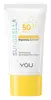
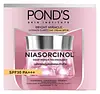
Y.O.U Sunbrella 2% Niacinamide Brightening Sunscreen SPF 50+ PA++++ Versus Pond's Bright Miracle Day Cream Niasorcinol SPF 30
This chemical sunscreen covers the full UV range and blocks ~98% of UVB at SPF 50.
This brightening day moisturizer is formulated around Niacinamide and Sodium Ascorbyl Phosphate to brighten dull-looking skin and fade the look of dark spots.


What's inside
What's inside
 Key Ingredients
Benefits
Concerns
Ingredients Side-by-side
Water
Skin ConditioningPropylene Glycol
Humectant


Ethylhexyl Methoxycinnamate
UV Absorber


Niacinamide
Smoothing











Propanediol
Solvent
Diethylamino Hydroxybenzoyl Hexyl Benzoate
UV Filter
Dimethicone/Vinyl Dimethicone Crosspolymer
Skin Conditioning
Silica
Abrasive
Butylene Glycol
Humectant
Phenoxyethanol
Preservative
Carbomer
Emulsion StabilisingHydroxyacetophenone
Antioxidant
Aminomethyl Propanol
BufferingSorbitan Stearate
Emulsifying
Xanthan Gum
EmulsifyingDihydroxypropyl Arginine Hcl
HumectantHydrogenated Lecithin
Emulsifying
Undecane
EmollientSteareth-21
CleansingCaprylyl Methicone
Skin Conditioning
PEG-9 Dimethicone
Skin Conditioning
Tridecane
Perfuming

Cetearyl Methicone
Skin Conditioning
Caprylyl Glycol
Emollient
Disodium EDTA
Ethylhexylglycerin
Skin ConditioningMenthol
Masking

Sodium Surfactin
CleansingPhytosterols
Skin Conditioning
Sucrose Cocoate
Emulsifying
Sodium Benzoate
Masking
Butyl Methoxydibenzoylmethane
UV Absorber
Hyaluronic Acid
Humectant
3-O-Ethyl Ascorbic Acid
Skin Conditioning
Zinc PCA
Humectant
Ectoin
Skin Conditioning
Thermus Thermophillus Ferment
Skin ConditioningGlycerin
Humectant
Polyester-7
Skin ConditioningNeopentyl Glycol Diheptanoate
EmollientZea Mays Starch
Absorbent
Myrothamnus Flabellifolia Leaf/Stem Extract
HumectantPseudoalteromonas Ferment Extract
Humectant
Hydrolyzed Corn Starch
HumectantHydrolyzed Corn Starch Octenylsuccinate
AbsorbentButyrospermum Parkii Butter
Skin Conditioning

Cocamidopropyl Dimethylamine
Emulsifying
Buddleja Officinalis Flower Extract
UV FilterHamamelis Virginiana Extract
Antiseborrhoeic
1,2-Hexanediol
Skin Conditioning
Phenylethyl Resorcinol
Antioxidant
Ceramide NP
Skin Conditioning
Lactic Acid
Buffering
Sodium Salicylate
Preservative
Palmitoyl Tripeptide-5
Skin Conditioning
Hydrated Silica
Abrasive
Madecassoside
Antioxidant
Asiaticoside
Antioxidant
Ceramide Ns
Skin Conditioning
Ceramide As
Skin Conditioning
Potassium Sorbate
Preservative
Glucose
Humectant
Madecassic Acid
Skin Conditioning
Asiatic Acid
Skin Conditioning
Sodium Hyaluronate
Humectant
Chondrus Crispus Extract
Skin Conditioning
Hydroxypropyltrimonium Hyaluronate
Hydrolyzed Hyaluronic Acid
Humectant
Sodium Acetylated Hyaluronate
Humectant
Hydrolyzed Sodium Hyaluronate
Skin Conditioning
Sodium Hyaluronate Crosspolymer
Humectant
Potassium Hyaluronate
Skin ConditioningCeramide EOP
Skin Conditioning
Ceramide AP
Skin Conditioning
Water, Propylene Glycol, Ethylhexyl Methoxycinnamate, Niacinamide, Propanediol, Diethylamino Hydroxybenzoyl Hexyl Benzoate, Dimethicone/Vinyl Dimethicone Crosspolymer, Silica, Butylene Glycol, Phenoxyethanol, Carbomer, Hydroxyacetophenone, Aminomethyl Propanol, Sorbitan Stearate, Xanthan Gum, Dihydroxypropyl Arginine Hcl, Hydrogenated Lecithin, Undecane, Steareth-21, Caprylyl Methicone, PEG-9 Dimethicone, Tridecane, Cetearyl Methicone, Caprylyl Glycol, Disodium EDTA, Ethylhexylglycerin, Menthol, Sodium Surfactin, Phytosterols, Sucrose Cocoate, Sodium Benzoate, Butyl Methoxydibenzoylmethane, Hyaluronic Acid, 3-O-Ethyl Ascorbic Acid, Zinc PCA, Ectoin, Thermus Thermophillus Ferment, Glycerin, Polyester-7, Neopentyl Glycol Diheptanoate, Zea Mays Starch, Myrothamnus Flabellifolia Leaf/Stem Extract, Pseudoalteromonas Ferment Extract, Hydrolyzed Corn Starch, Hydrolyzed Corn Starch Octenylsuccinate, Butyrospermum Parkii Butter, Cocamidopropyl Dimethylamine, Buddleja Officinalis Flower Extract, Hamamelis Virginiana Extract, 1,2-Hexanediol, Phenylethyl Resorcinol, Ceramide NP, Lactic Acid, Sodium Salicylate, Palmitoyl Tripeptide-5, Hydrated Silica, Madecassoside, Asiaticoside, Ceramide Ns, Ceramide As, Potassium Sorbate, Glucose, Madecassic Acid, Asiatic Acid, Sodium Hyaluronate, Chondrus Crispus Extract, Hydroxypropyltrimonium Hyaluronate, Hydrolyzed Hyaluronic Acid, Sodium Acetylated Hyaluronate, Hydrolyzed Sodium Hyaluronate, Sodium Hyaluronate Crosspolymer, Potassium Hyaluronate, Ceramide EOP, Ceramide AP
Water
Skin ConditioningOctocrylene
UV Absorber
Ethylhexyl Salicylate
UV Absorber
Stearic Acid
Cleansing
Niacinamide
Smoothing
Glyceryl Stearate
Emollient
Butyl Methoxydibenzoylmethane
UV Absorber
Ethylhexyl Methoxycinnamate
UV Absorber
Dimethicone
Emollient
Glycerin
Humectant
Titanium Dioxide
Cosmetic Colorant
Cetyl Alcohol
Emollient
Phenoxyethanol
Preservative
Parfum
Masking
Carbomer
Emulsion StabilisingSodium Ascorbyl Phosphate
Antioxidant
Tocopheryl Acetate
Antioxidant
Methylparaben
Preservative
Allantoin
Skin Conditioning
Menthyl Lactate
Masking
Potassium Hydroxide
BufferingSilica
Abrasive
Propylparaben
Preservative
Disodium EDTA
Hydroxystearic Acid
Cleansing
Pvp
Emulsion StabilisingAluminum Hydroxide
EmollientCystine
MaskingGlycine
Buffering
Sodium PCA
Humectant
BHT
Antioxidant
Palmitic Acid
Emollient
3-O-Ethyl Ascorbic Acid
Skin Conditioning
4-Ethylresorcinol
AntimicrobialBifida Ferment Lysate
Skin Conditioning
Sodium Acetylated Hyaluronate
Humectant
Ceramide NP
Skin Conditioning
Sodium Hyaluronate
Humectant
Ceramide AP
Skin Conditioning
Phytosphingosine
Skin Conditioning
Cholesterol
Emollient
Sodium Hyaluronate Crosspolymer
Humectant
Hydrolyzed Sodium Hyaluronate
Skin Conditioning
Ceramide EOP
Skin Conditioning
CI 14700
Cosmetic ColorantWater, Octocrylene, Ethylhexyl Salicylate, Stearic Acid, Niacinamide, Glyceryl Stearate, Butyl Methoxydibenzoylmethane, Ethylhexyl Methoxycinnamate, Dimethicone, Glycerin, Titanium Dioxide, Cetyl Alcohol, Phenoxyethanol, Parfum, Carbomer, Sodium Ascorbyl Phosphate, Tocopheryl Acetate, Methylparaben, Allantoin, Menthyl Lactate, Potassium Hydroxide, Silica, Propylparaben, Disodium EDTA, Hydroxystearic Acid, Pvp, Aluminum Hydroxide, Cystine, Glycine, Sodium PCA, BHT, Palmitic Acid, 3-O-Ethyl Ascorbic Acid, 4-Ethylresorcinol, Bifida Ferment Lysate, Sodium Acetylated Hyaluronate, Ceramide NP, Sodium Hyaluronate, Ceramide AP, Phytosphingosine, Cholesterol, Sodium Hyaluronate Crosspolymer, Hydrolyzed Sodium Hyaluronate, Ceramide EOP, CI 14700
Ingredients Explained
These ingredients are found in both products.
Ingredients higher up in an ingredient list are typically present in a larger amount.
3-O-Ethyl Ascorbic Acid is one of the most popular "stable" vitamin C derivatives in skincare.
Plain ascorbic acid is fantastic but notoriously fragile; it browns, oxidizes, and loses potency fast. So attaching an ethyl group to the third carbon of the molecule gives it some cool perks:
In a formula, it does the 3 classic vitamin C jobs: it acts as an antioxidant, helps brighten skin tone by inhibiting tyrosinase, and supports collagen.
The evidence is reasonably solid for a cosmetic ingredient; Liao and colleagues (2018) showed it's significantly more stable than ascorbic acid while still being effective.
A 2021 study by Zerbinati and colleagues tested a serum with 30% 3-O-ethyl-l-ascorbic acid and 1% lactic acid significantly increased collagen production, reduced UVB-induced DNA damage, and decreased melanin on a reconstructed pigmented skin model.
Typical real world usage sits around 0.5-5% (and 1-2% is common for daily serums).
Amounts up to 30% have been shown to be non-irritating on human skin samples, but two isolated cases reported allergic contact dermatitis so a patch test is sensible if you have reactive skin.
Learn more about 3-O-Ethyl Ascorbic AcidAlso known as Avobenzone, this ingredient is an oil-soluble used to absorb the full spectrum of UVA rays (peak 357 nm).
It's one of the most effective UVA filters available but has a major caveat of photostability: avobenzone is susceptible to photodegradation.
This means it can lose efficacy when exposed to sunlight without the help of a stabilizing agent.
Studies show antioxidants (like vitamin E or vitamin C) and some UV filters (like octocrylene and Tinosorb S) can meaningfully improve its stability in a formulation.
The maximum allowable concentration according to regulation is 3% in the US + Canada, and 5% in the EU, Australia, China, Korea, and ASEAN countries.
It has a well-support safety profile: a comprehensive 2025 review found minimal toxicity with no evidence of carcinogenicity.
Overall, avobenzone is a safe and regulated ingredient used in sunscreen for over 40 years.
Learn more about Butyl MethoxydibenzoylmethaneCarbomer is a synthetic thickening and gelling agent. It's basically the ingredient that gives a lot of serums, gels, creams, and sunscreens their smooth, non-sticky texture.
Although legally permitted at very high levels, carbomers are normally used at concentrations below 1%.
It also needs to be neutralized to actually thicken, and because it is a large molecule, it doesn't really penetrate the skin barrier.
Allergy-wise, the risk is very low. Clinical studies show carbomers have low potential for skin irritation/sensitization even at concentrations up to 100%.
A 2024 UK study patch-tested 1,302 patients and found true allergy to the parent group of carbomer to be rare with no confirmed relevant reactions.
Learn more about CarbomerCeramide AP is is a skin-identical lipid that mimics what your skin already makes naturally. Ceramides help maintain epidermal integrity and barrier function.
You'll often see this ingredient paired with other ceramides (like ceramide NP), cholesterol, or fatty acids because this combination best mimics the natural lipid mix your skin already has.
The skin's ability to produce ceramides gets disrupted in skin conditions like eczema. This in turn weakens the skin barrier and applying ceramides topically has been shown to replenish what's been lost to restore barrier function.
Most of the studies with Ceramide AP test it as part of a multi-ceramide complex; studies reinforce ceramide AP's role in rebalancing ceramides in skin and improving skin hydration.
Learn more about Ceramide APCeramide EOP is formally known as Ceramide 1.
It is naturally found in skin and part of the intercellular "mortar" holding everything together in your outermost layer.
EOP stands for a linked Ester fatty acid, a linked Omega hydroxy fatty acid, and the Phytosphingosine base.
What makes Ceramide EOP special is its ultra-long fatty acid chain; this unique structure allows it to bridge the lipid layers in your skin barrier to prevent water loss (something no other ceramide can do).
Low levels of Ceramide EOP have been found in people with eczema and psoriasis.
Using it together with other ceramides, cholesterol, and linoleic acid have been shown to meaningfully improve hydration and reduce water loss.
In one clinical study, a regimen using Ceramide EOP, NP, and AP led to significant symptom improvements in patients with eczema, psoriasis, and dry skin in just 4 weeks.
You'll usually see concentrations between 0.1-0.5% in formulations. Overall, this is a well-tolerated and safe ingredient for cosmetic use.
Learn more about Ceramide EOPCeramide NP (formerly known as Ceramide 3) is one of the skin's naturally occurring lipids.
Since ceramides are the major lipid components of the skin, they are crucial for maintaining skin barrier and hydration. Ceramide NP most closely mirrors the dominant kind in human skin amongst ceramide subtypes.
This ceramide works by slotting into gaps within the stratum corneum's lipid matrix to limit trans-epidermal water loss (TEWL) and shield the skin against external irritants.
A study with 312 patients found that using a ceramide-containing routine for 4 weeks reduced the severity of atopic dermatitis by over 61%.
Another clinical study in subjects aged 60 and older found that a ceramide body wash and moisturizer improved skin dryness and itchy skin in 15 days.
Overall, ceramides are considered non-irritating and safety tests have found little to no observable adverse effects from using this ingredient.
Ceramide NP is usually sourced from plants (like soybean or rice bran), or produced synthetically.
Learn more about Ceramide NPDisodium EDTA is a chelating agent. It grabs onto and deactivates metal ions that sneak into your products from water, packaging, or air.
This ingredient mainly works behind the scenes and helps with:
On top of that, this ingredient can counteract the effects of hard water by binding to the minerals in it.
One thing worth knowing is that Disodium EDTA has been shown to be a mild penetration enhancer. It can help other ingredients absorb into skin more effectively which can be a double-edged sword (great for actives, but can also make the active too strong if you have sensitive skin).
Clinical patch testing showed no significant skin irritation at typical use concentrations and minimal dermal absorption.
You'll most likely see this ingredient near the end of an ingredient list. It's typically found in concentrations less than 1%.
Learn more about Disodium EDTAThis ingredient is also known as Octinoxate and is one of the oldest and most widely used chemical UV filters in skincare.
It has a simple job: soap up UVB radiation (290-320 nm), the wavelengths responsible for sunburn and a big chunk of long-term sun damage.
In formulas, it's always paired with a separate UVA filter because octinoxate solely protects skin from UVB.
Because it's an oil-soluble liquid, it's easy to blend into the oil phase of lotions/creams and gives a cosmetically elegant feel.
The one quirk about formulating this ingredient is photostability; the molecule slowly changes shape into a less effective version when sunlight hits it. So the longer you're in the sun, the weaker its protection gets. The drop can be more than 30% in some formulas.
It also doesn't play nice with Avobenzone (the common UVA filter) since avobenzone destabilizes octinoxate and the two degrade each other. But don't worry: brands have solved this issue by adding photostabilizers like Tinosorb S to prevent degradation and keep SPF stable under heavy UV exposure.
The maximum allowed level is 10% in the EU and Australia, 7.5% in the US and Canada, and 20% in Japan.
The Cosmetic Ingredient Review Panel has concluded this ingredient to be safe in cosmetics up to 10%.
One last thing worth knowing for context:
Octinoxate has been the subject of ongoing review in Europe where the Scientific Committee on Consumer Safety's (SCCS) 2025 final opinion is that this ingredient is an endocrine-active substance.
Lab and animal studies suggest it can act a bit like a hormone in the body (mildly mimicking estrogen and slightly blocking male hormones). It's important to know this hasn't really been shown to happen in everyday human use.
This ingredient is also banned in Hawaii over coral reef concerns.
Learn more about Ethylhexyl MethoxycinnamateGlycerin (or glycerol) is a compound naturally found in your skin. It's a powerhouse humectant that pulls water into the stratum corneum.
Topically, glycerin does several things at once:
Your skin makes glycerin on its own (mostly from sebaceous oil breakdown) and shuttles it to your outermost layer of skin, or your epidermis, via aquaporin-3.
Aquaporin-3 is a transporter that is essential for normal skin hydration, elasticity, and repair. Interestingly, mice lacking in AQP3 have dry and less elastic skin that can be fully corrected with glycerin.
This ingredient is non-irritating, plays well with almost every ingredient, and works across all skin types. Typical use is anywhere between 3-10% but can go up to 79% in some leave-on products.
Just know very high concentrations (>40%) can feel tacky in low humidity.
Glycerin is the name for this ingredient in American English. British English uses Glycerol/Glycerine.
Learn more about GlycerinThis ingredient is created by putting sodium hyaluronate through hydrolysis.
You might know this as 'mini' or 'ultra low-molecular weight' hyaluronic acid. The small molecule size means it is able to travel deeper in the skin.
According to studies, low molecular-weight hyaluronic acid can:
One study from 2011 found ultra-low weight HA to show pro-inflammatory properties. Another study from 2022 found it to downregulate UV-B induced inflammation.
Hydrolysis is a process of changing a molecule using water or enzymes.
This ingredient is water-soluble.
Learn more about Hydrolyzed Sodium HyaluronateNiacinamide is a multitasking form of vitamin B3 that strengthens the skin barrier, reduces pores and dark spots, regulates oil, and improves signs of aging.
And the best part? It's gentle and well-tolerated by most skin types, including sensitive and reactive skin.
You might have heard of "niacin flush", or the reddening of skin that causes itchiness. Niacinamide has not been found to cause this.
In very rare cases, some individuals may not be able to tolerate niacinamide at all or experience an allergic reaction to it.
If you are experiencing flaking, irritation, and dryness with this ingredient, be sure to double check all your products as this ingredient can be found in all categories of skincare.
When incorporating niacinamide into your routine, look out for concentration amounts. Typically, 5% niacinamide provides benefits such as fading dark spots. However, if you have sensitive skin, it is better to begin with a smaller concentration.
When you apply niacinamide to your skin, your body converts it into nicotinamide adenine dinucleotide (NAD). NAD is an essential coenzyme that is already found in your cells as "fuel" and powers countless biological processes.
In your skin, NAD helps repair cell damage, produce new healthy cells, support collagen production, strengthen the skin barrier, and fight environmental stressors (like UV and pollution).
Our natural NAD levels start to decline with age, leading to slower skin repair, visible aging, and a weaker skin barrier. By providing your skin niacinamide, you're recharging your skin's NAD levels. This leads to stronger, healthier, and younger looking skin.
Another name for vitamin B3 is nicotinamide. This vitamin is water-soluble and our bodies don't store it. We obtain Vitamin B3 from either food or skincare. Meat, fish, wheat, yeast, and leafy greens contain vitamin B3.
The type of niacinamide used in skincare is synthetically created.
Learn more about NiacinamidePhenoxyethanol is one of the most widely used preservatives in skincare (and for good reason!).
It has a large spectrum of antimicrobial activity and especially effective bacteria, yeast, and mold while only having a weak effect on your skin's natural microbiome.
On a cellular level, it disrupts the cell membranes of microbes by poking holes that make the cell leak. This shuts down the chemical reactions the microbe needs to make energy so it can no longer survive.
Another perk of this ingredient is that it stays functional across a wide pH range (3-10).
You'll often see it paired with boosters like Ethylhexylglycerin; one study showed that a 1:9 ratio of Ethylhexylglycerin to Phenoxyethanol damages bacterial membranes as effectively as doubling the Phenoxyethanol concentration on its own.
Typical use concentrations range from 0.3-1% depending on the formula, and this ingredient is capped at 1% int the EU.
Safety-wise, the fear mongering does not hold up to the evidence. The EU's Scientific Committee on Consumer Safety and FDA consider it safe as a preservative at up to 1%, including for children of all ages.
Adverse systemic effects only showed up in animal studies at exposures roughly 200x higher than what people get from cosmetics. And despite its very widespread use, this ingredient is a rare sensitizer and allergic reactions are uncommon.
Learn more about PhenoxyethanolSilica, also known as silicon dioxide, is a naturally occurring mineral. It is used as a fine, spherical, and porous powder in cosmetics.
Though it has exfoliant properties, the function of silica varies depending on the product.
The unique structure of silica enhances the spreadability and adds smoothness, making it a great texture enhancer.
It is also used as an active carrier, emulsifier, and mattifier due to its ability to absorb excess oil.
In some products, tiny microneedles called spicules are made from silica or hydrolyzed sponge. When you rub them in, they lightly polish away dead skin layers and enhance the penetration of active ingredients.
Learn more about SilicaSodium Acetylated Hyaluronate is a type of Hyaluronic Acid.
Hyaluronic Acids help moisturize, soothe, and protect the skin.
Read about common types of Hyaluronic Acid here:
Learn more about Sodium Acetylated HyaluronateSodium Hyaluronate is the salt form of hyaluronic acid. It is a long sugar chain that is naturally found in your skin, joints, and connective tissue that maintains hydration and elasticity.
In skincare, it works as a humectant. It pulls water from the environment and deeper layers of skin and binds it to the surface.
Interestingly, the size of the molecule affects its behavior:
Some clinical evidence links low molecular weight versions to improved wrinkle depth, elasticity, anti-inflammatory effects, and barrier repair.
Many serums use a blend of both weights so you can get surface hydration plus longer-lasting and deeper effects.
You'll typically see concentrations between 0.1-2% for this ingredient.
Learn more about Sodium HyaluronateSodium Hyaluronate Crosspolymer is a crosslinked version of sodium hyaluronate. This just means it's linked into a 3D mesh network that lets it be more stable and sit on skin as a cohesive, gel-like film rather than sinking into skin.
A 2016 human skin study found crosslinked HA increased epidermal water content by 7.6% over the control group and reduced transepidermal water loss by 27.8%.
A follow-up clinical trial found that a topical crosslinked HA serum applied after fillers, microneedling, or chemical peels was well-tolerated and enhanced skin quality at 14 / 28 days.
More recent research suggests that concentrations as low as 0.03% can act as a penetration enhancer for other skincare actives.
Learn more about Sodium Hyaluronate CrosspolymerWater. It's the most common cosmetic ingredient of all. You'll usually see it at the top of ingredient lists, meaning that it makes up the largest part of the product.
So why is it so popular? Water most often acts as a solvent - this means that it helps dissolve other ingredients into the formulation.
You'll also recognize water as that liquid we all need to stay alive. If you see this, drink a glass of water. Remember to stay hydrated!
Learn more about Water

