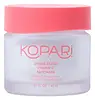
This wash off mask is made with Ascorbyl Glucoside and Zinc Oxide for a rinse-off brightening boost.

What's inside
What's inside
 Key Ingredients
Benefits
Concerns
Ingredients Side-by-side
Water
Skin ConditioningGlycerin
Humectant


Caprylic/Capric Triglyceride
Masking
Methyl Glucose Sesquistearate
Emollient

Coco-Caprylate/Caprate
Emollient
Isostearyl Linoleate
EmollientZinc Oxide
Cosmetic Colorant


Butyrospermum Parkii Butter
Skin Conditioning


Stearyl Alcohol
Emollient
Silica
Abrasive

Cetyl Alcohol
Emollient
Glyceryl Stearate Citrate
Emollient
Litchi Chinensis Seed Extract
Skin ConditioningAscorbyl Glucoside
Antioxidant



Vaccinium Myrtillus Fruit Extract
Skin ConditioningSaccharum Officinarum Extract
MoisturisingAcer Saccharum Extract
Skin ConditioningPyrus Malus Fruit Extract
Skin Conditioning
Salix Alba Bark Extract
Astringent

Cocos Nucifera Fruit Extract
Emollient
Lavandula Angustifolia Flower/Leaf/Stem Extract
Masking

Ocimum Sanctum Leaf Extract
Skin ConditioningAnanas Sativus Fruit Extract
Skin ConditioningRubus Idaeus Fruit Extract
AstringentPrunus Armeniaca Fruit Extract
Skin ConditioningVanilla Planifolia Fruit Extract
Skin Conditioning
Passiflora Incarnata Fruit Extract
Skin ConditioningPrunus Persica Fruit Extract
Abrasive
Musa Sapientum Fruit Extract
Skin ConditioningSolanum Melongena Fruit Extract
Skin ConditioningMelia Azadirachta Flower Extract
Skin ConditioningMelia Azadirachta Leaf Extract
Skin ConditioningCoccinia Indica Fruit Extract
Skin Conditioning
Citrus Limon Fruit Extract
Masking
Citrus Paradisi Fruit Extract
Skin ConditioningAloe Barbadensis Flower Extract
EmollientCitrus Aurantium Dulcis Fruit Extract
MaskingCitrus Aurantium Dulcis Peel Extract
Emulsion Stabilising
Citrus Aurantifolia Peel Extract
Cleansing
Citrus Limon Peel Extract
EmollientZea Mays Starch
Absorbent
Xanthan Gum
EmulsifyingCetearyl Alcohol
Emollient
1,2-Hexanediol
Skin Conditioning
Caprylyl Glycol
Emollient
Glyceryl Caprylate
EmollientSclerotium Gum
Emulsion StabilisingPullulan
Triethyl Citrate
Masking
Sodium Stearoyl Glutamate
CleansingPolyacrylate Crosspolymer-6
Emulsion StabilisingLecithin
Emollient
Potassium Sorbate
Preservative
Citric Acid
Buffering
Sodium Benzoate
Masking
Disodium EDTA
ChelatingPhenoxyethanol
Preservative
Water, Glycerin, Caprylic/Capric Triglyceride, Methyl Glucose Sesquistearate, Coco-Caprylate/Caprate, Isostearyl Linoleate, Zinc Oxide, Butyrospermum Parkii Butter, Stearyl Alcohol, Silica, Cetyl Alcohol, Glyceryl Stearate Citrate, Litchi Chinensis Seed Extract, Ascorbyl Glucoside, Vaccinium Myrtillus Fruit Extract, Saccharum Officinarum Extract, Acer Saccharum Extract, Pyrus Malus Fruit Extract, Salix Alba Bark Extract, Cocos Nucifera Fruit Extract, Lavandula Angustifolia Flower/Leaf/Stem Extract, Ocimum Sanctum Leaf Extract, Ananas Sativus Fruit Extract, Rubus Idaeus Fruit Extract, Prunus Armeniaca Fruit Extract, Vanilla Planifolia Fruit Extract, Passiflora Incarnata Fruit Extract, Prunus Persica Fruit Extract, Musa Sapientum Fruit Extract, Solanum Melongena Fruit Extract, Melia Azadirachta Flower Extract, Melia Azadirachta Leaf Extract, Coccinia Indica Fruit Extract, Citrus Limon Fruit Extract, Citrus Paradisi Fruit Extract, Aloe Barbadensis Flower Extract, Citrus Aurantium Dulcis Fruit Extract, Citrus Aurantium Dulcis Peel Extract, Citrus Aurantifolia Peel Extract, Citrus Limon Peel Extract, Zea Mays Starch, Xanthan Gum, Cetearyl Alcohol, 1,2-Hexanediol, Caprylyl Glycol, Glyceryl Caprylate, Sclerotium Gum, Pullulan, Triethyl Citrate, Sodium Stearoyl Glutamate, Polyacrylate Crosspolymer-6, Lecithin, Potassium Sorbate, Citric Acid, Sodium Benzoate, Disodium EDTA, Phenoxyethanol
Water
Skin ConditioningBentonite
Absorbent
Glycerin
Humectant
Hydrogenated Castor Oil
Emollient
Propanediol
Solvent
Cetyl Alcohol
Emollient
Glyceryl Stearate
Emollient
Kaolin
Abrasive
Stearic Acid
Cleansing
PEG-100 Stearate
Surfactant
Ricinus Communis Seed Oil
Masking
Glyceryl Caprylate
EmollientButyrospermum Parkii Butter
Skin Conditioning
Menthyl Lactate
Masking
Lecithin
Emollient
Dimethicone
Emollient
Leuconostoc/Radish Root Ferment Filtrate
Antimicrobial
Panthenol
Skin Conditioning
Titanium Dioxide
Cosmetic Colorant
Caprylyl Glycol
Emollient
1,2-Hexanediol
Skin Conditioning
Butylene Glycol
Humectant
Xanthan Gum
EmulsifyingCarrageenan
Vaccinium Myrtillus Fruit Extract
Skin ConditioningPseudoalteromonas Ferment Extract
Humectant
Camellia Sinensis Leaf Extract
Antimicrobial
Rosmarinus Officinalis Leaf Extract
AntimicrobialArctostaphylos Uva-Ursi Leaf Extract
Skin Conditioning
Cucumis Sativus Fruit Extract
Emollient
Tocopheryl Acetate
Antioxidant
PEG-8
HumectantAminopeptidase
Skin ConditioningProtease
Exfoliating
Saccharum Officinarum Extract
MoisturisingTriethyl Citrate
Masking
Citric Acid
Buffering
Glyceryl Undecylenate
Emollient
Hydrolyzed Wheat Protein
Skin ConditioningLavandula Angustifolia Flower/Leaf/Stem Extract
Masking
Hydrolyzed Soy Protein
Humectant
Acer Saccharum Extract
Skin ConditioningCitrus Aurantium Dulcis Fruit Extract
MaskingCitrus Medica Limonum Fruit Extract
Skin ConditioningCitrus Limon Peel Extract
EmollientSodium Hyaluronate
Humectant
Tetrahexyldecyl Ascorbate
Antioxidant
Pyrus Malus Fruit Extract
Skin Conditioning
Rubus Idaeus Fruit Extract
AstringentBupleurum Falcatum Root Extract
Skin ConditioningPotassium Sorbate
Preservative
Acetyl Hexapeptide-8
Humectant
Salvia Officinalis Leaf Extract
CleansingUbiquinone
Antioxidant
Vanilla Planifolia Fruit Extract
Skin Conditioning
Tripeptide-10 Citrulline
Skin Conditioning
Carbomer
Emulsion StabilisingCaffeine
Skin Conditioning
Coenzyme A
Skin ConditioningSalvia Sclarea Extract
AntiseborrhoeicVaccinium Macrocarpon Fruit Extract
AstringentZingiber Officinale Root Extract
Masking
Tripeptide-1
Skin Conditioning
Water, Bentonite, Glycerin, Hydrogenated Castor Oil, Propanediol, Cetyl Alcohol, Glyceryl Stearate, Kaolin, Stearic Acid, PEG-100 Stearate, Ricinus Communis Seed Oil, Glyceryl Caprylate, Butyrospermum Parkii Butter, Menthyl Lactate, Lecithin, Dimethicone, Leuconostoc/Radish Root Ferment Filtrate, Panthenol, Titanium Dioxide, Caprylyl Glycol, 1,2-Hexanediol, Butylene Glycol, Xanthan Gum, Carrageenan, Vaccinium Myrtillus Fruit Extract, Pseudoalteromonas Ferment Extract, Camellia Sinensis Leaf Extract, Rosmarinus Officinalis Leaf Extract, Arctostaphylos Uva-Ursi Leaf Extract, Cucumis Sativus Fruit Extract, Tocopheryl Acetate, PEG-8, Aminopeptidase, Protease, Saccharum Officinarum Extract, Triethyl Citrate, Citric Acid, Glyceryl Undecylenate, Hydrolyzed Wheat Protein, Lavandula Angustifolia Flower/Leaf/Stem Extract, Hydrolyzed Soy Protein, Acer Saccharum Extract, Citrus Aurantium Dulcis Fruit Extract, Citrus Medica Limonum Fruit Extract, Citrus Limon Peel Extract, Sodium Hyaluronate, Tetrahexyldecyl Ascorbate, Pyrus Malus Fruit Extract, Rubus Idaeus Fruit Extract, Bupleurum Falcatum Root Extract, Potassium Sorbate, Acetyl Hexapeptide-8, Salvia Officinalis Leaf Extract, Ubiquinone, Vanilla Planifolia Fruit Extract, Tripeptide-10 Citrulline, Carbomer, Caffeine, Coenzyme A, Salvia Sclarea Extract, Vaccinium Macrocarpon Fruit Extract, Zingiber Officinale Root Extract, Tripeptide-1
Ingredients Explained
These ingredients are found in both products.
Ingredients higher up in an ingredient list are typically present in a larger amount.
1,2-Hexanediol is a synthetic liquid and another multi-functional powerhouse.
It is a:
- Humectant, drawing moisture into the skin
- Emollient, helping to soften skin
- Solvent, dispersing and stabilizing formulas
- Preservative booster, enhancing the antimicrobial activity of other preservatives
We don't have a description for Acer Saccharum Extract yet.
This ingredient is also known as shea butter. It is a plant-derived extract from the nuts of the Africa shea tree and one of the most well-studied emollients.
Because it has a high concentration of fatty acids (primarily oleic, stearic, and linoleic) it is able to form a protective barrier on the skin's surface. This helps seal in moisture and prevents transepidermal water loss (TEWL).
In vitro research found an increase in skin hydration by 58% and a decrease in TEWL by 37.8% after 24 hours of applying this ingredient (pretty impressive for a single ingredient!).
Besides hydration, shea butter also contains triterpenes that have anti-inflammatory potential. In particule, lupeol cinnamate has shown the highest anti-inflammatory activity in vivo.
Shea butter also contains vitamins A and E which may contribute to antioxidant activity.
While Shea Butter has an SPF rating of about 3-4, it is not a sunscreen replacement.
This ingredient may not be fungal acne safe because its fatty acids fall within the C11-C24 range that the Malassezia yeast can metabolize.
This ingredient shows up on a lot of "pore-clogging" lists but there's no real evidence behind that. It doesn't even have a comedogenic rating from an actual study; the numbers you'll find online come from blogs citing other blogs.
Ratings for other ingredients mostly come from a 1980s rabbit ear test. This test doesn't translate well to human skin or to real products because the ingredient sits at a much lower percentage.
Some people still find it breaks them out. So if that's you, definitely trust your skin. Just know this one's based on experience and not evidence.
Learn more about Butyrospermum Parkii ButterCaprylyl Glycol is a humectant, skin conditioner, emollient, and preservative booster derived from either caprylic acid or synthetically created.
Typical use levels vary from 0.3-1% as a preservative booster and go up to 2% to condition skin.
Because it is not a free-fatty acid, this ingredient is fungal acne safe (there's nothing for Malassezia to feed on).
Learn more about Caprylyl GlycolCetyl Alcohol is a fatty alcohol. Fatty Alcohols are most often used as an emollient or to thicken a product.
Its main roles are:
Though it has "alcohol" in the name, it is not related to denatured alcohol or ethyl alcohol.
The FDA allows products labeled "alcohol-free" to have fatty alcohols.
This ingredient may not be fungal acne safe. It is a primary fatty alcohol with a chain length above 12 carbons. A study from 2019 show Malassezia can feed on fatty alcohols in this range, so it may trigger fungal acne in those prone to it.
Learn more about Cetyl AlcoholCitric Acid is an alpha hydroxy acid (AHA) naturally found in citrus fruits like oranges, lemons, and limes.
Like other AHAs, citric acid can exfoliate skin by breaking down the bonds that hold dead skin cells together. This helps reveal smoother and brighter skin underneath.
However, this exfoliating effect only happens at high concentrations (20%) which can be hard to find in cosmetic products.
Due to this, citric acid is usually included in small amounts as a pH adjuster. This helps keep products slightly more acidic and compatible with skin's natural pH.
In skincare formulas, citric acid can:
While it can provide some skin benefits, research shows lactic acid and glycolic acid are generally more effective and less irritating exfoliants.
Most citric acid used in skincare today is made by fermenting sugars (usually from molasses). This synthetic version is identical to the natural citrus form but easier to stabilize and use in formulations.
Rosacea skin has a lower threshold for acids generally, with 62.5% of rosacea subjects in one study reacting to lactic acid in a sting test. This is why we mark citric acid as a potential rosacea trigger.
However, this ingredient shows up as a pH adjuster or chelator at roughly 0.1-1% in many products. These low levels are unlikely to be an issue for rosacea skin and becomes a potential trigger at exfoliating concentrations (20%). Because everybody's skin is unique, we recommend a patch test if you are unsure.
Learn more about Citric AcidCitrus Aurantium Dulcis Fruit Extract is more commonly known as the bitter orange. Native to Southeast Asia, this extract is commonly found in both cosmetics and foods.
The bitter orange possesses antibacterial and antioxidant properties.
It can also be mildly exfoliating due to the citric acid, an AHA.
Citrus fruits are rich in flavonoids, alkaloids, and vitamin C.
Learn more about Citrus Aurantium Dulcis Fruit ExtractCitrus Limon Peel Extract is created from the peel of a lemon. Lemon peels contain Vitamin C. Lemon peels also exhibit antibacterial, antioxidant, and antifungal properties.
Glycerin (or glycerol) is a compound naturally found in your skin. It's a powerhouse humectant that pulls water into the stratum corneum.
Topically, glycerin does several things at once:
Your skin makes glycerin on its own (mostly from sebaceous oil breakdown) and shuttles it to your outermost layer of skin, or your epidermis, via aquaporin-3.
Aquaporin-3 is a transporter that is essential for normal skin hydration, elasticity, and repair. Interestingly, mice lacking in AQP3 have dry and less elastic skin that can be fully corrected with glycerin.
This ingredient is non-irritating, plays well with almost every ingredient, and works across all skin types. Typical use is anywhere between 3-10% but can go up to 79% in some leave-on products.
Just know very high concentrations (>40%) can feel tacky in low humidity.
Glycerin is the name for this ingredient in American English. British English uses Glycerol/Glycerine.
Learn more about GlycerinGlyceryl Caprylate comes from glycerin and caprylic acid. It is an emollient, co-emulsifier, and preservative booster.
Its short C8 fatty acid chain makes it behave differently from its longer-chain emollient cousins like Glyceryl Stearate. It feels more lightweight, fast-absorbing, and silky instead of rich and waxy.
As a co-emulsifier, its "head" and "tail" sit at the oil-water interface. But overall, the short C8 tail and not being water soluble means it doesn't really have the muscle to emulsify a formula on its own. That's why you'll often see it paired with a primary emulsifier like Cetearyl Glucoside.
Interestingly, Glyceryl Caprylate acts as a preservative booster. This is because its fatty-acid backbone disrupts microbial lipid membranes. It shows excellent activity against bacteria and yeast but is weaker against mold.
Typical concentrations range from 0.5-1% and this ingredient is generally non-irritating.
Because this ingredient has a C8 fatty acid chain, it is outside the range that the Malassezia yeast metabolizes (making it fungal acne safe).
Learn more about Glyceryl CaprylateThis ingredient comes from the lavender plant. It is used to add a scent or mask an unpleasant one in products.
Lavender contains linalool and linalyl acetate.
When exposed to air, these two compounds become strong allergens. This ingredient exhibits cytotoxicity at low concentrations; amounts of 0.25% have been shown to damage skin cells.
Learn more about Lavandula Angustifolia Flower/Leaf/Stem ExtractLecithin is a term for a group of substances found in the cell membranes of plants, animals, and humans. They are made up of phospholipids.
Thanks to its amphiphilic structure (water-loving head and oil-loving tail), it is a true multitasker:
It plays well with most ingredients and is typically used at 0.1-1%. However, concentrations up to 50% have been reported in moisturizers.
Learn more about LecithinPotassium Sorbate is a preservative used to prevent yeast and mold in products. It is commonly found in both cosmetic and food products.
This ingredient comes from potassium salt derived from sorbic acid. Sorbic acid is a natural antibiotic and effective against fungus.
Both potassium sorbate and sorbic acid can be found in baked goods, cheeses, dried meats, dried fruit, ice cream, pickles, wine, yogurt, and more.
You'll often find this ingredient used with other preservatives.
Learn more about Potassium SorbatePyrus Malus Fruit Extract is extract from Apples. Apples are rich in Vitamin C, sugars, and antioxidants.
The sugar in Apples are humectants and help hydrate the skin. On top of that, apples also contain some acids, such as malic acid. These acids may have a mild exfoliating effect.
Last, the phytochemicals found in apples are strong antioxidants. These antioxidants help with anti-aging as they protect your skin cells against oxidative damage.
Learn more about Pyrus Malus Fruit ExtractWe don't have a description for Rubus Idaeus Fruit Extract yet.
This ingredient is also called sugarcane extract. It is a moisturizing humectant and has skin soothing properties.
Similar to hyaluronic acid, sugarcane can attract moisture to your skin.
Glycolic acid is a derivative of sugarcane. While glycolic acid is an AHA with exfoliating properties, sugarcane is not an AHA.
A study from 2021 found the compounds in sugarcane extract to have antioxidant, antimicrobial, and anti-inflammatory activity. The study also suggests these compounds can inhibit skin ageing enzymes and promote collagen synthesis.
Learn more about Saccharum Officinarum ExtractTriethyl Citrate comes from citric acid. It has masking, perfuming, and solvent properties. As a solvent, this ingredient helps disperse ingredients evenly in skincare.
One manufacturer claims this ingredient can:
According to perfume manufacturers, this ingredient is almost odorless but has a mild fruity, wine and plum scent. It can be used to mask the scent of other ingredients.
This ingredient can be plant-sourced or synthetic; it can naturally be found in cabbage and white wine.
Learn more about Triethyl CitrateVaccinium Myrtillus Fruit Extract comes from the bilberry plant. This plant is native to Eurasia.
Bilberry contains antioxidant compounds called anthocyanins. Anthocyanins help fight free-radicals. Free-radicals are molecules that may damage your skin cells. Fighting off these molecules can help reduce signs of aging.
Vaccinium Myrtillus Fruit Extract also helps reduce irritation.
Learn more about Vaccinium Myrtillus Fruit ExtractVanilla Planifolia Fruit Extract comes from the vanilla orchid native to central America. It is a skin-soothing ingredient.
This ingredient is skin-soothing and contains polyphenols that give it antioxidant properties.
This ingredient is not known to sensitize or irritate skin (unlike Vanilla Tahitensis). Vanilla tahitensis has shown to irritate skin in low amounts.
Learn more about Vanilla Planifolia Fruit ExtractWater. It's the most common cosmetic ingredient of all. You'll usually see it at the top of ingredient lists, meaning that it makes up the largest part of the product.
So why is it so popular? Water most often acts as a solvent - this means that it helps dissolve other ingredients into the formulation.
You'll also recognize water as that liquid we all need to stay alive. If you see this, drink a glass of water. Remember to stay hydrated!
Learn more about WaterXanthan gum is used as a stabilizer and thickener within cosmetic products. It helps give products a sticky, thick feeling - preventing them from being too runny.
On the technical side of things, xanthan gum is a polysaccharide - a combination consisting of multiple sugar molecules bonded together.
Xanthan gum is a pretty common and great ingredient. It is a natural, non-toxic, non-irritating ingredient that is also commonly used in food products.
Learn more about Xanthan Gum

