Apivita Natural Cosmetics Beevine Elixir Wrinkle & Firmness Lift Cream Versus La Roche-Posay Hyalu B5 Creme Suractivee
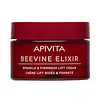
This anti-aging day moisturizer is formulated around Squalane and Propolis Extract to soften the look of wrinkles and hydrate skin.
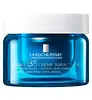
This barrier-repair moisturizer is formulated around Panthenol and Sodium Hyaluronate to strengthen the skin barrier and hydrate skin.


What's inside
What's inside
 Key Ingredients
Benefits
Concerns
Ingredients Side-by-side
Water
Skin ConditioningPropanediol
Solvent

Squalane
Emollient
Glycerin
Humectant
Triheptanoin
Skin ConditioningTriolein
Skin Conditioning

Cetearyl Glucoside
Emulsifying
Argania Spinosa Kernel Oil
Emollient



Caprylic/Capric/Succinic Triglyceride
EmollientButyrospermum Parkii Butter
Skin Conditioning


Hydrogenated Vegetable Oil
Emollient
Sorbitan Olivate
Emulsifying
Cetearyl Alcohol
Emollient

Phytosteryl/Octyldodecyl Lauroyl Glutamate
Skin ConditioningC10-18 Triglycerides
Emollient
Dipalmitoyl Hydroxyproline
Skin Conditioning
Propolis Extract
Skin Conditioning


Helianthus Annuus Seed Oil
Emollient
Aloe Barbadensis Leaf Juice Powder
Skin Conditioning
Rosa Canina Fruit Extract
Astringent
Hippophae Rhamnoides Kernel Extract
MaskingVitis Vinifera Leaf Extract
Skin ConditioningVegetable Oil
Skin Conditioning
Hydrolyzed Vegetable Protein
Skin ConditioningSodium Hyaluronate
Humectant
Hydroxyacetophenone
Antioxidant
Cetyl Palmitate
Emollient
Tocopheryl Acetate
Antioxidant

Panthenol
Skin Conditioning
Sorbitan Palmitate
Emulsifying
Polyacrylate Crosspolymer-6
Emulsion StabilisingTocopherol
Antioxidant
Xanthan Gum
EmulsifyingAminobutyric Acid
Sorbitan Oleate
Emulsifying
Ethylhexylglycerin
Skin ConditioningSodium Gluconate
ChelatingBisabolol
Antioxidant
Hydroxypropyl Cyclodextrin
MaskingCitronellyl Methylcrotonate
Masking
Palmitic Acid
Emollient
Maltodextrin
Absorbent
Allantoin
Skin Conditioning
Sodium Benzoate
Masking
Lecithin
Emollient
Sodium Hydroxide
BufferingSodium Phytate
ChelatingParfum
Masking

Water, Propanediol, Squalane, Glycerin, Triheptanoin, Triolein, Cetearyl Glucoside, Argania Spinosa Kernel Oil, Caprylic/Capric/Succinic Triglyceride, Butyrospermum Parkii Butter, Hydrogenated Vegetable Oil, Sorbitan Olivate, Cetearyl Alcohol, Phytosteryl/Octyldodecyl Lauroyl Glutamate, C10-18 Triglycerides, Dipalmitoyl Hydroxyproline, Propolis Extract, Helianthus Annuus Seed Oil, Aloe Barbadensis Leaf Juice Powder, Rosa Canina Fruit Extract, Hippophae Rhamnoides Kernel Extract, Vitis Vinifera Leaf Extract, Vegetable Oil, Hydrolyzed Vegetable Protein, Sodium Hyaluronate, Hydroxyacetophenone, Cetyl Palmitate, Tocopheryl Acetate, Panthenol, Sorbitan Palmitate, Polyacrylate Crosspolymer-6, Tocopherol, Xanthan Gum, Aminobutyric Acid, Sorbitan Oleate, Ethylhexylglycerin, Sodium Gluconate, Bisabolol, Hydroxypropyl Cyclodextrin, Citronellyl Methylcrotonate, Palmitic Acid, Maltodextrin, Allantoin, Sodium Benzoate, Lecithin, Sodium Hydroxide, Sodium Phytate, Parfum
Water
Skin ConditioningGlycerin
Humectant
Isohexadecane
EmollientPropanediol
Solvent
Alcohol Denat.
Antimicrobial

Isopropyl Isostearate
Emollient
Panthenol
Skin Conditioning
Dimethicone
Emollient
Octyldodecanol
Emollient
Behenyl Alcohol
Emollient
Cetyl Alcohol
Emollient
Alpinia Galanga Leaf Extract
Skin ConditioningStearic Acid
Cleansing
Calcium Chloride
AstringentCetearyl Alcohol
Emollient
Cetearyl Glucoside
Emulsifying
PEG-100 Stearate
Surfactant
Sodium Hyaluronate
Humectant
Sodium Hydroxide
BufferingAlgin
MaskingSilica
Abrasive

Myristic Acid
Cleansing
Cellulose
Absorbent
Palmitic Acid
Emollient
Adenosine
Skin Conditioning
Ammonium Polyacryloyldimethyl Taurate
Emulsion StabilisingDisodium Stearoyl Glutamate
CleansingEctoin
Skin Conditioning
Hydrolyzed Hyaluronic Acid
Humectant
Hydroxyacetophenone
Antioxidant
Caprylic/Capric Triglyceride
Masking
Capryloyl Salicylic Acid
Exfoliating
Citric Acid
Buffering
Laureth-7
EmulsifyingTrisodium Ethylenediamine Disuccinate
ChelatingAcetyl Glucosamine
Skin Conditioning
Xanthan Gum
EmulsifyingPentylene Glycol
Skin Conditioning
Phytic Acid
Chelating
Polyacrylamide
Polyepsilon-Lysine
Skin ConditioningButylene Glycol
Humectant
1,2-Hexanediol
Skin Conditioning
C13-14 Isoparaffin
Emollient
Phenoxyethanol
Preservative
Parfum
Masking
Water, Glycerin, Isohexadecane, Propanediol, Alcohol Denat., Isopropyl Isostearate, Panthenol, Dimethicone, Octyldodecanol, Behenyl Alcohol, Cetyl Alcohol, Alpinia Galanga Leaf Extract, Stearic Acid, Calcium Chloride, Cetearyl Alcohol, Cetearyl Glucoside, PEG-100 Stearate, Sodium Hyaluronate, Sodium Hydroxide, Algin, Silica, Myristic Acid, Cellulose, Palmitic Acid, Adenosine, Ammonium Polyacryloyldimethyl Taurate, Disodium Stearoyl Glutamate, Ectoin, Hydrolyzed Hyaluronic Acid, Hydroxyacetophenone, Caprylic/Capric Triglyceride, Capryloyl Salicylic Acid, Citric Acid, Laureth-7, Trisodium Ethylenediamine Disuccinate, Acetyl Glucosamine, Xanthan Gum, Pentylene Glycol, Phytic Acid, Polyacrylamide, Polyepsilon-Lysine, Butylene Glycol, 1,2-Hexanediol, C13-14 Isoparaffin, Phenoxyethanol, Parfum
Reviews
Ingredients Explained
These ingredients are found in both products.
Ingredients higher up in an ingredient list are typically present in a larger amount.
Cetearyl alcohol is a waxy mixture of two fatty alcohols: cetyl alcohol and stearyl alcohol. It is an emollient and emulsifier.
Despite having "alcohol" in its name, it has nothing to do with drying solvent alcohols; the FDA also allows "alcohol-free" products to contain fatty alcohols like this ingredient.
It plays several roles in a formula:
Typical use levels for this ingredient sit around 1-10% and the Cosmetic Ingredient Review Expert Panel has affirmed safety at concentrations up to 25% in leave-on products.
Multiple assessments have found it to be non-irritating and non-sensitizing to most people.
However, there have been some cases of allergic contact dermatitis in patients with chronically compromised skin barriers.
Cetearyl alcohol has a comedogenic rating of 2 and irritancy rating of 1. Both of these numbers come from the 1989 study that used rabbit ears; a "2" means mildly comedogenic and a "1" means low irritancy.
Here's the catch: rabbit skin is more sensitive than human skin and throws a lot of false positives. A 1996 reappraisal found that ingredients rated 1-2 in the rabbit ear tests are generally safe for humans.
Remember comedogenic ratings are unable to assess the entire formula of a product or how it will react on your skin. Just be sure to patch test if you are unsure about certain ingredients.
This ingredient is not fungal acne safe. Cetearyl alcohol is a fatty alcohol with chain lengths that fall within the range that Malassezia can metabolize.
A 2019 study has also observed Malassezia growth in the presence of this ingredient, confirming it to be not-fungal acne safe.
Learn more about Cetearyl AlcoholCetearyl Glucoside is a sugar-based emulsifier. It is usually made by combining cetearyl alcohol and glucose.
Belonging to the aklyl polyglucoside (APG) family, Cetearyl Glucoside has a sugar "head" that loves water and a fatty "tail" that loves oil. This means it can shuffle oil and water into a stable and smooth emulsion.
Typical use levels are between 1-5% and this ingredient is considered to be non-irritating by the CIR Expert Panel Review.
Once applied, your skin's glucoside hydrolases breaks it down to the parent fatty alcohol and glucose. This is why this ingredient may not be fungal acne safe.
Learn more about Cetearyl GlucosideGlycerin (or glycerol) is a compound naturally found in your skin. It's a powerhouse humectant that pulls water into the stratum corneum.
Topically, glycerin does several things at once:
Your skin makes glycerin on its own (mostly from sebaceous oil breakdown) and shuttles it to your outermost layer of skin, or your epidermis, via aquaporin-3.
Aquaporin-3 is a transporter that is essential for normal skin hydration, elasticity, and repair. Interestingly, mice lacking in AQP3 have dry and less elastic skin that can be fully corrected with glycerin.
This ingredient is non-irritating, plays well with almost every ingredient, and works across all skin types. Typical use is anywhere between 3-10% but can go up to 79% in some leave-on products.
Just know very high concentrations (>40%) can feel tacky in low humidity.
Glycerin is the name for this ingredient in American English. British English uses Glycerol/Glycerine.
Learn more about GlycerinHydroxyacetophenone is a small phenolic molecule that earns its place in a formulas as an antioxidant and preservative booster.
As a phenol, it is able to neutralize free radicals to protect both the product and the skin from oxidative stress.
Though it can't kill microbes on its own, it works as a good supporting agent when combined with other preservatives like Phenoxyethanol or 1,2-Hexanediol.
This ingredient naturally occurs as piceol in Norwegian spruce needles (~0.4-1.1% dry weight and in cloudberries). Though the cosmetic-grade material is synthesized for purity and consistency.
You'll usually see it used at low levels and suppliers recommend up to 1% added to a water phase.
Safety testing was done at concentrations like 0.05% in SPF products and 0.5% in a Human Repeated Insult Patch Test. The safety evidence is assuring; this ingredient is safe for cosmetics in current use and also holds safety status as a food flavoring as well.
An honest caveat: the "soothing" and "anti-inflammatory" claims come mostly from supplier marketing rather than published clinical trials. The Cosmetic Ingredient Review's own literature search found no useful efficacy studies on this ingredient.
So the antioxidant and preservative-boosting roles are the well supported ones while the calming benefit is plausible but thinly evidenced.
Overall, this is a well-tolerated, low-irritation multitasker that quietly helps a formula stay fresh and stable.
Learn more about HydroxyacetophenonePalmitic Acid is a fatty acid naturally found in our skin and in many plant and animal sources.
In cosmetics, it is usually derived from palm oil. It serves many purposes in skincare, acting as a cleanser, emollient, and emulsifier.
Interestingly, topically applied Palmitic Acid can be elongated into longer chain fatty acids and ceramides. A 2019 study found low levels of Palmitic Acid lead to slower development of cells, suggesting it plays a role in keeping your skin's renewal process on track.
The CIR (Cosmetic Ingredient Review) panel determined it safe as used in cosmetics at concentrations up to 13%. It is non-irritating and non-sensitizing in clinical studies.
The culprit behind fungal acne, the Malassezia yeast, feeds on fatty acids with carbon chain lengths between C11-C24. Palmitic Acid, at C16, falls right into that sweet spot.
In vitro studies have shown that Palmitic Acid is one of the fatty acids that induce rapid Malassezia growth in lab settings.
It's worth noting that what feeds yeast in a lab doesn't necessarily feed it on your face since formulation and your skin's chemistry play a bigger role.
This ingredient does have a comedogenic rating of 2, but this doesn't mean a formula with this ingredient will clog pores.
Human testing has proved that any finished product with a comedogenic ingredient won't automatically make you break out; it really comes down to concentration, formula, and your skin.
Learn more about Palmitic AcidPanthenol is a common ingredient that helps hydrate and soothe the skin. It is found naturally in our skin and hair.
There are two forms of panthenol: D and L.
D-panthenol is also known as dexpanthenol. Most cosmetics use dexpanthenol or a mixture of D and L-panthenol.
Panthenol is famous due to its ability to go deeper into the skin's layers. Using this ingredient has numerous pros (and no cons):
Like hyaluronic acid, panthenol is a humectant. Humectants are able to bind and hold large amounts of water to keep skin hydrated.
This ingredient works well for wound healing. It works by increasing tissue in the wound and helps close open wounds.
Once oxidized, panthenol converts to pantothenic acid. Panthothenic acid is found in all living cells.
This ingredient is also referred to as pro-vitamin B5.
Learn more about PanthenolParfum is a catch-all term for an ingredient or more that is used to give a scent to products.
Also called "fragrance", this ingredient can be a blend of hundreds of chemicals or plant oils. This means every product with "fragrance" or "parfum" in the ingredients list is a different mixture.
For instance, Habanolide is a proprietary trade name for a specific aroma chemical. When used as a fragrance ingredient in cosmetics, most aroma chemicals fall under the broad labeling category of “FRAGRANCE” or “PARFUM” according to EU and US regulations.
The term 'parfum' or 'fragrance' is not regulated in many countries. In many cases, it is up to the brand to define this term.
For instance, many brands choose to label themselves as "fragrance-free" because they are not using synthetic fragrances. However, their products may still contain ingredients such as essential oils that are considered a fragrance by INCI standards.
One example is Calendula flower extract. Calendula is an essential oil that still imparts a scent or 'fragrance'.
Depending on the blend, the ingredients in the mixture can cause allergies and sensitivities on the skin. Some ingredients that are known EU allergens include linalool and citronellol.
Parfum can also be used to mask or cover an unpleasant scent.
The bottom line is: not all fragrances/parfum/ingredients are created equally. If you are worried about fragrances, we recommend taking a closer look at an ingredient. And of course, we always recommend speaking with a professional.
Learn more about ParfumPropanediol is an all-star ingredient. It softens, hydrates, and smooths the skin.
It’s often used to:
Propanediol is not likely to cause sensitivity and considered safe to use. It is derived from corn or petroleum with a clear color and no scent.
Learn more about PropanediolSodium Hyaluronate is the salt form of hyaluronic acid. It is a long sugar chain that is naturally found in your skin, joints, and connective tissue that maintains hydration and elasticity.
In skincare, it works as a humectant. It pulls water from the environment and deeper layers of skin and binds it to the surface.
Interestingly, the size of the molecule affects its behavior:
Some clinical evidence links low molecular weight versions to improved wrinkle depth, elasticity, anti-inflammatory effects, and barrier repair.
Many serums use a blend of both weights so you can get surface hydration plus longer-lasting and deeper effects.
You'll typically see concentrations between 0.1-2% for this ingredient.
Learn more about Sodium HyaluronateSodium Hydroxide is also known as lye or caustic soda. It is used to adjust the pH of products; many ingredients require a specific pH to be effective.
In small amounts, sodium hydroxide is considered safe to use. However, large amounts may cause chemical burns due to its high alkaline.
Your skin has a natural pH and acid mantle. This acid mantle helps prevent harmful bacteria from breaking through. The acid mantle also helps keep your skin hydrated.
"Alkaline" refers to a high pH level. A low pH level would be considered acidic.
Learn more about Sodium HydroxideWater. It's the most common cosmetic ingredient of all. You'll usually see it at the top of ingredient lists, meaning that it makes up the largest part of the product.
So why is it so popular? Water most often acts as a solvent - this means that it helps dissolve other ingredients into the formulation.
You'll also recognize water as that liquid we all need to stay alive. If you see this, drink a glass of water. Remember to stay hydrated!
Learn more about WaterXanthan gum is used as a stabilizer and thickener within cosmetic products. It helps give products a sticky, thick feeling - preventing them from being too runny.
On the technical side of things, xanthan gum is a polysaccharide - a combination consisting of multiple sugar molecules bonded together.
Xanthan gum is a pretty common and great ingredient. It is a natural, non-toxic, non-irritating ingredient that is also commonly used in food products.
Learn more about Xanthan Gum

