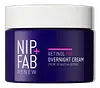
This anti-aging night moisturizer is formulated around Retinol and Bakuchiol to soften the look of wrinkles and refine skin texture.
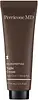
This anti-aging night moisturizer is formulated around Acetyl Hexapeptide-8 and Pentapeptide-18 to soften the look of wrinkles.


What's inside
What's inside
 Key Ingredients
Benefits
Concerns
Ingredients Side-by-side
Water
Skin ConditioningGlycerin
Humectant


Glyceryl Stearate Se
Emulsifying




Caprylic/Capric Triglyceride
Masking
Butyrospermum Parkii Butter
Skin Conditioning
Dimethicone
Emollient
Cetearyl Alcohol
Emollient
Retinol
Skin Conditioning








Benzyl Alcohol
Perfuming




Butylene Glycol
Humectant
Parfum
Masking
Polyacrylamide
Phospholipids
Skin Conditioning
C13-14 Isoparaffin
Emollient
Phenoxyethanol
Preservative
Sodium Stearoyl Glutamate
CleansingBisabolol
Antioxidant


Tocopheryl Acetate
Antioxidant
Disodium EDTA
Dehydroacetic Acid
Preservative
Laureth-7
EmulsifyingBakuchiol
Antimicrobial
Sodium Hyaluronate
Humectant
Polyglyceryl-10 Stearate
Skin Conditioning
Triethyl Citrate
Masking
Polyglyceryl-6 Behenate
Emulsion Stabilising
Ceramide NP
Skin Conditioning
Carbomer
Emulsion StabilisingSodium Lactate
Buffering
Ceramide AP
Skin Conditioning
Cholesterol
Emollient
Phytosphingosine
Skin Conditioning
Behenic Acid
Cleansing
Glyceryl Stearate
Emollient
Polysorbate 20
Emulsifying
Sodium Levulinate
Skin ConditioningSodium Cetearyl Sulfate
Cleansing
Palmitoyl Tripeptide-1
Skin Conditioning
Palmitoyl Tetrapeptide-7
Skin Conditioning
Ceramide EOP
Skin Conditioning
Benzyl Salicylate
Perfuming
Coumarin
Perfuming
Hexyl Cinnamal
Perfuming
Limonene
Perfuming
Linalool
Perfuming
Water, Glycerin, Glyceryl Stearate Se, Caprylic/Capric Triglyceride, Butyrospermum Parkii Butter, Dimethicone, Cetearyl Alcohol, Retinol, Benzyl Alcohol, Butylene Glycol, Parfum, Polyacrylamide, Phospholipids, C13-14 Isoparaffin, Phenoxyethanol, Sodium Stearoyl Glutamate, Bisabolol, Tocopheryl Acetate, Disodium EDTA, Dehydroacetic Acid, Laureth-7, Bakuchiol, Sodium Hyaluronate, Polyglyceryl-10 Stearate, Triethyl Citrate, Polyglyceryl-6 Behenate, Ceramide NP, Carbomer, Sodium Lactate, Ceramide AP, Cholesterol, Phytosphingosine, Behenic Acid, Glyceryl Stearate, Polysorbate 20, Sodium Levulinate, Sodium Cetearyl Sulfate, Palmitoyl Tripeptide-1, Palmitoyl Tetrapeptide-7, Ceramide EOP, Benzyl Salicylate, Coumarin, Hexyl Cinnamal, Limonene, Linalool
Water
Skin ConditioningGlycerin
Humectant
Isononyl Isononanoate
EmollientPentaerythrityl Tetraethylhexanoate
Emollient
Cetearyl Alcohol
Emollient
Butyrospermum Parkii Butter
Skin Conditioning
C12-20 Acid PEG-8 Ester
Emulsifying
Dimethyl Isosorbide
SolventC10-18 Triglycerides
Emollient
Isodecyl Salicylate
Skin Conditioning
Butylene Glycol
Humectant
Hydroxyethyl Acrylate/Sodium Acryloyldimethyl Taurate Copolymer
Emulsion StabilisingSqualane
Emollient
C12-15 Alkyl Benzoate
AntimicrobialDimethicone
Emollient
Polymethyl Methacrylate
Dimethyl Mea
BufferingAcetyl Hexapeptide-8
Humectant
Pentapeptide-18
Skin Conditioning
Tetrapeptide-21
Skin Conditioning
Dipeptide-2
Skin Conditioning
Palmitoyl Tetrapeptide-7
Skin Conditioning
Palmitoyl Hexapeptide-12
Skin Conditioning
Tyrosine
MaskingTocopheryl Acetate
Antioxidant
Dipotassium Glycyrrhizate
Humectant
Hesperidin Methyl Chalcone
Antioxidant
Ceramide Ng
Skin Conditioning
Fructose
Humectant
Allantoin
Skin Conditioning
Trehalose
Humectant
Maltose
MaskingGlucose
Humectant
Sodium Hyaluronate
Humectant
Citric Acid
Buffering
Sodium Hydroxide
BufferingDisodium EDTA
Sodium Chloride
MaskingSteareth-20
CleansingPolysorbate 60
Emulsifying
Caprylyl Glycol
Emollient
Tribehenin
Emollient
Coco-Glucoside
Cleansing
Pentylene Glycol
Skin Conditioning
Hexylene Glycol
EmulsifyingUrea
Buffering
PEG-10 Rapeseed Sterol
CleansingSodium Lactate
Buffering
Sodium PCA
Humectant
Phenoxyethanol
Preservative
Potassium Sorbate
Preservative
Parfum
Masking
Linalool
Perfuming
Limonene
Perfuming
Water, Glycerin, Isononyl Isononanoate, Pentaerythrityl Tetraethylhexanoate, Cetearyl Alcohol, Butyrospermum Parkii Butter, C12-20 Acid PEG-8 Ester, Dimethyl Isosorbide, C10-18 Triglycerides, Isodecyl Salicylate, Butylene Glycol, Hydroxyethyl Acrylate/Sodium Acryloyldimethyl Taurate Copolymer, Squalane, C12-15 Alkyl Benzoate, Dimethicone, Polymethyl Methacrylate, Dimethyl Mea, Acetyl Hexapeptide-8, Pentapeptide-18, Tetrapeptide-21, Dipeptide-2, Palmitoyl Tetrapeptide-7, Palmitoyl Hexapeptide-12, Tyrosine, Tocopheryl Acetate, Dipotassium Glycyrrhizate, Hesperidin Methyl Chalcone, Ceramide Ng, Fructose, Allantoin, Trehalose, Maltose, Glucose, Sodium Hyaluronate, Citric Acid, Sodium Hydroxide, Disodium EDTA, Sodium Chloride, Steareth-20, Polysorbate 60, Caprylyl Glycol, Tribehenin, Coco-Glucoside, Pentylene Glycol, Hexylene Glycol, Urea, PEG-10 Rapeseed Sterol, Sodium Lactate, Sodium PCA, Phenoxyethanol, Potassium Sorbate, Parfum, Linalool, Limonene
Ingredients Explained
These ingredients are found in both products.
Ingredients higher up in an ingredient list are typically present in a larger amount.
Butylene Glycol (or BG) is used within cosmetic products for a few different reasons:
Overall, Butylene Glycol is a safe and well-rounded ingredient that works well with other ingredients.
Though this ingredient works well with most skin types, some people with sensitive skin may experience a reaction such as allergic rashes, closed comedones, or itchiness.
Learn more about Butylene GlycolThis ingredient is also known as shea butter. It is a plant-derived extract from the nuts of the Africa shea tree and one of the most well-studied emollients.
Because it has a high concentration of fatty acids (primarily oleic, stearic, and linoleic) it is able to form a protective barrier on the skin's surface. This helps seal in moisture and prevents transepidermal water loss (TEWL).
In vitro research found an increase in skin hydration by 58% and a decrease in TEWL by 37.8% after 24 hours of applying this ingredient (pretty impressive for a single ingredient!).
Besides hydration, shea butter also contains triterpenes that have anti-inflammatory potential. In particule, lupeol cinnamate has shown the highest anti-inflammatory activity in vivo.
Shea butter also contains vitamins A and E which may contribute to antioxidant activity.
While Shea Butter has an SPF rating of about 3-4, it is not a sunscreen replacement.
This ingredient may not be fungal acne safe because its fatty acids fall within the C11-C24 range that the Malassezia yeast can metabolize.
This ingredient shows up on a lot of "pore-clogging" lists but there's no real evidence behind that. It doesn't even have a comedogenic rating from an actual study; the numbers you'll find online come from blogs citing other blogs.
Ratings for other ingredients mostly come from a 1980s rabbit ear test. This test doesn't translate well to human skin or to real products because the ingredient sits at a much lower percentage.
Some people still find it breaks them out. So if that's you, definitely trust your skin. Just know this one's based on experience and not evidence.
Learn more about Butyrospermum Parkii ButterCetearyl alcohol is a waxy mixture of two fatty alcohols: cetyl alcohol and stearyl alcohol. It is an emollient and emulsifier.
Despite having "alcohol" in its name, it has nothing to do with drying solvent alcohols; the FDA also allows "alcohol-free" products to contain fatty alcohols like this ingredient.
It plays several roles in a formula:
Typical use levels for this ingredient sit around 1-10% and the Cosmetic Ingredient Review Expert Panel has affirmed safety at concentrations up to 25% in leave-on products.
Multiple assessments have found it to be non-irritating and non-sensitizing to most people.
However, there have been some cases of allergic contact dermatitis in patients with chronically compromised skin barriers.
Cetearyl alcohol has a comedogenic rating of 2 and irritancy rating of 1. Both of these numbers come from the 1989 study that used rabbit ears; a "2" means mildly comedogenic and a "1" means low irritancy.
Here's the catch: rabbit skin is more sensitive than human skin and throws a lot of false positives. A 1996 reappraisal found that ingredients rated 1-2 in the rabbit ear tests are generally safe for humans.
Remember comedogenic ratings are unable to assess the entire formula of a product or how it will react on your skin. Just be sure to patch test if you are unsure about certain ingredients.
This ingredient is not fungal acne safe. Cetearyl alcohol is a fatty alcohol with chain lengths that fall within the range that Malassezia can metabolize.
A 2019 study has also observed Malassezia growth in the presence of this ingredient, confirming it to be not-fungal acne safe.
Learn more about Cetearyl AlcoholDimethicone is a type of synthetic silicone created from natural materials such as quartz. It is also known as polydimethylsiloxane.
What it does:
Dimethicone comes in different viscosities:
Depending on the viscosity, dimethicone has different properties.
Ingredients lists don't always show which type is used, so we recommend reaching out to the brand if you have questions about the viscosity.
This ingredient is unlikely to cause irritation because it does not get absorbed into skin. However, people with silicone allergies should be careful about using this ingredient.
Note: Dimethicone may contribute to pilling. This is because it is not oil or water soluble, so pilling may occur when layered with products. When mixed with heavy oils in a formula, the outcome is also quite greasy.
Learn more about DimethiconeDisodium EDTA is a chelating agent. It grabs onto and deactivates metal ions that sneak into your products from water, packaging, or air.
This ingredient mainly works behind the scenes and helps with:
On top of that, this ingredient can counteract the effects of hard water by binding to the minerals in it.
One thing worth knowing is that Disodium EDTA has been shown to be a mild penetration enhancer. It can help other ingredients absorb into skin more effectively which can be a double-edged sword (great for actives, but can also make the active too strong if you have sensitive skin).
Clinical patch testing showed no significant skin irritation at typical use concentrations and minimal dermal absorption.
You'll most likely see this ingredient near the end of an ingredient list. It's typically found in concentrations less than 1%.
Learn more about Disodium EDTAGlycerin (or glycerol) is a compound naturally found in your skin. It's a powerhouse humectant that pulls water into the stratum corneum.
Topically, glycerin does several things at once:
Your skin makes glycerin on its own (mostly from sebaceous oil breakdown) and shuttles it to your outermost layer of skin, or your epidermis, via aquaporin-3.
Aquaporin-3 is a transporter that is essential for normal skin hydration, elasticity, and repair. Interestingly, mice lacking in AQP3 have dry and less elastic skin that can be fully corrected with glycerin.
This ingredient is non-irritating, plays well with almost every ingredient, and works across all skin types. Typical use is anywhere between 3-10% but can go up to 79% in some leave-on products.
Just know very high concentrations (>40%) can feel tacky in low humidity.
Glycerin is the name for this ingredient in American English. British English uses Glycerol/Glycerine.
Learn more about GlycerinLimonene is a fragrance that adds scent and taste to a formulation.
It's found in the peel oil of citrus fruits and other plants such as lavender and eucalyptus. The scent of limonene is generally described as "sweet citrus".
Limonene acts as an antioxidant, meaning it helps neutralize free radicals.
When exposed to air, oxidized limonene may sensitize the skin. Because of this, limonene is often avoided by people with sensitive skin.
The term 'fragrance' is not regulated in many countries. In many cases, it is up to the brand to define this term. For instance, many brands choose to label themselves as "fragrance-free" because they are not using synthetic fragrances. However, their products may still contain ingredients such as essential oils that are considered a fragrance.
Learn more about LimoneneLinalool is a fragrance and helps add scent to products. It's derived from common plants such as cinnamon, mint, citrus, and lavender.
Like Limonene, this ingredient oxidizes when exposed to air. Oxidized linalool can cause allergies and skin sensitivity.
This ingredient has a scent that is floral, spicy tropical, and citrus-like.
Learn more about LinaloolPalmitoyl Tetrapeptide-7 (formerly Palmitoyl Tetrapeptide-3) is a synthetic peptide. Its main job is to fight what researchers call "inflammaging".
"Inflammaging" is the slow, low-grade chronic inflammation that quietly breaks down collagen as we age.
This ingredient calms down a specific inflammation signal in your skin cells (called IL-6). When left unchecked, this signal triggers enzymes that break down collagen and elastin.
Clinical testing showed statistically significant improvements in:
Studies also found the more of this ingredient used, the more your skin produces Collagen I, fibronectin, and hyaluronic acid.
You'll likely see this ingredient paired with Palmitoyl Tripeptide-1 in the well-known Matrixyl 3000 complex for enhanced anti-aging effects.
A 3% concentration applied twice daily for two months showed meaningful skin rejuvenation results in clinical panels.
Fungal acne note:
Usually a palmitic acid component can feed Malassezia in unbound form, but here is is covalently bonded to the peptide. This means it is very difficult for Malassezia to access, and therefore very unlikely to cause fungal acne.
Parfum is a catch-all term for an ingredient or more that is used to give a scent to products.
Also called "fragrance", this ingredient can be a blend of hundreds of chemicals or plant oils. This means every product with "fragrance" or "parfum" in the ingredients list is a different mixture.
For instance, Habanolide is a proprietary trade name for a specific aroma chemical. When used as a fragrance ingredient in cosmetics, most aroma chemicals fall under the broad labeling category of “FRAGRANCE” or “PARFUM” according to EU and US regulations.
The term 'parfum' or 'fragrance' is not regulated in many countries. In many cases, it is up to the brand to define this term.
For instance, many brands choose to label themselves as "fragrance-free" because they are not using synthetic fragrances. However, their products may still contain ingredients such as essential oils that are considered a fragrance by INCI standards.
One example is Calendula flower extract. Calendula is an essential oil that still imparts a scent or 'fragrance'.
Depending on the blend, the ingredients in the mixture can cause allergies and sensitivities on the skin. Some ingredients that are known EU allergens include linalool and citronellol.
Parfum can also be used to mask or cover an unpleasant scent.
The bottom line is: not all fragrances/parfum/ingredients are created equally. If you are worried about fragrances, we recommend taking a closer look at an ingredient. And of course, we always recommend speaking with a professional.
Learn more about ParfumPhenoxyethanol is one of the most widely used preservatives in skincare (and for good reason!).
It has a large spectrum of antimicrobial activity and especially effective bacteria, yeast, and mold while only having a weak effect on your skin's natural microbiome.
On a cellular level, it disrupts the cell membranes of microbes by poking holes that make the cell leak. This shuts down the chemical reactions the microbe needs to make energy so it can no longer survive.
Another perk of this ingredient is that it stays functional across a wide pH range (3-10).
You'll often see it paired with boosters like Ethylhexylglycerin; one study showed that a 1:9 ratio of Ethylhexylglycerin to Phenoxyethanol damages bacterial membranes as effectively as doubling the Phenoxyethanol concentration on its own.
Typical use concentrations range from 0.3-1% depending on the formula, and this ingredient is capped at 1% int the EU.
Safety-wise, the fear mongering does not hold up to the evidence. The EU's Scientific Committee on Consumer Safety and FDA consider it safe as a preservative at up to 1%, including for children of all ages.
Adverse systemic effects only showed up in animal studies at exposures roughly 200x higher than what people get from cosmetics. And despite its very widespread use, this ingredient is a rare sensitizer and allergic reactions are uncommon.
Learn more about PhenoxyethanolSodium Hyaluronate is the salt form of hyaluronic acid. It is a long sugar chain that is naturally found in your skin, joints, and connective tissue that maintains hydration and elasticity.
In skincare, it works as a humectant. It pulls water from the environment and deeper layers of skin and binds it to the surface.
Interestingly, the size of the molecule affects its behavior:
Some clinical evidence links low molecular weight versions to improved wrinkle depth, elasticity, anti-inflammatory effects, and barrier repair.
Many serums use a blend of both weights so you can get surface hydration plus longer-lasting and deeper effects.
You'll typically see concentrations between 0.1-2% for this ingredient.
Learn more about Sodium HyaluronateSodium Lactate is the sodium salt of lactic acid, an AHA. It is a humectant and sometimes used to adjust the pH of a product.
This ingredient is part of our skin's NMF, or natural moisturizing factor. Our NMF is essential for the hydration of our top skin layers and plasticity of skin. NMF also influences our skin's natural acid mantle and pH, which protects our skin from harmful bacteria.
High percentages of Sodium Lactate can have an exfoliating effect.
Fun fact: Sodium Lactate is produced from fermented sugar.
Learn more about Sodium LactateTocopheryl Acetate is a stable, shelf-friendly form of vitamin E.
Formulators love it because plain vitamin E oxidizes quickly once it hits air. This acetate version stays stable and resists going off, helping to extend a product's shelf life.
It's actually inactive on its own and works like a slow-release "storage" form; the enzymes in your skin called esterases gradually convert it into active vitamin E over time.
One in vivo study showed 5% of the acetate in the living layer of the epidermis converted to vitamin E after 5 days of application. This study also found the skin gained protection against UV damage even though the conversion was slow and small.
Once converted, vitamin E acts as a skin's main fat-soluble antioxidant that fights free radicals to protect skin from damage.
Topical vitamin E generally boosts the skin's photoprotection, and it reduced UV-damage in animal models.
This ingredient has some brightening potential but it's more of a prevention ingredient than spot-fader. Cell studies show it can slow down melanin production but it's worth noting that it's not the most powerful brightener out there.
Overall, it has a pretty solid safety profile and has been found to be non-irritating and non-comedogenic. Allergic reactions may happen but stay rare due to how widely the ingredient gets used.
The concentration will vary depending on the formula; industry data shows 0.1% in baby lotions, 3% in lipsticks, and 5% in foot powders. You can also find this ingredient at 100% in a pure vitamin E oil.
Most leave-on skincare keeps it at the lower end, often between 0.5-1%.
Learn more about Tocopheryl AcetateWater. It's the most common cosmetic ingredient of all. You'll usually see it at the top of ingredient lists, meaning that it makes up the largest part of the product.
So why is it so popular? Water most often acts as a solvent - this means that it helps dissolve other ingredients into the formulation.
You'll also recognize water as that liquid we all need to stay alive. If you see this, drink a glass of water. Remember to stay hydrated!
Learn more about Water

