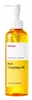
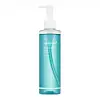
This oil-based makeup remover is made to dissolve makeup, sunscreen, and daily buildup.
This oil-based makeup remover is made to dissolve makeup, sunscreen, and daily buildup.

What's inside
What's inside
 Key Ingredients
Benefits
Concerns
Ingredients Side-by-side
Glycine Soja Oil
Emollient








Corylus Avellana Seed Oil
Emollient
Sorbeth-30 Tetraoleate
Emulsifying
Vitis Vinifera Seed Oil
Emollient
Olea Europaea Fruit Oil
Masking
Caprylic/Capric Triglyceride
Masking

Squalane
Emollient
Isoamyl Laurate
Emollient
Camellia Japonica Seed Oil
Emollient
Oenothera Biennis Oil
Emollient
Simmondsia Chinensis Seed Oil
Emollient
Helianthus Annuus Seed Oil
Emollient
Argania Spinosa Kernel Oil
Emollient
Orbignya Oleifera Seed Oil
Emollient
Saponaria Officinalis Leaf Extract
AntimicrobialCamellia Sinensis Leaf Extract
Antimicrobial


Oryza Sativa Bran Oil
Emollient
Rice Ferment Filtrate
Skin Conditioning
Decyl Glucoside
Cleansing
Ginkgo Biloba Leaf Extract
Skin Conditioning
Lavandula Angustifolia Oil
Masking


Aloe Barbadensis Leaf Extract
Emollient
Citrus Aurantium Dulcis Oil
Masking
Melaleuca Alternifolia Leaf Oil
Antioxidant
Tocopherol
Antioxidant
Glycine Soja Oil, Corylus Avellana Seed Oil, Sorbeth-30 Tetraoleate, Vitis Vinifera Seed Oil, Olea Europaea Fruit Oil, Caprylic/Capric Triglyceride, Squalane, Isoamyl Laurate, Camellia Japonica Seed Oil, Oenothera Biennis Oil, Simmondsia Chinensis Seed Oil, Helianthus Annuus Seed Oil, Argania Spinosa Kernel Oil, Orbignya Oleifera Seed Oil, Saponaria Officinalis Leaf Extract, Camellia Sinensis Leaf Extract, Oryza Sativa Bran Oil, Rice Ferment Filtrate, Decyl Glucoside, Ginkgo Biloba Leaf Extract, Lavandula Angustifolia Oil, Aloe Barbadensis Leaf Extract, Citrus Aurantium Dulcis Oil, Melaleuca Alternifolia Leaf Oil, Tocopherol
Glycine Soja Oil
Emollient
Sorbeth-30 Tetraoleate
Emulsifying
Parfum
Masking
Vitis Vinifera Seed Oil
Emollient
Olea Europaea Fruit Oil
Masking
Melia Azadirachta Leaf Extract
Skin ConditioningMelia Azadirachta Flower Extract
Skin ConditioningSimmondsia Chinensis Seed Oil
Emollient
Ricinus Communis Seed Oil
Masking
Macadamia Integrifolia Seed Oil
Skin Conditioning
Corylus Avellana Seed Oil
Emollient
Argania Spinosa Kernel Oil
Emollient
Oryza Sativa Bran Oil
Emollient
Camellia Japonica Seed Oil
Emollient
Helianthus Annuus Seed Oil
Emollient
Coccinia Indica Fruit Extract
Skin Conditioning
Aloe Barbadensis Flower Extract
EmollientSolanum Melongena Fruit Extract
Skin ConditioningOcimum Sanctum Leaf Extract
Skin ConditioningCorallina Officinalis Extract
Skin Conditioning
Curcuma Longa Root Extract
Antioxidant
Water
Skin ConditioningButylene Glycol
Humectant
Capryloyl Salicylic Acid
Exfoliating
Allantoin
Skin Conditioning
Niacinamide
Smoothing

Guaiazulene
Antimicrobial
Asiaticoside
Antioxidant
Asiatic Acid
Skin Conditioning
Madecassic Acid
Skin Conditioning
Tocopherol
Antioxidant
1,2-Hexanediol
Skin Conditioning
Pentylene Glycol
Skin Conditioning
Salix Alba Bark Extract
Astringent
Chamaecyparis Obtusa Leaf Extract
Skin ConditioningOriganum Vulgare Leaf Extract
Skin ConditioningSodium Hyaluronate
Humectant
Pinus Densiflora Leaf Extract
Antimicrobial
Madecassoside
Antioxidant
Scutellaria Baicalensis Root Extract
Astringent
Cinnamomum Cassia Bark Extract
Masking
Portulaca Oleracea Extract
Skin Conditioning
Lactobacillus/Soybean Ferment Extract
Skin ConditioningDecyl Glucoside
Cleansing
Pueraria Lobata Root Extract
HumectantPinus Palustris Leaf Extract
TonicUlmus Davidiana Root Extract
Skin Conditioning
Oenothera Biennis Flower Extract
AstringentCaprylyl Glycol
Emollient
Ethylhexylglycerin
Skin ConditioningGlycine Soja Oil, Sorbeth-30 Tetraoleate, Parfum, Vitis Vinifera Seed Oil, Olea Europaea Fruit Oil, Melia Azadirachta Leaf Extract, Melia Azadirachta Flower Extract, Simmondsia Chinensis Seed Oil, Ricinus Communis Seed Oil, Macadamia Integrifolia Seed Oil, Corylus Avellana Seed Oil, Argania Spinosa Kernel Oil, Oryza Sativa Bran Oil, Camellia Japonica Seed Oil, Helianthus Annuus Seed Oil, Coccinia Indica Fruit Extract, Aloe Barbadensis Flower Extract, Solanum Melongena Fruit Extract, Ocimum Sanctum Leaf Extract, Corallina Officinalis Extract, Curcuma Longa Root Extract, Water, Butylene Glycol, Capryloyl Salicylic Acid, Allantoin, Niacinamide, Guaiazulene, Asiaticoside, Asiatic Acid, Madecassic Acid, Tocopherol, 1,2-Hexanediol, Pentylene Glycol, Salix Alba Bark Extract, Chamaecyparis Obtusa Leaf Extract, Origanum Vulgare Leaf Extract, Sodium Hyaluronate, Pinus Densiflora Leaf Extract, Madecassoside, Scutellaria Baicalensis Root Extract, Cinnamomum Cassia Bark Extract, Portulaca Oleracea Extract, Lactobacillus/Soybean Ferment Extract, Decyl Glucoside, Pueraria Lobata Root Extract, Pinus Palustris Leaf Extract, Ulmus Davidiana Root Extract, Oenothera Biennis Flower Extract, Caprylyl Glycol, Ethylhexylglycerin
Reviews
Ingredients Explained
These ingredients are found in both products.
Ingredients higher up in an ingredient list are typically present in a larger amount.
You may know this ingredient as argan oil. It has emollient and skin conditioning properties that help soften skin and reinforce the lipid barrier.
The fatty acid profile of argan oil is roughly 45-55% oleic acid, 28-36% linoleic acid, 10-15% palmitic acid, and 5-7% stearic acid. It also contains vitamin E, sterols, squalene, and polyphenols like ferulic acid.
Two clinical studies in postmenopausal women found that applying argan oil for 60 days significantly improved skin elasticity and moisturization (reduced transepidermal water loss and increased epidermal water content).
Since it is high in oleic and linoleic acid, this ingredient may not be fungal acne safe. Both of these fall in the C11-C24 range that Malassezia yeast can metabolize.
Learn more about Argania Spinosa Kernel OilThis ingredient is also known as Tsubaki oil, or the fixed oil from the seeds of the Japanese camellia.
It's basically a fatty acid delivery system (~75-85% oleic acid) plus some minor extras like squalene, tocopherols, and phytosterols.
That profile makes it a classic emollient; it works by hanging out with the skin's surface lipids, softens, and slows down water loss.
The most cited study on it was done on skin cells in a dish where this oil got them to make more of the building blocks for collagen while also slowing down the enzyme that breaks collagen down. Researchers tested this on human skin too; it didn't cause irritation and helped skin hold onto moisture better.
Another study done on cells and mice found this oil quieted down some of the body's inflammation signals.
These studies are still small, early, and not done on humans, so it's best to think of this ingredient as a great supporting ingredient for the rest of your routine and not the main active.
Concentrations can range from 1-5% in serums to 100% as a single face oil (how it's most traditionally used).
Because this ingredient is a triglyceride of long-chain fatty acids, this ingredient may not be Malassezia safe.
Allergies to this protein are quite rare as the refined seed oil contains very little residual protein. Human irritation testing also came back clean. But it is a plant and as with any botanical ingredient, contact allergy is possible.
Learn more about Camellia Japonica Seed OilThis ingredient is also called hazelnut oil. It is rich in fatty acids and has emollient properties.
Decyl Glucoside is a plant-derived surfactant and emulsion stabilizer. It is created by reacting glucose with the fatty acids from plants.
Like all surfactants, it works by lowering the surface tension between water and oil. This makes it so that dirt, sebum, and makeup can be lifted off your skin and rinsed away. It also produces a dense and creamy foam.
Because it has a neutral charge, it is compatible with a wide range of ingredients and stays stable across a broad pH range/water hardiness conditions.
Patch testing has shown it to have the lowest irritation potential among common cleansing surfactants (like SLS).
Typical use levels range from 5-20% in rinse-off cleansers.
One thing worth knowing: The American Contact Dermatitis Society named the parent family, alkyl glucosides, "Allergen of the Year" in 2017. The prevalence of allergy is pretty low but be sure to patch test if you've reacted to "gentle" or sulfate-free cleansers before.
This ingredient is fungal acne safe because the fatty alcohol portion of this ingredient is not within the C11-24 chain length that Malassezia can metabolize.
Learn more about Decyl GlucosideGlycine Soja Oil is a plant-derived oil from soybean seeds. Like other oils, it is rich in essential fatty acids (mostly linoleic and oleic) that support skin hydration and barrier function.
The fatty acids are able to integrate into the lipid matrix of the stratum corneum to help soften skin and reduce water loss.
On top of that, soybean oil is rich in vitamins like vitamin E, a potent antioxidant.
Research on soybean's active components also point to anti-inflammatory, collagen-stimulating, antioxidant activity, and protection against UV-induced oxidative damage.
Most of this research applies to the broader soybean plant and not just the oil fraction alone.
This ingredient does carry a comedogenic rating of 3 from the old rabbit-ear assay. Just remember testing finished products in humans showed that formulas built with "comedogenic" ingredients are not necessarily comedogenic themselves. It's worth patch testing if you're breakout prone, and always listen to your skin.
Because this ingredient is a saturated triglyceride, it may not be fungal acne safe. This is because Malassezia breaks down sebum triglycerides into fatty acids it can consume, making this ingredient a possible source for the yeast.
Learn more about Glycine Soja OilHelianthus Annuus Seed Oil is a plant oil derived from the seeds of a sunflower.
It is rich in fatty acids, primarily linoleic acid and oleic acid. This gives it emollient and skin conditioning properties.
The reason this ingredient is so effective is because it forms a thin film on the skin that reduces transepidermal water loss (TEWL) while supplying linoleic acid to the stratum corneum to improve barrier strength.
The high linoleic acid content is particularly noteworthy for acne-prone skin.
Research suggests that acne-prone skin tends to be deficient in linoleic acid in sebum. Topical application may help replenish this to support a healthier follicular environment and less comedone-promoting sebum.
One randomized study found sunflower seed oil preserved skin barrier integrity in adult volunteers with and without atopic dermatitis (outperforming olive oil).
This ingredient is well-studied, gentle, and an effective emollient suitable for most skin types.
On fungal acne: This ingredient may not be Fungal acne (Malassezia folliculitis) safe. This is because it contains fatty acids with carbon chain lengths in the C11-C24 range.
Learn more about Helianthus Annuus Seed OilThis ingredient is also known as olive oil. It has been used in skincare for centuries and science largely backs up its reputation as a nourishing emollient.
The main components of olive oil are oleic acid (55-83%), linoleic acid (3.5-20%), and palmitic acid (7-20%). Oleic acid promotes skin regeneration and helps regulate inflammatory responses.
Squalene is also naturally present in olive oil and exhibits moisturizing and antioxidant properties.
The polyphenols in olive oil also show anti-aging promise; one clinical study found a measurable improvement in skin appearance after 30 days of topical serum use.
Just be aware that applying olive oil directly to skin can weaken the barrier and cause redness. One study with volunteers found even people without sensitive skin experienced a significant reduction in stratum corneum integrity and induced mild erythema.
It's best to use this ingredient as part of a carefully crafted formula (instead of putting it on skin directly from the bottle).
Because it has a 0-2 on the comedogenic scale, it is low risk for acne-prone skin. Just remember the overall formulation of a product matters more than a few ingredients with comedogenic ratings.
This ingredient may not be fungal acne safe because of the oleic and palmitic acid content. These fall within the C11-24 fatty acid range that the Malassezia yeast can metabolize to grow.
Overall, olive oil is a well-studied and nourishing skincare ingredient.
Learn more about Olea Europaea Fruit OilThis oil comes from the outer layer (bran) of rice grains. It is packed with skin-friendly fatty acids to soften and condition the skin while supporting your moisture barrier.
What makes it stand out from other plant oils is its naturally high concentration of gamma-oryzanol, a potent antioxidant. This antioxidant has shown some UV-absorptive properties in research.
Other antioxidants found in this oil include tocopherols, tocotrienols, and ferulic acid.
According to manufacturers, this oil has a lightweight texture that absorbs nicely.
The CIR (Cosmetic Ingredient Review) has concluded this ingredient to be safe as used in cosmetics and it has not shown to be a skin sensitizer in testing (unless you have a known rice allergy).
Due to the fatty acids (primarily Oleic Acid ~40%, Linoleic Acid ~30%, and some Palmitic Acid), this ingredient may not be fungal acne safe.
Learn more about Oryza Sativa Bran OilJojoba oil is one of the most well-studied plant-derived ingredients in cosmetics. It is an emollient with a special structure.
Because it is made up of 97-98% wax esters, it closely mirrors the linear monoesters found in human sebum. This makes it skin compatible, non-greasy, and lightweight.
Unlike other plant oils, jojoba wax doesn't easily penetrate skin. It mostly works in the uppermost layers as an emollient. This just means it forms a light barrier on the skin to help retain moisture.
Formulations with jojoba esters up to 90% reduced transepidermal water loss (TEWL) and increased barrier recovery by 81% (outperforming bisabolol at 47%).
Besides barrier support, the science also suggests jojoba to have anti-inflammatory effects and potential applications for skin infections, aging, and wound healing.
Fun fact: Indigenous cultures have used jojoba as a moisturizer and to help treat burns for centuries.
Fungal acne: The Malassezia yeast is known to metabolize fatty acids in the C11-24 range and jojoba's dominant fatty acid components fall into this range. This ingredient may not be fungal acne safe.
Learn more about Simmondsia Chinensis Seed OilSorbeth-30 Tetraoleate is a surfactant and emulsifier.
This ingredient is a tetraester from oleic acid and polyethylene glycol ether of sorbitol.
As an emulsifier, it helps ingredients such as oil and water mix together. This allows the dirt and oils in your skin to be washed away.
One study found pumpkin oil containing Sorbeth-30 Tetraoleate helped hydrate the skin and did not cause any irritation.
Learn more about Sorbeth-30 TetraoleateTocopherol is a fat-soluble antioxidant known as Vitamin E.
You'll find this ingredient in the vast majority of skincare (for good reason). It works to neutralize free radicals, or unstable molecules generated by UV exposure, pollution, and other environmental stressors, before they can cause oxidative damage to your skin cells.
Topically applied tocopherol has been shown to protect against UV damage by ramping up the skin's own natural defense enzymes.
It also acts as a skin conditioning agent; some studies show that regular topical use can improve the skin's water-binding capacity over 2-4 weeks.
This ingredient is especially loved for being a team player. When combined with Vitamin C, the photoprotective effect of both ingredients roughly doubles and the combo also helps reduce UV-induced DNA damage.
This ingredient has some brightening potential but it's more of a prevention ingredient than spot-fader. Cell studies show it can slow down melanin production but it's worth noting that it's not the most powerful brightener out there.
In formulations, it also serves as a stabilizer that helps protect other oxidation-prone ingredients from degrading.
Concentrations usually range from 0.1-1% in most leave-on products.
Learn more about TocopherolVitis Vinifera Seed Oil comes from the grape vine. Grape seeds are a byproduct of creating grape juice or wine.
The components of grape seeds have many skin benefits. Research has found it to be antimicrobial and anti-inflammatory. It also contains many potent antioxidants such as Vitamin E , Vitamin C, proanthocyanidins, polyphenols, flavonoids, and anthocyanins. Proanthocyanidin has been shown to help even out skin tone.
Antioxidants help fight free-radical molecules. Free-radical molecules are capable of damaging our cells and other genetic material. Antioxidants help stabilize free-radicals by donating extra electrons. Grape seed extract may help reduce the signs of aging.
The antimicrobial properties of grape seed may help treat acne. However, more research is needed to support this claim.
Grape seed has also been found to help absorb UV rays. Grape seed extract should not replace your sunscreen.
The fatty acids of grape seed oil give it emollient properties. Emollients help soothe and soften your skin by creating a film. This film traps moisture within, keeping your skin hydrated.
Learn more about Vitis Vinifera Seed Oil

