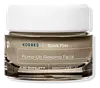
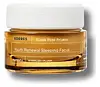
KORRES Black Pine Plump-Up Sleeping Facial Versus KORRES Black Pine Primus Youth Renewal Sleeping Facial Night Cream
This anti-aging night moisturizer is formulated around Squalane to soften the look of wrinkles and hydrate skin.
This anti-aging night moisturizer is formulated around Acetyl Hexapeptide-8 and Sodium Hyaluronate to soften the look of wrinkles and hydrate skin.

What's inside
What's inside
 Key Ingredients
Benefits
Concerns
Ingredients Side-by-side
Water
Skin ConditioningGlycerin
Humectant


Propanediol
Solvent
Caprylic/Capric/Myristic/Stearic Triglyceride
EmollientOleyl Alcohol
Emollient







Cetearyl Alcohol
Emollient
Glyceryl Stearate Citrate
Emollient
Isoamyl Laurate
Emollient
Cetyl Palmitate
Emollient
Crambe Abyssinica Seed Oil
Skin Conditioning
Olus Oil
Emollient
Passiflora Incarnata Seed Oil
Skin Protecting
Squalane
Emollient
Caprylic/Capric Triglyceride
Masking
Saccharomyces/Xylinum/Black Tea Ferment
Skin Conditioning
Behenyl Alcohol
Emollient
Ascorbyl Palmitate
Antioxidant


Avena Strigosa Seed Extract
Skin ConditioningBacillus Ferment
Skin Conditioning
Citric Acid
Buffering
Dextran
Dioscorea Villosa Root Extract
Skin Conditioning
Epigallocatechin Gallate
Antioxidant
Epigallocatechin Gallatyl Glucoside
Antioxidant
Glyceryl Caprylate
EmollientGlycine Soja Sterols
Emollient
Helianthus Annuus Seed Oil
Emollient
Hexyldecanol
Emollient
Hydroxyethylcellulose
Emulsion StabilisingLactic Acid
Buffering



Lecithin
Emollient
Lonicera Caprifolium Flower Extract
Perfuming
Lonicera Japonica Flower Extract
Skin ConditioningSalix Nigra Bark Extract
Skin ProtectingPinus Nigra Bud/Needle Extract
Antimicrobial
Sodium Carboxymethyl Beta-Glucan
CleansingSodium Citrate
BufferingSpilanthes Acmella Flower Extract
Skin ConditioningTetrasodium Glutamate Diacetate
ChelatingTocopherol
Antioxidant
Tocopheryl Acetate
Antioxidant
Trifluoroacetyl Tripeptide-2
Skin Conditioning
Xanthan Gum
EmulsifyingBenzyl Alcohol
Perfuming


Phenoxyethanol
Preservative
Potassium Sorbate
Preservative
Salicylic Acid
Masking


Sodium Benzoate
Masking
Sorbic Acid
Preservative
Parfum
Masking
Water, Glycerin, Propanediol, Caprylic/Capric/Myristic/Stearic Triglyceride, Oleyl Alcohol, Cetearyl Alcohol, Glyceryl Stearate Citrate, Isoamyl Laurate, Cetyl Palmitate, Crambe Abyssinica Seed Oil, Olus Oil, Passiflora Incarnata Seed Oil, Squalane, Caprylic/Capric Triglyceride, Saccharomyces/Xylinum/Black Tea Ferment, Behenyl Alcohol, Ascorbyl Palmitate, Avena Strigosa Seed Extract, Bacillus Ferment, Citric Acid, Dextran, Dioscorea Villosa Root Extract, Epigallocatechin Gallate, Epigallocatechin Gallatyl Glucoside, Glyceryl Caprylate, Glycine Soja Sterols, Helianthus Annuus Seed Oil, Hexyldecanol, Hydroxyethylcellulose, Lactic Acid, Lecithin, Lonicera Caprifolium Flower Extract, Lonicera Japonica Flower Extract, Salix Nigra Bark Extract, Pinus Nigra Bud/Needle Extract, Sodium Carboxymethyl Beta-Glucan, Sodium Citrate, Spilanthes Acmella Flower Extract, Tetrasodium Glutamate Diacetate, Tocopherol, Tocopheryl Acetate, Trifluoroacetyl Tripeptide-2, Xanthan Gum, Benzyl Alcohol, Phenoxyethanol, Potassium Sorbate, Salicylic Acid, Sodium Benzoate, Sorbic Acid, Parfum
Water
Skin ConditioningGlycerin
Humectant
Propanediol
Solvent
Coco-Caprylate
Emollient
Caprylic/Capric Triglyceride
Masking
Triheptanoin
Skin ConditioningCaprylic/Capric/Myristic/Stearic Triglyceride
EmollientGlyceryl Stearate Citrate
Emollient
Cetyl Palmitate
Emollient
C10-18 Triglycerides
Emollient
Glyceryl Stearate
Emollient
Prunus Armeniaca Kernel Oil
Masking
Acetyl Hexapeptide-8
Humectant
Alanine
Masking
Arginine
Masking
Betaine
Humectant
Butylene Glycol
Humectant
Caprylyl Glycol
Emollient
Cellulase
Disodium Phosphate
BufferingEpigallocatechin Gallatyl Glucoside
Antioxidant
Ethylhexylglycerin
Skin ConditioningGallyl Glucoside
Antioxidant
Glutamic Acid
Humectant
Glycine
Buffering
Hydrolyzed Sodium Hyaluronate
Skin Conditioning
Hydroxyethyl Acrylate/Sodium Acryloyldimethyl Taurate Copolymer
Emulsion StabilisingLactic Acid
Buffering
Lavandula Angustifolia Flower Extract
Cleansing
Linolenic Acid
Cleansing
Lysine Hcl
Skin Conditioning
Pancratium Maritimum Extract
BleachingPCA
Humectant
Pentylene Glycol
Skin Conditioning
Pinus Nigra Bud/Needle Extract
Antimicrobial
Polysorbate 60
Emulsifying
Proline
Skin Conditioning
Propyl Gallate
Antioxidant
Serine
Masking
Sodium Acetylated Hyaluronate
Humectant
Sodium Carboxymethyl Beta-Glucan
CleansingSodium Hyaluronate
Humectant
Sodium Hyaluronate Crosspolymer
Humectant
Sodium Lactate
Buffering
Sodium Levulinate
Skin ConditioningSodium PCA
Humectant
Sodium Phosphate
BufferingSodium Polyacryloyldimethyl Taurate
Emulsion StabilisingSorbitan Isostearate
Emulsifying
Threonine
Tocopherol
Antioxidant
Xanthan Gum
EmulsifyingBenzyl Alcohol
Perfuming
Dehydroacetic Acid
Preservative
Potassium Sorbate
Preservative
Sodium Benzoate
Masking
Parfum
Masking
Water, Glycerin, Propanediol, Coco-Caprylate, Caprylic/Capric Triglyceride, Triheptanoin, Caprylic/Capric/Myristic/Stearic Triglyceride, Glyceryl Stearate Citrate, Cetyl Palmitate, C10-18 Triglycerides, Glyceryl Stearate, Prunus Armeniaca Kernel Oil, Acetyl Hexapeptide-8, Alanine, Arginine, Betaine, Butylene Glycol, Caprylyl Glycol, Cellulase, Disodium Phosphate, Epigallocatechin Gallatyl Glucoside, Ethylhexylglycerin, Gallyl Glucoside, Glutamic Acid, Glycine, Hydrolyzed Sodium Hyaluronate, Hydroxyethyl Acrylate/Sodium Acryloyldimethyl Taurate Copolymer, Lactic Acid, Lavandula Angustifolia Flower Extract, Linolenic Acid, Lysine Hcl, Pancratium Maritimum Extract, PCA, Pentylene Glycol, Pinus Nigra Bud/Needle Extract, Polysorbate 60, Proline, Propyl Gallate, Serine, Sodium Acetylated Hyaluronate, Sodium Carboxymethyl Beta-Glucan, Sodium Hyaluronate, Sodium Hyaluronate Crosspolymer, Sodium Lactate, Sodium Levulinate, Sodium PCA, Sodium Phosphate, Sodium Polyacryloyldimethyl Taurate, Sorbitan Isostearate, Threonine, Tocopherol, Xanthan Gum, Benzyl Alcohol, Dehydroacetic Acid, Potassium Sorbate, Sodium Benzoate, Parfum
Reviews
Ingredients Explained
These ingredients are found in both products.
Ingredients higher up in an ingredient list are typically present in a larger amount.
Benzyl Alcohol is an aromatic alcohol with several roles: it's a preservative, solvent, and mild fragrance component with a floral scent.
This ingredient has been deemed safe for use in cosmetic formulations at concentrations up to 5%, and up to 10% in hair dyes. You'll typically see 0.5-2% in most rinse-off or leave-on products.
As a preservative, it works by disrupting the membrane of microbial proteins. This helps keep bacteria and fungi from growing in your products.
The sensitization picture is actually quite assuring as well:of nearly 71,000 patients patch tested with benzyl alcohol, only 0.21% showed a positive reaction with most of them being weakly positive.
This led researchers to conclude that benzyl alcohol cannot be regarded as a significant contact allergen.
It is worth noting this ingredient is classified as one of the EU's regulated fragrance allergens and restricted to 1% in finished products.
Labels must also declare it in concentrations above 0.001% in leave-on products and 0.01% in rinse-off products.
At concentrations around 5%, localized redness and itching can appear as a direct irritant response and not as a true allergic reaction.
Learn more about Benzyl AlcoholCaprylic/Capric Triglyceride (aka MCT Oil) is a lightweight emollient, solvent, and texture enhancer. It is considered a skin-softener by helping to prevent moisture loss.
Though it behaves like an oil, it is not technically one due to its chemical composition. One perk of this ingredient is that it is very stable, resistant to oxidation, and unlikely to go rancid.
In practice, that translates to a long shelf life and a consistently elegant skin feel.
While there is an assumption Caprylic Triglyceride can clog pores due to it being derived from coconut oil, there is no research supporting this. Just patch test if you have concerns.
Fractionated coconut oil and MCT Oil are both listed as Caprylic/Capric Triglyceride according to INCI. This is because INCI names are based on the ingredient’s final chemical composition and not its marketing name or source.
This ingredient is treated as the gold standard fungal acne safe oil. Even though it is coconut derived, the problematic lauric acid is stripped out.
This leaves just caprylic (C8) and capric (C10) acid. These chain lengths actually trend antifungal; a 2020 study found caprylic acid was enough to disrupt Malassezia furfur cell membrane, with a caprylic acid derivative damaging membrane structures at concentrations as low as 0.2%.
Learn more about Caprylic/Capric TriglycerideWe don't have a description for Caprylic/Capric/Myristic/Stearic Triglyceride yet.
Cetyl Palmitate is a wax-ester that pulls triple duty as an emollient, thickener, and emulsion enhancer.
It helps enhance the texture of products by giving a smooth, silky feel while helping to stabilize the formula. The emollient action softens skin and reduces moisture loss.
This ingredient is considered safe and human testing of concentrations between 2.5-2.7% were found minimal irritation. Just know, there have been very rare cases of the palmitate family causing contact dermatitis.
This ingredient may not be fungal acne safe because it contains a C16 ester (palmitic acid) that falls into the C11-24 range that Malassezia can feed on.
Learn more about Cetyl PalmitateThis ingredient is a modified version of the famous antioxidant found in green tea, EGCG.
EGCG has antioxidant and anti-inflammatory properties. It has been shown to protect skin from UV-induced damage.
Since this ingredient is modified to attach to a glucose molecule, it also has great hydrating properties.
Learn more about Epigallocatechin Gallatyl GlucosideGlycerin (or glycerol) is a compound naturally found in your skin. It's a powerhouse humectant that pulls water into the stratum corneum.
Topically, glycerin does several things at once:
Your skin makes glycerin on its own (mostly from sebaceous oil breakdown) and shuttles it to your outermost layer of skin, or your epidermis, via aquaporin-3.
Aquaporin-3 is a transporter that is essential for normal skin hydration, elasticity, and repair. Interestingly, mice lacking in AQP3 have dry and less elastic skin that can be fully corrected with glycerin.
This ingredient is non-irritating, plays well with almost every ingredient, and works across all skin types. Typical use is anywhere between 3-10% but can go up to 79% in some leave-on products.
Just know very high concentrations (>40%) can feel tacky in low humidity.
Glycerin is the name for this ingredient in American English. British English uses Glycerol/Glycerine.
Learn more about GlycerinGlyceryl Stearate Citrate is a citric acid ester of glyceryl stearate.
It is an emulsifier, emollient, and a surfactant.
Emulsifiers help stabilize a product. It does this by preventing certain ingredients from separating. Common ingredients include oils and water, which do not mix naturally. Emulsifiers have properties that help keep ingredients such as these together.
Emollients help soothe and soften the skin. They do this by creating a protective film on your skin. This barrier helps trap moisture and keeps your skin hydrated. Emollients may be effective at treating dry or itchy skin.
Surfactants help gather oils, dirt, and other pollutants from the skin. This helps them to be easily rinsed away.
Learn more about Glyceryl Stearate CitrateLactic Acid is another well-loved alpha hydroxy acid (AHA). It is gentler than glycolic acid but still highly effective.
Its main role is to exfoliate the surface of the skin by loosening the “glue” that holds dead skin cells together. Shedding those old cells leads to smoother, softer, and more even-toned skin.
Because lactic acid molecules are larger than glycolic acid, they don’t penetrate as deeply. This means they’re less likely to sting or irritate, making it a great choice for beginners or those with sensitive skin.
Like glycolic acid, it can:
Lactic acid also acts as a humectant (like hyaluronic acid). It can draw water into the skin to improve hydration and also plays a role in the skin's natural moisturizing factor (NMF) in the form of sodium lactate.
Studies show it can boost ceramide production to strengthen the skin barrier and even help balance the skin’s microbiome.
To get results, choose products with a pH between 3-4.
Lower strengths (5-12%) focus on surface exfoliation; higher strengths (12% and up) can reach deeper in the dermis (deeper, supportive layer) to improve skin texture and firmness over time.
Though it was originally derived from milk, most modern lactic acid used in skincare is vegan. It is made through non-dairy fermentation to create a bio-identical and stable form suitable for all formulations.
When lactic acid shows up near the end of an ingredient list, it usually means the brand added just a tiny amount to adjust the product’s pH.
Legend has it that Cleopatra used to bathe in sour milk to help reduce wrinkles.
Lactic acid is truly a gentle multitasker: it exfoliates, hydrates, strengthens, and brightens. It's a great ingredient for giving your skin a smooth, glowing, and healthy look without the harshness of stronger acids.
Read more about some other popular AHA's here:
Learn more about Lactic AcidParfum is a catch-all term for an ingredient or more that is used to give a scent to products.
Also called "fragrance", this ingredient can be a blend of hundreds of chemicals or plant oils. This means every product with "fragrance" or "parfum" in the ingredients list is a different mixture.
For instance, Habanolide is a proprietary trade name for a specific aroma chemical. When used as a fragrance ingredient in cosmetics, most aroma chemicals fall under the broad labeling category of “FRAGRANCE” or “PARFUM” according to EU and US regulations.
The term 'parfum' or 'fragrance' is not regulated in many countries. In many cases, it is up to the brand to define this term.
For instance, many brands choose to label themselves as "fragrance-free" because they are not using synthetic fragrances. However, their products may still contain ingredients such as essential oils that are considered a fragrance by INCI standards.
One example is Calendula flower extract. Calendula is an essential oil that still imparts a scent or 'fragrance'.
Depending on the blend, the ingredients in the mixture can cause allergies and sensitivities on the skin. Some ingredients that are known EU allergens include linalool and citronellol.
Parfum can also be used to mask or cover an unpleasant scent.
The bottom line is: not all fragrances/parfum/ingredients are created equally. If you are worried about fragrances, we recommend taking a closer look at an ingredient. And of course, we always recommend speaking with a professional.
Learn more about ParfumPinus Nigra Bud/Needle Extract is an antioxidant.
Potassium Sorbate is a preservative used to prevent yeast and mold in products. It is commonly found in both cosmetic and food products.
This ingredient comes from potassium salt derived from sorbic acid. Sorbic acid is a natural antibiotic and effective against fungus.
Both potassium sorbate and sorbic acid can be found in baked goods, cheeses, dried meats, dried fruit, ice cream, pickles, wine, yogurt, and more.
You'll often find this ingredient used with other preservatives.
Learn more about Potassium SorbatePropanediol is an all-star ingredient. It softens, hydrates, and smooths the skin.
It’s often used to:
Propanediol is not likely to cause sensitivity and considered safe to use. It is derived from corn or petroleum with a clear color and no scent.
Learn more about PropanediolSodium Benzoate is a preservative. It's used in both cosmetic and food products to inhibit the growth of mold and bacteria. It is typically produced synthetically.
Both the US FDA and EU Health Committee have approved the use of sodium benzoate. In the US, levels of 0.1% (of the total product) are allowed.
Sodium benzoate works as a preservative by inhibiting the growth of bacteria inside of cells. It prevents the cell from fermenting a type of sugar using an enzyme called phosphofructokinase.
It is the salt of benzoic acid. Foods containing sodium benzoate include soda, salad dressings, condiments, fruit juices, wines, and snack foods.
Studies for using ascorbic acid and sodium benzoate in cosmetics are lacking, especially in skincare routines with multiple steps.
We always recommend speaking with a professional, such as a dermatologist, if you have any concerns.
Learn more about Sodium BenzoateWe don't have a description for Sodium Carboxymethyl Beta-Glucan yet.
Tocopherol is a fat-soluble antioxidant known as Vitamin E.
You'll find this ingredient in the vast majority of skincare (for good reason). It works to neutralize free radicals, or unstable molecules generated by UV exposure, pollution, and other environmental stressors, before they can cause oxidative damage to your skin cells.
Topically applied tocopherol has been shown to protect against UV damage by ramping up the skin's own natural defense enzymes.
It also acts as a skin conditioning agent; some studies show that regular topical use can improve the skin's water-binding capacity over 2-4 weeks.
This ingredient is especially loved for being a team player. When combined with Vitamin C, the photoprotective effect of both ingredients roughly doubles and the combo also helps reduce UV-induced DNA damage.
This ingredient has some brightening potential but it's more of a prevention ingredient than spot-fader. Cell studies show it can slow down melanin production but it's worth noting that it's not the most powerful brightener out there.
In formulations, it also serves as a stabilizer that helps protect other oxidation-prone ingredients from degrading.
Concentrations usually range from 0.1-1% in most leave-on products.
Learn more about TocopherolWater. It's the most common cosmetic ingredient of all. You'll usually see it at the top of ingredient lists, meaning that it makes up the largest part of the product.
So why is it so popular? Water most often acts as a solvent - this means that it helps dissolve other ingredients into the formulation.
You'll also recognize water as that liquid we all need to stay alive. If you see this, drink a glass of water. Remember to stay hydrated!
Learn more about WaterXanthan gum is used as a stabilizer and thickener within cosmetic products. It helps give products a sticky, thick feeling - preventing them from being too runny.
On the technical side of things, xanthan gum is a polysaccharide - a combination consisting of multiple sugar molecules bonded together.
Xanthan gum is a pretty common and great ingredient. It is a natural, non-toxic, non-irritating ingredient that is also commonly used in food products.
Learn more about Xanthan Gum

