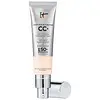
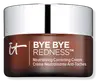
IT Cosmetics CC+ Cream With SPF 50+ Versus IT Cosmetics Bye Bye Redness Neutralizing Correcting Cream

What's inside
What's inside
 Key Ingredients
Benefits
Concerns
Ingredients Side-by-side
Titanium Dioxide 9%
Cosmetic Colorant

Zinc Oxide 6.3%
Cosmetic Colorant
Water
Skin ConditioningPhenyl Trimethicone
Skin Conditioning
Dimethicone
Emollient
Butylene Glycol
Humectant

Butylene Glycol Dicaprylate/Dicaprate
EmollientOrbignya Oleifera Seed Oil
Emollient


Butyloctyl Salicylate
Skin Conditioning
Cetyl PEG/PPG-10/1 Dimethicone
Emulsifying
Cyclopentasiloxane
Emollient
Snail Secretion Filtrate
Skin Conditioning


Aluminum Hydroxide
EmollientMagnesium Sulfate
Polyglyceryl-4 Isostearate
Emulsifying
Stearic Acid
Cleansing
Cyclohexasiloxane
Emollient
Dimethicone/Vinyl Dimethicone Crosspolymer
Skin Conditioning
Hexyl Laurate
Emollient
Calcium Stearate
Cosmetic ColorantTriethoxycaprylylsilane
Caprylyl Glycol
Emollient
Ethyl Hexanediol
SolventEthylhexylglycerin
Skin ConditioningLimonene
Perfuming



Citrus Limon Peel Oil
Masking

Sorbitan Isostearate
Emulsifying
Tocopheryl Acetate
Antioxidant


Phenoxyethanol
Preservative
Citrus Aurantium Bergamia Fruit Oil
Masking
1,2-Hexanediol
Skin Conditioning
Adenosine
Skin Conditioning
Citrus Aurantium Dulcis Peel Oil
Masking
Citrus Aurantifolia Oil
Cleansing
Pinus Sylvestris Leaf Oil
Masking
Linalool
Perfuming
Eucalyptus Globulus Leaf Oil
Perfuming
Glycerin
Humectant
Citral
Perfuming
Niacinamide
Smoothing




Hyaluronic Acid
Humectant
Colloidal Oatmeal
Absorbent
Hydrolyzed Collagen
Emollient
Steareth-20
CleansingPentaerythrityl Tetra-Di-T-Butyl Hydroxyhydrocinnamate
Antioxidant
Camellia Sinensis Leaf Extract
Antimicrobial
Olea Europaea Leaf Extract
Perfuming
Chlorhexidine Digluconate
Antimicrobial
N-Hydroxysuccinimide
Skin ConditioningSilk Extract
Skin ConditioningHydrolyzed Silk
Humectant
Sodium Citrate
BufferingPotassium Sorbate
Preservative
Palmitoyl Tripeptide-1
Skin Conditioning
Chrysin
Skin ConditioningPalmitoyl Tetrapeptide-7
Skin Conditioning
Citric Acid
Buffering
Biotin
AntiseborrhoeicTitanium Dioxide 9%, Zinc Oxide 6.3%, Water, Phenyl Trimethicone, Dimethicone, Butylene Glycol, Butylene Glycol Dicaprylate/Dicaprate, Orbignya Oleifera Seed Oil, Butyloctyl Salicylate, Cetyl PEG/PPG-10/1 Dimethicone, Cyclopentasiloxane, Snail Secretion Filtrate, Aluminum Hydroxide, Magnesium Sulfate, Polyglyceryl-4 Isostearate, Stearic Acid, Cyclohexasiloxane, Dimethicone/Vinyl Dimethicone Crosspolymer, Hexyl Laurate, Calcium Stearate, Triethoxycaprylylsilane, Caprylyl Glycol, Ethyl Hexanediol, Ethylhexylglycerin, Limonene, Citrus Limon Peel Oil, Sorbitan Isostearate, Tocopheryl Acetate, Phenoxyethanol, Citrus Aurantium Bergamia Fruit Oil, 1,2-Hexanediol, Adenosine, Citrus Aurantium Dulcis Peel Oil, Citrus Aurantifolia Oil, Pinus Sylvestris Leaf Oil, Linalool, Eucalyptus Globulus Leaf Oil, Glycerin, Citral, Niacinamide, Hyaluronic Acid, Colloidal Oatmeal, Hydrolyzed Collagen, Steareth-20, Pentaerythrityl Tetra-Di-T-Butyl Hydroxyhydrocinnamate, Camellia Sinensis Leaf Extract, Olea Europaea Leaf Extract, Chlorhexidine Digluconate, N-Hydroxysuccinimide, Silk Extract, Hydrolyzed Silk, Sodium Citrate, Potassium Sorbate, Palmitoyl Tripeptide-1, Chrysin, Palmitoyl Tetrapeptide-7, Citric Acid, Biotin
Cyclopentasiloxane
Emollient
Water
Skin ConditioningSilica
Abrasive
PEG/PPG-18/18 Dimethicone
Emulsifying
Dimethicone/Vinyl Dimethicone Crosspolymer
Skin Conditioning
Isododecane
EmollientPropanediol
Solvent
Dimethicone
Emollient
Polysilicone-11
Lauryl PEG/PPG-18/18 Methicone
Skin Conditioning
PEG-10 Dimethicone
Skin Conditioning
Magnesium Aluminum Silicate
Absorbent
Sodium Chloride
MaskingPolyglyceryl-4 Isostearate
Emulsifying
Butylene Glycol
Humectant
Decyl Glucoside
Cleansing
Disteardimonium Hectorite
StabilisingCetyl PEG/PPG-10/1 Dimethicone
Emulsifying
Methicone
Emollient
Hexyl Laurate
Emollient
Retinyl Palmitate
Skin Conditioning
Ascorbyl Palmitate
Antioxidant
Tocopheryl Acetate
Antioxidant
Hydrolyzed Collagen
Emollient
Hydrolyzed Silk
Humectant
Acetyl Octapeptide-3
Humectant
Dipeptide Diaminobutyroyl Benzylamide Diacetate
Skin Conditioning
Acetyl Hexapeptide-8
Humectant
Camellia Sinensis Leaf Extract
Antimicrobial
Caprylic/Capric Triglyceride
Masking
Aloe Barbadensis Leaf Extract
Emollient
Olea Europaea Leaf Extract
Perfuming
Punica Granatum Extract
AstringentGlycyrrhiza Glabra Root Extract
Bleaching
Carthamus Tinctorius Seed Oil
Masking
Vitis Vinifera Seed Extract
Antimicrobial
Chamomilla Recutita Flower Extract
Masking
Prunus Domestica Seed Oil
Skin Conditioning
Persea Gratissima Oil
Skin Conditioning
Perfluorodecalin
Skin ConditioningNiacinamide
Smoothing
Glycerin
Humectant
Carbomer
Emulsion StabilisingPolysorbate 20
Emulsifying
Palmitoyl Oligopeptide
Cleansing
Palmitoyl Tetrapeptide-7
Skin Conditioning
Ethylhexyl Palmitate
Emollient
Silica Dimethyl Silylate
EmollientHyaluronic Acid
Humectant
Cholesteryl Nonanoate
EmollientCholesteryl Oleyl Carbonate
Skin ConditioningCholesteryl Chloride
Skin ConditioningColloidal Oatmeal
Absorbent
Magnolia Acuminata Bark Extract
Skin ConditioningChrysanthemum Parthenium Extract
Skin ConditioningCitrus Grandis Peel Oil
Masking
Lithospermum Officinale Extract
MaskingAgaricus Bisporus Extract
Skin ConditioningGlycine Soja Seed Extract
Skin Conditioning
Curcuma Longa Root Extract
Antioxidant
Phenoxyethanol
Preservative
Ethylhexylglycerin
Skin ConditioningCI 77891
Cosmetic ColorantIron Oxides
Cyclopentasiloxane, Water, Silica, PEG/PPG-18/18 Dimethicone, Dimethicone/Vinyl Dimethicone Crosspolymer, Isododecane, Propanediol, Dimethicone, Polysilicone-11, Lauryl PEG/PPG-18/18 Methicone, PEG-10 Dimethicone, Magnesium Aluminum Silicate, Sodium Chloride, Polyglyceryl-4 Isostearate, Butylene Glycol, Decyl Glucoside, Disteardimonium Hectorite, Cetyl PEG/PPG-10/1 Dimethicone, Methicone, Hexyl Laurate, Retinyl Palmitate, Ascorbyl Palmitate, Tocopheryl Acetate, Hydrolyzed Collagen, Hydrolyzed Silk, Acetyl Octapeptide-3, Dipeptide Diaminobutyroyl Benzylamide Diacetate, Acetyl Hexapeptide-8, Camellia Sinensis Leaf Extract, Caprylic/Capric Triglyceride, Aloe Barbadensis Leaf Extract, Olea Europaea Leaf Extract, Punica Granatum Extract, Glycyrrhiza Glabra Root Extract, Carthamus Tinctorius Seed Oil, Vitis Vinifera Seed Extract, Chamomilla Recutita Flower Extract, Prunus Domestica Seed Oil, Persea Gratissima Oil, Perfluorodecalin, Niacinamide, Glycerin, Carbomer, Polysorbate 20, Palmitoyl Oligopeptide, Palmitoyl Tetrapeptide-7, Ethylhexyl Palmitate, Silica Dimethyl Silylate, Hyaluronic Acid, Cholesteryl Nonanoate, Cholesteryl Oleyl Carbonate, Cholesteryl Chloride, Colloidal Oatmeal, Magnolia Acuminata Bark Extract, Chrysanthemum Parthenium Extract, Citrus Grandis Peel Oil, Lithospermum Officinale Extract, Agaricus Bisporus Extract, Glycine Soja Seed Extract, Curcuma Longa Root Extract, Phenoxyethanol, Ethylhexylglycerin, CI 77891, Iron Oxides
Reviews
Ingredients Explained
These ingredients are found in both products.
Ingredients higher up in an ingredient list are typically present in a larger amount.
Butylene Glycol (or BG) is used within cosmetic products for a few different reasons:
Overall, Butylene Glycol is a safe and well-rounded ingredient that works well with other ingredients.
Though this ingredient works well with most skin types, some people with sensitive skin may experience a reaction such as allergic rashes, closed comedones, or itchiness.
Learn more about Butylene GlycolCamellia Sinensis Leaf Extract (tea extract) is one of the most well-researched plant extracts in skincare with an impressive resume.
Black tea, green tea, and oolong tea are all harvested from the Camellia Sinensis plant.
Studies show green tea extract and its catechins (like epigallocatechin gallate (EGCG)) help your skin cells product energy more efficiently and reducing the number of free-radicals that can damage your skin from the inside.
In lab-grown skin models, this translated to younger, healthier, and stronger skin.
There's also good sun protection data; researchers saw less DNA damage and redness on human skin when green tea was applied before UVB exposure. And the more they applied, the better the protection.
Needless to say, this ingredient shouldn't replace your sunscreen. But it is a great supportive ingredient that you can already find in many sunscreens and antioxidant serums.
A 2009 study found a 2% green tea lotion was effective for mild-to-moderate acne thanks to its anti-inflammatory and mild antimicrobial activity.
The quality of the extract matters a lot here:
Good extracts contain 50-90% catechins while lower quality ones are mostly there for marketing. We recommend reaching out to the brand if you have questions about the quality or source of their ingredients.
Human Repeated Insult Patch Testing showed no irritation or sensitization at use concentrations (0.86% in leave-on products and up to 30% as leaf water).
Learn more about Camellia Sinensis Leaf ExtractThis ingredient is a silicone-based emulsifer that helps the water and oil phases play nicely together.
It's pretty effective because one end of the molecule loves oil and the other one loves water.
Besides holding formulas together, it also leaves a silky and lightweight feel on skin without the greasiness. A manufacturer also claims it can help with the controlled release of active ingredients.
The CIR Expert Panel found this ingredient to not be sensitizing in concentrations up to 15% in human maximazation testing and dimethicone-based compounds were not comedogenic.
It has a high molecular weight well above 1,000 g/mol which means it limits meaningful skin penetration.
A 2019 study specifically tested this ingredient and found no observable Malassezia growth in its presence.
Learn more about Cetyl PEG/PPG-10/1 DimethiconeAccording to INCI standards, this ingredient refers to the physical ground up oatmeal. If you are looking for colloidal oatmeal in skincare, you'll most likely see Avena Sativa Kernel Extract on your ingredient list.
Physical colloidal oatmeal is an abrasive meaning it provides physical exfoliation.
Cyclopentasiloxane (D5) is a lightweight silicone that mostly acts as an emollient and solvent in cosmetics. Its the reason your products feel silky, fast-spreading, and non-greasy.
Since D5 is volatile, it does its thing and then evaporates off the skin quickly.
The safety profile of this ingredient is reassuring; the US CIR Expert Panel concluded D5 is safe as used in cosmetics and Health Canada concluded that D5 is not harmful to human health or the environment as currently used in cosmetics
There's a study that people mention about D5 in a rat study showing tumors. This study is related to long-term inhalation of high D5 levels.
Regulatory bodies have judged this study to be not applicable in topical skincare since skin absorption of D5 is very low and we're not really inhaling huge amounts of D5.
The only restriction for this ingredient is environmental. The European Chemicals Agency (ECHA) restricted D5 in wash-off cosmetics at or above 0.1% due to their persistence in water.
Learn more about CyclopentasiloxaneDimethicone is a type of synthetic silicone created from natural materials such as quartz. It is also known as polydimethylsiloxane.
What it does:
Dimethicone comes in different viscosities:
Depending on the viscosity, dimethicone has different properties.
Ingredients lists don't always show which type is used, so we recommend reaching out to the brand if you have questions about the viscosity.
This ingredient is unlikely to cause irritation because it does not get absorbed into skin. However, people with silicone allergies should be careful about using this ingredient.
Note: Dimethicone may contribute to pilling. This is because it is not oil or water soluble, so pilling may occur when layered with products. When mixed with heavy oils in a formula, the outcome is also quite greasy.
Learn more about DimethiconeThis ingredient is a silicone elastomer that works as a texture enhancer, adds a silky slip, and also helps absorb excess oil.
Because it's a large macromolecule that's insoluble in water and chemically inert, it's not expected to penetrate or be absorbed into skin.
Human patch tests with a facial lotion containing 1% of this ingredient found no sensitization.
Learn more about Dimethicone/Vinyl Dimethicone CrosspolymerEthylhexylglycerin is created from glycerin. It is a multitasker ingredient that:
The CIR Expert Panel found minimal skin absorption or sensitization of any kind in a safety assessment. Though this ingredient is considered well-tolerated, a small number of cases of allergic dermatitis have been published since 2002. Just be sure to patch test if you are unsure.
Industry-reported use ranges from 8% in rinse-off products and 2% in leave-on formulations.
Learn more about EthylhexylglycerinGlycerin (or glycerol) is a compound naturally found in your skin. It's a powerhouse humectant that pulls water into the stratum corneum.
Topically, glycerin does several things at once:
Your skin makes glycerin on its own (mostly from sebaceous oil breakdown) and shuttles it to your outermost layer of skin, or your epidermis, via aquaporin-3.
Aquaporin-3 is a transporter that is essential for normal skin hydration, elasticity, and repair. Interestingly, mice lacking in AQP3 have dry and less elastic skin that can be fully corrected with glycerin.
This ingredient is non-irritating, plays well with almost every ingredient, and works across all skin types. Typical use is anywhere between 3-10% but can go up to 79% in some leave-on products.
Just know very high concentrations (>40%) can feel tacky in low humidity.
Glycerin is the name for this ingredient in American English. British English uses Glycerol/Glycerine.
Learn more about GlycerinHexyl Laurate isn't fungal acne safe.
Hyaluronic acid (HA) is a glycosaminoglycan (basically a long sugar chain) that your skin already makes on its own. In your skin, HA lives in the extracellular matrix and acts as the body's moisture reservoir.
Topically, HA is a humectant that binds water and helps skin look more plump, smooth, and hydrated.
The only catch is that HA isn't a single thing; it actually comes in a wide range of molecular weights (~50 - 2,000+ kDA) and size matters.
Some clinical evidence links low molecular weight versions to improved wrinkle depth, elasticity, anti-inflammatory effects, and barrier repair.
This is why the best HA serums blend the two sizes together so you get the best of both worlds.
The majority of cosmetic HA is produced by bacterial fermentation, typically using Streptococcus or Bacillus strains. Typical use levels in skincare sit around 0.1-2%.
A clinical study using a 0.2% low-molecular weight HA gel showed improvement in facial seborrheic dermatitis with excellent tolerance.
These are some other common types of Hyaluronic Acid:
Learn more about Hyaluronic AcidHydrolyzed Collagen is Collagen (usually sourced from fish, bovine, or porcine byproducts) that's been broken down into smaller peptides. This makes it water-soluble and easy to blend into formulations.
In a formula, it works mainly as a skin-conditioning and moisturizing agent.
The small peptides and amino acids (including Natural Moisturizing Factor components like Hydroxyproline, Serine, and Aspartic Acid) help the surface of the skin hold onto water, feel softer, and look temporarily plumper.
This ingredient also has mild film-forming and antioxidant properties with research showing the antioxidant effect is stronger the lower the molecular weight of the peptides.
It's worth being realistic here:
Topically applied Hydrolyzed Collagen conditions the upper layers of skin rather than rebuilding the structural collagen deep in your dermis (the wrinkle-and-firmness benefits people associate with Collagen mostly come from oral supplements in studies, not topicals).
However, recent lab and skin-model work on Hydrolyzed Fish Collagen has shown promising effects on cell viability and wound healing when used as an active.
Typical concentrations range from 0.2-2%, but the percentage can go much higher in rinse-off or hair products (sometimes even above 50%).
Clinical studies on this ingredient showed no irritation, sensitization, or phototoxicity.
If you are looking for vegan collagen, it usually goes by a different INCI name like hydrolyzed soy protein. Vegan collagen is derived from yeast, bacteria, or plant sources.
The results are varied.
A study from 2021 found hydrolyzed collagen increased elasticity and improved wrinkles in 1,125 participants between age 20 and 70. Another study found increased skin thickness in participants between the ages of 45 to 59.
However, It is difficult to prove that oral collagen will end up working on your skin. Many of the studies using hydrolyzed collagen also add several vitamins and nutrients into the test mixture as well.
Further studies are needed at this time.
Learn more about Hydrolyzed CollagenYou can find hydrolyzed silk in both haircare and skincare products. According to a manufacturer, it can help improve skin and hair hydration.
This ingredient is created by adding acid or enzymes to 'hydrolyze' silk protein.
Due to the origins of this ingredient, it is not vegan. Silk is an animal product from silkworms.
Depending on the source, this ingredient can be considered cruelty-free. It is created from left-over cocoons of silkworms. We recommend reaching out to the brand if you have questions about where their hydrolyzed silk comes from.
Learn more about Hydrolyzed SilkNiacinamide is a multitasking form of vitamin B3 that strengthens the skin barrier, reduces pores and dark spots, regulates oil, and improves signs of aging.
And the best part? It's gentle and well-tolerated by most skin types, including sensitive and reactive skin.
You might have heard of "niacin flush", or the reddening of skin that causes itchiness. Niacinamide has not been found to cause this.
In very rare cases, some individuals may not be able to tolerate niacinamide at all or experience an allergic reaction to it.
If you are experiencing flaking, irritation, and dryness with this ingredient, be sure to double check all your products as this ingredient can be found in all categories of skincare.
When incorporating niacinamide into your routine, look out for concentration amounts. Typically, 5% niacinamide provides benefits such as fading dark spots. However, if you have sensitive skin, it is better to begin with a smaller concentration.
When you apply niacinamide to your skin, your body converts it into nicotinamide adenine dinucleotide (NAD). NAD is an essential coenzyme that is already found in your cells as "fuel" and powers countless biological processes.
In your skin, NAD helps repair cell damage, produce new healthy cells, support collagen production, strengthen the skin barrier, and fight environmental stressors (like UV and pollution).
Our natural NAD levels start to decline with age, leading to slower skin repair, visible aging, and a weaker skin barrier. By providing your skin niacinamide, you're recharging your skin's NAD levels. This leads to stronger, healthier, and younger looking skin.
Another name for vitamin B3 is nicotinamide. This vitamin is water-soluble and our bodies don't store it. We obtain Vitamin B3 from either food or skincare. Meat, fish, wheat, yeast, and leafy greens contain vitamin B3.
The type of niacinamide used in skincare is synthetically created.
Learn more about NiacinamideOlive tree leaves contain more antioxidants than olive fruit.
This is due to its rich flavonoid and polyphenol content. However, the antioxidant content varies depending on plant variety, harvesting method, leaf maturity, and extraction method.
This ingredient also has a natural fragrance. Read more about fragrance in cosmetics here.
Learn more about Olea Europaea Leaf ExtractPalmitoyl Tetrapeptide-7 (formerly Palmitoyl Tetrapeptide-3) is a synthetic peptide. Its main job is to fight what researchers call "inflammaging".
"Inflammaging" is the slow, low-grade chronic inflammation that quietly breaks down collagen as we age.
This ingredient calms down a specific inflammation signal in your skin cells (called IL-6). When left unchecked, this signal triggers enzymes that break down collagen and elastin.
Clinical testing showed statistically significant improvements in:
Studies also found the more of this ingredient used, the more your skin produces Collagen I, fibronectin, and hyaluronic acid.
You'll likely see this ingredient paired with Palmitoyl Tripeptide-1 in the well-known Matrixyl 3000 complex for enhanced anti-aging effects.
A 3% concentration applied twice daily for two months showed meaningful skin rejuvenation results in clinical panels.
Fungal acne note:
Usually a palmitic acid component can feed Malassezia in unbound form, but here is is covalently bonded to the peptide. This means it is very difficult for Malassezia to access, and therefore very unlikely to cause fungal acne.
Phenoxyethanol is one of the most widely used preservatives in skincare (and for good reason!).
It has a large spectrum of antimicrobial activity and especially effective bacteria, yeast, and mold while only having a weak effect on your skin's natural microbiome.
On a cellular level, it disrupts the cell membranes of microbes by poking holes that make the cell leak. This shuts down the chemical reactions the microbe needs to make energy so it can no longer survive.
Another perk of this ingredient is that it stays functional across a wide pH range (3-10).
You'll often see it paired with boosters like Ethylhexylglycerin; one study showed that a 1:9 ratio of Ethylhexylglycerin to Phenoxyethanol damages bacterial membranes as effectively as doubling the Phenoxyethanol concentration on its own.
Typical use concentrations range from 0.3-1% depending on the formula, and this ingredient is capped at 1% int the EU.
Safety-wise, the fear mongering does not hold up to the evidence. The EU's Scientific Committee on Consumer Safety and FDA consider it safe as a preservative at up to 1%, including for children of all ages.
Adverse systemic effects only showed up in animal studies at exposures roughly 200x higher than what people get from cosmetics. And despite its very widespread use, this ingredient is a rare sensitizer and allergic reactions are uncommon.
Learn more about PhenoxyethanolPolyglyceryl-4 Isostearate is a plant-derived, PEG-free emulsifier.
It's made by hooking isostearic acid onto a chain of glycerin units to give it a water-loving "head" and oil-loving "tail". This allows it to keep the oil and water mixed in a formula.
The highest reported concentration is about 24% in eye makeup but most suppliers recommend a level below 10%.
It has a clean track record for safety and found to be non-irritating.
Because it is an ester of a C18 fatty acid, Malassezia can potentially metabolize it (it sits in the C11-24 range that Malassezia likes). Therefore, this ingredient may not be fungal acne safe.
Learn more about Polyglyceryl-4 IsostearateTocopheryl Acetate is a stable, shelf-friendly form of vitamin E.
Formulators love it because plain vitamin E oxidizes quickly once it hits air. This acetate version stays stable and resists going off, helping to extend a product's shelf life.
It's actually inactive on its own and works like a slow-release "storage" form; the enzymes in your skin called esterases gradually convert it into active vitamin E over time.
One in vivo study showed 5% of the acetate in the living layer of the epidermis converted to vitamin E after 5 days of application. This study also found the skin gained protection against UV damage even though the conversion was slow and small.
Once converted, vitamin E acts as a skin's main fat-soluble antioxidant that fights free radicals to protect skin from damage.
Topical vitamin E generally boosts the skin's photoprotection, and it reduced UV-damage in animal models.
This ingredient has some brightening potential but it's more of a prevention ingredient than spot-fader. Cell studies show it can slow down melanin production but it's worth noting that it's not the most powerful brightener out there.
Overall, it has a pretty solid safety profile and has been found to be non-irritating and non-comedogenic. Allergic reactions may happen but stay rare due to how widely the ingredient gets used.
The concentration will vary depending on the formula; industry data shows 0.1% in baby lotions, 3% in lipsticks, and 5% in foot powders. You can also find this ingredient at 100% in a pure vitamin E oil.
Most leave-on skincare keeps it at the lower end, often between 0.5-1%.
Learn more about Tocopheryl AcetateWater. It's the most common cosmetic ingredient of all. You'll usually see it at the top of ingredient lists, meaning that it makes up the largest part of the product.
So why is it so popular? Water most often acts as a solvent - this means that it helps dissolve other ingredients into the formulation.
You'll also recognize water as that liquid we all need to stay alive. If you see this, drink a glass of water. Remember to stay hydrated!
Learn more about Water

