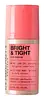
iNNBEAUTY PROJECT Bright & Tight Eye Cream Versus The Daily Glow Panda's Fantasy Brightening Eye Balm
This brightening eye moisturizer is formulated around Tranexamic Acid and Tetrahexyldecyl Ascorbate to brighten dull-looking skin and soften the look of wrinkles.
This brightening eye mask is formulated around Laminaria Digitata Extract and Niacinamide to brighten dull-looking skin and soften the look of wrinkles.


What's inside
What's inside
 Key Ingredients
Benefits
Concerns
Ingredients Side-by-side
Water
Skin ConditioningPropanediol
Solvent

Caprylic/Capric Triglyceride
Masking
Coco-Caprylate
Emollient
Tranexamic Acid
Astringent




Dimethicone
Emollient

Glycerin
Humectant
Squalane
Emollient
Mangifera Indica Seed Butter
Skin Conditioning

Stearic Acid
Cleansing
Cetearyl Alcohol
Emollient


Dilinoleic Acid/Propanediol Copolymer
EmollientArachidyl Alcohol
Emollient
Butylene Glycol
Humectant
Hydrogenated Polydecene
EmollientBis-Diglyceryl Polyacyladipate-2
Emollient
Tetrahexyldecyl Ascorbate
Antioxidant



Bakuchiol
Antimicrobial

Nicotiana Benthamiana Hexapeptide-40 Sh-Polypeptide-76
Skin Conditioning
Palmitoyl Tripeptide-5
Skin Conditioning
Ascorbyl Glucoside
Antioxidant
3-O-Ethyl Ascorbic Acid
Skin Conditioning
Coffea Arabica Seed Extract
Masking
Sodium Hyaluronate
Humectant
Glycyrrhiza Glabra Root Extract
Bleaching
Cedrus Atlantica Bark Extract
Perfuming


Caffeine
Skin Conditioning
Oryza Sativa Bran Extract
Skin Conditioning
Pistacia Lentiscus Gum
MaskingBacillus Ferment
Skin Conditioning
Leuconostoc/Radish Root Ferment Filtrate
Antimicrobial
Vaccinium Myrtillus Fruit Extract
Skin ConditioningSodium PCA
Humectant
Allantoin
Skin Conditioning
Silica
Abrasive
Rosmarinus Officinalis Leaf Extract
AntimicrobialBisabolol
Antioxidant
Helianthus Annuus Extract
Emollient
Xanthan Gum
EmulsifyingGlucose
Humectant
Tocopherol
Antioxidant
Sorbitan Isostearate
Emulsifying
Phospholipids
Skin Conditioning
Phytonadione
Lecithin
Emollient
Glyceryl Caprylate
EmollientPolyglyceryl-3 Caprate
EmulsifyingGlyceryl Caprylate/Caprate
EmollientEthylhexyl Palmitate
Emollient
C12-15 Alkyl Benzoate
AntimicrobialBehenyl Alcohol
Emollient
Phenoxyethanol
Preservative
Sorbitan Sesquioleate
Emulsifying
1,2-Hexanediol
Skin Conditioning
Caprylyl Glycol
Emollient
Cetearyl Glucoside
Emulsifying
Arachidyl Glucoside
EmulsifyingHydroxyacetophenone
Antioxidant
Citric Acid
Buffering
Hydroxyethyl Acrylate/Sodium Acryloyldimethyl Taurate Copolymer
Emulsion StabilisingSodium Phytate
ChelatingSodium Polyacrylate
Absorbent
Pentylene Glycol
Skin Conditioning
Dicaprylyl Carbonate
EmollientSilica Dimethyl Silylate
EmollientTitanium Dioxide
Cosmetic Colorant

CI 77891
Cosmetic ColorantMica
Cosmetic ColorantIron Oxides
CI 77492
Cosmetic ColorantCI 77491
Cosmetic ColorantWater, Propanediol, Caprylic/Capric Triglyceride, Coco-Caprylate, Tranexamic Acid, Dimethicone, Glycerin, Squalane, Mangifera Indica Seed Butter, Stearic Acid, Cetearyl Alcohol, Dilinoleic Acid/Propanediol Copolymer, Arachidyl Alcohol, Butylene Glycol, Hydrogenated Polydecene, Bis-Diglyceryl Polyacyladipate-2, Tetrahexyldecyl Ascorbate, Bakuchiol, Nicotiana Benthamiana Hexapeptide-40 Sh-Polypeptide-76, Palmitoyl Tripeptide-5, Ascorbyl Glucoside, 3-O-Ethyl Ascorbic Acid, Coffea Arabica Seed Extract, Sodium Hyaluronate, Glycyrrhiza Glabra Root Extract, Cedrus Atlantica Bark Extract, Caffeine, Oryza Sativa Bran Extract, Pistacia Lentiscus Gum, Bacillus Ferment, Leuconostoc/Radish Root Ferment Filtrate, Vaccinium Myrtillus Fruit Extract, Sodium PCA, Allantoin, Silica, Rosmarinus Officinalis Leaf Extract, Bisabolol, Helianthus Annuus Extract, Xanthan Gum, Glucose, Tocopherol, Sorbitan Isostearate, Phospholipids, Phytonadione, Lecithin, Glyceryl Caprylate, Polyglyceryl-3 Caprate, Glyceryl Caprylate/Caprate, Ethylhexyl Palmitate, C12-15 Alkyl Benzoate, Behenyl Alcohol, Phenoxyethanol, Sorbitan Sesquioleate, 1,2-Hexanediol, Caprylyl Glycol, Cetearyl Glucoside, Arachidyl Glucoside, Hydroxyacetophenone, Citric Acid, Hydroxyethyl Acrylate/Sodium Acryloyldimethyl Taurate Copolymer, Sodium Phytate, Sodium Polyacrylate, Pentylene Glycol, Dicaprylyl Carbonate, Silica Dimethyl Silylate, Titanium Dioxide, CI 77891, Mica, Iron Oxides, CI 77492, CI 77491
Laminaria Digitata Extract
Skin Protecting
Butyrospermum Parkii Oil
Emollient
Dimethicone
Emollient
Cetearyl Alcohol
Emollient
Silica
Abrasive
Yeast Extract
Skin ConditioningCaffeine
Skin Conditioning
Helianthus Annuus Seed Oil
Emollient
Prunus Amygdalus Dulcis Oil
Skin Conditioning
Sodium Hyaluronate
Humectant
Niacinamide
Smoothing

Glycerin
Humectant
Linoleic Acid
Cleansing
Bakuchiol
Antimicrobial
Sorbitol
Humectant
Methicone
Emollient
Polymethylsilsesquioxane/Silica Crosspolymer
Hexylene Glycol
EmulsifyingIsododecane
EmollientSqualene
Emollient
Propylene Glycol
Humectant
Caprylyl Glycol
Emollient
Carbomer
Emulsion StabilisingDisodium EDTA
ChelatingPhenoxyethanol
Preservative
Laminaria Digitata Extract, Butyrospermum Parkii Oil, Dimethicone, Cetearyl Alcohol, Silica, Yeast Extract, Caffeine, Helianthus Annuus Seed Oil, Prunus Amygdalus Dulcis Oil, Sodium Hyaluronate, Niacinamide, Glycerin, Linoleic Acid, Bakuchiol, Sorbitol, Methicone, Polymethylsilsesquioxane/Silica Crosspolymer, Hexylene Glycol, Isododecane, Squalene, Propylene Glycol, Caprylyl Glycol, Carbomer, Disodium EDTA, Phenoxyethanol
Ingredients Explained
These ingredients are found in both products.
Ingredients higher up in an ingredient list are typically present in a larger amount.
Bakuchiol is a plant-derived antioxidant from the seeds of the Psoralea corylifolia plant. It has antimicrobial, emollient, skin conditioning, and antioxidant properties.
You'll likely see it called a "retinol replacement" but the two are technically not related. This is because bakuchiol is able to flip many of the same switches in your skin cells to tell them to:
1) produce more collagen (type I, III, and IV)
2) activate the same genes retinoids do
Unlike retinoids, this ingredient will not increase photosensitivity and is safe to use during pregnancy (but please still check in with your doctor!).
The flagship clinical trial from Dhaliwal et al. 2019 found 0.5% bakuchiol (twice daily) and 0.5% retinol (once daily) reduced wrinkles and hyperpigmentation equally, but bakuchiol had significantly less irritation.
Systematic reviews also back this up:
Bakuchiol is comparable to retinol for photoaging but with better tolerability. It also has mild antibacterial properties against Cutibacterium acnes and antifungal activity in vitro against Candida and dermatophytes.
The reason bakuchiol works well is due to its structure; it is a meroterpene phenol, or a hybrid molecule. The phenol half acts as an antioxidant while the terpene half is fat-loving. This helps the molecule slip through the skin barrier.
This ingredient is usually used between 0.5-2%. Only one case of contact dermatitis has ever been reported for this ingredient.
Learn more about BakuchiolCaffeine is a naturally occurring plant compound found in coffee beans, tea leaves, cocoa pods, and guarana.
As an antioxidant, caffeine protects your skin from free radical damage caused by UV exposure and envionrmnetal stressors.
Early research also shows that caffeine can help calm redness, soothe irritated skin, and support hair growth by stimulating microcirculation in the scalp.
You might have seen eye creams marketing caffeine as a depuffing ingredient. This is because it is a vasoconstrictor meaning it can temporarily constrict blood vessels, though clinical evidence for this specific use is still limited.
Most skincare products contain this ingredient at concentrations between 1-6%. It is able to penetrate skin easily regardless of skin type or thickness.
Just so you know, a very small number of case reports describe caffeine-induced allergy. This ingredient is generally well-tolerated, non-irritating, and non-sensitizing for the majority of people.
Learn more about CaffeineCaprylyl Glycol is a humectant, skin conditioner, emollient, and preservative booster derived from either caprylic acid or synthetically created.
Typical use levels vary from 0.3-1% as a preservative booster and go up to 2% to condition skin.
Because it is not a free-fatty acid, this ingredient is fungal acne safe (there's nothing for Malassezia to feed on).
Learn more about Caprylyl GlycolCetearyl alcohol is a waxy mixture of two fatty alcohols: cetyl alcohol and stearyl alcohol. It is an emollient and emulsifier.
Despite having "alcohol" in its name, it has nothing to do with drying solvent alcohols; the FDA also allows "alcohol-free" products to contain fatty alcohols like this ingredient.
It plays several roles in a formula:
Typical use levels for this ingredient sit around 1-10% and the Cosmetic Ingredient Review Expert Panel has affirmed safety at concentrations up to 25% in leave-on products.
Multiple assessments have found it to be non-irritating and non-sensitizing to most people.
However, there have been some cases of allergic contact dermatitis in patients with chronically compromised skin barriers.
Cetearyl alcohol has a comedogenic rating of 2 and irritancy rating of 1. Both of these numbers come from the 1989 study that used rabbit ears; a "2" means mildly comedogenic and a "1" means low irritancy.
Here's the catch: rabbit skin is more sensitive than human skin and throws a lot of false positives. A 1996 reappraisal found that ingredients rated 1-2 in the rabbit ear tests are generally safe for humans.
Remember comedogenic ratings are unable to assess the entire formula of a product or how it will react on your skin. Just be sure to patch test if you are unsure about certain ingredients.
This ingredient is not fungal acne safe. Cetearyl alcohol is a fatty alcohol with chain lengths that fall within the range that Malassezia can metabolize.
A 2019 study has also observed Malassezia growth in the presence of this ingredient, confirming it to be not-fungal acne safe.
Learn more about Cetearyl AlcoholDimethicone is a type of synthetic silicone created from natural materials such as quartz. It is also known as polydimethylsiloxane.
What it does:
Dimethicone comes in different viscosities:
Depending on the viscosity, dimethicone has different properties.
Ingredients lists don't always show which type is used, so we recommend reaching out to the brand if you have questions about the viscosity.
This ingredient is unlikely to cause irritation because it does not get absorbed into skin. However, people with silicone allergies should be careful about using this ingredient.
Note: Dimethicone may contribute to pilling. This is because it is not oil or water soluble, so pilling may occur when layered with products. When mixed with heavy oils in a formula, the outcome is also quite greasy.
Learn more about DimethiconeGlycerin (or glycerol) is a compound naturally found in your skin. It's a powerhouse humectant that pulls water into the stratum corneum.
Topically, glycerin does several things at once:
Your skin makes glycerin on its own (mostly from sebaceous oil breakdown) and shuttles it to your outermost layer of skin, or your epidermis, via aquaporin-3.
Aquaporin-3 is a transporter that is essential for normal skin hydration, elasticity, and repair. Interestingly, mice lacking in AQP3 have dry and less elastic skin that can be fully corrected with glycerin.
This ingredient is non-irritating, plays well with almost every ingredient, and works across all skin types. Typical use is anywhere between 3-10% but can go up to 79% in some leave-on products.
Just know very high concentrations (>40%) can feel tacky in low humidity.
Glycerin is the name for this ingredient in American English. British English uses Glycerol/Glycerine.
Learn more about GlycerinPhenoxyethanol is one of the most widely used preservatives in skincare (and for good reason!).
It has a large spectrum of antimicrobial activity and especially effective bacteria, yeast, and mold while only having a weak effect on your skin's natural microbiome.
On a cellular level, it disrupts the cell membranes of microbes by poking holes that make the cell leak. This shuts down the chemical reactions the microbe needs to make energy so it can no longer survive.
Another perk of this ingredient is that it stays functional across a wide pH range (3-10).
You'll often see it paired with boosters like Ethylhexylglycerin; one study showed that a 1:9 ratio of Ethylhexylglycerin to Phenoxyethanol damages bacterial membranes as effectively as doubling the Phenoxyethanol concentration on its own.
Typical use concentrations range from 0.3-1% depending on the formula, and this ingredient is capped at 1% int the EU.
Safety-wise, the fear mongering does not hold up to the evidence. The EU's Scientific Committee on Consumer Safety and FDA consider it safe as a preservative at up to 1%, including for children of all ages.
Adverse systemic effects only showed up in animal studies at exposures roughly 200x higher than what people get from cosmetics. And despite its very widespread use, this ingredient is a rare sensitizer and allergic reactions are uncommon.
Learn more about PhenoxyethanolSilica, also known as silicon dioxide, is a naturally occurring mineral. It is used as a fine, spherical, and porous powder in cosmetics.
Though it has exfoliant properties, the function of silica varies depending on the product.
The unique structure of silica enhances the spreadability and adds smoothness, making it a great texture enhancer.
It is also used as an active carrier, emulsifier, and mattifier due to its ability to absorb excess oil.
In some products, tiny microneedles called spicules are made from silica or hydrolyzed sponge. When you rub them in, they lightly polish away dead skin layers and enhance the penetration of active ingredients.
Learn more about SilicaSodium Hyaluronate is the salt form of hyaluronic acid. It is a long sugar chain that is naturally found in your skin, joints, and connective tissue that maintains hydration and elasticity.
In skincare, it works as a humectant. It pulls water from the environment and deeper layers of skin and binds it to the surface.
Interestingly, the size of the molecule affects its behavior:
Some clinical evidence links low molecular weight versions to improved wrinkle depth, elasticity, anti-inflammatory effects, and barrier repair.
Many serums use a blend of both weights so you can get surface hydration plus longer-lasting and deeper effects.
You'll typically see concentrations between 0.1-2% for this ingredient.
Learn more about Sodium Hyaluronate

