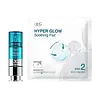
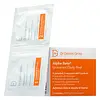
Dr.G Hyper Glow 30% Ampoule Peeling 2-Step Program Versus Dr. Dennis Gross Skincare Alpha Beta Universal Daily Peel
This smoothing exfoliator is formulated around Glycolic Acid and Gluconolactone to refine skin texture and brighten dull-looking skin.
This smoothing exfoliator is formulated around Glycolic Acid and Salicylic Acid to refine skin texture and brighten dull-looking skin.


What's inside
What's inside
 Key Ingredients
Benefits
Concerns
Ingredients Side-by-side
Water
Skin ConditioningGlycolic Acid
Buffering











Gluconolactone
Skin Conditioning
Dipropylene Glycol
HumectantLactic Acid
Buffering
Butylene Glycol
Humectant

Potassium Hydroxide
BufferingGlycereth-26
Humectant
Glycerin
Humectant
Isopentyldiol
Humectant
1,2-Hexanediol
Skin Conditioning
Betaine
Humectant
Ammonium Polyacryloyldimethyl Taurate
Emulsion StabilisingTrehalose
Humectant
Sodium Polyacryloyldimethyl Taurate
Emulsion StabilisingC12-14 Alketh-12
EmulsifyingAcacia Senegal Gum
MaskingXanthan Gum
EmulsifyingHydroxyacetophenone
Antioxidant
Panthenol
Skin Conditioning
Allantoin
Skin Conditioning
Ammonium Glycyrrhizate
MaskingSalicylic Acid
Masking


Ethylhexylglycerin
Skin ConditioningCaprylyl Glycol
Emollient
Sclerotium Gum
Emulsion StabilisingGlyceryl Acrylate/Acrylic Acid Copolymer
HumectantDisodium EDTA
Malt Extract
Skin ProtectingCapryloyl Salicylic Acid
Exfoliating
Pvm/Ma Copolymer
Emulsion StabilisingCaprylic/Capric Triglyceride
Masking
Hydrogenated Lecithin
Emulsifying
Salix Alba Bark Extract
Astringent
Carica Papaya Fruit Extract
Skin ConditioningPrunus Mume Extract
Antioxidant
Pyrus Malus Fruit Extract
Skin Conditioning
Vitis Vinifera Fruit Extract
Skin ConditioningPinus Palustris Leaf Extract
TonicCeramide NP
Skin Conditioning
Ceramide AP
Skin Conditioning
Ceramide EOP
Skin Conditioning
Polyglutamic Acid
Skin Conditioning
Hydroxypropyltrimonium Hyaluronate
Beta-Glucan
Skin Conditioning
Alcohol
Antimicrobial
Cetyl Ethylhexanoate
EmollientPolysorbate 20
Emulsifying
Ammonium Acryloyldimethyltaurate/Vp Copolymer
Cellulose Gum
Emulsion StabilisingDipotassium Glycyrrhizate
Humectant
Adenosine
Skin Conditioning
Trifolium Pratense Extract
Skin ConditioningMelaleuca Alternifolia Leaf Extract
Perfuming
Sodium Hyaluronate
Humectant
Centella Asiatica Extract
Cleansing
Asiaticoside
Antioxidant
Madecassoside
Antioxidant
Asiatic Acid
Skin Conditioning
Madecassic Acid
Skin Conditioning
Water, Glycolic Acid, Gluconolactone, Dipropylene Glycol, Lactic Acid, Butylene Glycol, Potassium Hydroxide, Glycereth-26, Glycerin, Isopentyldiol, 1,2-Hexanediol, Betaine, Ammonium Polyacryloyldimethyl Taurate, Trehalose, Sodium Polyacryloyldimethyl Taurate, C12-14 Alketh-12, Acacia Senegal Gum, Xanthan Gum, Hydroxyacetophenone, Panthenol, Allantoin, Ammonium Glycyrrhizate, Salicylic Acid, Ethylhexylglycerin, Caprylyl Glycol, Sclerotium Gum, Glyceryl Acrylate/Acrylic Acid Copolymer, Disodium EDTA, Malt Extract, Capryloyl Salicylic Acid, Pvm/Ma Copolymer, Caprylic/Capric Triglyceride, Hydrogenated Lecithin, Salix Alba Bark Extract, Carica Papaya Fruit Extract, Prunus Mume Extract, Pyrus Malus Fruit Extract, Vitis Vinifera Fruit Extract, Pinus Palustris Leaf Extract, Ceramide NP, Ceramide AP, Ceramide EOP, Polyglutamic Acid, Hydroxypropyltrimonium Hyaluronate, Beta-Glucan, Alcohol, Cetyl Ethylhexanoate, Polysorbate 20, Ammonium Acryloyldimethyltaurate/Vp Copolymer, Cellulose Gum, Dipotassium Glycyrrhizate, Adenosine, Trifolium Pratense Extract, Melaleuca Alternifolia Leaf Extract, Sodium Hyaluronate, Centella Asiatica Extract, Asiaticoside, Madecassoside, Asiatic Acid, Madecassic Acid
Water
Skin ConditioningAlcohol Denat.
Antimicrobial
Glycolic Acid
Buffering
Potassium Hydroxide
BufferingHamamelis Virginiana Water
Astringent
Salicylic Acid
Masking
Polysorbate 20
Emulsifying
Citric Acid
Buffering
Lactic Acid
Buffering
Malic Acid
Buffering
Camellia Sinensis Leaf Extract
Antimicrobial
Achillea Millefolium Extract
CleansingAnthemis Nobilis Flower Extract
Masking
Soy Isoflavones
Skin ConditioningCopper PCA
HumectantZinc PCA
Humectant
Lecithin
Emollient
Disodium EDTA
Alcohol
Antimicrobial
Polysorbate 80
Emulsifying
Parfum
Masking
Linalool
Perfuming
Benzyl Salicylate
Perfuming
Benzoic Acid
Masking
Phenoxyethanol
Preservative
Sodium Benzoate
Masking
Sodium Bicarbonate
Abrasive
Ascorbic Acid
Antioxidant
Ascorbyl Palmitate
Antioxidant
Retinyl Palmitate
Skin Conditioning
Retinol
Skin Conditioning
Tocopheryl Acetate
Antioxidant
Resveratrol
Antioxidant
Ubiquinone
Antioxidant
Leuconostoc/Radish Root Ferment Filtrate
Antimicrobial
Phospholipids
Skin Conditioning
Sodium PCA
Humectant
Dimethicone
Emollient
PEG-30 Stearate
Emulsifying
Octoxynol-9
EmulsifyingBHT
Antioxidant
Tetrasodium EDTA
Sorbic Acid
Preservative
Water, Alcohol Denat., Glycolic Acid, Potassium Hydroxide, Hamamelis Virginiana Water, Salicylic Acid, Polysorbate 20, Citric Acid, Lactic Acid, Malic Acid, Camellia Sinensis Leaf Extract, Achillea Millefolium Extract, Anthemis Nobilis Flower Extract, Soy Isoflavones, Copper PCA, Zinc PCA, Lecithin, Disodium EDTA, Alcohol, Polysorbate 80, Parfum, Linalool, Benzyl Salicylate, Benzoic Acid, Phenoxyethanol, Sodium Benzoate, Sodium Bicarbonate, Ascorbic Acid, Ascorbyl Palmitate, Retinyl Palmitate, Retinol, Tocopheryl Acetate, Resveratrol, Ubiquinone, Leuconostoc/Radish Root Ferment Filtrate, Phospholipids, Sodium PCA, Dimethicone, PEG-30 Stearate, Octoxynol-9, BHT, Tetrasodium EDTA, Sorbic Acid
Reviews
Ingredients Explained
These ingredients are found in both products.
Ingredients higher up in an ingredient list are typically present in a larger amount.
This ingredient is also called ethanol or ethyl alcohol. It is denatured, meaning made undrinkable for cosmetic use.
In formulas, it:
Is it bad for your skin?
The answer comes down to concentration. Patch and wash studies have found highly concentrated alcohol-based hand rubs (60-100%) cause less barrier disruption than washing with a basic detergent like SLS. The only measurable effect in these studies was a temporary dip in skin hydration.
Concentrations below 12-15% in leave-on cosmetics is generally well-tolerated. Concentrations above start to see increased transepidermal water loss (TEWL) and reduced hydration.
In concentrations about 58%, it creates temporary channels in your skin's lipid layers to become more permeable and allow other ingredients to slip through easily.
This ingredient can be up to 80% of the formula in alcohol-based perfumes.
Overall, this ingredient is probably harmless if found lower down an ingredients list but worth side-eyeing if it's high up (especially if your barrier is already struggling).
Alcohol can worsen dry skin, eczema, and oily skin, especially at higher concentrations. This is because it can increase transepidermal water loss and decrease hydration to disrupt the skin barrier.
According to the National Rosacea Society based in the US, you should be mindful of products with these alcohols in the top half of ingredients.
True allergic contact dermatitis to ethanol is uncommon, but be sure to patch test if you have dry or sensitive skin.
Learn more about AlcoholDisodium EDTA is a chelating agent. It grabs onto and deactivates metal ions that sneak into your products from water, packaging, or air.
This ingredient mainly works behind the scenes and helps with:
On top of that, this ingredient can counteract the effects of hard water by binding to the minerals in it.
One thing worth knowing is that Disodium EDTA has been shown to be a mild penetration enhancer. It can help other ingredients absorb into skin more effectively which can be a double-edged sword (great for actives, but can also make the active too strong if you have sensitive skin).
Clinical patch testing showed no significant skin irritation at typical use concentrations and minimal dermal absorption.
You'll most likely see this ingredient near the end of an ingredient list. It's typically found in concentrations less than 1%.
Learn more about Disodium EDTAGlycolic Acid is arguably the most famous alpha hydroxy acid (AHA) with tons of research backing its benefits.
It is found naturally in sugar cane but the form used in skincare is usually synthetic for purity and stability.
Glycolic acid removes the top layer of dead skin cells to allow newer and fresher ones to emerge.
AHAs work by breaking down the structural “glue” that holds old skin cells in place. When that buildup is gone, your skin can renew itself more efficiently.
Research also shows glycolic acid stimulates collagen production, helping to firm and thicken the skin over time. This is one of its biggest advantages over other AHAs.
Overall, glycolic acid helps with:
Fun fact: Glycolic acid boosts skin hydration by helping it produce molecules that increase hyaluronic acid naturally.
To work best, glycolic acid products should have a pH between 3-4 (that’s where exfoliation is most effective but still gentle on skin).
The pH and concentration of a product are key to its effectiveness:
It is normal to feel a slight stinging sensation when using glycolic acid. This usually fades as your skin adjusts.
Because glycolic acid has the smallest molecular size in the AHA family, it can penetrate deeper, which enhances its effectiveness but also makes it more likely to irritate sensitive skin.
If your skin is very sensitive or prone to rosacea, glycolic acid may be too strong; in that case, try milder options like lactic acid or a PHA instead.
Recent studies suggest glycolic acid might even help protect against UV damage. But don’t skip sunscreen! Freshly exfoliated skin is more sensitive to the sun.
Glycolic acid is a skincare superstar. It smooths, brightens, hydrates, and firms the skin. Unless you’re highly sensitive, it’s well worth adding to your routine.
Read more about some other popular AHA's here:
Learn more about Glycolic AcidLactic Acid is another well-loved alpha hydroxy acid (AHA). It is gentler than glycolic acid but still highly effective.
Its main role is to exfoliate the surface of the skin by loosening the “glue” that holds dead skin cells together. Shedding those old cells leads to smoother, softer, and more even-toned skin.
Because lactic acid molecules are larger than glycolic acid, they don’t penetrate as deeply. This means they’re less likely to sting or irritate, making it a great choice for beginners or those with sensitive skin.
Like glycolic acid, it can:
Lactic acid also acts as a humectant (like hyaluronic acid). It can draw water into the skin to improve hydration and also plays a role in the skin's natural moisturizing factor (NMF) in the form of sodium lactate.
Studies show it can boost ceramide production to strengthen the skin barrier and even help balance the skin’s microbiome.
To get results, choose products with a pH between 3-4.
Lower strengths (5-12%) focus on surface exfoliation; higher strengths (12% and up) can reach deeper in the dermis (deeper, supportive layer) to improve skin texture and firmness over time.
Though it was originally derived from milk, most modern lactic acid used in skincare is vegan. It is made through non-dairy fermentation to create a bio-identical and stable form suitable for all formulations.
When lactic acid shows up near the end of an ingredient list, it usually means the brand added just a tiny amount to adjust the product’s pH.
Legend has it that Cleopatra used to bathe in sour milk to help reduce wrinkles.
Lactic acid is truly a gentle multitasker: it exfoliates, hydrates, strengthens, and brightens. It's a great ingredient for giving your skin a smooth, glowing, and healthy look without the harshness of stronger acids.
Read more about some other popular AHA's here:
Learn more about Lactic AcidPolysorbate 20 is a gentle, water-soluble emulsifier and mild surfactant. It stops oil and water from separating to keep your formulas blended and stable.
It also acts as a mild penetration enhancer by helping active ingredients absorb slightly better.
The common safety discussion around this ingredient involves a manufacturing byproduct called 1,4-dioxane.
Trace amounts can form during production but the EU's Scientific Committee on Consumer Safety has concluded that levels at/below 10 ppm in finished products are safe (commercial products consistently fall within acceptable margins).
True allergic reactions are uncommon and the CIR Expert Panel has confirmed this ingredient to be safe as used in cosmetics.
Because it is derived from lauric acid, it may not be fungal acne safe.
Learn more about Polysorbate 20Potassium Hydroxide (also known as potash) is a strong alkaline ingredient that does one job: it nudges a product's pH up so the whole formula lands in a skin-friendly range.
It's also the base that turns oils into liquid soap during the soap making process.
An expert safety panel reviewed it and found it safe when formulations are made to be non-irritating.
As a pH adjuster, it's typically used well under 1% though regulatory caps go much higher: 5% in nail cuticle removers and 2-4.5% in hair straighteners.
Though there is some concern for irritation from raw or high pH material, a well-balanced formula will be a non-issue for the vast majority of people.
Learn more about Potassium HydroxideSalicylic Acid (also known as beta hydroxy acid or BHA) is a well-known ingredient for treating skin that struggles with acne and clogged pores. It exfoliates both the skin's surface and deep within the pores to help clear out buildup, control oil, and reduce inflammation.
Unlike AHAs (alpha hydroxy acids), salicylic acid is oil-soluble. This allows it to penetrate into pores which makes it especially effective for treating blackheads and preventing future breakouts.
Salicylic acid is also known for its soothing properties. It has a similar structure to aspirin and can calm inflamed or irritated skin, making it a good option for acne-prone skin that is also sensitive.
Concentrations of 0.5-2% are recognized by the U.S. FDA as an over-the-counter topical acne product.
It can cause irritation and/or dryness if one's skin already has a compromised moisture barrier, so it's best to focus on repairing that before introducing this ingredient into your routine.
While salicylic acid does not increase sun sensitivity, it’s still important to wear sunscreen daily to protect your skin.
If you are looking for the ingredient called BHA or Butylated Hydroxyanisole, click here.
Learn more about Salicylic AcidWater. It's the most common cosmetic ingredient of all. You'll usually see it at the top of ingredient lists, meaning that it makes up the largest part of the product.
So why is it so popular? Water most often acts as a solvent - this means that it helps dissolve other ingredients into the formulation.
You'll also recognize water as that liquid we all need to stay alive. If you see this, drink a glass of water. Remember to stay hydrated!
Learn more about Water

