This hybrid sunscreen covers the full UV range and blocks ~98% of UVB at SPF 50.
This hybrid sunscreen covers the full UV range and blocks ~98% of UVB at SPF 50.

What's inside
What's inside
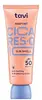 Key Ingredients
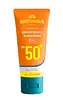
Benefits
Concerns
Ingredients Side-by-side
Water
Skin ConditioningDimethicone
Emollient

Dicaprylyl Carbonate
EmollientTitanium Dioxide
Cosmetic Colorant

Diethylamino Hydroxybenzoyl Hexyl Benzoate
UV Filter
Ethylhexyl Triazone
UV Absorber
C12-15 Alkyl Benzoate
AntimicrobialDipropylene Glycol
HumectantPropanediol
Solvent

Butylene Glycol
Humectant
Silica
Abrasive


Camellia Sinensis Leaf Extract
Antimicrobial




Bis-Ethylhexyloxyphenol Methoxyphenyl Triazine
UV Absorber
Acrylates/Beheneth-25 Methacrylate Copolymer
1,2-Hexanediol
Skin Conditioning
Chlorphenesin
Antimicrobial
Glycerin
Humectant
Propylene Glycol
Humectant

Caprylic/Capric Triglyceride
Masking
Cetyl Palmitate
Emollient
Laureth-23
Cleansing
Methylene Bis-Benzotriazolyl Tetramethylbutylphenol
UV Filter
Steareth-100
Gel FormingAllantoin
Skin Conditioning
Sodium Acrylates Copolymer
Dimethicone Crosspolymer
Emulsion Stabilising
Glycyrrhiza Glabra Root Extract
Bleaching
Mica
Cosmetic ColorantDisodium EDTA
ChelatingPhenoxyethanol
Preservative
Caprylhydroxamic Acid
ChelatingSodium Hydroxide
BufferingLecithin
Emollient
Styrene/Acrylates Copolymer
Centella Asiatica Extract
Cleansing
Cellulose Gum
Emulsion StabilisingSucrose
Humectant
Madecassoside
Antioxidant
Pentylene Glycol
Skin Conditioning
Artemisia Capillaris Flower Extract
Skin ConditioningCarnosine
Skin Conditioning
Niacinamide
Smoothing

Alpha-Arbutin
Antioxidant
Sodium Metabisulfite
Antioxidant
Tranexamic Acid
Astringent
Sodium Citrate
BufferingPotassium Sorbate
Preservative
Sodium Benzoate
Masking
Ubiquinone
Antioxidant
Citric Acid
Buffering
Hydrogenated Lecithin
Emulsifying
Cholesterol
Emollient
Aminopropyl Ascorbyl Phosphate
Antioxidant
Geranium Robertianum Extract
AstringentPaeonia Suffruticosa Root Extract
Skin ProtectingScutellaria Baicalensis Root Extract
Astringent
Thymus Serpyllum Extract
Skin ConditioningAlpinia Katsumadai Seed Extract
Skin ConditioningGlutathione
CI 77492
Cosmetic ColorantCI 77491
Cosmetic ColorantCI 77499
Cosmetic ColorantWater, Dimethicone, Dicaprylyl Carbonate, Titanium Dioxide, Diethylamino Hydroxybenzoyl Hexyl Benzoate, Ethylhexyl Triazone, C12-15 Alkyl Benzoate, Dipropylene Glycol, Propanediol, Butylene Glycol, Silica, Camellia Sinensis Leaf Extract, Bis-Ethylhexyloxyphenol Methoxyphenyl Triazine, Acrylates/Beheneth-25 Methacrylate Copolymer, 1,2-Hexanediol, Chlorphenesin, Glycerin, Propylene Glycol, Caprylic/Capric Triglyceride, Cetyl Palmitate, Laureth-23, Methylene Bis-Benzotriazolyl Tetramethylbutylphenol, Steareth-100, Allantoin, Sodium Acrylates Copolymer, Dimethicone Crosspolymer, Glycyrrhiza Glabra Root Extract, Mica, Disodium EDTA, Phenoxyethanol, Caprylhydroxamic Acid, Sodium Hydroxide, Lecithin, Styrene/Acrylates Copolymer, Centella Asiatica Extract, Cellulose Gum, Sucrose, Madecassoside, Pentylene Glycol, Artemisia Capillaris Flower Extract, Carnosine, Niacinamide, Alpha-Arbutin, Sodium Metabisulfite, Tranexamic Acid, Sodium Citrate, Potassium Sorbate, Sodium Benzoate, Ubiquinone, Citric Acid, Hydrogenated Lecithin, Cholesterol, Aminopropyl Ascorbyl Phosphate, Geranium Robertianum Extract, Paeonia Suffruticosa Root Extract, Scutellaria Baicalensis Root Extract, Thymus Serpyllum Extract, Alpinia Katsumadai Seed Extract, Glutathione, CI 77492, CI 77491, CI 77499
Water
Skin ConditioningCyclohexasiloxane
Emollient
Ethylhexyl Methoxycinnamate
UV Absorber
Silica
Abrasive
Ethylhexyl Salicylate
UV Absorber
Glycerin
Humectant
Titanium Dioxide
Cosmetic Colorant
PEG-10 Dimethicone
Skin Conditioning
Caprylyl Methicone
Skin Conditioning
Zinc Oxide
Cosmetic Colorant
Polymethyl Methacrylate
Pentylene Glycol
Skin Conditioning
Glyceryl Glucoside
Humectant
Pachyrhizus Erosus Root Extract
Skin Conditioning1,2-Hexanediol
Skin Conditioning
Cetyl PEG/PPG-10/1 Dimethicone
Emulsifying
Magnesium Sulfate
CI 77007
Cosmetic ColorantAllantoin
Skin Conditioning
Trimethylsiloxysilicate
Emollient
Aluminum Hydroxide
EmollientStearic Acid
Cleansing
Hydroxyacetophenone
Antioxidant
Octyldodecanol
Emollient
Disteardimonium Hectorite
StabilisingButylene Glycol
Humectant
Glyceryl Caprylate
EmollientDipotassium Glycyrrhizate
Humectant
Dimethicone
Emollient
Helianthus Annuus Seed Oil
Emollient
Propanediol
Solvent
Sodium Phytate
ChelatingTriethoxycaprylylsilane
Methyl Diisopropyl Propionamide
MaskingPolyhydroxystearic Acid
Emulsifying
BHT
Antioxidant
Neopentyl Glycol Diethylhexanoate
Emollient
Tremella Fuciformis Extract
Humectant
Lavandula Angustifolia Flower/Leaf/Stem Extract
Masking
Ethyl Ferulate
Antioxidant
Ascorbyl Glucoside
Antioxidant
Rosmarinus Officinalis Leaf Extract
AntimicrobialTocopherol
Antioxidant
Ethylhexylglycerin
Skin ConditioningMagnesium Chloride
Panthenol
Skin Conditioning
Calcium Gluconate
HumectantPyridoxine Hcl
Skin ConditioningYeast Extract
Skin ConditioningCyanocobalamin
Skin Conditioning3-O-Ethyl Ascorbic Acid
Skin Conditioning
Terminalia Ferdinandiana Fruit Extract
Antioxidant
Water, Cyclohexasiloxane, Ethylhexyl Methoxycinnamate, Silica, Ethylhexyl Salicylate, Glycerin, Titanium Dioxide, PEG-10 Dimethicone, Caprylyl Methicone, Zinc Oxide, Polymethyl Methacrylate, Pentylene Glycol, Glyceryl Glucoside, Pachyrhizus Erosus Root Extract, 1,2-Hexanediol, Cetyl PEG/PPG-10/1 Dimethicone, Magnesium Sulfate, CI 77007, Allantoin, Trimethylsiloxysilicate, Aluminum Hydroxide, Stearic Acid, Hydroxyacetophenone, Octyldodecanol, Disteardimonium Hectorite, Butylene Glycol, Glyceryl Caprylate, Dipotassium Glycyrrhizate, Dimethicone, Helianthus Annuus Seed Oil, Propanediol, Sodium Phytate, Triethoxycaprylylsilane, Methyl Diisopropyl Propionamide, Polyhydroxystearic Acid, BHT, Neopentyl Glycol Diethylhexanoate, Tremella Fuciformis Extract, Lavandula Angustifolia Flower/Leaf/Stem Extract, Ethyl Ferulate, Ascorbyl Glucoside, Rosmarinus Officinalis Leaf Extract, Tocopherol, Ethylhexylglycerin, Magnesium Chloride, Panthenol, Calcium Gluconate, Pyridoxine Hcl, Yeast Extract, Cyanocobalamin, 3-O-Ethyl Ascorbic Acid, Terminalia Ferdinandiana Fruit Extract
Reviews
Ingredients Explained
These ingredients are found in both products.
Ingredients higher up in an ingredient list are typically present in a larger amount.
1,2-Hexanediol is a synthetic liquid and another multi-functional powerhouse.
It is a:
- Humectant, drawing moisture into the skin
- Emollient, helping to soften skin
- Solvent, dispersing and stabilizing formulas
- Preservative booster, enhancing the antimicrobial activity of other preservatives
Allantoin is a soothing ingredient known for its protective and moisturizing properties; it's basically a quiet workhorse ingredient you can find in a huge range of cosmetics.
Though it can be derived from the comfrey plant, allantoin is produced synthetically for cosmetic products to ensure purity.
Research shows it can encourage your skin cells to turn over and renew by stimulating keratinocyte and fibroblast proliferation.
It also has mild keratolytic properties to help loosen and shed dead skin cells without being harsh.
Studies also suggest allantoin can help calm inflammation by dialing down some of the chemical signals your skin sends out when it is irritated.
This ingredient is typically used in the 0.1-0.5% range, and the FDA recognizes it as a skin protectant in OTC products up to 2%.
Overall, allantoin is a wonderful addition to most routines; it is stable across a wide pH range (~4-8), works well with other ingredients, and is considered non-sensitizing/non-irritating.
Fun fact: Allantoin is naturally occurring in comfrey root, beets, chamomile, and wheat sprouts. Our bodies even produce it as a byproduct of uric acid metabolism.
Learn more about AllantoinButylene Glycol (or BG) is used within cosmetic products for a few different reasons:
Overall, Butylene Glycol is a safe and well-rounded ingredient that works well with other ingredients.
Though this ingredient works well with most skin types, some people with sensitive skin may experience a reaction such as allergic rashes, closed comedones, or itchiness.
Learn more about Butylene GlycolDimethicone is a type of synthetic silicone created from natural materials such as quartz. It is also known as polydimethylsiloxane.
What it does:
Dimethicone comes in different viscosities:
Depending on the viscosity, dimethicone has different properties.
Ingredients lists don't always show which type is used, so we recommend reaching out to the brand if you have questions about the viscosity.
This ingredient is unlikely to cause irritation because it does not get absorbed into skin. However, people with silicone allergies should be careful about using this ingredient.
Note: Dimethicone may contribute to pilling. This is because it is not oil or water soluble, so pilling may occur when layered with products. When mixed with heavy oils in a formula, the outcome is also quite greasy.
Learn more about DimethiconeGlycerin (or glycerol) is a compound naturally found in your skin. It's a powerhouse humectant that pulls water into the stratum corneum.
Topically, glycerin does several things at once:
Your skin makes glycerin on its own (mostly from sebaceous oil breakdown) and shuttles it to your outermost layer of skin, or your epidermis, via aquaporin-3.
Aquaporin-3 is a transporter that is essential for normal skin hydration, elasticity, and repair. Interestingly, mice lacking in AQP3 have dry and less elastic skin that can be fully corrected with glycerin.
This ingredient is non-irritating, plays well with almost every ingredient, and works across all skin types. Typical use is anywhere between 3-10% but can go up to 79% in some leave-on products.
Just know very high concentrations (>40%) can feel tacky in low humidity.
Glycerin is the name for this ingredient in American English. British English uses Glycerol/Glycerine.
Learn more about GlycerinPentylene Glycol (1,2-pentanediol) is a multitasking little diol with three main roles in a formula:
Research on alkanediols (the family pentylene glycol belongs to) show they work by disrupting microbial cell membranes. This disruption helps the primary preservative system in a product work more effectively at lower doses.
On the safety side, the Cosmetic Ingredient Review Expert Panel has concluded this ingredient to be safe as used in current cosmetic practices + concentrations.
Typical use levels in a formula run about 1-5%.
Learn more about Pentylene GlycolPropanediol is an all-star ingredient. It softens, hydrates, and smooths the skin.
It’s often used to:
Propanediol is not likely to cause sensitivity and considered safe to use. It is derived from corn or petroleum with a clear color and no scent.
Learn more about PropanediolSilica, also known as silicon dioxide, is a naturally occurring mineral. It is used as a fine, spherical, and porous powder in cosmetics.
Though it has exfoliant properties, the function of silica varies depending on the product.
The unique structure of silica enhances the spreadability and adds smoothness, making it a great texture enhancer.
It is also used as an active carrier, emulsifier, and mattifier due to its ability to absorb excess oil.
In some products, tiny microneedles called spicules are made from silica or hydrolyzed sponge. When you rub them in, they lightly polish away dead skin layers and enhance the penetration of active ingredients.
Learn more about SilicaTitanium Dioxide (TD) is a mineral UV filter widely used in sunscreens and cosmetics.
It's one of only two UV filters officially classified as "mineral" by regulatory agencies (the other being Zinc Oxide).
A really common myth is that mineral filters work by reflecting UV light off your skin like tiny mirrors.
They don't only do that; modern research shows TD protects mostly by absorbing UV radiation, the same way chemical filters do.
When researchers measured this, reflection accounted for only about 4-5% of the protection (and less than SPF 2 on its own). The other ~95% comes from absorption: the UV photons hit the particle and their energy gets soaked up by its semiconductor band gap rather than bouncing off.
So "reflects vs. absorbs" was never really the right way to split mineral from chemical filters.
TD gives broad-spectrum protection that's strongest in the UVB and UVA-2 range and weaker in the UVA-1 range. Its UVA protection isn't quite as strong as Zinc Oxide's which is why you'll often see the two paired together.
Together, they make a solid broad-spectrum system.
TD is a great pick for sensitive, acne-prone, or redness-prone skin because it's non-irritating and chemically inert. Regulatory reviews classify it as a non-sensitizer and mild-to-non-irritant.
It's also unlikely to cause the "eye sting" some chemical filters are known for.
The main trade-off is cosmetic; TD can leave a white cast and has a thicker texture. This is why mineral sunscreens are often less cosmetically elegant than chemical or hybrid formulas (and harder to shade-match on deeper skin tones).
Formulators often use micronized or nano-sized TD to cut down on white case and improve spreadability. Smaller particles scatter less visible light so the formula looks less chalky while still filtering UV.
TD is almost always bundled with coatings like Alumina, Silica, Stearic Acid, or Dimethicone. These coatings do two important jobs:
TD can be used at up to 25% in a finished sunscreen; this is the regulatory ceiling in both the US and the EU.
In practice, the amount in any given product varies a lot depending on the target SPF and whether it's paired with other UV filters.
TD is one of the most heavily vetted sunscreen ingredients out there. It is approved as a UV filter in all major markets worldwide, including the US, EU, UK, Japan, Korea, China, Australia, and Canada.
The safety evidence is solid. There was an old worry that nano particles might absorb through skin into the body but multiple studies (including on damaged, sunburned, and UV-irradiated skin) have shown that TD stays on the surface and the layer of dead skin cells on top of everything else.
There's also no evidence of carcinogenicity, mutagenicity, or reproductive toxicity from dermal exposure of this ingredient.
For those who have seen the headline about a 2022 EU ban on TD, that was on TD as a food additive (a complete separate use from topical sunscreen).
There are ongoing questions about how nano-TD might affect marine ecosystems. As of now, there has been no conclusive evidence that any form of TD (or any other sunscreen filter) harms coral reefs or marine life.
The science is still developing and it's a space worth watching rather than packing over.
However, several destinations have reef-safety sunscreen rules that restrict certain chemical filters and steer visitors toward mineral, non-nano options. If you're traveling somewhere with these rules, a non-nano mineral sunscreen is the safe bet.
Learn more about Titanium DioxideWater. It's the most common cosmetic ingredient of all. You'll usually see it at the top of ingredient lists, meaning that it makes up the largest part of the product.
So why is it so popular? Water most often acts as a solvent - this means that it helps dissolve other ingredients into the formulation.
You'll also recognize water as that liquid we all need to stay alive. If you see this, drink a glass of water. Remember to stay hydrated!
Learn more about Water

