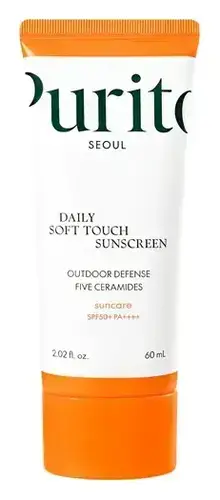
PURITO Daily Soft Touch Sunscreen SPF 50+ Versus Dr. Dennis Gross Skincare Dark Spot Sun Defense Broad Spectrum SPF 50
This chemical sunscreen covers the full UV range and blocks ~98% of UVB at SPF 50.
This mineral sunscreen covers the full UV range and blocks ~98% of UVB at SPF 50.


What's inside
What's inside
 Key Ingredients
Benefits
Concerns
Ingredients Side-by-side
Water
Skin ConditioningPropanediol
Solvent

Dibutyl Adipate
EmollientDicaprylyl Carbonate
EmollientDiethylamino Hydroxybenzoyl Hexyl Benzoate
UV Filter
Ethylhexyl Triazone
UV Absorber
Bis-Ethylhexyloxyphenol Methoxyphenyl Triazine
UV Absorber
Amylopectin
Butylene Glycol
Humectant
Methylene Bis-Benzotriazolyl Tetramethylbutylphenol
UV Filter
Glycerin
Humectant
Behenyl Alcohol
Emollient
Poly C10-30 Alkyl Acrylate
Emulsion StabilisingPolyglyceryl-3 Methylglucose Distearate
Emulsifying

Sodium Acrylates Crosspolymer-2
AbsorbentCarbomer
Emulsion StabilisingTromethamine
BufferingDecyl Glucoside
Cleansing
Acrylates/C10-30 Alkyl Acrylate Crosspolymer
Emulsion StabilisingBisabolol
Antioxidant


Panthenol
Skin Conditioning
Caprylhydroxamic Acid
Centella Asiatica Extract
Cleansing

Tocopherol
Antioxidant


Ceramide NP
Skin Conditioning
Dipropylene Glycol
HumectantCholesterol
Emollient
Propylene Glycol
Humectant
Xanthan Gum
EmulsifyingGlyceryl Stearate
Emollient
Ceramide As
Skin Conditioning
Ceramide AP
Skin Conditioning
Ceramide Ns
Skin Conditioning
Hydrogenated Lecithin
Emulsifying
Ceramide EOP
Skin Conditioning
Water, Propanediol, Dibutyl Adipate, Dicaprylyl Carbonate, Diethylamino Hydroxybenzoyl Hexyl Benzoate, Ethylhexyl Triazone, Bis-Ethylhexyloxyphenol Methoxyphenyl Triazine, Amylopectin, Butylene Glycol, Methylene Bis-Benzotriazolyl Tetramethylbutylphenol, Glycerin, Behenyl Alcohol, Poly C10-30 Alkyl Acrylate, Polyglyceryl-3 Methylglucose Distearate, Sodium Acrylates Crosspolymer-2, Carbomer, Tromethamine, Decyl Glucoside, Acrylates/C10-30 Alkyl Acrylate Crosspolymer, Bisabolol, Panthenol, Caprylhydroxamic Acid, Centella Asiatica Extract, Tocopherol, Ceramide NP, Dipropylene Glycol, Cholesterol, Propylene Glycol, Xanthan Gum, Glyceryl Stearate, Ceramide As, Ceramide AP, Ceramide Ns, Hydrogenated Lecithin, Ceramide EOP
Titanium Dioxide
Cosmetic Colorant
Zinc Oxide
Cosmetic Colorant
Acrylates/Carbamate Copolymer
Skin ConditioningAluminum Hydroxide
EmollientAscorbyl Glucoside
Antioxidant
Benzyl Alcohol
Perfuming





BHT
Antioxidant
Bis-Ethylhexyl Hydroxydimethoxy Benzylmalonate
Antioxidant
Boerhavia Diffusa Root Extract
Skin Protecting
Butylene Glycol
Humectant
C12-15 Alkyl Benzoate
AntimicrobialCaprylyl Glycol
Emollient
Carbomer
Emulsion StabilisingCarthamus Tinctorius Seed Oil
Masking
Citric Acid
Buffering
Citrus Aurantium Dulcis Oil
Masking
Citrus Aurantium Dulcis Peel Extract
Emulsion Stabilising
Coco-Caprylate/Caprate
Emollient
Coconut Alkanes
Emollient
Disodium EDTA
Echium Plantagineum Seed Oil
Skin Conditioning
Glycerin
Humectant
Glycolic Acid
Buffering


Hydrogenated Lecithin
Emulsifying
Hydroxyethyl Acrylate/Sodium Acryloyldimethyl Taurate Copolymer
Emulsion StabilisingHydroxypropyl Cyclodextrin
MaskingIsohexadecane
EmollientIsononyl Isononanoate
EmollientIsopropyl Titanium Triisostearate
Emollient
Magnesium Ascorbyl Phosphate
Antioxidant
Melatonin
Antioxidant
Nordihydroguaiaretic Acid
Antioxidant
Oenothera Biennis Oil
Emollient
Olea Europaea Fruit Oil
Masking
Oleanolic Acid
Skin ConditioningOryza Sativa Extract
Absorbent
Palmitoyl Tripeptide-38
Skin Conditioning
PEG-60 Almond Glycerides
Emulsifying
Pentylene Glycol
Skin Conditioning
Phenoxyethanol
Preservative
Phospholipids
Skin Conditioning
Polyhydroxystearic Acid
Emulsifying
Polysorbate 60
Emulsifying
Potassium Sorbate
Preservative
Propanediol
Solvent
Saccharide Isomerate
Humectant
Sodium Benzoate
Masking
Sodium Citrate
BufferingSodium Hyaluronate
Humectant
Sodium PCA
Humectant
Sphingolipids
Emollient
Stearic Acid
Cleansing
Tetrahexyldecyl Ascorbate
Antioxidant
Tocopherol
Antioxidant
Water
Skin ConditioningXanthan Gum
EmulsifyingZinc PCA
Humectant
Titanium Dioxide, Zinc Oxide, Acrylates/Carbamate Copolymer, Aluminum Hydroxide, Ascorbyl Glucoside, Benzyl Alcohol, BHT, Bis-Ethylhexyl Hydroxydimethoxy Benzylmalonate, Boerhavia Diffusa Root Extract, Butylene Glycol, C12-15 Alkyl Benzoate, Caprylyl Glycol, Carbomer, Carthamus Tinctorius Seed Oil, Citric Acid, Citrus Aurantium Dulcis Oil, Citrus Aurantium Dulcis Peel Extract, Coco-Caprylate/Caprate, Coconut Alkanes, Disodium EDTA, Echium Plantagineum Seed Oil, Glycerin, Glycolic Acid, Hydrogenated Lecithin, Hydroxyethyl Acrylate/Sodium Acryloyldimethyl Taurate Copolymer, Hydroxypropyl Cyclodextrin, Isohexadecane, Isononyl Isononanoate, Isopropyl Titanium Triisostearate, Magnesium Ascorbyl Phosphate, Melatonin, Nordihydroguaiaretic Acid, Oenothera Biennis Oil, Olea Europaea Fruit Oil, Oleanolic Acid, Oryza Sativa Extract, Palmitoyl Tripeptide-38, PEG-60 Almond Glycerides, Pentylene Glycol, Phenoxyethanol, Phospholipids, Polyhydroxystearic Acid, Polysorbate 60, Potassium Sorbate, Propanediol, Saccharide Isomerate, Sodium Benzoate, Sodium Citrate, Sodium Hyaluronate, Sodium PCA, Sphingolipids, Stearic Acid, Tetrahexyldecyl Ascorbate, Tocopherol, Water, Xanthan Gum, Zinc PCA
Reviews
Ingredients Explained
These ingredients are found in both products.
Ingredients higher up in an ingredient list are typically present in a larger amount.
Butylene Glycol (or BG) is used within cosmetic products for a few different reasons:
Overall, Butylene Glycol is a safe and well-rounded ingredient that works well with other ingredients.
Though this ingredient works well with most skin types, some people with sensitive skin may experience a reaction such as allergic rashes, closed comedones, or itchiness.
Learn more about Butylene GlycolCarbomer is a synthetic thickening and gelling agent. It's basically the ingredient that gives a lot of serums, gels, creams, and sunscreens their smooth, non-sticky texture.
Although legally permitted at very high levels, carbomers are normally used at concentrations below 1%.
It also needs to be neutralized to actually thicken, and because it is a large molecule, it doesn't really penetrate the skin barrier.
Allergy-wise, the risk is very low. Clinical studies show carbomers have low potential for skin irritation/sensitization even at concentrations up to 100%.
A 2024 UK study patch-tested 1,302 patients and found true allergy to the parent group of carbomer to be rare with no confirmed relevant reactions.
Learn more about CarbomerGlycerin (or glycerol) is a compound naturally found in your skin. It's a powerhouse humectant that pulls water into the stratum corneum.
Topically, glycerin does several things at once:
Your skin makes glycerin on its own (mostly from sebaceous oil breakdown) and shuttles it to your outermost layer of skin, or your epidermis, via aquaporin-3.
Aquaporin-3 is a transporter that is essential for normal skin hydration, elasticity, and repair. Interestingly, mice lacking in AQP3 have dry and less elastic skin that can be fully corrected with glycerin.
This ingredient is non-irritating, plays well with almost every ingredient, and works across all skin types. Typical use is anywhere between 3-10% but can go up to 79% in some leave-on products.
Just know very high concentrations (>40%) can feel tacky in low humidity.
Glycerin is the name for this ingredient in American English. British English uses Glycerol/Glycerine.
Learn more about GlycerinHydrogenated Lecithin is a more stable version of lecithin.
It's made by taking lecithin (a phospholipid commonly found in soybeans and egg yolks) and hydrogenating it. This just means the unsaturated fatty acids are turned into saturated ones so they don't go bad as easily.
This ingredient is an emollient, emulsifier, and penetration enhancer. As an emollient, it helps soften and hydrate skin by trapping moisture within. As an emulsifier, it prevents oil and water ingredients from separating.
Hydrogenated Lecithin can form tiny spherical structures made of phospholipid bilayers called liposomes. These liposomes are able to capture compounds inside their structure and deliver them through the skin barrier.
Because phospholipids are a natural component of our cell membranes, this ingredient is inherently compatible with skin.
A 2021 study found lecithin-based surfactants were less harsh and more tolerable comared to Sodium Lauryl Sulfate (SLS).
Learn more about Hydrogenated LecithinPropanediol is an all-star ingredient. It softens, hydrates, and smooths the skin.
It’s often used to:
Propanediol is not likely to cause sensitivity and considered safe to use. It is derived from corn or petroleum with a clear color and no scent.
Learn more about PropanediolTocopherol is a fat-soluble antioxidant known as Vitamin E.
You'll find this ingredient in the vast majority of skincare (for good reason). It works to neutralize free radicals, or unstable molecules generated by UV exposure, pollution, and other environmental stressors, before they can cause oxidative damage to your skin cells.
Topically applied tocopherol has been shown to protect against UV damage by ramping up the skin's own natural defense enzymes.
It also acts as a skin conditioning agent; some studies show that regular topical use can improve the skin's water-binding capacity over 2-4 weeks.
This ingredient is especially loved for being a team player. When combined with Vitamin C, the photoprotective effect of both ingredients roughly doubles and the combo also helps reduce UV-induced DNA damage.
This ingredient has some brightening potential but it's more of a prevention ingredient than spot-fader. Cell studies show it can slow down melanin production but it's worth noting that it's not the most powerful brightener out there.
In formulations, it also serves as a stabilizer that helps protect other oxidation-prone ingredients from degrading.
Concentrations usually range from 0.1-1% in most leave-on products.
Learn more about TocopherolWater. It's the most common cosmetic ingredient of all. You'll usually see it at the top of ingredient lists, meaning that it makes up the largest part of the product.
So why is it so popular? Water most often acts as a solvent - this means that it helps dissolve other ingredients into the formulation.
You'll also recognize water as that liquid we all need to stay alive. If you see this, drink a glass of water. Remember to stay hydrated!
Learn more about WaterXanthan gum is used as a stabilizer and thickener within cosmetic products. It helps give products a sticky, thick feeling - preventing them from being too runny.
On the technical side of things, xanthan gum is a polysaccharide - a combination consisting of multiple sugar molecules bonded together.
Xanthan gum is a pretty common and great ingredient. It is a natural, non-toxic, non-irritating ingredient that is also commonly used in food products.
Learn more about Xanthan Gum

