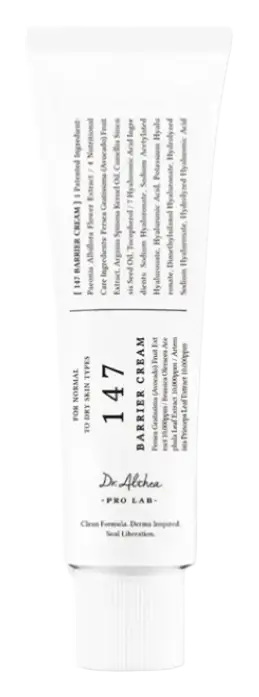
Dr. Althea 147 Barrier Cream
A popular moisturizer with 67 ingredients, including vitamin E, hyaluronic acid, and ceramides.
This barrier-repair moisturizer is formulated around Ceramide NP and Squalane to strengthen the skin barrier and hydrate skin.
Worth noting
Contains Pelargonium Graveolens Flower Oil, an EU-listed fragrance allergen.
We independently verify ingredients, backed by peer-reviewed research. Suggest an update.
What's inside
Ingredients List
Water
Skin ConditioningGlycerin
Humectant


Dipropylene Glycol
HumectantCetearyl Alcohol
Emollient




Caprylic/Capric Triglyceride
Masking
Methyl Trimethicone
Skin Conditioning
Hydrogenated Polydecene
Emollient1,2-Hexanediol
Skin Conditioning
Phenyl Trimethicone
Skin Conditioning
Vegetable Oil
Skin Conditioning
Dimethicone/Vinyl Dimethicone Crosspolymer
Skin Conditioning
Glyceryl Stearate Se
Emulsifying
Cetearyl Olivate
Palmitic Acid
Emollient
Sorbitan Olivate
Emulsifying
C12-16 Alcohols
EmollientBehenyl Alcohol
Emollient
Stearic Acid
Cleansing
Hydrogenated Lecithin
Emulsifying
Microcrystalline Cellulose
AbsorbentCetearyl Glucoside
Emulsifying
Laminaria Japonica Extract
Skin Protecting

Eclipta Prostrata Leaf Extract
Skin ConditioningButylene Glycol
Humectant
Ceramide NP
Skin Conditioning

Ethylhexylglycerin
Skin ConditioningC12-15 Alkyl Benzoate
AntimicrobialSqualane
Emollient
Ammonium Acryloyldimethyltaurate/Vp Copolymer
Panthenol
Skin Conditioning
Polyglyceryl-10 Myristate
Skin Conditioning
Glyceryl Polymethacrylate
Cellulose Gum
Emulsion StabilisingPelargonium Graveolens Flower Oil
Masking



Cholesterol
Emollient
Fructooligosaccharides
Humectant
Coptis Japonica Root Extract
Skin ConditioningDisodium EDTA
Beta-Glucan
Skin Conditioning
Sodium Hyaluronate
Humectant
Artemisia Princeps Leaf Extract
Skin ConditioningPersea Gratissima Fruit Extract
EmollientBrassica Oleracea Acephala Leaf Extract
HumectantCarnosine
Skin Conditioning
Hydrolyzed Hyaluronic Acid
Humectant
Methylpropanediol
SolventMaltodextrin
Absorbent
Hydrolyzed Gardenia Florida Extract
Antioxidant
Guaiazulene
Antimicrobial
Arginine
Masking
Carbomer
Emulsion StabilisingPhenoxyethanol
Preservative
Tocopherol
Antioxidant


Camellia Sinensis Seed Oil
Humectant
Argania Spinosa Kernel Oil
Emollient
Beta Vulgaris Root Extract
Skin ConditioningChamaecyparis Obtusa Leaf Extract
Skin ConditioningDimethylsilanol Hyaluronate
Humectant
Hydrolyzed Sodium Hyaluronate
Skin Conditioning
Potassium Hyaluronate
Skin ConditioningHyaluronic Acid
Humectant
Paeonia Albiflora Flower Extract
TonicSodium Hyaluronate Crosspolymer
Humectant
Hydroxypropyltrimonium Hyaluronate
Sodium Hyaluronate Dimethylsilanol
HumectantSodium Acetylated Hyaluronate
Humectant
Oligopeptide-1
Skin Conditioning

Water, Glycerin, Dipropylene Glycol, Cetearyl Alcohol, Caprylic/Capric Triglyceride, Methyl Trimethicone, Hydrogenated Polydecene, 1,2-Hexanediol, Phenyl Trimethicone, Vegetable Oil, Dimethicone/Vinyl Dimethicone Crosspolymer, Glyceryl Stearate Se, Cetearyl Olivate, Palmitic Acid, Sorbitan Olivate, C12-16 Alcohols, Behenyl Alcohol, Stearic Acid, Hydrogenated Lecithin, Microcrystalline Cellulose, Cetearyl Glucoside, Laminaria Japonica Extract, Eclipta Prostrata Leaf Extract, Butylene Glycol, Ceramide NP, Ethylhexylglycerin, C12-15 Alkyl Benzoate, Squalane, Ammonium Acryloyldimethyltaurate/Vp Copolymer, Panthenol, Polyglyceryl-10 Myristate, Glyceryl Polymethacrylate, Cellulose Gum, Pelargonium Graveolens Flower Oil, Cholesterol, Fructooligosaccharides, Coptis Japonica Root Extract, Disodium EDTA, Beta-Glucan, Sodium Hyaluronate, Artemisia Princeps Leaf Extract, Persea Gratissima Fruit Extract, Brassica Oleracea Acephala Leaf Extract, Carnosine, Hydrolyzed Hyaluronic Acid, Methylpropanediol, Maltodextrin, Hydrolyzed Gardenia Florida Extract, Guaiazulene, Arginine, Carbomer, Phenoxyethanol, Tocopherol, Camellia Sinensis Seed Oil, Argania Spinosa Kernel Oil, Beta Vulgaris Root Extract, Chamaecyparis Obtusa Leaf Extract, Dimethylsilanol Hyaluronate, Hydrolyzed Sodium Hyaluronate, Potassium Hyaluronate, Hyaluronic Acid, Paeonia Albiflora Flower Extract, Sodium Hyaluronate Crosspolymer, Hydroxypropyltrimonium Hyaluronate, Sodium Hyaluronate Dimethylsilanol, Sodium Acetylated Hyaluronate, Oligopeptide-1
Key Ingredients
Benefits
Concerns
Ingredients Explained
Water. It's the most common cosmetic ingredient of all. You'll usually see it at the top of ingredient lists, meaning that it makes up the largest part of the product.
So why is it so popular? Water most often acts as a solvent - this means that it helps dissolve other ingredients into the formulation.
You'll also recognize water as that liquid we all need to stay alive. If you see this, drink a glass of water. Remember to stay hydrated!
Learn more about WaterGlycerin (or glycerol) is a compound naturally found in your skin. It's a powerhouse humectant that pulls water into the stratum corneum.
Topically, glycerin does several things at once:
Your skin makes glycerin on its own (mostly from sebaceous oil breakdown) and shuttles it to your outermost layer of skin, or your epidermis, via aquaporin-3.
Aquaporin-3 is a transporter that is essential for normal skin hydration, elasticity, and repair. Interestingly, mice lacking in AQP3 have dry and less elastic skin that can be fully corrected with glycerin.
This ingredient is non-irritating, plays well with almost every ingredient, and works across all skin types. Typical use is anywhere between 3-10% but can go up to 79% in some leave-on products.
Just know very high concentrations (>40%) can feel tacky in low humidity.
Glycerin is the name for this ingredient in American English. British English uses Glycerol/Glycerine.
Learn more about GlycerinDipropylene Glycol is a synthetically created humectant, stabilizer, and solvent.
This ingredient helps:
Dipropylene glycol is technically an alcohol, but it belongs to the glycol family (often considered part of the ‘good’ alcohols). This means it is hydrating and gentle on skin unlike drying solvent alcohols like denatured alcohol.
As a masking agent, Dipropylene Glycol can be used to cover the smell of other ingredients. However, it does not have a scent.
Studies show Dipropylene Glycol is considered safe to use in skincare.
Learn more about Dipropylene GlycolCetearyl alcohol is a waxy mixture of two fatty alcohols: cetyl alcohol and stearyl alcohol. It is an emollient and emulsifier.
Despite having "alcohol" in its name, it has nothing to do with drying solvent alcohols; the FDA also allows "alcohol-free" products to contain fatty alcohols like this ingredient.
It plays several roles in a formula:
Typical use levels for this ingredient sit around 1-10% and the Cosmetic Ingredient Review Expert Panel has affirmed safety at concentrations up to 25% in leave-on products.
Multiple assessments have found it to be non-irritating and non-sensitizing to most people.
However, there have been some cases of allergic contact dermatitis in patients with chronically compromised skin barriers.
Cetearyl alcohol has a comedogenic rating of 2 and irritancy rating of 1. Both of these numbers come from the 1989 study that used rabbit ears; a "2" means mildly comedogenic and a "1" means low irritancy.
Here's the catch: rabbit skin is more sensitive than human skin and throws a lot of false positives. A 1996 reappraisal found that ingredients rated 1-2 in the rabbit ear tests are generally safe for humans.
Remember comedogenic ratings are unable to assess the entire formula of a product or how it will react on your skin. Just be sure to patch test if you are unsure about certain ingredients.
This ingredient is not fungal acne safe. Cetearyl alcohol is a fatty alcohol with chain lengths that fall within the range that Malassezia can metabolize.
A 2019 study has also observed Malassezia growth in the presence of this ingredient, confirming it to be not-fungal acne safe.
Learn more about Cetearyl AlcoholCaprylic/Capric Triglyceride (aka MCT Oil) is a lightweight emollient, solvent, and texture enhancer. It is considered a skin-softener by helping to prevent moisture loss.
Though it behaves like an oil, it is not technically one due to its chemical composition. One perk of this ingredient is that it is very stable, resistant to oxidation, and unlikely to go rancid.
In practice, that translates to a long shelf life and a consistently elegant skin feel.
While there is an assumption Caprylic Triglyceride can clog pores due to it being derived from coconut oil, there is no research supporting this. Just patch test if you have concerns.
Fractionated coconut oil and MCT Oil are both listed as Caprylic/Capric Triglyceride according to INCI. This is because INCI names are based on the ingredient’s final chemical composition and not its marketing name or source.
This ingredient is treated as the gold standard fungal acne safe oil. Even though it is coconut derived, the problematic lauric acid is stripped out.
This leaves just caprylic (C8) and capric (C10) acid. These chain lengths actually trend antifungal; a 2020 study found caprylic acid was enough to disrupt Malassezia furfur cell membrane, with a caprylic acid derivative damaging membrane structures at concentrations as low as 0.2%.
Learn more about Caprylic/Capric TriglycerideMethyl Trimethicone is a type of silicone. It is a solvent and emulsifier.
Solvents are used to keep ingredients together in a product. They can help dissolve ingredients to stable bases or help evenly distribute ingredients throughout the product.
Emulsifiers help stabilize a product. It does this by preventing certain ingredients from separating.
Methyl Trimethicone does not get absorbed into the skin.
Learn more about Methyl TrimethiconeHydrogenated Polydecene is a synthetic emollient. It forms a non-occlusive film on the skin's surface to provide a silky feel without being greasy.
In vivo studies in volunteers with atopic and dry skin showed no irritation or intolerance. The volunteers also saw a positive effect in dryness, scaling, and roughness after 28 days of use.
Concentrations up to 100% in guinea pig tests found it to be non-sensitizing and completely safe for use in cosmetics.
Learn more about Hydrogenated Polydecene1,2-Hexanediol is a synthetic liquid and another multi-functional powerhouse.
It is a:
- Humectant, drawing moisture into the skin
- Emollient, helping to soften skin
- Solvent, dispersing and stabilizing formulas
- Preservative booster, enhancing the antimicrobial activity of other preservatives
Phenyl Trimethicone is a silicon-based polymer. It is derived from silica.
Phenyl Trimethicone is used as an emollient and prevents products from foaming.
As an emollient, it helps trap moisture in the skin. It is considered an occlusive.
Learn more about Phenyl TrimethiconeVegetable oil is created from seeds or parts of plants.
The term "vegetable Oil" is an umbrella term. It can refer to a variety of vegetable oils and/or blends of: sunflower oil, soybean oil, olive oil, coconut oil, palm oil, and more.
This ingredient is an emollient. Emollients help soothe and soften the skin. They do this by creating a protective film on your skin. This barrier helps trap moisture and keeps your skin hydrated. Emollients may be effective at treating dry or itchy skin.
Due to the differences in vegetables, the benefits may vary.
Learn more about Vegetable OilThis ingredient is a silicone elastomer that works as a texture enhancer, adds a silky slip, and also helps absorb excess oil.
Because it's a large macromolecule that's insoluble in water and chemically inert, it's not expected to penetrate or be absorbed into skin.
Human patch tests with a facial lotion containing 1% of this ingredient found no sensitization.
Learn more about Dimethicone/Vinyl Dimethicone CrosspolymerGlyceryl Stearate Se is a self-emulsifying (SE) form of glyceryl stearate. Self-emusifying means this ingredient automatically blends with water. It is an emulsifier, emollient, and cleansing agent.
As an emulsifier, Glyceryl Stearate Se prevents ingredients such as oil and water from separating. It is also a surfactant, meaning it helps cleanse the skin. Surfactants help gather oil, dirt, and other pollutants so they may be rinsed away easily.
Emollients help your skin stay smooth and soft. It does so by creating a film on top of the skin that helps trap moisture in.
Learn more about Glyceryl Stearate SeCetearyl Olivate is a plant-derived emulsifier and texture enhancer. It helps keep the oil and water phases from separating so your formulas stay stable.
You'll likely see it combined with Sorbitan Olivate (together sold as the trade name Olivem 1000). This combination generates a liquid crystal structure that closely resemble the lipid organization of the stratum corneum.
These "skin-like" liquid crystals improve skin barrier integrity and promote the delivery of actives into the skin.
This ingredient is well-tolerated and has no significant sensitization data.
Because it is derived from the fatty acids in olive oil, this ingredient may not be fungal acne safe.
Learn more about Cetearyl OlivatePalmitic Acid is a fatty acid naturally found in our skin and in many plant and animal sources.
In cosmetics, it is usually derived from palm oil. It serves many purposes in skincare, acting as a cleanser, emollient, and emulsifier.
Interestingly, topically applied Palmitic Acid can be elongated into longer chain fatty acids and ceramides. A 2019 study found low levels of Palmitic Acid lead to slower development of cells, suggesting it plays a role in keeping your skin's renewal process on track.
The CIR (Cosmetic Ingredient Review) panel determined it safe as used in cosmetics at concentrations up to 13%. It is non-irritating and non-sensitizing in clinical studies.
The culprit behind fungal acne, the Malassezia yeast, feeds on fatty acids with carbon chain lengths between C11-C24. Palmitic Acid, at C16, falls right into that sweet spot.
In vitro studies have shown that Palmitic Acid is one of the fatty acids that induce rapid Malassezia growth in lab settings.
It's worth noting that what feeds yeast in a lab doesn't necessarily feed it on your face since formulation and your skin's chemistry play a bigger role.
Learn more about Palmitic AcidSorbitan Olivate is created from the fatty acids in olive oil and sorbitol.
This ingredient is an oil in water emulsifier. It helps stabilize a product by preventing oils and waters from separating. Sorbitan Olivate also helps hydrate the skin.
This ingredient is also known as part of Olivem 1000, with Cetearyl Olivate being the other part.
According to a manufacturer, this ingredient helps preserve the natural microbiome of skin. Having a healthy microbiome helps keep our skin healthy and protects against harmful bacteria.
Please note, having a healthy microbiome is different from fungal acne; a healthy microbiome includes small amounts of yeast that normally live on your skin without causing problems.
Fungal acne happens when one type of yeast (Malassezia) grows out of control. This is usually because it's feeding on certain oils or fatty acids. Due to the olive oil base, this ingredient may not be fungal acne safe.
Learn more about Sorbitan OlivateWe don't have a description for C12-16 Alcohols yet.
Behenyl Alcohol is a type of fatty alcohol (these are different from the drying, solvent alcohols).
Fatty Alcohols have hydrating properties and are most often used as an emollient or to thicken a product. They are usually derived from natural fats and oils; behenyl alcohol is derived from the fats of vegetable oils.
Emollients help keep your skin soft and hydrated by creating a film that traps moisture in.
In 2000, Behenyl Alcohol was approved by the US as medicine to reduce the duration of cold sores.
Learn more about Behenyl AlcoholStearic Acid is a fatty acid that is already found in your skin. It's one of the free fatty acids that works alongside ceramides and cholesterols to maintain your barrier.
In cosmetics, it is a multitasker:
Safety-wise, the CIR Expert Panel has concluded it to be safe in cosmetics when formulated to be non-irritating and non-sensitizing.
Free stearic acid is a C18 fatty acid that the Malassezia yeast can substrate, so this ingredient may not be fungal acne safe.
Learn more about Stearic AcidHydrogenated Lecithin is a more stable version of lecithin.
It's made by taking lecithin (a phospholipid commonly found in soybeans and egg yolks) and hydrogenating it. This just means the unsaturated fatty acids are turned into saturated ones so they don't go bad as easily.
This ingredient is an emollient, emulsifier, and penetration enhancer. As an emollient, it helps soften and hydrate skin by trapping moisture within. As an emulsifier, it prevents oil and water ingredients from separating.
Hydrogenated Lecithin can form tiny spherical structures made of phospholipid bilayers called liposomes. These liposomes are able to capture compounds inside their structure and deliver them through the skin barrier.
Because phospholipids are a natural component of our cell membranes, this ingredient is inherently compatible with skin.
A 2021 study found lecithin-based surfactants were less harsh and more tolerable comared to Sodium Lauryl Sulfate (SLS).
Learn more about Hydrogenated LecithinMicrocrystalline Cellulose is another name for refined wood pulp. It is used as an emulsifier and mattifying ingredient. As an emulsifier, it helps keep ingredients together.
Cetearyl Glucoside is a sugar-based emulsifier. It is usually made by combining cetearyl alcohol and glucose.
Belonging to the aklyl polyglucoside (APG) family, Cetearyl Glucoside has a sugar "head" that loves water and a fatty "tail" that loves oil. This means it can shuffle oil and water into a stable and smooth emulsion.
Typical use levels are between 1-5% and this ingredient is considered to be non-irritating by the CIR Expert Panel Review.
Once applied, your skin's glucoside hydrolases breaks it down to the parent fatty alcohol and glucose. This is why this ingredient may not be fungal acne safe.
Learn more about Cetearyl GlucosideLaminaria Japonica Extract comes from a kelp more commonly known as 'sweet kelp'. It is commonly eaten in Japan, Korea, and China.
Sweet kelp is a humectant and helps hydrate your skin. Humectants draw moisture from the air to your skin.
Studies show Laminaria Japonica has antioxidant compounds. Antioxidants may help with anti-aging. Kelp also contains magnesium and zinc, making it great for calming inflammation and redness.
Learn more about Laminaria Japonica ExtractEclipta Prostrata Leaf Extract comes from the false daisy plant. False daisy contains antioxidant compounds such as flavonoids.
One study found false daisy to absorb UVA and UVB radiation. However, this should not replace your sunscreen.
False daisy is used in both traditional medicines and foods throughout Southeast Asia and India.
Learn more about Eclipta Prostrata Leaf ExtractButylene Glycol (or BG) is used within cosmetic products for a few different reasons:
Overall, Butylene Glycol is a safe and well-rounded ingredient that works well with other ingredients.
Though this ingredient works well with most skin types, some people with sensitive skin may experience a reaction such as allergic rashes, closed comedones, or itchiness.
Learn more about Butylene GlycolCeramide NP (formerly known as Ceramide 3) is one of the skin's naturally occurring lipids.
Since ceramides are the major lipid components of the skin, they are crucial for maintaining skin barrier and hydration. Ceramide NP most closely mirrors the dominant kind in human skin amongst ceramide subtypes.
This ceramide works by slotting into gaps within the stratum corneum's lipid matrix to limit trans-epidermal water loss (TEWL) and shield the skin against external irritants.
A study with 312 patients found that using a ceramide-containing routine for 4 weeks reduced the severity of atopic dermatitis by over 61%.
Another clinical study in subjects aged 60 and older found that a ceramide body wash and moisturizer improved skin dryness and itchy skin in 15 days.
Overall, ceramides are considered non-irritating and safety tests have found little to no observable adverse effects from using this ingredient.
Ceramide NP is usually sourced from plants (like soybean or rice bran), or produced synthetically.
Learn more about Ceramide NPEthylhexylglycerin is created from glycerin. It is a multitasker ingredient that:
The CIR Expert Panel found minimal skin absorption or sensitization of any kind in a safety assessment. Though this ingredient is considered well-tolerated, a small number of cases of allergic dermatitis have been published since 2002. Just be sure to patch test if you are unsure.
Industry-reported use ranges from 8% in rinse-off products and 2% in leave-on formulations.
Learn more about EthylhexylglycerinC12-15 Alkyl Benzoate is a lightweight emollient made by combinig benzoic acid with fatty alcohols that are 12-15 carbons long.
In cosmetics, it plays several roles:
The Cosmetic Review Expert Panel has concluded the alkyl benzoate group to be safe as used in cosmetics; it wasn't found to be a skin irritant and unlikely to be absorbed due to its low water solubility.
This report recorded almost 1000 reported uses with concentrations up to 59% in leave-on products but your cosmetics will typically use 0.5-15% depending on the product.
It's often called a "SPF booster": this is because it keeps UV filters properly dissolved and evenly distributed to support a sunscreen's performance. It doesn't actually raise SPF on its own.
Overall, this ingredient is well tolerated.
This ingredient is fungal acne safe because it is an ester of benzoic acid.
Think of this ingredient as two parts stuck together: an oily part and an acid part. Malassezia only gets a meal when it can snip off a fatty acid to eat. With C12-15 Alkyl Benzoate, the acid part is benzoic acid, which isn't a fatty acid and which the yeast can't use as food.
Benzoic acid is actually used as a preservative to stop yeast from growing.
The oily part is a blend of C12-15 fatty alcohols but fatty alcohols in this size range can support only a little Malassezia growth (mostly for one species of Malassezia as well).
In the ingredient, those alcohols stay locked inside the molecule. The yeast can only reach them by snipping the benzoate bond, and that type of bond is harder for it to cut than a normal fatty bond.
So not much gets released. And whatever does get snipped comes packaged with benzoic acid, which discourages yeast growth.
Learn more about C12-15 Alkyl BenzoateSqualane is the hydrogenated and shelf-stable form of squalene (a lipid that naturally occurs in human sebum).
It is an emollient and skin conditioning agent that is able to integrate seamlessly into the skin's lipid barrier without clogging pores.
This is due to how structurally similar it is to what your skin already produces.
Though it is mostly an emollient that helps soften and hydrate skin, it also has some humectant and occlusive action. Humectants help the skin retain moisture while occlusives seal it in, making squalane a triple-threat moisturizer.
Research shows it has antioxidant capabilities that help protect against stressors like UV exposure, specifically UVA induced oxidative stress. This study also found that it supports collagen biosynthesis in human dermal fibroblasts.
No clinical study has reported significant adverse effects and irritation reactions are very rare from this ingredient (even at 100% concentration).
Overall, it's a fantastic ingredient for hydration and is suitable for all skin types.
This depends on the source. Squalane can be derived from both plants and animals. Most squalane used in skincare comes from plants.
Please note: the source of squalane is only known if disclosed by the brand. We recommend reaching out to the brand if you have any questions about their squalane.
Read more about squalene with an "e".
Though squalane is often called an oil, it’s technically not one. It is a hydrocarbon, meaning it is only made of carbon and hydrogen. True oils are triglycerides and made of fatty acids and glycerol.
The term “oil-free” isn’t regulated so companies can define it however they want. Some exclude all oils, while others just avoid mineral oil or comedogenic oils.
Squalane has a comedogenic rating of 1 from the original 1972 study that tested raw ingredients under occlusion on rabbit ears. This system is not standardized or peer-reviewed, and using the raw ingredients is very different from how diluted cosmetic formulations are used on human skin.
A comedogenic rating of 1 means it is "unlikely to clog pores" according to the original rating system.
The overall formula of a product matters more than the individual ingredients on whether or not it will cause clogged pores.
Learn more about SqualaneAmmonium Acryloyldimethyltaurate/Vp Copolymer is a synthetically created polymer. It's used as a film-forming agent and used to thicken the consistency of products.
Think of it as a supportive ingredient that helps your gel-creams feel silky, "cloud cream-like", and spread evenly without being greasy.
The Cosmetic Ingredient Review (CIR) Expert Panel evaluated it (along with 22 other acryloyldimethyltaurate polymers) and concluded it's:
Due to its large molecular size, it sits on the surface of skin rather than penetrating it.
Learn more about Ammonium Acryloyldimethyltaurate/Vp CopolymerPanthenol is a common ingredient that helps hydrate and soothe the skin. It is found naturally in our skin and hair.
There are two forms of panthenol: D and L.
D-panthenol is also known as dexpanthenol. Most cosmetics use dexpanthenol or a mixture of D and L-panthenol.
Panthenol is famous due to its ability to go deeper into the skin's layers. Using this ingredient has numerous pros (and no cons):
Like hyaluronic acid, panthenol is a humectant. Humectants are able to bind and hold large amounts of water to keep skin hydrated.
This ingredient works well for wound healing. It works by increasing tissue in the wound and helps close open wounds.
Once oxidized, panthenol converts to pantothenic acid. Panthothenic acid is found in all living cells.
This ingredient is also referred to as pro-vitamin B5.
Learn more about PanthenolPolyglyceryl-10 Myristate is a nonionic emulsifier and skin conditioner made from Polyglycerin-10 and Myristic Acid.
As a skin conditioning agent, this ingredient leaves skin feeling soft without a greasy finish. As an emulsifier, it helps stabilize oil-in-water emulsions.
You'll likely see this ingredient in "clean" formulations because it's considered a natural alternative to PEGs.
Patch testing at concentration 0.1-1% showed no reactions and this ingredient is considered to be well-tolerated across skin types.
Due to its myristic acid base, this ingredient may not be fungal acne safe.
Learn more about Polyglyceryl-10 MyristateThis is a synthetic polymer made by combining glycerin with polymethacrylic acid.
It is a non-drying, non-greasy moisturizer that helps enhance the feel and slip of formulations, helps stabilize emulsions, creates a film, and controls viscosity.
As a film former, it creates a light and flexible layer on the skin's surface. This helps lock in moisture without feeling heavy.
It's typically used at concentrations up to 1.9% in leave-on products. CIR has concluded that these ingredients are safe in cosmetics at current use levels.
Due to its large molecule size, it doesn't readily penetrate into skin and mostly just sits on the surface. A large UK-based patch test study of over 1,300 patients found that sensitization to related acrylate copolymers is rare.
Learn more about Glyceryl PolymethacrylateCellulose Gum is a water-soluble polymer that comes from cellulose. It is used to change the texture of a product and to help stabilize emulsions.
As an emulsifier, cellulose gum specifically thicken the texture of water-based products.
This ingredient is considered hypoallergenic and non-toxic. Cellulose Gum can be found in cosmetics, food, and other household goods such as paper products.
Learn more about Cellulose GumPelargonium Graveolens Flower Oil is the pressed oil of the Rose Geranium plant. It is volatile, meaning it evaporates off the skin.
Fragrant components of Rose Geranium include citronellol and geraniol. These may cause allergies and skin-sensitivity. We recommend speaking with a professional if you have any concerns.
The scent of Rose Geranium closely resembles traditional roses.
Learn more about Pelargonium Graveolens Flower OilCholesterol is a lipid that is naturally found in human skin and is one of the three key components of your skin barrier. In skincare, it is an emollient and barrier-repairing ingredient.
It works by fitting directly into the lipid layers of skin to help restore structure and reduce transepidermal water loss (TEWL).
This is a great ingredient for dry, compromised, or aging skin; our skin starts to produce less cholesterol with age.
Research shows cholesterol works best in combination with ceramides and fatty acids, the other two major components in your skin barrier.
Cholesterol is also a well-establish penetration enhancer and can help other actives absorb more effectively.
Cosmetic-grade cholesterol is usually derived from lanolin but plant and synthetic options also exist. We recommend reaching out to the brand if you have questions about their source of cholesterol.
Learn more about CholesterolFructooligosaccharides (FOS) are a type of prebiotic sugar with humectant and skin conditioning properties. As a humectant, they help attract and hold moisture in the skin.
FOS essentially acts as a food source for the "good" bacteria on your skin and make it harder for "bad" bacteria to thrive. A 2022 study using a reconstructured human skin model found that just 1% of FOS was enough to shift the bacteria balance in favor of beneficial species. This suggests it could help support a healthier skin microbiome over time.
This ingredient has a low sensitization risk and testing shows it does not classify as a skin irritant or sensitizer.
FOS are usually produced from sugar beets and can also be found in foods like bananas, garlic, and onions.
Learn more about FructooligosaccharidesCoptis Japonica Root Extract, also known as Japanese Goldthread, is a traditional East Asian herb. It is prized for its anti-inflammatory, antioxidant, and antimicrobial properties.
That’s not all - research in the International Journal of Cosmetic Science found that its active compound, berberine, may help reduce fat accumulation and slow down fat cell development.
This makes it a promising ingredient for slimming and anti-cellulite products!
Learn more about Coptis Japonica Root ExtractDisodium EDTA is a chelating agent. It grabs onto and deactivates metal ions that sneak into your products from water, packaging, or air.
This ingredient mainly works behind the scenes and helps with:
On top of that, this ingredient can counteract the effects of hard water by binding to the minerals in it.
One thing worth knowing is that Disodium EDTA has been shown to be a mild penetration enhancer. It can help other ingredients absorb into skin more effectively which can be a double-edged sword (great for actives, but can also make the active too strong if you have sensitive skin).
Clinical patch testing showed no significant skin irritation at typical use concentrations and minimal dermal absorption.
You'll most likely see this ingredient near the end of an ingredient list. It's typically found in concentrations less than 1%.
Learn more about Disodium EDTABeta-Glucan is a soluble polysaccharide (a chain of glucose sugars) sourced from the cells walls of oats, baker's yeast, mushrooms, and seaweed.
It's a rare ingredient that pulls double-duty as a heavy-duty hydrator and skin-soothing repair agent.
On the surface, it acts as a humectant that holds water in place and reduces moisture loss for a plumper, smoother feel, while its anti-inflammatory and antioxidant properties make it a great pick for calming redness or sensitive skin
The more interesting story is underneath:
Despite its large molecular size, oat beta-glucan has been shown to penetrate the epidermis and reach the dermis by slipping between skin cells. Here, it interacts with fibroblasts and macrophages to nudge collagen synthesis and support wound repair.
A small 2005 split-face clinical study of 27 subjects found topical beta-glucan produced measurable reductions in wrinkle depth, height, and roughness after 8 weeks of use.
It is worth noting the trial was small and the penetration testing used frozen, irradiated skin so the anti-aging data is encouraging rather than definitive.
This ingredient gets along with pretty much everything and is typically used around 0.1-1%.
Fungal acne: This ingredient is not a food source for the Malassezia yeast because it is a glucose polysaccharide with no fatty acid or ester component.
Learn more about Beta-GlucanSodium Hyaluronate is the salt form of hyaluronic acid. It is a long sugar chain that is naturally found in your skin, joints, and connective tissue that maintains hydration and elasticity.
In skincare, it works as a humectant. It pulls water from the environment and deeper layers of skin and binds it to the surface.
Interestingly, the size of the molecule affects its behavior:
Some clinical evidence links low molecular weight versions to improved wrinkle depth, elasticity, anti-inflammatory effects, and barrier repair.
Many serums use a blend of both weights so you can get surface hydration plus longer-lasting and deeper effects.
You'll typically see concentrations between 0.1-2% for this ingredient.
Learn more about Sodium HyaluronateThis leaf extract comes from the Asian mugwort. It has antioxidant and anti-inflammatory properties.
Fun fact: This flower is part of the sunflower family.
Persea Gratissima Fruit Extract comes from the avocado.
Avocados are rich in fatty acids. About 67% of these fatty acids is made up of oleic acid. Palmitic acid and linoleic acid are also present.
Besides fatty acids, avocados also have B vitamins, vitamin K, vitamin C, vitamin E, and potassium.
Learn more about Persea Gratissima Fruit ExtractYou might know this ingredient as Kale. Besides being a superfood, kale has many benefits in skincare.
Kale is rich in antioxidants. Antioxidants help fight free-radical molecules. These unstable molecules may damage your skin cells. By helping to stabilize them, antioxidants may help with anti-aging. Beta-carotene and vitamin C are two types of antioxidants found in kale.
Kale leaf extract also helps hydrate the skin as a humectant. Kale is rich in omega-3 and omega-6 fatty acids that help soothe and hydrate skin. Studies show Brassica Oleracea Acephala Leaf Extract is effective at calming inflammation and treating inflammatory skin diseases.
Besides Vitamin C, Kale is also rich in vitamin A and vitamin K.
Learn more about Brassica Oleracea Acephala Leaf ExtractCarnosine is a dipeptide made from two amino acids.
This ingredient helps:
Glycation is the process of sugars binding to and damaging proteins. Too much sugar in our skin can lead to damaged collagen, contributing to factors of aging.
Carnosine is water-soluble and is not able to travel deeper layers of skin. This leads to some doubt about whether it can boost collagen in skin, since collagen is located in the deeper layers of skin.
Fun fact: Carnosine can be naturally found in our muscles and brain.
Learn more about CarnosineHydrolyzed Hyaluronic Acid is hyaluronic acid (HA) that is broken down into lower molecular weight fragments.
It's a humectant that pulls and holds water in the skin to help with hydration, plumpness, and reduce transepidermal water loss.
Because hydrolyzed hyaluronic acid is smaller in size, it can slip past your outermost layer of skin more easily than full-sized HA.
Most formulations will combine all sizes to get the best of both worlds.
Typical usage levels range from 0.01-1%. Any percentage higher than 2% might become goopy and tacky.
Learn more about Hydrolyzed Hyaluronic AcidMethylpropanediol is a synthetic solvent and humectant.
As a solvent, it helps dissolve other ingredients, helping to evenly distribute ingredients throughout the product. This ingredient has also been shown to have antimicrobial properties which makes it a preservative booster.
Methylpropanediol is able to add a bit of moisture to the skin. It also helps other ingredients be better absorbed into the skin, such as salicylic acid.
Learn more about MethylpropanediolMaltodextrin is a plant-derived carbohydrate made by breaking down starch (usually from corn, potato, or rice). In cosmetic formulas, it's a multitasking absorbent, emulsion stabilizer, and skin conditioner.
This ingredient is mostly used to stabilize emulsions and improve the powdery, non-greasy feel of products (like dry shampoos).
Safety-wise, this ingredient is pretty solid; it's even recognized as a food additive. Both animal and clinical studies found no adverse effects at the levels used in cosmetics.
Industry data shows this ingredient is used up to 45.7% in spray products and up to 33% in powder products.
Learn more about MaltodextrinThis ingredient is the hydrolyzed form of Gardenia florida, a shrub native to East Asia. It has antioxidant properties because the plant is rich in polyphenolic compounds like catechin, rutin, quercetin, and gallic acid.
Lab studies confirm that gardenia extracts demonstrate free-radical scavenging activity and a peer-reviewed study showing gardenia fruit extract can calm UV-triggered skin inflammation.
Guaiazulene is a fragrance.
Arginine is a semi-essential amino acid. This just means our bodies can product a bit on its own, but sometimes needs a little boost from food sources.
It is a part of your skin's natural moisturizing factor (NMF), or the water-loving molecules in your outermost layer of skin (stratum corneum) that keeps everything hydrated and happy.
Here's an interesting thing about Arginine: your skin converts it into urea through the Krebs-Henseleit urea cycle. Urea is one of the most effective humectants your skin naturally produces.
A clinical study showed applying 2.5% arginine hydrochloride to atopic dermatitis skin showed significant urea levels in the stratum corneum and improved moisture in just four weeks.
Arginine is also a precursor to nitric oxide; nitric oxide improves microcirculation and supports wound healing and collagen synthesis.
One study found that an amino acid complex containing Arginine reduced skin irritation, improved hydration, and accelerated skin repair in clinical / in-vivo studies.
Arginine itself is an amino acid and not a fatty acid, oil, or ester. On its own, it's not a direct food source for Malassezia, or the yeast that causes fungal acne.
Learn more about ArginineCarbomer is a synthetic thickening and gelling agent. It's basically the ingredient that gives a lot of serums, gels, creams, and sunscreens their smooth, non-sticky texture.
Although legally permitted at very high levels, carbomers are normally used at concentrations below 1%.
It also needs to be neutralized to actually thicken, and because it is a large molecule, it doesn't really penetrate the skin barrier.
Allergy-wise, the risk is very low. Clinical studies show carbomers have low potential for skin irritation/sensitization even at concentrations up to 100%.
A 2024 UK study patch-tested 1,302 patients and found true allergy to the parent group of carbomer to be rare with no confirmed relevant reactions.
Learn more about CarbomerPhenoxyethanol is one of the most widely used preservatives in skincare (and for good reason!).
It has a large spectrum of antimicrobial activity and especially effective bacteria, yeast, and mold while only having a weak effect on your skin's natural microbiome.
On a cellular level, it disrupts the cell membranes of microbes by poking holes that make the cell leak. This shuts down the chemical reactions the microbe needs to make energy so it can no longer survive.
Another perk of this ingredient is that it stays functional across a wide pH range (3-10).
You'll often see it paired with boosters like Ethylhexylglycerin; one study showed that a 1:9 ratio of Ethylhexylglycerin to Phenoxyethanol damages bacterial membranes as effectively as doubling the Phenoxyethanol concentration on its own.
Typical use concentrations range from 0.3-1% depending on the formula, and this ingredient is capped at 1% int the EU.
Safety-wise, the fear mongering does not hold up to the evidence. The EU's Scientific Committee on Consumer Safety and FDA consider it safe as a preservative at up to 1%, including for children of all ages.
Adverse systemic effects only showed up in animal studies at exposures roughly 200x higher than what people get from cosmetics. And despite its very widespread use, this ingredient is a rare sensitizer and allergic reactions are uncommon.
Learn more about PhenoxyethanolTocopherol is a fat-soluble antioxidant known as Vitamin E.
You'll find this ingredient in the vast majority of skincare (for good reason). It works to neutralize free radicals, or unstable molecules generated by UV exposure, pollution, and other environmental stressors, before they can cause oxidative damage to your skin cells.
Topically applied tocopherol has been shown to protect against UV damage by ramping up the skin's own natural defense enzymes.
It also acts as a skin conditioning agent; some studies show that regular topical use can improve the skin's water-binding capacity over 2-4 weeks.
This ingredient is especially loved for being a team player. When combined with Vitamin C, the photoprotective effect of both ingredients roughly doubles and the combo also helps reduce UV-induced DNA damage.
This ingredient has some brightening potential but it's more of a prevention ingredient than spot-fader. Cell studies show it can slow down melanin production but it's worth noting that it's not the most powerful brightener out there.
In formulations, it also serves as a stabilizer that helps protect other oxidation-prone ingredients from degrading.
Concentrations usually range from 0.1-1% in most leave-on products.
Learn more about TocopherolCamellia Sinensis Seed Oil is the oil expressed from the seeds from the tea plant. This is the same plant we get green, black, and oolong tea from.
Camellia Sinensis Seed Oil is rich in oleic acid. This makes it an effective moisturizer. By drawing moisture to the skin, Camellia Oleifera Seed Oil helps keep your skin hydrated.
Other components of Camellia Sinensis Seed Oil includes Vitamin E and polyphenols. These are antioxidants that may help slow down the signs of aging. Antioxidants help fight free-radicals, or unstable molecules that can damage our skin cells.
Camellia Sinensis Seed Oil also has anti-inflammatory properties.
The seed oil comes from the dried kernels of the plant.
Learn more about Camellia Sinensis Seed OilYou may know this ingredient as argan oil. It has emollient and skin conditioning properties that help soften skin and reinforce the lipid barrier.
The fatty acid profile of argan oil is roughly 45-55% oleic acid, 28-36% linoleic acid, 10-15% palmitic acid, and 5-7% stearic acid. It also contains vitamin E, sterols, squalene, and polyphenols like ferulic acid.
Two clinical studies in postmenopausal women found that applying argan oil for 60 days significantly improved skin elasticity and moisturization (reduced transepidermal water loss and increased epidermal water content).
Since it is high in oleic and linoleic acid, this ingredient may not be fungal acne safe. Both of these fall in the C11-C24 range that Malassezia yeast can metabolize.
Learn more about Argania Spinosa Kernel OilBeta Vulgaris Root Extract comes from the beet root plant. Beet Root has high Vitamin C content.
Beet roots also contain antioxidants. Antioxidants help fight free-radicals. Free-radicals are molecules that may damage your skin cells, such as pollution.
Beet root has many benefits when eaten. More research is needed on applying beetroot in skincare.
Beet Root is used to add pink/red color.
Learn more about Beta Vulgaris Root ExtractThis ingredient comes from the leaves of the Japanese cypress tree that is also called Hinoki. The leaves are rich in flavonoids with quercitrin being one of its key actives.
A 2023 study tested a 70% ethanol extract on UVA-stressed, collagen-producing skin cells. Across multiple antioxidant tests, this extract protected skin from free radicals at meaningful rates.
And the coolest part? At 1000 µg/mL, it blocked two enzymes (collagenase and elastase) almost as well as vitamin C did at the same dose. Collagenase and elastase are the enzymes that break down your skin's collagen and elastin over time.
The same study found this ingredient lowered skin-breakdown enzymes and inflammation signals while bumping up collagen production in UV-stressed cells.
A 2024 follow-up tested a fermented version (fermented with mushroom) and it calmed down several key inflammation markers in irritated immune cells. So besides anti-aging, this ingredient can also help soothe skin.
Most of the data right now is still at the cell-culture stage rather than from human clinical trials. However, there's no harm in adding this ingredient to your routine.
Just be sure to patch test if you have a history of sensitivity toward botanical extracts.
Learn more about Chamaecyparis Obtusa Leaf ExtractDimethylsilanol Hyaluronate is a type of hyaluronic acid.
This ingredient is created by putting sodium hyaluronate through hydrolysis.
You might know this as 'mini' or 'ultra low-molecular weight' hyaluronic acid. The small molecule size means it is able to travel deeper in the skin.
According to studies, low molecular-weight hyaluronic acid can:
One study from 2011 found ultra-low weight HA to show pro-inflammatory properties. Another study from 2022 found it to downregulate UV-B induced inflammation.
Hydrolysis is a process of changing a molecule using water or enzymes.
This ingredient is water-soluble.
Learn more about Hydrolyzed Sodium HyaluronatePotassium hyaluronate (PH) is a salt form of hyaluronic acid and has similar skin hydrating benefits.
Similar to hyaluronic acid, PH is able to draw and hold moisture to your skin. This helps keep skin soft and hydrated.
Fun fact: PH is used in eye drops and injectable treatments for joint disorders. It has lubricating and tissue-repair properties.
Learn more about Potassium HyaluronateHyaluronic acid (HA) is a glycosaminoglycan (basically a long sugar chain) that your skin already makes on its own. In your skin, HA lives in the extracellular matrix and acts as the body's moisture reservoir.
Topically, HA is a humectant that binds water and helps skin look more plump, smooth, and hydrated.
The only catch is that HA isn't a single thing; it actually comes in a wide range of molecular weights (~50 - 2,000+ kDA) and size matters.
Some clinical evidence links low molecular weight versions to improved wrinkle depth, elasticity, anti-inflammatory effects, and barrier repair.
This is why the best HA serums blend the two sizes together so you get the best of both worlds.
The majority of cosmetic HA is produced by bacterial fermentation, typically using Streptococcus or Bacillus strains. Typical use levels in skincare sit around 0.1-2%.
A clinical study using a 0.2% low-molecular weight HA gel showed improvement in facial seborrheic dermatitis with excellent tolerance.
These are some other common types of Hyaluronic Acid:
Learn more about Hyaluronic AcidWe don't have a description for Paeonia Albiflora Flower Extract yet.
Sodium Hyaluronate Crosspolymer is a crosslinked version of sodium hyaluronate. This just means it's linked into a 3D mesh network that lets it be more stable and sit on skin as a cohesive, gel-like film rather than sinking into skin.
A 2016 human skin study found crosslinked HA increased epidermal water content by 7.6% over the control group and reduced transepidermal water loss by 27.8%.
A follow-up clinical trial found that a topical crosslinked HA serum applied after fillers, microneedling, or chemical peels was well-tolerated and enhanced skin quality at 14 / 28 days.
More recent research suggests that concentrations as low as 0.03% can act as a penetration enhancer for other skincare actives.
Learn more about Sodium Hyaluronate CrosspolymerHydroxypropyltrimonium Hyaluronate is a positively charged version of hyaluronic acid.
This small change does a lot in a formula:
Regular hyaluronic acid carries a negative charge and so does the surface of your skin. This means the two repel each other and hyaluronic acid can be washed away easily. The positive charge here does the opposite: it makes the ingredient cling to your skin (also called "substantivity") so it keeps hydrating even in rinse-off products where it lays down a light, moisture-holding film.
The research backs this up too; a 2025 clinical study on a shower gel containing 0.1% positively charged hyaluronic acid increased skin hydration by 6.6% versus the baseline and 11.1% versus the placebo. This was measured 6 hours after 1 minute of contact and rinse, and on volunteers with very dry skin.
The same team's lab work showed it adhered to skin far better than unmodified hyaluronic acid (+107% vs. low molecular weight, +23% versus high molecular weight). They also found it increased two proteins tied to skin hydration, aquaporin-3 by 16% and filaggrin by 35%.
A separate 2024 study reached a similar conclusion and credited the hydrating benefits to its film-forming properties.
Both studies used the ingredient at 0.1% which also matches how much it usually shows up in products (at fractions of a percent).
One honesty note worth keeping in mind: the published research comes from the company that manufactures the ingredient so independent data would strengthen the picture. However, the results are consistent and the mechanism makes sense.
As a Hyaluronic Acid derivative, it has a well-tolerated profile and suits most skin types.
Learn more about Hydroxypropyltrimonium HyaluronateWe don't have a description for Sodium Hyaluronate Dimethylsilanol yet.
Sodium Acetylated Hyaluronate is a type of Hyaluronic Acid.
Hyaluronic Acids help moisturize, soothe, and protect the skin.
Read about common types of Hyaluronic Acid here:
Learn more about Sodium Acetylated HyaluronateOligopeptide-1 is another name for Epidermal Growth Factor (EGF). In a formula, EGF works as a signaling ingredient.
EGF binds to receptors on your skin cells and tells keratinocytes/fibroblasts to divide, move, and rebuild the skin's support structure.
A 2012 open-label study on a barley-derived EGF serum reported statistically significant improvements in fine-lines, skin texture, pore size, and uneven skin tone, with changes showing up within the first month of 2x/daily use.
And a 2023 review found generally positive but modest results for growth factor products while pointing out that most trials are small, often industry-funded, and rarely test EGF on its own.
So, a fair summary of this ingredient would be "promising with real mechanistic backing, but not yet large-scale proof".
Concentration-wise, EGF is biologically active at very tiny amounts so finished products use it at low levels (think parts per million).
Raw material supplies usually sell a pre-diluted EGF solution and recommend adding roughly 1-5% of that solution to a formula.
Another practical catch: EGF is a fragile protein so it reacts badly to heat and the wrong pH. This just means it relies heavily on good packaging and a solid delivery system to stay active in a bottle.
Oligopeptide-1 and Sh-Oligopeptide-1. The "sh-" prefix just means "synthetic human" and it tells you that it's the lab grown version.
Learn more about Oligopeptide-1Reviews
Recent searches
Search reviews by skin type, ingredient, or keyword.
Where it's from
Dr. Althea is a Korean brand

Often compared with

We're dedicated to providing you with the most up-to-date and science-backed ingredient info out there.
The data we've presented on this page has been verified by a member of the SkinSort Team.
Read more about us· Updated July 9, 2025 • Added by Rubi_yihi


