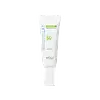
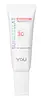
Y.O.U Sunbrella Pro Acnecare Shield Sunscreen SPF 50+ PA++++ Versus Y.O.U Sunbrella Pro Gentlecare Physical Sunscreen SPF 30+
This chemical sunscreen covers the full UV range and blocks ~98% of UVB at SPF 50.
This mineral sunscreen covers the full UV range and blocks ~97% of UVB at SPF 30.

What's inside
What's inside
 Key Ingredients
Benefits
Concerns
Ingredients Side-by-side
Water
Skin ConditioningPropylene Glycol
Humectant


Ethylhexyl Methoxycinnamate
UV Absorber


Propanediol
Solvent
Diethylamino Hydroxybenzoyl Hexyl Benzoate
UV Filter
Dimethicone/Vinyl Dimethicone Crosspolymer
Skin Conditioning
Butylene Glycol
Humectant
Silica
Abrasive


Phenoxyethanol
Preservative
Acrylates/C10-30 Alkyl Acrylate Crosspolymer
Emulsion StabilisingHydroxyacetophenone
Antioxidant
Aminomethyl Propanol
BufferingSorbitan Stearate
Emulsifying
Magnesium Aluminum Silicate
Absorbent
Dihydroxypropyl Arginine Hcl
HumectantHydrogenated Lecithin
Emulsifying
PEG-9 Dimethicone
Skin Conditioning
Cetearyl Methicone
Skin Conditioning
Tridecane
Perfuming

Undecane
EmollientCaprylyl Methicone
Skin Conditioning
Steareth-21
CleansingCaprylyl Glycol
Emollient
Parfum
Masking
Disodium EDTA
ChelatingEthylhexylglycerin
Skin ConditioningSodium Surfactin
CleansingPhytosterols
Skin Conditioning
Sucrose Cocoate
Emulsifying

Sodium Benzoate
Masking
Zinc PCA
Humectant


Butyl Methoxydibenzoylmethane
UV Absorber
Ectoin
Skin Conditioning


Glycerin
Humectant
Glucosylrutin
Antioxidant
Polyester-7
Skin ConditioningPEG-60 Hydrogenated Castor Oil
Emulsifying
Neopentyl Glycol Diheptanoate
EmollientZea Mays Starch
Absorbent
Portulaca Oleracea Extract
Skin Conditioning
Cocamidopropyl Dimethylamine
Emulsifying
Hydrolyzed Corn Starch
HumectantHydrolyzed Corn Starch Octenylsuccinate
AbsorbentIsoquercitrin
Antioxidant
Scutellaria Baicalensis Root Extract
Astringent
O-Cymen-5-Ol
Antimicrobial
Salicylic Acid
Masking


Butyrospermum Parkii Butter
Skin Conditioning

Hamamelis Virginiana Extract
Antiseborrhoeic
Buddleja Officinalis Flower Extract
UV FilterPhenylethyl Resorcinol
Antioxidant
Ceramide NP
Skin Conditioning
1,2-Hexanediol
Skin Conditioning
Lactic Acid
Buffering
10-Hydroxydecanoic Acid
Skin ConditioningXanthan Gum
EmulsifyingHydrated Silica
Abrasive
Palmitoyl Tripeptide-5
Skin Conditioning
Madecassoside
Antioxidant
Asiaticoside
Antioxidant
Ceramide As
Skin Conditioning
Ceramide Ns
Skin Conditioning
Glucose
Humectant
Asiatic Acid
Skin Conditioning
Madecassic Acid
Skin Conditioning
Sodium Hyaluronate
Humectant
Chondrus Crispus Extract
Skin Conditioning
Hydroxypropyltrimonium Hyaluronate
Hydrolyzed Hyaluronic Acid
Humectant
Sodium Acetylated Hyaluronate
Humectant
Hyaluronic Acid
Humectant
Hydrolyzed Sodium Hyaluronate
Skin Conditioning
Sodium Hyaluronate Crosspolymer
Humectant
Potassium Hyaluronate
Skin ConditioningCeramide AP
Skin Conditioning
Ceramide EOP
Skin Conditioning
Water, Propylene Glycol, Ethylhexyl Methoxycinnamate, Propanediol, Diethylamino Hydroxybenzoyl Hexyl Benzoate, Dimethicone/Vinyl Dimethicone Crosspolymer, Butylene Glycol, Silica, Phenoxyethanol, Acrylates/C10-30 Alkyl Acrylate Crosspolymer, Hydroxyacetophenone, Aminomethyl Propanol, Sorbitan Stearate, Magnesium Aluminum Silicate, Dihydroxypropyl Arginine Hcl, Hydrogenated Lecithin, PEG-9 Dimethicone, Cetearyl Methicone, Tridecane, Undecane, Caprylyl Methicone, Steareth-21, Caprylyl Glycol, Parfum, Disodium EDTA, Ethylhexylglycerin, Sodium Surfactin, Phytosterols, Sucrose Cocoate, Sodium Benzoate, Zinc PCA, Butyl Methoxydibenzoylmethane, Ectoin, Glycerin, Glucosylrutin, Polyester-7, PEG-60 Hydrogenated Castor Oil, Neopentyl Glycol Diheptanoate, Zea Mays Starch, Portulaca Oleracea Extract, Cocamidopropyl Dimethylamine, Hydrolyzed Corn Starch, Hydrolyzed Corn Starch Octenylsuccinate, Isoquercitrin, Scutellaria Baicalensis Root Extract, O-Cymen-5-Ol, Salicylic Acid, Butyrospermum Parkii Butter, Hamamelis Virginiana Extract, Buddleja Officinalis Flower Extract, Phenylethyl Resorcinol, Ceramide NP, 1,2-Hexanediol, Lactic Acid, 10-Hydroxydecanoic Acid, Xanthan Gum, Hydrated Silica, Palmitoyl Tripeptide-5, Madecassoside, Asiaticoside, Ceramide As, Ceramide Ns, Glucose, Asiatic Acid, Madecassic Acid, Sodium Hyaluronate, Chondrus Crispus Extract, Hydroxypropyltrimonium Hyaluronate, Hydrolyzed Hyaluronic Acid, Sodium Acetylated Hyaluronate, Hyaluronic Acid, Hydrolyzed Sodium Hyaluronate, Sodium Hyaluronate Crosspolymer, Potassium Hyaluronate, Ceramide AP, Ceramide EOP
Water
Skin ConditioningCyclopentasiloxane
Emollient
Zinc Oxide
Cosmetic Colorant
Isononyl Isononanoate
EmollientButylene Glycol
Humectant
Dicaprylyl Carbonate
EmollientPEG-10 Dimethicone
Skin Conditioning
Methyl Methacrylate Crosspolymer
Titanium Dioxide
Cosmetic Colorant
Cetyl PEG/PPG-10/1 Dimethicone
Emulsifying
Magnesium Sulfate
Dimethicone/Vinyl Dimethicone Crosspolymer
Skin Conditioning
Hexyl Laurate
Emollient
Hydroxyacetophenone
Antioxidant
Disteardimonium Hectorite
StabilisingPolyglyceryl-4 Isostearate
Emulsifying
Triethoxycaprylylsilane
Phenoxyethanol
Preservative
Stearic Acid
Cleansing
Alumina
Abrasive
Centella Asiatica Extract
Cleansing
Tocopherol
Antioxidant
Glycyrrhiza Glabra Root Extract
Bleaching
Scutellaria Baicalensis Root Extract
Astringent
Polygonum Cuspidatum Root Extract
Antioxidant
Camellia Sinensis Leaf Extract
Antimicrobial
Rosmarinus Officinalis Leaf Extract
AntimicrobialChamomilla Recutita Flower Extract
Masking
Ectoin
Skin Conditioning
Sodium Hyaluronate
Humectant
Dipotassium Glycyrrhizate
Humectant
Polyester-7
Skin ConditioningPropanediol
Solvent
Neopentyl Glycol Diheptanoate
EmollientPortulaca Oleracea Extract
Skin Conditioning
Glycerin
Humectant
Buddleja Officinalis Flower Extract
UV FilterMethylpropanediol
SolventPropylene Glycol
Humectant
Ceramide NP
Skin Conditioning
Ceramide EOP
Skin Conditioning
Phenylethyl Resorcinol
Antioxidant
Potassium Sorbate
Preservative
1,2-Hexanediol
Skin Conditioning
Silica
Abrasive
Water, Cyclopentasiloxane, Zinc Oxide, Isononyl Isononanoate, Butylene Glycol, Dicaprylyl Carbonate, PEG-10 Dimethicone, Methyl Methacrylate Crosspolymer, Titanium Dioxide, Cetyl PEG/PPG-10/1 Dimethicone, Magnesium Sulfate, Dimethicone/Vinyl Dimethicone Crosspolymer, Hexyl Laurate, Hydroxyacetophenone, Disteardimonium Hectorite, Polyglyceryl-4 Isostearate, Triethoxycaprylylsilane, Phenoxyethanol, Stearic Acid, Alumina, Centella Asiatica Extract, Tocopherol, Glycyrrhiza Glabra Root Extract, Scutellaria Baicalensis Root Extract, Polygonum Cuspidatum Root Extract, Camellia Sinensis Leaf Extract, Rosmarinus Officinalis Leaf Extract, Chamomilla Recutita Flower Extract, Ectoin, Sodium Hyaluronate, Dipotassium Glycyrrhizate, Polyester-7, Propanediol, Neopentyl Glycol Diheptanoate, Portulaca Oleracea Extract, Glycerin, Buddleja Officinalis Flower Extract, Methylpropanediol, Propylene Glycol, Ceramide NP, Ceramide EOP, Phenylethyl Resorcinol, Potassium Sorbate, 1,2-Hexanediol, Silica
Reviews
Ingredients Explained
These ingredients are found in both products.
Ingredients higher up in an ingredient list are typically present in a larger amount.
1,2-Hexanediol is a synthetic liquid and another multi-functional powerhouse.
It is a:
- Humectant, drawing moisture into the skin
- Emollient, helping to soften skin
- Solvent, dispersing and stabilizing formulas
- Preservative booster, enhancing the antimicrobial activity of other preservatives
This ingredient is derived from a shrub native to central and southern China.
According to a manufacturer, this ingredient is rich in polyphenols that provide strong antioxidant protection against UV and blue light damage.
Fun fact: This flower is traditionally used in Chinese and Korean medicine.
Learn more about Buddleja Officinalis Flower ExtractButylene Glycol (or BG) is used within cosmetic products for a few different reasons:
Overall, Butylene Glycol is a safe and well-rounded ingredient that works well with other ingredients.
Though this ingredient works well with most skin types, some people with sensitive skin may experience a reaction such as allergic rashes, closed comedones, or itchiness.
Learn more about Butylene GlycolCeramide EOP is formally known as Ceramide 1.
It is naturally found in skin and part of the intercellular "mortar" holding everything together in your outermost layer.
EOP stands for a linked Ester fatty acid, a linked Omega hydroxy fatty acid, and the Phytosphingosine base.
What makes Ceramide EOP special is its ultra-long fatty acid chain; this unique structure allows it to bridge the lipid layers in your skin barrier to prevent water loss (something no other ceramide can do).
Low levels of Ceramide EOP have been found in people with eczema and psoriasis.
Using it together with other ceramides, cholesterol, and linoleic acid have been shown to meaningfully improve hydration and reduce water loss.
In one clinical study, a regimen using Ceramide EOP, NP, and AP led to significant symptom improvements in patients with eczema, psoriasis, and dry skin in just 4 weeks.
You'll usually see concentrations between 0.1-0.5% in formulations. Overall, this is a well-tolerated and safe ingredient for cosmetic use.
Learn more about Ceramide EOPCeramide NP (formerly known as Ceramide 3) is one of the skin's naturally occurring lipids.
Since ceramides are the major lipid components of the skin, they are crucial for maintaining skin barrier and hydration. Ceramide NP most closely mirrors the dominant kind in human skin amongst ceramide subtypes.
This ceramide works by slotting into gaps within the stratum corneum's lipid matrix to limit trans-epidermal water loss (TEWL) and shield the skin against external irritants.
A study with 312 patients found that using a ceramide-containing routine for 4 weeks reduced the severity of atopic dermatitis by over 61%.
Another clinical study in subjects aged 60 and older found that a ceramide body wash and moisturizer improved skin dryness and itchy skin in 15 days.
Overall, ceramides are considered non-irritating and safety tests have found little to no observable adverse effects from using this ingredient.
Ceramide NP is usually sourced from plants (like soybean or rice bran), or produced synthetically.
Learn more about Ceramide NPThis ingredient is a silicone elastomer that works as a texture enhancer, adds a silky slip, and also helps absorb excess oil.
Because it's a large macromolecule that's insoluble in water and chemically inert, it's not expected to penetrate or be absorbed into skin.
Human patch tests with a facial lotion containing 1% of this ingredient found no sensitization.
Learn more about Dimethicone/Vinyl Dimethicone CrosspolymerEctoin is a compound found naturally in some species of bacteria. It can be synthetically created for skincare use.
This ingredient is an osmolyte; Osmolytes help organisms survive osmotic shock (it protects them from extreme conditions). It does this by influencing the properties of biological fluids within cells.
When applied to the skin, ectoin helps bind water molecules to protect our skin. The water forms a sort of armor for the parts of our skin cells, enzymes, proteins, and more.
Besides this, ectoin has many uses in skincare:
A study from 2004 found ectoin to counteract the damage from UV-A exposure at different cell levels. It has also been shown to protect skin against both UV-A, UV-B rays, infrared light, and visible light.
Studies show ectoin to have dual-action pollution protection: first, it protects our skin from further pollution damage. Second, it helps repair damage from pollution.
In fact, ectoin has been shown to help with:
Fun fact: In the EU, ectoin is used in inhalation medication as an anti-pollution ingredient.
Ectoin is a highly stable ingredient. It has a wide pH range of 1-9. Light, oxygen, and temperature do not affect this ingredient.
The chemical name for this ingredient is Tetrahydromethylpyrimidine Carboxylic Acid.
Learn more about EctoinGlycerin (or glycerol) is a compound naturally found in your skin. It's a powerhouse humectant that pulls water into the stratum corneum.
Topically, glycerin does several things at once:
Your skin makes glycerin on its own (mostly from sebaceous oil breakdown) and shuttles it to your outermost layer of skin, or your epidermis, via aquaporin-3.
Aquaporin-3 is a transporter that is essential for normal skin hydration, elasticity, and repair. Interestingly, mice lacking in AQP3 have dry and less elastic skin that can be fully corrected with glycerin.
This ingredient is non-irritating, plays well with almost every ingredient, and works across all skin types. Typical use is anywhere between 3-10% but can go up to 79% in some leave-on products.
Just know very high concentrations (>40%) can feel tacky in low humidity.
Glycerin is the name for this ingredient in American English. British English uses Glycerol/Glycerine.
Learn more about GlycerinHydroxyacetophenone is a small phenolic molecule that earns its place in a formulas as an antioxidant and preservative booster.
As a phenol, it is able to neutralize free radicals to protect both the product and the skin from oxidative stress.
Though it can't kill microbes on its own, it works as a good supporting agent when combined with other preservatives like Phenoxyethanol or 1,2-Hexanediol.
This ingredient naturally occurs as piceol in Norwegian spruce needles (~0.4-1.1% dry weight and in cloudberries). Though the cosmetic-grade material is synthesized for purity and consistency.
You'll usually see it used at low levels and suppliers recommend up to 1% added to a water phase.
Safety testing was done at concentrations like 0.05% in SPF products and 0.5% in a Human Repeated Insult Patch Test. The safety evidence is assuring; this ingredient is safe for cosmetics in current use and also holds safety status as a food flavoring as well.
An honest caveat: the "soothing" and "anti-inflammatory" claims come mostly from supplier marketing rather than published clinical trials. The Cosmetic Ingredient Review's own literature search found no useful efficacy studies on this ingredient.
So the antioxidant and preservative-boosting roles are the well supported ones while the calming benefit is plausible but thinly evidenced.
Overall, this is a well-tolerated, low-irritation multitasker that quietly helps a formula stay fresh and stable.
Learn more about HydroxyacetophenoneNeopentyl Glycol Diheptanoate is a lightweight synthetic emollient that also helps improve how a product feels and spreads.
In a formula, it's a workhorse that:
The Cosmetic Ingredient Review panel has concluded this ingredient to be safe in cosmetics and found to be a non-ocular (eye) irritant at 100% in rabbits.
Usage levels vary depending on product type; industry surveys report it around 2.2% in baby products, 19.5% in hair sprays, and 1-20% in skincare.
Learn more about Neopentyl Glycol DiheptanoatePhenoxyethanol is one of the most widely used preservatives in skincare (and for good reason!).
It has a large spectrum of antimicrobial activity and especially effective bacteria, yeast, and mold while only having a weak effect on your skin's natural microbiome.
On a cellular level, it disrupts the cell membranes of microbes by poking holes that make the cell leak. This shuts down the chemical reactions the microbe needs to make energy so it can no longer survive.
Another perk of this ingredient is that it stays functional across a wide pH range (3-10).
You'll often see it paired with boosters like Ethylhexylglycerin; one study showed that a 1:9 ratio of Ethylhexylglycerin to Phenoxyethanol damages bacterial membranes as effectively as doubling the Phenoxyethanol concentration on its own.
Typical use concentrations range from 0.3-1% depending on the formula, and this ingredient is capped at 1% int the EU.
Safety-wise, the fear mongering does not hold up to the evidence. The EU's Scientific Committee on Consumer Safety and FDA consider it safe as a preservative at up to 1%, including for children of all ages.
Adverse systemic effects only showed up in animal studies at exposures roughly 200x higher than what people get from cosmetics. And despite its very widespread use, this ingredient is a rare sensitizer and allergic reactions are uncommon.
Learn more about PhenoxyethanolPhenylethyl Resorcinol (PR) is a synthetic antioxidant and tyrosinase inhibitor. This ingredient is found naturally in pine trees.
What is a tyrosinase inhibitor?
Tyrosinase is an enzyme that plays a key role in melanin production, which leads to skin darkening when exposed to UV light. By inhibiting this enzyme, PR can help with skin brightening and lifting dark spots.
The manufacturer states 0.5% of PR is more effective than 1% kojic acid. In 2013, a study of 80 participants found combining PR with other skin-brightening ingredients found 57% showed moderate improvement and 17% saw no change. Another study with 20 women reported a 43% reduction in uneven skin tone.
While more research is needed to fully confirm PR's efficacy, there’s no harm in trying it - especially when combined with other proven skin-brightening ingredients.
Learn more about Phenylethyl ResorcinolWe don't have a description for Polyester-7 yet.
This extract comes from Purslane, a succulent. It has anti-inflammatory, antioxidant, and hydrating properties.
Purslane is very nutritious. It contains omega-3 fatty acids, NMFs, many vitamins, minerals, and antioxidants. The vitamins found in purslane include: Vitamin C, Vitamin A, and Vitamin E.
Fun fact: Purslane is a succulent with an extensive habitat. It is used in traditional Korean medicine to treat irritated skin.
Nowadays, purslane is becoming a superfood due to its highly nutritious content.
Learn more about Portulaca Oleracea ExtractPropanediol is an all-star ingredient. It softens, hydrates, and smooths the skin.
It’s often used to:
Propanediol is not likely to cause sensitivity and considered safe to use. It is derived from corn or petroleum with a clear color and no scent.
Learn more about PropanediolPropylene Glycol is a synthetic, colorless, odorless liquid that has been a staple in cosmetics for decades. It is a skin conditioning agent, humectant, and solvent.
As a humectant, it draw water to the skin to reduce flaking and restore suppleness. It's also a solvent that helps dissolve other actives and keeps formulas stable across temperature changes.
The CIR Expert Panel has confirmed this ingredient to be nontoxic and clinical studies show no sensitization at cosmetic use concentrations.
True allergic reactions are quite rare: a 15-year retrospective study of 6,751 patients found only 0.31% had a positive reaction (and less than half were considered clinically relevant).
It seemed that when sensitization does occur, it's most commonly linked to topical medication (like corticosteroids) and not cosmetics. Allergic contact dermatitis also appears largely limited to individuals with underlying skin conditions.
Overall, propylene glycol is a well-studied ingredient that most people can tolerate without issue.
Learn more about Propylene GlycolScutellaria Baicalensis Root Extract comes from the Baikal skullcap or Chinese skullcap plant. This plant is native to Northeast Asia and can be found in China, Mongolia, Korea, and Siberia.
In cosmetics, Scutellaria Baicalensis Root Extract provides antioxidant and anti-inflammatory benefits. This is due to the flavonoid composition of Scutellaria Baicalensis Root Extract.
In Chinese traditional folk medicine, Scutellaria Baicalensis Root Extract is used to help treat lung issues and hypertension.
Learn more about Scutellaria Baicalensis Root ExtractSilica, also known as silicon dioxide, is a naturally occurring mineral. It is used as a fine, spherical, and porous powder in cosmetics.
Though it has exfoliant properties, the function of silica varies depending on the product.
The unique structure of silica enhances the spreadability and adds smoothness, making it a great texture enhancer.
It is also used as an active carrier, emulsifier, and mattifier due to its ability to absorb excess oil.
In some products, tiny microneedles called spicules are made from silica or hydrolyzed sponge. When you rub them in, they lightly polish away dead skin layers and enhance the penetration of active ingredients.
Learn more about SilicaSodium Hyaluronate is the salt form of hyaluronic acid. It is a long sugar chain that is naturally found in your skin, joints, and connective tissue that maintains hydration and elasticity.
In skincare, it works as a humectant. It pulls water from the environment and deeper layers of skin and binds it to the surface.
Interestingly, the size of the molecule affects its behavior:
Some clinical evidence links low molecular weight versions to improved wrinkle depth, elasticity, anti-inflammatory effects, and barrier repair.
Many serums use a blend of both weights so you can get surface hydration plus longer-lasting and deeper effects.
You'll typically see concentrations between 0.1-2% for this ingredient.
Learn more about Sodium HyaluronateWater. It's the most common cosmetic ingredient of all. You'll usually see it at the top of ingredient lists, meaning that it makes up the largest part of the product.
So why is it so popular? Water most often acts as a solvent - this means that it helps dissolve other ingredients into the formulation.
You'll also recognize water as that liquid we all need to stay alive. If you see this, drink a glass of water. Remember to stay hydrated!
Learn more about Water

