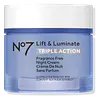
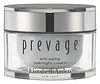
No7 Lift & Luminate Triple Action Night Cream Versus Elizabeth Arden Prevage Anti-Aging Overnight Cream
This anti-aging night moisturizer is formulated around Ascorbyl Glucoside and Palmitoyl Tripeptide-1 to soften the look of wrinkles and brighten dull-looking skin.
This anti-aging night moisturizer is formulated around Butyrospermum Parkii Butter and Hydroxypinacolone Retinoate to soften the look of wrinkles and hydrate skin.


What's inside
What's inside
 Key Ingredients
Benefits
Concerns
Ingredients Side-by-side
Water
Skin ConditioningGlycerin
Humectant


Butyrospermum Parkii Butter
Skin Conditioning




Cyclopentasiloxane
Emollient
Steareth-21
CleansingCaprylic/Capric Triglyceride
Masking
C12-15 Alkyl Benzoate
AntimicrobialCyclohexasiloxane
Emollient
Dimethicone
Emollient
Cetearyl Alcohol
Emollient
Steareth-2
EmulsifyingGlyceryl Stearate
Emollient
Polyacrylamide
Butylene Glycol
Humectant
Alcohol Denat.
Antimicrobial


C13-14 Isoparaffin
Emollient
Phenoxyethanol
Preservative
Dimethiconol
Emollient
Caprylyl Glycol
Emollient
Ascorbyl Glucoside
Antioxidant



Laureth-7
EmulsifyingPropylene Glycol
Humectant
Sodium Benzoate
Masking
Tocopheryl Acetate
Antioxidant
Sodium Hyaluronate
Humectant

Pentylene Glycol
Skin Conditioning
Hibiscus Abelmoschus Extract
MaskingEthylhexylglycerin
Skin ConditioningRetinyl Palmitate
Skin Conditioning

Phyllanthus Emblica Fruit Extract
HumectantHydrolyzed Rice Protein
Skin ConditioningTetrasodium EDTA
ChelatingSorbitan Laurate
Emulsifying
Panax Ginseng Root Extract
Emollient
Carbomer
Emulsion StabilisingDimethylmethoxy Chromanol
Antioxidant
Polysorbate 20
Emulsifying
Xanthan Gum
EmulsifyingHydroxyethylcellulose
Emulsion StabilisingAcetyl Dipeptide-1 Cetyl Ester
Skin Conditioning
Morus Alba Leaf Extract
Skin ConditioningTocopherol
Antioxidant
Palmitoyl Tripeptide-1
Skin Conditioning
Palmitoyl Tetrapeptide-7
Skin Conditioning
Water, Glycerin, Butyrospermum Parkii Butter, Cyclopentasiloxane, Steareth-21, Caprylic/Capric Triglyceride, C12-15 Alkyl Benzoate, Cyclohexasiloxane, Dimethicone, Cetearyl Alcohol, Steareth-2, Glyceryl Stearate, Polyacrylamide, Butylene Glycol, Alcohol Denat., C13-14 Isoparaffin, Phenoxyethanol, Dimethiconol, Caprylyl Glycol, Ascorbyl Glucoside, Laureth-7, Propylene Glycol, Sodium Benzoate, Tocopheryl Acetate, Sodium Hyaluronate, Pentylene Glycol, Hibiscus Abelmoschus Extract, Ethylhexylglycerin, Retinyl Palmitate, Phyllanthus Emblica Fruit Extract, Hydrolyzed Rice Protein, Tetrasodium EDTA, Sorbitan Laurate, Panax Ginseng Root Extract, Carbomer, Dimethylmethoxy Chromanol, Polysorbate 20, Xanthan Gum, Hydroxyethylcellulose, Acetyl Dipeptide-1 Cetyl Ester, Morus Alba Leaf Extract, Tocopherol, Palmitoyl Tripeptide-1, Palmitoyl Tetrapeptide-7
Water
Skin ConditioningButyrospermum Parkii Butter
Skin Conditioning
Cyclopentasiloxane
Emollient
Glycerin
Humectant
Dimethicone
Emollient
PEG-8 Dimethicone
Emulsifying
Butylene Glycol
Humectant
Cetearyl Alcohol
Emollient
Theobroma Cacao Seed Butter
Emollient
Phytosteryl Macadamiate
Skin Conditioning
PPG-2 Isoceteth-20 Acetate
EmulsifyingDipentaerythrityl Hexacaprylate/Hexacaprate
EmulsifyingTridecyl Trimellitate
EmollientC12-15 Alkyl Benzoate
AntimicrobialCaprylyl Glycol
Emollient
Caprylyl Methicone
Skin Conditioning
Carbomer
Emulsion StabilisingCetearyl Glucoside
Emulsifying
Cyclohexasiloxane
Emollient
Dimethicone Crosspolymer
Emulsion Stabilising
Dimethiconol
Emollient
Dimethyl Isosorbide
SolventDisodium EDTA
ChelatingGlyceryl Stearate
Emollient
Hexylene Glycol
EmulsifyingHydrogenated Lecithin
Emulsifying
Hydrogenated Phosphatidylcholine
Emulsifying
Hydrogenated Polydecene
EmollientHydroxydecyl Ubiquinoyl Dipalmitoyl Glycerate
Skin ConditioningHydroxyethyl Acrylate/Sodium Acryloyldimethyl Taurate Copolymer
Emulsion StabilisingHydroxypinacolone Retinoate
Skin Conditioning


Isohexadecane
EmollientLactobacillus/Lemon Peel Ferment Extract
Skin ConditioningLeuconostoc/Radish Root Ferment Filtrate
Antimicrobial
Mica
Cosmetic ColorantNeopentyl Glycol Dicaprylate/Dicaprate
EmollientParfum
Masking

PEG-100 Stearate
Surfactant
PEG-8
HumectantPhenyl Trimethicone
Skin Conditioning
Phospholipids
Skin Conditioning
Polyphosphorylcholine Glycol Acrylate
Polyquaternium-51
Skin Conditioning
Polysorbate 60
Emulsifying
Propylene Glycol
Humectant
Sodium Hyaluronate
Humectant
Sodium Hydroxide
BufferingSodium PCA
Humectant
Solanum Lycopersicum Fruit Extract
Antioxidant
Stearoxymethicone/Dimethicone Copolymer
Emollient
Sucrose
Humectant
Tocopheryl Acetate
Antioxidant
Trehalose
Humectant
Tridecyl Stearate
Emollient
Urea
Buffering
Xanthan Gum
EmulsifyingAlpha-Isomethyl Ionone
Perfuming
Linalool
Perfuming
Benzoic Acid
Masking
Chlorphenesin
Antimicrobial
Methylparaben
Preservative

Phenoxyethanol
Preservative
CI 77492
Cosmetic ColorantCI 14700
Cosmetic ColorantCI 77891
Cosmetic ColorantCI 19140
Cosmetic ColorantWater, Butyrospermum Parkii Butter, Cyclopentasiloxane, Glycerin, Dimethicone, PEG-8 Dimethicone, Butylene Glycol, Cetearyl Alcohol, Theobroma Cacao Seed Butter, Phytosteryl Macadamiate, PPG-2 Isoceteth-20 Acetate, Dipentaerythrityl Hexacaprylate/Hexacaprate, Tridecyl Trimellitate, C12-15 Alkyl Benzoate, Caprylyl Glycol, Caprylyl Methicone, Carbomer, Cetearyl Glucoside, Cyclohexasiloxane, Dimethicone Crosspolymer, Dimethiconol, Dimethyl Isosorbide, Disodium EDTA, Glyceryl Stearate, Hexylene Glycol, Hydrogenated Lecithin, Hydrogenated Phosphatidylcholine, Hydrogenated Polydecene, Hydroxydecyl Ubiquinoyl Dipalmitoyl Glycerate, Hydroxyethyl Acrylate/Sodium Acryloyldimethyl Taurate Copolymer, Hydroxypinacolone Retinoate, Isohexadecane, Lactobacillus/Lemon Peel Ferment Extract, Leuconostoc/Radish Root Ferment Filtrate, Mica, Neopentyl Glycol Dicaprylate/Dicaprate, Parfum, PEG-100 Stearate, PEG-8, Phenyl Trimethicone, Phospholipids, Polyphosphorylcholine Glycol Acrylate, Polyquaternium-51, Polysorbate 60, Propylene Glycol, Sodium Hyaluronate, Sodium Hydroxide, Sodium PCA, Solanum Lycopersicum Fruit Extract, Stearoxymethicone/Dimethicone Copolymer, Sucrose, Tocopheryl Acetate, Trehalose, Tridecyl Stearate, Urea, Xanthan Gum, Alpha-Isomethyl Ionone, Linalool, Benzoic Acid, Chlorphenesin, Methylparaben, Phenoxyethanol, CI 77492, CI 14700, CI 77891, CI 19140
Reviews
Ingredients Explained
These ingredients are found in both products.
Ingredients higher up in an ingredient list are typically present in a larger amount.
Butylene Glycol (or BG) is used within cosmetic products for a few different reasons:
Overall, Butylene Glycol is a safe and well-rounded ingredient that works well with other ingredients.
Though this ingredient works well with most skin types, some people with sensitive skin may experience a reaction such as allergic rashes, closed comedones, or itchiness.
Learn more about Butylene GlycolThis ingredient is also known as shea butter. It is a plant-derived extract from the nuts of the Africa shea tree and one of the most well-studied emollients.
Because it has a high concentration of fatty acids (primarily oleic, stearic, and linoleic) it is able to form a protective barrier on the skin's surface. This helps seal in moisture and prevents transepidermal water loss (TEWL).
In vitro research found an increase in skin hydration by 58% and a decrease in TEWL by 37.8% after 24 hours of applying this ingredient (pretty impressive for a single ingredient!).
Besides hydration, shea butter also contains triterpenes that have anti-inflammatory potential. In particule, lupeol cinnamate has shown the highest anti-inflammatory activity in vivo.
Shea butter also contains vitamins A and E which may contribute to antioxidant activity.
While Shea Butter has an SPF rating of about 3-4, it is not a sunscreen replacement.
This ingredient may not be fungal acne safe because its fatty acids fall within the C11-C24 range that the Malassezia yeast can metabolize.
This ingredient shows up on a lot of "pore-clogging" lists but there's no real evidence behind that. It doesn't even have a comedogenic rating from an actual study; the numbers you'll find online come from blogs citing other blogs.
Ratings for other ingredients mostly come from a 1980s rabbit ear test. This test doesn't translate well to human skin or to real products because the ingredient sits at a much lower percentage.
Some people still find it breaks them out. So if that's you, definitely trust your skin. Just know this one's based on experience and not evidence.
Learn more about Butyrospermum Parkii ButterC12-15 Alkyl Benzoate is a lightweight emollient made by combinig benzoic acid with fatty alcohols that are 12-15 carbons long.
In cosmetics, it plays several roles:
The Cosmetic Review Expert Panel has concluded the alkyl benzoate group to be safe as used in cosmetics; it wasn't found to be a skin irritant and unlikely to be absorbed due to its low water solubility.
This report recorded almost 1000 reported uses with concentrations up to 59% in leave-on products but your cosmetics will typically use 0.5-15% depending on the product.
It's often called a "SPF booster": this is because it keeps UV filters properly dissolved and evenly distributed to support a sunscreen's performance. It doesn't actually raise SPF on its own.
Overall, this ingredient is well tolerated.
This ingredient is fungal acne safe because it is an ester of benzoic acid.
Think of this ingredient as two parts stuck together: an oily part and an acid part. Malassezia only gets a meal when it can snip off a fatty acid to eat. With C12-15 Alkyl Benzoate, the acid part is benzoic acid, which isn't a fatty acid and which the yeast can't use as food.
Benzoic acid is actually used as a preservative to stop yeast from growing.
The oily part is a blend of C12-15 fatty alcohols but fatty alcohols in this size range can support only a little Malassezia growth (mostly for one species of Malassezia as well).
In the ingredient, those alcohols stay locked inside the molecule. The yeast can only reach them by snipping the benzoate bond, and that type of bond is harder for it to cut than a normal fatty bond.
So not much gets released. And whatever does get snipped comes packaged with benzoic acid, which discourages yeast growth.
Learn more about C12-15 Alkyl BenzoateCaprylyl Glycol is a humectant, skin conditioner, emollient, and preservative booster derived from either caprylic acid or synthetically created.
Typical use levels vary from 0.3-1% as a preservative booster and go up to 2% to condition skin.
Because it is not a free-fatty acid, this ingredient is fungal acne safe (there's nothing for Malassezia to feed on).
Learn more about Caprylyl GlycolCarbomer is a synthetic thickening and gelling agent. It's basically the ingredient that gives a lot of serums, gels, creams, and sunscreens their smooth, non-sticky texture.
Although legally permitted at very high levels, carbomers are normally used at concentrations below 1%.
It also needs to be neutralized to actually thicken, and because it is a large molecule, it doesn't really penetrate the skin barrier.
Allergy-wise, the risk is very low. Clinical studies show carbomers have low potential for skin irritation/sensitization even at concentrations up to 100%.
A 2024 UK study patch-tested 1,302 patients and found true allergy to the parent group of carbomer to be rare with no confirmed relevant reactions.
Learn more about CarbomerCetearyl alcohol is a waxy mixture of two fatty alcohols: cetyl alcohol and stearyl alcohol. It is an emollient and emulsifier.
Despite having "alcohol" in its name, it has nothing to do with drying solvent alcohols; the FDA also allows "alcohol-free" products to contain fatty alcohols like this ingredient.
It plays several roles in a formula:
Typical use levels for this ingredient sit around 1-10% and the Cosmetic Ingredient Review Expert Panel has affirmed safety at concentrations up to 25% in leave-on products.
Multiple assessments have found it to be non-irritating and non-sensitizing to most people.
However, there have been some cases of allergic contact dermatitis in patients with chronically compromised skin barriers.
Cetearyl alcohol has a comedogenic rating of 2 and irritancy rating of 1. Both of these numbers come from the 1989 study that used rabbit ears; a "2" means mildly comedogenic and a "1" means low irritancy.
Here's the catch: rabbit skin is more sensitive than human skin and throws a lot of false positives. A 1996 reappraisal found that ingredients rated 1-2 in the rabbit ear tests are generally safe for humans.
Remember comedogenic ratings are unable to assess the entire formula of a product or how it will react on your skin. Just be sure to patch test if you are unsure about certain ingredients.
This ingredient is not fungal acne safe. Cetearyl alcohol is a fatty alcohol with chain lengths that fall within the range that Malassezia can metabolize.
A 2019 study has also observed Malassezia growth in the presence of this ingredient, confirming it to be not-fungal acne safe.
Learn more about Cetearyl AlcoholCyclohexasiloxane is a type of silicone more commonly known as D6. It is an emollient and solvent.
Cyclohexasiloxane is used to evenly distribute ingredients throughout the product. When applied to the skin, Cyclohexasiloxane evaporates and leaves behind a silky feel.
As an emollient, it can help the skin feel soft and hydrated. It is also used to reduce frizz in hair products.
Learn more about CyclohexasiloxaneCyclopentasiloxane (D5) is a lightweight silicone that mostly acts as an emollient and solvent in cosmetics. Its the reason your products feel silky, fast-spreading, and non-greasy.
Since D5 is volatile, it does its thing and then evaporates off the skin quickly.
The safety profile of this ingredient is reassuring; the US CIR Expert Panel concluded D5 is safe as used in cosmetics and Health Canada concluded that D5 is not harmful to human health or the environment as currently used in cosmetics
There's a study that people mention about D5 in a rat study showing tumors. This study is related to long-term inhalation of high D5 levels.
Regulatory bodies have judged this study to be not applicable in topical skincare since skin absorption of D5 is very low and we're not really inhaling huge amounts of D5.
The only restriction for this ingredient is environmental. The European Chemicals Agency (ECHA) restricted D5 in wash-off cosmetics at or above 0.1% due to their persistence in water.
Learn more about CyclopentasiloxaneDimethicone is a type of synthetic silicone created from natural materials such as quartz. It is also known as polydimethylsiloxane.
What it does:
Dimethicone comes in different viscosities:
Depending on the viscosity, dimethicone has different properties.
Ingredients lists don't always show which type is used, so we recommend reaching out to the brand if you have questions about the viscosity.
This ingredient is unlikely to cause irritation because it does not get absorbed into skin. However, people with silicone allergies should be careful about using this ingredient.
Note: Dimethicone may contribute to pilling. This is because it is not oil or water soluble, so pilling may occur when layered with products. When mixed with heavy oils in a formula, the outcome is also quite greasy.
Learn more about DimethiconeDimethiconol is a silicone that resembles the popular dimethicone. Like other silicones, it is an emollient. Emollients create a thin film on skin to prevent moisture from escaping.
This ingredient helps to create a silky texture and improve spreadability. Due to its high molecular weight and thickness, it is often combined with cyclopentasiloxane.
Glycerin (or glycerol) is a compound naturally found in your skin. It's a powerhouse humectant that pulls water into the stratum corneum.
Topically, glycerin does several things at once:
Your skin makes glycerin on its own (mostly from sebaceous oil breakdown) and shuttles it to your outermost layer of skin, or your epidermis, via aquaporin-3.
Aquaporin-3 is a transporter that is essential for normal skin hydration, elasticity, and repair. Interestingly, mice lacking in AQP3 have dry and less elastic skin that can be fully corrected with glycerin.
This ingredient is non-irritating, plays well with almost every ingredient, and works across all skin types. Typical use is anywhere between 3-10% but can go up to 79% in some leave-on products.
Just know very high concentrations (>40%) can feel tacky in low humidity.
Glycerin is the name for this ingredient in American English. British English uses Glycerol/Glycerine.
Learn more about GlycerinGlyceryl Stearate is made by reacting glycerin with stearic acid (typically sourced from plant oils like palm or coconut). It's an emulsifier, emollient, and mild occlusive.
Emulsifiers help ingredients like oil and water stay mixed so your formula stays nicely blended and uniform in texture.
This ingredient is typically used in concentrations between 1-10%. Studies have found it to be non-sensitizing, non-phototoxic, and non-photoallergenic.
A close cousin of this ingredient is Glyceryl Stearate SE ("self-emulsifying"). This just has a small amount of sodium or potassium stearate added so it can emulsify without a co-emulsifier.
Since this ingredient is an ester of a C18 fatty acid, it may not be fungal acne safe. The Malassezia yeast can potentially metabolize within the C11-C24 range.
Fun fact: The human body also creates Glyceryl Stearate naturally.
Learn more about Glyceryl StearatePhenoxyethanol is one of the most widely used preservatives in skincare (and for good reason!).
It has a large spectrum of antimicrobial activity and especially effective bacteria, yeast, and mold while only having a weak effect on your skin's natural microbiome.
On a cellular level, it disrupts the cell membranes of microbes by poking holes that make the cell leak. This shuts down the chemical reactions the microbe needs to make energy so it can no longer survive.
Another perk of this ingredient is that it stays functional across a wide pH range (3-10).
You'll often see it paired with boosters like Ethylhexylglycerin; one study showed that a 1:9 ratio of Ethylhexylglycerin to Phenoxyethanol damages bacterial membranes as effectively as doubling the Phenoxyethanol concentration on its own.
Typical use concentrations range from 0.3-1% depending on the formula, and this ingredient is capped at 1% int the EU.
Safety-wise, the fear mongering does not hold up to the evidence. The EU's Scientific Committee on Consumer Safety and FDA consider it safe as a preservative at up to 1%, including for children of all ages.
Adverse systemic effects only showed up in animal studies at exposures roughly 200x higher than what people get from cosmetics. And despite its very widespread use, this ingredient is a rare sensitizer and allergic reactions are uncommon.
Learn more about PhenoxyethanolPropylene Glycol is a synthetic, colorless, odorless liquid that has been a staple in cosmetics for decades. It is a skin conditioning agent, humectant, and solvent.
As a humectant, it draw water to the skin to reduce flaking and restore suppleness. It's also a solvent that helps dissolve other actives and keeps formulas stable across temperature changes.
The CIR Expert Panel has confirmed this ingredient to be nontoxic and clinical studies show no sensitization at cosmetic use concentrations.
True allergic reactions are quite rare: a 15-year retrospective study of 6,751 patients found only 0.31% had a positive reaction (and less than half were considered clinically relevant).
It seemed that when sensitization does occur, it's most commonly linked to topical medication (like corticosteroids) and not cosmetics. Allergic contact dermatitis also appears largely limited to individuals with underlying skin conditions.
Overall, propylene glycol is a well-studied ingredient that most people can tolerate without issue.
Learn more about Propylene GlycolSodium Hyaluronate is the salt form of hyaluronic acid. It is a long sugar chain that is naturally found in your skin, joints, and connective tissue that maintains hydration and elasticity.
In skincare, it works as a humectant. It pulls water from the environment and deeper layers of skin and binds it to the surface.
Interestingly, the size of the molecule affects its behavior:
Some clinical evidence links low molecular weight versions to improved wrinkle depth, elasticity, anti-inflammatory effects, and barrier repair.
Many serums use a blend of both weights so you can get surface hydration plus longer-lasting and deeper effects.
You'll typically see concentrations between 0.1-2% for this ingredient.
Learn more about Sodium HyaluronateTocopheryl Acetate is a stable, shelf-friendly form of vitamin E.
Formulators love it because plain vitamin E oxidizes quickly once it hits air. This acetate version stays stable and resists going off, helping to extend a product's shelf life.
It's actually inactive on its own and works like a slow-release "storage" form; the enzymes in your skin called esterases gradually convert it into active vitamin E over time.
One in vivo study showed 5% of the acetate in the living layer of the epidermis converted to vitamin E after 5 days of application. This study also found the skin gained protection against UV damage even though the conversion was slow and small.
Once converted, vitamin E acts as a skin's main fat-soluble antioxidant that fights free radicals to protect skin from damage.
Topical vitamin E generally boosts the skin's photoprotection, and it reduced UV-damage in animal models.
This ingredient has some brightening potential but it's more of a prevention ingredient than spot-fader. Cell studies show it can slow down melanin production but it's worth noting that it's not the most powerful brightener out there.
Overall, it has a pretty solid safety profile and has been found to be non-irritating and non-comedogenic. Allergic reactions may happen but stay rare due to how widely the ingredient gets used.
The concentration will vary depending on the formula; industry data shows 0.1% in baby lotions, 3% in lipsticks, and 5% in foot powders. You can also find this ingredient at 100% in a pure vitamin E oil.
Most leave-on skincare keeps it at the lower end, often between 0.5-1%.
Learn more about Tocopheryl AcetateWater. It's the most common cosmetic ingredient of all. You'll usually see it at the top of ingredient lists, meaning that it makes up the largest part of the product.
So why is it so popular? Water most often acts as a solvent - this means that it helps dissolve other ingredients into the formulation.
You'll also recognize water as that liquid we all need to stay alive. If you see this, drink a glass of water. Remember to stay hydrated!
Learn more about WaterXanthan gum is used as a stabilizer and thickener within cosmetic products. It helps give products a sticky, thick feeling - preventing them from being too runny.
On the technical side of things, xanthan gum is a polysaccharide - a combination consisting of multiple sugar molecules bonded together.
Xanthan gum is a pretty common and great ingredient. It is a natural, non-toxic, non-irritating ingredient that is also commonly used in food products.
Learn more about Xanthan Gum

