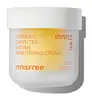
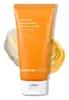
innisfree Vitamin C Green Tea Enzyme Brightening Cream Versus innisfree Vitamin C Brightening Mask To Foam
This brightening moisturizer is formulated around Niacinamide and 3-O-Ethyl Ascorbic Acid to brighten dull-looking skin and refine skin texture.
This wash off mask is made with Protease and 3-O-Ethyl Ascorbic Acid for a rinse-off brightening boost.

What's inside
What's inside
 Key Ingredients
Benefits
Concerns
Ingredients Side-by-side
Water
Skin ConditioningButylene Glycol
Humectant

Propanediol
Solvent
Glycerin
Humectant
Niacinamide
Smoothing









Isopentyldiol
Humectant
1,2-Hexanediol
Skin Conditioning
Hydrogenated Poly(C6-14 Olefin)
EmollientCaprylic/Capric Triglyceride
Masking
Isononyl Isononanoate
EmollientSqualane
Emollient
Ammonium Acryloyldimethyltaurate/Vp Copolymer
Acrylates/C10-30 Alkyl Acrylate Crosspolymer
Emulsion StabilisingArginine
Masking
Trehalose
Humectant
Hydroxyethyl Acrylate/Sodium Acryloyldimethyl Taurate Copolymer
Emulsion StabilisingSodium Acrylic Acid/Ma Copolymer
Dextrin
AbsorbentXanthan Gum
Emulsifying3-O-Ethyl Ascorbic Acid
Skin Conditioning
Cetearyl Olivate


Citrus Reticulata Peel Extract
Skin ConditioningCastor Oil/Ipdi Copolymer

Coptis Japonica Root Extract
Skin ConditioningEthylhexylglycerin
Skin ConditioningDaucus Carota Sativa Root Extract
Skin Conditioning
Sorbitan Olivate
Emulsifying
Canola Oil
Emollient


Cyclodextrin
AbsorbentSodium Phytate
ChelatingGlyceryl Acrylate/Acrylic Acid Copolymer
HumectantSorbitan Isostearate
Emulsifying
Protease
Exfoliating
Caprylyl Glycol
Emollient
Pvm/Ma Copolymer
Emulsion StabilisingDaucus Carota Sativa Seed Oil
Emollient
Carbomer
Emulsion StabilisingAscorbyl Tetraisopalmitate
Antioxidant
Tocopheryl Acetate
Antioxidant
Beta-Carotene
Skin ConditioningHelianthus Annuus Seed Oil
Emollient
Amodimethicone

Glucose
Humectant
Sodium Hyaluronate
Humectant
Panthenol
Skin Conditioning
Chondrus Crispus Extract
Skin Conditioning
Hydroxypropyltrimonium Hyaluronate
Sodium Ascorbyl Phosphate
Antioxidant
Tocopherol
Antioxidant
Magnesium Ascorbyl Phosphate
Antioxidant
Glutathione
Ferulic Acid
Antimicrobial
Linum Usitatissimum Seed Oil
Perfuming
Hydrolyzed Hyaluronic Acid
Humectant
Sodium Acetylated Hyaluronate
Humectant
Cyanocobalamin
Skin ConditioningGluconolactone
Chelating
Hyaluronic Acid
Humectant
Sodium Hyaluronate Crosspolymer
Humectant
Hydrolyzed Sodium Hyaluronate
Skin Conditioning
Potassium Hyaluronate
Skin ConditioningLinolenic Acid
Cleansing
Linoleic Acid
Cleansing
Ascorbic Acid
Antioxidant
Biotin
AntiseborrhoeicFolic Acid
Skin ConditioningRiboflavin
Cosmetic ColorantPyridoxine
Skin ConditioningThiamine Hcl
MaskingWater, Butylene Glycol, Propanediol, Glycerin, Niacinamide, Isopentyldiol, 1,2-Hexanediol, Hydrogenated Poly(C6-14 Olefin), Caprylic/Capric Triglyceride, Isononyl Isononanoate, Squalane, Ammonium Acryloyldimethyltaurate/Vp Copolymer, Acrylates/C10-30 Alkyl Acrylate Crosspolymer, Arginine, Trehalose, Hydroxyethyl Acrylate/Sodium Acryloyldimethyl Taurate Copolymer, Sodium Acrylic Acid/Ma Copolymer, Dextrin, Xanthan Gum, 3-O-Ethyl Ascorbic Acid, Cetearyl Olivate, Citrus Reticulata Peel Extract, Castor Oil/Ipdi Copolymer, Coptis Japonica Root Extract, Ethylhexylglycerin, Daucus Carota Sativa Root Extract, Sorbitan Olivate, Canola Oil, Cyclodextrin, Sodium Phytate, Glyceryl Acrylate/Acrylic Acid Copolymer, Sorbitan Isostearate, Protease, Caprylyl Glycol, Pvm/Ma Copolymer, Daucus Carota Sativa Seed Oil, Carbomer, Ascorbyl Tetraisopalmitate, Tocopheryl Acetate, Beta-Carotene, Helianthus Annuus Seed Oil, Amodimethicone, Glucose, Sodium Hyaluronate, Panthenol, Chondrus Crispus Extract, Hydroxypropyltrimonium Hyaluronate, Sodium Ascorbyl Phosphate, Tocopherol, Magnesium Ascorbyl Phosphate, Glutathione, Ferulic Acid, Linum Usitatissimum Seed Oil, Hydrolyzed Hyaluronic Acid, Sodium Acetylated Hyaluronate, Cyanocobalamin, Gluconolactone, Hyaluronic Acid, Sodium Hyaluronate Crosspolymer, Hydrolyzed Sodium Hyaluronate, Potassium Hyaluronate, Linolenic Acid, Linoleic Acid, Ascorbic Acid, Biotin, Folic Acid, Riboflavin, Pyridoxine, Thiamine Hcl
Glycerin
Humectant
Water
Skin ConditioningSodium Cocoyl Isethionate
Cleansing
Olea Europaea Fruit Oil
Masking
Caprylic/Capric Triglyceride
Masking
Sorbeth-30 Tetraoleate
Emulsifying
Cetyl Ethylhexanoate
EmollientLauryl Hydroxysultaine
CleansingLauric Acid
Cleansing
Glycol Distearate
Emollient
Polyglyceryl-10 Diisostearate
Emulsifying
Polyglyceryl-10 Stearate
Skin Conditioning
Sodium Chloride
MaskingC14-22 Alcohols
Emulsion Stabilising
Disodium Cocoamphodiacetate
CleansingCitrus Aurantium Dulcis Peel Oil
Masking
Citrus Unshiu Fruit Water
Skin ConditioningButylene Glycol
Humectant
Citrus Limon Peel Oil
Masking


Polyquaternium-7
Citrus Aurantium Bergamia Fruit Oil
Masking
C12-20 Alkyl Glucoside
EmulsifyingProtease
Exfoliating
CI 77492
Cosmetic ColorantSodium Benzoate
Masking
1,2-Hexanediol
Skin Conditioning
3-O-Ethyl Ascorbic Acid
Skin Conditioning
Citric Acid
Buffering
Gluconolactone
Chelating
Citrus Unshiu Peel Extract
MaskingPropanediol
Solvent
Ethylhexylglycerin
Skin ConditioningCitrus Sphaerocarpa Peel Extract
Limonene
Perfuming
Citrus Aurantium Peel Oil
Citrus Aurantium Bergamia Peel Oil
Perfuming
Pinene
Masking
Linalyl Acetate
Masking
Linalool
Perfuming
Citral
Perfuming
Glycerin, Water, Sodium Cocoyl Isethionate, Olea Europaea Fruit Oil, Caprylic/Capric Triglyceride, Sorbeth-30 Tetraoleate, Cetyl Ethylhexanoate, Lauryl Hydroxysultaine, Lauric Acid, Glycol Distearate, Polyglyceryl-10 Diisostearate, Polyglyceryl-10 Stearate, Sodium Chloride, C14-22 Alcohols, Disodium Cocoamphodiacetate, Citrus Aurantium Dulcis Peel Oil, Citrus Unshiu Fruit Water, Butylene Glycol, Citrus Limon Peel Oil, Polyquaternium-7, Citrus Aurantium Bergamia Fruit Oil, C12-20 Alkyl Glucoside, Protease, CI 77492, Sodium Benzoate, 1,2-Hexanediol, 3-O-Ethyl Ascorbic Acid, Citric Acid, Gluconolactone, Citrus Unshiu Peel Extract, Propanediol, Ethylhexylglycerin, Citrus Sphaerocarpa Peel Extract, Limonene, Citrus Aurantium Peel Oil, Citrus Aurantium Bergamia Peel Oil, Pinene, Linalyl Acetate, Linalool, Citral
Alternatives
Ingredients Explained
These ingredients are found in both products.
Ingredients higher up in an ingredient list are typically present in a larger amount.
1,2-Hexanediol is a synthetic liquid and another multi-functional powerhouse.
It is a:
- Humectant, drawing moisture into the skin
- Emollient, helping to soften skin
- Solvent, dispersing and stabilizing formulas
- Preservative booster, enhancing the antimicrobial activity of other preservatives
3-O-Ethyl Ascorbic Acid is one of the most popular "stable" vitamin C derivatives in skincare.
Plain ascorbic acid is fantastic but notoriously fragile; it browns, oxidizes, and loses potency fast. So attaching an ethyl group to the third carbon of the molecule gives it some cool perks:
In a formula, it does the 3 classic vitamin C jobs: it acts as an antioxidant, helps brighten skin tone by inhibiting tyrosinase, and supports collagen.
The evidence is reasonably solid for a cosmetic ingredient; Liao and colleagues (2018) showed it's significantly more stable than ascorbic acid while still being effective.
A 2021 study by Zerbinati and colleagues tested a serum with 30% 3-O-ethyl-l-ascorbic acid and 1% lactic acid significantly increased collagen production, reduced UVB-induced DNA damage, and decreased melanin on a reconstructed pigmented skin model.
Typical real world usage sits around 0.5-5% (and 1-2% is common for daily serums).
Amounts up to 30% have been shown to be non-irritating on human skin samples, but two isolated cases reported allergic contact dermatitis so a patch test is sensible if you have reactive skin.
Learn more about 3-O-Ethyl Ascorbic AcidButylene Glycol (or BG) is used within cosmetic products for a few different reasons:
Overall, Butylene Glycol is a safe and well-rounded ingredient that works well with other ingredients.
Though this ingredient works well with most skin types, some people with sensitive skin may experience a reaction such as allergic rashes, closed comedones, or itchiness.
Learn more about Butylene GlycolCaprylic/Capric Triglyceride (aka MCT Oil) is a lightweight emollient, solvent, and texture enhancer. It is considered a skin-softener by helping to prevent moisture loss.
Though it behaves like an oil, it is not technically one due to its chemical composition. One perk of this ingredient is that it is very stable, resistant to oxidation, and unlikely to go rancid.
In practice, that translates to a long shelf life and a consistently elegant skin feel.
While there is an assumption Caprylic Triglyceride can clog pores due to it being derived from coconut oil, there is no research supporting this. Just patch test if you have concerns.
Fractionated coconut oil and MCT Oil are both listed as Caprylic/Capric Triglyceride according to INCI. This is because INCI names are based on the ingredient’s final chemical composition and not its marketing name or source.
This ingredient is treated as the gold standard fungal acne safe oil. Even though it is coconut derived, the problematic lauric acid is stripped out.
This leaves just caprylic (C8) and capric (C10) acid. These chain lengths actually trend antifungal; a 2020 study found caprylic acid was enough to disrupt Malassezia furfur cell membrane, with a caprylic acid derivative damaging membrane structures at concentrations as low as 0.2%.
Learn more about Caprylic/Capric TriglycerideEthylhexylglycerin is created from glycerin. It is a multitasker ingredient that:
The CIR Expert Panel found minimal skin absorption or sensitization of any kind in a safety assessment. Though this ingredient is considered well-tolerated, a small number of cases of allergic dermatitis have been published since 2002. Just be sure to patch test if you are unsure.
Industry-reported use ranges from 8% in rinse-off products and 2% in leave-on formulations.
Learn more about EthylhexylglycerinGluconolactone is a PHA. PHAs are a great gentle alternative to traditional AHAs.
When applied, Gluconolactone has the same affect on skin as AHAs such as lactic acid. It helps dissolve the dead skin cells in the top layer of your skin. This improves texture and brightens the skin.
PHAs are more gentle than AHAs due to their larger structure. They do not penetrate as deeply as AHAs and take a longer time to dissolve dead cells. Studies show PHAs do not cause as much irritation.
Gluconolactone has some interesting properties:
In a 2004 study, Gluconolactone was found to prevent UV damage in mouse skin cells and has not been found to increase sun sensitivity. However, we still recommend wearing SPF daily.
This ingredient is is an created by reacting gluconic acid with an alcohol.
Learn more about GluconolactoneGlycerin (or glycerol) is a compound naturally found in your skin. It's a powerhouse humectant that pulls water into the stratum corneum.
Topically, glycerin does several things at once:
Your skin makes glycerin on its own (mostly from sebaceous oil breakdown) and shuttles it to your outermost layer of skin, or your epidermis, via aquaporin-3.
Aquaporin-3 is a transporter that is essential for normal skin hydration, elasticity, and repair. Interestingly, mice lacking in AQP3 have dry and less elastic skin that can be fully corrected with glycerin.
This ingredient is non-irritating, plays well with almost every ingredient, and works across all skin types. Typical use is anywhere between 3-10% but can go up to 79% in some leave-on products.
Just know very high concentrations (>40%) can feel tacky in low humidity.
Glycerin is the name for this ingredient in American English. British English uses Glycerol/Glycerine.
Learn more about GlycerinPropanediol is an all-star ingredient. It softens, hydrates, and smooths the skin.
It’s often used to:
Propanediol is not likely to cause sensitivity and considered safe to use. It is derived from corn or petroleum with a clear color and no scent.
Learn more about PropanediolProtease is an enzyme that works as a gentle exfoliant by mimicking something your skin already does naturally.
Your skin uses proteolytic enzymes to carry out desquamation; this is the process of shedding dead skin cells from the stratum corneum.
In skincare, proteases act as biological catalysts that mimic this natural desquamation process. You can think of it as giving your skin's own renewal system a nudge.
By breaking down the bonds that hold dead skin cells together, proteases help accelerate cell turnover to:
One reason they're becoming a popular AHA alternative is because proteases are considered effective while also being well-tolerated on skin. Because they work at a protein level rather than by lowering the skin pH, they can be a good option for those sensitive to AHAs.
Available in vitro and in vivo studies show positive exfoliant results but clinical (human) trials specifically on enzymatic exfoliation are still limited at this time.
Just one thing worth noting: temperature, pH, and stabilization are important factors that affect enzyme activity. The formulation quality definitely matters with this ingredient.
This ingredient can be either microbial sourced or plant-derived (papain from papaya, bromelain from pineapple).
Learn more about ProteaseWater. It's the most common cosmetic ingredient of all. You'll usually see it at the top of ingredient lists, meaning that it makes up the largest part of the product.
So why is it so popular? Water most often acts as a solvent - this means that it helps dissolve other ingredients into the formulation.
You'll also recognize water as that liquid we all need to stay alive. If you see this, drink a glass of water. Remember to stay hydrated!
Learn more about Water

