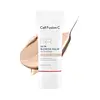
Cell Fusion C BB Skin Blemish Balm Intensive Versus Abib Glutathiosome CC Sunscreen Toning Tube SPF 50+
This chemical sunscreen covers the full UV range and blocks ~98% of UVB at SPF 50.

What's inside
What's inside
 Key Ingredients
Benefits
Concerns
Ingredients Side-by-side
Water
Skin ConditioningCI 77891
Cosmetic ColorantCaprylic/Capric Triglyceride
Masking


Cetyl Ethylhexanoate
EmollientCoco-Caprylate/Caprate
Emollient
Polyglyceryl-4 Diisostearate/Polyhydroxystearate/Sebacate
Emulsifying

Butylene Glycol
Humectant
Glycerin
Humectant
Diphenylsiloxy Phenyl Trimethicone
Skin Conditioning
Dicaprylyl Carbonate
EmollientDisteardimonium Hectorite
StabilisingGlyceryl Behenate/Eicosadioate
Emollient
Phenyl Trimethicone
Skin Conditioning
Polyglyceryl-3 Oleate
Emulsifying
Acrylates/Dimethicone Copolymer
Skin Conditioning
Magnesium Sulfate
Sorbitan Sesquioleate
Emulsifying
CI 77492
Cosmetic ColorantSilica
Abrasive


Polymethylsilsesquioxane
Diisostearoyl Polyglyceryl-3 Dimer Dilinoleate
Emollient
CI 77491
Cosmetic ColorantCI 77499
Cosmetic ColorantStearalkonium Hectorite
Gel FormingTriethoxycaprylylsilane
Caprylyl Glycol
Emollient
Aluminum Hydroxide
EmollientPropylene Carbonate
SolventBetaine
Humectant
Hydrolyzed Hyaluronic Acid
Humectant

Silica Silylate
Emollient
Tocopheryl Acetate
Antioxidant


Ethylhexylglycerin
Skin ConditioningHydrogenated Lecithin
Emulsifying
Adenosine
Skin Conditioning
Cetearyl Alcohol
Emollient


Stearic Acid
Cleansing
Ectoin
Skin Conditioning

1,2-Hexanediol
Skin Conditioning
Tocopherol
Antioxidant
Leontopodium Alpinum Callus Culture Extract
Antioxidant
Ceramide NP
Skin Conditioning
Helianthus Annuus Seed Oil
Emollient
Ceramide Ns
Skin Conditioning
Cholesterol
Emollient
Phytosphingosine
Skin Conditioning
Acetyl Hexapeptide-8
Humectant
Ceramide AP
Skin Conditioning
Ceramide As
Skin Conditioning
Copper Tripeptide-1
Skin Conditioning
Ceramide EOP
Skin Conditioning
Dipeptide-2
Skin Conditioning
Oligopeptide-1
Skin Conditioning
Palmitoyl Pentapeptide-4
Skin Conditioning
Tripeptide-1
Skin Conditioning
Water, CI 77891, Caprylic/Capric Triglyceride, Cetyl Ethylhexanoate, Coco-Caprylate/Caprate, Polyglyceryl-4 Diisostearate/Polyhydroxystearate/Sebacate, Butylene Glycol, Glycerin, Diphenylsiloxy Phenyl Trimethicone, Dicaprylyl Carbonate, Disteardimonium Hectorite, Glyceryl Behenate/Eicosadioate, Phenyl Trimethicone, Polyglyceryl-3 Oleate, Acrylates/Dimethicone Copolymer, Magnesium Sulfate, Sorbitan Sesquioleate, CI 77492, Silica, Polymethylsilsesquioxane, Diisostearoyl Polyglyceryl-3 Dimer Dilinoleate, CI 77491, CI 77499, Stearalkonium Hectorite, Triethoxycaprylylsilane, Caprylyl Glycol, Aluminum Hydroxide, Propylene Carbonate, Betaine, Hydrolyzed Hyaluronic Acid, Silica Silylate, Tocopheryl Acetate, Ethylhexylglycerin, Hydrogenated Lecithin, Adenosine, Cetearyl Alcohol, Stearic Acid, Ectoin, 1,2-Hexanediol, Tocopherol, Leontopodium Alpinum Callus Culture Extract, Ceramide NP, Helianthus Annuus Seed Oil, Ceramide Ns, Cholesterol, Phytosphingosine, Acetyl Hexapeptide-8, Ceramide AP, Ceramide As, Copper Tripeptide-1, Ceramide EOP, Dipeptide-2, Oligopeptide-1, Palmitoyl Pentapeptide-4, Tripeptide-1
Water
Skin ConditioningDibutyl Adipate
EmollientPropanediol
Solvent
CI 77891
Cosmetic ColorantBis-Ethylhexyloxyphenol Methoxyphenyl Triazine
UV Absorber
Diethylamino Hydroxybenzoyl Hexyl Benzoate
UV Filter
Ethylhexyl Triazone
UV Absorber
Polysilicone-15
UV Filter
Niacinamide
Smoothing

Coco-Caprylate/Caprate
Emollient
Diisopropyl Sebacate
EmollientPolymethylsilsesquioxane
Butylene Glycol
Humectant
1,2-Hexanediol
Skin Conditioning
Glycerin
Humectant
Methylene Bis-Benzotriazolyl Tetramethylbutylphenol
UV Filter
Pentylene Glycol
Skin Conditioning
Isododecane
EmollientOctyldodecanol
Emollient
Potassium Cetyl Phosphate
EmulsifyingBehenyl Alcohol
Emollient
Polyacrylate Crosspolymer-6
Emulsion StabilisingPolyglyceryl-3 Methylglucose Distearate
Emulsifying
Poly C10-30 Alkyl Acrylate
Emulsion StabilisingTromethamine
BufferingPolyglyceryl-4 Isostearate
Emulsifying
CI 77492
Cosmetic ColorantCarbomer
Emulsion StabilisingDecyl Glucoside
Cleansing
Isopropyl Titanium Triisostearate
Emollient
Aluminum Hydroxide
EmollientAcrylates/C10-30 Alkyl Acrylate Crosspolymer
Emulsion StabilisingMica
Cosmetic ColorantPolyester-1
Sodium Stearoyl Glutamate
CleansingEthylhexylglycerin
Skin ConditioningCI 77491
Cosmetic ColorantAdenosine
Skin Conditioning
CI 77499
Cosmetic ColorantGlutathione
Silica Dimethyl Silylate
EmollientXanthan Gum
EmulsifyingTocopherol
Antioxidant
Allantoin
Skin Conditioning
Malus Domestica Fruit Cell Culture Extract
Skin ConditioningDipropylene Glycol
HumectantBeta-Glucan
Skin Conditioning
Hydrogenated Lecithin
Emulsifying
Cholesterol
Emollient
Chitosan
Ascorbic Acid
Antioxidant
3-O-Ethyl Ascorbic Acid
Skin Conditioning
Ascorbyl Glucoside
Antioxidant
Ceramide NP
Skin Conditioning
Water, Dibutyl Adipate, Propanediol, CI 77891, Bis-Ethylhexyloxyphenol Methoxyphenyl Triazine, Diethylamino Hydroxybenzoyl Hexyl Benzoate, Ethylhexyl Triazone, Polysilicone-15, Niacinamide, Coco-Caprylate/Caprate, Diisopropyl Sebacate, Polymethylsilsesquioxane, Butylene Glycol, 1,2-Hexanediol, Glycerin, Methylene Bis-Benzotriazolyl Tetramethylbutylphenol, Pentylene Glycol, Isododecane, Octyldodecanol, Potassium Cetyl Phosphate, Behenyl Alcohol, Polyacrylate Crosspolymer-6, Polyglyceryl-3 Methylglucose Distearate, Poly C10-30 Alkyl Acrylate, Tromethamine, Polyglyceryl-4 Isostearate, CI 77492, Carbomer, Decyl Glucoside, Isopropyl Titanium Triisostearate, Aluminum Hydroxide, Acrylates/C10-30 Alkyl Acrylate Crosspolymer, Mica, Polyester-1, Sodium Stearoyl Glutamate, Ethylhexylglycerin, CI 77491, Adenosine, CI 77499, Glutathione, Silica Dimethyl Silylate, Xanthan Gum, Tocopherol, Allantoin, Malus Domestica Fruit Cell Culture Extract, Dipropylene Glycol, Beta-Glucan, Hydrogenated Lecithin, Cholesterol, Chitosan, Ascorbic Acid, 3-O-Ethyl Ascorbic Acid, Ascorbyl Glucoside, Ceramide NP
Reviews
Ingredients Explained
These ingredients are found in both products.
Ingredients higher up in an ingredient list are typically present in a larger amount.
1,2-Hexanediol is a synthetic liquid and another multi-functional powerhouse.
It is a:
- Humectant, drawing moisture into the skin
- Emollient, helping to soften skin
- Solvent, dispersing and stabilizing formulas
- Preservative booster, enhancing the antimicrobial activity of other preservatives
Adenosine is a purine nucleoside that your body already makes in every cell. In skincare, it acts mainly as a skin conditioning and anti-aging agent.
The way it works is fairly well mapped out:
Your skin has cells called fibroblasts that build collagen (the stuff that keeps skin firm and smooth). Adenosine basically flips a switch on these cells that tells them to get to work making more collagen and other proteins. These cells slow down on their own as skin ages, so Adenosine helps give them a little nudge to keep going.
The clinical backing is pretty solid too.
A blind, randomized, placebo-controlled trial of 126 women aged 45-65 tested a 0.1% cream twice daily and found real improvements in crow's feet and frown lines using a precise 3D skin-mapping technique; these changes showed up by week 3 and held at 2 months.
A later study using Adenosine-loaded dissolving microneedle patches reported gains in wrinkle depth, dermal density, elasticity, and hydration.
On concentrations, South Korea's Ministry of Food and Drug Safety has set 0.04% as the approved functional anti-wrinkle level. You'll typically see this ingredient used somewhere in the 0.04-0.1% range since it works at low doses.
This ingredient has been found safe for cosmetics with the data showing no irritation or sensitization.
Overall, this is a great ingredient for any anti-aging routine and has no photosensitizing effect, so it suits both AM and PM use.
Learn more about AdenosineAluminum Hydroxide is a form of aluminum. It can be naturally found in nature as the mineral gibbsite. In cosmetics, Aluminum Hydroxide is used as a colorant, pH adjuster, and absorbent.
As a colorant, Aluminum Hydroxide may add opacity, or reduce the transparency. Aluminum hydroxide is contains both basic and acidic properties.
According to manufacturers, this ingredient is an emollient and humectant. This means it helps hydrate the skin.
In medicine, this ingredient is used to help relieve heartburn and help heal ulcers.
There is currently no credible scientific evidence linking aluminum hydroxide in cosmetics to increased cancer risk.
Major health organizations allow the use of aluminum hydroxide in personal care products and have not flagged it as a carcinogenic risk at typical usage levels.
Learn more about Aluminum HydroxideButylene Glycol (or BG) is used within cosmetic products for a few different reasons:
Overall, Butylene Glycol is a safe and well-rounded ingredient that works well with other ingredients.
Though this ingredient works well with most skin types, some people with sensitive skin may experience a reaction such as allergic rashes, closed comedones, or itchiness.
Learn more about Butylene GlycolCeramide NP (formerly known as Ceramide 3) is one of the skin's naturally occurring lipids.
Since ceramides are the major lipid components of the skin, they are crucial for maintaining skin barrier and hydration. Ceramide NP most closely mirrors the dominant kind in human skin amongst ceramide subtypes.
This ceramide works by slotting into gaps within the stratum corneum's lipid matrix to limit trans-epidermal water loss (TEWL) and shield the skin against external irritants.
A study with 312 patients found that using a ceramide-containing routine for 4 weeks reduced the severity of atopic dermatitis by over 61%.
Another clinical study in subjects aged 60 and older found that a ceramide body wash and moisturizer improved skin dryness and itchy skin in 15 days.
Overall, ceramides are considered non-irritating and safety tests have found little to no observable adverse effects from using this ingredient.
Ceramide NP is usually sourced from plants (like soybean or rice bran), or produced synthetically.
Learn more about Ceramide NPCholesterol is a lipid that is naturally found in human skin and is one of the three key components of your skin barrier. In skincare, it is an emollient and barrier-repairing ingredient.
It works by fitting directly into the lipid layers of skin to help restore structure and reduce transepidermal water loss (TEWL).
This is a great ingredient for dry, compromised, or aging skin; our skin starts to produce less cholesterol with age.
Research shows cholesterol works best in combination with ceramides and fatty acids, the other two major components in your skin barrier.
Cholesterol is also a well-establish penetration enhancer and can help other actives absorb more effectively.
Cosmetic-grade cholesterol is usually derived from lanolin but plant and synthetic options also exist. We recommend reaching out to the brand if you have questions about their source of cholesterol.
Learn more about CholesterolCi 77491 is also hydrated iron III oxide. It's sole purpose is to give a red/pink hue to products.
Iron III oxides are classified as inorganic chemicals for coloring.
Synthetically created Ci 77491 is considered safer than those naturally found. This is because the synthetically created version may contain less impurities. Iron oxides are generally non-toxic and non-allergenic.
Learn more about CI 77491CI 77492 is also hydrated iron III oxide. It's sole purpose is to give a yellow hue to products.
Iron III oxides are classified as inorganic chemicals for coloring.
Synthetically created CI 77492 is considered safer than those naturally found. This is because the synthetically created version may contain less impurities. Iron oxides are generally non-toxic and non-allergenic.
Learn more about CI 77492Ci 77499 is also hydrated iron III oxide. It is created from mixing red and black iron oxides. This helps give shades of darkness to a product.
Iron III oxides are classified as inorganic chemicals for coloring.
Ci 77891 is a white pigment from Titanium dioxide. It is naturally found in minerals such as rutile and ilmenite.
It's main function is to add a white color to cosmetics. It can also be mixed with other colors to create different shades.
Ci 77891 is commonly found in sunscreens due to its ability to block UV rays.
Learn more about CI 77891Coco-Caprylate/Caprate is a lightweight ester created from coconut oil fatty acids, caprylic acid, and capric acid.
It is an emollient that helps soften skin and reduce transepidermal water loss (TEWL). What sets it apart from heavier emollients is its ultralight, non-greasy feel.
Once applied, this ingredient dries down quickly and leaves a dry, silky finish behind. This also helps improve spreadability and texture.
This ingredient has an excellent safety-record and is non-irritating.
Typical concentrations for cosmetics range from 0.5-62%.
Research on Malassezia growth found no growth on fatty acid esters with chain lengths shorter than 12 carbons (it prefers C11-24).
Since Coco-Caprylate/Caprate is built on C8 and C10 fatty acids, it is out of the range that Malassezia metabolizes, and therefore safe for fungal acne.
Learn more about Coco-Caprylate/CaprateEthylhexylglycerin is created from glycerin. It is a multitasker ingredient that:
The CIR Expert Panel found minimal skin absorption or sensitization of any kind in a safety assessment. Though this ingredient is considered well-tolerated, a small number of cases of allergic dermatitis have been published since 2002. Just be sure to patch test if you are unsure.
Industry-reported use ranges from 8% in rinse-off products and 2% in leave-on formulations.
Learn more about EthylhexylglycerinGlycerin (or glycerol) is a compound naturally found in your skin. It's a powerhouse humectant that pulls water into the stratum corneum.
Topically, glycerin does several things at once:
Your skin makes glycerin on its own (mostly from sebaceous oil breakdown) and shuttles it to your outermost layer of skin, or your epidermis, via aquaporin-3.
Aquaporin-3 is a transporter that is essential for normal skin hydration, elasticity, and repair. Interestingly, mice lacking in AQP3 have dry and less elastic skin that can be fully corrected with glycerin.
This ingredient is non-irritating, plays well with almost every ingredient, and works across all skin types. Typical use is anywhere between 3-10% but can go up to 79% in some leave-on products.
Just know very high concentrations (>40%) can feel tacky in low humidity.
Glycerin is the name for this ingredient in American English. British English uses Glycerol/Glycerine.
Learn more about GlycerinHydrogenated Lecithin is a more stable version of lecithin.
It's made by taking lecithin (a phospholipid commonly found in soybeans and egg yolks) and hydrogenating it. This just means the unsaturated fatty acids are turned into saturated ones so they don't go bad as easily.
This ingredient is an emollient, emulsifier, and penetration enhancer. As an emollient, it helps soften and hydrate skin by trapping moisture within. As an emulsifier, it prevents oil and water ingredients from separating.
Hydrogenated Lecithin can form tiny spherical structures made of phospholipid bilayers called liposomes. These liposomes are able to capture compounds inside their structure and deliver them through the skin barrier.
Because phospholipids are a natural component of our cell membranes, this ingredient is inherently compatible with skin.
A 2021 study found lecithin-based surfactants were less harsh and more tolerable comared to Sodium Lauryl Sulfate (SLS).
Learn more about Hydrogenated LecithinPolymethylsilsesquioxane is a silicone used as a film forming agent.
When applied to the skin, this ingredient creates an invisible film on the surface. This film still allows oxygen to pass through, but prevents moisture from escaping. This can help condition and hydrate the skin. It also leaves a silky feel when applied.
Polymethylsilsesquioxane has not been shown to clog pores. It has been deemed safe to use up to 55%, but most cosmetics use much less.
If you have concerns about using this ingredient, we recommend speaking with a professional.
Learn more about PolymethylsilsesquioxaneTocopherol is a fat-soluble antioxidant known as Vitamin E.
You'll find this ingredient in the vast majority of skincare (for good reason). It works to neutralize free radicals, or unstable molecules generated by UV exposure, pollution, and other environmental stressors, before they can cause oxidative damage to your skin cells.
Topically applied tocopherol has been shown to protect against UV damage by ramping up the skin's own natural defense enzymes.
It also acts as a skin conditioning agent; some studies show that regular topical use can improve the skin's water-binding capacity over 2-4 weeks.
This ingredient is especially loved for being a team player. When combined with Vitamin C, the photoprotective effect of both ingredients roughly doubles and the combo also helps reduce UV-induced DNA damage.
This ingredient has some brightening potential but it's more of a prevention ingredient than spot-fader. Cell studies show it can slow down melanin production but it's worth noting that it's not the most powerful brightener out there.
In formulations, it also serves as a stabilizer that helps protect other oxidation-prone ingredients from degrading.
Concentrations usually range from 0.1-1% in most leave-on products.
Learn more about TocopherolWater. It's the most common cosmetic ingredient of all. You'll usually see it at the top of ingredient lists, meaning that it makes up the largest part of the product.
So why is it so popular? Water most often acts as a solvent - this means that it helps dissolve other ingredients into the formulation.
You'll also recognize water as that liquid we all need to stay alive. If you see this, drink a glass of water. Remember to stay hydrated!
Learn more about Water

