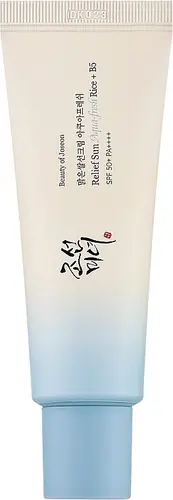
BYOMA Ultralight Face Fluid SPF 30 Versus Haruharu Wonder Black Rice Moisture Airyfit Sunscreen SPF 50+ PA++++
This chemical sunscreen covers most of the UV range, lighter on the deep UVA that drives aging.
This chemical sunscreen covers the full UV range and blocks ~98% of UVB at SPF 50.


What's inside
What's inside
 Key Ingredients
Benefits
Concerns
Ingredients Side-by-side
Water
Skin ConditioningOctocrylene
UV Absorber



Homosalate
Skin Conditioning
Ethylhexyl Salicylate
UV Absorber
Butyloctyl Salicylate
Skin Conditioning
Butyl Methoxydibenzoylmethane
UV Absorber
Glycerin
Humectant


Sodium Hyaluronate
Humectant


Tocopherol
Antioxidant



Bisabolol
Antioxidant
Ethyl Ferulate
Antioxidant
Ceramide NP
Skin Conditioning
Cholesterol
Emollient
Olea Europaea Fruit Oil
Masking



Aloe Barbadensis Leaf Juice
Skin Conditioning
Astaxanthin
Skin Conditioning
Phytosphingosine
Skin Conditioning
Haematococcus Pluvialis Extract
Antioxidant
Beta-Glucan
Skin Conditioning
Cocoglycerides
Emollient
Dicaprylyl Carbonate
EmollientDiisopropyl Adipate
EmollientCaprylic/Capric Triglyceride
Masking
Oleic Acid
Emollient

Stearic Acid
Cleansing
Sodium Stearoyl Glutamate
CleansingGlyceryl Stearate Se
Emulsifying
Hydrogenated Lecithin
Emulsifying
Propanediol
Solvent
Lactic Acid
Buffering



Microcrystalline Cellulose
AbsorbentXanthan Gum
EmulsifyingCellulose Gum
Emulsion StabilisingSodium Gluconate
Skin ConditioningCitric Acid
Buffering
Caprylhydroxamic Acid
Caprylyl Glycol
Emollient
Methylheptylglycerin
HumectantSodium Benzoate
Masking
Potassium Sorbate
Preservative
1,2-Hexanediol
Skin Conditioning
Phospholipids
Skin Conditioning
Glycolipids
Skin ConditioningPhosphatidylserine
Emulsion StabilisingWater, Octocrylene, Homosalate, Ethylhexyl Salicylate, Butyloctyl Salicylate, Butyl Methoxydibenzoylmethane, Glycerin, Sodium Hyaluronate, Tocopherol, Bisabolol, Ethyl Ferulate, Ceramide NP, Cholesterol, Olea Europaea Fruit Oil, Aloe Barbadensis Leaf Juice, Astaxanthin, Phytosphingosine, Haematococcus Pluvialis Extract, Beta-Glucan, Cocoglycerides, Dicaprylyl Carbonate, Diisopropyl Adipate, Caprylic/Capric Triglyceride, Oleic Acid, Stearic Acid, Sodium Stearoyl Glutamate, Glyceryl Stearate Se, Hydrogenated Lecithin, Propanediol, Lactic Acid, Microcrystalline Cellulose, Xanthan Gum, Cellulose Gum, Sodium Gluconate, Citric Acid, Caprylhydroxamic Acid, Caprylyl Glycol, Methylheptylglycerin, Sodium Benzoate, Potassium Sorbate, 1,2-Hexanediol, Phospholipids, Glycolipids, Phosphatidylserine
Water
Skin ConditioningDibutyl Adipate
EmollientPropanediol
Solvent
Butyloctyl Salicylate
Skin Conditioning
Ethylhexyl Triazone
UV Absorber
Terephthalylidene Dicamphor Sulfonic Acid
UV Absorber
Glycerin
Humectant
Niacinamide
Smoothing

Tromethamine
BufferingPolyglyceryl-3 Distearate
Emulsifying
1,2-Hexanediol
Skin Conditioning
Pentylene Glycol
Skin Conditioning
Diethylamino Hydroxybenzoyl Hexyl Benzoate
UV Filter
Cetearyl Alcohol
Emollient
Caprylyl Methicone
Skin Conditioning
Polysilicone-15
UV Filter
Stellaria Media Extract
Skin ConditioningHelianthus Annuus Flower Extract
Skin ConditioningVaccinium Vitis-Idaea Fruit Extract
Antioxidant
Oryza Sativa Extract
Absorbent
Bellis Perennis Flower Extract
Skin ConditioningHouttuynia Cordata Extract
Skin Conditioning
Oryza Sativa Bran Oil
Emollient
Hydrogenated Lecithin
Emulsifying
Polymethylsilsesquioxane
Palmitic Acid
Emollient
Butylene Glycol
Humectant
Stearic Acid
Cleansing
Glyceryl Stearate
Emollient
Bis-Ethylhexyloxyphenol Methoxyphenyl Triazine
Skin Conditioning
Potassium Cetyl Phosphate
EmulsifyingPoly C10-30 Alkyl Acrylate
Emulsion StabilisingMethylpropanediol
SolventCarbomer
Emulsion StabilisingAmmonium Acryloyldimethyltaurate/Vp Copolymer
Acrylates/C10-30 Alkyl Acrylate Crosspolymer
Emulsion StabilisingGlyceryl Stearate Citrate
Emollient
Ethylhexylglycerin
Skin ConditioningAdenosine
Skin Conditioning
Polyether-1
Myristic Acid
Cleansing
Biosaccharide Gum-1
Humectant
Tocopherol
Antioxidant
Moringa Oleifera Seed Oil
Emollient
Ceramide NP
Skin Conditioning
Phytosphingosine
Skin Conditioning
Phenethyl Alcohol
MaskingSodium Chloride
MaskingDisodium Phosphate
BufferingPotassium Chloride
Potassium Phosphate
BufferingWater, Dibutyl Adipate, Propanediol, Butyloctyl Salicylate, Ethylhexyl Triazone, Terephthalylidene Dicamphor Sulfonic Acid, Glycerin, Niacinamide, Tromethamine, Polyglyceryl-3 Distearate, 1,2-Hexanediol, Pentylene Glycol, Diethylamino Hydroxybenzoyl Hexyl Benzoate, Cetearyl Alcohol, Caprylyl Methicone, Polysilicone-15, Stellaria Media Extract, Helianthus Annuus Flower Extract, Vaccinium Vitis-Idaea Fruit Extract, Oryza Sativa Extract, Bellis Perennis Flower Extract, Houttuynia Cordata Extract, Oryza Sativa Bran Oil, Hydrogenated Lecithin, Polymethylsilsesquioxane, Palmitic Acid, Butylene Glycol, Stearic Acid, Glyceryl Stearate, Bis-Ethylhexyloxyphenol Methoxyphenyl Triazine, Potassium Cetyl Phosphate, Poly C10-30 Alkyl Acrylate, Methylpropanediol, Carbomer, Ammonium Acryloyldimethyltaurate/Vp Copolymer, Acrylates/C10-30 Alkyl Acrylate Crosspolymer, Glyceryl Stearate Citrate, Ethylhexylglycerin, Adenosine, Polyether-1, Myristic Acid, Biosaccharide Gum-1, Tocopherol, Moringa Oleifera Seed Oil, Ceramide NP, Phytosphingosine, Phenethyl Alcohol, Sodium Chloride, Disodium Phosphate, Potassium Chloride, Potassium Phosphate
Reviews
Ingredients Explained
These ingredients are found in both products.
Ingredients higher up in an ingredient list are typically present in a larger amount.
1,2-Hexanediol is a synthetic liquid and another multi-functional powerhouse.
It is a:
- Humectant, drawing moisture into the skin
- Emollient, helping to soften skin
- Solvent, dispersing and stabilizing formulas
- Preservative booster, enhancing the antimicrobial activity of other preservatives
Butyloctyl Salicylate is a chemical UV filter structurally similar to octisalate. It is a photostabilizer, SPF booster, emollient and solvent. This ingredient helps evenly spread out ingredients.
According to a manufacturer, it is suitable for pairing with micro Titanium Dioxide, Zinc Oxide, and pigments.
Photostabilizers help stabilize UV-filters and prevents them from degrading quickly.
Learn more about Butyloctyl SalicylateCeramide NP (formerly known as Ceramide 3) is one of the skin's naturally occurring lipids.
Since ceramides are the major lipid components of the skin, they are crucial for maintaining skin barrier and hydration. Ceramide NP most closely mirrors the dominant kind in human skin amongst ceramide subtypes.
This ceramide works by slotting into gaps within the stratum corneum's lipid matrix to limit trans-epidermal water loss (TEWL) and shield the skin against external irritants.
A study with 312 patients found that using a ceramide-containing routine for 4 weeks reduced the severity of atopic dermatitis by over 61%.
Another clinical study in subjects aged 60 and older found that a ceramide body wash and moisturizer improved skin dryness and itchy skin in 15 days.
Overall, ceramides are considered non-irritating and safety tests have found little to no observable adverse effects from using this ingredient.
Ceramide NP is usually sourced from plants (like soybean or rice bran), or produced synthetically.
Learn more about Ceramide NPGlycerin (or glycerol) is a compound naturally found in your skin. It's a powerhouse humectant that pulls water into the stratum corneum.
Topically, glycerin does several things at once:
Your skin makes glycerin on its own (mostly from sebaceous oil breakdown) and shuttles it to your outermost layer of skin, or your epidermis, via aquaporin-3.
Aquaporin-3 is a transporter that is essential for normal skin hydration, elasticity, and repair. Interestingly, mice lacking in AQP3 have dry and less elastic skin that can be fully corrected with glycerin.
This ingredient is non-irritating, plays well with almost every ingredient, and works across all skin types. Typical use is anywhere between 3-10% but can go up to 79% in some leave-on products.
Just know very high concentrations (>40%) can feel tacky in low humidity.
Glycerin is the name for this ingredient in American English. British English uses Glycerol/Glycerine.
Learn more about GlycerinHydrogenated Lecithin is a more stable version of lecithin.
It's made by taking lecithin (a phospholipid commonly found in soybeans and egg yolks) and hydrogenating it. This just means the unsaturated fatty acids are turned into saturated ones so they don't go bad as easily.
This ingredient is an emollient, emulsifier, and penetration enhancer. As an emollient, it helps soften and hydrate skin by trapping moisture within. As an emulsifier, it prevents oil and water ingredients from separating.
Hydrogenated Lecithin can form tiny spherical structures made of phospholipid bilayers called liposomes. These liposomes are able to capture compounds inside their structure and deliver them through the skin barrier.
Because phospholipids are a natural component of our cell membranes, this ingredient is inherently compatible with skin.
A 2021 study found lecithin-based surfactants were less harsh and more tolerable comared to Sodium Lauryl Sulfate (SLS).
Learn more about Hydrogenated LecithinPhytosphingosine is a phospholipid naturally found in our skin as a building block for ceramides.. It helps moisturize, soothe, and protect skin.
Phytosphingosine contributes to your skin's natural moisturizing factor (NMF). The NMF is responsible for hydration, a strong barrier, and plasticity. Our NMF decreases with age. Increasing NMF leads to more healthy and hydrated skin.
Studies show products formulated with NMF ingredients help strengthen our skin's barrier. Having a healthy skin barrier reduces irritation and increases hydration. Our skin barrier is responsible for having plump and firm skin. It also helps protect our skin against infection, allergies, and inflammation.
Fun fact: Phytosphingosine is abundant in plants and fungi.
More ingredients that help boost collagen in skin:
Learn more about PhytosphingosinePropanediol is an all-star ingredient. It softens, hydrates, and smooths the skin.
It’s often used to:
Propanediol is not likely to cause sensitivity and considered safe to use. It is derived from corn or petroleum with a clear color and no scent.
Learn more about PropanediolStearic Acid is a fatty acid that is already found in your skin. It's one of the free fatty acids that works alongside ceramides and cholesterols to maintain your barrier.
In cosmetics, it is a multitasker:
Safety-wise, the CIR Expert Panel has concluded it to be safe in cosmetics when formulated to be non-irritating and non-sensitizing.
Free stearic acid is a C18 fatty acid that the Malassezia yeast can substrate, so this ingredient may not be fungal acne safe.
Learn more about Stearic AcidTocopherol is a fat-soluble antioxidant known as Vitamin E.
You'll find this ingredient in the vast majority of skincare (for good reason). It works to neutralize free radicals, or unstable molecules generated by UV exposure, pollution, and other environmental stressors, before they can cause oxidative damage to your skin cells.
Topically applied tocopherol has been shown to protect against UV damage by ramping up the skin's own natural defense enzymes.
It also acts as a skin conditioning agent; some studies show that regular topical use can improve the skin's water-binding capacity over 2-4 weeks.
This ingredient is especially loved for being a team player. When combined with Vitamin C, the photoprotective effect of both ingredients roughly doubles and the combo also helps reduce UV-induced DNA damage.
This ingredient has some brightening potential but it's more of a prevention ingredient than spot-fader. Cell studies show it can slow down melanin production but it's worth noting that it's not the most powerful brightener out there.
In formulations, it also serves as a stabilizer that helps protect other oxidation-prone ingredients from degrading.
Concentrations usually range from 0.1-1% in most leave-on products.
Learn more about TocopherolWater. It's the most common cosmetic ingredient of all. You'll usually see it at the top of ingredient lists, meaning that it makes up the largest part of the product.
So why is it so popular? Water most often acts as a solvent - this means that it helps dissolve other ingredients into the formulation.
You'll also recognize water as that liquid we all need to stay alive. If you see this, drink a glass of water. Remember to stay hydrated!
Learn more about Water