

What's inside
What's inside
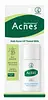 Key Ingredients
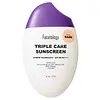
Benefits
Concerns
Ingredients Side-by-side
Cyclopentasiloxane
Emollient
Zinc Oxide
Cosmetic Colorant


Water
Skin ConditioningTalc
Abrasive
Ethylhexyl Methoxycinnamate
UV Absorber
Mica
Cosmetic ColorantEthylhexyl Salicylate
UV Absorber
Silica
Abrasive
Methylpropanediol
SolventPEG-10 Dimethicone
Skin Conditioning
Glycerin
Humectant


Ethylhexyl Triazone
UV Absorber
Polyglyceryl-4 Isostearate
Emulsifying
Dibutyl Adipate
EmollientPortulaca Oleracea Extract
Skin Conditioning

Butylene Glycol
Humectant
Trimethylsiloxysilicate
Emollient
Diethylamino Hydroxybenzoyl Hexyl Benzoate
UV Filter
Triethoxycaprylylsilane
Dipropylene Glycol
HumectantPhenoxyethanol
Preservative
Dimethicone
Emollient
CI 77492
Cosmetic ColorantSalicylic Acid
Masking






O-Cymen-5-Ol
Antimicrobial
Centella Asiatica Extract
Cleansing
PEG/PPG-18/18 Dimethicone
Emulsifying
Magnesium Sulfate
Amylopectin
Dextrin
AbsorbentEthylhexylglycerin
Skin ConditioningXanthan Gum
EmulsifyingCI 77491
Cosmetic ColorantSodium Ascorbyl Phosphate
Antioxidant

Chondrus Crispus Extract
Skin Conditioning
BHT
Antioxidant
CI 77499
Cosmetic ColorantRosmarinus Officinalis Extract
AntimicrobialTocopheryl Acetate
Antioxidant
Pyridoxine Hcl
Skin ConditioningStearyl Glycyrrhetinate
Skin ConditioningButyl Avocadate
Skin Conditioning
Candida Bombicola/Glucose/Methyl Rapeseedate Ferment
AntimicrobialPropylene Glycol
Humectant
Chlorphenesin
Antimicrobial
Asiaticoside
Antioxidant
Madecassic Acid
Skin Conditioning
Asiatic Acid
Skin Conditioning
Sodium Dehydroacetate
Preservative
Citric Acid
Buffering
Potassium Sorbate
Preservative
Tocopherol
Antioxidant
Cyclopentasiloxane, Zinc Oxide, Water, Talc, Ethylhexyl Methoxycinnamate, Mica, Ethylhexyl Salicylate, Silica, Methylpropanediol, PEG-10 Dimethicone, Glycerin, Ethylhexyl Triazone, Polyglyceryl-4 Isostearate, Dibutyl Adipate, Portulaca Oleracea Extract, Butylene Glycol, Trimethylsiloxysilicate, Diethylamino Hydroxybenzoyl Hexyl Benzoate, Triethoxycaprylylsilane, Dipropylene Glycol, Phenoxyethanol, Dimethicone, CI 77492, Salicylic Acid, O-Cymen-5-Ol, Centella Asiatica Extract, PEG/PPG-18/18 Dimethicone, Magnesium Sulfate, Amylopectin, Dextrin, Ethylhexylglycerin, Xanthan Gum, CI 77491, Sodium Ascorbyl Phosphate, Chondrus Crispus Extract, BHT, CI 77499, Rosmarinus Officinalis Extract, Tocopheryl Acetate, Pyridoxine Hcl, Stearyl Glycyrrhetinate, Butyl Avocadate, Candida Bombicola/Glucose/Methyl Rapeseedate Ferment, Propylene Glycol, Chlorphenesin, Asiaticoside, Madecassic Acid, Asiatic Acid, Sodium Dehydroacetate, Citric Acid, Potassium Sorbate, Tocopherol
Water
Skin ConditioningCyclopentasiloxane
Emollient
Ethylhexyl Methoxycinnamate
UV Absorber
Cetyl Alcohol
Emollient

Titanium Dioxide
Cosmetic Colorant
Glycerin
Humectant
Niacinamide
Smoothing
Talc
Abrasive
Centella Asiatica Extract
Cleansing
Nylon 6/12
AbsorbentCetearyl Alcohol
Emollient

Zinc Oxide
Cosmetic Colorant
Butyl Methoxydibenzoylmethane
UV Absorber
Butylene Glycol
Humectant
Glyceryl Stearate
Emollient
Octocrylene
UV Absorber
Propylene Glycol
Humectant
Ceteareth-20
CleansingPEG-40 Stearate
Emulsifying
Polyacrylamide
Triethoxycaprylylsilane
Aluminum Hydroxide
EmollientEthylhexyl Salicylate
UV Absorber
Artemisia Vulgaris Extract
Skin Conditioning
Isopropyl Titanium Triisostearate
Emollient
Methylene Bis-Benzotriazolyl Tetramethylbutylphenol
UV Filter
Lecithin
Emollient
Mica
Cosmetic ColorantLaureth-7
EmulsifyingOryza Sativa Extract
Absorbent
Oryza Sativa Germ Extract
EmollientDecyl Glucoside
Cleansing
Acetyl Glucosamine
Skin Conditioning
Caprylhydroxamic Acid
Ethylhexylglycerin
Skin ConditioningBroussonetia Papyrifera Bark Extract
Skin ConditioningMorus Alba Bark Extract
Skin ConditioningRhus Semialata Extract
Skin ConditioningCamellia Japonica Flower Extract
EmollientCamellia Sinensis Leaf Extract
Antimicrobial
Madecassoside
Antioxidant
Pyrus Malus Fruit Extract
Skin Conditioning
Citric Acid
Buffering
Xanthan Gum
EmulsifyingTricholoma Matsutake Extract
Skin ConditioningTranexamic Acid
Astringent
Phragmites Communis Extract
Skin ConditioningPoria Cocos Extract
Skin ConditioningPhenoxyethanol
Preservative
Potassium Sorbate
Preservative
Sodium Benzoate
Masking
CI 77491
Cosmetic ColorantCI 77492
Cosmetic ColorantCI 77499
Cosmetic ColorantWater, Cyclopentasiloxane, Ethylhexyl Methoxycinnamate, Cetyl Alcohol, Titanium Dioxide, Glycerin, Niacinamide, Talc, Centella Asiatica Extract, Nylon 6/12, Cetearyl Alcohol, Zinc Oxide, Butyl Methoxydibenzoylmethane, Butylene Glycol, Glyceryl Stearate, Octocrylene, Propylene Glycol, Ceteareth-20, PEG-40 Stearate, Polyacrylamide, Triethoxycaprylylsilane, Aluminum Hydroxide, Ethylhexyl Salicylate, Artemisia Vulgaris Extract, Isopropyl Titanium Triisostearate, Methylene Bis-Benzotriazolyl Tetramethylbutylphenol, Lecithin, Mica, Laureth-7, Oryza Sativa Extract, Oryza Sativa Germ Extract, Decyl Glucoside, Acetyl Glucosamine, Caprylhydroxamic Acid, Ethylhexylglycerin, Broussonetia Papyrifera Bark Extract, Morus Alba Bark Extract, Rhus Semialata Extract, Camellia Japonica Flower Extract, Camellia Sinensis Leaf Extract, Madecassoside, Pyrus Malus Fruit Extract, Citric Acid, Xanthan Gum, Tricholoma Matsutake Extract, Tranexamic Acid, Phragmites Communis Extract, Poria Cocos Extract, Phenoxyethanol, Potassium Sorbate, Sodium Benzoate, CI 77491, CI 77492, CI 77499
Ingredients Explained
These ingredients are found in both products.
Ingredients higher up in an ingredient list are typically present in a larger amount.
Butylene Glycol (or BG) is used within cosmetic products for a few different reasons:
Overall, Butylene Glycol is a safe and well-rounded ingredient that works well with other ingredients.
Though this ingredient works well with most skin types, some people with sensitive skin may experience a reaction such as allergic rashes, closed comedones, or itchiness.
Learn more about Butylene GlycolCentella Asiatica Extract (Centella) is derived from an herb native to Southeast Asia. It is famous for its anti-inflammatory and soothing properties.
Centella is rich in antioxidants and amino acids, such as Madecassic Acid and Asiaticoside.
Studies show the compounds in centella help with:
The combination of all these properties makes centella effective at soothing, hydrating, and protecting the skin.
Other great components of centella include Vitamin A, vitamin C, several B vitamins, and Asiatic Acid.
Fun fact: Centella has been used as a medicine and in food for many centuries. As a medicine, it is used to treat burns, scratches, and wounds.
Learn more about Centella Asiatica ExtractCi 77491 is also hydrated iron III oxide. It's sole purpose is to give a red/pink hue to products.
Iron III oxides are classified as inorganic chemicals for coloring.
Synthetically created Ci 77491 is considered safer than those naturally found. This is because the synthetically created version may contain less impurities. Iron oxides are generally non-toxic and non-allergenic.
Learn more about CI 77491CI 77492 is also hydrated iron III oxide. It's sole purpose is to give a yellow hue to products.
Iron III oxides are classified as inorganic chemicals for coloring.
Synthetically created CI 77492 is considered safer than those naturally found. This is because the synthetically created version may contain less impurities. Iron oxides are generally non-toxic and non-allergenic.
Learn more about CI 77492Ci 77499 is also hydrated iron III oxide. It is created from mixing red and black iron oxides. This helps give shades of darkness to a product.
Iron III oxides are classified as inorganic chemicals for coloring.
Citric Acid is an alpha hydroxy acid (AHA) naturally found in citrus fruits like oranges, lemons, and limes.
Like other AHAs, citric acid can exfoliate skin by breaking down the bonds that hold dead skin cells together. This helps reveal smoother and brighter skin underneath.
However, this exfoliating effect only happens at high concentrations (20%) which can be hard to find in cosmetic products.
Due to this, citric acid is usually included in small amounts as a pH adjuster. This helps keep products slightly more acidic and compatible with skin's natural pH.
In skincare formulas, citric acid can:
While it can provide some skin benefits, research shows lactic acid and glycolic acid are generally more effective and less irritating exfoliants.
Most citric acid used in skincare today is made by fermenting sugars (usually from molasses). This synthetic version is identical to the natural citrus form but easier to stabilize and use in formulations.
Read more about some other popular AHA's here:
Learn more about Citric AcidCyclopentasiloxane, or D5, is a silicone used to improve texture of products and trap moisture.
D5 is considered lightweight and volatile. Volatile means it evaporates quickly after application. Once evaporated, D5 leaves a thin barrier that helps keep skin hydrated.
It is also an emollient. Emollients help soften the skin and prevent water loss. Silicones create a silky texture in products. D5 helps other ingredients become more spreadable.
Studies show D5 is safe to use in skincare products. We recommend speaking with a skincare professional if you have concerns.
Learn more about CyclopentasiloxaneEthylhexyl Methoxycinnamate is an organic compound that provides UVB protection. It often goes by the more common name of octinoxate. It is created from methoxycinnamic acid and 2-ethylhexanol.
Ethylhexyl Methoxycinnamate absorbs UVB rays with wavelengths between 280-320 nm. UV absorbers protect your skin by using chemical reactions to convert UV rays into heat and energy.
UVB (290-320 nm) rays emit more energy than UVA rays. They are capable of damaging DNA, causing sunburns and are thought to be linked to skin cancer.
The state of Hawaii has banned sunscreens containing octinoxate due to its potential impact on coral reefs. More research is needed to bridge gaps in this research. The European Union allows higher levels of octinoxate in sunscreens than the US and Australia.
Ethylhexyl Methoxycinnamate is oil soluble. It is not stable and may lose efficacy when exposed to sunlight.
Learn more about Ethylhexyl MethoxycinnamateEthylhexyl Salicylate is an organic compound used to block UV rays. It primarily absorbs UVB rays but offers a small amount of UVA protection as well.
Commonly found in sunscreens, Ethylhexyl Salicylate is created from salicylic acid and 2-ethylhexanol. You might know salicylic acid as the effective acne fighter ingredient and BHA.
The ethylhexanol in this ingredient is a fatty alcohol and helps hydrate your skin, similar to oils. It is an emollient, which means it traps moisture into the skin.
According to manufacturers, Ethylhexyl Salicylate absorbs UV wavelength of 295-315 nm, with a peak absorption at 307-310 nm. UVA rays are linked to long term skin damage, such as hyperpigmentation. UVB rays emit more energy and are capable of damaging our DNA. UVB rays cause sunburn.
Learn more about Ethylhexyl SalicylateEthylhexylglycerin is created from glycerin. It is a multitasker ingredient that:
The CIR Expert Panel found minimal skin absorption or sensitization of any kind in a safety assessment. Though this ingredient is considered well-tolerated, a small number of cases of allergic dermatitis have been published since 2002. Just be sure to patch test if you are unsure.
Industry-reported use ranges from 8% in rinse-off products and 2% in leave-on formulations.
Learn more about EthylhexylglycerinGlycerin (or glycerol) is a compound naturally found in your skin. It's a powerhouse humectant that pulls water into the stratum corneum.
Topically, glycerin does several things at once:
Your skin makes glycerin on its own (mostly from sebaceous oil breakdown) and shuttles it to your outermost layer of skin, or your epidermis, via aquaporin-3.
Aquaporin-3 is a transporter that is essential for normal skin hydration, elasticity, and repair. Interestingly, mice lacking in AQP3 have dry and less elastic skin that can be fully corrected with glycerin.
This ingredient is non-irritating, plays well with almost every ingredient, and works across all skin types. Typical use is anywhere between 3-10% but can go up to 79% in some leave-on products.
Just know very high concentrations (>40%) can feel tacky in low humidity.
Glycerin is the name for this ingredient in American English. British English uses Glycerol/Glycerine.
Learn more about GlycerinMica is a naturally occurring mineral used to add shimmer and color in cosmetics. It can also help improve the texture of a product or give it an opaque, white/silver color.
Serecite is the name for very fine but ragged grains of mica.
This ingredient is often coated with metal oxides like titanium dioxide. Trace amounts of heavy metals may be found in mica, but these metals are not harmful in our personal products.
Mica has been used since prehistoric times throughout the world. Ancient Egyptian, Indian, Greek, Roman, Aztec, and Chinese civilizations have used mica.
Learn more about MicaPhenoxyethanol is a preservative that has germicide, antimicrobial, and aromatic properties. Studies show that phenoxyethanol can prevent microbial growth. By itself, it has a scent that is similar to that of a rose.
It's often used in formulations along with Caprylyl Glycol to preserve the shelf life of products.
Potassium Sorbate is a preservative used to prevent yeast and mold in products. It is commonly found in both cosmetic and food products.
This ingredient comes from potassium salt derived from sorbic acid. Sorbic acid is a natural antibiotic and effective against fungus.
Both potassium sorbate and sorbic acid can be found in baked goods, cheeses, dried meats, dried fruit, ice cream, pickles, wine, yogurt, and more.
You'll often find this ingredient used with other preservatives.
Learn more about Potassium SorbatePropylene Glycol is a synthetic, colorless, odorless liquid that has been a staple in cosmetics for decades. It is a skin conditioning agent, humectant, and solvent.
As a humectant, it draw water to the skin to reduce flaking and restore suppleness. It's also a solvent that helps dissolve other actives and keeps formulas stable across temperature changes.
The CIR Expert Panel has confirmed this ingredient to be nontoxic and clinical studies show no sensitization at cosmetic use concentrations.
True allergic reactions are quite rare: a 15-year retrospective study of 6,751 patients found only 0.31% had a positive reaction (and less than half were considered clinically relevant).
It seemed that when sensitization does occur, it's most commonly linked to topical medication (like corticosteroids) and not cosmetics. Allergic contact dermatitis also appears largely limited to individuals with underlying skin conditions.
Overall, propylene glycol is a well-studied ingredient that most people can tolerate without issue.
Learn more about Propylene GlycolTalc is a clay mineral. It helps absorb moisture and improve the texture of products. Like other types of clay, Talc can have a slight exfoliating effect on skin. Talc can be added to increase the volume of products.
Some Baby powders are made by combining talc with corn starch. The word "talc" comes from Latin and originates from Arabic. Talc is a mineral commonly found throughout the world.
If you have any concerns about using talc, we recommend checking out the FDA's official page.
Learn more about TalcTriethoxycaprylylsilane is a silicon-based surface modifier that makes sunscreens feel silky and makeup stay put.
Its main job is to coat mineral particles like titanium dioxide, zinc oxide, and color pigments in a thin, oily layer so they spread smoothly, don't clump, and stick to skin better.
This ingredient is typically used at low levels (up to 2.5% in eyeshadow and 1% in lipstick).
Learn more about TriethoxycaprylylsilaneWater. It's the most common cosmetic ingredient of all. You'll usually see it at the top of ingredient lists, meaning that it makes up the largest part of the product.
So why is it so popular? Water most often acts as a solvent - this means that it helps dissolve other ingredients into the formulation.
You'll also recognize water as that liquid we all need to stay alive. If you see this, drink a glass of water. Remember to stay hydrated!
Learn more about WaterXanthan gum is used as a stabilizer and thickener within cosmetic products. It helps give products a sticky, thick feeling - preventing them from being too runny.
On the technical side of things, xanthan gum is a polysaccharide - a combination consisting of multiple sugar molecules bonded together.
Xanthan gum is a pretty common and great ingredient. It is a natural, non-toxic, non-irritating ingredient that is also commonly used in food products.
Learn more about Xanthan GumZinc Oxide is a mineral broad-spectrum UV filter; it is the broadest UVA and UVB reflector approved by the FDA. It also has skin protectant and skin soothing properties.
Zinc oxide is one of the most effective broad-spectrum UV filters. It protects against UVB, UVAII, and UVAI. In comparison to its counterpart titanium dioxide, zinc oxide provides uniform and extended UVA protection.
Another great benefit? This ingredient is highly photostable so it won't degrade easily under sunlight.
A common myth is that mineral UV filters are widely believed to primarily reflect UV light.
However, modern research shows titanium dioxide absorbs UV radiation like chemical filters (~95% absorption & 5% reflection).
Zinc oxide has great skin soothing properties so you'll likely find this in sunscreens formulated for sensitive skin or babies/children. It is unlikely to cause "eye sting" like other sunscreen ingredients.
Regulatory agencies consider zinc oxide to be non-toxic and safe. It has also been shown to not penetrate the skin.
Unfortunately, this ingredient does leave a visible white cast. This is why mineral sunscreens are often less cosmetically elegant than chemical or hybrid ones.
In cosmetics, zinc oxide can be found in both non-nano and nano-sized forms. The nano version is used to reduce white cast and improve the texture of sunscreen formulas.
There are ongoing concerns surrounding nano-zinc oxide's impact on marine ecosystems and whether it can be absorbed into skin.
Regarding marine ecosystems and coral reefs, there is no conclusive evidence that any form of zinc oxide (or any other sunscreen ingredients) will cause harm. The science is still developing but many consumers are keeping a close eye on this issue.
Please note, many destinations have reef-safety sunscreen rules. For instance, the U.S. Virgin Islands advises all visitors to use non-nano mineral sunscreens.
There has also been some stir about whether micronized or nano zinc oxide has potential photoxicity and absorption through the skin/lungs.
An in-vitro (done in a test tube or petri dish) study demonstrated micronized zinc oxide to have potential phototoxicity. There's no need to fret; the EU Commission's Scientific Committee on Consumer Safety has stated, "The relevance of these findings needs to be clarified by appropriate investigations in vivo." Or in other words, further studies done on living organisms are needed to prove this.
Current research shows zinc oxide nanoparticles do not penetrate intact or sunburned skin. They either remain on the surface or in the outermost layer of dead skin (stratum corneum).
Zinc oxide is one of only two classified mineral UV filters with titanium dioxide being the other one.
Fun fact: Zinc has been used throughout history as an ingredient in paint and medicine. An Indian text from 500BC is believed to list zinc oxide as a salve for open wound. The Ancient Greek physician Dioscorides has also mentioned the use of zinc as an ointment in 1AD.
Learn more about Zinc Oxide
