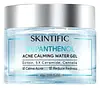
This acne moisturizer is formulated around Niacinamide and Melaleuca Alternifolia Leaf Oil to clear breakouts and calm redness.
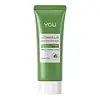
This calming moisturizer is formulated around Panthenol and Centella Asiatica Extract to calm redness and strengthen the skin barrier.


What's inside
What's inside
 Key Ingredients
Benefits
Concerns
Ingredients Side-by-side
Water
Skin ConditioningEthylhexyl Palmitate
Emollient




Propylene Glycol
Humectant
Glycerin
Humectant

Dimethicone
Emollient
Cetearyl Alcohol
Emollient

Glyceryl Stearate
Emollient
PEG-100 Stearate
Surfactant
Butylene Glycol
Humectant
Propanediol
Solvent
Hydroxyacetophenone
Antioxidant
Carbomer
Emulsion StabilisingTriethanolamine
BufferingCetearyl Glucoside
Emulsifying
Sorbitan Stearate
Emulsifying
Sodium Acrylate/Sodium Acryloyldimethyl Taurate Copolymer
Emulsion StabilisingSodium Acrylates Copolymer
Pentylene Glycol
Skin Conditioning
Allantoin
Skin Conditioning

Galla Rhois Gallnut Extract
Antimicrobial
Isohexadecane
EmollientAloe Barbadensis Leaf Juice
Skin Conditioning
Gentiana Scabra Root Extract
Skin ConditioningXanthan Gum
EmulsifyingCaprylhydroxamic Acid
ChelatingLecithin
Emollient
Caprylic/Capric Triglyceride
Masking
Polysorbate 80
Emulsifying
Disodium EDTA
ChelatingNiacinamide
Smoothing







Cedrus Atlantica Bark Oil
Masking




Sorbitan Oleate
Emulsifying
Melaleuca Alternifolia Leaf Oil
Antioxidant
Pelargonium Graveolens Oil
Masking
Citrus Paradisi Peel Oil
Masking
Panthenol
Skin Conditioning
Ectoin
Skin Conditioning
Phenoxyethanol
Preservative
Trehalose
Humectant
Glyceryl Glucoside
Humectant
Dipotassium Glycyrrhizate
Humectant
Rheum Palmatum Root Extract
Astringent
Scutellaria Baicalensis Root Extract
Astringent
Phellodendron Amurense Bark Extract
Skin ConditioningSalvia Miltiorrhiza Root Extract
Skin ConditioningEthylhexylglycerin
Skin ConditioningMadecassoside
Antioxidant
Asiaticoside
Antioxidant
Asiatic Acid
Skin Conditioning
Madecassic Acid
Skin Conditioning
Caprylyl Glycol
Emollient
Glyceryl Caprylate
EmollientStephania Tetrandra Root Extract
Skin ConditioningZinc PCA
Humectant
CI 19140
Cosmetic ColorantCI 17200
Cosmetic ColorantWater, Ethylhexyl Palmitate, Propylene Glycol, Glycerin, Dimethicone, Cetearyl Alcohol, Glyceryl Stearate, PEG-100 Stearate, Butylene Glycol, Propanediol, Hydroxyacetophenone, Carbomer, Triethanolamine, Cetearyl Glucoside, Sorbitan Stearate, Sodium Acrylate/Sodium Acryloyldimethyl Taurate Copolymer, Sodium Acrylates Copolymer, Pentylene Glycol, Allantoin, Galla Rhois Gallnut Extract, Isohexadecane, Aloe Barbadensis Leaf Juice, Gentiana Scabra Root Extract, Xanthan Gum, Caprylhydroxamic Acid, Lecithin, Caprylic/Capric Triglyceride, Polysorbate 80, Disodium EDTA, Niacinamide, Cedrus Atlantica Bark Oil, Sorbitan Oleate, Melaleuca Alternifolia Leaf Oil, Pelargonium Graveolens Oil, Citrus Paradisi Peel Oil, Panthenol, Ectoin, Phenoxyethanol, Trehalose, Glyceryl Glucoside, Dipotassium Glycyrrhizate, Rheum Palmatum Root Extract, Scutellaria Baicalensis Root Extract, Phellodendron Amurense Bark Extract, Salvia Miltiorrhiza Root Extract, Ethylhexylglycerin, Madecassoside, Asiaticoside, Asiatic Acid, Madecassic Acid, Caprylyl Glycol, Glyceryl Caprylate, Stephania Tetrandra Root Extract, Zinc PCA, CI 19140, CI 17200
Water
Skin ConditioningPanthenol
Skin Conditioning
Methyl Gluceth-20
Humectant
Dipropylene Glycol
HumectantCentella Asiatica Extract
Cleansing
Calendula Officinalis Extract
Skin Conditioning
Avena Sativa Kernel Extract
Abrasive
Phaeodactylum Tricornutum Extract
HumectantChlorella Vulgaris Extract
Skin ConditioningPentylene Glycol
Skin Conditioning
Acrylates/C10-30 Alkyl Acrylate Crosspolymer
Emulsion StabilisingTromethamine
Buffering1,2-Hexanediol
Skin Conditioning
Ectoin
Skin Conditioning
Ceramide NP
Skin Conditioning
Ceramide As
Skin Conditioning
Ceramide Ns
Skin Conditioning
Ceramide AP
Skin Conditioning
Ceramide EOP
Skin Conditioning
Butylene Glycol
Humectant
Glycerophosphoinositol Choline
Skin ProtectingGlycerin
Humectant
Ammonium Acryloyldimethyltaurate/Vp Copolymer
Hydrogenated Lecithin
Emulsifying
Tocopherol
Antioxidant
Pentasodium Pentetate
ChelatingErythritol
Humectant
Propanediol
Solvent
Phytic Acid
Chelating
Silver Oxide
AntimicrobialDiethoxyethyl Succinate
SolventHydroxyphenyl Propamidobenzoic Acid
Skin ConditioningLecithin
Emollient
Sodium Ascorbate
Antioxidant
Ascorbyl Palmitate
Antioxidant
Water, Panthenol, Methyl Gluceth-20, Dipropylene Glycol, Centella Asiatica Extract, Calendula Officinalis Extract, Avena Sativa Kernel Extract, Phaeodactylum Tricornutum Extract, Chlorella Vulgaris Extract, Pentylene Glycol, Acrylates/C10-30 Alkyl Acrylate Crosspolymer, Tromethamine, 1,2-Hexanediol, Ectoin, Ceramide NP, Ceramide As, Ceramide Ns, Ceramide AP, Ceramide EOP, Butylene Glycol, Glycerophosphoinositol Choline, Glycerin, Ammonium Acryloyldimethyltaurate/Vp Copolymer, Hydrogenated Lecithin, Tocopherol, Pentasodium Pentetate, Erythritol, Propanediol, Phytic Acid, Silver Oxide, Diethoxyethyl Succinate, Hydroxyphenyl Propamidobenzoic Acid, Lecithin, Sodium Ascorbate, Ascorbyl Palmitate
Reviews
Ingredients Explained
These ingredients are found in both products.
Ingredients higher up in an ingredient list are typically present in a larger amount.
Butylene Glycol (or BG) is used within cosmetic products for a few different reasons:
Overall, Butylene Glycol is a safe and well-rounded ingredient that works well with other ingredients.
Though this ingredient works well with most skin types, some people with sensitive skin may experience a reaction such as allergic rashes, closed comedones, or itchiness.
Learn more about Butylene GlycolEctoin is a compound found naturally in some species of bacteria. It can be synthetically created for skincare use.
This ingredient is an osmolyte; Osmolytes help organisms survive osmotic shock (it protects them from extreme conditions). It does this by influencing the properties of biological fluids within cells.
When applied to the skin, ectoin helps bind water molecules to protect our skin. The water forms a sort of armor for the parts of our skin cells, enzymes, proteins, and more.
Besides this, ectoin has many uses in skincare:
A study from 2004 found ectoin to counteract the damage from UV-A exposure at different cell levels. It has also been shown to protect skin against both UV-A, UV-B rays, infrared light, and visible light.
Studies show ectoin to have dual-action pollution protection: first, it protects our skin from further pollution damage. Second, it helps repair damage from pollution.
In fact, ectoin has been shown to help with:
Fun fact: In the EU, ectoin is used in inhalation medication as an anti-pollution ingredient.
Ectoin is a highly stable ingredient. It has a wide pH range of 1-9. Light, oxygen, and temperature do not affect this ingredient.
The chemical name for this ingredient is Tetrahydromethylpyrimidine Carboxylic Acid.
Learn more about EctoinGlycerin (or glycerol) is a compound naturally found in your skin. It's a powerhouse humectant that pulls water into the stratum corneum.
Topically, glycerin does several things at once:
Your skin makes glycerin on its own (mostly from sebaceous oil breakdown) and shuttles it to your outermost layer of skin, or your epidermis, via aquaporin-3.
Aquaporin-3 is a transporter that is essential for normal skin hydration, elasticity, and repair. Interestingly, mice lacking in AQP3 have dry and less elastic skin that can be fully corrected with glycerin.
This ingredient is non-irritating, plays well with almost every ingredient, and works across all skin types. Typical use is anywhere between 3-10% but can go up to 79% in some leave-on products.
Just know very high concentrations (>40%) can feel tacky in low humidity.
Glycerin is the name for this ingredient in American English. British English uses Glycerol/Glycerine.
Learn more about GlycerinLecithin is a term for a group of substances found in the cell membranes of plants, animals, and humans. They are made up of phospholipids.
Thanks to its amphiphilic structure (water-loving head and oil-loving tail), it is a true multitasker:
It plays well with most ingredients and is typically used at 0.1-1%. However, concentrations up to 50% have been reported in moisturizers.
Learn more about LecithinPanthenol is a common ingredient that helps hydrate and soothe the skin. It is found naturally in our skin and hair.
There are two forms of panthenol: D and L.
D-panthenol is also known as dexpanthenol. Most cosmetics use dexpanthenol or a mixture of D and L-panthenol.
Panthenol is famous due to its ability to go deeper into the skin's layers. Using this ingredient has numerous pros (and no cons):
Like hyaluronic acid, panthenol is a humectant. Humectants are able to bind and hold large amounts of water to keep skin hydrated.
This ingredient works well for wound healing. It works by increasing tissue in the wound and helps close open wounds.
Once oxidized, panthenol converts to pantothenic acid. Panthothenic acid is found in all living cells.
This ingredient is also referred to as pro-vitamin B5.
Learn more about PanthenolPentylene Glycol (1,2-pentanediol) is a multitasking little diol with three main roles in a formula:
Research on alkanediols (the family pentylene glycol belongs to) show they work by disrupting microbial cell membranes. This disruption helps the primary preservative system in a product work more effectively at lower doses.
On the safety side, the Cosmetic Ingredient Review Expert Panel has concluded this ingredient to be safe as used in current cosmetic practices + concentrations.
Typical use levels in a formula run about 1-5%.
Learn more about Pentylene GlycolPropanediol is an all-star ingredient. It softens, hydrates, and smooths the skin.
It’s often used to:
Propanediol is not likely to cause sensitivity and considered safe to use. It is derived from corn or petroleum with a clear color and no scent.
Learn more about PropanediolWater. It's the most common cosmetic ingredient of all. You'll usually see it at the top of ingredient lists, meaning that it makes up the largest part of the product.
So why is it so popular? Water most often acts as a solvent - this means that it helps dissolve other ingredients into the formulation.
You'll also recognize water as that liquid we all need to stay alive. If you see this, drink a glass of water. Remember to stay hydrated!
Learn more about Water

