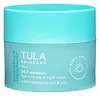
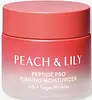
Tula Skincare 24-7 Moisture Hydrating Day & Night Cream Versus Peach & Lily Peptide Pro Firming Moisturizer
This barrier-repair moisturizer is formulated around Squalane and Bifida Ferment Lysate to strengthen the skin barrier and hydrate skin.
This anti-aging moisturizer is formulated around Collagen Extract and Acetyl Hexapeptide-8 to soften the look of wrinkles and hydrate skin.


What's inside
What's inside
 Key Ingredients
Benefits
Concerns
Ingredients Side-by-side
Water
Skin ConditioningButylene Glycol
Humectant

Ethylhexyl Palmitate
Emollient




Squalane
Emollient
Glycerin
Humectant
Cetyl Alcohol
Emollient

Caprylic/Capric Triglyceride
Masking
Dimethicone
Emollient
Hydrogenated Vegetable Oil
Emollient
Glyceryl Stearate
Emollient
PEG-100 Stearate
Surfactant
Bifida Ferment Lysate
Skin Conditioning

Lactose
HumectantLactis Proteinum
Skin ConditioningYogurt Extract
Skin ConditioningHydrolyzed Rice Protein
Skin ConditioningCichorium Intybus Root Extract
MaskingVaccinium Angustifolium Fruit Extract
Skin Protecting
Vegetable Oil
Skin Conditioning
Camelina Sativa Seed Oil
Skin Conditioning
Camellia Sinensis Leaf Extract
Antimicrobial



Curcuma Longa Root Extract
Antioxidant
Tocopheryl Acetate
Antioxidant
Ascorbyl Palmitate
Antioxidant
Carthamus Tinctorius Seed Oil
Masking
Olea Europaea Fruit Oil
Masking
Pyrus Malus Fruit Extract
Skin Conditioning
Citrullus Lanatus Fruit Extract
Skin Conditioning
Lens Esculenta Fruit Extract
Skin ConditioningSodium Lactate
Buffering
Sodium PCA
Humectant
Carbomer
Emulsion StabilisingSodium Hydroxide
BufferingPentylene Glycol
Skin Conditioning
Caprylyl Glycol
Emollient
Bulnesia Sarmientoi Wood Oil
Masking
Citrus Limon Fruit Oil
Astringent
Citrus Aurantium Dulcis Oil
Masking
Juniperus Mexicana Oil
Masking
Cananga Odorata Flower Oil
Masking


Ethylhexylglycerin
Skin ConditioningStearyl Alcohol
Emollient
Disodium EDTA
ChelatingCitric Acid
Buffering
Sorbic Acid
Preservative
Phenethyl Alcohol
MaskingSodium Benzoate
Masking
Potassium Sorbate
Preservative
Phenoxyethanol
Preservative
Parfum
Masking
Alpha-Isomethyl Ionone
Perfuming
Butylphenyl Methylpropional
Perfuming
Linalool
Perfuming
Hexyl Cinnamal
Perfuming
Water, Butylene Glycol, Ethylhexyl Palmitate, Squalane, Glycerin, Cetyl Alcohol, Caprylic/Capric Triglyceride, Dimethicone, Hydrogenated Vegetable Oil, Glyceryl Stearate, PEG-100 Stearate, Bifida Ferment Lysate, Lactose, Lactis Proteinum, Yogurt Extract, Hydrolyzed Rice Protein, Cichorium Intybus Root Extract, Vaccinium Angustifolium Fruit Extract, Vegetable Oil, Camelina Sativa Seed Oil, Camellia Sinensis Leaf Extract, Curcuma Longa Root Extract, Tocopheryl Acetate, Ascorbyl Palmitate, Carthamus Tinctorius Seed Oil, Olea Europaea Fruit Oil, Pyrus Malus Fruit Extract, Citrullus Lanatus Fruit Extract, Lens Esculenta Fruit Extract, Sodium Lactate, Sodium PCA, Carbomer, Sodium Hydroxide, Pentylene Glycol, Caprylyl Glycol, Bulnesia Sarmientoi Wood Oil, Citrus Limon Fruit Oil, Citrus Aurantium Dulcis Oil, Juniperus Mexicana Oil, Cananga Odorata Flower Oil, Ethylhexylglycerin, Stearyl Alcohol, Disodium EDTA, Citric Acid, Sorbic Acid, Phenethyl Alcohol, Sodium Benzoate, Potassium Sorbate, Phenoxyethanol, Parfum, Alpha-Isomethyl Ionone, Butylphenyl Methylpropional, Linalool, Hexyl Cinnamal
Water
Skin ConditioningButylene Glycol
Humectant
Sorbitol
Humectant
Glycerin
Humectant
Cetearyl Alcohol
Emollient
Butylene Glycol Dicaprylate/Dicaprate
Emollient1,2-Hexanediol
Skin Conditioning
Caprylic/Capric Triglyceride
Masking
Hydrogenated Polydecene
EmollientC10-18 Triglycerides
Emollient
Stearic Acid
Cleansing
Cetearyl Glucoside
Emulsifying
Collagen Extract
Skin Conditioning
Acetyl Hexapeptide-8
Humectant
Dipeptide-2
Skin Conditioning
Acetyl Tetrapeptide-5
Humectant
Sh-Oligopeptide-1
Skin Conditioning
Copper Tripeptide-1
Skin Conditioning
Tripeptide-1
Skin Conditioning
Palmitoyl Tripeptide-5
Skin Conditioning
Palmitoyl Tripeptide-1
Skin Conditioning
Nonapeptide-1
Skin Conditioning
Hexapeptide-9
Skin Conditioning
Palmitoyl Pentapeptide-4
Skin Conditioning
Sh-Polypeptide-1
Skin Conditioning
Serine
Masking
Methionine
Skin ConditioningCysteine
Antioxidant
Arginine
Masking
Tremella Fuciformis Extract
Humectant
Phytosteryl/Octyldodecyl Lauroyl Glutamate
Skin ConditioningPolyglutamic Acid
Skin Conditioning
Polyglyceryl-3 Methylglucose Distearate
Emulsifying
Hydrolyzed Sodium Hyaluronate
Skin Conditioning
Hydrolyzed Hyaluronic Acid
Humectant
Hyaluronic Acid
Humectant
Squalane
Emollient
Sodium Hyaluronate
Humectant
Sodium Hyaluronate Crosspolymer
Humectant
Glyceryl Glucoside
Humectant
Saccharomyces/Rice Ferment Filtrate
Skin Conditioning
Prunus Mume Fruit Extract
Humectant
Curcuma Longa Root Extract
Antioxidant
Corallina Officinalis Extract
Skin Conditioning
Panax Ginseng Callus Culture Extract
Skin ConditioningSolanum Melongena Fruit Extract
Skin ConditioningPrunus Armeniaca Fruit Extract
Skin ConditioningAloe Barbadensis Leaf Extract
Emollient
Ocimum Sanctum Leaf Extract
Skin ConditioningAdenosine
Skin Conditioning
Tocopherol
Antioxidant
Sorbitan Stearate
Emulsifying
Carbomer
Emulsion StabilisingSodium Polyacryloyldimethyl Taurate
Emulsion StabilisingOriganum Majorana Leaf Extract
AntiseborrhoeicMelia Azadirachta Leaf Extract
Skin ConditioningMelia Azadirachta Flower Extract
Skin ConditioningAloe Barbadensis Flower Extract
EmollientPhellinus Linteus Extract
Skin Conditioning3-O-Ethyl Ascorbic Acid
Skin Conditioning
Glucose
Humectant
Ethylhexylglycerin
Skin ConditioningCoccinia Indica Fruit Extract
Skin Conditioning
Pentylene Glycol
Skin Conditioning
Caprylyl Glycol
Emollient
Tropolone
Skin ConditioningCitrus Aurantium Bergamia Fruit Oil
Masking
Water, Butylene Glycol, Sorbitol, Glycerin, Cetearyl Alcohol, Butylene Glycol Dicaprylate/Dicaprate, 1,2-Hexanediol, Caprylic/Capric Triglyceride, Hydrogenated Polydecene, C10-18 Triglycerides, Stearic Acid, Cetearyl Glucoside, Collagen Extract, Acetyl Hexapeptide-8, Dipeptide-2, Acetyl Tetrapeptide-5, Sh-Oligopeptide-1, Copper Tripeptide-1, Tripeptide-1, Palmitoyl Tripeptide-5, Palmitoyl Tripeptide-1, Nonapeptide-1, Hexapeptide-9, Palmitoyl Pentapeptide-4, Sh-Polypeptide-1, Serine, Methionine, Cysteine, Arginine, Tremella Fuciformis Extract, Phytosteryl/Octyldodecyl Lauroyl Glutamate, Polyglutamic Acid, Polyglyceryl-3 Methylglucose Distearate, Hydrolyzed Sodium Hyaluronate, Hydrolyzed Hyaluronic Acid, Hyaluronic Acid, Squalane, Sodium Hyaluronate, Sodium Hyaluronate Crosspolymer, Glyceryl Glucoside, Saccharomyces/Rice Ferment Filtrate, Prunus Mume Fruit Extract, Curcuma Longa Root Extract, Corallina Officinalis Extract, Panax Ginseng Callus Culture Extract, Solanum Melongena Fruit Extract, Prunus Armeniaca Fruit Extract, Aloe Barbadensis Leaf Extract, Ocimum Sanctum Leaf Extract, Adenosine, Tocopherol, Sorbitan Stearate, Carbomer, Sodium Polyacryloyldimethyl Taurate, Origanum Majorana Leaf Extract, Melia Azadirachta Leaf Extract, Melia Azadirachta Flower Extract, Aloe Barbadensis Flower Extract, Phellinus Linteus Extract, 3-O-Ethyl Ascorbic Acid, Glucose, Ethylhexylglycerin, Coccinia Indica Fruit Extract, Pentylene Glycol, Caprylyl Glycol, Tropolone, Citrus Aurantium Bergamia Fruit Oil
Reviews
Ingredients Explained
These ingredients are found in both products.
Ingredients higher up in an ingredient list are typically present in a larger amount.
Butylene Glycol (or BG) is used within cosmetic products for a few different reasons:
Overall, Butylene Glycol is a safe and well-rounded ingredient that works well with other ingredients.
Though this ingredient works well with most skin types, some people with sensitive skin may experience a reaction such as allergic rashes, closed comedones, or itchiness.
Learn more about Butylene GlycolCaprylic/Capric Triglyceride (aka MCT Oil) is a lightweight emollient, solvent, and texture enhancer. It is considered a skin-softener by helping to prevent moisture loss.
Though it behaves like an oil, it is not technically one due to its chemical composition. One perk of this ingredient is that it is very stable, resistant to oxidation, and unlikely to go rancid.
In practice, that translates to a long shelf life and a consistently elegant skin feel.
While there is an assumption Caprylic Triglyceride can clog pores due to it being derived from coconut oil, there is no research supporting this. Just patch test if you have concerns.
Fractionated coconut oil and MCT Oil are both listed as Caprylic/Capric Triglyceride according to INCI. This is because INCI names are based on the ingredient’s final chemical composition and not its marketing name or source.
This ingredient is treated as the gold standard fungal acne safe oil. Even though it is coconut derived, the problematic lauric acid is stripped out.
This leaves just caprylic (C8) and capric (C10) acid. These chain lengths actually trend antifungal; a 2020 study found caprylic acid was enough to disrupt Malassezia furfur cell membrane, with a caprylic acid derivative damaging membrane structures at concentrations as low as 0.2%.
Learn more about Caprylic/Capric TriglycerideCaprylyl Glycol is a humectant, skin conditioner, emollient, and preservative booster derived from either caprylic acid or synthetically created.
Typical use levels vary from 0.3-1% as a preservative booster and go up to 2% to condition skin.
Because it is not a free-fatty acid, this ingredient is fungal acne safe (there's nothing for Malassezia to feed on).
Learn more about Caprylyl GlycolCarbomer is a synthetic thickening and gelling agent. It's basically the ingredient that gives a lot of serums, gels, creams, and sunscreens their smooth, non-sticky texture.
Although legally permitted at very high levels, carbomers are normally used at concentrations below 1%.
It also needs to be neutralized to actually thicken, and because it is a large molecule, it doesn't really penetrate the skin barrier.
Allergy-wise, the risk is very low. Clinical studies show carbomers have low potential for skin irritation/sensitization even at concentrations up to 100%.
A 2024 UK study patch-tested 1,302 patients and found true allergy to the parent group of carbomer to be rare with no confirmed relevant reactions.
Learn more about CarbomerCurcuma Longa Root Extract comes from the rhizome (underground stem) of the turmeric plant.
While the official EU Cosing Database lists this ingredient as a fragrance, it actually does more than give products a scent.
This ingredient contains a group of yellow pigments called curcuminoids (mostly curcumin) that give it genuine antioxidant and anti-inflammatory activity in skin.
Reviews of topical clinical studies have found turmeric/curcumin to be generally well-tolerated and useful across conditions like eczema and mild inflammation.
One thing working in its favor is that curcumin barely penetrates; in lab skin-permeation testing, the curcuminoids mostly stayed in the outermost layer of skin. This is a good thing because its soothing and antioxidant activity is a surface-level job anyway.
At this time, industry data shows there's no single "correct" cosmetic percentage. It's used across a wide range depending on the product and varies from tiny fractions of a percent up to a few percent.
Allergy-wise, curcumin is a documented (but uncommon) contact allergen. It can also cross react with related plants, so anyone with a turmeric/ginger/cinnamon allergy or reactive skin should patch test first.
Learn more about Curcuma Longa Root ExtractEthylhexylglycerin is created from glycerin. It is a multitasker ingredient that:
The CIR Expert Panel found minimal skin absorption or sensitization of any kind in a safety assessment. Though this ingredient is considered well-tolerated, a small number of cases of allergic dermatitis have been published since 2002. Just be sure to patch test if you are unsure.
Industry-reported use ranges from 8% in rinse-off products and 2% in leave-on formulations.
Learn more about EthylhexylglycerinGlycerin (or glycerol) is a compound naturally found in your skin. It's a powerhouse humectant that pulls water into the stratum corneum.
Topically, glycerin does several things at once:
Your skin makes glycerin on its own (mostly from sebaceous oil breakdown) and shuttles it to your outermost layer of skin, or your epidermis, via aquaporin-3.
Aquaporin-3 is a transporter that is essential for normal skin hydration, elasticity, and repair. Interestingly, mice lacking in AQP3 have dry and less elastic skin that can be fully corrected with glycerin.
This ingredient is non-irritating, plays well with almost every ingredient, and works across all skin types. Typical use is anywhere between 3-10% but can go up to 79% in some leave-on products.
Just know very high concentrations (>40%) can feel tacky in low humidity.
Glycerin is the name for this ingredient in American English. British English uses Glycerol/Glycerine.
Learn more about GlycerinPentylene Glycol (1,2-pentanediol) is a multitasking little diol with three main roles in a formula:
Research on alkanediols (the family pentylene glycol belongs to) show they work by disrupting microbial cell membranes. This disruption helps the primary preservative system in a product work more effectively at lower doses.
On the safety side, the Cosmetic Ingredient Review Expert Panel has concluded this ingredient to be safe as used in current cosmetic practices + concentrations.
Typical use levels in a formula run about 1-5%.
Learn more about Pentylene GlycolSqualane is the hydrogenated and shelf-stable form of squalene (a lipid that naturally occurs in human sebum).
It is an emollient and skin conditioning agent that is able to integrate seamlessly into the skin's lipid barrier without clogging pores.
This is due to how structurally similar it is to what your skin already produces.
Though it is mostly an emollient that helps soften and hydrate skin, it also has some humectant and occlusive action. Humectants help the skin retain moisture while occlusives seal it in, making squalane a triple-threat moisturizer.
Research shows it has antioxidant capabilities that help protect against stressors like UV exposure, specifically UVA induced oxidative stress. This study also found that it supports collagen biosynthesis in human dermal fibroblasts.
No clinical study has reported significant adverse effects and irritation reactions are very rare from this ingredient (even at 100% concentration).
Overall, it's a fantastic ingredient for hydration and is suitable for all skin types.
This depends on the source. Squalane can be derived from both plants and animals. Most squalane used in skincare comes from plants.
Please note: the source of squalane is only known if disclosed by the brand. We recommend reaching out to the brand if you have any questions about their squalane.
Read more about squalene with an "e".
Though squalane is often called an oil, it’s technically not one. It is a hydrocarbon, meaning it is only made of carbon and hydrogen. True oils are triglycerides and made of fatty acids and glycerol.
The term “oil-free” isn’t regulated so companies can define it however they want. Some exclude all oils, while others just avoid mineral oil or comedogenic oils.
Squalane has a comedogenic rating of 1 from the original 1972 study that tested raw ingredients under occlusion on rabbit ears. This system is not standardized or peer-reviewed, and using the raw ingredients is very different from how diluted cosmetic formulations are used on human skin.
A comedogenic rating of 1 means it is "unlikely to clog pores" according to the original rating system.
The overall formula of a product matters more than the individual ingredients on whether or not it will cause clogged pores.
Learn more about SqualaneWater. It's the most common cosmetic ingredient of all. You'll usually see it at the top of ingredient lists, meaning that it makes up the largest part of the product.
So why is it so popular? Water most often acts as a solvent - this means that it helps dissolve other ingredients into the formulation.
You'll also recognize water as that liquid we all need to stay alive. If you see this, drink a glass of water. Remember to stay hydrated!
Learn more about Water

