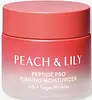
This anti-aging moisturizer is formulated around Collagen Extract and Acetyl Hexapeptide-8 to soften the look of wrinkles and hydrate skin.
This pore-care moisturizer is formulated around Gluconolactone to refine the look of pores and balance excess oil.


What's inside
What's inside
 Key Ingredients
Benefits
Concerns
Ingredients Side-by-side
Water
Skin ConditioningButylene Glycol
Humectant

Sorbitol
Humectant
Glycerin
Humectant
Cetearyl Alcohol
Emollient






Butylene Glycol Dicaprylate/Dicaprate
Emollient1,2-Hexanediol
Skin Conditioning
Caprylic/Capric Triglyceride
Masking
Hydrogenated Polydecene
EmollientC10-18 Triglycerides
Emollient
Stearic Acid
Cleansing
Cetearyl Glucoside
Emulsifying
Collagen Extract
Skin Conditioning
Acetyl Hexapeptide-8
Humectant
Dipeptide-2
Skin Conditioning
Acetyl Tetrapeptide-5
Humectant
Sh-Oligopeptide-1
Skin Conditioning
Copper Tripeptide-1
Skin Conditioning
Tripeptide-1
Skin Conditioning
Palmitoyl Tripeptide-5
Skin Conditioning
Palmitoyl Tripeptide-1
Skin Conditioning
Nonapeptide-1
Skin Conditioning
Hexapeptide-9
Skin Conditioning
Palmitoyl Pentapeptide-4
Skin Conditioning
Sh-Polypeptide-1
Skin Conditioning
Serine
Masking
Methionine
Skin ConditioningCysteine
Antioxidant
Arginine
Masking
Tremella Fuciformis Extract
Humectant
Phytosteryl/Octyldodecyl Lauroyl Glutamate
Skin ConditioningPolyglutamic Acid
Skin Conditioning
Polyglyceryl-3 Methylglucose Distearate
Emulsifying
Hydrolyzed Sodium Hyaluronate
Skin Conditioning
Hydrolyzed Hyaluronic Acid
Humectant
Hyaluronic Acid
Humectant
Squalane
Emollient
Sodium Hyaluronate
Humectant
Sodium Hyaluronate Crosspolymer
Humectant
Glyceryl Glucoside
Humectant
Saccharomyces/Rice Ferment Filtrate
Skin Conditioning
Prunus Mume Fruit Extract
Humectant
Curcuma Longa Root Extract
Antioxidant
Corallina Officinalis Extract
Skin Conditioning
Panax Ginseng Callus Culture Extract
Skin ConditioningSolanum Melongena Fruit Extract
Skin ConditioningPrunus Armeniaca Fruit Extract
Skin ConditioningAloe Barbadensis Leaf Extract
Emollient
Ocimum Sanctum Leaf Extract
Skin ConditioningAdenosine
Skin Conditioning
Tocopherol
Antioxidant

Sorbitan Stearate
Emulsifying
Carbomer
Emulsion StabilisingSodium Polyacryloyldimethyl Taurate
Emulsion StabilisingOriganum Majorana Leaf Extract
AntiseborrhoeicMelia Azadirachta Leaf Extract
Skin ConditioningMelia Azadirachta Flower Extract
Skin ConditioningAloe Barbadensis Flower Extract
EmollientPhellinus Linteus Extract
Skin Conditioning3-O-Ethyl Ascorbic Acid
Skin Conditioning

Glucose
Humectant
Ethylhexylglycerin
Skin ConditioningCoccinia Indica Fruit Extract
Skin Conditioning
Pentylene Glycol
Skin Conditioning
Caprylyl Glycol
Emollient
Tropolone
Skin ConditioningCitrus Aurantium Bergamia Fruit Oil
Masking


Water, Butylene Glycol, Sorbitol, Glycerin, Cetearyl Alcohol, Butylene Glycol Dicaprylate/Dicaprate, 1,2-Hexanediol, Caprylic/Capric Triglyceride, Hydrogenated Polydecene, C10-18 Triglycerides, Stearic Acid, Cetearyl Glucoside, Collagen Extract, Acetyl Hexapeptide-8, Dipeptide-2, Acetyl Tetrapeptide-5, Sh-Oligopeptide-1, Copper Tripeptide-1, Tripeptide-1, Palmitoyl Tripeptide-5, Palmitoyl Tripeptide-1, Nonapeptide-1, Hexapeptide-9, Palmitoyl Pentapeptide-4, Sh-Polypeptide-1, Serine, Methionine, Cysteine, Arginine, Tremella Fuciformis Extract, Phytosteryl/Octyldodecyl Lauroyl Glutamate, Polyglutamic Acid, Polyglyceryl-3 Methylglucose Distearate, Hydrolyzed Sodium Hyaluronate, Hydrolyzed Hyaluronic Acid, Hyaluronic Acid, Squalane, Sodium Hyaluronate, Sodium Hyaluronate Crosspolymer, Glyceryl Glucoside, Saccharomyces/Rice Ferment Filtrate, Prunus Mume Fruit Extract, Curcuma Longa Root Extract, Corallina Officinalis Extract, Panax Ginseng Callus Culture Extract, Solanum Melongena Fruit Extract, Prunus Armeniaca Fruit Extract, Aloe Barbadensis Leaf Extract, Ocimum Sanctum Leaf Extract, Adenosine, Tocopherol, Sorbitan Stearate, Carbomer, Sodium Polyacryloyldimethyl Taurate, Origanum Majorana Leaf Extract, Melia Azadirachta Leaf Extract, Melia Azadirachta Flower Extract, Aloe Barbadensis Flower Extract, Phellinus Linteus Extract, 3-O-Ethyl Ascorbic Acid, Glucose, Ethylhexylglycerin, Coccinia Indica Fruit Extract, Pentylene Glycol, Caprylyl Glycol, Tropolone, Citrus Aurantium Bergamia Fruit Oil
Water
Skin ConditioningButylene Glycol
Humectant
Dipropylene Glycol
HumectantGlycerin
Humectant
Hydrogenated Polydecene
EmollientTriethylhexanoin
MaskingHdi/Trimethylol Hexyllactone Crosspolymer
Dimethicone
Emollient
Dipeptide-15
Skin Conditioning
Glyceryl Stearate Se
Emulsifying
Trehalose
Humectant
Tocopherol
Antioxidant
Saccharum Officinarum Extract
MoisturisingCitrus Aurantium Dulcis Fruit Extract
MaskingCitrus Limon Fruit Extract
Masking
Sodium Hyaluronate
Humectant
Morinda Citrifolia Leaf Extract
Skin ConditioningLeuconostoc/Radish Root Ferment Filtrate
Antimicrobial
Acer Saccharum Extract
Skin ConditioningVaccinium Myrtillus Fruit Extract
Skin ConditioningSalvia Hispanica Seed Extract
Emollient
Gluconolactone
Chelating


Chondrus Crispus Extract
Skin Conditioning
Aminopropyl Dimethicone
Betaine
Humectant
Sodium Metabisulfite
Antioxidant
Isostearic Acid
Cleansing
Coconut Acid
Cleansing
PEG-5 Glyceryl Stearate
Emulsifying
Behenyl Alcohol
Emollient
Stearic Acid
Cleansing
Carbomer
Emulsion StabilisingXanthan Gum
EmulsifyingPotassium Hydroxide
BufferingBehenic Acid
Cleansing
Silica
Abrasive
Disodium EDTA
ChelatingSodium Benzoate
Masking
Phenoxyethanol
Preservative
Water, Butylene Glycol, Dipropylene Glycol, Glycerin, Hydrogenated Polydecene, Triethylhexanoin, Hdi/Trimethylol Hexyllactone Crosspolymer, Dimethicone, Dipeptide-15, Glyceryl Stearate Se, Trehalose, Tocopherol, Saccharum Officinarum Extract, Citrus Aurantium Dulcis Fruit Extract, Citrus Limon Fruit Extract, Sodium Hyaluronate, Morinda Citrifolia Leaf Extract, Leuconostoc/Radish Root Ferment Filtrate, Acer Saccharum Extract, Vaccinium Myrtillus Fruit Extract, Salvia Hispanica Seed Extract, Gluconolactone, Chondrus Crispus Extract, Aminopropyl Dimethicone, Betaine, Sodium Metabisulfite, Isostearic Acid, Coconut Acid, PEG-5 Glyceryl Stearate, Behenyl Alcohol, Stearic Acid, Carbomer, Xanthan Gum, Potassium Hydroxide, Behenic Acid, Silica, Disodium EDTA, Sodium Benzoate, Phenoxyethanol
Reviews
Ingredients Explained
These ingredients are found in both products.
Ingredients higher up in an ingredient list are typically present in a larger amount.
Butylene Glycol (or BG) is used within cosmetic products for a few different reasons:
Overall, Butylene Glycol is a safe and well-rounded ingredient that works well with other ingredients.
Though this ingredient works well with most skin types, some people with sensitive skin may experience a reaction such as allergic rashes, closed comedones, or itchiness.
Learn more about Butylene GlycolCarbomer is a synthetic thickening and gelling agent. It's basically the ingredient that gives a lot of serums, gels, creams, and sunscreens their smooth, non-sticky texture.
Although legally permitted at very high levels, carbomers are normally used at concentrations below 1%.
It also needs to be neutralized to actually thicken, and because it is a large molecule, it doesn't really penetrate the skin barrier.
Allergy-wise, the risk is very low. Clinical studies show carbomers have low potential for skin irritation/sensitization even at concentrations up to 100%.
A 2024 UK study patch-tested 1,302 patients and found true allergy to the parent group of carbomer to be rare with no confirmed relevant reactions.
Learn more about CarbomerGlycerin (or glycerol) is a compound naturally found in your skin. It's a powerhouse humectant that pulls water into the stratum corneum.
Topically, glycerin does several things at once:
Your skin makes glycerin on its own (mostly from sebaceous oil breakdown) and shuttles it to your outermost layer of skin, or your epidermis, via aquaporin-3.
Aquaporin-3 is a transporter that is essential for normal skin hydration, elasticity, and repair. Interestingly, mice lacking in AQP3 have dry and less elastic skin that can be fully corrected with glycerin.
This ingredient is non-irritating, plays well with almost every ingredient, and works across all skin types. Typical use is anywhere between 3-10% but can go up to 79% in some leave-on products.
Just know very high concentrations (>40%) can feel tacky in low humidity.
Glycerin is the name for this ingredient in American English. British English uses Glycerol/Glycerine.
Learn more about GlycerinHydrogenated Polydecene is a synthetic emollient. It forms a non-occlusive film on the skin's surface to provide a silky feel without being greasy.
In vivo studies in volunteers with atopic and dry skin showed no irritation or intolerance. The volunteers also saw a positive effect in dryness, scaling, and roughness after 28 days of use.
Concentrations up to 100% in guinea pig tests found it to be non-sensitizing and completely safe for use in cosmetics.
Learn more about Hydrogenated PolydeceneSodium Hyaluronate is the salt form of hyaluronic acid. It is a long sugar chain that is naturally found in your skin, joints, and connective tissue that maintains hydration and elasticity.
In skincare, it works as a humectant. It pulls water from the environment and deeper layers of skin and binds it to the surface.
Interestingly, the size of the molecule affects its behavior:
Some clinical evidence links low molecular weight versions to improved wrinkle depth, elasticity, anti-inflammatory effects, and barrier repair.
Many serums use a blend of both weights so you can get surface hydration plus longer-lasting and deeper effects.
You'll typically see concentrations between 0.1-2% for this ingredient.
Learn more about Sodium HyaluronateStearic Acid is a fatty acid that is already found in your skin. It's one of the free fatty acids that works alongside ceramides and cholesterols to maintain your barrier.
In cosmetics, it is a multitasker:
Safety-wise, the CIR Expert Panel has concluded it to be safe in cosmetics when formulated to be non-irritating and non-sensitizing.
Free stearic acid is a C18 fatty acid that the Malassezia yeast can substrate, so this ingredient may not be fungal acne safe.
Learn more about Stearic AcidTocopherol is a fat-soluble antioxidant known as Vitamin E.
You'll find this ingredient in the vast majority of skincare (for good reason). It works to neutralize free radicals, or unstable molecules generated by UV exposure, pollution, and other environmental stressors, before they can cause oxidative damage to your skin cells.
Topically applied tocopherol has been shown to protect against UV damage by ramping up the skin's own natural defense enzymes.
It also acts as a skin conditioning agent; some studies show that regular topical use can improve the skin's water-binding capacity over 2-4 weeks.
This ingredient is especially loved for being a team player. When combined with Vitamin C, the photoprotective effect of both ingredients roughly doubles and the combo also helps reduce UV-induced DNA damage.
This ingredient has some brightening potential but it's more of a prevention ingredient than spot-fader. Cell studies show it can slow down melanin production but it's worth noting that it's not the most powerful brightener out there.
In formulations, it also serves as a stabilizer that helps protect other oxidation-prone ingredients from degrading.
Concentrations usually range from 0.1-1% in most leave-on products.
Learn more about TocopherolWater. It's the most common cosmetic ingredient of all. You'll usually see it at the top of ingredient lists, meaning that it makes up the largest part of the product.
So why is it so popular? Water most often acts as a solvent - this means that it helps dissolve other ingredients into the formulation.
You'll also recognize water as that liquid we all need to stay alive. If you see this, drink a glass of water. Remember to stay hydrated!
Learn more about Water

