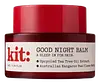
This barrier-repair night moisturizer is formulated around Squalane and Simmondsia Chinensis Seed Oil to strengthen the skin barrier and hydrate skin.

What's inside
What's inside
 Key Ingredients
Benefits
Concerns
Ingredients Side-by-side
Water
Skin ConditioningCetearyl Alcohol
Emollient






Glycerin
Humectant


Squalane
Emollient
Butylene Glycol
Humectant
Simmondsia Chinensis Seed Oil
Emollient
Sesamum Indicum Seed Oil
Emollient
Butyrospermum Parkii Butter
Skin Conditioning
Coco-Caprylate/Caprate
Emollient
Sucrose Polystearate
EmollientCetyl Palmitate
Emollient
Undecane
EmollientParfum
Masking


Triheptanoin
Skin Conditioning1,2-Hexanediol
Skin Conditioning
Tridecane
Perfuming
Hydroxyacetophenone
Antioxidant
Tocopheryl Acetate
Antioxidant

Xylitylglucoside
Humectant
Sodium Stearoyl Glutamate
CleansingAnhydroxylitol
Humectant
Cetearyl Glucoside
Emulsifying
Xanthan Gum
EmulsifyingXylitol
Humectant
Sodium Polyacrylate
Absorbent
Cassia Angustifolia Seed Polysaccharide
Skin ConditioningPhenoxyethanol
Preservative
Anigozanthos Flavidus Extract
Skin ConditioningDisodium EDTA
ChelatingVitis Vinifera Fruit Extract
Skin ConditioningHydroxyethylcellulose
Emulsion StabilisingDextrin
AbsorbentTheobroma Cacao Extract
Skin ConditioningMelaleuca Alternifolia Leaf Oil
Antioxidant


Tocopherol
Antioxidant

Trehalose
Humectant
Linalool
Perfuming
Coumarin
Perfuming
Limonene
Perfuming
Citral
Perfuming
Geraniol
Perfuming
Amyris Balsamifera Bark Oil
Masking
Juniperus Virginiana Oil
Masking
Eucalyptus Globulus Leaf Oil
Perfuming
Lavandula Hybrida Oil
Emollient
Lavandula Angustifolia Oil
Masking
Commiphora Myrrha Gum Oil
Perfuming
Opoponax Oil
Masking
Pogostemon Cablin Leaf Oil
Masking
Rosmarinus Officinalis Leaf Oil
Masking
Mentha Viridis Leaf Oil
Astringent
Vetiveria Zizanoides Root Oil
Masking
Water, Cetearyl Alcohol, Glycerin, Squalane, Butylene Glycol, Simmondsia Chinensis Seed Oil, Sesamum Indicum Seed Oil, Butyrospermum Parkii Butter, Coco-Caprylate/Caprate, Sucrose Polystearate, Cetyl Palmitate, Undecane, Parfum, Triheptanoin, 1,2-Hexanediol, Tridecane, Hydroxyacetophenone, Tocopheryl Acetate, Xylitylglucoside, Sodium Stearoyl Glutamate, Anhydroxylitol, Cetearyl Glucoside, Xanthan Gum, Xylitol, Sodium Polyacrylate, Cassia Angustifolia Seed Polysaccharide, Phenoxyethanol, Anigozanthos Flavidus Extract, Disodium EDTA, Vitis Vinifera Fruit Extract, Hydroxyethylcellulose, Dextrin, Theobroma Cacao Extract, Melaleuca Alternifolia Leaf Oil, Tocopherol, Trehalose, Linalool, Coumarin, Limonene, Citral, Geraniol, Amyris Balsamifera Bark Oil, Juniperus Virginiana Oil, Eucalyptus Globulus Leaf Oil, Lavandula Hybrida Oil, Lavandula Angustifolia Oil, Commiphora Myrrha Gum Oil, Opoponax Oil, Pogostemon Cablin Leaf Oil, Rosmarinus Officinalis Leaf Oil, Mentha Viridis Leaf Oil, Vetiveria Zizanoides Root Oil
Water
Skin ConditioningGlycerin
Humectant
Butylene Glycol
Humectant
Cetyl Ethylhexanoate
EmollientCoco-Caprylate/Caprate
Emollient
Sea Water
HumectantSqualane
Emollient
Undecane
EmollientC14-22 Alcohols
Emulsion Stabilising
Butyrospermum Parkii Butter
Skin Conditioning
Aloe Barbadensis Leaf Juice
Skin Conditioning
Hydrogenated Lecithin
Emulsifying
Tridecane
Perfuming
Hydroxyacetophenone
Antioxidant
Panthenol
Skin Conditioning
Tocopheryl Acetate
Antioxidant
Xylitylglucoside
Humectant
Anhydroxylitol
Humectant
1,2-Hexanediol
Skin Conditioning
C12-20 Alkyl Glucoside
EmulsifyingCarbomer
Emulsion StabilisingAllantoin
Skin Conditioning
Xanthan Gum
EmulsifyingXylitol
Humectant
Parfum
Masking
Macadamia Ternifolia Seed Oil
Emollient
Aminomethyl Propanol
BufferingSodium Hyaluronate
Humectant
Disodium EDTA
ChelatingCitric Acid
Buffering
Benzyl Alcohol
Perfuming
Curcuma Longa Root Extract
Antioxidant
Potassium Sorbate
Preservative
Centella Asiatica Extract
Cleansing
Cucurbita Pepo Seed Extract
Skin ConditioningSodium Benzoate
Masking
Amyris Balsamifera Oil Acetylated 100%
Perfuming
Elettaria Cardamomum Seed Oil
Masking
Juniperus Virginiana Oil
Masking
Salvia Sclarea Oil
Masking
Eucalyptus Globulus Leaf Oil
Perfuming
Boswellia Carterii Gum Extract
Perfuming
Camphor
Masking
Cinnamomum Camphora Linalooliferum Wood Oil
Perfuming
Citrus Aurantium Dulcis Oil
Masking
Pogostemon Cablin Leaf Oil
Masking
Citrus Sinensis Peel Oil Expressed
Perfuming
Cananga Odorata Flower Oil
Masking
Linalool
Perfuming
Limonene
Perfuming
Geraniol
Perfuming
Water, Glycerin, Butylene Glycol, Cetyl Ethylhexanoate, Coco-Caprylate/Caprate, Sea Water, Squalane, Undecane, C14-22 Alcohols, Butyrospermum Parkii Butter, Aloe Barbadensis Leaf Juice, Hydrogenated Lecithin, Tridecane, Hydroxyacetophenone, Panthenol, Tocopheryl Acetate, Xylitylglucoside, Anhydroxylitol, 1,2-Hexanediol, C12-20 Alkyl Glucoside, Carbomer, Allantoin, Xanthan Gum, Xylitol, Parfum, Macadamia Ternifolia Seed Oil, Aminomethyl Propanol, Sodium Hyaluronate, Disodium EDTA, Citric Acid, Benzyl Alcohol, Curcuma Longa Root Extract, Potassium Sorbate, Centella Asiatica Extract, Cucurbita Pepo Seed Extract, Sodium Benzoate, Amyris Balsamifera Oil Acetylated 100%, Elettaria Cardamomum Seed Oil, Juniperus Virginiana Oil, Salvia Sclarea Oil, Eucalyptus Globulus Leaf Oil, Boswellia Carterii Gum Extract, Camphor, Cinnamomum Camphora Linalooliferum Wood Oil, Citrus Aurantium Dulcis Oil, Pogostemon Cablin Leaf Oil, Citrus Sinensis Peel Oil Expressed, Cananga Odorata Flower Oil, Linalool, Limonene, Geraniol
Reviews
Ingredients Explained
These ingredients are found in both products.
Ingredients higher up in an ingredient list are typically present in a larger amount.
1,2-Hexanediol is a synthetic liquid and another multi-functional powerhouse.
It is a:
- Humectant, drawing moisture into the skin
- Emollient, helping to soften skin
- Solvent, dispersing and stabilizing formulas
- Preservative booster, enhancing the antimicrobial activity of other preservatives
This ingredient is created from dehydrating xylitol in acidic conditions. Xylitol is a famous sugar and humectant.
Much like its predecessor, anhydroxylitol is a humectant. Humectants attract and hold water to moisturize the skin.
This ingredient is most commonly found in a popular trio called Aquaxyl. Aquaxyl is made up of anhydroxylitol (24 - 34%), xylitylglucoside (35 - 50%), and xylitol (5 - 15%).
According to a manufacturer, Aquaxyl is known for a 3-D hydration concept and an anti-dehydration shield to reinforce the outer layer of skin.
This ingredient is often derived from plants such as wood and sugarcane.
Learn more about AnhydroxylitolButylene Glycol (or BG) is used within cosmetic products for a few different reasons:
Overall, Butylene Glycol is a safe and well-rounded ingredient that works well with other ingredients.
Though this ingredient works well with most skin types, some people with sensitive skin may experience a reaction such as allergic rashes, closed comedones, or itchiness.
Learn more about Butylene GlycolThis ingredient is also known as shea butter. It is a plant-derived extract from the nuts of the Africa shea tree and one of the most well-studied emollients.
Because it has a high concentration of fatty acids (primarily oleic, stearic, and linoleic) it is able to form a protective barrier on the skin's surface. This helps seal in moisture and prevents transepidermal water loss (TEWL).
In vitro research found an increase in skin hydration by 58% and a decrease in TEWL by 37.8% after 24 hours of applying this ingredient (pretty impressive for a single ingredient!).
Besides hydration, shea butter also contains triterpenes that have anti-inflammatory potential. In particule, lupeol cinnamate has shown the highest anti-inflammatory activity in vivo.
Shea butter also contains vitamins A and E which may contribute to antioxidant activity.
While Shea Butter has an SPF rating of about 3-4, it is not a sunscreen replacement.
This ingredient may not be fungal acne safe because its fatty acids fall within the C11-C24 range that the Malassezia yeast can metabolize.
This ingredient shows up on a lot of "pore-clogging" lists but there's no real evidence behind that. It doesn't even have a comedogenic rating from an actual study; the numbers you'll find online come from blogs citing other blogs.
Ratings for other ingredients mostly come from a 1980s rabbit ear test. This test doesn't translate well to human skin or to real products because the ingredient sits at a much lower percentage.
Some people still find it breaks them out. So if that's you, definitely trust your skin. Just know this one's based on experience and not evidence.
Learn more about Butyrospermum Parkii ButterCoco-Caprylate/Caprate is a lightweight ester created from coconut oil fatty acids, caprylic acid, and capric acid.
It is an emollient that helps soften skin and reduce transepidermal water loss (TEWL). What sets it apart from heavier emollients is its ultralight, non-greasy feel.
Once applied, this ingredient dries down quickly and leaves a dry, silky finish behind. This also helps improve spreadability and texture.
This ingredient has an excellent safety-record and is non-irritating.
Typical concentrations for cosmetics range from 0.5-62%.
Research on Malassezia growth found no growth on fatty acid esters with chain lengths shorter than 12 carbons (it prefers C11-24).
Since Coco-Caprylate/Caprate is built on C8 and C10 fatty acids, it is out of the range that Malassezia metabolizes, and therefore safe for fungal acne.
Learn more about Coco-Caprylate/CaprateDisodium EDTA is a chelating agent. It grabs onto and deactivates metal ions that sneak into your products from water, packaging, or air.
This ingredient mainly works behind the scenes and helps with:
On top of that, this ingredient can counteract the effects of hard water by binding to the minerals in it.
One thing worth knowing is that Disodium EDTA has been shown to be a mild penetration enhancer. It can help other ingredients absorb into skin more effectively which can be a double-edged sword (great for actives, but can also make the active too strong if you have sensitive skin).
Clinical patch testing showed no significant skin irritation at typical use concentrations and minimal dermal absorption.
You'll most likely see this ingredient near the end of an ingredient list. It's typically found in concentrations less than 1%.
Learn more about Disodium EDTAThis oil is derived from the leaves of Eucalyptus Globulus, a type of Eucalyptus tree native to Australia.
Though this oil shows antibacterial and antioxidant activity, it is also a known skin-irritant due to its fragrance components.
Geraniol is used to add fragrance/parfum to a product. It is the main component of citronellol. It is a monoterpenoid and an alcohol.
Monoterpenes are naturally found in many parts of different plants.
Geraniol can be found in many essential oils including Rose Oil and Citronella Oil. The scent of Geraniol is often described as "rose-like". Many foods also contain Geraniol for fruit flavoring.
Geraniol can irritate the skin when exposed to air. However, irritation depends on the ability of geraniol to penetrate into the skin. In general, geraniol is not able to penetrate skin easily.
Geraniol is colorless and has low water-solubility. However, it is soluble in common organic solvents.
Like citronellol, it is a natural insect repellent.
2,6-Octadien-1-ol, 3,7-dimethyl-, (2E)-
Learn more about GeraniolGlycerin (or glycerol) is a compound naturally found in your skin. It's a powerhouse humectant that pulls water into the stratum corneum.
Topically, glycerin does several things at once:
Your skin makes glycerin on its own (mostly from sebaceous oil breakdown) and shuttles it to your outermost layer of skin, or your epidermis, via aquaporin-3.
Aquaporin-3 is a transporter that is essential for normal skin hydration, elasticity, and repair. Interestingly, mice lacking in AQP3 have dry and less elastic skin that can be fully corrected with glycerin.
This ingredient is non-irritating, plays well with almost every ingredient, and works across all skin types. Typical use is anywhere between 3-10% but can go up to 79% in some leave-on products.
Just know very high concentrations (>40%) can feel tacky in low humidity.
Glycerin is the name for this ingredient in American English. British English uses Glycerol/Glycerine.
Learn more about GlycerinHydroxyacetophenone is a small phenolic molecule that earns its place in a formulas as an antioxidant and preservative booster.
As a phenol, it is able to neutralize free radicals to protect both the product and the skin from oxidative stress.
Though it can't kill microbes on its own, it works as a good supporting agent when combined with other preservatives like Phenoxyethanol or 1,2-Hexanediol.
This ingredient naturally occurs as piceol in Norwegian spruce needles (~0.4-1.1% dry weight and in cloudberries). Though the cosmetic-grade material is synthesized for purity and consistency.
You'll usually see it used at low levels and suppliers recommend up to 1% added to a water phase.
Safety testing was done at concentrations like 0.05% in SPF products and 0.5% in a Human Repeated Insult Patch Test. The safety evidence is assuring; this ingredient is safe for cosmetics in current use and also holds safety status as a food flavoring as well.
An honest caveat: the "soothing" and "anti-inflammatory" claims come mostly from supplier marketing rather than published clinical trials. The Cosmetic Ingredient Review's own literature search found no useful efficacy studies on this ingredient.
So the antioxidant and preservative-boosting roles are the well supported ones while the calming benefit is plausible but thinly evidenced.
Overall, this is a well-tolerated, low-irritation multitasker that quietly helps a formula stay fresh and stable.
Learn more about HydroxyacetophenoneJuniperus Virginiana Oil is the volatile oil obtained from the fruits and leaves of the Red Cedar tree. This tree is native to North America.
Limonene is the compound that gives citrus peel its smell.
In skincare, it shows up as a standalone fragrance ingredient or as a natural compound of citrus and other essential oils.
You'll typically see this ingredient used in very small amounts; anything above 0.001% in a leave-on product or 0.01% in a rinse-off has to be named on the label in the EU. The citrus oils that carry it sit around 0.5-1% in a finished formula.
Fresh limonene is a weak allergen; the real issue is that it slowly reacts with air and then breaks down from oxidation to create hydroperoxides (which are strong sensitizers). This is why suppliers are required to keep the peroxide value below 20 mmol.
Positive reactions in people being investigated for eczema vary:
It's worth skipping if you have a known fragrance allergy or a compromised barrier, but the risk is low for most people.
Older or long-opened products are also more likely to bother you than fresh ones due to oxidation.
Learn more about LimoneneLinalool is a small, naturally occurring scent molecule found in plants like lavender, coriander, bergamot, and more.
It is one of the two most-used fragrance ingredients in cosmetics and added purely for smell. Since it's not used for a skin benefit, there's no "effective dose". Concentration depends on the fragrance load of the product.
The EU requires it to be named on the label above 0.001% in leave-on and 0.01% in rinse-off products.
Fresh linalool is a weak sensitizer but air exposure turns some of it into hydroperoxides, which are strong sensitizers. Those oxidation products are the actual allergy concern.
Patch-test clinics see positive reactions to linalool hydroperoxides in about 4% to 12% of dermatitis patients depending on country and test concentration.
Resassuringly, one analytical study found hydroperoxide levels in real fragranced products to be orders of magnitude below what induced sensitization in animal studies with no evidence of oxidation building up during normal storage.
The practical takeaway is that linalool is fine for most people but worth avoiding if you have a confirmed fragrance contact allergy or a badly compromised barrier.
Products stored a long time after opening are also the high-risk scenario since that is when oxidation happens.
The scent of linalool is described as floral, spicy tropical, and citrus-like.
Learn more about LinaloolParfum is a catch-all term for an ingredient or more that is used to give a scent to products.
Also called "fragrance", this ingredient can be a blend of hundreds of chemicals or plant oils. This means every product with "fragrance" or "parfum" in the ingredients list is a different mixture.
For instance, Habanolide is a proprietary trade name for a specific aroma chemical. When used as a fragrance ingredient in cosmetics, most aroma chemicals fall under the broad labeling category of “FRAGRANCE” or “PARFUM” according to EU and US regulations.
The term 'parfum' or 'fragrance' is not regulated in many countries. In many cases, it is up to the brand to define this term.
For instance, many brands choose to label themselves as "fragrance-free" because they are not using synthetic fragrances. However, their products may still contain ingredients such as essential oils that are considered a fragrance by INCI standards.
One example is Calendula flower extract. Calendula is an essential oil that still imparts a scent or 'fragrance'.
Depending on the blend, the ingredients in the mixture can cause allergies and sensitivities on the skin. Some ingredients that are known EU allergens include linalool and citronellol.
Parfum can also be used to mask or cover an unpleasant scent.
The bottom line is: not all fragrances/parfum/ingredients are created equally. If you are worried about fragrances, we recommend taking a closer look at an ingredient. And of course, we always recommend speaking with a professional.
Learn more about ParfumThis ingredient is also known as Patchouli oil. Its main role is to add a warm, earthy, and musky scent to products.
Patchouli exhibits slight antioxidant, antibacterial and antifungal activity from its patchoulol, beta-caryophyllene, pogostone content.
Like all essential oils, this ingredient is a known sensitizer at higher concentrations. This is because this oil also contains known skin-irritating fragrances, limonene and camphor. Limonene and camphor are both known EU allergens.
While patchouli oil holds FDA GRAS ("generally recognized as safe") status, it is typically used at low levels and subject to usage guidelines.
Those with sensitive skin should patch test before using.
Learn more about Pogostemon Cablin Leaf OilSqualane is the hydrogenated and shelf-stable form of squalene (a lipid that naturally occurs in human sebum).
It is an emollient and skin conditioning agent that is able to integrate seamlessly into the skin's lipid barrier without clogging pores.
This is due to how structurally similar it is to what your skin already produces.
Though it is mostly an emollient that helps soften and hydrate skin, it also has some humectant and occlusive action. Humectants help the skin retain moisture while occlusives seal it in, making squalane a triple-threat moisturizer.
Research shows it has antioxidant capabilities that help protect against stressors like UV exposure, specifically UVA induced oxidative stress. This study also found that it supports collagen biosynthesis in human dermal fibroblasts.
No clinical study has reported significant adverse effects and irritation reactions are very rare from this ingredient (even at 100% concentration).
Overall, it's a fantastic ingredient for hydration and is suitable for all skin types.
This depends on the source. Squalane can be derived from both plants and animals. Most squalane used in skincare comes from plants.
Please note: the source of squalane is only known if disclosed by the brand. We recommend reaching out to the brand if you have any questions about their squalane.
Read more about squalene with an "e".
Though squalane is often called an oil, it’s technically not one. It is a hydrocarbon, meaning it is only made of carbon and hydrogen. True oils are triglycerides and made of fatty acids and glycerol.
The term “oil-free” isn’t regulated so companies can define it however they want. Some exclude all oils, while others just avoid mineral oil or comedogenic oils.
Squalane has a comedogenic rating of 1 from the original 1972 study that tested raw ingredients under occlusion on rabbit ears. This system is not standardized or peer-reviewed, and using the raw ingredients is very different from how diluted cosmetic formulations are used on human skin.
A comedogenic rating of 1 means it is "unlikely to clog pores" according to the original rating system.
The overall formula of a product matters more than the individual ingredients on whether or not it will cause clogged pores.
Learn more about SqualaneTocopheryl Acetate is a stable, shelf-friendly form of vitamin E.
Formulators love it because plain vitamin E oxidizes quickly once it hits air. This acetate version stays stable and resists going off, helping to extend a product's shelf life.
It's actually inactive on its own and works like a slow-release "storage" form; the enzymes in your skin called esterases gradually convert it into active vitamin E over time.
One in vivo study showed 5% of the acetate in the living layer of the epidermis converted to vitamin E after 5 days of application. This study also found the skin gained protection against UV damage even though the conversion was slow and small.
Once converted, vitamin E acts as a skin's main fat-soluble antioxidant that fights free radicals to protect skin from damage.
Topical vitamin E generally boosts the skin's photoprotection, and it reduced UV-damage in animal models.
This ingredient has some brightening potential but it's more of a prevention ingredient than spot-fader. Cell studies show it can slow down melanin production but it's worth noting that it's not the most powerful brightener out there.
Overall, it has a pretty solid safety profile and has been found to be non-irritating and non-comedogenic. Allergic reactions may happen but stay rare due to how widely the ingredient gets used.
The concentration will vary depending on the formula; industry data shows 0.1% in baby lotions, 3% in lipsticks, and 5% in foot powders. You can also find this ingredient at 100% in a pure vitamin E oil.
Most leave-on skincare keeps it at the lower end, often between 0.5-1%.
Learn more about Tocopheryl AcetateTridecane is a lightweight emollient and fragrancing ingredient. It is a paraffin and often called a silicone alternative.
According to official INCI guidelines, this ingredient is used to give a light odor to raw materials. It is often used as a starter ingredient to create parfum.
This ingredient can be derived from palm oil, or coconut oil. It is also naturally found in certain species of organisms.
According to the NOAA, this ingredient can cause skin sensitivity with prolonged use. However, this warning is taken from the Coast Guard and no studies have been done on this in relation to cosmetics.
Tridecane is not water soluble.
Learn more about TridecaneUndecane is an emollient and helps create a lightweight base for products.
Is is not soluble in water and naturally occurring in some species.
Water. It's the most common cosmetic ingredient of all. You'll usually see it at the top of ingredient lists, meaning that it makes up the largest part of the product.
So why is it so popular? Water most often acts as a solvent - this means that it helps dissolve other ingredients into the formulation.
You'll also recognize water as that liquid we all need to stay alive. If you see this, drink a glass of water. Remember to stay hydrated!
Learn more about WaterXanthan gum is used as a stabilizer and thickener within cosmetic products. It helps give products a sticky, thick feeling - preventing them from being too runny.
On the technical side of things, xanthan gum is a polysaccharide - a combination consisting of multiple sugar molecules bonded together.
Xanthan gum is a pretty common and great ingredient. It is a natural, non-toxic, non-irritating ingredient that is also commonly used in food products.
Learn more about Xanthan GumXylitol is a humectant and prebiotic. It can help with dry skin.
In studies, xylitol has been shown to improve dry skin. It decreased transepidermal water loss, or when water passes through the skin and evaporates. Xylitol also showed to help improve the biomechanical properties of the skin barrier.
The prebiotic property of xylitol may also help reinforce our skin's natural microbiome. Having a healthy microbiome prevents infection by bad bacteria and helps with hydration.
As a humectant, Xylitol helps draw moisture from both the air and from deeper skin layers. This helps keep skin hydrated.
Xylitol is a sugar alcohol and commonly used as a sugar substitute. It is naturally occurring in plants such as strawberries and pumpkin.
Learn more about XylitolXylitylglucoside is created from xylitol and glucose, two humectants.
Not surprisingly, this ingredient is also a humectant. It attracts and holds water in your skin, helping to maintain hydration.
This ingredient is most commonly found in a popular trio called Aquaxyl. Aquaxyl is made up of anhydroxylitol(24 - 34%), xylitylglucoside (35 - 50%), and xylitol (5 - 15%).
According to a manufacturer, Aquaxyl is known for a 3-D hydration concept and an anti-dehydration shield to reinforce the outer layer of skin.
Learn more about Xylitylglucoside

