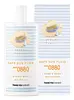
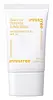
Thank You Farmer Safe Sun Fluid AGE 0880 SPF50+/PA++++ Versus innisfree Daily UV Defense Sunscreen Broad Spectrum SPF 36
This hybrid sunscreen covers the full UV range and blocks ~98% of UVB at SPF 50.
This chemical sunscreen covers most of the UV range, lighter on the deep UVA that drives aging.

What's inside
What's inside
 Key Ingredients
Benefits
Concerns
Ingredients Side-by-side
Water
Skin ConditioningC12-15 Alkyl Benzoate
AntimicrobialTitanium Dioxide
Cosmetic Colorant

Butylene Glycol
Humectant

Dipropylene Glycol
HumectantNiacinamide
Smoothing










Butyloctyl Salicylate
Skin Conditioning
Caprylyl Methicone
Skin Conditioning
1,2-Hexanediol
Skin Conditioning
Aluminum Stearate
Cosmetic ColorantPolyhydroxystearic Acid
Emulsifying

Cetyl Ethylhexanoate
EmollientSilica
Abrasive
Pentylene Glycol
Skin Conditioning
Polymethylsilsesquioxane
Caprylic/Capric Triglyceride
Masking
Alumina
Abrasive
Propanediol
Solvent
Ammonium Acryloyldimethyltaurate/Vp Copolymer
Parfum
Masking



Polyacrylate Crosspolymer-6
Emulsion StabilisingSaccharide Hydrolysate
HumectantSodium Stearoyl Glutamate
CleansingHydroxypropyl Methylcellulose Stearoxy Ether
Octyldodecanol
Emollient
Stearic Acid
Cleansing
Ethylhexylglycerin
Skin ConditioningAdenosine
Skin Conditioning
Salvia Hispanica Seed Extract
Emollient
Centella Asiatica Extract
Cleansing
Portulaca Oleracea Extract
Skin Conditioning
Houttuynia Cordata Extract
Skin Conditioning
Echium Plantagineum Seed Oil
Skin Conditioning
Curcuma Longa Root Extract
Antioxidant
T-Butyl Alcohol
Perfuming

Cardiospermum Halicacabum Flower/Leaf/Vine Extract
Skin ConditioningHelianthus Annuus Seed Oil Unsaponifiables
Emollient
Glycerin
Humectant
Tocopherol
Antioxidant
Camellia Japonica Flower Extract
EmollientChamomilla Recutita Flower/Leaf Extract
AntimicrobialPancratium Maritimum Extract
BleachingWater, C12-15 Alkyl Benzoate, Titanium Dioxide, Butylene Glycol, Dipropylene Glycol, Niacinamide, Butyloctyl Salicylate, Caprylyl Methicone, 1,2-Hexanediol, Aluminum Stearate, Polyhydroxystearic Acid, Cetyl Ethylhexanoate, Silica, Pentylene Glycol, Polymethylsilsesquioxane, Caprylic/Capric Triglyceride, Alumina, Propanediol, Ammonium Acryloyldimethyltaurate/Vp Copolymer, Parfum, Polyacrylate Crosspolymer-6, Saccharide Hydrolysate, Sodium Stearoyl Glutamate, Hydroxypropyl Methylcellulose Stearoxy Ether, Octyldodecanol, Stearic Acid, Ethylhexylglycerin, Adenosine, Salvia Hispanica Seed Extract, Centella Asiatica Extract, Portulaca Oleracea Extract, Houttuynia Cordata Extract, Echium Plantagineum Seed Oil, Curcuma Longa Root Extract, T-Butyl Alcohol, Cardiospermum Halicacabum Flower/Leaf/Vine Extract, Helianthus Annuus Seed Oil Unsaponifiables, Glycerin, Tocopherol, Camellia Japonica Flower Extract, Chamomilla Recutita Flower/Leaf Extract, Pancratium Maritimum Extract
Butyl Methoxydibenzoylmethane 2.5%
UV Absorber
Homosalate 7%
Skin Conditioning
Water 4.3%
Skin ConditioningButyloctyl Salicylate
Skin Conditioning
Butylene Glycol
Humectant
Ethylhexyl Methoxycrylene
Skin Conditioning
Arachidyl Alcohol
Emollient
Behenyl Alcohol
Emollient
Polymethylsilsesquioxane
1,2-Hexanediol
Skin Conditioning
Cetyl Alcohol
Emollient
Arachidyl Glucoside
EmulsifyingPhenoxyethanol
Preservative
Propanediol
Solvent
Polyacrylate Crosspolymer-6
Emulsion StabilisingOctyldodecanol
Emollient
Glyceryl Stearate
Emollient
PEG-100 Stearate
Surfactant
Parfum
Masking
Xanthan Gum
EmulsifyingLimonene
Perfuming
Centella Asiatica Extract
Cleansing
Portulaca Oleracea Extract
Skin Conditioning
Echium Plantagineum Seed Oil
Skin Conditioning
T-Butyl Alcohol
Perfuming
Camellia Sinensis Leaf Extract
Antimicrobial
Linalool
Perfuming
Ethylhexylglycerin
Skin ConditioningHelianthus Annuus Seed Oil Unsaponifiables
Emollient
Cardiospermum Halicacabum Flower/Leaf/Vine Extract
Skin ConditioningTocopherol
Antioxidant
Helianthus Annuus Seed Oil
Emollient
Glycerin
Humectant
Hamamelis Virginiana Leaf Extract
Skin Conditioning
Citrus Unshiu Peel Extract
MaskingOpuntia Coccinellifera Fruit Extract
Skin ConditioningOrchid Extract
Skin ConditioningCamellia Japonica Leaf Extract
Skin ConditioningCitric Acid
Buffering
Sodium Benzoate
Masking
Potassium Sorbate
Preservative
Butyl Methoxydibenzoylmethane 2.5%, Homosalate 7%, Water 4.3%, Butyloctyl Salicylate, Butylene Glycol, Ethylhexyl Methoxycrylene, Arachidyl Alcohol, Behenyl Alcohol, Polymethylsilsesquioxane, 1,2-Hexanediol, Cetyl Alcohol, Arachidyl Glucoside, Phenoxyethanol, Propanediol, Polyacrylate Crosspolymer-6, Octyldodecanol, Glyceryl Stearate, PEG-100 Stearate, Parfum, Xanthan Gum, Limonene, Centella Asiatica Extract, Portulaca Oleracea Extract, Echium Plantagineum Seed Oil, T-Butyl Alcohol, Camellia Sinensis Leaf Extract, Linalool, Ethylhexylglycerin, Helianthus Annuus Seed Oil Unsaponifiables, Cardiospermum Halicacabum Flower/Leaf/Vine Extract, Tocopherol, Helianthus Annuus Seed Oil, Glycerin, Hamamelis Virginiana Leaf Extract, Citrus Unshiu Peel Extract, Opuntia Coccinellifera Fruit Extract, Orchid Extract, Camellia Japonica Leaf Extract, Citric Acid, Sodium Benzoate, Potassium Sorbate
Reviews
Ingredients Explained
These ingredients are found in both products.
Ingredients higher up in an ingredient list are typically present in a larger amount.
1,2-Hexanediol is a synthetic liquid and another multi-functional powerhouse.
It is a:
- Humectant, drawing moisture into the skin
- Emollient, helping to soften skin
- Solvent, dispersing and stabilizing formulas
- Preservative booster, enhancing the antimicrobial activity of other preservatives
Butylene Glycol (or BG) is used within cosmetic products for a few different reasons:
Overall, Butylene Glycol is a safe and well-rounded ingredient that works well with other ingredients.
Though this ingredient works well with most skin types, some people with sensitive skin may experience a reaction such as allergic rashes, closed comedones, or itchiness.
Learn more about Butylene GlycolButyloctyl Salicylate is a chemical UV filter structurally similar to octisalate. It is a photostabilizer, SPF booster, emollient and solvent. This ingredient helps evenly spread out ingredients.
According to a manufacturer, it is suitable for pairing with micro Titanium Dioxide, Zinc Oxide, and pigments.
Photostabilizers help stabilize UV-filters and prevents them from degrading quickly.
Learn more about Butyloctyl SalicylateCardiospermum halicacabum extract is more commonly known as Balloon Vine Extract.
Centella Asiatica Extract (Centella) is one of the most researched botanical extracts in skincare with decades of studies backing its effects on inflammation, collagen, and the skin barrier.
That research keeps pointing back to the same four triterpenoid saponins: Asiaticoside, Madecassoside, Asiatic Acid, and Madecassic Acid.
These compounds allow centella to dial back inflammation, encourage the skin to build and hold onto collagen, support the barrier and hydration, and bring solid antioxidant activity to protect against signs of aging.
Centella also carries a nice supporting cast of Vitamin A, vitamin C, several B vitamins, and amino acids. Put it all together and you get an ingredient that soothes, hydrates, and protects, all at once.
Most of centella's magic comes from the four big compounds (Asiaticoside, Madecassoside, Asiatic Acid, and Madecassic Acid). These are the actives doing the heavy lifting in almost every centella study.
Here is the short version of what they do in the skin:
So it is not just soothing for the sake of soothing. Centella calms the skin AND helps it rebuild.
Just FYI, not all centella on an ingredient list is the same. What you are getting actually depends on the extract:
Fun fact on the ratios: the leaves tend to be richest in Madecassoside and Asiaticoside, and lower in the two acids. The exact amounts shift with where the plant is grown and how it is processed. This means purity really does vary brand to brand.
Centella is one of the most easygoing actives out there.
It layers well with basically everything: niacinamide, hyaluronic acid, peptides, and vitamin C, and also pairs nicely with stronger actives like retinoids and exfoliating acids where it can help take the edge off irritation.
On the safety side, centella and its triterpenes are classified as weak sensitizers, meaning allergic reactions are possible but uncommon.
Patch tests at 1% and 5% came back negative in test panels, and creams at typical use levels did not cause allergic reactions across large groups of people.
But as with any new active, a patch test is still a smart move for very reactive skin.
Centella is widely used because it is effective at low percentages. For context, human safety testing found no meaningful irritation from creams containing centella extract at everyday use levels (the tested amounts were well under 1%).
The irritancy threshold in animal testing was also above 30% (so real-world formulas sit far below anything concerning).
In collagen lab studies, higher concentrations drove more collagen synthesis, so serums built around centella tend to feature it more prominently.
Bottom line: you will find centella working nicely anywhere from a fraction of a percent up to hero-ingredient levels depending on whether it is a supporting soother or the main event.
Fun fact: Centella has been used as a medicine and in food for many centuries. As a medicine, it is used to treat burns, scratches, and wounds.
Learn more about Centella Asiatica ExtractEchium Plantagineum Seed Oil is an oil and isn't fungal acne safe. It can help to reduce redness.
Ethylhexylglycerin is created from glycerin. It is a multitasker ingredient that:
The CIR Expert Panel found minimal skin absorption or sensitization of any kind in a safety assessment. Though this ingredient is considered well-tolerated, a small number of cases of allergic dermatitis have been published since 2002. Just be sure to patch test if you are unsure.
Industry-reported use ranges from 8% in rinse-off products and 2% in leave-on formulations.
Learn more about EthylhexylglycerinGlycerin (or glycerol) is a compound naturally found in your skin. It's a powerhouse humectant that pulls water into the stratum corneum.
Topically, glycerin does several things at once:
Your skin makes glycerin on its own (mostly from sebaceous oil breakdown) and shuttles it to your outermost layer of skin, or your epidermis, via aquaporin-3.
Aquaporin-3 is a transporter that is essential for normal skin hydration, elasticity, and repair. Interestingly, mice lacking in AQP3 have dry and less elastic skin that can be fully corrected with glycerin.
This ingredient is non-irritating, plays well with almost every ingredient, and works across all skin types. Typical use is anywhere between 3-10% but can go up to 79% in some leave-on products.
Just know very high concentrations (>40%) can feel tacky in low humidity.
Glycerin is the name for this ingredient in American English. British English uses Glycerol/Glycerine.
Learn more about GlycerinThis ingredient is the small fraction of sunflower seed oil (~1.5-2% of the whole oil) that cannot be turned into soap.
This concentrated fraction is rich in skin-nourishing compounds like free fatty acids, tocopherols, and phytosterols. Linoleic acid makes up about 48-74% of its composition.
Unsaponifiables have high antioxidant potential due to the tocopherols, carotenoids, and phenolic acids that help protect skin from free radical damage. On the other hand, linoleic acid supports the skin's barrier by replenishing ceramides and reducing transepidermal water loss.
A manufacturer-sponsored clinical study found that a cream with 2% of this ingredient increased skin moisturization by 48.6% after 1 hour and 34.2% after 24 hours.
Using this cream twice-daily for 4 weeks showed meaningful improvement in dryness, roughness, and desquamation (the shedding of dead skin cells).
Keep in mind this is a small, industry-funded study so it'd be great to see independent replication. However, the mechanism is consistent with well-establish linoleic and phytosterol research.
While this ingredient is generally considered safe, those with an Asteraceae/Compositae plant allergy should patch test this ingredient.
Fungal acne: this ingredient is not considered safe for fungal acne because the Malassezia yeast preferentially metabolizes in the C11-24 range. Linoleic acid falls into this range at C18.
Learn more about Helianthus Annuus Seed Oil UnsaponifiablesOctyldodecanol is a fatty alcohol sourced from plant oils like coconut or palm (or made synthetically).
It is:
You'll likely see this in many BHA products because this is the go-to solvent for salicylic acid.
This ingredient is typically used at levels between 2-20%.
Regarding fungal acne:
In 2019, this ingredient was tested against multiple Malassezia species (the yeast that causes fungal acne) and showed no growth.
Parfum is a catch-all term for an ingredient or more that is used to give a scent to products.
Also called "fragrance", this ingredient can be a blend of hundreds of chemicals or plant oils. This means every product with "fragrance" or "parfum" in the ingredients list is a different mixture.
For instance, Habanolide is a proprietary trade name for a specific aroma chemical. When used as a fragrance ingredient in cosmetics, most aroma chemicals fall under the broad labeling category of “FRAGRANCE” or “PARFUM” according to EU and US regulations.
The term 'parfum' or 'fragrance' is not regulated in many countries. In many cases, it is up to the brand to define this term.
For instance, many brands choose to label themselves as "fragrance-free" because they are not using synthetic fragrances. However, their products may still contain ingredients such as essential oils that are considered a fragrance by INCI standards.
One example is Calendula flower extract. Calendula is an essential oil that still imparts a scent or 'fragrance'.
Depending on the blend, the ingredients in the mixture can cause allergies and sensitivities on the skin. Some ingredients that are known EU allergens include linalool and citronellol.
Parfum can also be used to mask or cover an unpleasant scent.
The bottom line is: not all fragrances/parfum/ingredients are created equally. If you are worried about fragrances, we recommend taking a closer look at an ingredient. And of course, we always recommend speaking with a professional.
Learn more about ParfumPolyacrylate Crosspolymer-6 is a texture enhancer and pH adjuster.
It is be used to thicken water-based products and create a gel-texture with a velvet feel.
One manufacturer claims this ingredient to have a pH range of 2-8 and to be biodegradable.
This ingredient is also known as Sepimax Zen.
Learn more about Polyacrylate Crosspolymer-6Polymethylsilsesquioxane is a silicone used as a film forming agent.
When applied to the skin, this ingredient creates an invisible film on the surface. This film still allows oxygen to pass through, but prevents moisture from escaping. This can help condition and hydrate the skin. It also leaves a silky feel when applied.
Polymethylsilsesquioxane has not been shown to clog pores. It has been deemed safe to use up to 55%, but most cosmetics use much less.
If you have concerns about using this ingredient, we recommend speaking with a professional.
Learn more about PolymethylsilsesquioxaneThis extract comes from Purslane, a succulent. It has anti-inflammatory, antioxidant, and hydrating properties.
Purslane is very nutritious. It contains omega-3 fatty acids, NMFs, many vitamins, minerals, and antioxidants. The vitamins found in purslane include: Vitamin C, Vitamin A, and Vitamin E.
Fun fact: Purslane is a succulent with an extensive habitat. It is used in traditional Korean medicine to treat irritated skin.
Nowadays, purslane is becoming a superfood due to its highly nutritious content.
Learn more about Portulaca Oleracea ExtractPropanediol is an all-star ingredient. It softens, hydrates, and smooths the skin.
It’s often used to:
Propanediol is not likely to cause sensitivity and considered safe to use. It is derived from corn or petroleum with a clear color and no scent.
Learn more about PropanediolT-Butyl Alcohol (aka tert-butanol) is a small, clear, camphor-smelling alcohol.
It has two main jobs:
On the safety side, it's well-studied and has a solid track record. Human repeat-insult patch testing showed no skin irritation or sensitization even at 100%.
Typical use levels are pretty tiny, usually less than 1%.
You might see some fear-mongering around this ingredient:
Studies in male rats showed kidney effects but that's because of a rat-specific protein that humans don't make. So this study isn't really relevant to humans.
Though it's not a typical fragrance like parfum, it does have a natural scent. That's why the official COSIng database lists it as 'perfuming' ingredient. It can be used to modify the scent of a formula.
Learn more about T-Butyl AlcoholTocopherol is a fat-soluble antioxidant known as Vitamin E.
You'll find this ingredient in the vast majority of skincare (for good reason). It works to neutralize free radicals, or unstable molecules generated by UV exposure, pollution, and other environmental stressors, before they can cause oxidative damage to your skin cells.
Topically applied tocopherol has been shown to protect against UV damage by ramping up the skin's own natural defense enzymes.
It also acts as a skin conditioning agent; some studies show that regular topical use can improve the skin's water-binding capacity over 2-4 weeks.
This ingredient is especially loved for being a team player. When combined with Vitamin C, the photoprotective effect of both ingredients roughly doubles and the combo also helps reduce UV-induced DNA damage.
This ingredient has some brightening potential but it's more of a prevention ingredient than spot-fader. Cell studies show it can slow down melanin production but it's worth noting that it's not the most powerful brightener out there.
In formulations, it also serves as a stabilizer that helps protect other oxidation-prone ingredients from degrading.
Concentrations usually range from 0.1-1% in most leave-on products.
Learn more about TocopherolWater. It's the most common cosmetic ingredient of all. You'll usually see it at the top of ingredient lists, meaning that it makes up the largest part of the product.
So why is it so popular? Water most often acts as a solvent - this means that it helps dissolve other ingredients into the formulation.
You'll also recognize water as that liquid we all need to stay alive. If you see this, drink a glass of water. Remember to stay hydrated!
Learn more about Water

