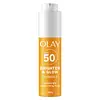
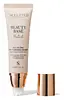
Olay Vitamin C Brighten & Glow Lightweight Moisturizing Fluid SPF 50+ Versus Sculpted by Aimee Beauty Base Protect SPF50 All-In-One Moisturising Primer
This brightening day moisturizer is formulated around Niacinamide and 3-O-Ethyl Ascorbic Acid to brighten dull-looking skin and fade the look of dark spots.


What's inside
What's inside
 Key Ingredients
Benefits
Concerns
Ingredients Side-by-side
Water
Skin ConditioningOctocrylene
UV Absorber



Homosalate
Skin Conditioning
Dimethicone
Emollient

Ethylhexyl Salicylate
UV Absorber
Phenylbenzimidazole Sulfonic Acid
UV Absorber
Butyl Methoxydibenzoylmethane
UV Absorber
Glycerin
Humectant

Lauroyl Lysine
Skin Conditioning
Trehalose
Humectant
Niacinamide
Smoothing







3-O-Ethyl Ascorbic Acid
Skin Conditioning
Panthenol
Skin Conditioning
Caprylyl Glycol
Emollient
Disodium EDTA
ChelatingAcrylates/C10-30 Alkyl Acrylate Crosspolymer
Emulsion StabilisingSodium Hydroxide
BufferingTin Oxide
Abrasive
1,2-Hexanediol
Skin Conditioning
Silica
Abrasive
Phenoxyethanol
Preservative
Sodium Benzoate
Masking
Limonene
Perfuming


Parfum
Masking
Linalool
Perfuming
Citrus Aurantium Peel Oil

Citrus Limon Peel Oil
Masking

Citronellol
Perfuming
Hexamethylindanopyran
Masking
Menthol
Masking
Tetramethyl Acetyloctahydronaphthalenes
Masking
Pinene
Masking
CI 77891
Cosmetic ColorantMica
Cosmetic ColorantWater, Octocrylene, Homosalate, Dimethicone, Ethylhexyl Salicylate, Phenylbenzimidazole Sulfonic Acid, Butyl Methoxydibenzoylmethane, Glycerin, Lauroyl Lysine, Trehalose, Niacinamide, 3-O-Ethyl Ascorbic Acid, Panthenol, Caprylyl Glycol, Disodium EDTA, Acrylates/C10-30 Alkyl Acrylate Crosspolymer, Sodium Hydroxide, Tin Oxide, 1,2-Hexanediol, Silica, Phenoxyethanol, Sodium Benzoate, Limonene, Parfum, Linalool, Citrus Aurantium Peel Oil, Citrus Limon Peel Oil, Citronellol, Hexamethylindanopyran, Menthol, Tetramethyl Acetyloctahydronaphthalenes, Pinene, CI 77891, Mica
Water
Skin ConditioningButyloctyl Salicylate
Skin Conditioning
Glycereth-26
Humectant
Ethylhexyl Salicylate
UV Absorber
Glycerin
Humectant
CI 77891
Cosmetic ColorantDibutyl Adipate
EmollientCoco-Caprylate/Caprate
Emollient
Pentaerythrityl Tetraisostearate
Emollient
Bis-Ethylhexyloxyphenol Methoxyphenyl Triazine
UV Absorber
Mica
Cosmetic ColorantGlyceryl Stearate
Emollient
PEG-100 Stearate
Surfactant
1,2-Hexanediol
Skin Conditioning
Methyl Methacrylate Crosspolymer
Cetyl Alcohol
Emollient
Acrylates Copolymer
Caprylyl Methicone
Skin Conditioning
Ceteareth-20
Cleansing
Oleth-10
EmulsifyingTrideceth-9
EmulsifyingStearic Acid
Cleansing
Aluminum Hydroxide
EmollientPolysorbate 80
Emulsifying
Hydroxyacetophenone
Antioxidant
Phenoxyethanol
Preservative
Polyglyceryl-3 Distearate
Emulsifying
Ammonium Acryloyldimethyltaurate/Vp Copolymer
Parfum
Masking
Sodium Polyacrylate
Absorbent
Palmitic Acid
Emollient
CI 77492
Cosmetic ColorantBetaine
Humectant
Allantoin
Skin Conditioning
Trehalose
Humectant
Panthenol
Skin Conditioning
Hydroxyethylcellulose
Emulsion StabilisingTriethoxycaprylylsilane
Ethylhexylglycerin
Skin ConditioningSodium Hyaluronate
Humectant
Caprylyl Glycol
Emollient
Tocopherol
Antioxidant
Glyceryl Stearate Citrate
Emollient
Sodium Phytate
ChelatingArginine
Masking
CI 77491
Cosmetic ColorantPotassium Cetyl Phosphate
EmulsifyingPolyacrylate Crosspolymer-6
Emulsion StabilisingMyristic Acid
Cleansing
Silica
Abrasive
T-Butyl Alcohol
Perfuming
Butylene Glycol
Humectant
Polyglyceryl-10 Laurate
Skin Conditioning
Acetyl Hexapeptide-8
Humectant
Copper Tripeptide-1
Skin Conditioning
Tripeptide-1
Skin Conditioning
Palmitoyl Pentapeptide-4
Skin Conditioning
Hexapeptide-9
Skin Conditioning
Water, Butyloctyl Salicylate, Glycereth-26, Ethylhexyl Salicylate, Glycerin, CI 77891, Dibutyl Adipate, Coco-Caprylate/Caprate, Pentaerythrityl Tetraisostearate, Bis-Ethylhexyloxyphenol Methoxyphenyl Triazine, Mica, Glyceryl Stearate, PEG-100 Stearate, 1,2-Hexanediol, Methyl Methacrylate Crosspolymer, Cetyl Alcohol, Acrylates Copolymer, Caprylyl Methicone, Ceteareth-20, Oleth-10, Trideceth-9, Stearic Acid, Aluminum Hydroxide, Polysorbate 80, Hydroxyacetophenone, Phenoxyethanol, Polyglyceryl-3 Distearate, Ammonium Acryloyldimethyltaurate/Vp Copolymer, Parfum, Sodium Polyacrylate, Palmitic Acid, CI 77492, Betaine, Allantoin, Trehalose, Panthenol, Hydroxyethylcellulose, Triethoxycaprylylsilane, Ethylhexylglycerin, Sodium Hyaluronate, Caprylyl Glycol, Tocopherol, Glyceryl Stearate Citrate, Sodium Phytate, Arginine, CI 77491, Potassium Cetyl Phosphate, Polyacrylate Crosspolymer-6, Myristic Acid, Silica, T-Butyl Alcohol, Butylene Glycol, Polyglyceryl-10 Laurate, Acetyl Hexapeptide-8, Copper Tripeptide-1, Tripeptide-1, Palmitoyl Pentapeptide-4, Hexapeptide-9
Reviews
Ingredients Explained
These ingredients are found in both products.
Ingredients higher up in an ingredient list are typically present in a larger amount.
1,2-Hexanediol is a synthetic liquid and another multi-functional powerhouse.
It is a:
- Humectant, drawing moisture into the skin
- Emollient, helping to soften skin
- Solvent, dispersing and stabilizing formulas
- Preservative booster, enhancing the antimicrobial activity of other preservatives
Caprylyl Glycol is a humectant, skin conditioner, emollient, and preservative booster derived from either caprylic acid or synthetically created.
Typical use levels vary from 0.3-1% as a preservative booster and go up to 2% to condition skin.
Because it is not a free-fatty acid, this ingredient is fungal acne safe (there's nothing for Malassezia to feed on).
Learn more about Caprylyl GlycolCi 77891 is a white pigment from Titanium dioxide. It is naturally found in minerals such as rutile and ilmenite.
It's main function is to add a white color to cosmetics. It can also be mixed with other colors to create different shades.
Ci 77891 is commonly found in sunscreens due to its ability to block UV rays.
Learn more about CI 77891Ethylhexyl Salicylate (also called Octisalate or Octyl Salicylate) is an oil-soluble organic UV filter that's been used in sunscreen since the 1950's.
It absorbs UVB light in the 280-320 nm range with a peak absorbance around 306 nm.
You'll often see it paired with other UV filters to boost overall SPF because octisalate is a fairly week filter on its own.
The reason you'll see it so often is because it can help solubilize and stabilize the trickier filters like oxybenzone and avobenzone.
Unlike these filters, octisalate has pretty good photostability and doesn't create skin-damaging free radicals when exposed to sunlight.
The fatty-alcohol part of the molecule also gives it a light, emollient feel so it doubles as a nice texture enhancer.
Usage levels vary around the world:
Safety-wise, this ingredient has a pretty reassuring track record. The EU's Scientific Committee on Consumer Products (SCCP) found very low skin penetration in human skin tests and negative results for irritation, phototoxicity, and photoallergy.
The real-world allergy risk is pretty low too; a 2012 European study of 1,031 people recorded only 2 reactions to it (a rate of 0.19%).
You might have seen scary headlines about sunscreen getting into your blood.
In 2019, the FDA found that several chemical filters can absorb through the skin and show up in the bloodstream at small but measurable levels.
Here's the important part: these tiny levels are just a cutoff the FDA uses to decide which ingredients need more testing and doesn't mean anything harmful was found.
The researchers were clear that the results are no reason to stop wearing sunscreen.
Learn more about Ethylhexyl SalicylateGlycerin (or glycerol) is a compound naturally found in your skin. It's a powerhouse humectant that pulls water into the stratum corneum.
Topically, glycerin does several things at once:
Your skin makes glycerin on its own (mostly from sebaceous oil breakdown) and shuttles it to your outermost layer of skin, or your epidermis, via aquaporin-3.
Aquaporin-3 is a transporter that is essential for normal skin hydration, elasticity, and repair. Interestingly, mice lacking in AQP3 have dry and less elastic skin that can be fully corrected with glycerin.
This ingredient is non-irritating, plays well with almost every ingredient, and works across all skin types. Typical use is anywhere between 3-10% but can go up to 79% in some leave-on products.
Just know very high concentrations (>40%) can feel tacky in low humidity.
Glycerin is the name for this ingredient in American English. British English uses Glycerol/Glycerine.
Learn more about GlycerinMica is a naturally occurring mineral used to add shimmer and color in cosmetics. It can also help improve the texture of a product or give it an opaque, white/silver color.
Serecite is the name for very fine but ragged grains of mica.
This ingredient is often coated with metal oxides like titanium dioxide. Trace amounts of heavy metals may be found in mica, but these metals are not harmful in our personal products.
Mica has been used since prehistoric times throughout the world. Ancient Egyptian, Indian, Greek, Roman, Aztec, and Chinese civilizations have used mica.
Learn more about MicaPanthenol is a common ingredient that helps hydrate and soothe the skin. It is found naturally in our skin and hair.
There are two forms of panthenol: D and L.
D-panthenol is also known as dexpanthenol. Most cosmetics use dexpanthenol or a mixture of D and L-panthenol.
Panthenol is famous due to its ability to go deeper into the skin's layers. Using this ingredient has numerous pros (and no cons):
Like hyaluronic acid, panthenol is a humectant. Humectants are able to bind and hold large amounts of water to keep skin hydrated.
This ingredient works well for wound healing. It works by increasing tissue in the wound and helps close open wounds.
Once oxidized, panthenol converts to pantothenic acid. Panthothenic acid is found in all living cells.
This ingredient is also referred to as pro-vitamin B5.
Learn more about PanthenolParfum is a catch-all term for an ingredient or more that is used to give a scent to products.
Also called "fragrance", this ingredient can be a blend of hundreds of chemicals or plant oils. This means every product with "fragrance" or "parfum" in the ingredients list is a different mixture.
For instance, Habanolide is a proprietary trade name for a specific aroma chemical. When used as a fragrance ingredient in cosmetics, most aroma chemicals fall under the broad labeling category of “FRAGRANCE” or “PARFUM” according to EU and US regulations.
The term 'parfum' or 'fragrance' is not regulated in many countries. In many cases, it is up to the brand to define this term.
For instance, many brands choose to label themselves as "fragrance-free" because they are not using synthetic fragrances. However, their products may still contain ingredients such as essential oils that are considered a fragrance by INCI standards.
One example is Calendula flower extract. Calendula is an essential oil that still imparts a scent or 'fragrance'.
Depending on the blend, the ingredients in the mixture can cause allergies and sensitivities on the skin. Some ingredients that are known EU allergens include linalool and citronellol.
Parfum can also be used to mask or cover an unpleasant scent.
The bottom line is: not all fragrances/parfum/ingredients are created equally. If you are worried about fragrances, we recommend taking a closer look at an ingredient. And of course, we always recommend speaking with a professional.
Learn more about ParfumPhenoxyethanol is one of the most widely used preservatives in skincare (and for good reason!).
It has a large spectrum of antimicrobial activity and especially effective bacteria, yeast, and mold while only having a weak effect on your skin's natural microbiome.
On a cellular level, it disrupts the cell membranes of microbes by poking holes that make the cell leak. This shuts down the chemical reactions the microbe needs to make energy so it can no longer survive.
Another perk of this ingredient is that it stays functional across a wide pH range (3-10).
You'll often see it paired with boosters like Ethylhexylglycerin; one study showed that a 1:9 ratio of Ethylhexylglycerin to Phenoxyethanol damages bacterial membranes as effectively as doubling the Phenoxyethanol concentration on its own.
Typical use concentrations range from 0.3-1% depending on the formula, and this ingredient is capped at 1% int the EU.
Safety-wise, the fear mongering does not hold up to the evidence. The EU's Scientific Committee on Consumer Safety and FDA consider it safe as a preservative at up to 1%, including for children of all ages.
Adverse systemic effects only showed up in animal studies at exposures roughly 200x higher than what people get from cosmetics. And despite its very widespread use, this ingredient is a rare sensitizer and allergic reactions are uncommon.
Learn more about PhenoxyethanolSilica, also known as silicon dioxide, is a naturally occurring mineral. It is used as a fine, spherical, and porous powder in cosmetics.
Though it has exfoliant properties, the function of silica varies depending on the product.
The unique structure of silica enhances the spreadability and adds smoothness, making it a great texture enhancer.
It is also used as an active carrier, emulsifier, and mattifier due to its ability to absorb excess oil.
In some products, tiny microneedles called spicules are made from silica or hydrolyzed sponge. When you rub them in, they lightly polish away dead skin layers and enhance the penetration of active ingredients.
Learn more about SilicaTrehalose is a disaccharide made of two glucose molecules (glucose is sugar!). Trehalose is used to help moisturize skin. It also has antioxidant properties.
As a humectant, trehalose helps draw moisture from the air to your skin. This helps keep your skin hydrated.
Due to its antioxidant properties, trehalose may help with signs of aging. Antioxidants help fight free-radical molecules, unstable molecules that may damage your skin.
In medicine, trehalose and hyaluronic acid are used to help treat dry eyes.
Some animals, plants, and bacteria create trehalose as a source of energy to survive freeze or lack of water.
Learn more about TrehaloseWater. It's the most common cosmetic ingredient of all. You'll usually see it at the top of ingredient lists, meaning that it makes up the largest part of the product.
So why is it so popular? Water most often acts as a solvent - this means that it helps dissolve other ingredients into the formulation.
You'll also recognize water as that liquid we all need to stay alive. If you see this, drink a glass of water. Remember to stay hydrated!
Learn more about Water

