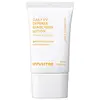
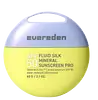
innisfree Daily UV Defense Sunscreen Lotion SPF 50+ Versus Evereden Kids SPF50 Fluid Silk Mineral Sunscreen Pro
This chemical sunscreen covers most of the UV range, lighter on the deep UVA that drives aging.
This mineral sunscreen covers the full UV range and blocks ~98% of UVB at SPF 50.


What's inside
What's inside
 Key Ingredients
Benefits
Concerns
Ingredients Side-by-side
Butyl Methoxydibenzoylmethane 2.5%
UV Absorber
Homosalate 7%
Skin Conditioning
Ethylhexyl Salicylate 4.3%
UV Absorber
Water
Skin ConditioningButyloctyl Salicylate
Skin Conditioning
Dipropylene Glycol
HumectantEthylhexyl Methoxycrylene
Skin Conditioning
Glycerin
Humectant


Silica
Abrasive


1,2-Hexanediol
Skin Conditioning
Arachidyl Alcohol
Emollient
Behenyl Alcohol
Emollient
Cetyl Alcohol
Emollient


Pentylene Glycol
Skin Conditioning
Arachidyl Glucoside
EmulsifyingAmmonium Polyacryloyldimethyl Taurate
Emulsion StabilisingGlyceryl Stearate
Emollient
PEG-100 Stearate
Surfactant
Parfum
Masking



Ethylhexylglycerin
Skin ConditioningLimonene
Perfuming
T-Butyl Alcohol
Perfuming

Linalool
Perfuming
Tocopherol
Antioxidant





Simmondsia Chinensis Seed Oil
Emollient
Helianthus Annuus Seed Oil
Emollient
Hamamelis Virginiana Flower Water
AstringentButylene Glycol
Humectant
Camellia Sinensis Leaf Extract
Antimicrobial
Centella Asiatica Extract
Cleansing
Caprylyl Glycol
Emollient
Butyl Methoxydibenzoylmethane 2.5%, Homosalate 7%, Ethylhexyl Salicylate 4.3%, Water, Butyloctyl Salicylate, Dipropylene Glycol, Ethylhexyl Methoxycrylene, Glycerin, Silica, 1,2-Hexanediol, Arachidyl Alcohol, Behenyl Alcohol, Cetyl Alcohol, Pentylene Glycol, Arachidyl Glucoside, Ammonium Polyacryloyldimethyl Taurate, Glyceryl Stearate, PEG-100 Stearate, Parfum, Ethylhexylglycerin, Limonene, T-Butyl Alcohol, Linalool, Tocopherol, Simmondsia Chinensis Seed Oil, Helianthus Annuus Seed Oil, Hamamelis Virginiana Flower Water, Butylene Glycol, Camellia Sinensis Leaf Extract, Centella Asiatica Extract, Caprylyl Glycol
Titanium Dioxide 3.7%
Cosmetic Colorant
Zinc Oxide 14%
Cosmetic Colorant
Water
Skin ConditioningCetyl Ethylhexanoate
EmollientUndecane
EmollientCaprylic/Capric Triglyceride
Masking
C13-15 Alkane
SolventDicaprylyl Ether
Emollient
Tridecane
Perfuming
Argania Spinosa Kernel Oil
Emollient
Propanediol
Solvent
Tocopheryl Acetate
Antioxidant
1,2-Hexanediol
Skin Conditioning
Polyglyceryl-6 Polyricinoleate
Emulsifying
Polyhydroxystearic Acid
Emulsifying
Silica
Abrasive
Stearyl Citrate
EmollientTrioctyldodecyl Citrate
EmollientAluminum Hydroxide
EmollientStearic Acid
Cleansing
Sodium Chloride
MaskingCarthamus Tinctorius Oleosomes
Emollient
Cucumis Sativus Fruit Extract
Emollient
Dextrin Palmitate
Emulsifying
Maris Limus Extract
Skin ProtectingMagnolia Officinalis Bark Extract
Antimicrobial
Thermus Thermophillus Ferment
Skin ConditioningBisabolol
Antioxidant
Aloe Barbadensis Leaf Juice
Skin Conditioning
Cocos Nucifera Fruit Juice
Emollient
Cocos Nucifera Oil
Masking
Helianthus Annuus Seed Oil
Emollient
Helianthus Annuus Seed Oil Unsaponifiables
Emollient
Persea Gratissima Oil
Skin Conditioning
Rosa Rubiginosa Seed Oil
Emollient
Vitis Vinifera Seed Oil
Emollient
Methyl Diisopropyl Propionamide
MaskingPongamia Pinnata Seed Extract
Skin ConditioningXanthan Gum
EmulsifyingCetyl Glyceryl Ether
EmollientSodium Phytate
ChelatingGlycerin
Humectant
Pongamia Glabra Seed Oil
Skin Conditioning
Phenylpropanol
Masking
Caprylyl Glycol
Emollient
Potassium Sorbate
Preservative
Hydroxyacetophenone
Antioxidant
Dunaliella Salina Extract
Skin ConditioningHaematococcus Pluvialis Extract
Antioxidant
Titanium Dioxide 3.7%, Zinc Oxide 14%, Water, Cetyl Ethylhexanoate, Undecane, Caprylic/Capric Triglyceride, C13-15 Alkane, Dicaprylyl Ether, Tridecane, Argania Spinosa Kernel Oil, Propanediol, Tocopheryl Acetate, 1,2-Hexanediol, Polyglyceryl-6 Polyricinoleate, Polyhydroxystearic Acid, Silica, Stearyl Citrate, Trioctyldodecyl Citrate, Aluminum Hydroxide, Stearic Acid, Sodium Chloride, Carthamus Tinctorius Oleosomes, Cucumis Sativus Fruit Extract, Dextrin Palmitate, Maris Limus Extract, Magnolia Officinalis Bark Extract, Thermus Thermophillus Ferment, Bisabolol, Aloe Barbadensis Leaf Juice, Cocos Nucifera Fruit Juice, Cocos Nucifera Oil, Helianthus Annuus Seed Oil, Helianthus Annuus Seed Oil Unsaponifiables, Persea Gratissima Oil, Rosa Rubiginosa Seed Oil, Vitis Vinifera Seed Oil, Methyl Diisopropyl Propionamide, Pongamia Pinnata Seed Extract, Xanthan Gum, Cetyl Glyceryl Ether, Sodium Phytate, Glycerin, Pongamia Glabra Seed Oil, Phenylpropanol, Caprylyl Glycol, Potassium Sorbate, Hydroxyacetophenone, Dunaliella Salina Extract, Haematococcus Pluvialis Extract
Reviews
Ingredients Explained
These ingredients are found in both products.
Ingredients higher up in an ingredient list are typically present in a larger amount.
1,2-Hexanediol is a synthetic liquid and another multi-functional powerhouse.
It is a:
- Humectant, drawing moisture into the skin
- Emollient, helping to soften skin
- Solvent, dispersing and stabilizing formulas
- Preservative booster, enhancing the antimicrobial activity of other preservatives
Caprylyl Glycol is a humectant, skin conditioner, emollient, and preservative booster derived from either caprylic acid or synthetically created.
Typical use levels vary from 0.3-1% as a preservative booster and go up to 2% to condition skin.
Because it is not a free-fatty acid, this ingredient is fungal acne safe (there's nothing for Malassezia to feed on).
Learn more about Caprylyl GlycolGlycerin (or glycerol) is a compound naturally found in your skin. It's a powerhouse humectant that pulls water into the stratum corneum.
Topically, glycerin does several things at once:
Your skin makes glycerin on its own (mostly from sebaceous oil breakdown) and shuttles it to your outermost layer of skin, or your epidermis, via aquaporin-3.
Aquaporin-3 is a transporter that is essential for normal skin hydration, elasticity, and repair. Interestingly, mice lacking in AQP3 have dry and less elastic skin that can be fully corrected with glycerin.
This ingredient is non-irritating, plays well with almost every ingredient, and works across all skin types. Typical use is anywhere between 3-10% but can go up to 79% in some leave-on products.
Just know very high concentrations (>40%) can feel tacky in low humidity.
Glycerin is the name for this ingredient in American English. British English uses Glycerol/Glycerine.
Learn more about GlycerinHelianthus Annuus Seed Oil is a plant oil derived from the seeds of a sunflower.
It is rich in fatty acids, primarily linoleic acid and oleic acid. This gives it emollient and skin conditioning properties.
The reason this ingredient is so effective is because it forms a thin film on the skin that reduces transepidermal water loss (TEWL) while supplying linoleic acid to the stratum corneum to improve barrier strength.
The high linoleic acid content is particularly noteworthy for acne-prone skin.
Research suggests that acne-prone skin tends to be deficient in linoleic acid in sebum. Topical application may help replenish this to support a healthier follicular environment and less comedone-promoting sebum.
One randomized study found sunflower seed oil preserved skin barrier integrity in adult volunteers with and without atopic dermatitis (outperforming olive oil).
This ingredient is well-studied, gentle, and an effective emollient suitable for most skin types.
On fungal acne: This ingredient may not be Fungal acne (Malassezia folliculitis) safe. This is because it contains fatty acids with carbon chain lengths in the C11-C24 range.
Learn more about Helianthus Annuus Seed OilSilica, also known as silicon dioxide, is a naturally occurring mineral. It is used as a fine, spherical, and porous powder in cosmetics.
Though it has exfoliant properties, the function of silica varies depending on the product.
The unique structure of silica enhances the spreadability and adds smoothness, making it a great texture enhancer.
It is also used as an active carrier, emulsifier, and mattifier due to its ability to absorb excess oil.
In some products, tiny microneedles called spicules are made from silica or hydrolyzed sponge. When you rub them in, they lightly polish away dead skin layers and enhance the penetration of active ingredients.
Learn more about SilicaWater. It's the most common cosmetic ingredient of all. You'll usually see it at the top of ingredient lists, meaning that it makes up the largest part of the product.
So why is it so popular? Water most often acts as a solvent - this means that it helps dissolve other ingredients into the formulation.
You'll also recognize water as that liquid we all need to stay alive. If you see this, drink a glass of water. Remember to stay hydrated!
Learn more about Water

