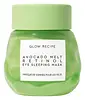
This anti-aging eye mask is formulated around Persea Gratissima Oil and Niacinamide to soften the look of wrinkles and hydrate skin.

What's inside
What's inside
 Key Ingredients
Benefits
Concerns
Ingredients Side-by-side
Water
Skin ConditioningGlycerin
Humectant


Propanediol
Solvent
Glyceryl Stearate
Emollient

Cetearyl Alcohol
Emollient




Persea Gratissima Oil
Skin Conditioning
C9-12 Alkane
SolventSodium Lauroyl Glutamate
SurfactantStearic Acid
Cleansing
Persea Gratissima Fruit Extract
EmollientSqualane
Emollient
Niacinamide
Smoothing








Ethylhexylglycerin
Skin ConditioningHexylresorcinol
Antimicrobial
Oryza Sativa Extract
Absorbent
Tocopheryl Acetate
Antioxidant

Aloe Barbadensis Leaf Juice
Skin Conditioning
Coffea Arabica Fruit Extract
Antioxidant
Hyaluronic Acid
Humectant
Ethylhexyl Palmitate
Emollient
Sodium Hyaluronate
Humectant
Retinol
Skin Conditioning

Pei-10
Hydrated Silica
Abrasive
Sodium Chloride
MaskingFructan
Skin ConditioningMaltodextrin
Absorbent
Spirulina Maxima Extract
SmoothingCurcumin
Antioxidant
Butyrospermum Parkii Butter
Skin Conditioning
Potassium Chloride
Potassium Phosphate
BufferingButylene Glycol
Humectant
Sodium Phosphate
BufferingHydrogenated Starch Hydrolysate
HumectantMaltooligosyl Glucoside
Skin ConditioningArginine
Masking
Silica Dimethyl Silylate
EmollientSodium Dilauramidoglutamide Lysine
HumectantSodium Hydroxide
BufferingCitric Acid
Buffering
Caprylyl Glycol
Emollient
Kaolin
Abrasive
Carthamus Tinctorius Seed Extract
Skin ConditioningLavandula Angustifolia Flower/Leaf/Stem Extract
Masking
Rosmarinus Officinalis Leaf Extract
AntimicrobialPPG-3 Benzyl Ether Myristate
EmollientPolyisobutene
Pvp
Emulsion StabilisingC13-15 Alkane
SolventAcrylates/C10-30 Alkyl Acrylate Crosspolymer
Emulsion StabilisingSodium Hydroxypropylsulfonate Laurylglucoside Crosspolymer
CleansingHexylene Glycol
EmulsifyingPotassium Sorbate
Preservative
Sodium Benzoate
Masking
Phenoxyethanol
Preservative
Aroma

Water, Glycerin, Propanediol, Glyceryl Stearate, Cetearyl Alcohol, Persea Gratissima Oil, C9-12 Alkane, Sodium Lauroyl Glutamate, Stearic Acid, Persea Gratissima Fruit Extract, Squalane, Niacinamide, Ethylhexylglycerin, Hexylresorcinol, Oryza Sativa Extract, Tocopheryl Acetate, Aloe Barbadensis Leaf Juice, Coffea Arabica Fruit Extract, Hyaluronic Acid, Ethylhexyl Palmitate, Sodium Hyaluronate, Retinol, Pei-10, Hydrated Silica, Sodium Chloride, Fructan, Maltodextrin, Spirulina Maxima Extract, Curcumin, Butyrospermum Parkii Butter, Potassium Chloride, Potassium Phosphate, Butylene Glycol, Sodium Phosphate, Hydrogenated Starch Hydrolysate, Maltooligosyl Glucoside, Arginine, Silica Dimethyl Silylate, Sodium Dilauramidoglutamide Lysine, Sodium Hydroxide, Citric Acid, Caprylyl Glycol, Kaolin, Carthamus Tinctorius Seed Extract, Lavandula Angustifolia Flower/Leaf/Stem Extract, Rosmarinus Officinalis Leaf Extract, PPG-3 Benzyl Ether Myristate, Polyisobutene, Pvp, C13-15 Alkane, Acrylates/C10-30 Alkyl Acrylate Crosspolymer, Sodium Hydroxypropylsulfonate Laurylglucoside Crosspolymer, Hexylene Glycol, Potassium Sorbate, Sodium Benzoate, Phenoxyethanol, Aroma
Squalane
Emollient
Diisostearyl Malate
EmollientCeresin
Emulsion StabilisingPolyethylene
Abrasive
Mica
Cosmetic ColorantBis-Diglyceryl Polyacyladipate-2
Emollient
Synthetic Wax
Abrasive
Caprylic/Capric Triglyceride
Masking
Silica Dimethyl Silylate
EmollientEthylene/Propylene Copolymer
Abrasive
Glycerin
Humectant
Caprylyl Glycol
Emollient
Carthamus Tinctorius Seed Oil
Masking
Retinol
Skin Conditioning
Oleic Acid
Emollient
Polysorbate 20
Emulsifying
Lecithin
Emollient
Polycaprolactone
StabilisingTerminalia Arjuna Extract
Skin ConditioningUbiquinone
Antioxidant
Astaxanthin
Skin Conditioning
Oryza Sativa Bran Wax
Skin Conditioning
Bakuchiol
Antimicrobial
Sodium Hyaluronate
Humectant
Phaseolus Radiatus Seed Extract
Skin ConditioningAcmella Oleracea Extract
Skin ProtectingCeramide NP
Skin Conditioning
Biotinoyl Hexapeptide-2 Amide
Skin Conditioning
Heptasodium Hexacarboxymethyl Dipeptide-12
Skin Conditioning
Spilanthes Acmella Flower/Leaf/Stem Extract
AntimicrobialAstragalus Membranaceus Root Extract
Emollient
Haematococcus Pluvialis Extract
Antioxidant
Olea Europaea Fruit Oil
Masking
Psoralea Corylifolia Seed Extract
Skin ConditioningAvena Sativa Meal Extract
SoothingTocopherol
Antioxidant
1,2-Hexanediol
Skin Conditioning
Water
Skin ConditioningSodium Magnesium Silicate
Squalane, Diisostearyl Malate, Ceresin, Polyethylene, Mica, Bis-Diglyceryl Polyacyladipate-2, Synthetic Wax, Caprylic/Capric Triglyceride, Silica Dimethyl Silylate, Ethylene/Propylene Copolymer, Glycerin, Caprylyl Glycol, Carthamus Tinctorius Seed Oil, Retinol, Oleic Acid, Polysorbate 20, Lecithin, Polycaprolactone, Terminalia Arjuna Extract, Ubiquinone, Astaxanthin, Oryza Sativa Bran Wax, Bakuchiol, Sodium Hyaluronate, Phaseolus Radiatus Seed Extract, Acmella Oleracea Extract, Ceramide NP, Biotinoyl Hexapeptide-2 Amide, Heptasodium Hexacarboxymethyl Dipeptide-12, Spilanthes Acmella Flower/Leaf/Stem Extract, Astragalus Membranaceus Root Extract, Haematococcus Pluvialis Extract, Olea Europaea Fruit Oil, Psoralea Corylifolia Seed Extract, Avena Sativa Meal Extract, Tocopherol, 1,2-Hexanediol, Water, Sodium Magnesium Silicate
Reviews
Ingredients Explained
These ingredients are found in both products.
Ingredients higher up in an ingredient list are typically present in a larger amount.
Caprylyl Glycol is a humectant, skin conditioner, emollient, and preservative booster derived from either caprylic acid or synthetically created.
Typical use levels vary from 0.3-1% as a preservative booster and go up to 2% to condition skin.
Because it is not a free-fatty acid, this ingredient is fungal acne safe (there's nothing for Malassezia to feed on).
Learn more about Caprylyl GlycolGlycerin (or glycerol) is a compound naturally found in your skin. It's a powerhouse humectant that pulls water into the stratum corneum.
Topically, glycerin does several things at once:
Your skin makes glycerin on its own (mostly from sebaceous oil breakdown) and shuttles it to your outermost layer of skin, or your epidermis, via aquaporin-3.
Aquaporin-3 is a transporter that is essential for normal skin hydration, elasticity, and repair. Interestingly, mice lacking in AQP3 have dry and less elastic skin that can be fully corrected with glycerin.
This ingredient is non-irritating, plays well with almost every ingredient, and works across all skin types. Typical use is anywhere between 3-10% but can go up to 79% in some leave-on products.
Just know very high concentrations (>40%) can feel tacky in low humidity.
Glycerin is the name for this ingredient in American English. British English uses Glycerol/Glycerine.
Learn more about GlycerinRetinol is one of the most studied anti-aging ingredients in skincare (and for good reason!).
It's a form of vitamin A that your skin converts into Retinoic Acid, the active molecule that actually does the work in your cells.
That conversion happens in two steps: your skin first turns Retinol into Retinaldehyde (also called Retinal), then turns Retinaldehyde into Retinoic Acid.
Retinol is converted to biologically active retinoic acid via retinaldehyde by dehydrogenases in a two-step oxidation process.
Each step is a little "upgrade" toward the active form which is part of why Retinol is gentler than prescription Retinoic Acid; your skin does the work gradually. This also explains where Retinol sits in the retinoid family.
Here is the retinoid family ranked roughly by strength: Retinyl Esters (like Retinyl Palmitate) < Retinol < Retinaldehyde < Retinoic Acid.
Retinoid activity increases in that order, while tolerance runs in reverse; retinyl esters are the gentlest and retinoic acid the most irritating.
The more conversion steps an ingredient needs, the gentler (and slower) it tends to be, so Retinol lands in a nice middle spot. It's more effective than the esters, gentler than prescription options.
Once it becomes Retinoic Acid, it binds to receptors inside your cells' nuclei (called RARs and RXRs). These receptor pairs bind to specific DNA motifs called retinoic acid response elements and act like switches that turn certain genes on or off.
In practice, this means a few things happen in a formula. It:
That last two are worth a closer look.
A study that tested Retinol directly (not just prescription Retinoic Acid) found that four weeks of retinol thickened the epidermis and switched on the genes for Collagen I and Collagen III, with more procollagen I and III showing up in the skin. And after twelve weeks, facial wrinkles were visibly reduced.
Retinoids more broadly stimulate the skin's synthesis of hyaluronan and other glycosaminoglycans, part of what gives skin a plumper, more hydrated look over time.
So even the gentler OTC form is doing real structural work (not just sitting on the surface).
It's also worth knowing Retinol isn't only a wrinkle ingredient; it can help with uneven tone, dark spots, rough texture, and the look of pores as well because it speeds up turnover and influences pigment.
The research backs this up as well.
A pooled analysis of six clinical studies found that 0.1% stabilized retinol improved all signs of photoaging versus vehicle as early as week 4 and through 12 weeks, with only a few mild cases of irritation.
Another study comparing concentrations found that 0.3% and 1% Retinol were similarly effective at remodeling photodamaged skin, but 0.3% caused fewer adverse reactions when used daily (a useful reminder that more isn't always better).
Retinol is about tenfold less potent than Retinoic Acid. This is why it works as a gentler, non-prescription option that builds results over time.
Typical concentrations range from 0.1-1%, with 0.1% to 0.3% being a well-supported sweet spot for visible benefits with good tolerability.
One quirk worth mentioning: Retinol is famously unstable.
It's highly sensitive to light and oxygen, and UV exposure breaks it down into a range of degradation products.
Real-world testing bears this out, with retinoid content in some products dropping anywhere from 0% to 80% after six months at room temperature, and even more at higher temperatures.
This is why good formulations lean on opaque, air-tight packaging (think tubes and pumps, not clear jars) and often "encapsulate" the Retinol to shield it.
Signs of oxidation include your product turning yellow or smelling "off". Keeping it somewhere cool and dark, and using it up within a few months of opening helps it stay effective.
The most common side effects are mild and temporary: usually some dryness, redness, or light peeling as your skin adjusts. These tend to settle with consistent and lower-frequency use.
Like all retinoids, Retinol works best with nightly use, a good moisturizer, and daytime sunscreen.
The "ramp up" method works well: start with Retinol once a week to give your skin time to adjust, which keeps irritation low. Slowly add more nights until you reach your goal frequency once your skin feels comfortable.
Retinoids also make your skin more sensitive to the sun in the first few weeks, so wear sunscreen every morning and protect your skin from direct sun while you build up tolerance.
One safety note: topical Retinoids aren't recommended during pregnancy or breastfeeding. Systemic absorption from creams is low but because high oral vitamin A is a known teratogen and topical safety data are limited, most clinicians recommend stopping retinoids when pregnant or trying to conceive.
Learn more about RetinolThis silica is mainly used to thicken oils and suspend particles in oils. It is not water soluble.
According to the manufacturer, it:
The manufacturer also claims this ingredient to be useful in makeup.
In lipstick formulations, this ingredient improves color payoff, reduces pigment settling, and reduces oil bleeding. This ingredient also improves the grip of powder products such as dry shampoos.
Learn more about Silica Dimethyl SilylateSodium Hyaluronate is the salt form of hyaluronic acid. It is a long sugar chain that is naturally found in your skin, joints, and connective tissue that maintains hydration and elasticity.
In skincare, it works as a humectant. It pulls water from the environment and deeper layers of skin and binds it to the surface.
Interestingly, the size of the molecule affects its behavior:
Some clinical evidence links low molecular weight versions to improved wrinkle depth, elasticity, anti-inflammatory effects, and barrier repair.
Many serums use a blend of both weights so you can get surface hydration plus longer-lasting and deeper effects.
You'll typically see concentrations between 0.1-2% for this ingredient.
Learn more about Sodium HyaluronateSqualane is the hydrogenated and shelf-stable form of squalene (a lipid that naturally occurs in human sebum).
It is an emollient and skin conditioning agent that is able to integrate seamlessly into the skin's lipid barrier without clogging pores.
This is due to how structurally similar it is to what your skin already produces.
Though it is mostly an emollient that helps soften and hydrate skin, it also has some humectant and occlusive action. Humectants help the skin retain moisture while occlusives seal it in, making squalane a triple-threat moisturizer.
Research shows it has antioxidant capabilities that help protect against stressors like UV exposure, specifically UVA induced oxidative stress. This study also found that it supports collagen biosynthesis in human dermal fibroblasts.
No clinical study has reported significant adverse effects and irritation reactions are very rare from this ingredient (even at 100% concentration).
Overall, it's a fantastic ingredient for hydration and is suitable for all skin types.
This depends on the source. Squalane can be derived from both plants and animals. Most squalane used in skincare comes from plants.
Please note: the source of squalane is only known if disclosed by the brand. We recommend reaching out to the brand if you have any questions about their squalane.
Read more about squalene with an "e".
Though squalane is often called an oil, it’s technically not one. It is a hydrocarbon, meaning it is only made of carbon and hydrogen. True oils are triglycerides and made of fatty acids and glycerol.
The term “oil-free” isn’t regulated so companies can define it however they want. Some exclude all oils, while others just avoid mineral oil or comedogenic oils.
Squalane has a comedogenic rating of 1 from the original 1972 study that tested raw ingredients under occlusion on rabbit ears. This system is not standardized or peer-reviewed, and using the raw ingredients is very different from how diluted cosmetic formulations are used on human skin.
A comedogenic rating of 1 means it is "unlikely to clog pores" according to the original rating system.
The overall formula of a product matters more than the individual ingredients on whether or not it will cause clogged pores.
Learn more about SqualaneWater. It's the most common cosmetic ingredient of all. You'll usually see it at the top of ingredient lists, meaning that it makes up the largest part of the product.
So why is it so popular? Water most often acts as a solvent - this means that it helps dissolve other ingredients into the formulation.
You'll also recognize water as that liquid we all need to stay alive. If you see this, drink a glass of water. Remember to stay hydrated!
Learn more about Water

