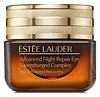
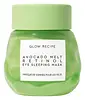
Estée Lauder Advanced Night Repair Eye Supercharged Complex Versus Glow Recipe Avocado Melt Retinol Eye Sleeping Mask
This barrier-repair eye moisturizer is formulated around Bifida Ferment Lysate and Caffeine to strengthen the skin barrier and soften the look of wrinkles.
This anti-aging eye mask is formulated around Persea Gratissima Oil and Niacinamide to soften the look of wrinkles and hydrate skin.

What's inside
What's inside
 Key Ingredients
Benefits
Concerns
Ingredients Side-by-side
Methyl Trimethicone
Skin Conditioning
Water
Skin ConditioningBifida Ferment Lysate
Skin Conditioning



Dimethicone
Emollient
Dimethicone/Vinyl Dimethicone Crosspolymer
Skin Conditioning
Propanediol
Solvent
Sucrose
Humectant
Petrolatum
Emollient


Polysorbate 40
Emulsifying

Trehalose
Humectant
Algae Extract
Emollient

Morus Bombycis Root Extract
Skin ConditioningScutellaria Baicalensis Root Extract
Astringent
Lactobacillus Ferment
Skin Conditioning
Triticum Vulgare Germ Extract
Skin ConditioningAcrylamide/Sodium Acryloyldimethyltaurate Copolymer
Emulsion StabilisingBetula Alba Bark Extract
Masking
Hydrolyzed Algin
Poria Cocos Sclerotium Extract
AstringentJojoba Alcohol
Emollient
Ethylhexylglycerin
Skin ConditioningGlycine Soja Seed Extract
Skin Conditioning
Isopropyl Jojobate
EmollientJojoba Esters
Emollient
Isohexadecane
EmollientFaex Extract
Skin ConditioningHydrogenated Lecithin
Emulsifying
Hordeum Vulgare Extract
EmollientPEG/PPG-18/18 Dimethicone
Emulsifying
Cholesterol
Emollient
Anthemis Nobilis Flower Extract
Masking
Tocopheryl Acetate
Antioxidant


Sodium Rna
Skin ConditioningCaffeine
Skin Conditioning
Polysorbate 80
Emulsifying
Caprylyl Glycol
Emollient
Phytosphingosine
Skin Conditioning
Squalane
Emollient
Potassium Sulfate
Sodium Hyaluronate
Humectant
Acrylates/C10-30 Alkyl Acrylate Crosspolymer
Emulsion StabilisingTripeptide-32
Skin Conditioning
Butylene Glycol
Humectant
Tromethamine
BufferingDisodium EDTA
ChelatingBHT
Antioxidant
Phenoxyethanol
Preservative
CI 77491
Cosmetic ColorantCI 77492
Cosmetic ColorantCI 77499
Cosmetic ColorantMethyl Trimethicone, Water, Bifida Ferment Lysate, Dimethicone, Dimethicone/Vinyl Dimethicone Crosspolymer, Propanediol, Sucrose, Petrolatum, Polysorbate 40, Trehalose, Algae Extract, Morus Bombycis Root Extract, Scutellaria Baicalensis Root Extract, Lactobacillus Ferment, Triticum Vulgare Germ Extract, Acrylamide/Sodium Acryloyldimethyltaurate Copolymer, Betula Alba Bark Extract, Hydrolyzed Algin, Poria Cocos Sclerotium Extract, Jojoba Alcohol, Ethylhexylglycerin, Glycine Soja Seed Extract, Isopropyl Jojobate, Jojoba Esters, Isohexadecane, Faex Extract, Hydrogenated Lecithin, Hordeum Vulgare Extract, PEG/PPG-18/18 Dimethicone, Cholesterol, Anthemis Nobilis Flower Extract, Tocopheryl Acetate, Sodium Rna, Caffeine, Polysorbate 80, Caprylyl Glycol, Phytosphingosine, Squalane, Potassium Sulfate, Sodium Hyaluronate, Acrylates/C10-30 Alkyl Acrylate Crosspolymer, Tripeptide-32, Butylene Glycol, Tromethamine, Disodium EDTA, BHT, Phenoxyethanol, CI 77491, CI 77492, CI 77499
Water
Skin ConditioningGlycerin
Humectant
Propanediol
Solvent
Glyceryl Stearate
Emollient
Cetearyl Alcohol
Emollient
Persea Gratissima Oil
Skin Conditioning
C9-12 Alkane
SolventSodium Lauroyl Glutamate
SurfactantStearic Acid
Cleansing
Persea Gratissima Fruit Extract
EmollientSqualane
Emollient
Niacinamide
Smoothing




Ethylhexylglycerin
Skin ConditioningHexylresorcinol
Antimicrobial
Oryza Sativa Extract
Absorbent
Tocopheryl Acetate
Antioxidant
Aloe Barbadensis Leaf Juice
Skin Conditioning
Coffea Arabica Fruit Extract
Antioxidant
Hyaluronic Acid
Humectant
Ethylhexyl Palmitate
Emollient
Sodium Hyaluronate
Humectant
Retinol
Skin Conditioning
Pei-10
Hydrated Silica
Abrasive
Sodium Chloride
MaskingFructan
Skin ConditioningMaltodextrin
Absorbent
Spirulina Maxima Extract
SmoothingCurcumin
Antioxidant
Butyrospermum Parkii Butter
Skin Conditioning
Potassium Chloride
Potassium Phosphate
BufferingButylene Glycol
Humectant
Sodium Phosphate
BufferingHydrogenated Starch Hydrolysate
HumectantMaltooligosyl Glucoside
Skin ConditioningArginine
Masking
Silica Dimethyl Silylate
EmollientSodium Dilauramidoglutamide Lysine
HumectantSodium Hydroxide
BufferingCitric Acid
Buffering
Caprylyl Glycol
Emollient
Kaolin
Abrasive
Carthamus Tinctorius Seed Extract
Skin ConditioningLavandula Angustifolia Flower/Leaf/Stem Extract
Masking
Rosmarinus Officinalis Leaf Extract
AntimicrobialPPG-3 Benzyl Ether Myristate
EmollientPolyisobutene
Pvp
Emulsion StabilisingC13-15 Alkane
SolventAcrylates/C10-30 Alkyl Acrylate Crosspolymer
Emulsion StabilisingSodium Hydroxypropylsulfonate Laurylglucoside Crosspolymer
CleansingHexylene Glycol
EmulsifyingPotassium Sorbate
Preservative
Sodium Benzoate
Masking
Phenoxyethanol
Preservative
Aroma

Water, Glycerin, Propanediol, Glyceryl Stearate, Cetearyl Alcohol, Persea Gratissima Oil, C9-12 Alkane, Sodium Lauroyl Glutamate, Stearic Acid, Persea Gratissima Fruit Extract, Squalane, Niacinamide, Ethylhexylglycerin, Hexylresorcinol, Oryza Sativa Extract, Tocopheryl Acetate, Aloe Barbadensis Leaf Juice, Coffea Arabica Fruit Extract, Hyaluronic Acid, Ethylhexyl Palmitate, Sodium Hyaluronate, Retinol, Pei-10, Hydrated Silica, Sodium Chloride, Fructan, Maltodextrin, Spirulina Maxima Extract, Curcumin, Butyrospermum Parkii Butter, Potassium Chloride, Potassium Phosphate, Butylene Glycol, Sodium Phosphate, Hydrogenated Starch Hydrolysate, Maltooligosyl Glucoside, Arginine, Silica Dimethyl Silylate, Sodium Dilauramidoglutamide Lysine, Sodium Hydroxide, Citric Acid, Caprylyl Glycol, Kaolin, Carthamus Tinctorius Seed Extract, Lavandula Angustifolia Flower/Leaf/Stem Extract, Rosmarinus Officinalis Leaf Extract, PPG-3 Benzyl Ether Myristate, Polyisobutene, Pvp, C13-15 Alkane, Acrylates/C10-30 Alkyl Acrylate Crosspolymer, Sodium Hydroxypropylsulfonate Laurylglucoside Crosspolymer, Hexylene Glycol, Potassium Sorbate, Sodium Benzoate, Phenoxyethanol, Aroma
Reviews
Ingredients Explained
These ingredients are found in both products.
Ingredients higher up in an ingredient list are typically present in a larger amount.
Acrylates/C10-30 Alkyl Acrylate Crosspolymer is a synthetic polymer. It is used to thicken, emulsify, and improve the texture of products.
As an emulsifier, it helps stabilize oil-in-water emulsions to give products an elegant feel when applied.
It can also form a thin protective film on skin. One study found that a formula using this polymer helped slow down how quickly other ingredients (like DEET) were absorbed through skin.
A 2024 study of over 1,300 patients confirmed that sensitization to this ingredient is rare. It is also non-mutagenic and has a clean track record.
Learn more about Acrylates/C10-30 Alkyl Acrylate CrosspolymerButylene Glycol (or BG) is used within cosmetic products for a few different reasons:
Overall, Butylene Glycol is a safe and well-rounded ingredient that works well with other ingredients.
Though this ingredient works well with most skin types, some people with sensitive skin may experience a reaction such as allergic rashes, closed comedones, or itchiness.
Learn more about Butylene GlycolCaprylyl Glycol is a humectant, skin conditioner, emollient, and preservative booster derived from either caprylic acid or synthetically created.
Typical use levels vary from 0.3-1% as a preservative booster and go up to 2% to condition skin.
Because it is not a free-fatty acid, this ingredient is fungal acne safe (there's nothing for Malassezia to feed on).
Learn more about Caprylyl GlycolEthylhexylglycerin is created from glycerin. It is a multitasker ingredient that:
The CIR Expert Panel found minimal skin absorption or sensitization of any kind in a safety assessment. Though this ingredient is considered well-tolerated, a small number of cases of allergic dermatitis have been published since 2002. Just be sure to patch test if you are unsure.
Industry-reported use ranges from 8% in rinse-off products and 2% in leave-on formulations.
Learn more about EthylhexylglycerinPhenoxyethanol is one of the most widely used preservatives in skincare (and for good reason!).
It has a large spectrum of antimicrobial activity and especially effective bacteria, yeast, and mold while only having a weak effect on your skin's natural microbiome.
On a cellular level, it disrupts the cell membranes of microbes by poking holes that make the cell leak. This shuts down the chemical reactions the microbe needs to make energy so it can no longer survive.
Another perk of this ingredient is that it stays functional across a wide pH range (3-10).
You'll often see it paired with boosters like Ethylhexylglycerin; one study showed that a 1:9 ratio of Ethylhexylglycerin to Phenoxyethanol damages bacterial membranes as effectively as doubling the Phenoxyethanol concentration on its own.
Typical use concentrations range from 0.3-1% depending on the formula, and this ingredient is capped at 1% int the EU.
Safety-wise, the fear mongering does not hold up to the evidence. The EU's Scientific Committee on Consumer Safety and FDA consider it safe as a preservative at up to 1%, including for children of all ages.
Adverse systemic effects only showed up in animal studies at exposures roughly 200x higher than what people get from cosmetics. And despite its very widespread use, this ingredient is a rare sensitizer and allergic reactions are uncommon.
Learn more about PhenoxyethanolPropanediol is an all-star ingredient. It softens, hydrates, and smooths the skin.
It’s often used to:
Propanediol is not likely to cause sensitivity and considered safe to use. It is derived from corn or petroleum with a clear color and no scent.
Learn more about PropanediolSodium Hyaluronate is the salt form of hyaluronic acid. It is a long sugar chain that is naturally found in your skin, joints, and connective tissue that maintains hydration and elasticity.
In skincare, it works as a humectant. It pulls water from the environment and deeper layers of skin and binds it to the surface.
Interestingly, the size of the molecule affects its behavior:
Some clinical evidence links low molecular weight versions to improved wrinkle depth, elasticity, anti-inflammatory effects, and barrier repair.
Many serums use a blend of both weights so you can get surface hydration plus longer-lasting and deeper effects.
You'll typically see concentrations between 0.1-2% for this ingredient.
Learn more about Sodium HyaluronateSqualane is the hydrogenated and shelf-stable form of squalene (a lipid that naturally occurs in human sebum).
It is an emollient and skin conditioning agent that is able to integrate seamlessly into the skin's lipid barrier without clogging pores.
This is due to how structurally similar it is to what your skin already produces.
Though it is mostly an emollient that helps soften and hydrate skin, it also has some humectant and occlusive action. Humectants help the skin retain moisture while occlusives seal it in, making squalane a triple-threat moisturizer.
Research shows it has antioxidant capabilities that help protect against stressors like UV exposure, specifically UVA induced oxidative stress. This study also found that it supports collagen biosynthesis in human dermal fibroblasts.
No clinical study has reported significant adverse effects and irritation reactions are very rare from this ingredient (even at 100% concentration).
Overall, it's a fantastic ingredient for hydration and is suitable for all skin types.
This depends on the source. Squalane can be derived from both plants and animals. Most squalane used in skincare comes from plants.
Please note: the source of squalane is only known if disclosed by the brand. We recommend reaching out to the brand if you have any questions about their squalane.
Read more about squalene with an "e".
Though squalane is often called an oil, it’s technically not one. It is a hydrocarbon, meaning it is only made of carbon and hydrogen. True oils are triglycerides and made of fatty acids and glycerol.
The term “oil-free” isn’t regulated so companies can define it however they want. Some exclude all oils, while others just avoid mineral oil or comedogenic oils.
Squalane has a comedogenic rating of 1 from the original 1972 study that tested raw ingredients under occlusion on rabbit ears. This system is not standardized or peer-reviewed, and using the raw ingredients is very different from how diluted cosmetic formulations are used on human skin.
A comedogenic rating of 1 means it is "unlikely to clog pores" according to the original rating system.
The overall formula of a product matters more than the individual ingredients on whether or not it will cause clogged pores.
Learn more about SqualaneTocopheryl Acetate is a stable, shelf-friendly form of vitamin E.
Formulators love it because plain vitamin E oxidizes quickly once it hits air. This acetate version stays stable and resists going off, helping to extend a product's shelf life.
It's actually inactive on its own and works like a slow-release "storage" form; the enzymes in your skin called esterases gradually convert it into active vitamin E over time.
One in vivo study showed 5% of the acetate in the living layer of the epidermis converted to vitamin E after 5 days of application. This study also found the skin gained protection against UV damage even though the conversion was slow and small.
Once converted, vitamin E acts as a skin's main fat-soluble antioxidant that fights free radicals to protect skin from damage.
Topical vitamin E generally boosts the skin's photoprotection, and it reduced UV-damage in animal models.
This ingredient has some brightening potential but it's more of a prevention ingredient than spot-fader. Cell studies show it can slow down melanin production but it's worth noting that it's not the most powerful brightener out there.
Overall, it has a pretty solid safety profile and has been found to be non-irritating and non-comedogenic. Allergic reactions may happen but stay rare due to how widely the ingredient gets used.
The concentration will vary depending on the formula; industry data shows 0.1% in baby lotions, 3% in lipsticks, and 5% in foot powders. You can also find this ingredient at 100% in a pure vitamin E oil.
Most leave-on skincare keeps it at the lower end, often between 0.5-1%.
Learn more about Tocopheryl AcetateWater. It's the most common cosmetic ingredient of all. You'll usually see it at the top of ingredient lists, meaning that it makes up the largest part of the product.
So why is it so popular? Water most often acts as a solvent - this means that it helps dissolve other ingredients into the formulation.
You'll also recognize water as that liquid we all need to stay alive. If you see this, drink a glass of water. Remember to stay hydrated!
Learn more about Water

