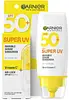
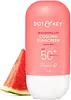
Garnier Super UV Invisible Serum Sunscreen SPF 50+ Versus Dot & Key Skincare Watermelon Cooling SPF 50 Sunscreen


What's inside
What's inside
 Key Ingredients
Benefits
Concerns
Ingredients Side-by-side
Water
Skin ConditioningAlcohol Denat.
Antimicrobial




Diisopropyl Sebacate
EmollientSilica
Abrasive


Isopropyl Myristate
Emollient


Ethylhexyl Salicylate
UV Absorber

Bis-Ethylhexyloxyphenol Methoxyphenyl Triazine
Skin Conditioning
Ethylhexyl Triazone
UV Absorber
Butyl Methoxydibenzoylmethane
UV Absorber
Glycerin
Humectant


Phenylbenzimidazole Sulfonic Acid
UV Absorber
Propanediol
Solvent
C12-22 Alkyl Acrylate/Hydroxyethylacrylate Copolymer
StabilisingTriethanolamine
BufferingDrometrizole Trisiloxane
UV Absorber
Caprylic/Capric Triglyceride
Masking
Tocopherol
Antioxidant





Ascorbyl Glucoside
Antioxidant
Hydroxyacetophenone
Antioxidant
Sodium Hyaluronate
Humectant
Hydroxyethylcellulose
Emulsion StabilisingSodium Lactate
Buffering
Adenosine
Skin Conditioning
Trisodium Ethylenediamine Disuccinate
Silica Silylate
Emollient
Cellulose
Absorbent
Polysorbate 20
Emulsifying
Palmitoyl Tripeptide-1
Skin Conditioning

Palmitoyl Tetrapeptide-7
Skin Conditioning
Limonene
Perfuming

Linalool
Perfuming
Benzyl Salicylate
Perfuming
Benzyl Alcohol
Perfuming
Tromethamine
BufferingCapryloyl Salicylic Acid
Exfoliating
Caprylyl Glycol
Emollient
Acrylates/C10-30 Alkyl Acrylate Crosspolymer
Emulsion StabilisingCarbomer
Emulsion StabilisingGeraniol
Perfuming
Butylene Glycol
Humectant
Citrus Limon Fruit Extract
Masking
Citral
Perfuming
Parfum
Masking
Water, Alcohol Denat., Diisopropyl Sebacate, Silica, Isopropyl Myristate, Ethylhexyl Salicylate, Bis-Ethylhexyloxyphenol Methoxyphenyl Triazine, Ethylhexyl Triazone, Butyl Methoxydibenzoylmethane, Glycerin, Phenylbenzimidazole Sulfonic Acid, Propanediol, C12-22 Alkyl Acrylate/Hydroxyethylacrylate Copolymer, Triethanolamine, Drometrizole Trisiloxane, Caprylic/Capric Triglyceride, Tocopherol, Ascorbyl Glucoside, Hydroxyacetophenone, Sodium Hyaluronate, Hydroxyethylcellulose, Sodium Lactate, Adenosine, Trisodium Ethylenediamine Disuccinate, Silica Silylate, Cellulose, Polysorbate 20, Palmitoyl Tripeptide-1, Palmitoyl Tetrapeptide-7, Limonene, Linalool, Benzyl Salicylate, Benzyl Alcohol, Tromethamine, Capryloyl Salicylic Acid, Caprylyl Glycol, Acrylates/C10-30 Alkyl Acrylate Crosspolymer, Carbomer, Geraniol, Butylene Glycol, Citrus Limon Fruit Extract, Citral, Parfum
Water
Skin ConditioningEthylhexyl Methoxycinnamate
UV Absorber
Butyl Methoxydibenzoylmethane
UV Absorber
Benzophenone-3
UV Absorber
Phospholipids
Skin Conditioning
Butylene Glycol
Humectant
Glycerin
Humectant
C12-15 Alkyl Benzoate
AntimicrobialCaprylic/Capric Triglyceride
Masking
Propanediol
Solvent
Cyclopentasiloxane
Emollient
Zea Mays Starch
Absorbent
Citrullus Lanatus Fruit Extract
Skin Conditioning
Oxothiazolidine
Skin ProtectingSodium Benzoate
Masking
Methylene Bis-Benzotriazolyl Tetramethylbutylphenol
UV Filter
Decyl Glucoside
Cleansing
Propylene Glycol
Humectant
Xanthan Gum
EmulsifyingDiethylamino Hydroxybenzoyl Hexyl Benzoate
UV Filter
Titanium Dioxide
Cosmetic Colorant
Silica
Abrasive
Fructooligosaccharides
Humectant
Beta Vulgaris Root Extract
Skin ConditioningSodium Hyaluronate
Humectant
Aloe Barbadensis Leaf Juice
Skin Conditioning
Tocopheryl Acetate
Antioxidant
Menthyl Lactate
Masking
Glyceryl Stearate
Emollient
PEG-100 Stearate
Surfactant
Acrylates/C10-30 Alkyl Acrylate Crosspolymer
Emulsion StabilisingSorbitan Stearate
Emulsifying
Sucrose Cocoate
Emulsifying
Sodium Lactate
Buffering
Sodium Gluconate
Skin ConditioningDisodium EDTA
Sodium Hydroxide
BufferingPhenoxyethanol
Preservative
Ethylhexylglycerin
Skin ConditioningWater, Ethylhexyl Methoxycinnamate, Butyl Methoxydibenzoylmethane, Benzophenone-3, Phospholipids, Butylene Glycol, Glycerin, C12-15 Alkyl Benzoate, Caprylic/Capric Triglyceride, Propanediol, Cyclopentasiloxane, Zea Mays Starch, Citrullus Lanatus Fruit Extract, Oxothiazolidine, Sodium Benzoate, Methylene Bis-Benzotriazolyl Tetramethylbutylphenol, Decyl Glucoside, Propylene Glycol, Xanthan Gum, Diethylamino Hydroxybenzoyl Hexyl Benzoate, Titanium Dioxide, Silica, Fructooligosaccharides, Beta Vulgaris Root Extract, Sodium Hyaluronate, Aloe Barbadensis Leaf Juice, Tocopheryl Acetate, Menthyl Lactate, Glyceryl Stearate, PEG-100 Stearate, Acrylates/C10-30 Alkyl Acrylate Crosspolymer, Sorbitan Stearate, Sucrose Cocoate, Sodium Lactate, Sodium Gluconate, Disodium EDTA, Sodium Hydroxide, Phenoxyethanol, Ethylhexylglycerin
Reviews
Ingredients Explained
These ingredients are found in both products.
Ingredients higher up in an ingredient list are typically present in a larger amount.
Acrylates/C10-30 Alkyl Acrylate Crosspolymer is a synthetic polymer. It is used to thicken, emulsify, and improve the texture of products.
As an emulsifier, it helps stabilize oil-in-water emulsions to give products an elegant feel when applied.
It can also form a thin protective film on skin. One study found that a formula using this polymer helped slow down how quickly other ingredients (like DEET) were absorbed through skin.
A 2024 study of over 1,300 patients confirmed that sensitization to this ingredient is rare. It is also non-mutagenic and has a clean track record.
Learn more about Acrylates/C10-30 Alkyl Acrylate CrosspolymerAlso known as Avobenzone, this ingredient is a chemical sunscreen filter that provides protection in the UV-A range.
Avobenzone is globally approved and is the most commonly used UV-A filter in the world.
Studies have found that avobenzone becomes ineffective when exposed to UV light (it is not photostable; meaning that it breaks down in sunlight). Because of this, formulations that include avobenzone will usually contain stabilizers such as octocrylene.
However, some modern formulations (looking at you, EU!) are able to stabilize avobenzone by coating the molecules.
Avobenzone does not protect against the UV-B range, so it's important to check that the sunscreen you're using contains other UV filters that do!
The highest concentration of avobenzone permitted is 3% in the US, and 5% in the EU.
Learn more about Butyl MethoxydibenzoylmethaneButylene Glycol (or BG) is used within cosmetic products for a few different reasons:
Overall, Butylene Glycol is a safe and well-rounded ingredient that works well with other ingredients.
Though this ingredient works well with most skin types, some people with sensitive skin may experience a reaction such as allergic rashes, closed comedones, or itchiness.
Learn more about Butylene GlycolThis ingredient is a lightweight emollient, solvent, and texture enhancer. It is considered a skin-softener by helping the skin prevent moisture loss.
It helps thicken a product's formula and makes it easier to spread by dissolving clumping compounds.
Caprylic Triglyceride is made by combining glycerin with coconut oil, forming a clear liquid. Though it behaves like an oil, it is not technically one due to its chemical composition. It is very stable, resistant to oxidation, and unlikely to go rancid. In practice, that translates to a long shelf life and a consistently elegant skin feel.
While there is an assumption Caprylic Triglyceride can clog pores due to it being derived from coconut oil, there is no research supporting this. Be sure to patch test if you have concerns.
Fractionated coconut oil and MCT Oil are both listed as Caprylic/Capric Triglyceride according to INCI. This is because INCI names are based on the ingredient’s final chemical composition and not its marketing name or source.
Learn more about Caprylic/Capric TriglycerideGlycerin (or glycerol) is a compound naturally found in your skin. It's a powerhouse humectant that pulls water into the stratum corneum.
Topically, glycerin does several things at once:
Your skin makes glycerin on its own (mostly from sebaceous oil breakdown) and shuttles it to your outermost layer of skin, or your epidermis, via aquaporin-3.
Aquaporin-3 is a transporter that is essential for normal skin hydration, elasticity, and repair. Interestingly, mice lacking in AQP3 have dry and less elastic skin that can be fully corrected with glycerin.
This ingredient is non-irritating, plays well with almost every ingredient, and works across all skin types. Typical use is anywhere between 3-10% but can go up to 79% in some leave-on products.
Just know very high concentrations (>40%) can feel tacky in low humidity.
Glycerin is the name for this ingredient in American English. British English uses Glycerol/Glycerine.
Learn more about GlycerinPropanediol is an all-star ingredient. It softens, hydrates, and smooths the skin.
It’s often used to:
Propanediol is not likely to cause sensitivity and considered safe to use. It is derived from corn or petroleum with a clear color and no scent.
Learn more about PropanediolSilica, also known as silicon dioxide, is a naturally occurring mineral. It is used as a fine, spherical, and porous powder in cosmetics.
Though it has exfoliant properties, the function of silica varies depending on the product.
The unique structure of silica enhances the spreadability and adds smoothness, making it a great texture enhancer.
It is also used as an active carrier, emulsifier, and mattifier due to its ability to absorb excess oil.
In some products, tiny microneedles called spicules are made from silica or hydrolyzed sponge. When you rub them in, they lightly polish away dead skin layers and enhance the penetration of active ingredients.
Learn more about SilicaSodium Hyaluronate is the salt form of hyaluronic acid. It is a long sugar chain that is naturally found in your skin, joints, and connective tissue that maintains hydration and elasticity.
In skincare, it works as a humectant. It pulls water from the environment and deeper layers of skin and binds it to the surface.
Interestingly, the size of the molecule affects its behavior:
Some clinical evidence links low molecular weight versions to improved wrinkle depth, elasticity, anti-inflammatory effects, and barrier repair.
Many serums use a blend of both weights so you can get surface hydration plus longer-lasting and deeper effects.
You'll typically see concentrations between 0.1-2% for this ingredient.
Learn more about Sodium HyaluronateSodium Lactate is the sodium salt of lactic acid, an AHA. It is a humectant and sometimes used to adjust the pH of a product.
This ingredient is part of our skin's NMF, or natural moisturizing factor. Our NMF is essential for the hydration of our top skin layers and plasticity of skin. NMF also influences our skin's natural acid mantle and pH, which protects our skin from harmful bacteria.
High percentages of Sodium Lactate can have an exfoliating effect.
Fun fact: Sodium Lactate is produced from fermented sugar.
Learn more about Sodium LactateWater. It's the most common cosmetic ingredient of all. You'll usually see it at the top of ingredient lists, meaning that it makes up the largest part of the product.
So why is it so popular? Water most often acts as a solvent - this means that it helps dissolve other ingredients into the formulation.
You'll also recognize water as that liquid we all need to stay alive. If you see this, drink a glass of water. Remember to stay hydrated!
Learn more about Water
