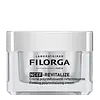
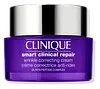
Filorga NCEF-Revitalize Firming Polyrevitalizing Cream Versus Clinique Smart Clinical Repair Wrinkle Correcting Face Cream
This anti-aging moisturizer is formulated around Hydrolyzed Hyaluronic Acid and Palmitoyl Tripeptide-1 to soften the look of wrinkles and hydrate skin.
This anti-aging treatment is formulated around Acetyl Hexapeptide-8 and Acetyl Octapeptide-3 to soften the look of wrinkles and refine skin texture.


What's inside
What's inside
 Key Ingredients
Benefits
Concerns
Ingredients Side-by-side
Water
Skin ConditioningGlycerin
Humectant


Ethyl Oleate
Emollient



Butyrospermum Parkii Butter
Skin Conditioning


Hydrogenated Vegetable Oil
Emollient
Propanediol
Solvent
Methylsilanol Mannuronate
Skin ConditioningCetyl Alcohol
Emollient

Arachidyl Alcohol
Emollient
Cellulose
Absorbent
Mannitol
Humectant
Dimethicone
Emollient
Methylpropanediol
SolventSodium Stearoyl Glutamate
CleansingBehenyl Alcohol
Emollient
Stearyl Stearate
Emollient
Sodium Polyacrylate
Absorbent
Parfum
Masking
Arachidyl Glucoside
EmulsifyingSodium Benzoate
Masking
Citric Acid
Buffering

Polyacrylate Crosspolymer-6
Emulsion StabilisingTocopheryl Acetate
Antioxidant

PEG-20 Castor Oil
Emulsifying
Hydrolyzed Hyaluronic Acid
Humectant

Polyglyceryl-10 Dioleate
Emulsifying
Niacinamide
Smoothing






Copernicia Cerifera Cera
Emollient
Rhus Verniciflua Peel Wax
Magnesium Stearate
Cosmetic ColorantAlcohol Denat.
Antimicrobial

Taurine
BufferingCaprylic/Capric Triglyceride
Masking
Carnosine
Skin Conditioning
Sodium PCA
Humectant
Potassium Sorbate
Preservative
Pentylene Glycol
Skin Conditioning
Arginine
Masking
Tetramethyl Acetyloctahydronaphthalenes
Masking
Linalool
Perfuming
Sodium Phytate
ChelatingAdenosine
Skin Conditioning
Polyglyceryl-10 Dipalmitate
Emollient
Linalyl Acetate
Masking
PEG-60 Hydrogenated Castor Oil
Emulsifying
Zea Mays Oil
Emulsifying
Sodium Lactate
Buffering
Haberlea Rhodopensis Leaf Extract
Skin ConditioningCalcium Pantothenate
Inositol
Humectant
Tocopherol
Antioxidant
Retinol
Skin Conditioning
Dipeptide Diaminobutyroyl Benzylamide Diacetate
Skin Conditioning
Xanthan Gum
EmulsifyingBenzoic Acid
Masking
Rosa Moschata Seed Oil
Emollient
Geranyl Acetate
Perfuming
Glycine
Buffering
Acetyl Tetrapeptide-11
Skin Conditioning
Magnesium Sulfate
Nicotinamide Adenine Dinucleotide
Skin ConditioningAcetyl Tetrapeptide-9
Skin Conditioning
Ergothioneine
Antioxidant
Biotin
AntiseborrhoeicPalmitoyl Tripeptide-1
Skin Conditioning
Palmitoyl Tetrapeptide-7
Skin Conditioning
CI 17200
Cosmetic ColorantWater, Glycerin, Ethyl Oleate, Butyrospermum Parkii Butter, Hydrogenated Vegetable Oil, Propanediol, Methylsilanol Mannuronate, Cetyl Alcohol, Arachidyl Alcohol, Cellulose, Mannitol, Dimethicone, Methylpropanediol, Sodium Stearoyl Glutamate, Behenyl Alcohol, Stearyl Stearate, Sodium Polyacrylate, Parfum, Arachidyl Glucoside, Sodium Benzoate, Citric Acid, Polyacrylate Crosspolymer-6, Tocopheryl Acetate, PEG-20 Castor Oil, Hydrolyzed Hyaluronic Acid, Polyglyceryl-10 Dioleate, Niacinamide, Copernicia Cerifera Cera, Rhus Verniciflua Peel Wax, Magnesium Stearate, Alcohol Denat., Taurine, Caprylic/Capric Triglyceride, Carnosine, Sodium PCA, Potassium Sorbate, Pentylene Glycol, Arginine, Tetramethyl Acetyloctahydronaphthalenes, Linalool, Sodium Phytate, Adenosine, Polyglyceryl-10 Dipalmitate, Linalyl Acetate, PEG-60 Hydrogenated Castor Oil, Zea Mays Oil, Sodium Lactate, Haberlea Rhodopensis Leaf Extract, Calcium Pantothenate, Inositol, Tocopherol, Retinol, Dipeptide Diaminobutyroyl Benzylamide Diacetate, Xanthan Gum, Benzoic Acid, Rosa Moschata Seed Oil, Geranyl Acetate, Glycine, Acetyl Tetrapeptide-11, Magnesium Sulfate, Nicotinamide Adenine Dinucleotide, Acetyl Tetrapeptide-9, Ergothioneine, Biotin, Palmitoyl Tripeptide-1, Palmitoyl Tetrapeptide-7, CI 17200
Water
Skin ConditioningGlycerin
Humectant
Isostearyl Neopentanoate
Emollient
Butylene Glycol
Humectant
Glyceryl Stearate
Emollient
PEG-100 Stearate
Surfactant
Dimethicone
Emollient
Cetearyl Alcohol
Emollient
Acetyl Hexapeptide-8
Humectant
Acetyl Octapeptide-3
Humectant
Aminopropyl Ascorbyl Phosphate
Antioxidant
Palmitoyl Tetrapeptide-7
Skin Conditioning
Algae Extract
Emollient
Sodium Hyaluronate
Humectant
Palmitoyl Hexapeptide-12
Skin Conditioning
Sigesbeckia Orientalis Extract
Skin ConditioningWhey Protein
Skin ConditioningDipeptide Diaminobutyroyl Benzylamide Diacetate
Skin Conditioning
Acetyl Glucosamine
Skin Conditioning
Caffeine
Skin Conditioning
Palmitoyl Tripeptide-1
Skin Conditioning
Glycine Soja Seed Extract
Skin Conditioning
Cetearyl Glucoside
Emulsifying
Tocopheryl Acetate
Antioxidant
Isohexadecane
EmollientPetrolatum
Emollient
Caprylyl Glycol
Emollient
Glycereth-26
Humectant
Acrylates/C10-30 Alkyl Acrylate Crosspolymer
Emulsion StabilisingTromethamine
BufferingGlyceryl Polymethacrylate
PEG-8
HumectantPolysorbate 20
Emulsifying
Hexylene Glycol
EmulsifyingPolysorbate 80
Emulsifying
Carbomer
Emulsion StabilisingAcrylamide/Sodium Acryloyldimethyltaurate Copolymer
Emulsion StabilisingSorbitan Oleate
Emulsifying
Cetyl Alcohol
Emollient
Sodium Citrate
BufferingDisodium EDTA
ChelatingPhenoxyethanol
Preservative
Potassium Sorbate
Preservative
Sodium Benzoate
Masking
Water, Glycerin, Isostearyl Neopentanoate, Butylene Glycol, Glyceryl Stearate, PEG-100 Stearate, Dimethicone, Cetearyl Alcohol, Acetyl Hexapeptide-8, Acetyl Octapeptide-3, Aminopropyl Ascorbyl Phosphate, Palmitoyl Tetrapeptide-7, Algae Extract, Sodium Hyaluronate, Palmitoyl Hexapeptide-12, Sigesbeckia Orientalis Extract, Whey Protein, Dipeptide Diaminobutyroyl Benzylamide Diacetate, Acetyl Glucosamine, Caffeine, Palmitoyl Tripeptide-1, Glycine Soja Seed Extract, Cetearyl Glucoside, Tocopheryl Acetate, Isohexadecane, Petrolatum, Caprylyl Glycol, Glycereth-26, Acrylates/C10-30 Alkyl Acrylate Crosspolymer, Tromethamine, Glyceryl Polymethacrylate, PEG-8, Polysorbate 20, Hexylene Glycol, Polysorbate 80, Carbomer, Acrylamide/Sodium Acryloyldimethyltaurate Copolymer, Sorbitan Oleate, Cetyl Alcohol, Sodium Citrate, Disodium EDTA, Phenoxyethanol, Potassium Sorbate, Sodium Benzoate
Ingredients Explained
These ingredients are found in both products.
Ingredients higher up in an ingredient list are typically present in a larger amount.
Cetyl Alcohol is a fatty alcohol. Fatty Alcohols are most often used as an emollient or to thicken a product.
Its main roles are:
Though it has "alcohol" in the name, it is not related to denatured alcohol or ethyl alcohol.
The FDA allows products labeled "alcohol-free" to have fatty alcohols.
This ingredient may not be fungal acne safe. It is a primary fatty alcohol with a chain length above 12 carbons. A study from 2019 show Malassezia can feed on fatty alcohols in this range, so it may trigger fungal acne in those prone to it.
Learn more about Cetyl AlcoholDimethicone is a type of synthetic silicone created from natural materials such as quartz. It is also known as polydimethylsiloxane.
What it does:
Dimethicone comes in different viscosities:
Depending on the viscosity, dimethicone has different properties.
Ingredients lists don't always show which type is used, so we recommend reaching out to the brand if you have questions about the viscosity.
This ingredient is unlikely to cause irritation because it does not get absorbed into skin. However, people with silicone allergies should be careful about using this ingredient.
Note: Dimethicone may contribute to pilling. This is because it is not oil or water soluble, so pilling may occur when layered with products. When mixed with heavy oils in a formula, the outcome is also quite greasy.
Learn more about DimethiconeThis small molecule peptide has similar benefits to Argireline, the "botox" peptide.
According to the manufacturer, this peptide mimics snake venom to freeze muscles. This prevents muscle movement and contractions to prohibit the formation of fine lines and wrinkles.
While this seems promising, research is lacking in proving this ingredient to be as effective as botox.
Learn more about Dipeptide Diaminobutyroyl Benzylamide DiacetateGlycerin (or glycerol) is a compound naturally found in your skin. It's a powerhouse humectant that pulls water into the stratum corneum.
Topically, glycerin does several things at once:
Your skin makes glycerin on its own (mostly from sebaceous oil breakdown) and shuttles it to your outermost layer of skin, or your epidermis, via aquaporin-3.
Aquaporin-3 is a transporter that is essential for normal skin hydration, elasticity, and repair. Interestingly, mice lacking in AQP3 have dry and less elastic skin that can be fully corrected with glycerin.
This ingredient is non-irritating, plays well with almost every ingredient, and works across all skin types. Typical use is anywhere between 3-10% but can go up to 79% in some leave-on products.
Just know very high concentrations (>40%) can feel tacky in low humidity.
Glycerin is the name for this ingredient in American English. British English uses Glycerol/Glycerine.
Learn more about GlycerinPalmitoyl Tetrapeptide-7 (formerly Palmitoyl Tetrapeptide-3) is a synthetic peptide. Its main job is to fight what researchers call "inflammaging".
"Inflammaging" is the slow, low-grade chronic inflammation that quietly breaks down collagen as we age.
This ingredient calms down a specific inflammation signal in your skin cells (called IL-6). When left unchecked, this signal triggers enzymes that break down collagen and elastin.
Clinical testing showed statistically significant improvements in:
Studies also found the more of this ingredient used, the more your skin produces Collagen I, fibronectin, and hyaluronic acid.
You'll likely see this ingredient paired with Palmitoyl Tripeptide-1 in the well-known Matrixyl 3000 complex for enhanced anti-aging effects.
A 3% concentration applied twice daily for two months showed meaningful skin rejuvenation results in clinical panels.
Fungal acne note:
Usually a palmitic acid component can feed Malassezia in unbound form, but here is is covalently bonded to the peptide. This means it is very difficult for Malassezia to access, and therefore very unlikely to cause fungal acne.
Palmitoyl Tripeptide-1 (aka Pal-GHK) is a synthetic signal peptide made of three amino acids attached to palmitic acid.
That fatty acid attachment is the key: it boosts the peptide's ability to penetrate the skin barrier. This puts it closer to the dermal cells where it can actually make a difference.
Once there, it acts as a matrikine, a signaling peptide that prompts fibroblasts to produce more collagen, fibronectin, and hyaluronic acid.
In vitro studies show it can boost collagen production in skin cells even when UV-damaged skin samples were treated with it at a tiny concentration (it almost fully restored dermal collagen at 5ppm). It achieved this at 100x lower concentration than retinoic acid, which needed 500 ppm to do the same thing.
Human clinical data is promising, but modest:
A study of 23 female volunteers found a small but statistically significant increase (~4%) in skin thickness after treatment at 4 ppm.
A separate small trial of 15 women showed statistically significant reductions in wrinkle length, depth, and skin roughness after applying it twice daily for four weeks.
You'll likely see Pal-GHK paired with Palmitoyl Tetrapeptide-7 as part of the Matrixyl 3000 complex.
Fungal acne note:
Usually a palmitic acid component can feed Malassezia in unbound form, but here is is covalently bonded to the peptide. This means it is very difficult for Malassezia to access, and therefore very unlikely to cause fungal acne.
Potassium Sorbate is a preservative used to prevent yeast and mold in products. It is commonly found in both cosmetic and food products.
This ingredient comes from potassium salt derived from sorbic acid. Sorbic acid is a natural antibiotic and effective against fungus.
Both potassium sorbate and sorbic acid can be found in baked goods, cheeses, dried meats, dried fruit, ice cream, pickles, wine, yogurt, and more.
You'll often find this ingredient used with other preservatives.
Learn more about Potassium SorbateSodium Benzoate is a preservative. It's used in both cosmetic and food products to inhibit the growth of mold and bacteria. It is typically produced synthetically.
Both the US FDA and EU Health Committee have approved the use of sodium benzoate. In the US, levels of 0.1% (of the total product) are allowed.
Sodium benzoate works as a preservative by inhibiting the growth of bacteria inside of cells. It prevents the cell from fermenting a type of sugar using an enzyme called phosphofructokinase.
It is the salt of benzoic acid. Foods containing sodium benzoate include soda, salad dressings, condiments, fruit juices, wines, and snack foods.
Studies for using ascorbic acid and sodium benzoate in cosmetics are lacking, especially in skincare routines with multiple steps.
We always recommend speaking with a professional, such as a dermatologist, if you have any concerns.
Learn more about Sodium BenzoateTocopheryl Acetate is a stable, shelf-friendly form of vitamin E.
Formulators love it because plain vitamin E oxidizes quickly once it hits air. This acetate version stays stable and resists going off, helping to extend a product's shelf life.
It's actually inactive on its own and works like a slow-release "storage" form; the enzymes in your skin called esterases gradually convert it into active vitamin E over time.
One in vivo study showed 5% of the acetate in the living layer of the epidermis converted to vitamin E after 5 days of application. This study also found the skin gained protection against UV damage even though the conversion was slow and small.
Once converted, vitamin E acts as a skin's main fat-soluble antioxidant that fights free radicals to protect skin from damage.
Topical vitamin E generally boosts the skin's photoprotection, and it reduced UV-damage in animal models.
This ingredient has some brightening potential but it's more of a prevention ingredient than spot-fader. Cell studies show it can slow down melanin production but it's worth noting that it's not the most powerful brightener out there.
Overall, it has a pretty solid safety profile and has been found to be non-irritating and non-comedogenic. Allergic reactions may happen but stay rare due to how widely the ingredient gets used.
The concentration will vary depending on the formula; industry data shows 0.1% in baby lotions, 3% in lipsticks, and 5% in foot powders. You can also find this ingredient at 100% in a pure vitamin E oil.
Most leave-on skincare keeps it at the lower end, often between 0.5-1%.
Learn more about Tocopheryl AcetateWater. It's the most common cosmetic ingredient of all. You'll usually see it at the top of ingredient lists, meaning that it makes up the largest part of the product.
So why is it so popular? Water most often acts as a solvent - this means that it helps dissolve other ingredients into the formulation.
You'll also recognize water as that liquid we all need to stay alive. If you see this, drink a glass of water. Remember to stay hydrated!
Learn more about Water

