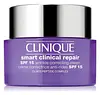
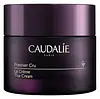
Clinique Smart Clinical Repair SPF 15 Wrinkle Correcting Cream Versus Caudalie Premier Cru Anti Aging Cream Moisturizer with Hyaluronic Acid
This anti-aging day moisturizer is formulated around Palmitoyl Tripeptide-1 and Palmitoyl Tetrapeptide-7 to soften the look of wrinkles.
This anti-aging moisturizer is formulated around Palmitoyl Grapevine Shoot Extract and Hydrolyzed Hyaluronic Acid to soften the look of wrinkles and hydrate skin.


What's inside
What's inside
 Key Ingredients
Benefits
Concerns
Ingredients Side-by-side
Water
Skin ConditioningHomosalate
Skin Conditioning

Ethylhexyl Salicylate
UV Absorber
Glycerin
Humectant


Ethylhexyl Methoxycinnamate
UV Absorber
Butylene Glycol
Humectant
Coco-Caprylate/Caprate
Emollient
Butyl Methoxydibenzoylmethane
UV Absorber
Polyester-8
Skin Conditioning
Ethylhexyl Methoxycrylene
Skin Conditioning
Butyloctyl Salicylate
Skin Conditioning
Acrylates Copolymer
Dextrin Palmitate
Emulsifying

PEG-100 Stearate
Surfactant
Sigesbeckia Orientalis Extract
Skin ConditioningSodium Hyaluronate
Humectant


7-Dehydrocholesterol
Emulsion StabilisingBiosaccharide Gum-1
Humectant
Caffeine
Skin Conditioning
Caprylyl Glycol
Emollient
Palmitoyl Tripeptide-1
Skin Conditioning

Palmitoyl Tetrapeptide-7
Skin Conditioning
Palmitoyl Hexapeptide-12
Skin Conditioning
Acetyl Hexapeptide-8
Humectant
Lauroyl Lysine
Skin Conditioning
Saccharomyces Ferment
Skin Conditioning
Whey Protein
Skin ConditioningAlgae Extract
Emollient

Plankton Extract
Skin ConditioningPolyglyceryl-2 Stearate
Emulsifying
Silica
Abrasive

Pentylene Glycol
Skin Conditioning
Hexylene Glycol
EmulsifyingAcrylates/C10-30 Alkyl Acrylate Crosspolymer
Emulsion StabilisingGlyceryl Stearate
Emollient
Lecithin
Emollient
Polysorbate 20
Emulsifying
PPG-8-Ceteth-20
EmulsifyingSorbitan Sesquiisostearate
Emulsifying
Sorbeth-30 Tetraisostearate
Emulsifying
PEG-8
HumectantCarbomer
Emulsion StabilisingDehydroxanthan Gum
Emulsion StabilisingDipropylene Glycol
HumectantPotassium Hydroxide
BufferingSodium Polyacryloyldimethyl Taurate
Emulsion StabilisingStearyl Alcohol
Emollient
Acrylates/Beheneth-25 Methacrylate Copolymer
Glyceryl Polymethacrylate
Tocopheryl Acetate
Antioxidant


BHT
Antioxidant
Sodium Citrate
BufferingDisodium EDTA
ChelatingPhenoxyethanol
Preservative
Potassium Sorbate
Preservative
Sodium Benzoate
Masking
Water, Homosalate, Ethylhexyl Salicylate, Glycerin, Ethylhexyl Methoxycinnamate, Butylene Glycol, Coco-Caprylate/Caprate, Butyl Methoxydibenzoylmethane, Polyester-8, Ethylhexyl Methoxycrylene, Butyloctyl Salicylate, Acrylates Copolymer, Dextrin Palmitate, PEG-100 Stearate, Sigesbeckia Orientalis Extract, Sodium Hyaluronate, 7-Dehydrocholesterol, Biosaccharide Gum-1, Caffeine, Caprylyl Glycol, Palmitoyl Tripeptide-1, Palmitoyl Tetrapeptide-7, Palmitoyl Hexapeptide-12, Acetyl Hexapeptide-8, Lauroyl Lysine, Saccharomyces Ferment, Whey Protein, Algae Extract, Plankton Extract, Polyglyceryl-2 Stearate, Silica, Pentylene Glycol, Hexylene Glycol, Acrylates/C10-30 Alkyl Acrylate Crosspolymer, Glyceryl Stearate, Lecithin, Polysorbate 20, PPG-8-Ceteth-20, Sorbitan Sesquiisostearate, Sorbeth-30 Tetraisostearate, PEG-8, Carbomer, Dehydroxanthan Gum, Dipropylene Glycol, Potassium Hydroxide, Sodium Polyacryloyldimethyl Taurate, Stearyl Alcohol, Acrylates/Beheneth-25 Methacrylate Copolymer, Glyceryl Polymethacrylate, Tocopheryl Acetate, BHT, Sodium Citrate, Disodium EDTA, Phenoxyethanol, Potassium Sorbate, Sodium Benzoate
Water
Skin ConditioningGlycerin
Humectant
Butylene Glycol
Humectant
Caprylic/Capric Triglyceride
Masking
Hydrogenated Ethylhexyl Olivate
EmollientCetearyl Alcohol
Emollient
Cetearyl Glucoside
Emulsifying
Coco-Caprylate/Caprate
Emollient
Hydrogenated Olive Oil Unsaponifiables
Emollient
Sesamum Indicum Seed Oil
Emollient
Vitis Vinifera Seed Oil
Emollient
Butyrospermum Parkii Butter Extract
Skin Conditioning
Propanediol
Solvent
Palmitoyl Grapevine Shoot Extract
Antioxidant
Palmitoyl Grape Seed Extract
Skin ConditioningPentaerythrityl Distearate
Emulsifying
Potassium Cetyl Phosphate
EmulsifyingCarbomer
Emulsion StabilisingCaprylyl Glycol
Emollient
Xanthan Gum
EmulsifyingHydrolyzed Hyaluronic Acid
Humectant
Magnolia Grandiflora Bark Extract
Antimicrobial
Potassium Sorbate
Preservative
Tocopherol
Antioxidant
Helianthus Annuus Seed Oil
Emollient
Adenosine
Skin Conditioning
Sodium Hydroxide
BufferingSodium Phytate
ChelatingGleditsia Triacanthos Seed Extract
Paeonia Lactiflora Root Extract
Skin ConditioningParfum
Masking

Geraniol
Perfuming
Linalool
Perfuming
Citronellol
Perfuming
Water, Glycerin, Butylene Glycol, Caprylic/Capric Triglyceride, Hydrogenated Ethylhexyl Olivate, Cetearyl Alcohol, Cetearyl Glucoside, Coco-Caprylate/Caprate, Hydrogenated Olive Oil Unsaponifiables, Sesamum Indicum Seed Oil, Vitis Vinifera Seed Oil, Butyrospermum Parkii Butter Extract, Propanediol, Palmitoyl Grapevine Shoot Extract, Palmitoyl Grape Seed Extract, Pentaerythrityl Distearate, Potassium Cetyl Phosphate, Carbomer, Caprylyl Glycol, Xanthan Gum, Hydrolyzed Hyaluronic Acid, Magnolia Grandiflora Bark Extract, Potassium Sorbate, Tocopherol, Helianthus Annuus Seed Oil, Adenosine, Sodium Hydroxide, Sodium Phytate, Gleditsia Triacanthos Seed Extract, Paeonia Lactiflora Root Extract, Parfum, Geraniol, Linalool, Citronellol
Reviews
Ingredients Explained
These ingredients are found in both products.
Ingredients higher up in an ingredient list are typically present in a larger amount.
Butylene Glycol (or BG) is used within cosmetic products for a few different reasons:
Overall, Butylene Glycol is a safe and well-rounded ingredient that works well with other ingredients.
Though this ingredient works well with most skin types, some people with sensitive skin may experience a reaction such as allergic rashes, closed comedones, or itchiness.
Learn more about Butylene GlycolCaprylyl Glycol is a humectant, skin conditioner, emollient, and preservative booster derived from either caprylic acid or synthetically created.
Typical use levels vary from 0.3-1% as a preservative booster and go up to 2% to condition skin.
Because it is not a free-fatty acid, this ingredient is fungal acne safe (there's nothing for Malassezia to feed on).
Learn more about Caprylyl GlycolCarbomer is a synthetic thickening and gelling agent. It's basically the ingredient that gives a lot of serums, gels, creams, and sunscreens their smooth, non-sticky texture.
Although legally permitted at very high levels, carbomers are normally used at concentrations below 1%.
It also needs to be neutralized to actually thicken, and because it is a large molecule, it doesn't really penetrate the skin barrier.
Allergy-wise, the risk is very low. Clinical studies show carbomers have low potential for skin irritation/sensitization even at concentrations up to 100%.
A 2024 UK study patch-tested 1,302 patients and found true allergy to the parent group of carbomer to be rare with no confirmed relevant reactions.
Learn more about CarbomerCoco-Caprylate/Caprate is a lightweight ester created from coconut oil fatty acids, caprylic acid, and capric acid.
It is an emollient that helps soften skin and reduce transepidermal water loss (TEWL). What sets it apart from heavier emollients is its ultralight, non-greasy feel.
Once applied, this ingredient dries down quickly and leaves a dry, silky finish behind. This also helps improve spreadability and texture.
This ingredient has an excellent safety-record and is non-irritating.
Typical concentrations for cosmetics range from 0.5-62%.
Research on Malassezia growth found no growth on fatty acid esters with chain lengths shorter than 12 carbons (it prefers C11-24).
Since Coco-Caprylate/Caprate is built on C8 and C10 fatty acids, it is out of the range that Malassezia metabolizes, and therefore safe for fungal acne.
Learn more about Coco-Caprylate/CaprateGlycerin (or glycerol) is a compound naturally found in your skin. It's a powerhouse humectant that pulls water into the stratum corneum.
Topically, glycerin does several things at once:
Your skin makes glycerin on its own (mostly from sebaceous oil breakdown) and shuttles it to your outermost layer of skin, or your epidermis, via aquaporin-3.
Aquaporin-3 is a transporter that is essential for normal skin hydration, elasticity, and repair. Interestingly, mice lacking in AQP3 have dry and less elastic skin that can be fully corrected with glycerin.
This ingredient is non-irritating, plays well with almost every ingredient, and works across all skin types. Typical use is anywhere between 3-10% but can go up to 79% in some leave-on products.
Just know very high concentrations (>40%) can feel tacky in low humidity.
Glycerin is the name for this ingredient in American English. British English uses Glycerol/Glycerine.
Learn more about GlycerinPotassium Sorbate is a preservative used to prevent yeast and mold in products. It is commonly found in both cosmetic and food products.
This ingredient comes from potassium salt derived from sorbic acid. Sorbic acid is a natural antibiotic and effective against fungus.
Both potassium sorbate and sorbic acid can be found in baked goods, cheeses, dried meats, dried fruit, ice cream, pickles, wine, yogurt, and more.
You'll often find this ingredient used with other preservatives.
Learn more about Potassium SorbateWater. It's the most common cosmetic ingredient of all. You'll usually see it at the top of ingredient lists, meaning that it makes up the largest part of the product.
So why is it so popular? Water most often acts as a solvent - this means that it helps dissolve other ingredients into the formulation.
You'll also recognize water as that liquid we all need to stay alive. If you see this, drink a glass of water. Remember to stay hydrated!
Learn more about Water

