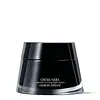
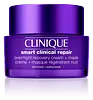
Armani Beauty Crema Nera Supreme Reviving Light Cream Versus Clinique Smart Clinical Repair Overnight Recovery Cream + Mask
This anti-aging overnight mask is formulated around Acetyl Glucosamine and Sodium Hyaluronate to soften the look of wrinkles and strengthen the skin barrier.


What's inside
What's inside
 Key Ingredients
Benefits
Concerns
Ingredients Side-by-side
Water
Skin ConditioningGlycerin
Humectant


Prunus Armeniaca Kernel Oil
Masking




Butyrospermum Parkii Butter
Skin Conditioning
Alcohol Denat.
Antimicrobial


Isopropyl Myristate
Emollient
Rhamnose
HumectantPentylene Glycol
Skin Conditioning
Ammonium Polyacryloyldimethyl Taurate
Emulsion StabilisingTamarindus Indica Seed Polysaccharide
Skin ConditioningHelianthus Annuus Seed Oil
Emollient
Myrothamnus Flabellifolia Leaf Extract
EmollientCapparis Spinosa Fruit Extract
Skin ConditioningTin Oxide
Abrasive
Potassium PCA
Humectant
Glyceryl Stearate
Emollient
Trehalose
Humectant
Methylsilanol Mannuronate
Skin ConditioningSodium Hyaluronate
Humectant

Sodium Hydroxide
BufferingSodium Lactate
Buffering
Sodium Lauryl Sulfate
Cleansing
Adenosine
Skin Conditioning
Magnesium Sulfate
Disodium Phosphate
BufferingCaprylyl Glycol
Emollient
Citric Acid
Buffering

Trisodium Ethylenediamine Disuccinate
ChelatingBiosaccharide Gum-1
Humectant
Lactic Acid
Buffering



Synthetic Fluorphlogopite
Acrylates/Steareth-20 Methacrylate Copolymer
Cetyl Alcohol
Emollient
Octyldodecyl Myristate
EmollientTocopherol
Antioxidant

Sorbic Acid
Preservative
Phenoxyethanol
Preservative
Chlorphenesin
Antimicrobial
CI 77891
Cosmetic ColorantLinalool
Perfuming

Geraniol
Perfuming
Alpha-Isomethyl Ionone
Perfuming
Citronellol
Perfuming
Hexyl Cinnamal
Perfuming
Benzyl Alcohol
Perfuming
Benzyl Salicylate
Perfuming
Parfum
Masking
Water, Glycerin, Prunus Armeniaca Kernel Oil, Butyrospermum Parkii Butter, Alcohol Denat., Isopropyl Myristate, Rhamnose, Pentylene Glycol, Ammonium Polyacryloyldimethyl Taurate, Tamarindus Indica Seed Polysaccharide, Helianthus Annuus Seed Oil, Myrothamnus Flabellifolia Leaf Extract, Capparis Spinosa Fruit Extract, Tin Oxide, Potassium PCA, Glyceryl Stearate, Trehalose, Methylsilanol Mannuronate, Sodium Hyaluronate, Sodium Hydroxide, Sodium Lactate, Sodium Lauryl Sulfate, Adenosine, Magnesium Sulfate, Disodium Phosphate, Caprylyl Glycol, Citric Acid, Trisodium Ethylenediamine Disuccinate, Biosaccharide Gum-1, Lactic Acid, Synthetic Fluorphlogopite, Acrylates/Steareth-20 Methacrylate Copolymer, Cetyl Alcohol, Octyldodecyl Myristate, Tocopherol, Sorbic Acid, Phenoxyethanol, Chlorphenesin, CI 77891, Linalool, Geraniol, Alpha-Isomethyl Ionone, Citronellol, Hexyl Cinnamal, Benzyl Alcohol, Benzyl Salicylate, Parfum
Water
Skin ConditioningIsostearyl Neopentanoate
Emollient
Glycerin
Humectant
Butylene Glycol
Humectant
Glyceryl Stearate
Emollient
PEG-100 Stearate
Surfactant
Dimethicone
Emollient
Cetearyl Alcohol
Emollient
Glycereth-26
Humectant
Acetyl Glucosamine
Skin Conditioning
Sodium Hyaluronate
Humectant
Hypnea Musciformis Extract
Skin Protecting
Gelidiella Acerosa Extract
Skin Protecting
Centaurium Erythraea Extract
Skin ConditioningDictyopteris Polypodioides Extract
EmollientCaffeine
Skin Conditioning
Astrocaryum Murumuru Seed Butter
Emollient
Saccharomyces/Xylinum/Black Tea Ferment
Skin Conditioning
Faex Extract
Skin ConditioningWhey Protein
Skin ConditioningGlycine Soja Protein
EmulsifyingPetrolatum
Emollient
Cetearyl Glucoside
Emulsifying
Isohexadecane
EmollientCaprylyl Glycol
Emollient
Adenosine
Skin Conditioning
Aminopropyl Ascorbyl Phosphate
Antioxidant
Soy Amino Acids
Skin ConditioningHexylene Glycol
EmulsifyingMicrococcus Lysate
Skin ConditioningAcetyl Hexapeptide-8
Humectant
Ergothioneine
Antioxidant
Palmitoyl Tripeptide-1
Skin Conditioning
Palmitoyl Tetrapeptide-7
Skin Conditioning
Biotin
AntiseborrhoeicCetyl Alcohol
Emollient
Acrylates/C10-30 Alkyl Acrylate Crosspolymer
Emulsion StabilisingSorbitan Oleate
Emulsifying
Lecithin
Emollient
Polysorbate 80
Emulsifying
Polysorbate 20
Emulsifying
Tromethamine
BufferingCitric Acid
Buffering
Acrylamide/Sodium Acryloyldimethyltaurate Copolymer
Emulsion StabilisingHydroxyethylcellulose
Emulsion StabilisingCarbomer
Emulsion StabilisingCalcium Chloride
AstringentTocopheryl Acetate
Antioxidant
Sodium Citrate
BufferingDisodium EDTA
ChelatingPhenoxyethanol
Preservative
Sodium Benzoate
Masking
Potassium Sorbate
Preservative
Mica
Cosmetic ColorantCI 77891
Cosmetic ColorantWater, Isostearyl Neopentanoate, Glycerin, Butylene Glycol, Glyceryl Stearate, PEG-100 Stearate, Dimethicone, Cetearyl Alcohol, Glycereth-26, Acetyl Glucosamine, Sodium Hyaluronate, Hypnea Musciformis Extract, Gelidiella Acerosa Extract, Centaurium Erythraea Extract, Dictyopteris Polypodioides Extract, Caffeine, Astrocaryum Murumuru Seed Butter, Saccharomyces/Xylinum/Black Tea Ferment, Faex Extract, Whey Protein, Glycine Soja Protein, Petrolatum, Cetearyl Glucoside, Isohexadecane, Caprylyl Glycol, Adenosine, Aminopropyl Ascorbyl Phosphate, Soy Amino Acids, Hexylene Glycol, Micrococcus Lysate, Acetyl Hexapeptide-8, Ergothioneine, Palmitoyl Tripeptide-1, Palmitoyl Tetrapeptide-7, Biotin, Cetyl Alcohol, Acrylates/C10-30 Alkyl Acrylate Crosspolymer, Sorbitan Oleate, Lecithin, Polysorbate 80, Polysorbate 20, Tromethamine, Citric Acid, Acrylamide/Sodium Acryloyldimethyltaurate Copolymer, Hydroxyethylcellulose, Carbomer, Calcium Chloride, Tocopheryl Acetate, Sodium Citrate, Disodium EDTA, Phenoxyethanol, Sodium Benzoate, Potassium Sorbate, Mica, CI 77891
Ingredients Explained
These ingredients are found in both products.
Ingredients higher up in an ingredient list are typically present in a larger amount.
Adenosine is a purine nucleoside that your body already makes in every cell. In skincare, it acts mainly as a skin conditioning and anti-aging agent.
The way it works is fairly well mapped out:
Your skin has cells called fibroblasts that build collagen (the stuff that keeps skin firm and smooth). Adenosine basically flips a switch on these cells that tells them to get to work making more collagen and other proteins. These cells slow down on their own as skin ages, so Adenosine helps give them a little nudge to keep going.
The clinical backing is pretty solid too.
A blind, randomized, placebo-controlled trial of 126 women aged 45-65 tested a 0.1% cream twice daily and found real improvements in crow's feet and frown lines using a precise 3D skin-mapping technique; these changes showed up by week 3 and held at 2 months.
A later study using Adenosine-loaded dissolving microneedle patches reported gains in wrinkle depth, dermal density, elasticity, and hydration.
On concentrations, South Korea's Ministry of Food and Drug Safety has set 0.04% as the approved functional anti-wrinkle level. You'll typically see this ingredient used somewhere in the 0.04-0.1% range since it works at low doses.
This ingredient has been found safe for cosmetics with the data showing no irritation or sensitization.
Overall, this is a great ingredient for any anti-aging routine and has no photosensitizing effect, so it suits both AM and PM use.
Learn more about AdenosineCaprylyl Glycol is a humectant, skin conditioner, emollient, and preservative booster derived from either caprylic acid or synthetically created.
Typical use levels vary from 0.3-1% as a preservative booster and go up to 2% to condition skin.
Because it is not a free-fatty acid, this ingredient is fungal acne safe (there's nothing for Malassezia to feed on).
Learn more about Caprylyl GlycolCetyl Alcohol is a fatty alcohol. Fatty Alcohols are most often used as an emollient or to thicken a product.
Its main roles are:
Though it has "alcohol" in the name, it is not related to denatured alcohol or ethyl alcohol.
The FDA allows products labeled "alcohol-free" to have fatty alcohols.
This ingredient may not be fungal acne safe. It is a primary fatty alcohol with a chain length above 12 carbons. A study from 2019 show Malassezia can feed on fatty alcohols in this range, so it may trigger fungal acne in those prone to it.
Learn more about Cetyl AlcoholCi 77891 is a white pigment from Titanium dioxide. It is naturally found in minerals such as rutile and ilmenite.
It's main function is to add a white color to cosmetics. It can also be mixed with other colors to create different shades.
Ci 77891 is commonly found in sunscreens due to its ability to block UV rays.
Learn more about CI 77891Citric Acid is an alpha hydroxy acid (AHA) naturally found in citrus fruits like oranges, lemons, and limes.
Like other AHAs, citric acid can exfoliate skin by breaking down the bonds that hold dead skin cells together. This helps reveal smoother and brighter skin underneath.
However, this exfoliating effect only happens at high concentrations (20%) which can be hard to find in cosmetic products.
Due to this, citric acid is usually included in small amounts as a pH adjuster. This helps keep products slightly more acidic and compatible with skin's natural pH.
In skincare formulas, citric acid can:
While it can provide some skin benefits, research shows lactic acid and glycolic acid are generally more effective and less irritating exfoliants.
Most citric acid used in skincare today is made by fermenting sugars (usually from molasses). This synthetic version is identical to the natural citrus form but easier to stabilize and use in formulations.
Rosacea skin has a lower threshold for acids generally, with 62.5% of rosacea subjects in one study reacting to lactic acid in a sting test. This is why we mark citric acid as a potential rosacea trigger.
However, this ingredient shows up as a pH adjuster or chelator at roughly 0.1-1% in many products. These low levels are unlikely to be an issue for rosacea skin and becomes a potential trigger at exfoliating concentrations (20%). Because everybody's skin is unique, we recommend a patch test if you are unsure.
Learn more about Citric AcidGlycerin (or glycerol) is a compound naturally found in your skin. It's a powerhouse humectant that pulls water into the stratum corneum.
Topically, glycerin does several things at once:
Your skin makes glycerin on its own (mostly from sebaceous oil breakdown) and shuttles it to your outermost layer of skin, or your epidermis, via aquaporin-3.
Aquaporin-3 is a transporter that is essential for normal skin hydration, elasticity, and repair. Interestingly, mice lacking in AQP3 have dry and less elastic skin that can be fully corrected with glycerin.
This ingredient is non-irritating, plays well with almost every ingredient, and works across all skin types. Typical use is anywhere between 3-10% but can go up to 79% in some leave-on products.
Just know very high concentrations (>40%) can feel tacky in low humidity.
Glycerin is the name for this ingredient in American English. British English uses Glycerol/Glycerine.
Learn more about GlycerinGlyceryl Stearate is made by reacting glycerin with stearic acid (typically sourced from plant oils like palm or coconut). It's an emulsifier, emollient, and mild occlusive.
Emulsifiers help ingredients like oil and water stay mixed so your formula stays nicely blended and uniform in texture.
This ingredient is typically used in concentrations between 1-10%. Studies have found it to be non-sensitizing, non-phototoxic, and non-photoallergenic.
A close cousin of this ingredient is Glyceryl Stearate SE ("self-emulsifying"). This just has a small amount of sodium or potassium stearate added so it can emulsify without a co-emulsifier.
Since this ingredient is an ester of a C18 fatty acid, it may not be fungal acne safe. The Malassezia yeast can potentially metabolize within the C11-C24 range.
Fun fact: The human body also creates Glyceryl Stearate naturally.
Learn more about Glyceryl StearatePhenoxyethanol is one of the most widely used preservatives in skincare (and for good reason!).
It has a large spectrum of antimicrobial activity and especially effective bacteria, yeast, and mold while only having a weak effect on your skin's natural microbiome.
On a cellular level, it disrupts the cell membranes of microbes by poking holes that make the cell leak. This shuts down the chemical reactions the microbe needs to make energy so it can no longer survive.
Another perk of this ingredient is that it stays functional across a wide pH range (3-10).
You'll often see it paired with boosters like Ethylhexylglycerin; one study showed that a 1:9 ratio of Ethylhexylglycerin to Phenoxyethanol damages bacterial membranes as effectively as doubling the Phenoxyethanol concentration on its own.
Typical use concentrations range from 0.3-1% depending on the formula, and this ingredient is capped at 1% int the EU.
Safety-wise, the fear mongering does not hold up to the evidence. The EU's Scientific Committee on Consumer Safety and FDA consider it safe as a preservative at up to 1%, including for children of all ages.
Adverse systemic effects only showed up in animal studies at exposures roughly 200x higher than what people get from cosmetics. And despite its very widespread use, this ingredient is a rare sensitizer and allergic reactions are uncommon.
Learn more about PhenoxyethanolSodium Hyaluronate is the salt form of hyaluronic acid. It is a long sugar chain that is naturally found in your skin, joints, and connective tissue that maintains hydration and elasticity.
In skincare, it works as a humectant. It pulls water from the environment and deeper layers of skin and binds it to the surface.
Interestingly, the size of the molecule affects its behavior:
Some clinical evidence links low molecular weight versions to improved wrinkle depth, elasticity, anti-inflammatory effects, and barrier repair.
Many serums use a blend of both weights so you can get surface hydration plus longer-lasting and deeper effects.
You'll typically see concentrations between 0.1-2% for this ingredient.
Learn more about Sodium HyaluronateWater. It's the most common cosmetic ingredient of all. You'll usually see it at the top of ingredient lists, meaning that it makes up the largest part of the product.
So why is it so popular? Water most often acts as a solvent - this means that it helps dissolve other ingredients into the formulation.
You'll also recognize water as that liquid we all need to stay alive. If you see this, drink a glass of water. Remember to stay hydrated!
Learn more about Water

