Pink By Pure Beauty Matte Sun Stick SPF 50+
A sunscreen with 66 ingredients, including spf, exfoliants, and vitamin E.
This chemical sunscreen covers the full UV range and blocks ~98% of UVB at SPF 50.
Worth noting
Contains EU-listed fragrance allergens, including Citronellol and Limonene.
We independently verify ingredients, backed by peer-reviewed research. Suggest an update.
What's inside
Ingredients List
Silica
Abrasive


Synthetic Wax
Abrasive
Dimethicone
Emollient

Microcrystalline Wax
Emulsion StabilisingDiethylamino Hydroxybenzoyl Hexyl Benzoate
UV Filter
Butylene Glycol Dicaprylate/Dicaprate
EmollientButyloctyl Salicylate
Skin Conditioning
Dibutyl Adipate
EmollientIsoamyl Laurate
Emollient

Methyl Trimethicone
Skin Conditioning
Ethylhexyl Triazone
UV Absorber
Dicaprylyl Carbonate
EmollientBis-Ethylhexyloxyphenol Methoxyphenyl Triazine
UV Absorber
Cetyl Ethylhexanoate
EmollientCaprylic/Capric Triglyceride
Masking


Ethylene/Propylene Copolymer
Abrasive
Acrylates Copolymer
Glycerin
Humectant
Dipropylene Glycol
Humectant1,2-Hexanediol
Skin Conditioning
Bisabolol
Antioxidant


Dipentaerythrityl Hexahydroxystearate/Hexastearate/Hexarosinate
Skin ConditioningWater
Skin ConditioningParfum
Masking



Propylene Glycol Dicaprylate/Dicaprate
EmollientPentaerythrityl Tetra-Di-T-Butyl Hydroxyhydrocinnamate
Antioxidant
Stearalkonium Hectorite
Gel FormingDimethicone/Vinyl Dimethicone Crosspolymer
Skin Conditioning
Ethylhexylglycerin
Skin ConditioningHydrogenated Lecithin
Emulsifying
Polyglyceryl-10 Oleate
Skin Conditioning
Propylene Carbonate
SolventTriethoxycaprylylsilane
Adenosine
Skin Conditioning
Aluminum Hydroxide
EmollientLauryl Polyglyceryl-3 Polydimethylsiloxyethyl Dimethicone
Skin Conditioning
Oenothera Biennis Flower Extract
AstringentPinus Palustris Leaf Extract
TonicPueraria Lobata Root Extract
HumectantUlmus Davidiana Root Extract
Skin Conditioning
Tocopherol
Antioxidant


Butylene Glycol
Humectant
Propanediol
Solvent
Artemisia Princeps Leaf Extract
Skin ConditioningLactobacillus Ferment Lysate
Skin Conditioning
Hyaluronic Acid
Humectant
Hydrolyzed Hyaluronic Acid
Humectant
Sodium Hyaluronate
Humectant
Lotus Corniculatus Flower Extract
MaskingCamellia Sinensis Leaf Extract
Antimicrobial
Saccharomyces Ferment Filtrate
Humectant
Sasa Quelpaertensis Extract
Skin ConditioningSucrose
Humectant
CI 77007
Cosmetic ColorantCI 77891
Cosmetic ColorantCitronellol
Perfuming
Limonene
Perfuming
Hexamethylindanopyran
Masking
Tetramethyl Acetyloctahydronaphthalenes
Masking
Citrus Aurantium Peel Oil

Citrus Limon Peel Oil
Masking

Geranyl Acetate
Perfuming
Benzyl Salicylate
Perfuming
Linalool
Perfuming
Alpha-Isomethyl Ionone
Perfuming
Linalyl Acetate
Masking
Silica, Synthetic Wax, Dimethicone, Microcrystalline Wax, Diethylamino Hydroxybenzoyl Hexyl Benzoate, Butylene Glycol Dicaprylate/Dicaprate, Butyloctyl Salicylate, Dibutyl Adipate, Isoamyl Laurate, Methyl Trimethicone, Ethylhexyl Triazone, Dicaprylyl Carbonate, Bis-Ethylhexyloxyphenol Methoxyphenyl Triazine, Cetyl Ethylhexanoate, Caprylic/Capric Triglyceride, Ethylene/Propylene Copolymer, Acrylates Copolymer, Glycerin, Dipropylene Glycol, 1,2-Hexanediol, Bisabolol, Dipentaerythrityl Hexahydroxystearate/Hexastearate/Hexarosinate, Water, Parfum, Propylene Glycol Dicaprylate/Dicaprate, Pentaerythrityl Tetra-Di-T-Butyl Hydroxyhydrocinnamate, Stearalkonium Hectorite, Dimethicone/Vinyl Dimethicone Crosspolymer, Ethylhexylglycerin, Hydrogenated Lecithin, Polyglyceryl-10 Oleate, Propylene Carbonate, Triethoxycaprylylsilane, Adenosine, Aluminum Hydroxide, Lauryl Polyglyceryl-3 Polydimethylsiloxyethyl Dimethicone, Oenothera Biennis Flower Extract, Pinus Palustris Leaf Extract, Pueraria Lobata Root Extract, Ulmus Davidiana Root Extract, Tocopherol, Butylene Glycol, Propanediol, Artemisia Princeps Leaf Extract, Lactobacillus Ferment Lysate, Hyaluronic Acid, Hydrolyzed Hyaluronic Acid, Sodium Hyaluronate, Lotus Corniculatus Flower Extract, Camellia Sinensis Leaf Extract, Saccharomyces Ferment Filtrate, Sasa Quelpaertensis Extract, Sucrose, CI 77007, CI 77891, Citronellol, Limonene, Hexamethylindanopyran, Tetramethyl Acetyloctahydronaphthalenes, Citrus Aurantium Peel Oil, Citrus Limon Peel Oil, Geranyl Acetate, Benzyl Salicylate, Linalool, Alpha-Isomethyl Ionone, Linalyl Acetate
Key Ingredients
Benefits
Concerns
Ingredients Explained
Silica, also known as silicon dioxide, is a naturally occurring mineral. It is used as a fine, spherical, and porous powder in cosmetics.
Though it has exfoliant properties, the function of silica varies depending on the product.
The unique structure of silica enhances the spreadability and adds smoothness, making it a great texture enhancer.
It is also used as an active carrier, emulsifier, and mattifier due to its ability to absorb excess oil.
In some products, tiny microneedles called spicules are made from silica or hydrolyzed sponge. When you rub them in, they lightly polish away dead skin layers and enhance the penetration of active ingredients.
Learn more about SilicaSynthetic Wax is a manufactured hydrocarbon wax. In formulas, it works as an occlusive emollient that helps reduce water loss and improves the spreadability of products.
Research comparing synthetic wax to traditional mineral-derived products found that formulas containing it perform as well for skin hydration.
It is considered non-comedogenic and vegan-friendly.
This ingredient has a well-established safety record by the CIR Expert Panel for Cosmetic Ingredient Safety.
Synthetic Waxes are straight/branched-chain hydrocarbons with no ester bond or fatty acids. That means there is nothing for the Malassezia yeast to feed on.
Learn more about Synthetic WaxDimethicone is a type of synthetic silicone created from natural materials such as quartz. It is also known as polydimethylsiloxane.
What it does:
Dimethicone comes in different viscosities:
Depending on the viscosity, dimethicone has different properties.
Ingredients lists don't always show which type is used, so we recommend reaching out to the brand if you have questions about the viscosity.
This ingredient is unlikely to cause irritation because it does not get absorbed into skin. However, people with silicone allergies should be careful about using this ingredient.
Note: Dimethicone may contribute to pilling. This is because it is not oil or water soluble, so pilling may occur when layered with products. When mixed with heavy oils in a formula, the outcome is also quite greasy.
Learn more about DimethiconeMicrocrystalline Wax is derived from petroleum through a de-oiling process, then highly refined and purified before use in cosmetics.
In skincare formulations, it is used to improve texture and create a smooth, even consistency. It also helps stabilize products by preventing ingredients from separating.
Diethylamino Hydroxybenzoyl Hexyl Benzoate (DHHB) is a chemical UV-A absorber. It is formulated for high UVA protection (320-400 nm).
DHHB is well-liked for:
DHHB has been approved by the EU, Japan, Taiwan, and South America for use up to 10%. Unfortunately, it has not been approved for use in the US or Canada due to slow regulatory processes.
This ingredient is soluble in oils, fats, and lipids.
Learn more about Diethylamino Hydroxybenzoyl Hexyl BenzoateThis is a lightweight diester (caprylic/capric acid + butylene glycol) with emollient and skin conditioning properties.
According to a manufacturer, this ingredient can help add a "cushiony" oil phase without making it heavy.
Butyloctyl Salicylate is a chemical UV filter structurally similar to octisalate. It is a photostabilizer, SPF booster, emollient and solvent. This ingredient helps evenly spread out ingredients.
According to a manufacturer, it is suitable for pairing with micro Titanium Dioxide, Zinc Oxide, and pigments.
Photostabilizers help stabilize UV-filters and prevents them from degrading quickly.
Learn more about Butyloctyl SalicylateDibutyl Adipate is a lightweight, oil-soluble ester that acts as an emollient and solvent. It helps products spread more easily and leaves a soft, silky, dry-touch finish without being greasy.
You'll likely see this ingredient in sunscreens because it does a nice job dissolving UV filters and keeping them evenly distributed.
This ingredient has been found to be safe as used in cosmetics, wasn't a skin or eye irritant in clinical patch testing, and wasn't phototoxic.
In a clinical comedogenicity test, this ingredient tested negative so it isn't likely to clog pores.
Typical use levels are about 5-8% for sunscreens + nail products, but can range from 0.005%-8% depending on the product.
Learn more about Dibutyl AdipateIsoamyl Laurate is a plant-derived and biodegradable lightweight emollient that is an Ecocert/COSMOS approved alternative to silicones.
It functions as an emollient that helps soften and hydrate skin without leaving a greasy/sticky feel.
You'll find it in a range of products from makeup to sunscreen, and typically at low percentages (~2-5%).
This ingredient is deemed safe at current cosmetic use and non-sensitizing in human studies (it's even approved as a food additive flavoring substance).
Because this ingredient is an easter of lauric acid, it falls in the C11-24 range that Malassezia can feed on, making this ingredient not fungal acne safe.
Learn more about Isoamyl LaurateMethyl Trimethicone is a type of silicone. It is a solvent and emulsifier.
Solvents are used to keep ingredients together in a product. They can help dissolve ingredients to stable bases or help evenly distribute ingredients throughout the product.
Emulsifiers help stabilize a product. It does this by preventing certain ingredients from separating.
Methyl Trimethicone does not get absorbed into the skin.
Learn more about Methyl TrimethiconeEthylhexyl Triazone (aka Octyl Triazone) is an oil-soluble organic UVB filter. It has peak absorption around 314 nm, right in the middle of the UVB range.
This ingredient is described as one of the most effective UVB filters available and small concentrations are enough to deliver a high SPF thanks to its strong UV absorbing power.
Formulators love it for its stability; its ability to filter UV stays practically unchanged even under intense radiation and it can also help boost the photostability of less stable filters like avobenzone.
It's also a great pick for water resistant products because it's insoluble in water and has a good affinity for keratin.
Because it's a big, heavy molecule, the European Scientific Committee has found to to have very low dermal penetration and negative results for allergenicity.
In vitro testing also showed a low absorption rate and clean results on irritation.
Typical use levels are 1-5% with 5% being the maximum in the EU, Japan, and other markets that allow it. However, this ingredient is not approved yet in the US or Canada.
Learn more about Ethylhexyl TriazoneDicaprylyl Carbonate comes from carbonic acid and caprylyl alcohol, a fatty alcohol. It is an emollient and gives skin a velvet feel. The sources of Dicaprylyl Carbonate may be synthetic or from animals.
As an emollient, Dicaprylyl Carbonate creates a film on the skin. This film traps moisture in, keeping your skin soft and hydrated.
This ingredient is better known as bemotrizinol or Tinosorb S and is one of the best broad-spectrum UV filters in modern sunscreen.
It works by absorbing UV light across a whole range (280-400 nm) with peaks around 310 nm (UVB) and 340-345 nm (UVA). This means it covers UVB plus the deeper UVA wavelengths that drive photoaging and pigmentation.
Another pro?
It's exceptionally photostable, barely degrades in sunlight, and acts as a "bodyguard" for less stable filters.
That's why you'll see it paired with avobenzone or octinoxate; this team up ensures they keep working through sun exposure.
Safety reviews have been reassuring across the board. This ingredient shows low absorption through the skin, rarely irritates, and lab studies found it doesn't act like a hormone in the body (a concern that's been raised about some older sunscreen filters).
On maximum concentrations:
In 2026, the US F.D.A finally added it as an OTC sunscreen ingredient at concentrations up to 6% for adults / children 6 months and older
Learn more about Bis-Ethylhexyloxyphenol Methoxyphenyl TriazineCetyl Ethylhexanoate is an emollient ester. It comes from cetearyl alcohol and 2-ethylhexanoic acid.
Cetyl Ethylhexanoate is an emollient that adds a velvety feel to skin without being greasy or oily. Emollients help trap moisture into your skin, keeping your skin soft and hydrated.
Caprylic/Capric Triglyceride (aka MCT Oil) is a lightweight emollient, solvent, and texture enhancer. It is considered a skin-softener by helping to prevent moisture loss.
Though it behaves like an oil, it is not technically one due to its chemical composition. One perk of this ingredient is that it is very stable, resistant to oxidation, and unlikely to go rancid.
In practice, that translates to a long shelf life and a consistently elegant skin feel.
While there is an assumption Caprylic Triglyceride can clog pores due to it being derived from coconut oil, there is no research supporting this. Just patch test if you have concerns.
Fractionated coconut oil and MCT Oil are both listed as Caprylic/Capric Triglyceride according to INCI. This is because INCI names are based on the ingredient’s final chemical composition and not its marketing name or source.
This ingredient is treated as the gold standard fungal acne safe oil. Even though it is coconut derived, the problematic lauric acid is stripped out.
This leaves just caprylic (C8) and capric (C10) acid. These chain lengths actually trend antifungal; a 2020 study found caprylic acid was enough to disrupt Malassezia furfur cell membrane, with a caprylic acid derivative damaging membrane structures at concentrations as low as 0.2%.
Learn more about Caprylic/Capric TriglycerideEthylene/Propylene Copolymer is an exfoliant.
Acrylates Copolymer is used as a film-forming agent and texture enhancer.
After applied, Acrylates Copolymer forms a thin film cover that helps skin feel more soft. It can help sunscreens become more water-resistant.
It is also used to make a product more thick.
Learn more about Acrylates CopolymerGlycerin (or glycerol) is a compound naturally found in your skin. It's a powerhouse humectant that pulls water into the stratum corneum.
Topically, glycerin does several things at once:
Your skin makes glycerin on its own (mostly from sebaceous oil breakdown) and shuttles it to your outermost layer of skin, or your epidermis, via aquaporin-3.
Aquaporin-3 is a transporter that is essential for normal skin hydration, elasticity, and repair. Interestingly, mice lacking in AQP3 have dry and less elastic skin that can be fully corrected with glycerin.
This ingredient is non-irritating, plays well with almost every ingredient, and works across all skin types. Typical use is anywhere between 3-10% but can go up to 79% in some leave-on products.
Just know very high concentrations (>40%) can feel tacky in low humidity.
Glycerin is the name for this ingredient in American English. British English uses Glycerol/Glycerine.
Learn more about GlycerinDipropylene Glycol is a synthetically created humectant, stabilizer, and solvent.
This ingredient helps:
Dipropylene glycol is technically an alcohol, but it belongs to the glycol family (often considered part of the ‘good’ alcohols). This means it is hydrating and gentle on skin unlike drying solvent alcohols like denatured alcohol.
As a masking agent, Dipropylene Glycol can be used to cover the smell of other ingredients. However, it does not have a scent.
Studies show Dipropylene Glycol is considered safe to use in skincare.
Learn more about Dipropylene Glycol1,2-Hexanediol is a synthetic liquid and another multi-functional powerhouse.
It is a:
- Humectant, drawing moisture into the skin
- Emollient, helping to soften skin
- Solvent, dispersing and stabilizing formulas
- Preservative booster, enhancing the antimicrobial activity of other preservatives
Bisabolol is a gentle skin conditioner, antioxidant, and soothing ingredient.
It's primary claim to fame is soothing and research shows topically applied bisabolol can quiet the chemical messengers that cause your skin to become inflamed, helping to sooth any irritation.
A clinical study found that applying 0.5% bisabolol daily for 8 weeks produced an average 9% decrease in skin pigmentation. Researchers found it can also suppress the process that leads to excess melanin production in skin.
In vitro studies found that bisabolol combined with propylene glycol significantly increased skin permeability by increasing lipid fluidity in the stratum corneum.
You'll likely see use concentrations quite low, usually 0.1-0.2%.
Overall, this is a well-tolerated ingredient that works well in formulas designed for sensitive, reactive, or post-procedure skin.
Learn more about BisabololThis ingredient is a high molecular weight fatty acid ester. It has skin conditioning properties and is also used as an emollient, texture enhancer, and viscosity emulsifier.
Water. It's the most common cosmetic ingredient of all. You'll usually see it at the top of ingredient lists, meaning that it makes up the largest part of the product.
So why is it so popular? Water most often acts as a solvent - this means that it helps dissolve other ingredients into the formulation.
You'll also recognize water as that liquid we all need to stay alive. If you see this, drink a glass of water. Remember to stay hydrated!
Learn more about WaterParfum is a catch-all term for an ingredient or more that is used to give a scent to products.
Also called "fragrance", this ingredient can be a blend of hundreds of chemicals or plant oils. This means every product with "fragrance" or "parfum" in the ingredients list is a different mixture.
For instance, Habanolide is a proprietary trade name for a specific aroma chemical. When used as a fragrance ingredient in cosmetics, most aroma chemicals fall under the broad labeling category of “FRAGRANCE” or “PARFUM” according to EU and US regulations.
The term 'parfum' or 'fragrance' is not regulated in many countries. In many cases, it is up to the brand to define this term.
For instance, many brands choose to label themselves as "fragrance-free" because they are not using synthetic fragrances. However, their products may still contain ingredients such as essential oils that are considered a fragrance by INCI standards.
One example is Calendula flower extract. Calendula is an essential oil that still imparts a scent or 'fragrance'.
Depending on the blend, the ingredients in the mixture can cause allergies and sensitivities on the skin. Some ingredients that are known EU allergens include linalool and citronellol.
Parfum can also be used to mask or cover an unpleasant scent.
The bottom line is: not all fragrances/parfum/ingredients are created equally. If you are worried about fragrances, we recommend taking a closer look at an ingredient. And of course, we always recommend speaking with a professional.
Learn more about ParfumThis ingredient is an emollient designed to leave a non-greasy feel. It is also a skin conditioning agent and viscosity modifier.
Skin irritation studies for this ingredient (up to 80%) showed mimimal to no irritation.
One thing worth knowing: this ingredient may enhance the skin penetration of other ingredients.
Overall, this ingredient is a well-tolerated and lightweight emollient.
Learn more about Propylene Glycol Dicaprylate/DicapratePentaerythrityl Tetra-Di-T-Butyl Hydroxyhydrocinnamate (long name, huh?) is a synthetic antioxidant.
It is used to help stabilize other antioxidants or prevent the color from changing in a product.
As an antioxidant, it helps fight free-radical molecules. Free-radical molecules are capable of damaging our cells and other genetic material. Thus, antioxidants may reduce the signs of aging.
This ingredient is oil-soluble.
Learn more about Pentaerythrityl Tetra-Di-T-Butyl HydroxyhydrocinnamateStearalkonium Hectorite is a clay-derived ingredient used to thicken a product and help create a gel-like texture.
This ingredient is a silicone elastomer that works as a texture enhancer, adds a silky slip, and also helps absorb excess oil.
Because it's a large macromolecule that's insoluble in water and chemically inert, it's not expected to penetrate or be absorbed into skin.
Human patch tests with a facial lotion containing 1% of this ingredient found no sensitization.
Learn more about Dimethicone/Vinyl Dimethicone CrosspolymerEthylhexylglycerin is created from glycerin. It is a multitasker ingredient that:
The CIR Expert Panel found minimal skin absorption or sensitization of any kind in a safety assessment. Though this ingredient is considered well-tolerated, a small number of cases of allergic dermatitis have been published since 2002. Just be sure to patch test if you are unsure.
Industry-reported use ranges from 8% in rinse-off products and 2% in leave-on formulations.
Learn more about EthylhexylglycerinHydrogenated Lecithin is a more stable version of lecithin.
It's made by taking lecithin (a phospholipid commonly found in soybeans and egg yolks) and hydrogenating it. This just means the unsaturated fatty acids are turned into saturated ones so they don't go bad as easily.
This ingredient is an emollient, emulsifier, and penetration enhancer. As an emollient, it helps soften and hydrate skin by trapping moisture within. As an emulsifier, it prevents oil and water ingredients from separating.
Hydrogenated Lecithin can form tiny spherical structures made of phospholipid bilayers called liposomes. These liposomes are able to capture compounds inside their structure and deliver them through the skin barrier.
Because phospholipids are a natural component of our cell membranes, this ingredient is inherently compatible with skin.
A 2021 study found lecithin-based surfactants were less harsh and more tolerable comared to Sodium Lauryl Sulfate (SLS).
Learn more about Hydrogenated LecithinPolyglyceryl-10 Oleate is made by combining ten units of glycerin with oleic acid.
According to a manufacturer, it is a low-irritation and hydrophilic (water loving) skin conditioning agent. It also improves the sensory feel and texture of a product.
Fungal acne note:
Since this ingredient is made from oleic acid, it might not be fungal acne safe. The Malassezia yeast survives by eating certain fats, including oleic acid.
However, it should be noted this oleic acid is chemically bound to a large polyglycerol molecule, so it might not trigger fungal acne for everyone.
Learn more about Polyglyceryl-10 OleateThis ingredient is a solvent. It helps dissolve active ingredients and alter the texture of products.
Propylene Carbonate is commonly used in makeup and with clay, such as montmorillonite or bentonite.
Studies show this ingredient to be safe for cosmetics. When it is undiluted, it can cause skin irritation. (It is always diluted in skincare and makeup). This ingredient is water-soluble.
Propylene Carbonate is created from propylene glycol and carbonic acid.
Learn more about Propylene CarbonateTriethoxycaprylylsilane is a silicon-based surface modifier that makes sunscreens feel silky and makeup stay put.
Its main job is to coat mineral particles like titanium dioxide, zinc oxide, and color pigments in a thin, oily layer so they spread smoothly, don't clump, and stick to skin better.
This ingredient is typically used at low levels (up to 2.5% in eyeshadow and 1% in lipstick).
Learn more about TriethoxycaprylylsilaneAdenosine is a purine nucleoside that your body already makes in every cell. In skincare, it acts mainly as a skin conditioning and anti-aging agent.
The way it works is fairly well mapped out:
Your skin has cells called fibroblasts that build collagen (the stuff that keeps skin firm and smooth). Adenosine basically flips a switch on these cells that tells them to get to work making more collagen and other proteins. These cells slow down on their own as skin ages, so Adenosine helps give them a little nudge to keep going.
The clinical backing is pretty solid too.
A blind, randomized, placebo-controlled trial of 126 women aged 45-65 tested a 0.1% cream twice daily and found real improvements in crow's feet and frown lines using a precise 3D skin-mapping technique; these changes showed up by week 3 and held at 2 months.
A later study using Adenosine-loaded dissolving microneedle patches reported gains in wrinkle depth, dermal density, elasticity, and hydration.
On concentrations, South Korea's Ministry of Food and Drug Safety has set 0.04% as the approved functional anti-wrinkle level. You'll typically see this ingredient used somewhere in the 0.04-0.1% range since it works at low doses.
This ingredient has been found safe for cosmetics with the data showing no irritation or sensitization.
Overall, this is a great ingredient for any anti-aging routine and has no photosensitizing effect, so it suits both AM and PM use.
Learn more about AdenosineAluminum Hydroxide is a form of aluminum. It can be naturally found in nature as the mineral gibbsite. In cosmetics, Aluminum Hydroxide is used as a colorant, pH adjuster, and absorbent.
As a colorant, Aluminum Hydroxide may add opacity, or reduce the transparency. Aluminum hydroxide is contains both basic and acidic properties.
According to manufacturers, this ingredient is an emollient and humectant. This means it helps hydrate the skin.
In medicine, this ingredient is used to help relieve heartburn and help heal ulcers.
There is currently no credible scientific evidence linking aluminum hydroxide in cosmetics to increased cancer risk.
Major health organizations allow the use of aluminum hydroxide in personal care products and have not flagged it as a carcinogenic risk at typical usage levels.
Learn more about Aluminum HydroxideLauryl Polyglyceryl-3 Polydimethylsiloxyethyl Dimethicone is a type of silicone.
We don't have a description for Oenothera Biennis Flower Extract yet.
We don't have a description for Pinus Palustris Leaf Extract yet.
This ingredient comes from the Kudzu root.
This tree is also known as the David Elm. It contains the ingredient bakuchiol.
Other great compounds found in this ingredient include galactose, glucose, and phenolics. The sugar content gives it great skin hydrating properties. Phenolics are potent antioxidants commonly found in fruits and veggies.
A 2020 study found the phenolics of this root to have an anti-inflammatory effect.
Fun fact: This ingredient is used in traditional Asian medicine.
Learn more about Ulmus Davidiana Root ExtractTocopherol is a fat-soluble antioxidant known as Vitamin E.
You'll find this ingredient in the vast majority of skincare (for good reason). It works to neutralize free radicals, or unstable molecules generated by UV exposure, pollution, and other environmental stressors, before they can cause oxidative damage to your skin cells.
Topically applied tocopherol has been shown to protect against UV damage by ramping up the skin's own natural defense enzymes.
It also acts as a skin conditioning agent; some studies show that regular topical use can improve the skin's water-binding capacity over 2-4 weeks.
This ingredient is especially loved for being a team player. When combined with Vitamin C, the photoprotective effect of both ingredients roughly doubles and the combo also helps reduce UV-induced DNA damage.
This ingredient has some brightening potential but it's more of a prevention ingredient than spot-fader. Cell studies show it can slow down melanin production but it's worth noting that it's not the most powerful brightener out there.
In formulations, it also serves as a stabilizer that helps protect other oxidation-prone ingredients from degrading.
Concentrations usually range from 0.1-1% in most leave-on products.
Learn more about TocopherolButylene Glycol (or BG) is used within cosmetic products for a few different reasons:
Overall, Butylene Glycol is a safe and well-rounded ingredient that works well with other ingredients.
Though this ingredient works well with most skin types, some people with sensitive skin may experience a reaction such as allergic rashes, closed comedones, or itchiness.
Learn more about Butylene GlycolPropanediol is an all-star ingredient. It softens, hydrates, and smooths the skin.
It’s often used to:
Propanediol is not likely to cause sensitivity and considered safe to use. It is derived from corn or petroleum with a clear color and no scent.
Learn more about PropanediolThis leaf extract comes from the Asian mugwort. It has antioxidant and anti-inflammatory properties.
Fun fact: This flower is part of the sunflower family.
Lactobacillus Ferment Lysate is a postbiotic with skin soothing properties. Postbiotics are inactive molecules produced by probiotic bacteria that provide skin benefits.
This ingredient comes from the secretion of the bacteria, Lactobacillus.
Studies show this ingredient can help calm redness and may help treat the signs of photoaging; however, the evidence is inconclusive and further studies are needed.
Lactobacillus Ferment is generally considered safe for fungal-acne prone skin. The key thing to understand is that it comes from bacteria, not yeast or fungus.
Yeast-derived ferments (like galactomyces) have been shown to activate a protein that's linked to Malassezia-related skin issues whereas lactobacillus doesn't have that problem.
Its byproducts also don't contain the types of fatty acids (C11-24 chain lengths) that Malassezia feeds on.
Learn more about Lactobacillus Ferment LysateHyaluronic acid (HA) is a glycosaminoglycan (basically a long sugar chain) that your skin already makes on its own. In your skin, HA lives in the extracellular matrix and acts as the body's moisture reservoir.
Topically, HA is a humectant that binds water and helps skin look more plump, smooth, and hydrated.
The only catch is that HA isn't a single thing; it actually comes in a wide range of molecular weights (~50 - 2,000+ kDA) and size matters.
Some clinical evidence links low molecular weight versions to improved wrinkle depth, elasticity, anti-inflammatory effects, and barrier repair.
This is why the best HA serums blend the two sizes together so you get the best of both worlds.
The majority of cosmetic HA is produced by bacterial fermentation, typically using Streptococcus or Bacillus strains. Typical use levels in skincare sit around 0.1-2%.
A clinical study using a 0.2% low-molecular weight HA gel showed improvement in facial seborrheic dermatitis with excellent tolerance.
These are some other common types of Hyaluronic Acid:
Learn more about Hyaluronic AcidHydrolyzed Hyaluronic Acid is hyaluronic acid (HA) that is broken down into lower molecular weight fragments.
It's a humectant that pulls and holds water in the skin to help with hydration, plumpness, and reduce transepidermal water loss.
Because hydrolyzed hyaluronic acid is smaller in size, it can slip past your outermost layer of skin more easily than full-sized HA.
Most formulations will combine all sizes to get the best of both worlds.
Typical usage levels range from 0.01-1%. Any percentage higher than 2% might become goopy and tacky.
Learn more about Hydrolyzed Hyaluronic AcidSodium Hyaluronate is the salt form of hyaluronic acid. It is a long sugar chain that is naturally found in your skin, joints, and connective tissue that maintains hydration and elasticity.
In skincare, it works as a humectant. It pulls water from the environment and deeper layers of skin and binds it to the surface.
Interestingly, the size of the molecule affects its behavior:
Some clinical evidence links low molecular weight versions to improved wrinkle depth, elasticity, anti-inflammatory effects, and barrier repair.
Many serums use a blend of both weights so you can get surface hydration plus longer-lasting and deeper effects.
You'll typically see concentrations between 0.1-2% for this ingredient.
Learn more about Sodium HyaluronateWe don't have a description for Lotus Corniculatus Flower Extract yet.
Camellia Sinensis Leaf Extract (tea extract) is one of the most well-researched plant extracts in skincare with an impressive resume.
Black tea, green tea, and oolong tea are all harvested from the Camellia Sinensis plant.
Studies show green tea extract and its catechins (like epigallocatechin gallate (EGCG)) help your skin cells product energy more efficiently and reducing the number of free-radicals that can damage your skin from the inside.
In lab-grown skin models, this translated to younger, healthier, and stronger skin.
There's also good sun protection data; researchers saw less DNA damage and redness on human skin when green tea was applied before UVB exposure. And the more they applied, the better the protection.
Needless to say, this ingredient shouldn't replace your sunscreen. But it is a great supportive ingredient that you can already find in many sunscreens and antioxidant serums.
A 2009 study found a 2% green tea lotion was effective for mild-to-moderate acne thanks to its anti-inflammatory and mild antimicrobial activity.
The quality of the extract matters a lot here:
Good extracts contain 50-90% catechins while lower quality ones are mostly there for marketing. We recommend reaching out to the brand if you have questions about the quality or source of their ingredients.
Human Repeated Insult Patch Testing showed no irritation or sensitization at use concentrations (0.86% in leave-on products and up to 30% as leaf water).
Learn more about Camellia Sinensis Leaf ExtractSaccharomyces Ferment Filtrate is the watery, nutrient-rich liquid left over after you ferment a yeast (genus Saccharomyces).
The yeast cells themselves are filtered out so you're getting the "broth" of skin-friendly molecules: amino acids, peptides, minerals, vitamins, organic acids, and beta-glucan.
Evidence-wise, its relatives (like Galactomyces) are the ones with the most published lab work. Keratinocyte studies show these ferments can boost barrier-related markers. This ingredient is generally assumed to behave similarly thanks to its overlapping composition.
This ingredient may not be fungal acne safe because its a fermentation filtrate. The exact composition is batch-variable and can include fatty acids and lipids byproducts.
Learn more about Saccharomyces Ferment FiltrateWe don't have a description for Sasa Quelpaertensis Extract yet.
Sucrose is a natural sugar found in fruits, vegetables, and nuts. It is the main constituent of white sugar.
In skincare, sucrose is a humectant and can be a mild exfoliant.
Sucrose is hydrophilic, meaning it attracts water. This makes it an effective humectant and helps hydrate the skin.
Studies show sugars may worsen acne-prone skin due to it disrupting the skin's natural biome. We recommend speaking with a professional if you have any concerns.
In some products such as body scrubs, sucrose is used as an gentle exfoliant.
The term 'sucrose' comes from the french word for sugar, 'sucre'.
Learn more about SucroseThis pigment is called Ultramarine blue lazurite. It gives a saturated blue color, but can be used to create other colors as well.
According to the manufacturer, it is usually made from kaolin, sodium sulfate, sodium carbonate, sulfur, and charcoal.
Ci 77891 is a white pigment from Titanium dioxide. It is naturally found in minerals such as rutile and ilmenite.
It's main function is to add a white color to cosmetics. It can also be mixed with other colors to create different shades.
Ci 77891 is commonly found in sunscreens due to its ability to block UV rays.
Learn more about CI 77891Citronellol is used to add fragrance/parfum to a product. It is often derived from plants such as roses. In fact, it can be found in many essential oils including geranium, lavender, neroli, and more. The scent of Citronellol is often described as "fresh, grassy, and citrus-like".
Since the Citronellol molecule is already unstable, Citronellol becomes irritating on the skin when exposed to air.
Citronellol is a modified terpene. Terpenes are unsaturated hydrocarbons found in plants. They make up the primary part of essential oils.
Citronellol is not able to be absorbed into deeper layers of the skin. It has low permeability,
Citronellol is also a natural insect repellent.
Learn more about CitronellolLimonene is the compound that gives citrus peel its smell.
In skincare, it shows up as a standalone fragrance ingredient or as a natural compound of citrus and other essential oils.
You'll typically see this ingredient used in very small amounts; anything above 0.001% in a leave-on product or 0.01% in a rinse-off has to be named on the label in the EU. The citrus oils that carry it sit around 0.5-1% in a finished formula.
Fresh limonene is a weak allergen; the real issue is that it slowly reacts with air and then breaks down from oxidation to create hydroperoxides (which are strong sensitizers). This is why suppliers are required to keep the peroxide value below 20 mmol.
Positive reactions in people being investigated for eczema vary:
It's worth skipping if you have a known fragrance allergy or a compromised barrier, but the risk is low for most people.
Older or long-opened products are also more likely to bother you than fresh ones due to oxidation.
Learn more about LimoneneThis ingredient is also known as Galaxolide. It is a synthetic fragrance used to add a "sweet musky floral" odor.
The EU Scientific Committee for Consumer Safety deems this ingredient to be an allergen and irritant.
This ingredient is also known as ISO E Super. It is a synthetic perfuming and masking ingredient.
The manufacturer describes this scnet as amber and woody.
According to the EU, this ingredient is a known allergen and some people may develop skin sensitivity from repeated exposure.
Learn more about Tetramethyl AcetyloctahydronaphthalenesCitrus Aurantium Peel Oil is an oil.
Citrus Limon Peel Oil is created from the peels of the lemon. It is used to add a lemon-scent to products. Lemon peel oil also has antibacterial, antifungal, and antioxidant properties. However, it may also cause phototoxicity and sensitize skin.
Lemon peel oil contains limonene, a skin sensitizing ingredient. Another component is furanocoumarin, which induces phototoxicity in skin.
Furanocoumarins bind and destabilize your DNA to increase the rate of sunburn.
Most reputable companies will remove furanocoumarins from their formulations.
Learn more about Citrus Limon Peel OilGeranyl Acetate is a fragrance. It can cause irritation.
Benzyl Salicylate is a solvent and fragrance additive. It is an ester of benzyl alcohol and salicylic acid. This ingredient can be naturally found in some plants and plant extracts.
In fragrances, Benzyl Salicylate may be a solvent or a fragrance component. In synthetic musk scents, it is used as a solvent. For floral fragrances such as lilac and jasmine, it is used as a fragrance component. The natural scent of Benzyl Salicylate is described as "lightly-sweet, slightly balsamic".
While Benzyl Salicylate has been associated with contact dermatitis and allergies, emerging studies show it may not be caused by this ingredient alone.
However, this ingredient is often used with fragrances and other components that may cause allergies. It is still listed as a known allergen in the EU. We recommend speaking with a professional if you have concerns.
Another study from 2021 shows Benzyl Salicylate may have anti-inflammatory properties.
Learn more about Benzyl SalicylateLinalool is a small, naturally occurring scent molecule found in plants like lavender, coriander, bergamot, and more.
It is one of the two most-used fragrance ingredients in cosmetics and added purely for smell. Since it's not used for a skin benefit, there's no "effective dose". Concentration depends on the fragrance load of the product.
The EU requires it to be named on the label above 0.001% in leave-on and 0.01% in rinse-off products.
Fresh linalool is a weak sensitizer but air exposure turns some of it into hydroperoxides, which are strong sensitizers. Those oxidation products are the actual allergy concern.
Patch-test clinics see positive reactions to linalool hydroperoxides in about 4% to 12% of dermatitis patients depending on country and test concentration.
Resassuringly, one analytical study found hydroperoxide levels in real fragranced products to be orders of magnitude below what induced sensitization in animal studies with no evidence of oxidation building up during normal storage.
The practical takeaway is that linalool is fine for most people but worth avoiding if you have a confirmed fragrance contact allergy or a badly compromised barrier.
Products stored a long time after opening are also the high-risk scenario since that is when oxidation happens.
The scent of linalool is described as floral, spicy tropical, and citrus-like.
Learn more about LinaloolAlpha-Isomethyl Ionone is a fragrance. It can be synthetically created or naturally occurring.
The scent of Alpha-Isomethyl Ionone is described as "flowery" but can also be "woody".
Naturally occurring Alpha-Isomethyl Ionone may be found in Saccharomyces cerevisiae, or the yeast used to make wine and bread.
The term 'fragrance' is not regulated in many countries. In many cases, it is up to the brand to define this term. For instance, many brands choose to label themselves as "fragrance-free" because they are not using synthetic fragrances. However, their products may still contain ingredients such as essential oils that are considered a fragrance.
Learn more about Alpha-Isomethyl IononeLinalyl Acetate is the acetate ester of linalool and can be naturally found in many flowers and spice plants.
This ingredient is often used to add a scent or mask an unpleasant one in products.
Linalyl acetate is mildly toxic to humans and toxic to fish.
Learn more about Linalyl AcetateReviews
No written reviews yet. Be the first to review this product.
Recent searches
Search reviews by skin type, ingredient, or keyword.
Where it's from
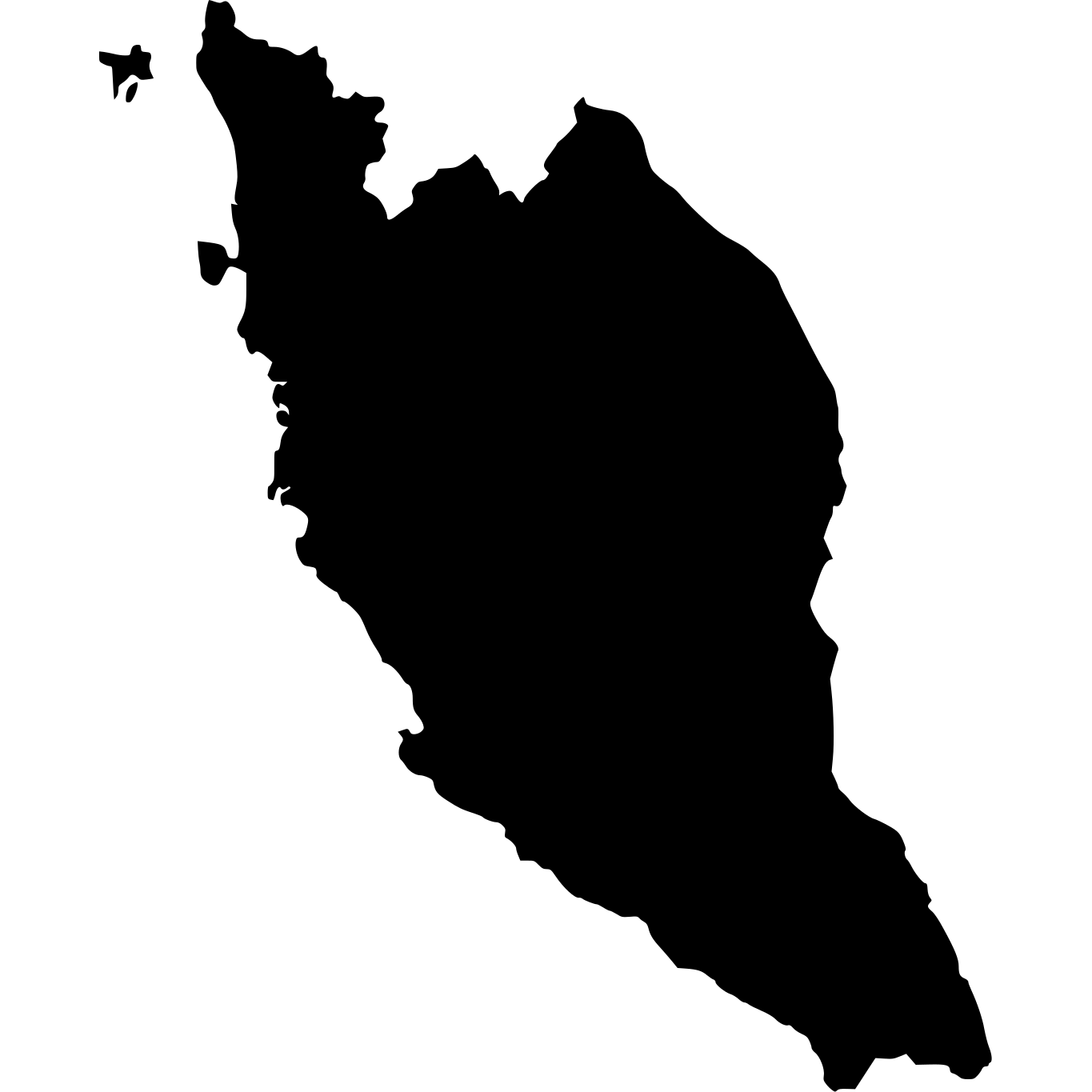
Pink By Pure Beauty is a Malaysian brand
50 SPF Rating
With an SPF rating of 50, this product protects against 98.0% of UVB rays

We're dedicated to providing you with the most up-to-date and science-backed ingredient info out there.
The data we've presented on this page has been verified by a member of the SkinSort Team.
Read more about us· Updated July 7, 2026 • Added by egetuzgu


