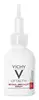
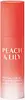
Vichy LiftActiv Pure Retinol Serum for Deep Wrinkles Versus Peach & Lily Retinal for All Renewing Serum
This anti-aging serum is formulated around Retinol and Palmitoyl Tetrapeptide-7 to soften the look of wrinkles and refine skin texture.
This anti-aging serum is formulated around Ectoin and Ceramide NP to soften the look of wrinkles and refine skin texture.


What's inside
What's inside
 Key Ingredients
Benefits
Concerns
Ingredients Side-by-side
Water
Skin ConditioningGlycerin
Humectant


Pentylene Glycol
Skin Conditioning
Isononyl Isononanoate
EmollientAlcohol Denat.
Antimicrobial




Dicaprylyl Ether
Emollient
Glycine Soja Oil
Emollient





Propylene Glycol
Humectant
PEG-6 Caprylic/Capric Glycerides
EmulsifyingHydrolyzed Rice Protein
Skin ConditioningHydroxyacetophenone
Antioxidant
Palmitoyl Tetrapeptide-7
Skin Conditioning


Palmitoyl Tripeptide-1
Skin Conditioning
Pentaerythrityl Tetra-Di-T-Butyl Hydroxyhydrocinnamate
Antioxidant
Sodium Hyaluronate
Humectant

Sodium Hydroxide
BufferingTrisodium Ethylenediamine Disuccinate
Vitreoscilla Ferment
Skin Conditioning
Retinol
Skin Conditioning




Dicaprylyl Carbonate
EmollientAmmonium Polyacryloyldimethyl Taurate
Emulsion StabilisingButylene Glycol
Humectant
Caprylyl Glycol
Emollient
Carbomer
Emulsion StabilisingGlyceryl Isostearate
Emollient
Polysorbate 20
Emulsifying
PPG-6-Decyltetradeceth-30
EmulsifyingSodium Lactate
Buffering
Tocopherol
Antioxidant
Xanthan Gum
EmulsifyingWater, Glycerin, Pentylene Glycol, Isononyl Isononanoate, Alcohol Denat., Dicaprylyl Ether, Glycine Soja Oil, Propylene Glycol, PEG-6 Caprylic/Capric Glycerides, Hydrolyzed Rice Protein, Hydroxyacetophenone, Palmitoyl Tetrapeptide-7, Palmitoyl Tripeptide-1, Pentaerythrityl Tetra-Di-T-Butyl Hydroxyhydrocinnamate, Sodium Hyaluronate, Sodium Hydroxide, Trisodium Ethylenediamine Disuccinate, Vitreoscilla Ferment, Retinol, Dicaprylyl Carbonate, Ammonium Polyacryloyldimethyl Taurate, Butylene Glycol, Caprylyl Glycol, Carbomer, Glyceryl Isostearate, Polysorbate 20, PPG-6-Decyltetradeceth-30, Sodium Lactate, Tocopherol, Xanthan Gum
Water
Skin ConditioningCaprylic/Capric Triglyceride
Masking
Cetearyl Alcohol
Emollient
Butylene Glycol
Humectant
Glycerin
Humectant
Cyclodextrin
AbsorbentSorbitan Stearate
Emulsifying
Cetyl Ethylhexanoate
EmollientDaucus Carota Sativa Root Water
MaskingCamellia Japonica Flower Extract
EmollientRubus Chamaemorus Seed Oil
Skin Conditioning
Sodium Hyaluronate
Humectant
Ectoin
Skin Conditioning
Behenic Acid
Cleansing
Eclipta Prostrata Extract
Skin Conditioning
Polyacrylate Crosspolymer-6
Emulsion StabilisingBisabolol
Antioxidant
Ceramide NP
Skin Conditioning
Ceramide AP
Skin Conditioning
Phytosphingosine
Skin Conditioning
Cholesterol
Emollient
Rhynchosia Nulubilis Seed Extract
Antioxidant
Retinal
Skin Conditioning
Lonicera Japonica Flower Extract
Skin ConditioningDextrin
AbsorbentPolygonum Multiflorum Root Extract
Skin ConditioningMoringa Oleifera Seed Oil
Emollient
Ceramide EOP
Skin Conditioning
Polyacrylate-13
Hydroxyethyl Acrylate/Sodium Acryloyldimethyl Taurate Copolymer
Emulsion StabilisingSesamum Indicum Seed Extract
Skin Conditioning
Melia Azadirachta Leaf Extract
Skin ConditioningGardenia Florida Fruit Extract
Skin ConditioningLonicera Caprifolium Flower Extract
Perfuming
Hydrogenated Polyisobutene
EmollientMethylpropanediol
SolventPotassium Sorbate
Preservative
Sodium Cetearyl Sulfate
Cleansing
Polyglyceryl-6 Behenate
Emulsion Stabilising
Glyceryl Caprylate
EmollientHydroxyacetophenone
Antioxidant
Phytosteryl/Octyldodecyl Lauroyl Glutamate
Skin ConditioningSucrose Cocoate
Emulsifying
Polyglyceryl-10 Laurate
Skin Conditioning
Ethylhexyl Palmitate
Emollient
Sorbitan Isostearate
Emulsifying
Polyglyceryl-10 Stearate
Skin Conditioning
Pentylene Glycol
Skin Conditioning
1,2-Hexanediol
Skin Conditioning
Triethyl Citrate
Masking
Tocopherol
Antioxidant
Sodium Levulinate
Skin ConditioningGlyceryl Stearate
Emollient
Sorbitan Olivate
Emulsifying
Ethylhexylglycerin
Skin ConditioningCetearyl Olivate
Propanediol
Solvent
Water, Caprylic/Capric Triglyceride, Cetearyl Alcohol, Butylene Glycol, Glycerin, Cyclodextrin, Sorbitan Stearate, Cetyl Ethylhexanoate, Daucus Carota Sativa Root Water, Camellia Japonica Flower Extract, Rubus Chamaemorus Seed Oil, Sodium Hyaluronate, Ectoin, Behenic Acid, Eclipta Prostrata Extract, Polyacrylate Crosspolymer-6, Bisabolol, Ceramide NP, Ceramide AP, Phytosphingosine, Cholesterol, Rhynchosia Nulubilis Seed Extract, Retinal, Lonicera Japonica Flower Extract, Dextrin, Polygonum Multiflorum Root Extract, Moringa Oleifera Seed Oil, Ceramide EOP, Polyacrylate-13, Hydroxyethyl Acrylate/Sodium Acryloyldimethyl Taurate Copolymer, Sesamum Indicum Seed Extract, Melia Azadirachta Leaf Extract, Gardenia Florida Fruit Extract, Lonicera Caprifolium Flower Extract, Hydrogenated Polyisobutene, Methylpropanediol, Potassium Sorbate, Sodium Cetearyl Sulfate, Polyglyceryl-6 Behenate, Glyceryl Caprylate, Hydroxyacetophenone, Phytosteryl/Octyldodecyl Lauroyl Glutamate, Sucrose Cocoate, Polyglyceryl-10 Laurate, Ethylhexyl Palmitate, Sorbitan Isostearate, Polyglyceryl-10 Stearate, Pentylene Glycol, 1,2-Hexanediol, Triethyl Citrate, Tocopherol, Sodium Levulinate, Glyceryl Stearate, Sorbitan Olivate, Ethylhexylglycerin, Cetearyl Olivate, Propanediol
Reviews
Ingredients Explained
These ingredients are found in both products.
Ingredients higher up in an ingredient list are typically present in a larger amount.
Butylene Glycol (or BG) is used within cosmetic products for a few different reasons:
Overall, Butylene Glycol is a safe and well-rounded ingredient that works well with other ingredients.
Though this ingredient works well with most skin types, some people with sensitive skin may experience a reaction such as allergic rashes, closed comedones, or itchiness.
Learn more about Butylene GlycolGlycerin (or glycerol) is a compound naturally found in your skin. It's a powerhouse humectant that pulls water into the stratum corneum.
Topically, glycerin does several things at once:
Your skin makes glycerin on its own (mostly from sebaceous oil breakdown) and shuttles it to your outermost layer of skin, or your epidermis, via aquaporin-3.
Aquaporin-3 is a transporter that is essential for normal skin hydration, elasticity, and repair. Interestingly, mice lacking in AQP3 have dry and less elastic skin that can be fully corrected with glycerin.
This ingredient is non-irritating, plays well with almost every ingredient, and works across all skin types. Typical use is anywhere between 3-10% but can go up to 79% in some leave-on products.
Just know very high concentrations (>40%) can feel tacky in low humidity.
Glycerin is the name for this ingredient in American English. British English uses Glycerol/Glycerine.
Learn more about GlycerinHydroxyacetophenone is a small phenolic molecule that earns its place in a formulas as an antioxidant and preservative booster.
As a phenol, it is able to neutralize free radicals to protect both the product and the skin from oxidative stress.
Though it can't kill microbes on its own, it works as a good supporting agent when combined with other preservatives like Phenoxyethanol or 1,2-Hexanediol.
This ingredient naturally occurs as piceol in Norwegian spruce needles (~0.4-1.1% dry weight and in cloudberries). Though the cosmetic-grade material is synthesized for purity and consistency.
You'll usually see it used at low levels and suppliers recommend up to 1% added to a water phase.
Safety testing was done at concentrations like 0.05% in SPF products and 0.5% in a Human Repeated Insult Patch Test. The safety evidence is assuring; this ingredient is safe for cosmetics in current use and also holds safety status as a food flavoring as well.
An honest caveat: the "soothing" and "anti-inflammatory" claims come mostly from supplier marketing rather than published clinical trials. The Cosmetic Ingredient Review's own literature search found no useful efficacy studies on this ingredient.
So the antioxidant and preservative-boosting roles are the well supported ones while the calming benefit is plausible but thinly evidenced.
Overall, this is a well-tolerated, low-irritation multitasker that quietly helps a formula stay fresh and stable.
Learn more about HydroxyacetophenonePentylene Glycol (1,2-pentanediol) is a multitasking little diol with three main roles in a formula:
Research on alkanediols (the family pentylene glycol belongs to) show they work by disrupting microbial cell membranes. This disruption helps the primary preservative system in a product work more effectively at lower doses.
On the safety side, the Cosmetic Ingredient Review Expert Panel has concluded this ingredient to be safe as used in current cosmetic practices + concentrations.
Typical use levels in a formula run about 1-5%.
Learn more about Pentylene GlycolSodium Hyaluronate is the salt form of hyaluronic acid. It is a long sugar chain that is naturally found in your skin, joints, and connective tissue that maintains hydration and elasticity.
In skincare, it works as a humectant. It pulls water from the environment and deeper layers of skin and binds it to the surface.
Interestingly, the size of the molecule affects its behavior:
Some clinical evidence links low molecular weight versions to improved wrinkle depth, elasticity, anti-inflammatory effects, and barrier repair.
Many serums use a blend of both weights so you can get surface hydration plus longer-lasting and deeper effects.
You'll typically see concentrations between 0.1-2% for this ingredient.
Learn more about Sodium HyaluronateTocopherol is a fat-soluble antioxidant known as Vitamin E.
You'll find this ingredient in the vast majority of skincare (for good reason). It works to neutralize free radicals, or unstable molecules generated by UV exposure, pollution, and other environmental stressors, before they can cause oxidative damage to your skin cells.
Topically applied tocopherol has been shown to protect against UV damage by ramping up the skin's own natural defense enzymes.
It also acts as a skin conditioning agent; some studies show that regular topical use can improve the skin's water-binding capacity over 2-4 weeks.
This ingredient is especially loved for being a team player. When combined with Vitamin C, the photoprotective effect of both ingredients roughly doubles and the combo also helps reduce UV-induced DNA damage.
This ingredient has some brightening potential but it's more of a prevention ingredient than spot-fader. Cell studies show it can slow down melanin production but it's worth noting that it's not the most powerful brightener out there.
In formulations, it also serves as a stabilizer that helps protect other oxidation-prone ingredients from degrading.
Concentrations usually range from 0.1-1% in most leave-on products.
Learn more about TocopherolWater. It's the most common cosmetic ingredient of all. You'll usually see it at the top of ingredient lists, meaning that it makes up the largest part of the product.
So why is it so popular? Water most often acts as a solvent - this means that it helps dissolve other ingredients into the formulation.
You'll also recognize water as that liquid we all need to stay alive. If you see this, drink a glass of water. Remember to stay hydrated!
Learn more about Water

